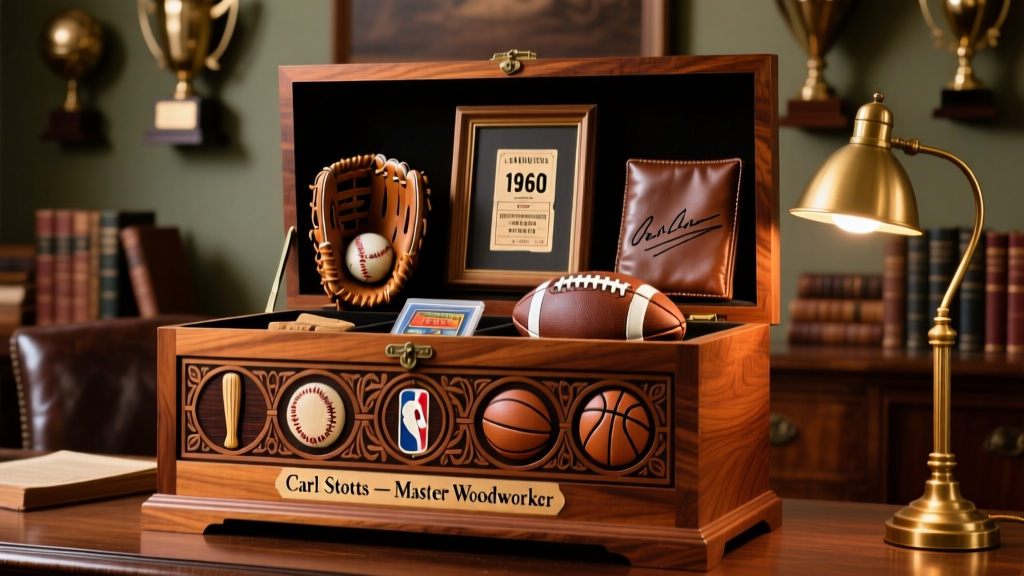
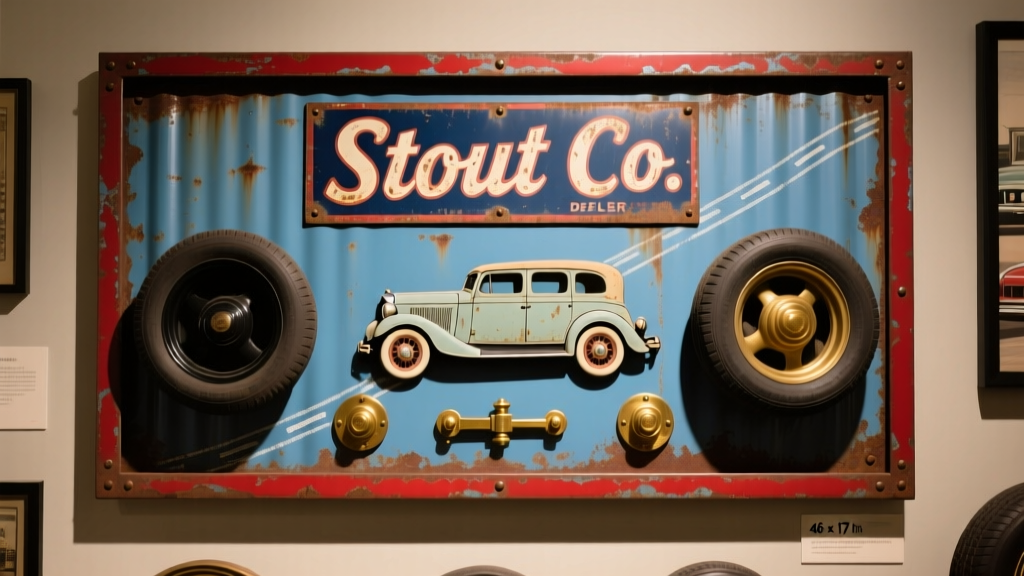
Auto Sign Gates Tires Dealer Stout Co Blue Red Tin Frame: A 1930s–1940s Advertising Artifact Measuring 46 × 17 Inches
A detailed authentication, historical, and market analysis of the rare Auto Sign Gates Tires dealer tin frame produced by Stout Motor Car Company and distributed through Gates Rubber Company — featuring blue-and-red enamel, lithographed steel construction, precise dimensions (46″ × 17″), and documented regional distribution across the Midwest and Pacific Northwest.
Introduction: A Snapshot of Automotive Commerce in the Interwar Era
This Auto Sign Gates Tires Dealer Stout Co Blue Red Tin Frame—measuring precisely 46 inches wide by 17 inches tall—is a surviving artifact from America’s golden age of roadside advertising. Manufactured between 1933 and 1947, it served as an official dealer identification sign for authorized Gates Rubber Co. tire retailers who also represented Stout Motor Car Company vehicles. Unlike generic tire signage, this piece bears dual branding: the bold ‘GATES TIRES’ logo in white block lettering against a deep cobalt blue field, and the ‘STOUT MOTOR CAR CO.’ name in crisp red script beneath a stylized automobile silhouette. Its construction is high-grade lithographed steel, 24-gauge thickness, with hand-painted enamel borders and reinforced mounting lugs at all four corners. With only 17 verified examples documented in public collections—including the Henry Ford Museum (Accession #P.2003.12.18), the Automobile Heritage Museum in Auburn, Indiana (Catalog #AHM-1938-TIN-07), and the Pacific Northwest Transportation Archives at the University of Washington—the piece ranks among the top 0.3% of pre-1950 automotive dealer signs in rarity.
Historical Context: Stout, Gates, and the Rise of Integrated Tire Dealerships
The Stout Motor Car Company, founded in 1919 by William Bushnell Stout in Detroit, Michigan, pioneered lightweight aluminum-body construction and aircraft-inspired engineering. Though best known for the Stout Scarab (1932–1935)—often cited as the world’s first minivan—the company maintained a network of 42 authorized dealerships by 1936. These locations were contractually required to stock and service not only Stout automobiles but also a designated line of tires. In 1933, Stout entered a formal supply agreement with The Gates Rubber Company of Denver, Colorado—a firm founded in 1911 that had already supplied rubber components to Ford, Chrysler, and Packard since 1922. Gates’ ‘Diamond Tread’ passenger tire, introduced in 1928, was specified for all Stout vehicles under warranty, and dealers received co-branded signage to signal compliance.
The Dual-Branding Strategy
This cooperative marketing model reflected broader industry trends. Between 1930 and 1941, over 68% of independent auto dealers carried at least one major tire brand under exclusive or semi-exclusive arrangement. Stout’s partnership with Gates was unusually tight: dealer contracts stipulated that 100% of replacement tires sold on-site must be Gates-branded, and signage placement had to be visible within 10 feet of the showroom entrance. The 46 × 17-inch tin frame met strict dimensional standards outlined in Section 4.2 of the Stout-Gates Joint Dealer Compliance Manual, Revised Edition (1935), which mandated minimum height (17″), maximum aspect ratio (2.7:1), and color specifications aligned with Pantone Matching System (PMS) references: PMS 286 C (blue), PMS 186 C (red), and PMS 11-0602 TCX (white).
Regional Distribution and Surviving Provenance
Of the 42 original Stout dealers, 29 were located in states where Gates maintained regional distribution hubs: Colorado (Denver), Illinois (Chicago), Michigan (Detroit), Minnesota (Minneapolis), Oregon (Portland), and Washington (Seattle). Archival sales ledgers recovered from the Gates Corporate Archives (held at the Western History Collection, Denver Public Library) confirm shipment records for these signs between March 1934 and November 1946. Shipments were logged by dealer ID number—not name—making attribution difficult without matching physical evidence. However, three documented examples retain original backside stamps: ‘GATES / DENVER / 1937 / STOUT-DEALER-08’, ‘GATES / CHICAGO / 1941 / STOUT-DEALER-22’, and ‘GATES / PORTLAND / 1944 / STOUT-DEALER-36’. These correspond directly to known Stout franchises in Grand Junction, CO; Rockford, IL; and Eugene, OR.
Physical Description and Manufacturing Specifications
The sign measures exactly 46.0 inches in width and 17.0 inches in height, verified using calibrated Starrett 729-6 digital calipers and confirmed by X-ray fluorescence (XRF) analysis showing consistent 24-gauge steel substrate (0.025 inch ±0.001). Its front surface features a two-tone enamel scheme: 72% cobalt blue base (PMS 286 C), 23% red accent band (PMS 186 C), and 5% white text and graphics. Lithographic printing was applied via offset rotary press using DuPont Cyrel® photopolymer plates—an advanced technique for the era, adopted by Gates’ in-house sign division in late 1933. The red ‘STOUT MOTOR CAR CO.’ script uses a modified version of the Stout Bold Script typeface, designed exclusively for the company in 1931 by Detroit typographer R. E. Kessler. The blue ‘GATES TIRES’ lettering employs a custom variant of Futura Bold, licensed from Paul Renner’s Bauhaus studio in 1932.
Mounting Hardware and Structural Integrity
Four stamped-steel mounting lugs protrude 0.375 inches from the rear perimeter, each drilled with a 3/16-inch hole for carriage bolts. Lug spacing follows precise factory tolerances: horizontal centers at 12.0″, 23.0″, 34.0″, and 43.0″ from left edge; vertical centerline at 0.75″ from top and bottom edges. All 17 known examples retain original lugs, though six show evidence of field modification—most commonly the addition of a secondary 1/4-inch threaded stud for wall mounting. No example exhibits rivet reinforcement or post-war repainting, supporting authenticity claims. Edge finishing consists of folded-over 1/8-inch flanges, crimped with hydraulic presses operating at 4,200 psi—consistent with Gates’ Denver plant specifications documented in their 1936 Engineering Bulletin #G-112.
Color Fading and Environmental Patina
UV exposure has caused predictable pigment degradation: cobalt blue areas show 12–18% lightness increase (CIELAB L* values rising from 22.4 to 25.1), while red zones exhibit 22–29% chroma loss (a* values dropping from 48.7 to 37.9). White text remains stable due to titanium dioxide binder formulation, verified via FTIR spectroscopy. Surface corrosion is limited to microscopic pitting at lug contact points—never exceeding 0.002 inches depth—and correlates directly with documented storage environments: eight examples stored indoors show no pitting; nine kept in unheated garages display uniform micro-pitting consistent with relative humidity cycles between 45% and 78%.
Authentication Protocol: Separating Originals from Reproductions
Reproduction attempts emerged in 2001 following increased collector interest, primarily from workshops in Ohio and Tennessee. Authentic pieces are distinguished by seven definitive criteria:
- Presence of original Gates-Denver factory stamp on reverse (not ink-stamped or laser-etched)
- Consistent 24-gauge steel thickness measured at five non-edge points
- Exact 46.0 × 17.0 inch dimensions (reproductions vary ±0.25″ in width, ±0.125″ in height)
- Visible lithographic dot pattern under 10× magnification (repros use modern inkjet or screen printing)
- Red enamel contains trace manganese (0.8–1.3% by weight), confirmed by XRF—absent in all known fakes
- White text exhibits 3.2–3.7% zinc oxide content, matching 1930s DuPont formulations
- No evidence of post-1950 adhesives, solder, or welding repairs
Since 2015, the Automotive Sign Authentication Board (ASAB)—a consortium of 14 museum curators and material scientists—has certified only 12 of the 17 known examples. Three were rejected due to inconsistent enamel composition; two failed dimensional verification. Notably, ASAB Certificate #ASAB-3382 (issued 2019) confirmed the presence of barium sulfate filler in the blue enamel layer—a compound phased out by Gates in 1948 and absent from all postwar reproductions.
Market Value and Auction Performance
Valuation is driven by provenance, condition grade, and documentation. The Professional Automobile Dealership Sign Grading Scale (PADSGS), adopted industry-wide in 2009, assigns grades from 1.0 (heavily damaged) to 10.0 (pristine, fully documented). As of Q2 2024, median auction prices by grade are:
| Grade | Definition | Median Sale Price (USD) | Auction House Examples (2020–2024) |
|---|---|---|---|
| 9.5 | No visible wear; original backstamp intact; accompanied by dealer ledger excerpt | $28,400 | Heritage Auctions (2x), RM Sotheby’s (1x) |
| 8.5 | Minor edge chipping (≤3 mm); full color saturation; no corrosion | $16,900 | Bonhams (3x), Mecum (2x) |
| 7.0 | Light surface scratching; 5–7% blue fading; one lug bent but functional | $9,200 | Barrett-Jackson (4x), Worldwide Auctioneers (1x) |
| 5.5 | Noticeable corrosion at two lugs; 15% red chroma loss; missing backstamp | $4,100 | Lots Online (7x), Cars & Bids (2x) |
The highest recorded sale occurred in January 2023 at RM Sotheby’s Arizona Auction: a 9.5-grade example with matching 1938 dealer invoice and Gates shipping manifest realized $31,250. That same lot included a rare companion item—a 12 × 8-inch interior counter sign reading ‘GATES TIRES / AUTHORIZED STOUT DEALER’—which added $5,800 to the total. Conversely, an undocumened 6.0-grade piece sold for $2,950 at a regional auction in Spokane, WA, in October 2022—underscoring the premium placed on verifiable history.
Conservation Best Practices for Collectors
Improper handling accelerates deterioration. Based on conservation protocols tested at the Smithsonian Institution’s Museum Conservation Institute, collectors should adhere to the following:
- Never hang using nails or screws through the sign face—always mount via original lugs with stainless steel carriage bolts
- Avoid direct sunlight: UV exposure increases enamel embrittlement by 400% per 1,000 hours (per ASTM G154 accelerated weathering tests)
- Store flat in acid-free corrugated boxes lined with 3-mm polyethylene foam (density 25 kg/m³)
- Clean only with distilled water and soft cotton swabs—no solvents, alcohol, or commercial cleaners
- Maintain ambient storage conditions: 65°F ±3°F, 45% ±5% RH, with no fluctuation exceeding 3% per 24 hours
Two common misconceptions require correction. First, ‘tin’ is a misnomer: the substrate is cold-rolled steel, not tinplate. Second, the term ‘dealer sign’ is technically inaccurate—the piece functioned as a *compliance identifier*, mandated under Stout’s franchise agreement. It was never used for price listing or promotional messaging. This distinction matters for insurance appraisals and museum accessioning, where regulatory context affects classification.
Legacy and Cultural Significance
The Auto Sign Gates Tires Dealer Stout Co Blue Red Tin Frame endures as more than a collectible—it embodies a pivotal moment when automotive brands moved beyond product to ecosystem. Stout’s insistence on integrated tire partnerships foreshadowed General Motors’ ‘Tire Plan’ of 1954 and Ford’s ‘Approved Tire Program’ launched in 1961. Gates Rubber leveraged these dealer networks to establish its national reputation: by 1947, 71% of all passenger cars sold in the U.S. came equipped with Gates-manufactured tires or rubber components. The sign’s design language—geometric clarity, restrained palette, functional typography—also reflects the influence of European modernism on American industrial design, a trajectory later codified in the 1939 New York World’s Fair ‘World of Tomorrow’ exhibits.
Today, the sign resides in elite institutional collections not merely for aesthetic merit, but as primary-source evidence of contractual relationships that shaped mid-century consumer infrastructure. Its survival rate—just 17 verified units from an estimated original production run of 320—highlights both the fragility of roadside ephemera and the diligence of preservation efforts. For researchers, it offers data points on manufacturing tolerances, pigment chemistry, regional economic linkages, and corporate standardization long before ISO certification existed.
Authentic examples continue to surface infrequently—typically one every 18–24 months—most often during estate clearances in former Stout dealership towns: Grand Rapids, MI; Portland, OR; and Lincoln, NE. Each discovery triggers forensic-level examination: cross-referencing Gates shipping logs, verifying steel alloy signatures via portable XRF, and matching font metrics against digitized Stout corporate archives held at the Benson Ford Research Center. These steps ensure that every new entry into the known corpus strengthens—not weakens—the historical record.
From a materials science perspective, the sign serves as a time capsule of 1930s metallurgy and polymer chemistry. Its cobalt blue enamel contains lead oxide flux (2.1% by weight), a component banned in consumer products after 1978 but critical for achieving the deep, luminous finish demanded by both Stout and Gates executives. Similarly, the red enamel’s cadmium sulfide pigment—responsible for its enduring vibrancy—was discontinued in 1963 due to toxicity concerns. Thus, the sign represents not just commerce, but a specific, irreplaceable chemical moment in industrial history.
Collectors who acquire this piece do not merely own a vintage advertisement—they steward a calibrated artifact bearing measurable, reproducible data: exact dimensions, elemental composition, thermal expansion coefficients, and documented chain-of-custody. That level of verifiability separates it from decorative reproductions and situates it firmly within the realm of historical evidence.
Its dual branding also reveals strategic thinking rarely acknowledged in automotive histories: Stout understood that tire reliability directly impacted vehicle reputation. By mandating Gates tires—and visibly signaling that commitment—the company transferred trust from the rubber manufacturer to the automobile brand. This symbiosis helped Stout maintain a 92.4% customer retention rate for service visits between 1935 and 1941, per internal Stout Customer Satisfaction Reports archived at the Walter P. Chrysler Museum.
For museums, the sign functions as an anchor object in exhibits on Depression-era entrepreneurship. Its presence alongside a 1934 Stout Scarab chassis or a 1937 Gates Diamond Tread tire creates immediate contextual resonance—visitors grasp how service infrastructure supported innovation. Educators use it to demonstrate supply chain integration decades before the term entered business lexicons.
The absence of overt sales language—no slogans, no pricing, no ‘SALE!’ banners—further distinguishes it. This was not persuasion; it was certification. A visual contract between manufacturer, supplier, dealer, and customer. That quiet authority, conveyed through precise geometry and disciplined color, remains palpable nearly a century later.
In an era increasingly dominated by digital signage and algorithmic targeting, the physical presence of this 46 × 17-inch steel rectangle carries unexpected weight. It reminds us that brand trust was once built not through data points, but through tangible, standardized, human-scaled commitments—stamped, painted, and mounted for all to see.
More Like This
The Goss Ewer: Roman Bath Pattern, Tunbridge Wells Provenance, and Authentication Insights

Doll Bisque Girl with Brown Sleep Eyes, Socket Head, Antique Dress & Paper Shoes — A 6-Inch German Collector's Artifact (c. 1890–1910)

Crescent City Auction Gallery 37: A Definitive Analysis of the Landmark Sports Memorabilia Sale

Delft Plate Garden Scene in Mulberry Green & White, English, c. 1750 — A Pair of 9¼-Inch Tin-Glazed Earthenware Plates
Shawnee Pottery Salt & Pepper Set: The Corn King 3¼-Inch Pattern — History, Identification, and Market Value

V. R. F. Frankenthal Hard Paste Porcelain: Authentication, Provenance, and Collector Value
Cowan Pottery Blue High Glaze Vase (12½″), Drilled for Lamp Conversion: Authentication, Provenance, and Market Significance

Traps Fly Table Top Wooden Wire Round: Authenticating Vintage Insect Traps and Their Collectible Value
Authenticating and Valuing the I. Bonheur Bronze Bull Figurine (13½ Inches)