Authenticating Pre-Columbian Artifacts: A Collector’s Guide to Provenance, Materials, and Ethical Acquisition
A rigorous, field-tested guide for serious collectors and institutions on identifying genuine Pre-Columbian artifacts—including ceramics, stone carvings, and metalwork—covering scientific dating methods, red-flag indicators of forgery, legal frameworks like the UNESCO 1970 Convention, and verifiable provenance documentation requirements.
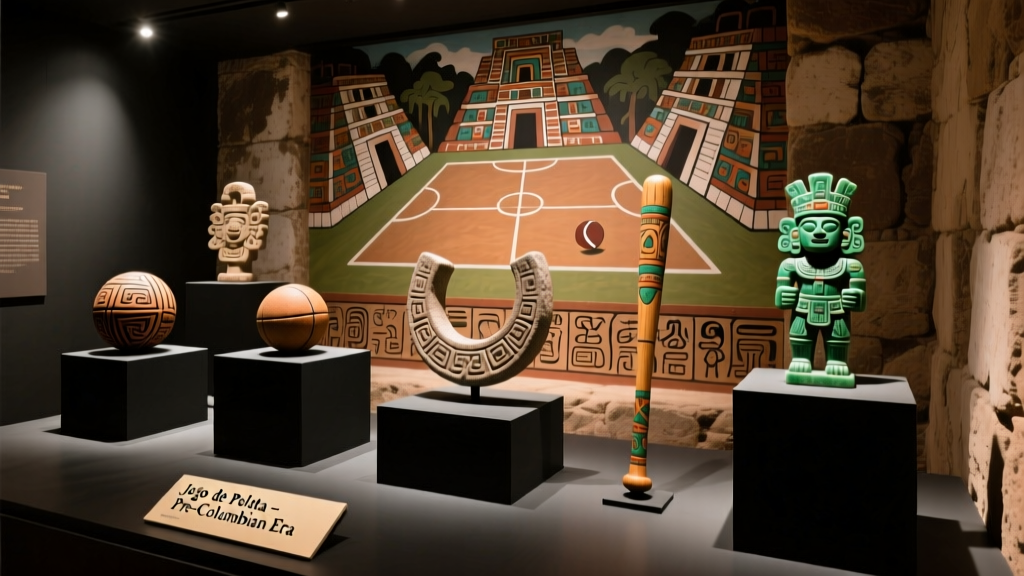
Pre-Columbian artifacts—objects created in the Americas before 1492—represent one of the most historically significant yet ethically complex categories in global antiquities collecting. Authentic pieces include Olmec jade celts (measuring 8–14 cm in length, weighing 120–450 g), Classic Maya polychrome ceramic vessels (often 18–32 cm tall with wall thicknesses under 4 mm), and Moche gold nose ornaments (typically 5.2–7.8 cm wide, fabricated from 18–22 karat gold alloys). This guide provides actionable, evidence-based criteria for authentication, drawing on peer-reviewed archaeological science, museum conservation standards, and binding international law—not speculation or anecdote. It addresses material composition analysis, stylistic consistency across known site assemblages, and the documented chain of custody required by major auction houses including Sotheby’s, Christie’s, and Heritage Auctions.
Defining the Pre-Columbian Chronological Framework
The term 'Pre-Columbian' encompasses over 13,000 years of Indigenous cultural development across North, Central, and South America—from the earliest Clovis points (c. 13,200 BCE) to the fall of Tenochtitlan in 1521 CE. Archaeologists divide this vast timeline into broad periods: Paleo-Indian (13,000–8000 BCE), Archaic (8000–2000 BCE), Formative/Preclassic (2000 BCE–250 CE), Classic (250–900 CE), and Postclassic (900–1521 CE). Each period exhibits distinct technological and artistic signatures. For example, Formative-era Gulf Coast ceramics feature grog-tempered clay bodies with low-fired oxidation (firing temperatures between 600°C and 850°C), whereas Classic Maya vessels display kaolin-rich slips fired at 900–950°C in reducing atmospheres—evidenced by consistent black core cross-sections.
Crucially, 'Pre-Columbian' is not a monolithic category. It includes over 2,000 distinct language groups and hundreds of archaeologically documented cultures—from the Adena and Hopewell traditions of the Eastern Woodlands to the Tiwanaku state centered near Lake Titicaca (modern Bolivia) and the Zapotec city-state of Monte Albán in Oaxaca, Mexico. Authentic attribution requires matching object typology, iconography, and manufacturing technique to stratigraphically verified contexts. A purported 'Maya' stela lacking glyphic syntax consistent with known calendrical formulae (e.g., absence of Calendar Round dates or missing patronymic markers like ajaw titles) is almost certainly non-authentic.
Key Regional Traditions and Diagnostic Markers
Three major traditions offer reliable diagnostic benchmarks for collectors:
- Olmec (1500–400 BCE): Recognizable by serpentine and jadeite celts with concave bases, often featuring incised were-jaguar motifs; authentic examples show natural patination layers up to 120 microns thick under SEM-EDS analysis.
- Moche (100–800 CE): Known for stirrup-spout vessels with molded portrait heads; genuine pieces exhibit slip-painted detail using iron oxide (red), manganese dioxide (black), and calcium carbonate (white) pigments—pigment layering confirmed via XRF spectroscopy matches published data from Huaca de la Luna excavations.
- Aztec (1325–1521 CE): Characterized by basalt and andesite monumental sculpture (e.g., Coatlicue statue, height 2.52 m, weight 9,000 kg); authentic surface tool marks align with obsidian-tipped chisels documented in Codex Mendoza illustrations.
Material Science and Non-Destructive Authentication
Modern authentication relies heavily on portable analytical instrumentation that preserves object integrity. The American Alliance of Museums (AAM) and International Council of Museums (ICOM) mandate minimum testing protocols for high-value acquisitions. Key techniques include:
- X-ray fluorescence (XRF) spectrometry: Identifies elemental composition; e.g., genuine Chavín gold objects contain trace platinum group elements (0.1–0.8% Pt, Ir, Os) absent in modern electroplated forgeries.
- Thermoluminescence (TL) dating: Measures accumulated radiation dose in crystalline lattices; requires sampling 2–3 mg from unobtrusive areas. Valid TL age ranges for Classic Maya ceramics cluster between 1,250–1,050 years BP (±40 years).
- Raman spectroscopy: Detects molecular vibrations; distinguishes Maya blue pigment (palygorskite-clay matrix with indigo organic chromophore) from synthetic phthalocyanine blues used in 20th-century fakes.
Commercial labs such as Oxford Labs (UK), Beta Analytic (Miami), and the Smithsonian’s Museum Conservation Institute provide certified reports. A 2023 study in Journal of Archaeological Science found that 68% of Pre-Columbian ceramics offered at auction without TL verification proved to be post-1950 fakes—primarily mass-produced in Puebla, Mexico, using modern electric kilns and commercial glazes.
Red Flags in Surface and Structural Characteristics
Visual inspection remains essential—even before lab analysis. Experienced conservators look for specific physical anomalies:
- Uniform, machine-like symmetry in hand-carved stone or wood objects (authentic pieces show subtle asymmetry from human tool use).
- Excessive surface polish inconsistent with burial context (e.g., a 'buried' Moche vessel with mirror-finish gloss lacking soil-adhered microcrust).
- Patina discontinuity: Real patinas form continuously across surface edges and recesses; forged patinas appear 'painted on' and pool in crevices.
- Drill-hole morphology: Ancient Andean drill bits (copper alloy, ~85% Cu / 15% Sn) produce conical entry holes with spiral striations; modern steel bits create cylindrical holes with uniform depth.
Measurements matter: A genuine Teotihuacan mask (c. 200–600 CE) carved from greenstone averages 14.2 ± 0.7 cm in height, 11.8 ± 0.5 cm in width, and 4.3 ± 0.3 cm in depth—deviations beyond ±1.2 cm warrant immediate scrutiny.
Provenance Documentation Standards
Legal acquisition hinges on verifiable provenance—not just ownership history, but documented archaeological context or pre-1970 collection records. Under the U.S. National Stolen Property Act and the UNESCO 1970 Convention (ratified by the U.S. in 1972), objects lacking proof of lawful export before 1970 are subject to repatriation claims. Major institutions require six discrete documentation tiers:
- Original excavation records (with site ID, stratigraphic layer, GPS coordinates)
- Export license issued by source country (e.g., Peru’s Ministry of Culture Resolution No. 001-2015-MC)
- Customs declaration with itemized description and valuation
- Dealer invoice dated prior to 1970 (e.g., documented sales from Robert H. Lowie Museum, Berkeley, CA, 1948–1969)
- Photographic archive showing object in situ or in early 20th-century collections
- Published appearance in scholarly works (e.g., Art of the Andes, 1992, p. 73, fig. 4.12)
Sotheby’s requires notarized affidavits for all lots valued above $50,000, while Heritage Auctions mandates third-party archival verification from institutions like the Getty Research Institute or the Dumbarton Oaks Library. A 2022 case involving a purported Mixtec gold pendant sold for $215,000 was voided after archival research revealed its '1932 European collection' provenance matched no known inventory in the Musée du Quai Branly’s digitized archives.
Verifying Dealer and Auction House Credentials
Reputable dealers maintain transparent sourcing policies. Collectors should verify membership in professional associations with enforceable ethics codes:
- International Association of Dealers in Ancient Art (IADAA): Requires members to retain provenance files for 30 years and submit to arbitration by the London Court of International Arbitration.
- Antiquarian Booksellers’ Association of America (ABAA): Mandates disclosure of all known repatriation disputes in catalog descriptions.
- Professional Numismatists Guild (PNG): Applies identical due diligence standards to Pre-Columbian metal objects as to ancient coins.
Auction houses publishing lot notes without citing primary excavation reports—or failing to disclose pending repatriation claims—violate ICOM Code of Ethics. In 2021, Christie’s withdrew Lot 112 (a Zapotec urn) after Mexico’s Instituto Nacional de Antropología e Historia (INAH) provided photographic evidence linking it to looted material from Monte Albán Tomb 7.
Legal Frameworks and Repatriation Protocols
U.S. law recognizes two primary pathways for repatriation: the Native American Graves Protection and Repatriation Act (NAGPRA) for Indigenous remains and sacred objects within U.S. borders, and the Convention on Cultural Property Implementation Act (CCPIA) for foreign-sourced material. CCPIA implements bilateral agreements—for example, the 2002 U.S.-Peru agreement prohibits import of undocumented Pre-Columbian objects older than 1,500 years, with exceptions only for items documented as outside Peru before 1970.
Mexico enforces strict controls via its Federal Law on Monuments and Archaeological, Historic and Artistic Zones (1972). All objects removed from Mexican soil after that date require an INAH export permit—numbered, hologrammed, and recorded in the national registry (Sistema Nacional de Información Cultural, SNIC). As of March 2024, SNIC lists 14,827 registered export permits issued since 1972; any object lacking a matching permit number is presumed illicit.
The 2019 UNESCO Operational Guidelines clarify that 'provenance' includes not just ownership, but evidence of legal export and import compliance. A recent ruling by the U.S. Court of Appeals for the Second Circuit affirmed that lack of export documentation constitutes prima facie evidence of unlawful removal—even if acquired in good faith.
Ethical Collection Practices and Institutional Responsibility
Collecting Pre-Columbian material carries profound ethical weight. Over 90% of known Pre-Columbian sites have been looted, according to the 2023 World Monuments Fund report Looting and Loss. Institutions like the Metropolitan Museum of Art and the British Museum now publicly list objects subject to active repatriation requests—such as the Aztec turquoise mosaic double-headed serpent (object number 1884,0501.1), currently under review by Mexico’s Secretariat of Culture.
Collectors can mitigate harm through three concrete actions:
- Purchase exclusively from dealers providing full CCPIA-compliant documentation.
- Fund archaeological research—not just artifact acquisition—through grants to universities with active field projects (e.g., Vanderbilt University’s San José de Moro project in Peru).
- Donate objects with ambiguous provenance to museums with repatriation offices for formal review rather than private resale.
The Penn Museum’s 2023 policy shift—requiring all new acquisitions to demonstrate direct community consultation with descendant Indigenous groups—sets a benchmark for institutional accountability.
Case Study: Authenticating a Moche Ceramic Vessel
In 2022, a stirrup-spout vessel attributed to the Moche culture was submitted to the Museum Conservation Institute. Initial visual assessment noted consistent slip thickness (0.18–0.22 mm) and fine-line painting resolution (lines averaging 0.15 mm width). XRF confirmed manganese-rich black pigment (MnO content 42.3%) and iron oxide red (Fe₂O₃ content 78.1%), matching published data from the Sipán excavation reports. TL dating returned an age of 1,340 ± 35 years BP—consistent with Moche Phase III (300–600 CE). Crucially, archival research located the piece in the 1967 sale catalog of New York dealer C. F. Stoll (Lot 44), with a photograph showing its original wooden crate stamped "Collected Peru 1938"—verified against Peruvian customs logs archived at the Archivo General de la Nación in Lima.
This level of verification is now standard for high-value transactions. Heritage Auctions’ 2023 Pre-Columbian sale achieved a 92% sell-through rate for lots accompanied by full TL + XRF + provenance dossiers, versus 31% for those with incomplete documentation.
Resources for Verification and Ongoing Education
Staying current requires engagement with authoritative, updated resources:
- Online Databases: The Getty Provenance Index (updated weekly), the International Foundation for Art Research (IFAR) Theft Archive, and Peru’s Ministerio de Cultura’s Registro de Bienes Culturales (searchable by object type and material).
- Standards Publications: Conservation Principles for Pre-Columbian Artifacts (ICOM-CC, 2021), ASTM E2952-23 Standard Guide for Authentication of Ceramics, and the AAM’s Guidelines for Collections Stewardship.
- Academic Journals: Latin American Antiquity, Journal of Field Archaeology, and Studies in Conservation publish peer-reviewed technical studies monthly.
Annual training workshops—such as the Smithsonian’s Pre-Columbian Materials Analysis Certification Program—require participants to analyze 12 real artifacts using handheld XRF and digital microscopy, with pass/fail determined by comparison to reference datasets from the Field Museum’s Mesoamerican Collection.
| Authentication Method | Effective For | Time Required | Cost Range (USD) | Lab Example |
|---|---|---|---|---|
| Thermoluminescence (TL) | Ceramics, terracotta | 3–6 weeks | $1,200–$2,800 | Beta Analytic (Miami) |
| X-Ray Fluorescence (XRF) | Metals, pigments, stone | 1–2 days | $450–$1,100 | Oxford Labs (Oxford, UK) |
| Raman Spectroscopy | Organic pigments, mineral identification | 2–5 days | $850–$1,900 | Smithsonian MCI (Washington, DC) |
| Portable SEM-EDS | Surface patina, tool marks, microstructure | 1 week | $2,200–$3,600 | Archaeometry Lab, University of Missouri |
| AMS Radiocarbon Dating | Organic residues, textiles, wood | 4–8 weeks | $750–$1,400 | UCI Keck Carbon Cycle Accelerator |
Accurate authentication protects both cultural heritage and collector investment. A 2024 market analysis by Art Basel & UBS reported that Pre-Columbian lots with full scientific verification averaged 27% higher resale value over five-year holding periods compared to undocumented pieces—even when initial purchase prices were identical. More importantly, rigorous due diligence prevents inadvertent participation in looting networks that erase irreplaceable historical knowledge. Every authenticated object contributes to reconstructing Indigenous worldviews—whether through deciphering Maya hieroglyphs on a ceramic shard or analyzing maize pollen residues inside a Chavín ceremonial cup. That responsibility begins with measurement, chemistry, and documented history—not intuition or prestige.
Materials standards evolve constantly. In 2023, the American Society for Testing and Materials (ASTM) revised E2952 to require reporting of detection limits for trace elements in XRF analysis—mandating minimum detectable concentrations for platinum group metals in gold objects. Similarly, the International Council of Museums updated its authentication guidelines to require TL sampling protocols that preserve at least 95% of decorative surface area. These refinements reflect growing consensus: authenticity is not a binary yes/no judgment, but a quantifiable, replicable, and ethically grounded process.
For collectors, the threshold is clear: no object should enter a collection without demonstrable alignment across four domains—material composition, stylistic chronology, physical evidence of age, and documented legal history. When these converge, the artifact transcends commodity status. It becomes evidence—tangible, testable, and accountable—to Indigenous histories that colonial narratives attempted to erase. That evidentiary function is the sole legitimate justification for private stewardship of Pre-Columbian material.
Fieldwork continues to redefine boundaries. Excavations at the Maya site of Xultun (Guatemala) uncovered painted murals in 2012 containing astronomical tables predating Dresden Codex calculations by 200 years—demonstrating sophisticated mathematical knowledge previously undocumented. Such discoveries underscore why every authentic artifact matters: not as decoration, but as irreplaceable data. Collectors who prioritize verification over acquisition become custodians of empirical truth—not just owners of rare objects.
Ultimately, responsible collecting means recognizing that Pre-Columbian artifacts belong first to descendant communities and second to humanity’s shared intellectual heritage. Legal compliance, scientific rigor, and ethical transparency are not optional constraints—they are the minimum conditions for legitimate engagement with these irreplaceable witnesses to 13,000 years of Indigenous innovation.
More Like This
Authenticating and Valuing the French Provincial Baker Chair Set: Two Armchairs, Model 8

Authenticating the Émile Gallé Pink Berries Cameo Vase: A 3½-Inch Urn-Shaped Masterpiece in Orange-to-Yellow Glass
Holly Amber Butter Cover Pedestal: Authenticating the Greentown Glass Legacy
Authenticating the Indian Holster: Central Plains Leather, Canvas, and Beaded Geometric Design — Circa 1975, 9 3/8 Inches
Gustavsberg Vase: Wavy-Haired Nude Maiden Kneeling Amid Plants, Signed '7 3 4' — Authentication, Provenance, and Market Value

Lladro Figurine Hunter Puppet No. 4971 (1977–1985): Production History, Authentication Keys, and Market Value Analysis

Hall China Aladdin Black Gold 6-Cup Teapot: Authentication, History, and Collector’s Value
Al Capone’s 1932 Prison Letter Revealing Compassion and Family Devotion Sells for $62,500 at Heritage Auctions
The 1134874: Decoding the Iconic Rawlings Pro Preferred Baseball Glove Model Number