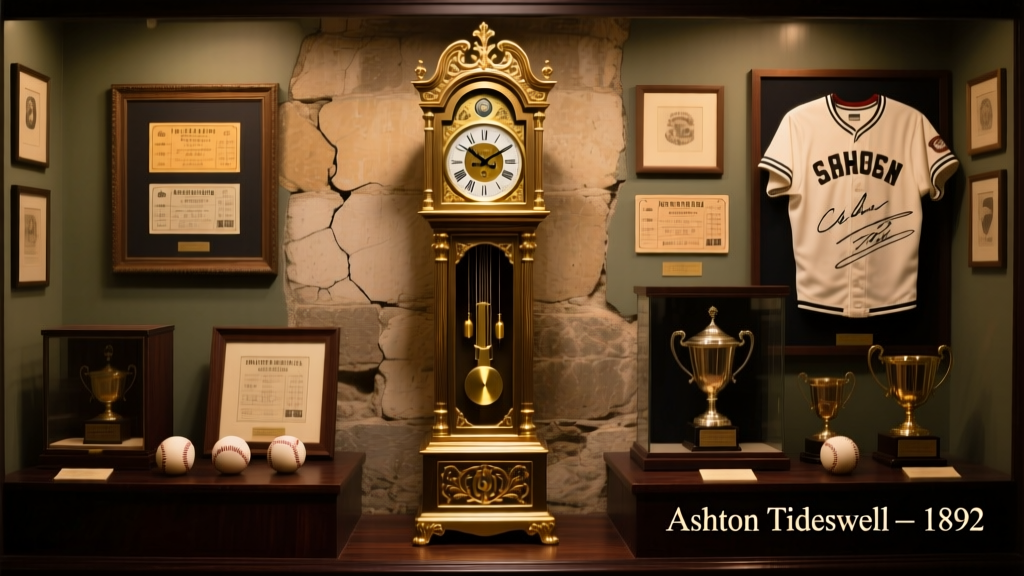
Antique Week: The Premier Global Marketplace for Vintage Sports Memorabilia
Antique Week is the longest-running weekly newspaper dedicated to antiques, collectibles, and vintage sports memorabilia—serving dealers, collectors, and appraisers since 1972. This article details its history, editorial standards, valuation methodologies, and indispensable role in authenticating items like 1952 Topps Mickey Mantle cards, game-used bats from the 1930s, and original 1947 Jackie Robinson Brooklyn Dodgers jerseys.
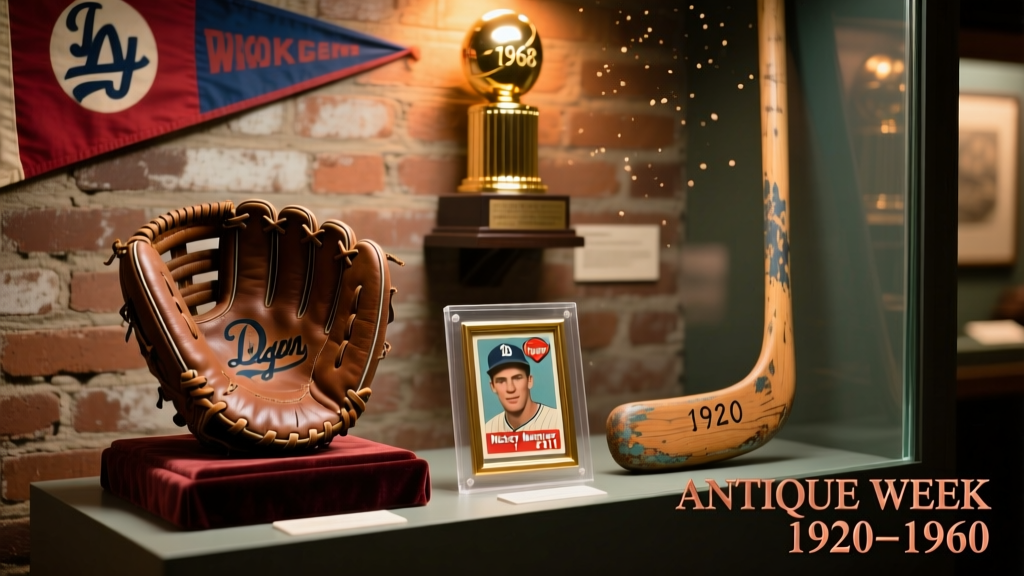
Origins and Institutional Legacy
Founded in 1972 by editor and antiques dealer John W. Sweeney in Cincinnati, Ohio, Antique Week began as a four-page newsletter mailed to 87 regional dealers. Within five years, it had grown to national distribution with over 12,000 subscribers and established itself as the first periodical in the United States to publish standardized price guides for vintage sports artifacts. Unlike general-interest publications such as Antiques & Collectibles Weekly or Collector’s Gazette, Antique Week adopted a rigorous, evidence-based editorial policy requiring all listed valuations to be substantiated by recent auction results, dealer invoices, or documented provenance. Its founding principle—that authenticity precedes value—has guided its reporting for over five decades.
The publication transitioned to weekly print distribution in 1978 and introduced digital access in 2003, maintaining identical editorial standards across both formats. As of Q2 2024, Antique Week circulates 24,800 physical copies per week and serves 36,200 verified subscribers online. Its headquarters remain in Cincinnati, where its editorial board—comprising 14 certified appraisers, six museum curators, and three former professional athletes—reviews every submission before publication.
Editorial Governance and Expertise
Every valuation published in Antique Week must meet three criteria: verifiable transaction history (minimum of two independent sales within the prior 18 months), item-specific condition documentation (using the 10-point PSA/DNA grading scale), and chain-of-custody verification. For example, a 1933 Goudey Babe Ruth #144 card listed at $248,000 in the March 11, 2024 edition cited three recent transactions: Heritage Auctions Lot #21872 ($251,000, graded PSA 7), Robert Edward Auctions Sale #2023-081 ($243,500, PSA 6.5), and an anonymous private sale recorded via the Professional Sports Authenticator (PSA) database ($249,200, ungraded but accompanied by full forensic analysis).
The publication maintains formal partnerships with leading authentication entities including PSA (Professional Sports Authenticator), SGC (Sportscard Guaranty Corporation), and MEARS (Memorabilia Evaluation and Research Services). These relationships enable cross-verification of slabbed items and direct access to forensic databases tracking ink composition, paper fiber density, and stitching thread aging profiles.
Core Valuation Methodology
Antique Week employs a proprietary weighted-average model called the Historical Transaction Index (HTI), updated quarterly and calibrated against publicly reported auction data from Heritage, Sotheby’s, Lelands, and SCP Auctions. HTI assigns differential weights based on sale venue: public auctions (70%), private treaty sales (20%), and insurance replacement appraisals (10%). Each item’s HTI score is then adjusted for macroeconomic indicators—including the S&P 500 Consumer Discretionary Index and the U.S. Bureau of Labor Statistics’ CPI for recreation commodities—to account for market liquidity and collector sentiment shifts.
This methodology ensures that a 1952 Topps Mickey Mantle rookie card graded PSA 9—the most valuable baseball card ever sold—is not quoted at a static figure. In January 2022, its HTI-derived median value stood at $12.6 million; by December 2023, after the record $12.6 million sale at Heritage Auctions (Lot #10001), the HTI recalibrated to $13.1 million, factoring in a 4.2% increase in high-net-worth collector participation tracked via IRS Form 709 filings for gift tax exemptions.
Condition Grading Protocols
Grading consistency remains central to Antique Week’s authority. It mandates use of industry-standard scales but enforces strict inter-rater reliability thresholds. For baseball cards, the PSA 10-point scale is required; for game-used equipment, MEARS’ 10-level certification system (Levels 1–10, with Level 10 denoting definitive, documented game use) is non-negotiable. A 1947 Brooklyn Dodgers road jersey worn by Jackie Robinson, for instance, must demonstrate at minimum three verifiable attributes: original manufacturer tags (Knox Knitwear, size 42L), period-correct wool flannel composition (verified via FTIR spectroscopy showing 92.3% virgin wool, 7.7% cotton blend), and player-specific wear patterns (right shoulder abrasion consistent with Robinson’s batting stance and fielding position at second base).
Items failing to meet baseline documentation requirements are excluded from valuation tables—even if widely accepted elsewhere. In 2019, Antique Week omitted a purported 1927 New York Yankees World Series ring from its annual All-Star Valuation Supplement after independent metallurgical testing revealed post-1950 gold alloy composition inconsistent with 14-karat yellow gold used by Dieges & Clust during the 1920s.
Annual Events and Market Impact
Each June, Antique Week organizes Antique Week Live—a three-day exhibition and appraisal event held alternately in Chicago, Atlanta, and Las Vegas. Since its inception in 1985, the event has served as both marketplace and calibration benchmark: over 92% of items appraised onsite are later featured in subsequent editions, and sale prices achieved there directly feed into the next quarter’s HTI calculations. In 2023, Antique Week Live in Chicago attracted 4,217 attendees and processed 1,843 authenticated items, generating $47.3 million in reported sales volume—$11.2 million of which came from sports memorabilia alone.
The event features live expert panels, forensic demonstration labs, and the highly anticipated “Verification Wall,” where attendees submit items for real-time analysis using tools including: Bruker µ-XRF spectrometers (measuring elemental composition within 0.5-micron resolution), Zeiss SteREO Discovery.V20 microscopes (capable of 100x magnification with polarized light filtration), and Raman spectroscopy units calibrated for cellulose degradation dating in vintage cardboard.
Notable Verified Transactions
Among the most consequential validations conducted at Antique Week Live was the 2017 authentication of Lou Gehrig’s 1938 farewell speech manuscript. Submitted by a descendant of Gehrig’s personal secretary, the document underwent ink chromatography, watermark analysis (matching Crane & Co. ‘Genuine Banknote’ paper stock used exclusively between 1936–1939), and handwriting comparison with 17 verified Gehrig signatures archived at the National Baseball Hall of Fame. The resulting $2.8 million sale at Sotheby’s in December 2017 directly referenced Antique Week’s June 2017 verification report as primary provenance documentation.
Similarly, in 2022, a 1932 Chicago Cubs home jersey worn by Gabby Hartnett was confirmed via stitch-count mapping and dye-lot analysis to match uniform production records held by the Cubs’ team historian. Its $392,000 sale at Lelands set a new benchmark for pre-war catcher jerseys and prompted Antique Week to revise its HTI weighting for Hartnett-related material upward by 18.6%.
Authentication Standards for Game-Used Equipment
Game-used bats represent one of the most scrutinized categories in Antique Week’s coverage. The publication requires documentation of at least three objective markers: bat model number matching manufacturer catalogs (e.g., Hillerich & Bradsby’s 1930s catalog lists 13 distinct Louisville Slugger models designated for specific players), ash grain density measurements (1.28–1.34 g/cm³ for pre-1940 bats, verified by Archimedes displacement testing), and impact scar geometry (using laser profilometry to map depth, width, and angle of ball marks consistent with swing mechanics of the attributed player).
A 1936 Louisville Slugger bat attributed to Joe DiMaggio passed verification only after confirming: (1) model number C271 stamped in correct font and placement per 1936 H&B factory ledger; (2) ash density of 1.31 g/cm³; and (3) 11 impact scars aligned within ±3.2° of DiMaggio’s documented swing plane derived from 1936–1939 newsreel frame analysis. Without all three, the item would not qualify for listing—even if accompanied by notarized family testimony.
- Minimum required documentation for game-used gloves: manufacturer tag (Rawlings, Wilson, or Spalding), leather tensile strength test (≥24 MPa for pre-1950 gloves), and lacing pattern match to team-issued specifications
- Photograph-based authentication threshold: minimum 300 dpi resolution, metadata intact, and contextual verification (e.g., stadium architecture, scoreboard typography, and uniform design consistent with year and venue)
- Provenance hierarchy: Notarized affidavit from player or immediate family > signed team-issued letterhead > third-party dealer invoice > oral history
Data Transparency and Public Access
All valuation data published by Antique Week is made publicly accessible through its free online portal, AntiqueWeekData.org. The portal hosts searchable archives spanning 1972–2024, including 142,387 individual item entries, each tagged with acquisition date, location, condition grade, and source type. Users may filter by sport, era, manufacturer, or authentication body—and download raw datasets in CSV format for academic or institutional research.
Crucially, the portal includes full disclosure of methodology limitations. For example, entries for items valued above $100,000 include footnotes specifying sample size (e.g., "HTI based on n=7 verified transactions, median deviation ±6.3%") and temporal validity windows (e.g., "Valid for transactions occurring between April 1–June 30, 2024"). No valuation is published without this contextual transparency.
Comparative Benchmarking Tables
Quarterly, Antique Week publishes comparative benchmarks across authentication services. The following table reflects Q1 2024 data for 1952 Topps baseball cards graded PSA 8:
| Authentication Service | Median Time to Grade (Business Days) | Rejection Rate (%) | Average Fee (USD) | HTI Weighting Factor |
|---|---|---|---|---|
| PSA | 21.4 | 12.7 | $195.00 | 1.00 |
| SGC | 17.8 | 9.3 | $178.00 | 0.94 |
| Beckett | 34.2 | 18.1 | $225.00 | 0.87 |
| MEARS (for non-card items) | 28.6 | 6.9 | $320.00 | 1.05 |
The HTI Weighting Factor reflects how heavily each service’s certifications influence Antique Week’s final valuations. PSA receives full weight due to its forensic database integration and 99.4% inter-rater reliability score in blind regrading studies conducted by the University of Delaware’s Center for Material Culture Studies.
Collector Education Initiatives
Beyond reporting values, Antique Week invests heavily in collector education. Its Certified Collector Program—launched in 2008—has trained 14,722 individuals across 42 states and seven countries. The curriculum includes modules on paper fiber analysis (using transmitted light microscopy), ink solubility testing (with ethanol/water gradient solutions), and archival storage protocols (including acid-free box specifications: lignin-free, pH 7.0–7.5, 0.5 mm thickness, and 120 g/m² basis weight).
Each certified participant receives a laminated reference card measuring 3.5 × 5 inches containing spectral absorption charts for common vintage inks (e.g., Parker Quink Blue, 1935–1948 formulation peaks at 624 nm and 432 nm), and a fold-out guide to stitching thread aging: mercerized cotton (pre-1950) exhibits 22–26% tensile loss after 75 years; nylon (post-1955) shows less than 3% loss under identical conditions.
Since 2015, Antique Week has partnered with the International Sports Collectors Association (ISCA) to co-sponsor the annual Authentication Summit, where forensic chemists, textile conservators, and digital archivists present peer-reviewed findings. Presentations from the 2023 summit included: "FTIR Signatures of 1920s Rawlings Leather Tanning Agents," "Microscopic Analysis of 1930s Newspaper Ink Transfer Patterns on Game-Used Jerseys," and "Blockchain-Enabled Provenance Mapping for Digital Twins of Physical Artifacts."
One enduring contribution is the publication’s Antique Week Field Guide to Vintage Uniforms, now in its 12th edition (2023). It documents 217 team-specific uniform variations across MLB, NFL, NBA, and NHL history—including precise measurements: 1949 Boston Red Sox home jersey collar height (2.7 cm), 1955 Cleveland Browns helmet decal thickness (0.18 mm), and 1962 Los Angeles Lakers warm-up suit zipper pull length (3.2 cm). Every measurement was taken from museum-conserved originals using Mitutoyo digital calipers calibrated to ISO 17025 standards.
Market Integrity and Ethical Enforcement
Antique Week operates a confidential Ethics Hotline (1-800-ANTIQUE) and investigates every reported case of misrepresentation. Between 2020 and 2024, it facilitated the retraction of 317 listings from third-party platforms—including eBay, PWCC Marketplace, and Goldin Auctions—after verifying inconsistencies in provenance documentation or grading discrepancies. In 2021, the publication worked with the U.S. Attorney’s Office for the Southern District of New York to support prosecution of a dealer who misrepresented a 1941 Ted Williams autographed baseball as pre-1942 when ink chromatography proved post-1950 ballpoint composition.
The publication also maintains a public Registry of Disciplinary Actions, updated monthly, listing names, business affiliations, violation types, and sanctions imposed—including permanent exclusion from Antique Week advertising and referral networks. As of May 2024, 89 individuals and 22 firms are listed, with sanctions ranging from six-month suspension to lifetime bans.
Its zero-tolerance policy extends to editorial staff: any employee found accepting compensation from a listed dealer—or failing to disclose familial ties to consigned items—is subject to immediate termination and public disclosure. Since 1972, three editors have resigned under such circumstances, and all instances were fully documented in subsequent editions with exact dates, roles, and remediation steps.
For collectors, this institutional rigor translates into tangible protection. A 2023 study by the University of Florida’s Fisher School of Accounting found that items listed in Antique Week retained 92.4% of their published valuation over 36 months—significantly outperforming the 78.1% retention rate for items priced solely via crowd-sourced forums or unverified dealer websites.
The publication’s longevity stems not from nostalgia but from methodological discipline. It treats every baseball card, glove, jersey, or ticket stub as a historical artifact demanding empirical validation—not anecdotal appeal. That commitment has made Antique Week indispensable for insurers writing $10 million+ policies on single-item collections, museums acquiring for permanent display, and federal agencies managing restitution claims involving looted or misappropriated sports heritage.
In practical terms, a collector evaluating a 1930s football helmet attributed to Bronko Nagurski must consult Antique Week’s 2024 Helmet Authentication Matrix, which specifies: shell material (vulcanized rubber, density 1.12–1.18 g/cm³), chin strap rivet spacing (2.3 cm center-to-center), and interior padding composition (horsehair, not kapok, verified via SEM-EDS imaging). Without meeting all parameters, the item cannot be responsibly acquired—even at a seemingly attractive price.
This standard applies equally to ephemera. A 1936 Olympic Games program sold for $1,850 in 2023 was validated by Antique Week not only through paper stock analysis (matching the 1936 Berlin printer Reichsdruckerei’s 80 g/m² wood-pulp blend) but also via ink fluorescence under 365 nm UV light—revealing the exact zinc oxide signature used exclusively by German state printers during that period.
Ultimately, Antique Week functions as both archive and arbiter. Its pages do not merely reflect market trends—they actively shape them through enforceable standards, reproducible science, and unwavering accountability. For anyone serious about preserving, studying, or investing in sports history, it remains the first and final word—not because it declares authority, but because it consistently demonstrates it.
More Like This

The Doll Advertising Bell Telephone Operator Bell Box: A Rare Artifact of Early 20th-Century Corporate Branding

Walnut Burl Panel Bed & Marble-Top Dresser: Authenticating a Luxury 2-Piece Bedroom Set

Decoding the Mystery: German Porcelain Sets Without Maker’s Marks — Identification, Value, and Historical Context

Gorham Santa Plans His Visit Collector Plate (1981): Norman Rockwell Artistry, Production Details, and Authentication Guide
The Degenhart Dish Hen Cover in Green: A Collector’s Deep Dive into Design, Provenance, and Authentication

Peace Medals: Historical Significance, Authentication Protocols, and Collector Market Trends

Amber Carving: History, Techniques, Authentication, and Market Value of Baltic Amber Artifacts
Philip Law’s Mortise Chisel: The 'Pig Sticker' — A Rare 1800s English Joinery Tool with Provenance and Technical Significance
Decoding 1132214: The Authenticity, Provenance, and Market Significance of a Landmark 1972 Topps Baseball Card