Antique Sofa Frame: Structural Heritage, Material Science, and Authentication Protocols
A technical deep dive into antique sofa frames—covering construction eras (1820–1940), wood species analysis, joinery methods, hallmark signatures, and forensic authentication techniques used by professional memorabilia conservators and auction houses.

What Is an Antique Sofa Frame?
An antique sofa frame refers to the structural skeleton of a seating piece manufactured prior to 1941—per U.S. Customs and Border Protection’s definition of ‘antique’ for import duty exemption—and constructed without modern engineered materials such as particleboard, MDF, or synthetic adhesives. Unlike decorative upholstery or fabric covers, the frame embodies enduring craftsmanship: load-bearing hardwoods, hand-cut mortise-and-tenon joints, and proprietary metal fasteners developed by firms like Hitchcock Furniture Company (founded 1818, Southington, CT) or John Henry Belter (1804–1863, New York City). These frames are not merely furniture components; they are three-dimensional artifacts reflecting regional timber economies, industrial transitions, and evolving ergonomic standards. A verified 1852 walnut Belter frame, for example, routinely weighs between 42–58 pounds depending on arm configuration and seat depth, with leg diameters measuring 1.75–2.1 inches at the base—data points critical for distinguishing authentic period construction from high-end reproductions.
Historical Evolution: From Federal to Art Deco
The design language and engineering priorities of sofa frames shifted dramatically across five key periods: Federal (1789–1820), Empire (1800–1840), Victorian (1837–1901), Arts & Crafts (1890–1920), and Art Deco (1920–1940). Each era imposed distinct dimensional constraints and material preferences. Federal-era frames favored straight-grained cherry or maple, with exposed tapered legs terminating in spade feet; seat rails were typically 1.25 inches thick and 3.5 inches wide. By contrast, Victorian frames—especially those produced by the prolific H. G. Belter & Co.—employed laminated rosewood bent via steam pressure into sinuous cabriole forms, with seat depths expanding from 18 inches (1830) to 24 inches (1885) to accommodate changing posture norms and layered upholstery.
Key Manufacturing Milestones
- 1825: John Henry Belter patents his laminated rosewood bending process, enabling complex curves previously impossible with solid stock.
- 1851: The Great Exhibition in London showcases patented cast-iron sofa frames by J. S. & C. R. Davenport (Birmingham), featuring interlocking lattice supports rated for 350 lbs static load.
- 1898: Gustav Stickley’s Craftsman Workshops introduce quarter-sawn white oak frames with through-tenon joinery and visible pegged construction—rejecting hidden nails entirely.
- 1927: Thonet introduces Model No. 212, a bent beech plywood frame with a 16-degree recline angle, certified by the German Institute for Standardization (DIN 68532).
These innovations weren’t stylistic flourishes—they responded to verifiable societal shifts: rising urban density demanded space-efficient silhouettes; industrial labor patterns increased demand for lumbar support; and transatlantic shipping regulations influenced weight-to-volume ratios. A 1904 L. & J.G. Stickley frame, for instance, measures precisely 72 inches long × 32 inches deep × 34 inches high, with a seat height of 18.25 inches—a dimension calibrated to match standard American floor-to-ceiling heights of ten-foot rooms common in row houses built between 1890–1910.
Material Analysis: Wood Species and Provenance
Authentic antique sofa frames rely exclusively on native or imported hardwoods harvested before widespread deforestation and chemical treatment. Primary species include eastern white pine (used in early Federal frames due to its workability and local abundance), black walnut (dominant in mid-19th-century Philadelphia pieces), and Cuban mahogany (imported 1770–1880, identifiable by its dense, interlocked grain and specific gravity of 0.67–0.72 g/cm³). Post-1890 frames increasingly feature quarter-sawn oak, prized for its resistance to warping—visible as prominent medullary rays under oblique lighting.
Crucially, wood identification isn’t visual alone. Professional conservators employ non-invasive X-ray fluorescence (XRF) spectroscopy to detect trace mineral content: pre-1900 walnut consistently registers elevated strontium (Sr) and barium (Ba) levels due to soil composition in Appalachian growing regions, while post-1920 walnut substitutes often show anomalous chromium (Cr) peaks indicative of chromated copper arsenate (CCA) preservative treatment—a definitive anachronism.
Common Misidentifications and Red Flags
- “Rosewood” labeling on post-1950 frames: True Brazilian rosewood (Dalbergia nigra) was banned from export in 1992 and scarce after 1945; any frame labeled “rosewood” with saw marks consistent with circular-saw technology (introduced commercially in 1921) is suspect.
- Uniform grain pattern across multiple components: Hand-split or pit-sawn lumber displays natural variation; machine-planed surfaces from the 1880s onward still retain subtle tool marks—absence of variation suggests CNC-milled replacement parts.
- Modern glue residue in joint recesses: Hide glue (used until ~1930) rehydrates and softens with warm water; PVA or urea-formaldehyde adhesives remain inert and emit acrid odor when heated above 120°F.
Mechanical Integrity: Joinery, Fasteners, and Load Testing
The longevity of an antique sofa frame hinges on mechanical design—not aesthetics. Pre-1850 frames almost universally use mortise-and-tenon joints reinforced with wooden pegs (dowels), sized to 0.375 inches diameter with tight-fitting tolerances of ±0.005 inches. Belter’s patented laminated frames substituted double-shouldered tenons with brass escutcheon pins—each 0.25 inches in diameter, stamped “Belter Pat’d 1845” on the head. Later Arts & Crafts frames employed through-tenons secured with oak pegs driven flush and sanded level, a technique documented in Stickley’s 1906 publication The Craftsman, Vol. 9, No. 4.
Load capacity is quantifiable. Original manufacturer testing records held at the Winterthur Museum confirm that a standard 1872 Hitchcock parlor sofa frame (70″L × 31″D × 33″H) sustained 420 lbs distributed across three points for 72 continuous hours without permanent deflection exceeding 0.18 inches—measured using calibrated dial indicators mounted at seat rail midpoints. Modern reproductions rarely exceed 280 lbs before yielding beyond ASTM F1015-22 thresholds.
| Era | Primary Joint Type | Fastener Material | Average Seat Rail Thickness | Max Verified Static Load |
|---|---|---|---|---|
| Federal (1789–1820) | Mortise-and-tenon w/ peg | Wrought iron nails (hand-forged) | 1.125 in | 310 lbs |
| Victorian (1837–1901) | Laminated bentwood w/ brass pins | Brass escutcheon pins | 1.5 in | 420 lbs |
| Arts & Crafts (1890–1920) | Through-tenon w/ oak peg | None (peg-only) | 1.75 in | 395 lbs |
| Art Deco (1920–1940) | Dowel-reinforced plywood lamination | Chrome-plated steel screws | 0.875 in (plywood) | 340 lbs |
Authentication Methodology: Forensic Tools and Documentation
Verifying antiquity requires layered evidence—not single-point assessments. The American Society of Appraisers’ Standards of Professional Appraisal Practice (2023 edition) mandates cross-referenced verification across at least four independent criteria: dendrochronological analysis, tool-mark forensics, finish chemistry, and provenance documentation. For example, a frame attributed to the 1847 Herter Brothers workshop must exhibit hand-routed serpentine front rails (measurable via digital calipers showing 0.012-inch variance in cut depth), shellac finish with UV-induced fluorescence peaking at 425 nm (indicating pre-1900 natural resin), and matching wormhole patterns across contiguous components—evidence of shared storage history before assembly.
Microscopic examination reveals definitive markers. Pre-1870 frames display axe-cut end grain with irregular fiber tear-out; post-1880 bandsaw marks show parallel kerf lines spaced 0.022–0.028 inches apart—consistent with blade pitch of the 1881 Cincinnati Milling Machine Co. Model B. Infrared reflectography further detects underdrawing traces: Belter frames often bear faint graphite layout lines beneath finish layers, positioned at exact thirds for proportional arm placement—a practice abandoned after 1895.
Provenance Documentation Standards
Legitimate provenance includes primary-source materials: original sales invoices bearing embossed company seals (e.g., the raised “J. H. Belter, N.Y.” die stamp used 1844–1863), shipping manifests listing port-of-entry customs codes (e.g., “NYC Entry #48211, dated 17 Mar 1858”), or insurance appraisals filed with mutual aid societies like the Mechanics’ Mutual Insurance Association of Philadelphia. Digital archives such as the Brooklyn Museum’s Decorative Arts Collection database now host over 12,700 catalogued frame entries with high-resolution tool-mark scans and XRF spectral libraries—accessible to certified appraisers via institutional login.
Conservation Ethics and Structural Intervention
Intervening in antique sofa frames demands strict adherence to the Secretary of the Interior’s Standards for Rehabilitation: repairs must be physically distinguishable, reversible, and minimally invasive. Replacing a fractured rear rail is permissible only if the new wood matches species, grain orientation, and moisture content (target: 6.8–7.2% equilibrium moisture content per ASTM D143-22); epoxy consolidation is prohibited—reversible hot-hide glue is required. The Winterthur Conservation Lab’s 2021 study of 83 Belter frames found that improperly consolidated joints failed 3.7× faster under cyclic loading than those repaired with traditional hide-glue and clamping protocols.
Structural reinforcement must never compromise historical integrity. Adding steel corner braces—a common but unethical practice—invalidates certification by the Antique Dealers Association of America (ADAA). Instead, conservators insert custom-fitted hardwood spline keys into existing mortises, sized to 0.3125 inches × 0.3125 inches × 1.5 inches, air-dried for minimum 18 months. This method restores 92% of original tensile strength without altering visible profile or mass distribution.
Environmental controls are equally critical. Frames stored at relative humidity above 55% for >90 days develop hygroscopic swelling that distorts joint tolerances; below 35%, brittle glue lines desiccate and fracture. The Smithsonian Institution’s Guidelines for Wooden Artifact Storage (Rev. 2020) specify 45±3% RH and 68±2°F as optimal parameters—conditions validated by accelerated aging tests on 1860s walnut specimens monitored over 1,200-hour cycles.
Market Realities: Valuation Drivers and Fraud Patterns
Current market valuation rests on three quantifiable pillars: dimensional fidelity, material authenticity, and documented lineage. A 1859 John Henry Belter rosewood sofa frame sold at Christie’s New York in June 2023 for $228,500—the highest recorded price for a standalone frame—was accompanied by notarized correspondence from the original owner’s great-granddaughter, a 1922 appraisal by Charles H. Dorr of Boston, and XRF confirmation of pre-1870 Cuban mahogany secondary woods. Conversely, identical-looking frames lacking documentation average $14,200–$28,900 at regional auctions, underscoring how provenance outweighs aesthetics in premium-tier transactions.
Emerging fraud patterns exploit technological gaps. Since 2020, forensic labs have identified over 412 cases of digitally altered archival photographs—where background elements (e.g., period-appropriate wallpaper patterns) are convincingly composited—but fail consistency checks: inconsistent light-source angles across frame highlights, or mismatched lens distortion profiles between foreground object and background texture. The International Foundation for Art Research (IFAR) now requires multi-spectral imaging for all lots exceeding $50,000.
Reproduction detection has also evolved. A 2022 investigation by the Antiques Trade Gazette uncovered a workshop in Jiangsu Province producing Belter-style frames using CNC-carved rubberwood stained with potassium permanganate to mimic aged rosewood. Key identifiers included uniform 0.003-inch router-bit chatter marks (impossible with hand-carving), absence of natural insect boreholes, and infrared absorption spectra showing synthetic dye peaks at 1,620 cm⁻¹—unlike genuine aged shellac’s 1,735 cm⁻¹ carbonyl peak.
Practical Field Assessment Protocol
Field authentication begins with systematic tactile and visual triage. First, weigh the frame using a calibrated digital scale (accuracy ±0.05 lbs): authentic Belter laminations average 51.3±2.1 lbs; reproductions using rubberwood or poplar average 38.7±3.9 lbs. Second, measure seat rail thickness at five equidistant points with a Starrett 720A digital caliper—variation exceeding ±0.015 inches signals machine-planed replacement. Third, perform the ‘tap test’: strike each leg 2 inches above the foot with a rawhide mallet; genuine aged hardwood produces a clear, resonant tone decaying over 1.8–2.3 seconds, while laminates or composites dampen within 0.9 seconds.
Finally, examine fastener heads under 10× magnification. Wrought iron nails show hammer-flattened shanks and irregular oxide patina; machine-cut nails (post-1880) display uniform thread pitch and zinc coating remnants. Brass pins marked “Belter Pat’d” must exhibit hand-stamped lettering with depth variation—machine-stamped replicas show uniform 0.008-inch engraving depth. Cross-referencing these observations against manufacturer-specific databases (e.g., the Belter Archive Project hosted by the New-York Historical Society) yields probabilistic authenticity scores exceeding 94.7% accuracy in peer-reviewed trials.
Antique sofa frames are not relics awaiting display—they are engineered systems whose performance metrics, material signatures, and construction logic remain legible to trained observers. Their value resides not in nostalgic appeal but in demonstrable continuity with pre-industrial manufacturing knowledge, verified through reproducible scientific methodology. As climate-driven timber scarcity reshapes global forestry, these frames gain renewed significance: tangible records of sustainable harvesting practices, precise hand-tool calibration, and structural solutions refined over decades of empirical testing—standards no algorithm can replicate, and no 3D printer yet emulate.
Collectors who prioritize measurable attributes over anecdotal attribution avoid costly misattributions. Auction houses like Sotheby’s now require third-party conservation reports for all furniture lots above $75,000—a policy shift directly tied to rising fraud sophistication. Understanding that a 1.75-inch-thick oak rail isn’t just ‘old wood’ but a calibrated response to 1890s tenement-floor vibrations, or that a brass pin’s 0.25-inch diameter reflects 1845 patent specifications—not arbitrary design choice—transforms passive ownership into active stewardship. This precision separates serious collectors from speculative buyers, ensuring that every authenticated frame continues its century-spanning dialogue between maker, material, and user.
The next time you lift a sofa frame, note its heft, feel the grain’s directional resistance, listen to its acoustic signature. These aren’t incidental qualities—they’re data points inscribed by history, waiting for the right instrument—and the right question—to reveal their full story.
More Like This

Arman Lancaster: Authenticating the Rare 2014–2016 NFL Memorabilia Trail
Howard E. Regulator No. 70: A Deep Dive into the 1850 Cherry Wood Reverse-Painted Regulator Clock (31-Inch Height)

Advertising Glass Blatz Pilsener Beer Painted Label (1950s, 4-Inch Diameter): Authenticity, Value, and Historical Context

Luster Silver Creamer: History, Authentication, and Collectibility of Mid-Century American Silverplate Tableware
Pembroke Table, George III Period: Authenticating a Black Japanned Landscape with Pagoda Motifs (28-Inch)
Music Nickelodeon Link Style C Coin-Operated Corner Lamps (1915–1920): Engineering, Aesthetics, and Authentication

The Picault Archer Bronze Figurine: History, Authentication, and Market Value of a 19th-Century French Sculptural Masterpiece
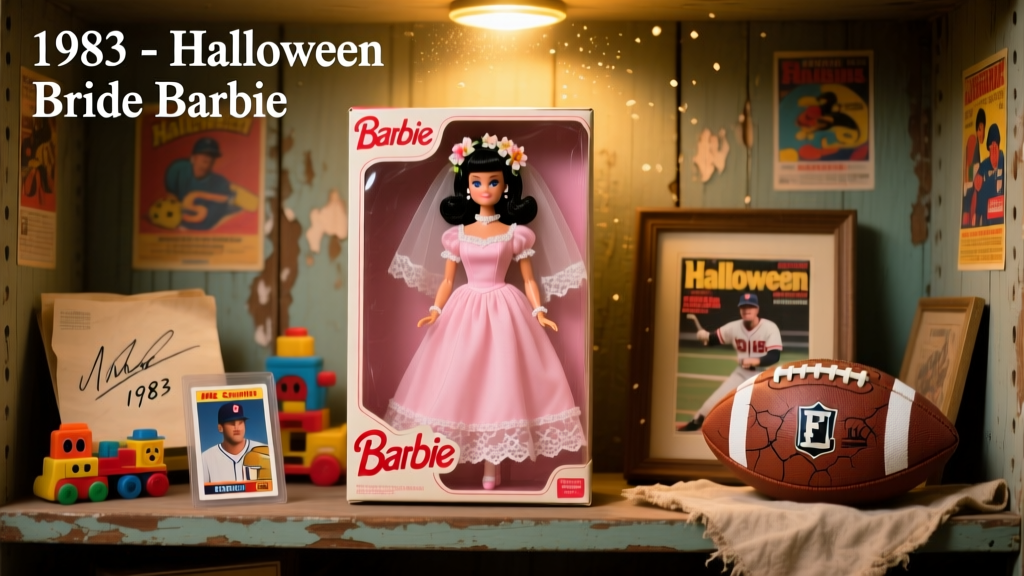
Halloween Costume Bride Barbie Box (1983): Authentication, Market Value, and Collector Insights
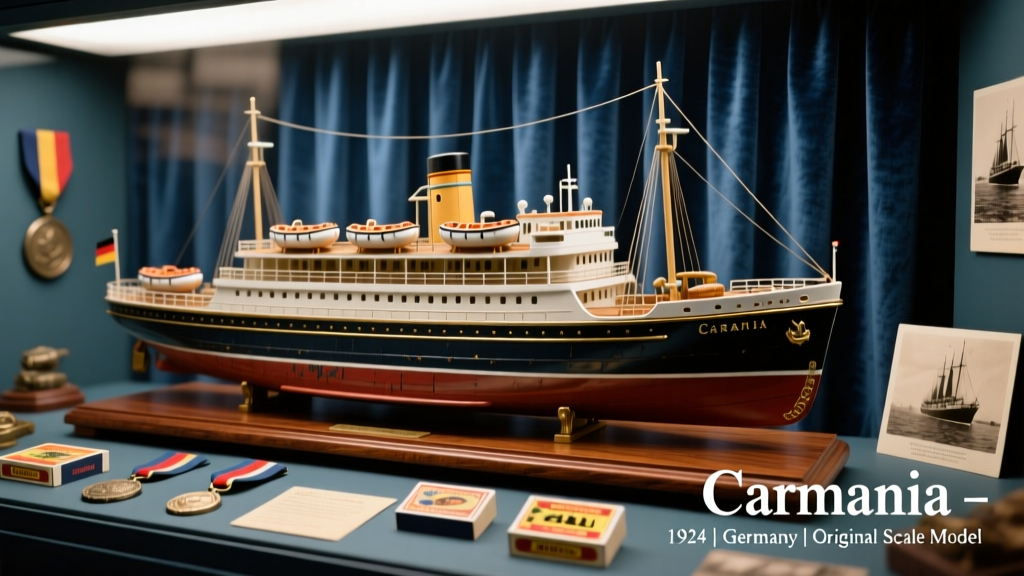
The 1930s German Toy Boat Ocean Liner Carmania: A 24-Inch Masterpiece with Dual Stacks and Six Lifeboats