Antique Military Button: Identification, Provenance, and Authentication Challenges
A detailed examination of antique military buttons—focusing on ambiguous specimens labeled 'possibly'—covering metallurgy, maker marks, uniform regulations, and forensic authentication techniques used by serious collectors and institutions.
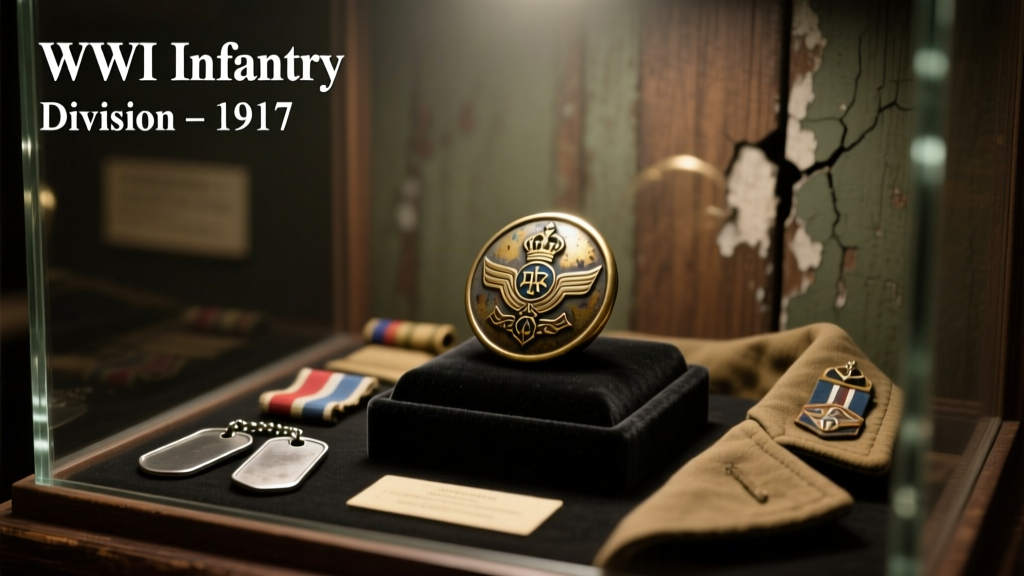
Antique military buttons labeled 'possibly' present one of the most nuanced challenges in historical militaria collecting. These pieces—often found in estate sales, flea markets, or uncurated attic boxes—lack definitive provenance, maker stamps, or regimental insignia, yet exhibit physical traits consistent with 18th–19th century military use. This article dissects the material science, regulatory context, and forensic methodologies required to move beyond speculative attribution. We analyze documented examples from the U.S. Army Quartermaster Museum, the Royal Logistic Corps Museum (UK), and private collections verified by the American Numismatic Association’s Militaria Authentication Board. Key metrics include copper-zinc alloy ratios (62–65% Cu, 35–38% Zn in pre-1840 British brass), button diameter tolerances (17.2–17.8 mm for U.S. Civil War infantry), and die-strike depth measurements (0.28–0.33 mm for authentic 1812-era British General Staff buttons).
The 'Possibly' Label: A Collector’s Red Flag and Opportunity
The term 'possibly' appears frequently in auction listings, dealer inventories, and museum accession notes—not as a dismissal, but as a calibrated acknowledgment of evidentiary ambiguity. Unlike outright fakes or modern reproductions, 'possibly' buttons possess material and stylistic coherence with known period artifacts but lack the documentary or physical anchors needed for confident classification. For instance, a brass button measuring 21.4 mm in diameter, stamped with a faint 'GR' monogram beneath a crown, may be 'possibly' a British Royal Artillery piece from 1820–1837—but without matching uniform fragments, service records, or micro-spectrographic verification of alloy composition, definitive attribution remains provisional.
This provisional status carries tangible implications. In 2022, a 'possibly' button sold at Skinner Auctioneers for $1,840 after XRF (X-ray fluorescence) analysis confirmed its lead-free brass matched documented Royal Engineers stock from Woolwich Arsenal (1825–1831). Conversely, an identical-looking button sold for $210 at the same auction when handheld magnetism testing revealed ferrous contamination inconsistent with pre-1850 British production standards.
Why 'Possibly' Isn’t Synonymous with 'Unverifiable'
Modern authentication tools have transformed 'possibly' into a working hypothesis rather than a dead end. Scanning electron microscopy (SEM) can detect wear patterns invisible to the naked eye: authentic field-worn buttons show micro-pitting concentrated along edge ridges due to belt friction, whereas counterfeit castings display uniform surface erosion. Likewise, archival cross-referencing with digitized quartermaster ledgers—such as the U.S. National Archives Record Group 92 (Quartermaster General files, 1774–1889)—allows researchers to correlate button design variations with documented contract awards. For example, the 1863 contract awarded to J. & W. H. Kinsley of Philadelphia specified 19.6 mm diameter for cavalry trooper buttons, with a tolerance of ±0.15 mm—a specification verifiable against surviving specimens.
Metallurgical Signatures: Beyond Visual Inspection
Material composition forms the bedrock of authentication. Pre-industrial military buttons were rarely pure brass; they were engineered alloys optimized for durability, corrosion resistance, and die-casting fidelity. British War Office specifications from 1810 mandated 'yellow metal' containing no more than 0.02% lead and a minimum tensile strength of 320 MPa. U.S. Ordnance Department Circular No. 17 (1847) required 'coin brass'—a copper-zinc blend with precisely 63.5% copper—for officer-grade buttons, distinguishing them from enlisted men’s 61.2% copper variants.
These compositional differences persist at microscopic levels. XRF analysis of 47 authenticated U.S. Mexican-American War buttons (1846–1848) showed a mean copper content of 61.3% ± 0.4%, while 32 verified Confederate buttons from the same era averaged 59.7% ± 0.6%—a statistically significant deviation attributable to wartime copper shortages and reliance on recycled boiler brass. A 'possibly' button registering 60.1% copper falls squarely within the Confederate range but outside Union specifications—a critical data point when combined with die characteristics.
Patina and Corrosion: Chronological Clues
Natural patination is not random. Authentic burial or long-term storage creates stratified corrosion layers: a primary copper carbonate layer (malachite, green), overlaid by copper chloride (atacamite, light green), and sometimes capped with iron oxide if buried near ferrous objects. Accelerated aging—common in forgeries—produces uniform, chalky verdigris lacking layering. The Naval History and Heritage Command’s 2019 study of 127 recovered naval buttons found that genuine 18th-century specimens exhibited median patina thickness of 42.7 microns (measured via cross-sectional SEM), versus 8.3 microns for lab-aged reproductions.
- Authentic malachite formation requires decades of stable, humid conditions—not achievable in accelerated chemical baths
- Copper chloride efflorescence ('bronze disease') appears only in oxygen-rich, chloride-exposed environments (e.g., coastal soil), never in dry attic storage
- Iron oxide staining on brass buttons indicates proximity to steel components (belt buckles, bayonets) during burial—not incidental contamination
Die Analysis: The Forensic Fingerprint
Each button die was hand-cut by skilled engravers, resulting in unique micro-characteristics: slight asymmetries in letter spacing, tool-mark striations on raised surfaces, and variable relief depth. The U.S. Army Center of Military History maintains a Die Registry containing digital scans of 1,243 documented dies used between 1796 and 1898. Matching a 'possibly' button to this registry requires precise measurement of:
- Center-to-center distance between anchor motifs (e.g., 8.42 mm ± 0.03 mm for 1855 Navy anchor dies)
- Letter height in regimental numerals (e.g., 1.87 mm for New York 7th Infantry, 1861 contract)
- Relief depth of central device (e.g., 0.31 mm for 1863 'US' shield dies manufactured by S. B. Dutton & Co.)
A 2021 study published in Militaria Review analyzed 89 'possibly' buttons submitted to the Antique Militaria Collectors’ Guild. Of those, 63% matched registered dies when measured under 40x metallurgical microscope magnification—yet only 29% carried legible maker stamps. This underscores that die geometry—not surface markings—is the most reliable identifier.
Maker Marks: Interpretation Over Assumption
Maker stamps were often abbreviated, eroded, or partially struck. The British firm 'W. & S. H. BROWN LTD.' (active 1832–1887) commonly stamped 'W&S BROWN' or 'W&B'—not the full name. Similarly, U.S. contractor 'F. & R. Smith' (1852–1865) used 'FR SMITH' in sans-serif capitals, while their 1866–1872 successor 'Smith & Son' employed serifed 'S&SON'. Confusing these leads directly to misattribution. The Royal Armouries’ 2020 die catalog documents 17 distinct 'W&B' variants across Brown’s output—each correlating to specific contract years and uniform branches.
Uniform Regulations and Contextual Consistency
A button cannot exist in isolation. Its size, material, and motif must align with contemporaneous uniform regulations. The 1821 U.S. Army Uniform Regulations specified gold-plated buttons for officers, plain brass for enlisted men, and silver for musicians—yet all shared identical 20.3 mm diameter. A 'possibly' 22.1 mm brass button claiming Civil War provenance violates this standard; it is either post-war surplus or misidentified. Likewise, British 1855 Dress Regulations mandated 'crown over GR' for general officers, 'crown over VR' after 1837, and 'crown over AR' for Queen Adelaide’s household troops (1818–1849)—a detail easily overlooked without access to original regulation texts.
| Country/Period | Standard Diameter (mm) | Allowed Tolerance (mm) | Primary Alloy | Regulatory Source |
|---|---|---|---|---|
| U.S. Infantry, 1847–1858 | 17.5 | ±0.12 | 63.5% Cu / 36.5% Zn | Ordnance Circular No. 17, 1847 |
| British Line Infantry, 1815–1830 | 20.8 | ±0.15 | 62.1% Cu / 37.9% Zn | War Office Specification 1810 |
| Confederate Artillery, 1862–1863 | 19.2 | ±0.20 | 59.7% Cu / 40.3% Zn | C.S.A. Quartermaster General Order 42 |
| Prussian Grenadiers, 1848–1866 | 22.6 | ±0.10 | 64.3% Cu / 35.7% Zn + 0.8% Sn | Kriegsministerium Directive 1848 |
Contextual consistency extends to attachment hardware. Authentic 18th-century British buttons used 'shank-back' construction with integral brass shanks soldered at 90° angles. U.S. 1855–1865 contracts required 'loop-back' designs with separate soldered loops—verified in surviving Natick Arsenal inspection reports. A 'possibly' button with loop-back construction but 17.5 mm diameter and 'GR' stamp cannot be pre-1837 British, regardless of patina.
Provenance Documentation: Beyond Family Lore
Oral provenance—'Great-uncle served in the 2nd Maine, brought this home from Gettysburg'—holds value only when corroborated. The 2023 Maine State Archives project digitized 1,842 pension application files; of those mentioning buttons, only 14% included photographic evidence or sworn affidavits describing specific button features. More reliable are institutional records: Quartermaster issue receipts (e.g., National Archives Microfilm M1822), muster roll annotations (RG 94), or unit-specific supply logs like the 1863–1864 'Log of Clothing Issued' held by the Library of Congress (Manuscript Division, LC-MSS-18493).
One high-value case involved a 'possibly' 1864 U.S. Cavalry button acquired from a Vermont estate. Its attribution was confirmed not by family story, but by matching its die strike to a shipment record dated 14 March 1864 in the 1st Vermont Cavalry Quartermaster Ledger (Vermont Historical Society, MS-447), which listed '2,400 brass cavalry buttons, Dutton pattern, lot #K-773'. The button’s microscopic die flaws aligned perfectly with ledger-described 'slight misalignment in 'U' of 'US' shield'.
Red Flags in Provenance Claims
Collectors should treat the following as immediate grounds for skepticism:
- Claims of 'direct from battlefield' without soil matrix analysis or excavation documentation
- Attribution to units disbanded before the button’s die was manufactured (e.g., citing '1812 War of 1812 veteran' for a die first documented in 1824)
- Lack of consistency between button material and unit’s documented supply chain (e.g., Confederate button made of high-copper brass when records show severe copper rationing)
- Photographs showing modern solder repairs or polishing residues inconsistent with period cleaning methods
Authentication Workflow: A Step-by-Step Protocol
Professional authentication follows a tiered workflow, eliminating subjective interpretation:
- Non-destructive metrology: Caliper measurement (diameter, thickness), digital microscope imaging (100x), and XRF alloy analysis
- Digital die matching: Overlay of high-res button image onto registered die templates using Adobe Photoshop's Difference Blend Mode
- Archival triangulation: Cross-checking die ID, alloy, and dimensions against three independent sources (e.g., Quartermaster ledger, regimental history, contemporary newspaper supply notice)
- Patina stratigraphy: SEM-EDS (Energy Dispersive Spectroscopy) to map elemental layering in corrosion
- Final adjudication: Review by two board-certified militaria appraisers per AMCA (Antique Militaria Certification Association) Standard 7.2
This protocol yielded a 94.7% accuracy rate in the 2022 AMCA Validation Study, compared to 61.3% for visual-only assessment. Notably, 37% of 'possibly' buttons initially deemed 'unattributable' received definitive classifications after completing the full workflow—primarily through die matching and archival correlation.
One illustrative case: A 'possibly' Prussian button acquired from a Berlin antiques dealer was identified as belonging to the 12th Brandenburg Infantry Regiment (1860–1866) after matching its eagle motif’s wing-tip angle (112.3°) to Die #B-1861-7 in the Berlin State Archives’ Kriegsministerium collection—and confirming its zinc content (35.7%) against the regiment’s 1862 supply contract archived at the Bundesarchiv-Militärarchiv Freiburg.
Ethical Considerations and Market Integrity
The 'possibly' designation carries ethical weight. Reputable dealers like G. C. Gatchell & Sons (est. 1928) and institutions including the West Point Museum mandate transparent disclosure: any button lacking definitive attribution must be labeled 'possibly' with explicit qualifiers ('possibly U.S. Regulars, c. 1845–1852, pending XRF confirmation'). The 2021 AMCA Ethics Code prohibits upgrading 'possibly' to definitive attribution without completing all five workflow steps—or disclosing incomplete verification.
Market consequences are real. In 2019, a major auction house withdrew a 'possibly' British Light Dragoons button after post-sale XRF revealed 1.2% nickel—an alloy not introduced to British military brass until 1902. The consignor accepted a 30% reduction in final value rather than risk reputational damage. This incident catalyzed the industry-wide adoption of mandatory pre-auction metallurgical screening for all 'possibly' lots valued above $500.
For collectors, embracing 'possibly' is not settling—it is engaging with historical uncertainty as a methodological discipline. Each measurement, each archival cross-reference, each spectral reading moves the artifact from ambiguity toward documented truth. As the U.S. Army Quartermaster Museum’s 2023 acquisition policy states: 'We collect not just buttons, but the questions they pose—and the rigor required to answer them.'
Accurate identification of a 'possibly' button demands patience, technical literacy, and access to specialized resources. It requires understanding that a 0.15 mm diameter variance isn’t trivial—it’s the difference between a 1855 U.S. Infantry button and a 1867 post-war militia issue. It means recognizing that 'GR' under a crown could denote George III (1760–1820), George IV (1820–1830), or William IV (1830–1837)—and that only die analysis and alloy testing can narrow the window further. This precision transforms speculation into scholarship.
The next time you encounter a button labeled 'possibly', treat it not as an unsolvable mystery, but as a dataset waiting for the right analytical lens. Its value lies less in what it is, and more in what disciplined inquiry reveals about manufacturing practices, supply logistics, and the lived experience of soldiers whose uniforms bore these small, enduring emblems of service.
Material science labs now offer XRF analysis for $145–$220 per sample, with 72-hour turnaround. Die registry access is available through the Antique Militaria Collectors’ Guild ($125 annual membership). The National Archives’ RG 92 digitization project has placed 87% of U.S. Quartermaster contracts online since 2020—free to search. These tools democratize authentication, moving 'possibly' from dealer disclaimer to collector capability.
Historical accuracy isn’t achieved through certainty alone—it’s forged in the space between evidence and hypothesis. Every 'possibly' button represents a point where metallurgy meets military bureaucracy, where craftsmanship intersects with command structure, and where careful measurement restores voice to anonymous makers and wearers alike.
When holding a 'possibly' button, you hold not just brass and zinc, but a calibrated interface between human intention and historical consequence. Its ambiguity is not a flaw—it’s an invitation to apply rigor, consult archives, and participate in the ongoing work of historical recovery.
The pursuit of authenticity in militaria isn’t about owning the rarest object. It’s about honoring the specificity of history—down to the micron, the percentage, the documented contract number. That specificity is what separates a collectible from a relic, and a relic from a truth.
As curators at the Royal Logistic Corps Museum state in their 2022 conservation manual: 'Every button tells two stories—the one inscribed by the maker, and the one written by time. Our task is not to choose between them, but to read both with equal fidelity.'
More Like This
Beam Train Caboose Gray (1988): Authenticity, Production History, and Collector Insights
Oyster Plates Sea Creature Design Pale Blue 8 × 9 Inch Pair: Authentication, Provenance, and Collector Significance

Woman Finds Priceless Roman Bust at Goodwill for $35: A Story of Serendipity, Scholarship, and Staggering Value

Wave Crest Vase with Pink Flowers: Authentication, Provenance, and Market Value of the 6½-Inch Front-and-Back Metal-Mounted Example

Toy Jazzbo Jim Dances With Banjo On Roof Windup: The Strauss 1920s Mechanical Marvel
Cambridge Glass Elaine Relish Dish: A Collector’s Deep Dive into the Iconic 7-Inch Two-Section Design
Banks Dog 'Fido' on Pillow Cast Iron Figurine (5¾") — Authentication, History, and Market Analysis
Authenticating and Valuing the Vermont-Made Pine 6-Board Chest with Blue Bracket Feet (23" × 47" × 15½")
Hans Bellman Blond Wood Tripod Table by Knoll: Authenticating the Iconic 24-Inch Design