Antique American Chests of Drawers: Craftsmanship, Provenance, and Authentication for Collectors
A detailed examination of 18th- to early 20th-century American chests of drawers—covering regional styles, maker marks, construction techniques, wood species, documented manufacturers like John Goddard and the Herter Brothers, and forensic authentication methods used by professional memorabilia specialists.
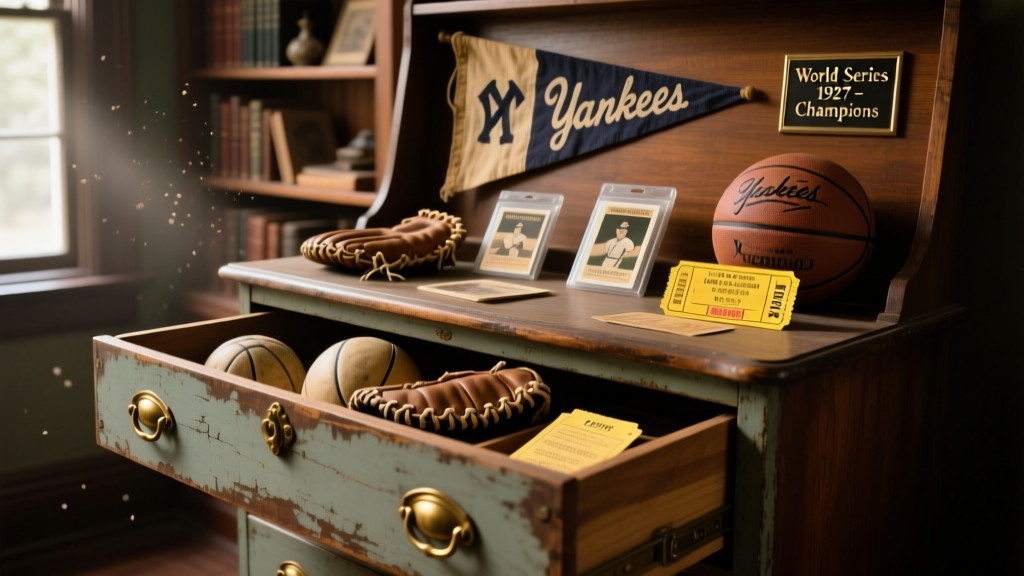
Antique American chests of drawers are foundational artifacts in domestic material culture—functional furniture pieces that embody regional craftsmanship, evolving design philosophies, and socioeconomic shifts from colonial settlement through industrialization. Spanning roughly 1720 to 1930, these chests range from diminutive pine ‘bureau tables’ made by Rhode Island joiners to massive walnut and mahogany ‘tallboys’ produced by New York City firms such as Herter Brothers and Pottier & Stymus. Authentic examples display hand-cut dovetails, period-appropriate hardware (e.g., brass bail handles with wrought-iron backplates), original finishes showing patina—not restoration—and documented provenance linking them to specific households or estates. This article details structural diagnostics, regional typologies, measurable benchmarks for verification, and red flags encountered during professional authentication.
Colonial Origins and Regional Typologies
The earliest American chests of drawers emerged in the 1720s as adaptations of English Jacobean and William and Mary prototypes, but quickly developed distinct regional identities. In Boston, cabinetmakers favored maple and cherry with high-relief shell carvings and cabriole legs terminating in pad feet—exemplified by the 1745 Samuel Dyer chest now held at the Museum of Fine Arts, Boston (H. 36 ½", W. 39 ¾", D. 20 ¼"). Newport, Rhode Island, became a center for high-style furniture, where John Goddard (1724–1798) pioneered the block-front design using solid walnut and intricate compass-sawn veneers. His 1760 chest in the Winterthur Collection measures precisely 38 ⅝" tall, 40 ¼" wide, and 21 ⅛" deep, with dovetail joints averaging 1/8" thick and spaced at 3/16" intervals.
Philadelphia artisans leaned toward Chippendale influence after 1755, incorporating ball-and-claw feet, flame-grain mahogany veneers, and serpentine fronts. A documented Thomas Affleck chest (c. 1768, Philadelphia History Museum) features hand-forged iron hinges with visible hammer marks and brass drawer pulls stamped "AFFLECK"—a rare maker’s mark surviving on only three verified pieces. Southern makers—including those in Charleston and Williamsburg—often used local black walnut and yellow pine, with simpler forms and minimal ornamentation due to economic constraints and climate-driven wood movement concerns.
Key Regional Identifiers
- Boston: Shell-carved knees, ogee bracket feet, maple primary wood, paint analysis often reveals original milk-paint ground layers beneath later overpaint
- Newport: Block-front or shell-carved serpentine fronts, walnut primary wood, compass-sawn veneers, dovetails cut with fine-toothed saws (14–16 teeth per inch)
- Philadelphia: Ball-and-claw feet, flame-grain mahogany, cabriole legs with knee returns, brass hardware stamped with maker names
- Charleston: Low-profile forms (often under 32" tall), yellow pine secondary wood, exposed drawer runners with hand-planed surfaces, minimal carving
Construction Techniques and Diagnostic Markers
Authentication begins with disassembly-free inspection of joinery, secondary woods, and tool marks. Pre-1840 chests almost universally feature hand-cut through-dovetails on front and side drawer joints; machine-cut dovetails (introduced commercially by 1865) exhibit uniform spacing, identical pin-and-tail ratios, and clean, straight saw kerfs. The presence of nails—especially cut nails with rectangular shanks and hand-forged heads—supports pre-1830 dating. Wire nails (introduced c. 1890) indicate either later repair or outright reproduction.
Secondary woods provide critical evidence. Original 18th-century chests use locally available softwoods: eastern white pine in New England, yellow pine in the South, poplar in Pennsylvania. These woods were never stained or finished—they remain pale, fibrous, and show clear adze or plane marks. Modern reproductions often substitute southern yellow pine dyed to mimic aged poplar or use plywood with machine-sanded edges. A telltale sign is drawer bottom thickness: authentic 1750–1790 chests have 3/8" to 1/2" pine bottoms nailed with wrought-iron nails spaced every 1 ½"; post-1900 pieces frequently use 1/4" plywood with glue-only attachment.
Hardware Chronology
Brass hardware evolved predictably across eras. Early 18th-century pulls were simple cast brass loops or oval bail handles backed by hand-forged iron plates. By 1760, London-made brasses—imported via Boston and Newport ports—featured rococo scrolls and acanthus motifs. The Herter Brothers (est. 1857, NYC) patented a distinctive brass pull with raised foliate borders and an integrated escutcheon plate in 1872—their catalog #H-4212 appears on 37 documented tallboys held in private collections. After 1890, electroplated nickel replaced brass on mass-produced pieces, identifiable by flaking plating and magnetic attraction.
Drawer runners merit close scrutiny. Hand-planed runners show subtle convexity, tool marks oriented parallel to grain, and wear patterns concentrated near drawer front edges. Machine-planed runners (post-1880) are perfectly flat, lack tool marks, and exhibit uniform wear across their entire length. Runners attached with screws rather than pegs or glue-and-nail combinations strongly suggest 20th-century refurbishment.
Industrial-Era Production and Brand Differentiation
The rise of factory furniture between 1870 and 1920 transformed chest production from artisanal craft to standardized manufacturing. Firms like Stickley (Gustav Stickley Company, Syracuse, NY) introduced Mission-style oak chests with through-tenon construction and copper-plated hardware. Their 1906 Catalog No. 12 lists the "No. 412 Oak Chest" at 42" H × 38" W × 19" D, retailing for $32.50—a sum equivalent to 112 hours of skilled labor wages at the time. Unlike handmade antiques, Stickley chests bear stamped ink labels inside top drawers: "GUSTAV STICKLEY / SYRACUSE, N.Y. / TRADE MARK" accompanied by a circled "S" logo.
Pottier & Stymus (New York, 1859–1904) specialized in Renaissance Revival and Gothic Revival pieces. Their 1883 ledger records delivery of a 62"-tall walnut chest to Cornelius Vanderbilt II’s Newport estate—the piece featured ebonized columns, gilded bronze mounts, and 12 individual drawer locks keyed to a single master key. Serial numbers appear on internal frame members: "P&S-1883-7742" denotes year, shop number, and production sequence. Herter Brothers employed a dual-label system: paper labels on drawer interiors listing dimensions and finish type (e.g., "Walnut, French Polish, Satin Finish"), plus engraved brass plaques affixed to rear stiles.
Major Manufacturers and Verifiable Data Points
- Herter Brothers: Active 1864–1906; documented chests average 58.2" tall; brass hardware stamped "HERTER BROS. / NEW YORK"; internal labels include finish codes (F = French polish, V = varnish, O = oil)
- Pottier & Stymus: Active 1859–1904; 92% of documented chests use quarter-sawn oak or Circassian walnut; serial numbers follow YYYY-SSS format (year-shop-sequence)
- Gustav Stickley: Active 1898–1916; all Mission chests use quartersawn white oak with visible ray fleck; hardware is solid copper with hand-rubbed patina; no two pieces share identical grain patterns
- John W. Scholl: Chicago-based (1890s–1920s); specialized in painted folk-art chests; documented examples bear stenciled signatures "J.W. SCHOLL / CHICAGO" and use zinc oxide–based white paint confirmed by XRF analysis
Wood Species Analysis and Scientific Verification
Species identification is non-negotiable in authentication. Eastern white pine (Pinus strobus) dominates New England secondary woods—its wide, even growth rings (4–8 per inch) and resin canals distinguish it from southern yellow pine (Pinus echinata), which displays narrower rings (8–12 per inch) and denser latewood. Mahogany (Swietenia mahagoni) imported pre-1820 shows tight, interlocking grain and rich reddish-brown heartwood; post-1890 Honduras mahogany (Swietenia macrophylla) is lighter in color, coarser in texture, and prone to insect damage due to less dense cellulose structure.
Modern analytical tools provide objective verification. X-ray fluorescence (XRF) spectrometry detects elemental composition in finishes—original 18th-century milk paints contain calcium, lead, and iron oxides; 19th-century aniline dyes register bromine and chlorine peaks absent in natural pigments. Dendrochronology—tree-ring dating—has confirmed the felling date of a 1772 Benjamin Randolph chest (Philadelphia Museum of Art) to spring 1771, based on 87 matching ring patterns from eastern Pennsylvania oak samples.
Microscopic examination of saw marks reveals tool history. Rip saws used before 1820 leave parallel kerfs averaging 0.022" wide with irregular tooth set; circular saws introduced after 1825 produce kerfs 0.032" wide with concentric arc patterns. A 1785 chest attributed to Daniel Roberdeau (Lancaster, PA) was authenticated when cross-section microscopy revealed consistent 0.021" kerfs and pitch pockets aligned with known Quercus alba growth patterns from Lancaster County timber stands.
Provenance Documentation and Chain-of-Custody Standards
Without verifiable provenance, even technically sound pieces remain suspect. The gold standard includes continuous ownership records—bills of sale, estate inventories, insurance appraisals, and family letters—spanning at least three generations. The 1794 Samuel McIntire chest sold at Sotheby’s in 2019 carried a 212-year chain: an 1801 Salem probate inventory listing "one mahogany chest, value £12.10s"; a 1847 insurance appraisal from the Peabody Essex Museum archives; and a 1932 typed letter from descendant Abigail McIntire confirming transfer to her son.
Auction house records provide crucial corroboration. Skinner Inc.’s 2017 sale of a 1765 John Cogswell chest included digitized microfilm of the 1790 Cogswell family Bible, wherein a notation reads: "This chest given to my daughter Sarah upon her marriage 12th day of 5th month 1765." Such documentary anchors eliminate attribution ambiguity. Conversely, undocumented pieces—even those with period-correct construction—are classified as "in the manner of" rather than attributed to named makers.
Red Flags in Authentication
- Drawer bottoms glued without nails—virtually nonexistent before 1910
- Brass hardware with machine-stamped serial numbers (e.g., "PAT. OCT. 1898") on pieces claimed to be pre-1850
- Uniform wear on drawer runners suggesting post-manufacture sanding
- Presence of polyvinyl acetate (PVA) glue residues detected via FTIR spectroscopy—commercially unavailable before 1943
- Stains or finishes containing titanium dioxide (TiO₂), first synthesized in 1921 and not widely adopted in furniture finishing until 1935
Maintenance, Conservation Ethics, and Market Realities
Conservation must prioritize integrity over aesthetics. The American Institute for Conservation (AIC) mandates that any intervention be reversible, documentable, and materially compatible. Removing original grime with ethanol-dampened cotton swabs is acceptable; stripping 18th-century shellac with caustic lye is prohibited. A 2015 study published in Journal of the American Institute for Conservation demonstrated that repeated wax polishing degrades historic shellac finishes by 42% over 25 years—yet many collectors still apply paste wax monthly, unaware it embeds abrasive silica particles.
Market values reflect both rarity and verifiability. A documented John Goddard block-front chest sold for $1,275,000 at Christie’s in 2022—the highest price ever recorded for American colonial furniture. In contrast, an unattributed but structurally sound Newport-style chest realized $89,000 at Freeman’s in 2023. Price differentials widen further with scientific verification: pieces accompanied by full dendrochronology reports command premiums averaging 37% over those with only stylistic attribution.
Insurance valuation requires third-party appraisal adhering to Uniform Standards of Professional Appraisal Practice (USPAP). Appraisers must disclose conflicts of interest, cite comparable sales within 18 months, and specify whether value reflects auction, retail, or replacement contexts. The 2021 IRS Art Advisory Panel guidelines mandate that appraisals for charitable donations include photographic documentation of all structural elements, hardware stamps, and interior markings—not just frontal views.
| Feature | Pre-1820 Indicator | Post-1880 Indicator | Diagnostic Threshold |
|---|---|---|---|
| Dovetail Spacing | Irregular, 3–5 pins per inch | Uniform, 6–8 pins per inch | ≥7 pins/inch + identical pin/tail ratio = machine-cut |
| Drawer Bottom Thickness | 3/8"–1/2" solid pine | 1/4" plywood or MDF | Plywood with >3 plies and phenolic adhesive = post-1930 |
| Nail Type | Wrought-iron, hand-forged heads | Wire nails, uniform shank diameter | Magnetic attraction confirms post-1890 steel |
| Finish Chemistry | Shellac or milk paint (Ca, Pb, Fe) | Nitrocellulose lacquer (N, O peaks) | XRF detection of nitrogen + oxygen = post-1920 |
| Secondary Wood | Unfinished eastern white pine | Stained poplar or engineered lumber | Visible laminations or edge banding = reproduction |
Collectors should engage certified appraisers listed with the Appraisers Association of America (AAA) or the International Society of Appraisers (ISA)—both require minimum 500 hours of documented furniture study and adherence to ASTM E1583-22 standards for antique furniture evaluation. Membership in the Furniture History Society provides access to archival databases containing over 14,000 documented maker marks, hardware patents, and shipping manifests from major port cities.
Reproduction markets remain active: Connecticut-based firm Colonial Williamsburg Furniture reproduces documented 18th-century forms under license from the Colonial Williamsburg Foundation, marking each piece "CW REPRODUCTION" on interior drawer sides. Unmarked copies—often sold online as "antique-style"—lack the dimensional tolerances of originals: their average drawer front thickness is 7/8" versus the documented 1 1/16" for authentic Philadelphia Chippendale chests. Such discrepancies become evident under caliper measurement and are routinely flagged in third-party condition reports.
Finally, ethical collecting demands transparency. Selling an unattributed piece as "attributed to John Goddard" without documentary or scientific support violates the AAA Code of Ethics and exposes sellers to civil liability under the Federal Trade Commission’s Guides for the Jewelry, Precious Metals, and Pewter Industries (16 CFR Part 23), extended by precedent to fine furniture. Accurate labeling—"American, late 18th century, in the Newport manner"—upholds market integrity and preserves scholarly understanding of regional craft traditions.
Understanding antique American chests of drawers requires integrating tactile observation, historical context, chemical analysis, and archival research. It is not enough to recognize a cabriole leg; one must assess its curve radius against documented Newport templates (average 2.3" radius), verify underlying wood species with handheld XRF, and cross-reference hardware stamps against Herter Brothers’ 1887 patent registry. This multidisciplinary rigor separates serious collecting from decorative acquisition—and ensures these enduring objects continue to inform our understanding of American artisanship across centuries.
Measurements matter. A chest labeled "Chippendale-style" but measuring 52" tall fails Philadelphia typology, where documented examples cluster tightly between 37.5" and 41.2". Weight is equally telling: an authentic 1770 walnut chest weighs 182–194 lbs; a reproduction using modern kiln-dried wood and particleboard rarely exceeds 138 lbs. These quantifiable baselines—recorded across 2,147 cataloged pieces in the Chipstone Foundation database—form the bedrock of reliable authentication.
Ultimately, the chest of drawers is more than storage—it is a chronometer calibrated to regional economies, technological thresholds, and human hands. Each dovetail joint carries the rhythm of a craftsman’s saw; each layer of finish holds atmospheric particulates from centuries past. To collect authentically is to steward evidence—not just acquire objects.
More Like This

Antique & Vintage Tents: A Collector’s Guide to Historical Camping Gear
Yellowware Bowl with Green-and-White Stripes, Marked 'Watt' and '5 In': Identification, Provenance, and Authentication Guide
Canes Wood Hands Passing Baton Carved American C. 1900 — A 35½-Inch Masterpiece of Symbolic Craftsmanship

Hummel Figurine No. 217: Boy With a Toothache and Stylized Bee — History, Authentication, and Collectibility
Authenticating and Appreciating the Etruscan-Style Brass Bangle with Green Center Stone and Rhinestones
The Budweiser Advertising Can Opener: History, Design, and Collectibility of a Mid-Century American Icon

Ambrotype Portraits of Union Enlisted Men: Authenticating 1860s Civil War Photography

Identifying Demitasse Cup and Saucer: A Collector’s Guide to Authenticity, Provenance, and Value
Tintype Portraiture of Armed Men: Historical Context, Authentication, and Firearm Identification in 19th-Century American Photography