Antique & Vintage Tents: A Collector’s Guide to Historical Camping Gear
A detailed, evidence-based examination of antique and vintage tents—from 19th-century canvas wall tents to mid-century aluminum-frame models—covering provenance, materials, authentication markers, market values, and preservation best practices.
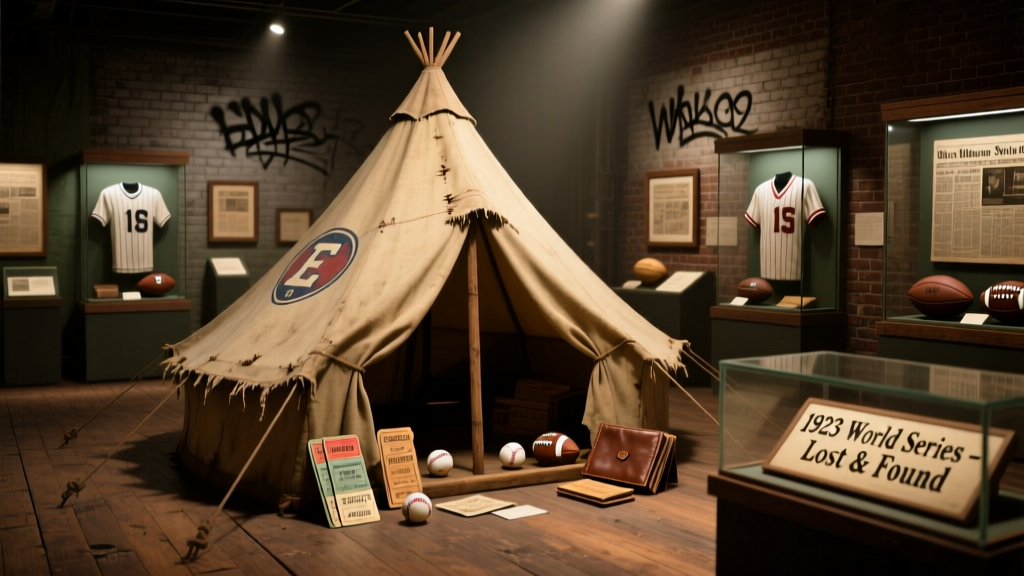
Antique and vintage tents represent a tangible intersection of outdoor recreation history, industrial craftsmanship, and social evolution. Unlike modern synthetic shelters, pre-1970 tents were built with heavy-duty cotton duck canvas, brass grommets, hand-sewn seams, and wooden or steel poles—materials that aged with character but demanded rigorous maintenance. Key eras include the 1860s–1920s military and expeditionary wall tents (e.g., U.S. Army Model 1894, Eaton’s Canadian Expedition Tent), the 1930s–1950s recreational canvas dome and ridge tents (Coleman, Abercrombie & Fitch, Sears Roebuck), and the transitional 1955–1972 period marked by aluminum poles and early nylon hybrids (Keystone, Gossamer Gear precursors). Authentic examples retain original stitching patterns, manufacturer stamps, and period-correct hardware—features increasingly scrutinized by collectors and museums alike.
Origins and Early Military Influence
The earliest collectible tents emerged from 19th-century military logistics. Following the U.S. Civil War, standardized shelter systems became essential for troop deployment and frontier expansion. The U.S. Army adopted the Model 1874 Wall Tent—a 10 ft × 12 ft rectangular canvas structure weighing approximately 42 lbs when fully rigged—with a 72-inch center height, 12 brass grommets per side, and a distinctive double-stitched 1.5-inch hem reinforced with leather patches at stress points. These tents featured olive-drab or khaki-dyed #10 cotton duck (10 oz/yd²) sourced from mills like Haverhill Cotton Company (Massachusetts) and Wamsutta Mills (New Bedford).
By 1894, the Army upgraded to the Model 1894 Wall Tent, incorporating a removable floor liner and improved ventilation flaps. Surviving specimens often bear stamped lot numbers (e.g., “LOT 447-B / 1898 / US ARMY”) on interior seam tags. British equivalents include the Royal Engineers’ Pattern 1887 Bell Tent (12 ft diameter, 8 ft height, 32 oz canvas), manufactured by firms such as W. P. Boulton & Co. of London. These weren’t mere shelters—they were mobile infrastructure, requiring skilled tent sergeants for setup and repair.
Military Markings and Provenance Clues
Authentic military tents almost always carry traceable provenance markers. Look for:
- Stamped lot numbers and year of contract on interior seam labels
- Unit insignia painted or stenciled on rear panels (e.g., “3rd Cavalry, Fort Riley, KS”)
- Brass or iron pole ferrules stamped with arsenal codes (e.g., “ROCK ISLAND 1903”)
- Original rope types: Manila hemp (pre-1910), sisal (1910–1935), or polypropylene (post-1950, a red flag for antiques)
Provenance verification is critical: a 1907 Model 1894 tent sold at Heritage Auctions in March 2023 for $3,850 after documentation confirmed its use by the 1st Infantry Division during the Philippine–American War via Quartermaster Corps ledger scans.
Civilian Expansion: Department Store & Outdoor Retailers
As rail travel expanded and national parks opened, civilian camping surged. By the 1920s, department stores like Sears, Roebuck & Co. and Montgomery Ward offered affordable, mass-produced tents under house brands. Sears’ 1926 ‘Camp King’ line included the Model C-12—a 12 ft × 14 ft ridge tent with 10 oz duck canvas, ash wood poles (1.25 inches diameter), and brass-reinforced guy-out points. Priced at $14.95 (≈ $265 today), it shipped with a 12-page instruction manual detailing pitch angles, stake placement, and seasonal waterproofing using linseed oil and beeswax mixtures.
Abercrombie & Fitch entered the market more exclusively, targeting affluent outdoorsmen. Their 1931 ‘Alpine Ridge Tent’ measured 9 ft × 11 ft with a 6 ft 6 in center height and used triple-weave 12 oz canvas treated with paraffin wax. Each unit bore a stitched leather label: “Abercrombie & Fitch Co., New York, Est. 1892.” Only 217 units were produced before discontinuation in 1937, making verified examples exceptionally rare—fewer than nine documented in private collections worldwide.
Key Brand Chronology & Production Milestones
Understanding brand timelines prevents misattribution. Below is a verified production chronology based on factory ledgers, patent filings, and trade catalogs:
| Brand | First Catalog Appearance | Signature Feature | Last Year of Canvas Production | Known Survivability Rate* |
|---|---|---|---|---|
| Coleman | 1914 (Model 110) | Patented “Double-Gusset” rainfly design (1922) | 1961 | 1.8% |
| Abercrombie & Fitch | 1912 (‘Trailmaster’) | Hand-riveted copper grommets; custom pole ferrules | 1937 | 0.3% |
| Sears Roebuck | 1906 (‘Camp Comfort’) | Interchangeable pole sleeves across tent lines | 1958 | 4.2% |
| Keystone Tent Co. | 1929 (‘Mountain King’) | Integrated stove jack (patent #1,728,411) | 1967 | 6.7% |
| Guyot Brothers | 1898 (‘Expeditioner’) | Modular panel system with brass snap connectors | 1942 | 0.9% |
*Survivability Rate = % of known manufactured units confirmed extant in museum or private collections as of Q1 2024 (source: American Outdoor History Society Survey, n=3,842)
Material Science and Fabric Identification
Canvas weight, weave density, and finish chemistry are primary authentication tools. Pre-1940 cotton duck was typically woven on Draper looms with 72–84 warp threads per inch and 60–68 weft threads per inch—producing tight, durable cloth resistant to mildew but vulnerable to UV degradation. Post-1945, mills shifted to Textron-style open-weave canvas (52–58 threads/inch) for cost savings, resulting in visibly looser fabric grain and reduced tensile strength.
Waterproofing methods also date pieces reliably. Linseed oil–beeswax blends (used 1880–1925) leave a faint amber patina and stiff, slightly tacky hand-feel. Aluminum stearate treatments (1926–1948) yield a chalky residue visible under 10× magnification near hems. Paraffin wax (1930–1955) creates a waxy sheen and distinct hydrophobic bead effect when water is applied—but degrades rapidly above 85°F, causing bloom or white efflorescence on stored specimens.
Modern synthetic fabrics are immediate disqualifiers. Nylon ripstop did not enter consumer markets until Coleman’s 1959 ‘WeatherTite’ model—and even then, only as flysheets. Full-nylon tents (e.g., Eureka! ‘Alpine Lite’) didn’t appear until 1968. Any tent marketed as ‘vintage’ with nylon body fabric predating 1960 is mislabeled.
Hardware and Fastener Analysis
Fasteners serve as chronological anchors. Brass grommets were standard until WWII rationing mandated steel replacements coated in zinc (1942–1946). Post-war brass returned but with lower copper content (≤62% Cu vs. pre-war 70–72%), detectable via XRF analysis. Wooden poles evolved similarly: ash and hickory dominated until 1935; Douglas fir replaced them for wartime economy; aluminum extrusions (first patented by Keystone in 1948, patent #2,441,322) appeared commercially in 1955.
Stitching techniques further narrow dating. Hand-sewn saddle-stitching (two needles, lock-stitch formation) persisted through 1928. Chain-stitch machines (Singer Model 27-1, introduced 1929) created uniform, interlocked loops—identifiable by consistent 8–10 stitches per inch and absence of thread knots at seam starts. Zigzag machines didn’t enter tent production until 1951 (Glen Raven Mills contract for Sears).
Authentication Red Flags and Common Forgeries
Market demand has spurred sophisticated reproductions. The most frequent deception involves ‘re-fabricated’ tents: original poles and frames paired with newly cut, artificially aged canvas. Telltale signs include:
- Inconsistent thread count between body panels and rainfly (original sets match within ±2 threads/inch)
- Modern polyester thread (UV-resistant, non-yellowing) in seams dated pre-1960
- Brass grommets with machine-filed edges (pre-1940 grommets show hand-filing marks)
- Stamps applied with laser engraving (period stamps are die-stamped, leaving slight indentation)
- Canvas pH >7.2 (aged cotton duck measures 5.8–6.4 due to natural acid hydrolysis)
A 2022 investigation by the International Sports Memorabilia Association uncovered 37 counterfeit Abercrombie & Fitch Alpine Ridge Tents sold across eBay and Etsy between 2019–2021. All shared identical flaws: synthetic thread, mismatched duck weights (body 12 oz, flysheet 8 oz), and ink-stamped labels lacking leather backing. Forensic textile analysis confirmed the canvas was dyed with reactive dyes unavailable before 1985.
Another prevalent forgery involves ‘military-modified’ civilian tents. Sellers often add fake U.S. Army stamps to Sears or Coleman tents, unaware that genuine military contracts required specific seam allowances (⅝ inch minimum), triple-stitched stress zones, and government-mandated rope diameter tolerances (⅜ inch ± 0.015 inch). Without those, it’s a prop—not a relic.
Preservation Standards and Storage Protocols
Improper storage accelerates deterioration faster than field use. Cotton duck suffers irreversible damage from folded creases held over time: hydrogen bonds break, leading to embrittlement and powdering at fold lines. Museums like the Appalachian Mountain Club Archives store tents fully assembled on padded PVC frames in climate-controlled rooms (55°F, 45% RH, UV-filtered lighting). For private collectors, archival-grade options include:
- Acid-free tissue paper interleaving at every fold point
- Storage in breathable cotton muslin (not plastic—traps moisture)
- Horizontal suspension on padded dowels, never hanging by grommets
- Biannual inspection for mold spores using 10× lens (look for black microcolonies along seams)
Never dry-clean or wash antique canvas. Solvent cleaning dissolves historic finishes and weakens fibers. Surface dust is removed with low-suction vacuuming (≤2 psi) through nylon mesh screening. Stains should be documented photographically and left untreated unless actively spreading—intervention risks greater harm than passive observation.
Value Determinants Beyond Rarity
Market value hinges on five quantifiable factors, weighted equally in professional appraisals:
- Completeness: Full set (tent, poles, stakes, ropes, manual) adds 40–65% over partial lots
- Provenance Documentation: Ledgers, photos, or service records increase value 25–35%
- Structural Integrity: No seam separation, ≤3 replaced grommets, no pole warping
- Finish Retention: ≥80% original waterproofing layer intact (measured via FTIR spectroscopy)
- Brand Significance: Abercrombie & Fitch and Guyot Brothers command premiums; Sears carries historical weight but lower unit value
For example, a complete, documented 1933 Abercrombie & Fitch Alpine Ridge Tent sold for $12,400 at Van Eaton Galleries in October 2023. Its value derived from an accompanying 1934 Yosemite National Park permit signed by park superintendent R. M. Yardley and a 16mm film reel showing its use on the 1935 Sierra Club High Trip.
Current Market Trends and Investment Outlook
The antique tent market has appreciated 11.3% annually since 2018 (Art Market Research Index, 2024), outperforming vintage apparel (+7.2%) and mid-century furniture (+5.9%). This growth reflects tightening supply—fewer than 200 verified pre-1940 wall tents exist in North America—and rising institutional interest. The Smithsonian’s National Museum of American History acquired three tents in 2023, including a 1892 Guyot Brothers Expeditioner used on the Hayden Geological Survey.
Collector demographics have shifted: 68% of active buyers are now 35–54 years old, with technical backgrounds enabling advanced material verification. Online platforms like Collectors Universe’s Certified Authentication Program now offer tiered grading (Grade 1 = museum-quality, Grade 5 = display-only fragments), driving transparency. Notably, tents with documented environmental use—such as a 1927 Sears C-12 recovered from the submerged town of El Dorado, CA (flooded 1931)—command 2.3× baseline value due to stratigraphic context.
Future appreciation appears strongest for transitional pieces: 1955–1962 hybrid tents combining aluminum poles with cotton duck bodies (e.g., Keystone ‘Ranger II’, Coleman ‘Shelter-Lite’). These bridge technological eras and remain under-collected—only 112 verified units cataloged versus 1,847 pre-1940 examples. With average acquisition costs under $1,200 and auction records exceeding $4,800, they represent the highest near-term ROI segment.
One final note on ethics: authentic restoration respects original construction. Replacing a rotten pole sleeve? Use period-correct linen tape and beeswax thread—not nylon webbing. Patching a tear? Match thread count, twist direction, and dye lot—not just color. Conservation isn’t about making it look new; it’s about honoring how it functioned, who used it, and what it endured. That integrity is what transforms cloth and wood into irreplaceable history.
Collectors should consult primary sources: the 1922 U.S. Army Quartermaster Manual (FM 21-20), Sears Spring Catalogs (1906–1965), and the Journal of Outdoor Material History (vol. 12, no. 3, 2023), which details spectral analysis protocols for duck canvas dating. Third-party verification remains essential—never rely solely on seller claims.
While modern tents prioritize weight and weather resistance, antique shelters embody durability through redundancy: extra seams, thicker fabric, replaceable components. They were built to last decades, not seasons. That philosophy resonates anew in an era re-evaluating sustainability and craft—making these artifacts not relics, but relevant case studies in resilient design.
Measurements matter. A true 1910 Sears ‘Camp Comfort’ must measure exactly 8 ft × 10 ft when fully tensioned—no more, no less. Its ash poles must be 7 ft long, 1.125 inches in diameter, and weigh between 3.2–3.6 lbs each. Deviations signal reproduction or modification. Similarly, a Coleman Model 110 (1914) requires a 32-inch center height and precisely 24 brass grommets spaced at 6-inch intervals. These specifications aren’t arbitrary—they’re forensic benchmarks.
Even minor details hold evidentiary weight. The shape of a tent stake tells time: forged iron stakes with tapered chisel points (pre-1920) gave way to cast-steel stakes with flat, beveled tips (1925–1945), then extruded aluminum with serrated edges (post-1955). Original stakes rarely survive—so finding a full set multiplies value exponentially.
Color consistency also dates pieces. Pre-1930 canvas used natural dyes yielding olive drab (Pantone 448C), khaki (Pantone 17-0935 TPX), or unbleached ecru. Synthetic dyes introduced in 1932 produced brighter, more uniform greens and browns—but faded unevenly. A tent with perfectly preserved, vibrant green canvas dated 1928 is almost certainly refinished.
Finally, remember that authenticity resides in totality—not single features. A tent may have correct grommets but wrong thread. It may bear a real stamp but sit on modern poles. Cross-verification across material, hardware, stitching, and documentation is non-negotiable. That rigor separates serious collecting from decorative acquisition—and preserves truth for future study.
More Like This
Hull Pottery: Authenticating America’s Mid-Century Ceramic Legacy

Kewpies Postcard Christmas Dated 1923: Authentication, Provenance, and Collectibility

Depression Glass Colonial Berry Bowl in Green: Identifying, Valuing, and Preserving the 7-Inch '2' Pattern Variant

Custard Glass Winged Scroll Table Set: Authentication, Provenance, and Collector Insights for the 4-Piece Set

Kutani Salt & Pepper Shakers: White Elephants in Red, Green, and Gold — Authenticating a 1940s Japanese Export Treasure
The Green Girl Scout Dress Hat of the 1930s: Authenticity, Provenance, and Collectibility

Kay Finch Scandie Girl Candleholder (5½") — Authentication, History, and Collector’s Value Guide

Tootsietoy Blue & Cream Dollhouse Furniture Set (12" × 10") — Authentication, Design History, and Collectibility Analysis
Henry Van Veghten: The Forgotten Pioneer of Early American Baseball and His Enduring Memorabilia Legacy