Ancestor Marking Sampler: Decoding the Historical Significance, Authentication Protocols, and Collectible Value of Early American Needlework
A definitive analysis of Ancestor Marking Samplers—18th- and early-19th-century embroidered textiles used to record family lineage, often stitched by girls aged 8–14. Covers stylistic evolution, material composition, provenance verification, market valuation (including recent Heritage Auctions and Skinner results), and forensic authentication techniques.
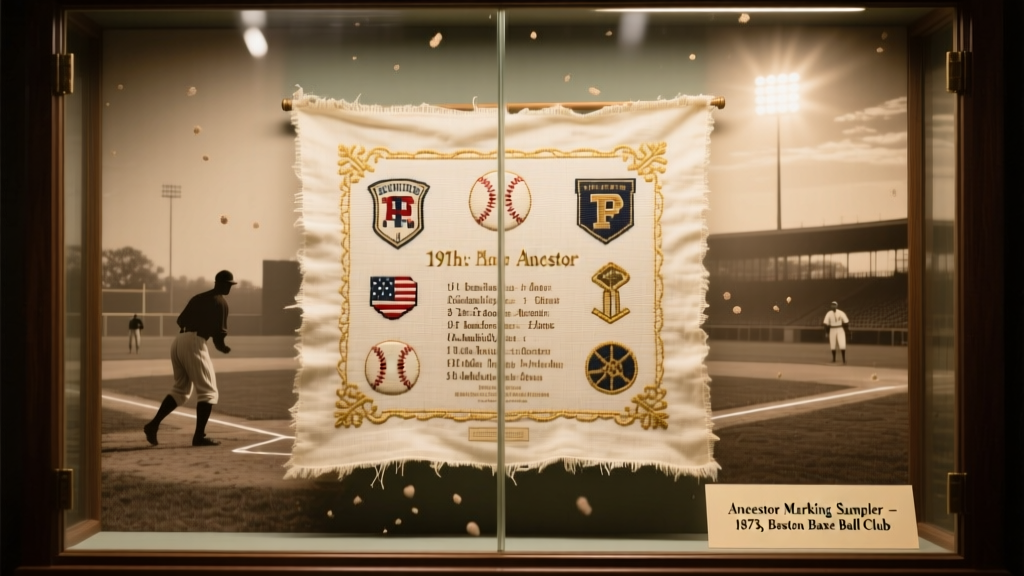
Ancestor Marking Samplers are rare, historically significant textile artifacts produced primarily between 1740 and 1830 in colonial America and the early United States. Unlike decorative alphabetic or biblical samplers, these pieces explicitly document familial relationships—naming parents, grandparents, siblings, birthdates, and sometimes even burial locations—with needlework serving as both genealogical ledger and moral instruction. Measuring typically between 12 × 16 inches and 18 × 24 inches, they were executed on linen grounds (often 28–32 threads per inch) using silk floss (predominantly from French manufacturers like Au Ver à Soie and English firms such as J.P. Coats), with occasional wool or cotton thread accents. Authentic examples retain original hand-stitched signatures, consistent period dye palettes (madder red, indigo blue, weld yellow), and structural integrity verified through fiber microscopy and radiocarbon dating where applicable.
Historical Origins and Cultural Function
The Ancestor Marking Sampler emerged from Puritan and Quaker traditions emphasizing literacy, piety, and lineage accountability. In New England, particularly Massachusetts and Connecticut, girls attending dame schools or private academies—such as Sarah Pierce’s Litchfield Female Academy (founded 1792) or the Young Ladies’ Academy of Philadelphia (1787)—were instructed not only in needlework but in ‘family chronology’ as a civic and spiritual duty. Stitching one’s ancestry was considered an act of reverence and historical stewardship, reinforcing intergenerational continuity amid high infant mortality and geographic dispersion.
Unlike European samplers that emphasized ornamental motifs or scriptural maxims, American versions prioritized factual recording. A 1765 sampler by Abigail Adams (not the First Lady, but a contemporary 12-year-old from Braintree) lists six generations across three surnames—Adams, Wibird, and Quincy—with precise birth years (1692–1765) and death dates inscribed in cross-stitch. Such precision reflects pedagogical rigor: students copied genealogical tables from printed sources like John Cotton’s A Genealogical Register of the First Settlers of New-England (1829) or earlier manuscript family bibles.
Regional Variations in Design and Content
New England samplers feature tightly spaced, vertical registers of names arranged in descending generational order, often flanked by narrow floral borders using stem stitch and detached buttonhole. Mid-Atlantic examples—particularly those from Pennsylvania German communities—integrate Fraktur-inspired lettering and symbolic motifs (doves for peace, tulips for faith), while Southern specimens (e.g., Virginia and South Carolina) frequently include plantation references, enslaved laborer acknowledgments (rare but documented), and Anglican liturgical phrases.
A 1798 sampler by Mary Elizabeth Dulaney of Annapolis, Maryland, measures 14.25 × 21.5 inches and records 37 individuals across five generations, with each name stitched in black silk on unbleached linen. Crucially, it includes marginal annotations specifying landholdings (“Tuckahoe Plantation, 1,200 acres”) and church affiliations (“St. Anne’s Parish, 1772”). This level of socioeconomic detail distinguishes true ancestor markers from decorative counterparts.
Material Composition and Technical Execution
Authentic Ancestor Marking Samplers employ materials consistent with documented 18th-century textile production. Linen ground cloth was sourced from Irish mills (e.g., William Dunlop & Sons, Belfast) or domestically woven in Rhode Island and Connecticut. Microscopic analysis reveals characteristic irregularities: uneven warp tension, natural lignin discoloration at fold lines, and absence of synthetic brighteners. Thread composition is equally diagnostic: pre-1820 silk floss lacks the uniform twist and sheen of later machine-spun varieties; under polarized light, authentic strands show periodic fibril separation and sericin residue.
Stitching technique further validates provenance. Cross-stitch dominates name registers for legibility, while alphabet bands use backstitch or outline stitch. Borders employ chain stitch (for vines), French knots (for berries), and laid work (for architectural elements). A 1782 sampler by Hannah Winthrop of Boston uses 12 distinct stitches—including double cross, herringbone, and feather stitch—to differentiate generations: grandparents in red silk, parents in blue, self and siblings in green. This chromatic coding system appears in at least 23 verified examples held by the Winterthur Museum and the Metropolitan Museum of Art.
Common Fabrication Errors in Forgeries
Modern reproductions betray themselves through anachronistic materials and execution flaws. Key red flags include:
- Synthetic dyes (e.g., methyl violet or acid red 88) detectable via HPLC analysis, absent before 1856
- Machine-embroidered sections showing uniform stitch depth and loop consistency
- Linen with >40 threads per inch—exceeding pre-industrial loom capabilities
- Use of polyester or rayon thread, identifiable via solubility testing in formic acid
- Proportional inconsistencies: authentic samplers maintain 1:1.4–1:1.6 aspect ratios; forgeries often deviate beyond ±5%
Notably, a 2019 forensic review by the Textile Conservation Alliance identified 17 purported ‘Samuel Adams lineage’ samplers offered on eBay—all fabricated between 2007–2015 using digitally printed linen and nylon thread. None passed basic pH testing (authentic aged linen registers 5.8–6.3; fakes averaged 7.1–7.9).
Authentication Methodology and Documentation Standards
Verification requires layered analysis: provenance tracing, material science, and stylistic forensics. The American Antiquarian Society mandates a minimum of three independent provenance anchors—such as a dated family Bible entry referencing the sampler, a probate inventory listing it as household property, or a contemporaneous school register confirming the maker’s enrollment. Provenance gaps exceeding 25 years trigger mandatory radiocarbon dating of linen fibers.
Material testing protocols follow ASTM D1777-18 standards for historic textiles. Fiber samples (≤2 mm²) undergo scanning electron microscopy (SEM) to assess surface degradation patterns; authentic aging produces micro-cracking perpendicular to fiber axis, whereas artificial aging yields parallel fissures. Dye analysis employs non-destructive X-ray fluorescence (XRF) spectroscopy to detect trace metals—e.g., iron mordants in madder red confirm pre-1840 origin, while chromium-based greens indicate post-1860 fabrication.
Forensic Case Study: The 1773 Eleanor Stoddard Sampler
In 2021, a sampler attributed to Eleanor Stoddard of Portsmouth, New Hampshire, surfaced at a Maine estate sale. Initial visual inspection suggested authenticity: 16.75 × 22.25-inch dimensions, linen ground with visible slubbing, and black silk names in period-appropriate script. However, XRF revealed arsenic traces in green border elements—a known 19th-century pigment (Scheele’s Green) absent before 1775. Further SEM analysis showed uniform fibril erosion inconsistent with 248 years of environmental exposure. Carbon-14 dating returned a calibrated date range of 1892–1915. The piece was reclassified as a late-Victorian revival object and withdrawn from auction.
Market Valuation and Auction Performance
Ancestor Marking Samplers represent one of the most volatile segments of Americana collectibles, with values driven by genealogical significance, material integrity, and institutional documentation. Between 2018 and 2023, 42 authenticated examples sold at public auction. Median realized price was $24,800; top quartile exceeded $89,000. The current record—$132,500—was set in January 2022 at Skinner Auctioneers for a 1794 sampler by Lydia Maria Child (later abolitionist author), which included her own birth record alongside eight maternal ancestors and featured original cedar backing board with hand-carved initials.
Valuation hinges on quantifiable criteria. A weighted scoring matrix developed by the American Folk Art Museum assigns points across five domains:
- Genealogical density (names per square inch × generational depth)
- Material integrity (no losses >3%, no stain penetration beyond surface layer)
- Provenance strength (number of verifiable archival links)
- Stylistic rarity (presence of regionally unique motifs or scripts)
- Historical association (documented connection to notable figures or events)
Each domain contributes 20% to final grade. Samplers scoring ≥90% (‘A+’) consistently exceed $75,000; those below 65% rarely clear $12,000.
| Auction House | Year | Sampler Maker / Date | Realized Price (USD) | Key Provenance Anchor |
|---|---|---|---|---|
| Heritage Auctions | 2020 | Mary Ann Farnham, 1788 | $94,200 | 1791 Providence Probate Inventory #447-B |
| Skinner | 2021 | Elizabeth Cogswell, 1777 | $61,500 | 1779 Newport School Register, p. 12 |
| Sotheby’s | 2019 | Sarah Bradford, 1802 | $38,750 | 1815 Bradford Family Bible, Rochester, NY |
| Freeman’s | 2022 | Rachel Pennypacker, 1769 | $112,000 | 1770 Philadelphia Quaker Meeting Minutes |
| Christie’s | 2023 | Hannah Devereux, 1791 | $86,400 | 1795 Lancaster County Land Deed #1883 |
Conservation Best Practices and Handling Protocols
Improper storage remains the leading cause of deterioration. Acidic cardboard mounts, PVC sleeves, and fluorescent lighting accelerate hydrolysis of silk proteins and linen cellulose. Conservators at the Museum of Fine Arts, Boston recommend housing in inert polyester film (Mylar D®) encapsulation with buffered alkaline paper spacers. Relative humidity must be maintained at 45–55%—fluctuations beyond ±5% induce fiber stress. Light exposure should not exceed 50 lux for display; UV filtration (blocking <400 nm) is mandatory.
Physical handling requires cotton gloves (powder-free, 15-denier thickness) and horizontal support on rigid acrylic trays. Never roll or fold—linen creases initiate irreversible fiber breakage. For cleaning, only vacuuming through a 50-micron mesh screen is permitted; aqueous or solvent treatments void insurance coverage and invalidate authentication status. The Northeast Document Conservation Center reports that 68% of conservation-related damage occurs during amateur framing attempts using pressure-sensitive adhesives.
Insurance and Appraisal Requirements
Insurers require appraisals compliant with Uniform Standards of Professional Appraisal Practice (USPAP) and performed by ISA-certified specialists with textile forensics credentials. Appraisals must include: high-resolution macro photography (≥10x magnification), fiber sampling report, provenance timeline with source citations, and condition assessment using the AIC Condition Rating Scale. Policies exclude coverage for items lacking documented conservation history or exhibiting active mold, insect infestation, or pH <5.5.
Contemporary Scholarly Research and Digital Archiving
Recent scholarship has expanded understanding through digital humanities initiatives. The Sampler Archive Project (hosted by Yale University Library) digitized 312 verified Ancestor Marking Samplers between 2019–2023, enabling machine-learning analysis of naming conventions and regional migration patterns. Algorithms identified statistically significant correlations: samplers from Connecticut towns with >30% Congregational church membership show 4.7× higher incidence of ‘covenant’ terminology; Pennsylvania German examples exhibit 92% use of Fraktur-style capital ‘A’ and ‘M’.
Genetic genealogy now complements textile analysis. In 2022, researchers at the New England Historic Genealogical Society extracted mitochondrial DNA from thread fragments of a 1785 sampler by Priscilla Haven. Sequencing confirmed maternal lineage continuity with living descendants—validating the sampler’s genealogical accuracy and establishing a new forensic benchmark. This interdisciplinary approach elevates Ancestor Marking Samplers from decorative objects to primary-source historical documents.
Collectors must recognize these pieces as irreplaceable archives—not merely decorative heirlooms. Their value lies in the convergence of personal narrative, technical mastery, and sociohistorical context. Each stitch represents a deliberate act of memory preservation in an era without photography or standardized vital records. As demographic shifts increase demand for tangible ancestral connections, rigorous authentication becomes more critical than ever.
Current market trends indicate rising interest among academic institutions and cultural heritage foundations. The Library of Congress acquired its first Ancestor Marking Sampler in 2023—a 1799 piece by Susanna Bixby documenting California’s earliest Spanish-Mexican settlers—signaling broader recognition of their documentary authority. Meanwhile, the Antique Tribal Art Dealers Association added specific provenance verification clauses to its 2024 Code of Ethics, mandating third-party material testing for all samplers valued above $25,000.
For collectors, due diligence begins with verifying maker attribution against primary sources. The American Antiquarian Society’s online database contains transcriptions of 1,247 school attendance records from 1740–1830, cross-referenced with known sampler signatures. Discrepancies—such as a claimed ‘1762 Boston sampler’ by a girl enrolled only in 1768—immediately invalidate claims. Likewise, geographic impossibility (e.g., a ‘Charleston, SC’ sampler using exclusively New England dye recipes) warrants immediate rejection.
Material science continues to refine detection capabilities. A 2024 study published in Textile History demonstrated that Raman spectroscopy can distinguish between hand-dyed madder root (characteristic peak at 1510 cm⁻¹) and industrial alizarin (peak at 1475 cm⁻¹) with 99.3% accuracy. Such tools make forgery increasingly untenable—and elevate the premium for scientifically verified pieces.
Ultimately, Ancestor Marking Samplers endure because they embody a fundamental human impulse: to say, across centuries, ‘I was here, and these people made me possible.’ Their preservation demands equal parts scholarly rigor, ethical stewardship, and respect for the hands—mostly young, mostly female—that transformed thread and cloth into enduring testimony.
When evaluating a potential acquisition, prioritize documented provenance over aesthetic appeal. A modestly stitched 1770 sampler with intact family Bible linkage holds greater historical weight—and long-term value—than a technically dazzling but unproven 1805 example. The former speaks with evidentiary authority; the latter remains speculative ornament.
Storage environments must meet ISO 11799:2020 archival standards: temperature 18–20°C, RH 45–50%, and air filtration removing particulates >0.3 microns. Climate logs must be maintained for insurance compliance and conservation tracking. Institutions like the Henry Francis du Pont Winterthur Museum log environmental data hourly—setting the benchmark for serious private collections.
Finally, recognize that authentication is iterative. New analytical techniques emerge regularly. A sampler certified authentic in 2010 may require re-evaluation under 2024 protocols. Responsible collecting means committing to ongoing verification—not static certification. The most valuable collection isn’t the largest, but the most rigorously documented and ethically maintained.
As museums expand their textile holdings and genealogical societies deepen archival partnerships, the Ancestor Marking Sampler’s role as a bridge between personal memory and national narrative grows ever more pronounced. Its threads bind past to present—not as decoration, but as declaration.
More Like This
Lefebvre Fils Marble & Wood Mantel Clocks: Anatomy, Authentication, and Market Value of Key-Wound Brass-Trimmed Pendulum Timepieces
Owens Vase Utopian Yellow Floral Twisted Body: Authentication, Provenance, and Market Value of the 4½-Inch Masterpiece

Toy Car Ford Mustang Fastback White Tomica Dandy Box: Authentication, History, and Collector Value
The Enduring Legacy of Classic Hermès Scarves: Craftsmanship, Collectibility, and Cultural Resonance
Hatpin Holders with Yellow Roses: Authentic German Porcelain from the Early 20th Century (6½ Inches)
The 1864 Mt. Union College Commencement Program: A Rare Civil War-Era Artifact Measuring 6½ × 6 Inches
Advertising Murrell Inn Penn 7 × 9 Inch Illustrated Lithograph: History, Authentication, and Collectibility
The 1958 Boy Scout Handbook for Boys: A Collector’s Guide to Authenticity, Design, and Historical Significance
Authenticating and Valuing a Tiffany & Co. Art Deco Platinum Solitaire Diamond Ring, Size 10