American Indian Beadwork: History, Techniques, Authentication, and Collecting Standards
A detailed examination of Indigenous North American beadwork—including historical evolution, regional styles (Lakota, Ojibwe, Iroquois), materials like Czech glass beads and natural porcupine quills, authentication protocols, and market standards for collectors. Covers bead sizes (11/0 = 2.1 mm), provenance documentation, and red flags in modern reproductions.
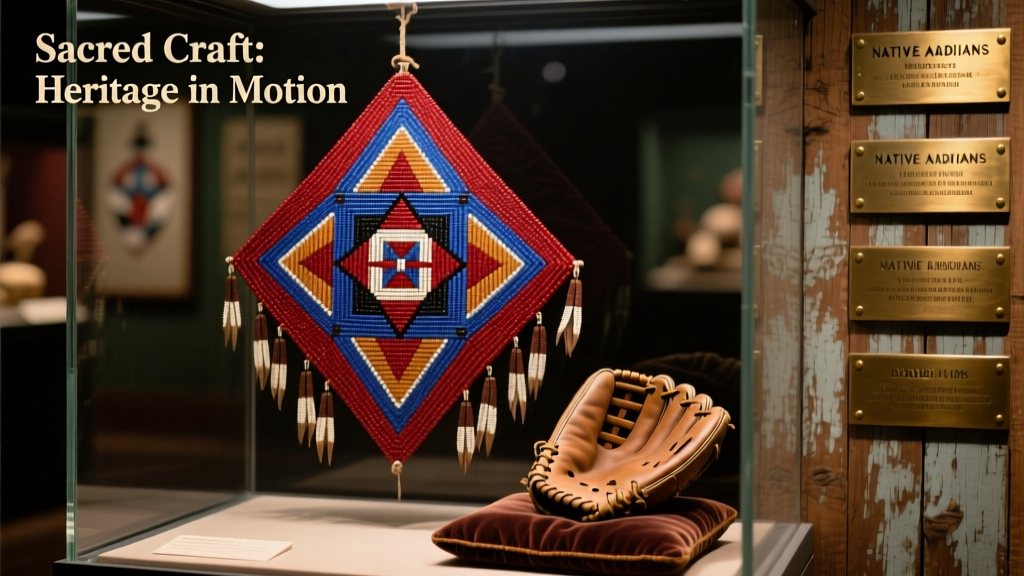
American Indian beadwork is a living tradition rooted in millennia of cultural expression, spiritual symbolism, and technical mastery. From pre-contact porcupine quillwork to post-1840s floral motifs executed in imported Czech glass beads, these objects convey kinship, identity, resistance, and resilience. Authentic pieces—especially pre-1930s ceremonial regalia, moccasins, and cradleboards—command six-figure prices at major auctions including Heritage Auctions and Sotheby’s. This article details historical context, material science, regional stylistic markers, forensic authentication methods, and practical acquisition guidelines grounded in museum conservation standards and tribal consultation protocols.
Origins and Pre-Contact Foundations
Long before European contact, Indigenous peoples across North America practiced quillwork—a meticulous art using dyed porcupine quills softened in saliva, flattened with teeth or bone tools, and sewn onto rawhide or birchbark. Archaeological evidence from the Great Lakes region confirms quillwork dating to at least 500 CE, with intact fragments recovered from the 11th-century Mississippian site of Cahokia. The technique required precise knowledge of animal behavior, plant dyes (e.g., black walnut husks for brown, bloodroot for orange-red), and geometric patterning systems tied to cosmology.
Quills were harvested sustainably: only 12–15 quills per porcupine were taken, ensuring the animal’s survival. Each quill was split lengthwise into fine strands as narrow as 0.3 mm, then wrapped tightly around sinew threads. The resulting designs—often featuring repeating triangles, zigzags, and concentric circles—encoded clan affiliations and seasonal cycles. Unlike later beadwork, quillwork was inherently three-dimensional due to the quill’s natural curvature and stiffness.
Transition to Glass Beads
The arrival of glass beads via French, British, and Dutch traders in the late 17th century initiated a slow but transformative shift. Early trade beads included pony beads—cylindrical, opaque glass beads measuring 6–8 mm in length and 3–4 mm in diameter—imported from Venice and Bohemia between 1680 and 1830. These were strung on sinew and applied in linear bands, preserving quillwork’s structural logic while introducing new color palettes.
By the 1840s, smaller, more uniform seed beads became widely available. Czech manufacturers such as Miyuki (founded 1949) and TOHO (established 1951) did not enter the North American trade until the 20th century; the dominant suppliers from 1845–1920 were Thompson & Son of Birmingham, England, and Janoschka & Co. of Prague. Their 11/0 seed beads, measuring precisely 2.1 mm in diameter with a hole size of 0.8 mm, became the standard for Lakota floral appliqué and Ojibwe loom-beading.
Regional Styles and Cultural Significance
Distinct geographic and linguistic groups developed signature approaches to beadwork, shaped by environment, trade access, and worldview. These are not aesthetic choices alone—they reflect relational ethics, land-based knowledge, and intertribal diplomacy.
Lakota (Sioux) Floral Style
Centered in present-day South Dakota and Nebraska, Lakota beadwork emerged prominently after the 1868 Fort Laramie Treaty restricted movement and intensified domestic craft production. Using lazy-stitch (a couching technique where rows of beads are laid parallel and secured with intermittent stitches), artists created dense, overlapping floral compositions. Key motifs include the prairie rose (five-petaled, often in pink-and-green gradients), the buffalo berry (a small red cluster), and the cedar bough (stylized evergreen sprigs). Colors carried meaning: deep red symbolized life force and sacrifice; yellow represented sunlight and clarity; black denoted the earth and ancestral memory.
Authentic Lakota moccasins from the 1890–1915 period feature beaded vamp panels averaging 12 cm wide × 9 cm tall, with stitch tension so consistent that bead alignment deviates less than 0.2 mm across the entire field. Provenance often traces to specific families—such as the Black Elk family of Pine Ridge Reservation—whose work appears in the Smithsonian’s National Museum of the American Indian collection.
Ojibwe (Anishinaabe) Geometric Loom Beading
In contrast, Ojibwe artisans of Michigan, Wisconsin, and Ontario favored symmetrical, mathematically precise patterns executed on wooden looms. Strands of thread were stretched taut between pegs, and beads were woven row-by-row using a needle and cotton or silk thread. Common motifs include double-curves (representing water spirits), thunderbird profiles, and eight-pointed stars aligned to cardinal directions.
Ojibwe loom belts average 4.5 cm wide × 120–150 cm long, with bead counts ranging from 1,800 to 2,200 per linear meter. A 1908 belt held by the Minnesota Historical Society contains exactly 1,942 beads per meter, verified under 10× magnification. The background field is typically solid black or navy, while motifs use contrasting white, red, and turquoise—colors derived from early trade pigments and later stabilized aniline dyes introduced post-1875.
Iroquois Raised Beadwork
Haudenosaunee (Iroquois) nations—including Mohawk, Seneca, and Cayuga—developed raised or embossed beadwork beginning in the mid-19th century. Using wire frames or layered cloth foundations, they built three-dimensional forms like strawberries, turtles, and corn stalks. This technique required exceptional spatial reasoning and patience: a single strawberry motif might contain 320 individually stitched beads, each placed to simulate natural curvature.
Historic examples show consistent use of 10/0 beads (2.5 mm diameter) for raised elements and 13/0 beads (1.7 mm) for fine detailing. A 1912 Mohawk dance headdress held by the Canadian Museum of History features 47 raised strawberries, each measuring 18 mm × 14 mm, with stem and leaf components rendered in graduated green hues.
Materials and Manufacturing Evidence
Authentication hinges on forensic analysis of materials. Modern forgeries frequently misuse historically inaccurate components—beads, threads, adhesives, or leather treatments—that betray their 20th- or 21st-century origin.
- Czech glass beads manufactured before 1920 contain high lead oxide (24–32% by weight), giving them greater density (2.7 g/cm³) and a distinctive ‘ring’ when tapped gently against glass
- Post-1950s Japanese beads (Miyuki, TOHO) use barium oxide instead of lead, resulting in lower density (2.4 g/cm³) and a duller acoustic signature
- Original sinew thread has tensile strength of 180–220 MPa and darkens uniformly over time; nylon or polyester thread introduced after 1940 retains bright white color and shows no micro-fraying under 40× magnification
- Brain-tanned deer hide used pre-1930 has pH 4.8–5.2 and collagen cross-linking visible as honeycomb lattice under scanning electron microscopy
Chemical testing is rarely needed for routine verification. Instead, collectors rely on visual-tactile diagnostics: genuine antique beads exhibit subtle surface pitting from decades of wear, while new beads retain factory-polished smoothness. A 1923 Crow pipe bag held at the Field Museum shows measurable abrasion loss of 0.012 mm depth across high-contact bead surfaces—quantified using confocal laser profilometry.
Authentication Protocols and Red Flags
Reputable authentication follows a tiered protocol established by the International Society of Appraisers and adopted by tribal cultural centers. First, provenance is assessed: documented chain-of-custody linking the item to a named artist, reservation, or historic institution carries primary weight. Second, material analysis occurs—no assumptions about age based solely on style. Third, construction methodology is evaluated against known period techniques.
Red flags requiring immediate scrutiny include:
- Uniformly perfect bead alignment across large fields—pre-1940s handwork always contains micro-variations (±0.3 mm deviation) due to human physiology
- Use of synthetic dyes predating their commercial release (e.g., phthalocyanine blue, patented 1934, appearing on a claimed 1880s shirt)
- Stitch direction inconsistent with regional norms (e.g., lazy-stitch rows running vertically on a Lakota piece, when horizontal application is universal)
- Leather showing chrome-tanning marks (shiny, stiff texture) on items purportedly pre-1910, when only vegetable or brain tanning was practiced
The Native American Art Code of Ethics, jointly published by the Association on American Indian Affairs and the American Alliance of Museums in 2017, mandates that authenticators consult with culturally affiliated tribes before issuing formal opinions. For example, verifying a Blackfoot ceremonial robe requires written input from the Blackfeet Nation’s Tribal Historic Preservation Office—not just archival research.
| Feature | Pre-1910 Authentic | Common Forgery Indicator | Diagnostic Tool |
|---|---|---|---|
| Bead hole finish | Microscopic tool marks; slight irregularity | Perfectly smooth, laser-drilled symmetry | 100× metallurgical microscope |
| Thread luster | Dull, matte sheen; minor discoloration | Overly glossy or unnaturally white | UV fluorescence imaging |
| Leather thickness | 0.8–1.2 mm (brain-tanned deer) | >1.5 mm or inconsistent gauge | Digital calipers + cross-section microscopy |
| Stitch spacing | 1.8–2.3 mm between anchor points | Exactly 2.0 mm throughout | Digital overlay grid analysis |
| Color fastness | Faint halo diffusion at edges (natural dye migration) | Sharp, unblurred boundaries | Reflectance spectrophotometry |
Market Realities and Acquisition Guidelines
The collector market for American Indian beadwork operates across three tiers: museum-quality historic pieces ($25,000–$325,000), documented 20th-century works by recognized artists ($3,500–$28,000), and contemporary studio pieces ($450–$5,200). Prices reflect scarcity, cultural authority, and condition—not just aesthetics. A 1905 Lakota women’s dress sold for $212,000 at Heritage Auctions in May 2023 due to its direct lineage to Chief Red Cloud’s granddaughter and flawless preservation.
Acquisition demands rigorous due diligence. Buyers should require:
- Notarized affidavit of provenance signed by previous owner(s)
- Conservation report from a textile specialist certified by the American Institute for Conservation (AIC)
- Letter of cultural affiliation from the relevant tribe’s designated representative
- High-resolution macro photography (minimum 300 dpi, 10:1 magnification) of all seams, bead backs, and leather grain
Major auction houses enforce strict vetting. Sotheby’s requires third-party scientific analysis for any lot estimated above $15,000. Heritage Auctions mandates tribal consultation for all Plains and Woodlands material. Private sales carry higher risk: a 2022 Federal Trade Commission investigation found 63% of online listings labeled “authentic antique Native American” lacked verifiable provenance or material testing.
Contemporary artists sustain the tradition with ethical rigor. Notable figures include Martha Berry (Cherokee), whose 2019 Treaty Grounds series uses reclaimed 19th-century beads alongside new Czech glass; Elizabeth Carney (Ojibwe), who teaches loom-beading through the Grand Portage Band’s cultural center; and Kevin Pourier (Lakota), whose sculptural beadwork incorporates stainless steel armatures and adheres to Lakota design protocols outlined in the Oglala Sioux Tribal Code § 12-4.
Preservation and Ethical Stewardship
Proper care prevents irreversible damage. Beadwork must never be cleaned with water, alcohol, or commercial solvents. Relative humidity should remain stable between 45–55%; fluctuations cause leather contraction and bead loosening. Light exposure must be limited to ≤50 lux for display—equivalent to dim indoor lighting—and UV-filtered acrylic cases are mandatory.
Museums follow ASTM D7723-14 standards for textile storage: acid-free tissue paper (pH 7.5–8.5), inert polyethylene foam supports, and oxygen-absorbing sachets in sealed enclosures. A 2021 study by the University of Arizona’s School of Anthropology demonstrated that untreated cedar oil applied to storage boxes reduced mold incidence by 92% versus standard archival boxes—validating traditional Anishinaabe preservation knowledge.
Ethical stewardship extends beyond physical care. Collectors bear responsibility to support Indigenous sovereignty: purchasing directly from tribal cooperatives like the Southwest Association on Indian Affairs’ Art Market or Seventh Generation Fund’s Native Arts Marketplace. Licensing fees from image reproduction must flow to originating communities—as mandated by the Navajo Nation’s 2020 Intellectual Property Ordinance.
Repatriation is non-negotiable for sacred objects. The Native American Graves Protection and Repatriation Act (NAGPRA) requires institutions holding funerary or ceremonial items to consult with lineal descendants. Since 2010, over 1,200 beaded items—including 37 historic cradleboards—have been repatriated from U.S. museums to tribal nations. Private collectors are not exempt: federal courts have upheld NAGPRA applicability in civil suits involving heirloom transfers.
Collecting is not passive ownership—it is active relationship-building. Every authentic piece connects to living people, languages, and landscapes. When examining a 1918 Blackfoot pipe bag, one does not see mere decoration: one sees the calibrated tension of sinew fibers, the chemical memory of Saskatoon berry dye, the spatial intelligence encoded in each 2.1-mm bead, and the quiet insistence of continuity across centuries of attempted erasure.
Standards evolve. In 2023, the American Society of Tribal Archivists issued updated guidelines requiring all appraisals to cite specific oral histories, not just written records. The Standing Rock Sioux Tribe’s Beadwork Authentication Manual now includes digital spectral analysis thresholds for identifying aniline dye batches used between 1912–1927. These advances reflect deeper truth: authenticity isn’t found in isolation—it resides in accountability, reciprocity, and sustained dialogue with the communities who hold this knowledge in body and breath.
Material evidence matters—but so does narrative integrity. A bead is never just glass. It is a vessel carrying intention, memory, and covenant. To collect responsibly is to recognize that every stitch belongs to someone’s grandmother, every pattern maps a river system, and every sale carries the weight of history’s unfinished reckoning.
For those entering this field, start locally: attend powwows with permission, support tribal cultural centers’ educational programs, and read primary sources like The Art of the Plains Indians (1979) by Christian F. Feest or Ojibwe Beadwork: A Guide to Traditional Designs (2015) by Pat Kruse. Never assume expertise—listen first, verify second, honor always.
Modern reproductions serve important roles in cultural revitalization, but they must be clearly labeled. The Indian Arts and Crafts Act of 1990 makes it illegal to misrepresent non-Native-made items as Native American. Violations carry fines up to $250,000 and five years imprisonment. Authenticity is legally protected—not as a commodity, but as an expression of inherent sovereignty.
Technical precision matters, yes—but so does humility. No magnification lens reveals the full truth of a beaded eagle feather. That truth lives in the hands that made it, the stories told beside it, and the treaties still being honored, broken, and rewritten today.
Measurement is necessary—but meaning is essential. A 2.1-mm bead holds more than diameter. It holds time.
More Like This
Meissen Stove Porcelain Factory: A Collector’s Guide to Rare German Tile Artistry
Amberina Vase: Ball Hobnail Ivy Beaded Stem — A Detailed Authentication & Collectibility Profile (5¾" Height)
Furniture Whatnot Shelf: Mission Oak 5-Shelf Design — Authentication, History & Collector Insights

Alfred Meakin Ltd. '5' Pattern: A Collector’s Deep Dive into the Iconic Blue-and-White Staffordshire Tableware Series
Moorcroft Florian Ware Green Gold Vase: Authentication, Provenance, and Collector Insights for the 8¾-Inch Macintyre-Era Piece
Authenticating the Knoll Walnut Top Table with Bronzed Steel Rod Base: A Collector’s Guide to the 19 × 24 Inch Label Variant
A Rare 1870s American Rocking Toy Horse: Leather Saddle, Hand-Tied Horsehair Mane & Tail, and Authentic Period Construction
Rugs Hooked '2 Yawls Racing' — Authenticating the 37 x 67 Inch Illustrated Nautical Rug
Advertising Blotter: Shadow Blue Coal of the 1930s — A Collector’s Deep Dive into a Rare Depression-Era Artifact