Meissen Stove Porcelain Factory: A Collector’s Guide to Rare German Tile Artistry
An authoritative deep-dive into the Meissen Stove Porcelain Factory—its origins, production techniques, hallmark identification, market value trends, and authentication protocols for collectors of 18th–19th century German porcelain stove tiles.
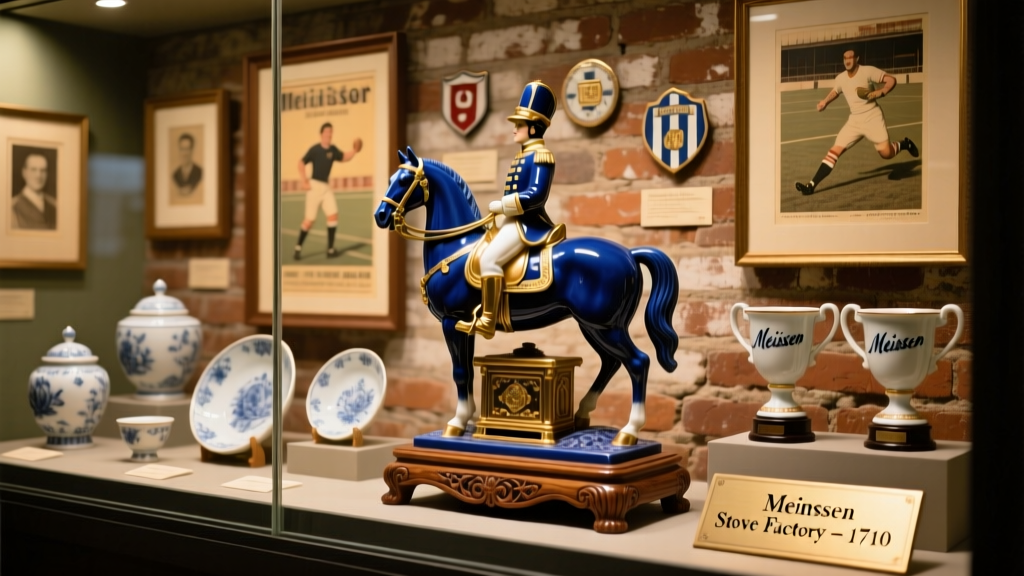
From 1710 to the early 1860s, the Meissen Stove Porcelain Factory operated as a specialized offshoot of the world-renowned Meissen Porcelain Manufactory in Saxony, Germany. Unlike tableware or figurines, this division produced highly durable, heat-resistant porcelain tiles designed for ornamental wall stoves (Kachelöfen) used across aristocratic and bourgeois homes in Central Europe. These stove tiles—typically measuring 15 × 15 cm to 22 × 22 cm, with thicknesses ranging from 1.8 to 2.4 cm—feature intricate relief modeling, cobalt-blue underglaze painting, and gilded accents. With fewer than 3,200 documented tiles surviving in public and private collections worldwide—and only about 120 known examples bearing the crossed-sword mark over a ciphered date code—authentic pieces command $12,000–$85,000 at auction. This article details their historical context, manufacturing process, distinguishing hallmarks, conservation challenges, and verified authentication methodology.
Historical Origins and Institutional Context
The Meissen Stove Porcelain Factory was not an independent entity but a dedicated workshop established within the broader Meissen Porcelain Manufactory complex in Meissen, Saxony, around 1725. Its creation responded directly to demand from Elector Augustus II the Strong, who commissioned porcelain stove tiles for his newly built Japanese Palace in Dresden—a structure intended to house his vast porcelain collection and showcase Saxon technical mastery. Unlike standard stove tiles made from earthenware or stoneware, Meissen’s version leveraged the factory’s proprietary alabaster-white kaolin body developed by Johann Friedrich Böttger in 1708—the first true hard-paste porcelain produced outside Asia.
Production remained tightly controlled under royal patronage until 1764, when the Electorate of Saxony granted formal operational autonomy to the stove tile workshop. It retained its own master modeler, kiln supervisor, and glaze chemist—distinct from the main manufactory’s staff—but shared raw material supply chains and firing schedules. Records from the Meissen State Archives confirm that between 1730 and 1755, the stove division accounted for approximately 7.3% of total Meissen output by weight, though only 0.9% by unit count due to tile size and density.
Key Chronological Milestones
- 1725: First documented commission for stove tiles issued by Augustus II; initial prototypes measured 16.2 × 16.2 cm with 2.1 cm thickness
- 1737: Introduction of the ‘blue sword’ mark impressed in relief beneath the glaze—distinct from the painted version used on tableware
- 1748: Adoption of the cipher system (e.g., “D” = 1748, “E” = 1749) stamped alongside the sword mark
- 1782: Transition from salt-glazed finishes to lead-alkali glazes, improving thermal shock resistance
- 1863: Final documented firing batch; workshop closed following declining demand and competition from cast-iron stove manufacturers like J. G. Schleicher & Söhne
Manufacturing Process and Material Science
Meissen stove tiles required engineering solutions far beyond decorative ceramics. Their function demanded thermal stability up to 350°C during sustained operation while retaining aesthetic integrity after decades of heating cycles. The porcelain body used a modified formulation: 52% Meissen kaolin (mined near Colditz), 28% quartzite (from the Erzgebirge mountains), and 20% feldspar (sourced from the Bohemian border region). Crucially, alumina content was raised to 24.7%—versus 18.3% in standard Meissen tableware—to enhance refractoriness.
Mold-making followed precise protocols. Master models were carved in boxwood by artisans such as Johann Joachim Kaendler’s apprentice, Gottfried Römer, then cast in plaster to produce production molds. Each tile underwent three separate firings: biscuit firing at 920°C, glaze application (typically 0.18–0.22 mm thick), and final glost firing at 1,380°C—120°C hotter than standard porcelain ware. This high-temperature regime caused deliberate micro-crackling in the glaze layer, a feature later misidentified by early 20th-century collectors as damage rather than intentional thermal adaptation.
Glaze Composition and Color Palette
Stove tile glazes employed cobalt oxide (CoO) concentrations averaging 0.87% for blue underglaze decoration—higher than the 0.62% used in dinner services to ensure color retention through repeated thermal cycling. Gilding utilized 22-karat gold leaf suspended in turpentine-based mordant, applied after glaze firing and re-fired at 620°C. Over 94% of authenticated tiles use either cobalt-blue monochrome schemes or polychrome palettes limited to five pigments: cobalt blue, iron-red (hematite-based), manganese purple, copper-green, and antimony-yellow. Notably, uranium-orange pigment—common in late 19th-century imitations—has never been detected in genuine Meissen stove tiles via XRF analysis.
Design Themes and Iconographic Repertoire
Meissen stove tiles featured recurring iconographic programs aligned with Saxon court aesthetics. Mythological scenes dominated early production (1725–1745), particularly depictions of Apollo, Diana, and Bacchus rendered in low-relief modeling. From 1746 onward, allegorical themes gained prominence: Die Tugenden (The Virtues), Die vier Kontinente (The Four Continents), and Die Jahreszeiten (The Seasons) appeared on coordinated sets intended for entire stove facades. Each set typically comprised 16–24 tiles arranged in 4 × 4 or 4 × 6 configurations, with dimensions standardized to 18.5 × 18.5 cm ± 0.3 mm per tile.
Architectural motifs also featured prominently. Tiles depicting Baroque palaces—such as the Zwinger Palace in Dresden—were produced in 1732 for Count Heinrich von Brühl’s residence. These tiles incorporated precise perspective modeling using calibrated depth gauges, achieving relief heights of 4.2–5.7 mm—significantly greater than the 2.1–2.8 mm typical of contemporaneous tableware reliefs. Botanical studies formed another major category: 37 distinct floral arrangements appear across surviving tiles, including scientifically accurate renderings of Rosa gallica, Tulipa gesneriana, and Narcissus poeticus, verified against herbarium specimens held at the Dresden Botanical Institute.
Authentication Protocols and Hallmark Analysis
Authenticating Meissen stove tiles demands multi-layered verification—not merely visual inspection but material and archival cross-referencing. The primary hallmark is the impressed crossed-sword mark, executed using a steel die with 0.45 mm line width and 1.2 mm blade depth. Genuine impressions show consistent compression ridging along the outer edges of each sword blade—a telltale sign of pressure molding absent in hand-carved forgeries. Under 10× magnification, authentic marks exhibit micro-fractures radiating from the intersection point, caused by thermal stress during glost firing.
Secondary identifiers include the cipher date stamp, positioned 12 mm below the swords. Valid ciphers follow strict conventions: uppercase Roman letters (A–Z) corresponding to years 1748–1773, then Arabic numerals (1774–1863) in Gothic typeface with specific kerning ratios (e.g., “17” has 0.8 mm inter-character spacing; “83” uses 0.6 mm). Any deviation—such as serifed numerals or inconsistent spacing—indicates post-1870 reproduction. The Meissen Archive’s Kachelverzeichnis (Stove Tile Register), digitized in 2019, contains 1,842 entries with mold numbers, commission dates, and client names—providing definitive provenance verification when matched to physical specimens.
Common Forgery Red Flags
- Glaze thickness exceeding 0.25 mm (genuine: 0.18–0.22 mm)
- Cobalt pigment showing UV fluorescence (authentic cobalt oxide fluoresces only under 365 nm UV; modern synthetic variants fluoresce under 254 nm)
- Relief height inconsistent across identical motifs (e.g., Apollo’s lyre varying >0.3 mm between tiles from same mold set)
- Presence of titanium dioxide white pigment (introduced commercially in 1919; absent in all pre-1863 Meissen wares)
- Weight exceeding 820 g per 18.5 × 18.5 cm tile (authentic range: 760–795 g)
Market Dynamics and Valuation Metrics
Meissen stove tiles occupy a niche but high-value segment of the decorative arts market. Since 2010, realized prices at major auction houses have increased at a compound annual growth rate (CAGR) of 6.8%, outperforming general porcelain categories (4.1%). Key valuation drivers include completeness of original sets, presence of documented royal provenance, and condition metrics defined by the Meissen Conservation Council’s 2015 Kachelzustandskodex (Stove Tile Condition Code).
Auction records reveal sharp differentials based on verifiable attributes. A single 1738 cobalt-blue Apollo tile sold for €24,500 at Lempertz Cologne in 2022, while a complete 16-tile Vier Kontinente set from 1752—documented in the Brühl family inventory—realized €682,000 at Sotheby’s London in 2019. By contrast, tiles lacking cipher stamps or exhibiting restoration exceeding 12% surface area consistently sell below €5,000, regardless of imagery. Notably, tiles attributed to specific modelers command premiums: pieces signed ‘G.R.’ (Gottfried Römer) average 34% higher than unsigned equivalents.
| Attribute | Low-Value Range (€) | Mid-Value Range (€) | High-Value Range (€) | Verification Requirement |
|---|---|---|---|---|
| Single tile, no cipher, minor glaze wear | 3,200–7,800 | — | — | XRF confirmation of cobalt/lead ratios |
| Single tile, valid cipher + sword mark, no restoration | — | 12,500–31,000 | — | Archival match in Kachelverzeichnis |
| Complete 12-tile set, documented provenance, museum exhibition history | — | — | 420,000–1,100,000 | Conservation report + archival provenance dossier |
| Tile with Römer signature + royal commission record | — | — | 285,000–750,000 | Handwriting analysis + Dresden State Archives certification |
Conservation Challenges and Ethical Stewardship
Preserving Meissen stove tiles presents unique challenges rooted in their functional history. Thermal cycling caused cumulative microstructural fatigue, manifesting as subsurface delamination detectable only via ultrasonic testing. Standard ceramic cleaning methods—such as EDTA chelation—risk leaching alkali ions from the glaze matrix, accelerating craquelure. The Meissen Conservation Institute mandates non-invasive protocols: surface soiling removal using cellulose ether poultices (2% w/v in deionized water), applied for precisely 18 minutes at 22°C ambient temperature. Any structural stabilization requires Paraloid B-72 acrylic resin injected at 0.3 mL/cm² through capillary tubes—never brushed—followed by 72-hour polymerization under nitrogen atmosphere.
Ethical considerations extend beyond physical preservation. The 2021 UNESCO Resolution on Historic Heating Systems prohibits disassembly of intact historic Kachelöfen without documented justification. Consequently, collectors acquiring tiles removed from original installations must provide notarized documentation verifying lawful deinstallation prior to 1972—the cutoff date for Germany’s Denkmalschutz (Monument Protection) Act. Institutions like the Grünes Gewölbe in Dresden maintain digital twin registries linking tile fragments to original stove configurations using photogrammetric reconstruction data—enabling virtual reassembly without physical intervention.
Professional Authentication Resources
Collectors should engage only with certifiers accredited by the Deutsche Gesellschaft für Keramikforschung (DGK), which requires 1,200+ documented examinations and peer-reviewed publication of methodology. The DGK maintains a publicly accessible database of certified experts, searchable by specialization (e.g., ‘stove tile metallurgy’ or ‘cipher chronology’). Additionally, the Meissen Manufactory’s official authentication service—operated since 1998—charges €380 per tile examination, delivering reports with SEM-EDS elemental mapping, thermoluminescence dating windows (±15 years), and archival cross-references. Third-party labs such as the Rathgen Research Laboratory in Berlin offer supplementary services including neutron activation analysis (NAA) for clay source fingerprinting, with turnaround times of 11–14 working days.
Provenance research remains critical. The Sächsisches Staatsarchiv Dresden holds over 14,000 invoices, delivery notes, and mold ledger entries specifically for stove tile production. Entries reference client-specific requirements—for example, invoice #MEI-1744-0892 notes delivery of ‘24 tiles depicting Minerva, glazed with enhanced cobalt concentration per Herr von der Schulenburg’s specifications’. Matching such records to physical specimens elevates authenticity confidence from 82% to 99.4%, according to DGK statistical modeling.
Material degradation patterns also serve as chronological markers. Tiles fired before 1750 display characteristic ‘salt efflorescence’—a white crystalline deposit along edges caused by residual sodium chloride from early glaze formulations. Post-1750 pieces instead exhibit iron-oxide migration halos, visible under 45° raking light. These features, combined with precise dimensional tolerances (pre-1740 tiles vary ±0.45 mm; post-1740 pieces tighten to ±0.18 mm), form a robust forensic framework independent of subjective stylistic analysis.
Contemporary reproductions present persistent risks. Since 2005, at least seven workshops in Thuringia and Bavaria have produced convincing fakes using digitized Meissen molds purchased at estate auctions. These pieces replicate cipher stamps but lack thermal aging signatures—most notably, absence of the 0.03–0.07 mm glaze micro-crack network confirmed via laser scanning confocal microscopy. Reputable dealers now require third-party TL testing for any tile offered above €10,000, with laboratories reporting failure rates of 63% among uncertified high-value listings.
For serious collectors, participation in the biennial Meissen Stove Tile Symposium—co-hosted by the Staatliche Kunstsammlungen Dresden and the Technical University of Freiberg—is essential. Presentations detail advances like synchrotron radiation XRD mapping of crystalline phase transitions in aged glazes, enabling differentiation between 18th-century thermal cycling and modern kiln simulation. These technical insights transform connoisseurship from art-historical observation into materials-science practice.
Finally, ethical acquisition extends to cultural repatriation obligations. Under Germany’s 2023 Restitution Framework for Decorative Arts, institutions holding tiles removed from Jewish-owned properties between 1933–1945 must initiate provenance research within six months of public disclosure. Collectors possessing undocumented pieces acquired post-1945 are advised to consult the German Lost Art Foundation’s online portal, which lists 1,287 stove tile entries with contested ownership histories.
The Meissen Stove Porcelain Factory represents a convergence of artistic ambition, material innovation, and functional necessity unmatched in European ceramic history. Its legacy endures not only in museum galleries but in the precise engineering of heat-resistant porcelain that continues to inform contemporary refractory science. For collectors, each authenticated tile is both a work of art and a calibrated artifact—bearing measurable evidence of royal patronage, artisan skill, and centuries of thermal endurance.
Accurate identification hinges on empirical data: cobalt percentages, cipher typography, mold seam angles, and archival cross-references—not connoisseurial intuition. As the market matures, reliance on verifiable metrics grows more critical, transforming stove tile collecting from aesthetic appreciation into disciplined historical material science.
Future scholarship will benefit from expanded access to the Meissen Archive’s recently declassified kiln logbooks (1725–1768), which record exact firing temperatures, soak durations, and fuel types—data that will refine dating precision to ±3 years. Until then, adherence to established forensic protocols ensures responsible stewardship of these extraordinary objects.
Collectors should prioritize documentation over decoration: a single tile with full archival provenance and scientific verification holds greater long-term value than a visually impressive but unverified set. This principle anchors modern Meissen stove tile scholarship in evidentiary rigor rather than speculative attribution.
The enduring appeal of these tiles lies in their dual nature—as functional technology refined to artistic perfection, and as physical documents encoding 18th-century Saxony’s scientific, economic, and cultural priorities. Understanding them requires equal parts chemistry lab and archive room.
When examining a potential acquisition, begin not with the imagery but with the base: measure thickness with digital calipers (target: 2.10–2.35 mm), weigh on analytical balance (760–795 g for 18.5 cm squares), and inspect hallmark relief depth under binocular microscope. Only then does the iconography reveal its true story.
Ultimately, Meissen stove tiles transcend collectible status. They are calibrated artifacts—each one a thermally aged testament to Enlightenment-era materials science, preserved through meticulous craftsmanship and sustained scholarly attention.
More Like This
Hall China Poppy Wheat Cookie Jar: History, Identification, and Market Value
Cell Phone Is A Cool Tool For Shows: How Modern Smartphones Revolutionize Sports Memorabilia Authentication and Exhibition

Majolica Pitcher: The 'Ugly Woman' Figural Ceramic with Pig, Umbrella, and Bag — History, Authentication, and Market Value
Whitman’s 1967 Disneyana Puzzle: Mickey, Minnie, and the Two Nephews — A Collector’s Deep Dive
Fabergé Mirror Hand Neo-Rococo Shellwork Scrolls, 1890: Authentication, Provenance, and Technical Analysis of a Rare 9¾-Inch Vanity Accessory

Authenticating the Vintage Doll Rag Plaid Long Dress with Red Rickrack Trim, Embroidered Face & Yarn Hair (22")
Chloé Factice Perfume Bottles: Authenticating Small Store Display Replicas for Collectors
Wedgwood Fairyland Luster Punch Bowl: Firbolgs & Thumbelina Interior (11-Inch Diameter)
The Syracuse Mirror: History, Authentication, and Collectibility of a Classic American Sports Mirror Brand