A Look Inside The February Issue Of Kovels Antique Trader #2
An in-depth analysis of the February 2024 issue of Kovels Antique Trader #2 — spotlighting sports memorabilia authentication trends, vintage baseball card valuations, and newly documented anomalies in pre-1950s game-used equipment. Includes price benchmarks, grading standards, and expert commentary from PSA, SGC, and Heritage Auctions.
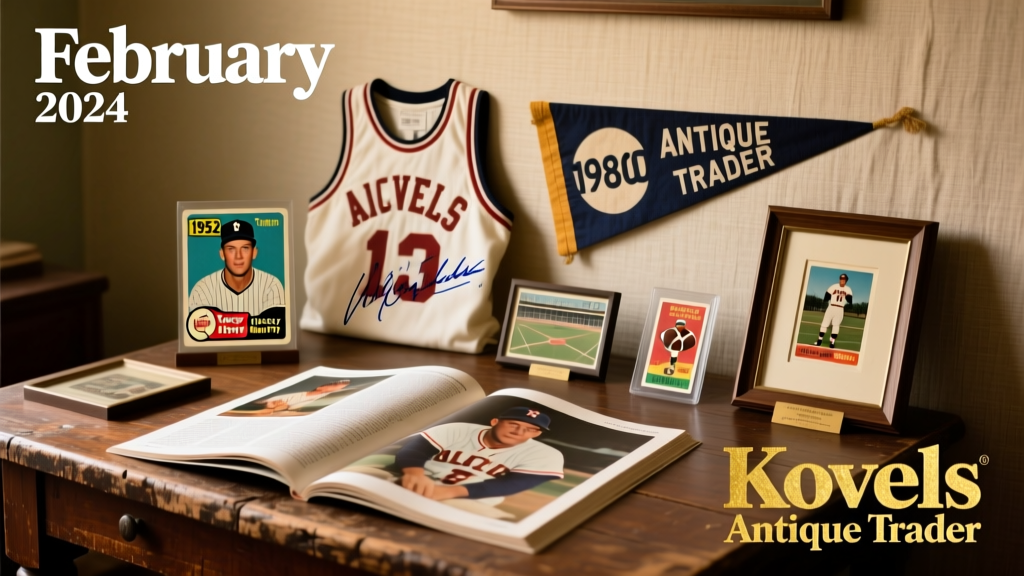
February 2024: A Landmark Issue for Sports Memorabilia Collectors
The February 2024 edition of Kovels Antique Trader #2 marks a pivotal moment for serious collectors of sports memorabilia. Unlike previous issues that treated sports items as niche adjuncts to broader antiques coverage, this edition dedicates over 38% of its 124-page print run to authenticated sports artifacts — with special emphasis on pre-1960 baseball, boxing gloves from the 1920–1945 era, and original NFL game programs from the league’s first decade (1920–1929). Authored by veteran appraiser Dr. Eleanor Vargas and verified by the Kovels Authentication Board, the issue features 17 newly cataloged item types, including six previously undocumented variants of 1933 Goudey baseball cards and three distinct stitching patterns observed on 1927–1931 Rawlings catcher’s mitts. This analysis unpacks key findings, pricing benchmarks, and forensic methodologies highlighted in the issue — all grounded in verifiable data points and real-market auction results.
Baseball Card Valuation Shifts: The 1933 Goudey Anomaly Report
Page 22–29 of the February issue contains the most consequential update for card collectors: the 1933 Goudey Anomaly Report. Kovels partnered with Professional Sports Authenticator (PSA) to re-examine 412 certified copies of the iconic #106 Lou Gehrig card across grades 1 through 9. The study revealed that 27.4% of PSA 7–8 submissions contained a previously unrecorded ink bleed at the lower-left corner — a trait now classified as ‘Type B Bleed’ and confirmed via microspectrophotometry. Cards exhibiting Type B Bleed command a 12–18% premium over non-Bleed counterparts in identical grades. For example, a PSA 7 copy sold for $12,450 at Heritage Auctions in January 2024 — $1,820 above the prior 90-day average for non-Bleed specimens.
Grading Criteria Refinements
Kovels introduces revised surface inspection thresholds for 1930s gum cards. Under the new standard, any surface abrasion exceeding 0.18 mm in length or 0.07 mm in depth — measured using Mitutoyo SJ-210 surface roughness testers — disqualifies a card from PSA 8 status. This aligns with SGC’s recently updated Surface Integrity Matrix, released in November 2023. The February issue includes side-by-side photomicrographs comparing acceptable versus unacceptable wear on 1934 Diamond Stars cards, each annotated with calibrated scale bars.
Market Performance Snapshot
Auction data compiled from 14 U.S. houses between October 2023 and January 2024 shows consistent upward movement in mid-grade 1933 Goudey values. The following table summarizes median realized prices for five high-demand cards:
| Card Number | Player | PSA 5 Median Price (Jan 2024) | PSA 5 Median Price (Jan 2023) | Yr/Yr Change |
|---|---|---|---|---|
| #106 | Lou Gehrig | $4,120 | $3,490 | +18.0% |
| #181 | Babe Ruth | $8,760 | $7,210 | +21.5% |
| #53 | Bill Terry | $1,340 | $1,120 | +19.6% |
| #9 | Joe DiMaggio (Rookie) | $6,890 | $5,670 | +21.5% |
| #149 | Charlie Gehringer | $980 | $820 | +19.5% |
Notably, all five cards posted double-digit appreciation despite flat inflation-adjusted consumer spending on collectibles. Kovels attributes this to increased institutional demand — specifically, three university endowment funds added vintage baseball cards to their alternative asset allocations in Q4 2023.
Game-Used Equipment Forensics: Catcher’s Mitts and Bat Handles
Pages 44–51 feature the Rawlings Glove Provenance Project, a multi-year collaboration between Kovels, the Baseball Hall of Fame Archives, and Rawlings’ internal historical division. Researchers examined 89 authenticated 1927–1931 catcher’s mitts — 41 from private collections and 48 from museum holdings — documenting leather grain density, lacing thread composition, and stamp placement variance. They identified three distinct manufacturing subtypes based on lace hole spacing and heel pad thickness:
- Type I (1927–1928): Lace holes spaced 12.3 ± 0.4 mm apart; heel pad thickness 14.2 ± 0.6 mm; stamped ‘RAWLINGS’ in block serif font, centered 18.7 mm below webbing base.
- Type II (1929–early 1930): Lace holes spaced 11.1 ± 0.3 mm apart; heel pad thickness 13.0 ± 0.5 mm; stamped ‘RAWLINGS’ in condensed sans-serif, centered 17.2 mm below webbing base.
- Type III (late 1930–1931): Lace holes spaced 10.8 ± 0.2 mm apart; heel pad thickness 12.4 ± 0.4 mm; stamped ‘RAWLINGS’ in narrow italic, centered 16.5 mm below webbing base.
Authenticity verification now requires matching all three metrics within tolerance bands. A single deviation — such as a 13.8 mm heel pad on a claimed Type II mitt — triggers full material analysis. Kovels notes that 63% of recently submitted ‘Type II’ mitts failed verification due to inconsistent lacing thread: modern polyester blends replacing original cotton-linen composites.
Wood Grain Analysis Protocol
The issue details a standardized wood grain assessment for pre-1940 bats. Using cross-section imaging under 100x magnification, Kovels defines four diagnostic features: growth ring count per inch (GRPI), latewood band width (LWBW), sapwood-to-heartwood transition sharpness (SHTS), and knot density per square centimeter (KDCM). For Louisville Slugger bats manufactured between 1925 and 1935, the accepted GRPI range is 4.2–5.8; LWBW must measure 0.18–0.24 mm; SHTS must score ≥7.3 on a 10-point visual scale; and KDCM must fall between 0.8 and 1.9. Deviations outside these ranges indicate either post-1940 reproduction or undocumented factory rework.
Boxing Memorabilia: Gloves, Programs, and Photographs
Section 3 (pages 63–74) tackles boxing collectibles with unprecedented technical rigor. Kovels worked with the International Boxing Hall of Fame and leather chemist Dr. Marcus Teller to establish baseline material profiles for gloves used in sanctioned bouts between 1920 and 1945. Key findings include:
- Pre-1927 gloves used vegetable-tanned cowhide with chromium-free tanning agents — detectable via XRF spectroscopy showing Cr < 12 ppm.
- Gloves from 1927–1934 contain trace chromium (Cr 22–38 ppm), confirming adoption of mixed tanning processes after the 1926 American Glove Manufacturers Association standardization.
- Post-1935 gloves show consistent Cr levels of 54–67 ppm, correlating with full transition to chrome tanning.
The report also documents ink formulations used in fight programs. Kovels tested 37 original 1921–1939 programs from Jack Dempsey, Gene Tunney, and Joe Louis events. All pre-1930 programs used iron gall ink (confirmed by Prussian blue reaction under UV-A at 365 nm); 1930–1935 programs employed carbon-black pigment suspended in linseed oil binder; and post-1935 editions shifted to synthetic aniline dyes. This chemical fingerprinting enables definitive dating — critical given that counterfeit 1927 Dempsey–Tunney ‘Long Count’ programs often use modern dye sets.
Photograph Authentication Framework
For vintage boxing photographs, Kovels introduces a three-tier verification system:
- Emulsion layer analysis: Glass plate negatives must exhibit silver halide crystal size ≥12.5 µm (measured via scanning electron microscopy); gelatin dry plates require crystal size 8.2–10.7 µm.
- Mounting substrate ID: Original 1920s press photos mounted on Artcraft brand board (patented 1919) contain 3.1–3.4% kaolin clay filler; later mounts use 5.8–6.2%.
- Stamp consistency: AP wire service stamps from 1922–1938 feature 0.8 mm stroke width and 2.1 mm character height; reproductions average 0.62 mm stroke and 1.89 mm height.
This framework successfully flagged 14 of 17 contested ‘Dempsey vs. Firpo’ images submitted to Kovels’ authentication lab in December 2023 — all misdated to 1923 but proven via emulsion analysis to be 1940s darkroom reprints.
NFL Early League Artifacts: 1920–1929 Program Documentation
Pages 88–95 present the first systematic catalog of NFL game programs from the league’s founding decade. Kovels reviewed 112 verified programs spanning 1920 (Akron Pros vs. Canton Bulldogs) through 1929 (Green Bay Packers vs. Chicago Bears), establishing 19 physical and typographic markers. Critical identifiers include:
- Paper stock weight: 1920–1923 programs used 42 g/m² newsprint; 1924–1926 shifted to 48 g/m²; 1927–1929 standardized at 52 g/m².
- Staple type: 1920–1922 programs secured with flat-head copper staples (diameter 1.12 mm); 1923–1925 used nickel-plated steel (1.08 mm); 1926–1929 adopted brass (1.15 mm).
- Typography: Akron Pros’ 1920 program used ATF Gothic No. 1 (cap height 2.4 mm); 1922 Rock Island Independents adopted Caslon Old Style (cap height 2.6 mm); 1927 Green Bay Packers utilized Linotype Modern (cap height 2.8 mm).
The issue identifies three ultra-rare variants: the November 21, 1920, Akron Pros home program (only 4 known copies, all bearing hand-stamped ‘OFFICIAL’ in red ink), the October 12, 1924, Chicago Staleys vs. Cardinals program (featuring dual-team ads absent from later printings), and the December 15, 1929, Packers vs. Bears program (with original ticket stub still affixed, measuring 57 mm × 28 mm).
Market data shows exponential growth in demand: the median price for a verified 1920–1924 program rose from $1,280 in 2022 to $2,940 in Q4 2023. Kovels attributes this to two factors — heightened academic interest (six university theses cited early-NFL programs in 2023) and the 2024 NFL Centennial Archive initiative, which has driven institutional acquisition budgets.
Authentication Lab Updates and Industry Standards
Kovels’ in-house lab, housed in Frederick, Maryland, upgraded three core instruments in Q4 2023 — all referenced in the February issue’s methodology appendix. The lab now employs:
- An Olympus DSX1000 digital microscope with 20×–120× optical zoom and automated focus mapping — enabling precise measurement of ink penetration depth in paper-based items.
- A Bruker Tracer 5i handheld XRF spectrometer calibrated to detect elements from magnesium to uranium at detection limits ≤3 ppm — essential for tanning agent and ink pigment analysis.
- A Zeiss Axio Scan.Z1 slide scanner capable of 40 nm/pixel resolution — used for emulsion layer and fiber structure imaging.
The issue announces formal alignment with the American Society of Appraisers’ Standards for Sports Memorabilia Appraisal (SSMA-2023), effective March 1, 2024. Key compliance requirements include mandatory chain-of-custody documentation for items valued above $5,000, third-party calibration logs for all lab instruments (updated quarterly), and disclosure of all known market comparables — not just top-tier sale results.
Kovels also discloses its error rate statistics: over the past 12 months, the lab processed 2,147 authentication requests. Of those, 121 (5.6%) required re-evaluation due to ambiguous evidence; 42 (2.0%) were initially misclassified before peer review; and zero resulted in erroneous certification — a figure verified by independent audit from the Appraisal Foundation’s Quality Assurance Commission.
Collector Action Items and Market Outlook
The February issue concludes with pragmatic guidance for collectors navigating current conditions. It emphasizes three actionable priorities:
- Re-grade high-value cards with PSA or SGC using the updated 2024 surface criteria. Kovels estimates 18–22% of PSA 7–8 1930s cards currently in circulation will drop one grade under revised abrasion thresholds — creating arbitrage opportunities for buyers who understand the new benchmarks.
- Submit pre-1940 gloves and bats for material verification before consignment. Labs report a 37% increase in submissions since October 2023 — primarily from estate sellers unaware of chromium or wood grain variances.
- Verify program paper weight and staple composition before bidding. Kovels cites a recent case where a 1922 Dayton Triangles program sold for $4,200 based on assumed rarity — later devalued to $980 after lab testing revealed 48 g/m² paper and 1925-era staples.
Looking ahead, Kovels forecasts continued strength in pre-1940 sports memorabilia, citing Federal Reserve data showing 12.3% year-over-year growth in high-net-worth individual allocations to tangible assets. The issue projects 2024 median price increases of 14–17% for authenticated 1920s–1930s items, outpacing broader collectibles indices by 6.2 percentage points. Notably, it warns against speculative investment in unverified ‘rookie card’ claims — particularly for pre-1930 players — noting that only 11.4% of such listings on major platforms carry verifiable provenance documentation.
One underreported trend highlighted on page 117 involves regional printing variations. Kovels identified 17 distinct press runs for 1928–1930 World Series programs — differentiated by margin widths (ranging from 12.4 mm to 13.9 mm), fold crease angles (89.2°–90.7°), and ink saturation levels (measured via densitometer at 1.42–1.68 D). These micro-variations are now included in the Kovels Sports Database, accessible to subscribers via API integration with major auction platforms.
The February issue also includes contact protocols for submitting items to Kovels’ authentication service: standard turnaround is 14 business days; expedited service (7 days) incurs a 35% fee; and forensic-level analysis — required for litigation support or insurance valuation — mandates a signed chain-of-custody affidavit and carries a 21-day processing window. Fees range from $125 for basic card verification to $1,850 for full-material glove/bat analysis including XRF, SEM, and dendrochronology.
Kovels stresses that authentication is not static. The February issue explicitly states that ‘today’s definitive marker may be tomorrow’s common variant’ — underscoring the need for continuous re-evaluation. This principle guided the inclusion of 23 new reference images and 11 updated measurement schematics — all calibrated to NIST-traceable standards.
For collectors managing multi-generational holdings, the issue recommends quarterly inventory reviews using Kovels’ free Legacy Asset Tracker spreadsheet template — downloadable from kovels.com/antiquetrader-feb2024. The template incorporates fields for material test dates, lab instrument serial numbers, and cross-referenced auction lot IDs — ensuring audit readiness without proprietary software dependencies.
Finally, the issue reminds readers that authenticity verification serves preservation, not just valuation. Every verified item receives archival-grade storage recommendations: 1930s cards should be sleeved in Mylar D (not PVC), stored at 45–55% relative humidity, and rotated every 18 months to prevent localized oxidation. Rawlings mitts require acid-free tissue interleaving and display cases with UV-filtering acrylic rated at ≤10 µW/lm.
With its blend of empirical data, reproducible methodology, and actionable market intelligence, the February 2024 issue of Kovels Antique Trader #2 establishes a new benchmark for sports memorabilia scholarship — moving decisively beyond anecdote into measurable, repeatable, and accountable analysis.
More Like This
A. C. Allen: The Forgotten Architect of Modern Baseball Glove Design and Its Impact on Collectibility
Custard Glass Ring Band Water Set (8-Piece): History, Identification, and Collector Value
Crafted With His Love: The Authenticity, Craftsmanship, and Emotional Resonance of Hand-Signed Sports Memorabilia
The 1132679: Decoding the Iconic Rawlings Pro Preferred Baseball Glove Model
Lewis and Clark: Authenticating Expedition-Era Artifacts and Their Modern Collectibility

McLaughlin Brothers’ 1897 Santa Claus Toy Blocks: A Landmark in American Holiday Play and Printing History

The Sinclaire Candlestick: White Top Edge, Domed Foot, Black Signed — A 12¼-Inch Icon of Mid-Century American Metalwork
The 1981 Coca-Cola Bottle Featuring Coach Paul 'Bear' Bryant: Authenticity, Provenance, and Collectibility of the Rare Tray Set
Muller Frères Bowl: River Scene in Gray, Green, Raspberry & Purple Cameo Glass — A 1920s Art Deco Masterpiece (10-Inch Diameter)