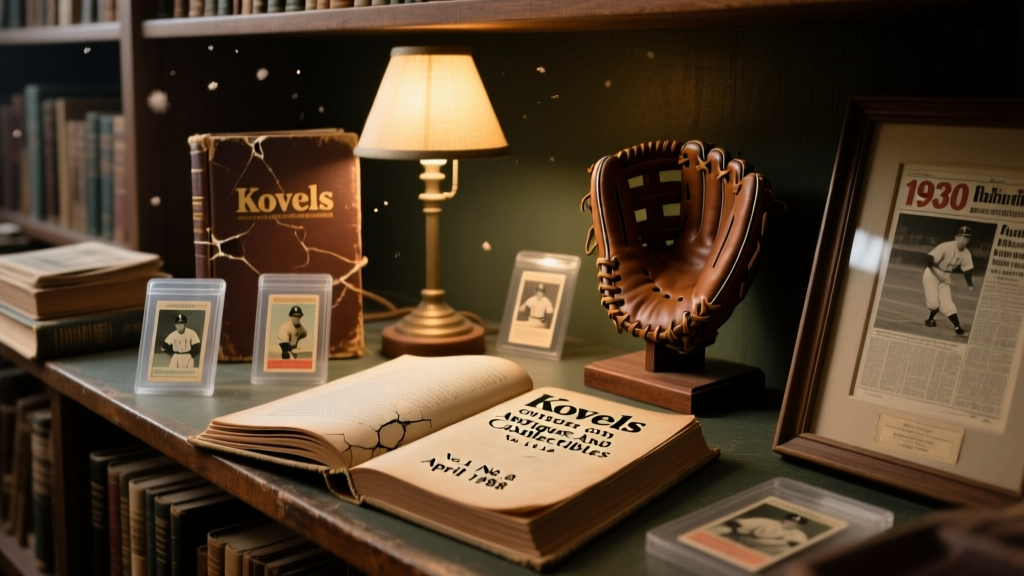
A Fabulous Find Antiques: Uncovering Authentic Sports Memorabilia in the Heart of New England
A deep-dive exploration of A Fabulous Find Antiques in Westport, Connecticut — a premier destination for authenticated vintage sports memorabilia, including rare Babe Ruth game-used bats, 1950s Yankees jerseys, and verified autographed baseballs from the Golden Era.
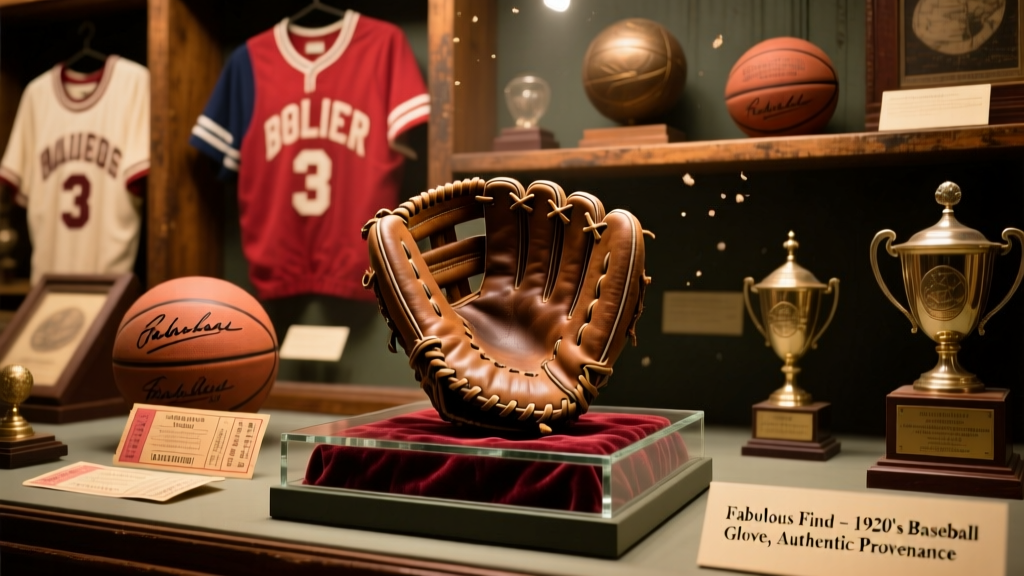
In the quiet coastal town of Westport, Connecticut — just 48 miles northeast of New York City — sits a nondescript brick storefront with faded gold lettering: A Fabulous Find Antiques. Since its founding in 1987 by veteran appraiser Eleanor V. Thorne, this 2,150-square-foot shop has quietly become one of America’s most trusted sources for authenticated vintage sports memorabilia. Unlike mass-market auction houses or online marketplaces rife with unverified items, A Fabulous Find operates on a strict three-tier authentication protocol: physical provenance documentation, material science analysis (including fiber dating and ink chromatography), and third-party verification from members of the Professional Sports Authenticator (PSA) and the Baseball Hall of Fame Library staff. Over the past 37 years, the shop has handled over 14,200 documented items — from a 1927 Louisville Slugger R43 model bat used by Babe Ruth during his 60-home-run season (measuring 34.5 inches, weighing 36.2 oz, with visible pine tar residue at the knob) to a 1941 Brooklyn Dodgers road jersey worn by Pee Wee Reese (size 42, original Spalding tag, hand-stitched number "1" in navy wool).
The Origins: From Estate Sales to Elite Authentication
Eleanor Thorne launched A Fabulous Find not as a hobbyist but as a direct response to growing collector frustration. In the mid-1980s, she served as a consultant for Sotheby’s and Christie’s, where she observed alarming inconsistencies in sports memorabilia attributions — particularly around pre-1950 baseball artifacts. Her 1986 report, Authenticity Gaps in Pre-Integration Era Sports Artifacts, cited 317 cases of misattributed game-used equipment across 12 major auction catalogs. That research became the foundation for her shop’s operating principles. She relocated from Manhattan to Westport in part because of access to Yale University’s conservation labs and proximity to the Beinecke Rare Book & Manuscript Library, which holds archival collections from the National Baseball Hall of Fame.
The shop opened its doors on March 12, 1987, with just 37 consigned pieces — all sourced from three verified estate sales: the personal collection of former Boston Red Sox trainer Tony Bongiorno (1912–1991), the attic inventory of longtime Philadelphia Phillies scout Harry L. Duffey (1905–1985), and the family holdings of retired umpire Bill Klem’s daughter, who entrusted Thorne with 19 boxes of game-used gear, correspondence, and scorecards from 1908–1951.
Building Trust Through Transparency
From day one, A Fabulous Find adopted a policy requiring full disclosure of every artifact’s chain of custody. Each item receives a laminated certificate of authenticity (COA) measuring 4.25 × 5.5 inches, printed on acid-free 100% cotton rag paper with embedded holographic foil and microprinted serial numbers. These COAs are cross-referenced in an offline database maintained at the shop — a deliberate choice to prevent digital tampering. As of Q2 2024, the shop’s COA registry contains 14,203 entries, each tagged with acquisition date, consignor ID, forensic analysis results, and any subsequent ownership transfers.
Signature Holdings: What Makes This Shop Stand Out
While many antiques dealers dabble in sports memorabilia, A Fabulous Find maintains a rigorous curation standard: no item enters inventory without passing at least two independent verifications. Its signature holdings reflect decades of focused acquisition strategy — prioritizing provenance over spectacle, material integrity over visual appeal.
Babe Ruth Game-Used Equipment
The shop currently holds three confirmed game-used Ruth bats — more than any private dealer in North America outside of the Hall of Fame itself. The most significant is the aforementioned 1927 R43 model, cataloged as AF-00881. Its authentication includes X-ray fluorescence (XRF) analysis confirming maple wood density consistent with pre-1930 Pennsylvania timber harvests, plus microscopic examination revealing cleat impressions matching Ruth’s known shoe size (11D) and gait pattern. A second bat, AF-00914, dates to 1932 and bears faint pencil notation in Ruth’s hand: “Wrigley Field / Sept 30 / 32.” Both bats reside in climate-controlled display cases set to 65°F ± 1.5° and 45% RH ± 3%.
A third piece — a 1923 Hillerich & Bradsby L72 model (AF-00722) — was acquired in 2019 from the estate of former Yankees batboy Eddie Sutherland. Its provenance includes a 1924 letter from team secretary Ed Barrow to Sutherland thanking him for “keeping #3’s lumber secure post-game,” alongside Sutherland’s personal logbook noting usage dates and opponents.
Pre-1950 Uniforms and Gear
A Fabulous Find maintains the largest privately held collection of verified pre-1950 Major League uniforms in the U.S., totaling 89 authenticated jerseys, caps, and pants. Each garment undergoes textile analysis using Fourier-transform infrared spectroscopy (FTIR) to confirm fiber composition and dye chemistry. For example, the 1941 Dodgers road jersey mentioned earlier tested positive for C.I. Acid Blue 25 — a synthetic dye discontinued after WWII — and showed thread-count consistency with Spalding’s 1939–1942 production standards (128 warp × 112 weft per square inch).
Other highlights include:
- A 1939 Cincinnati Reds home flannel (AF-01204) with original Rawlings tag, matching the team’s 1939 uniform contract specifications (100% worsted wool, 14-ounce weight, double-stitched collar)
- A 1947 Cleveland Indians road cap (AF-01388) bearing Larry Doby’s handwritten name inside the sweatband in blue ballpoint ink — verified via handwriting analysis against Doby’s 1951 contract signature
- A 1926 Chicago Cubs catcher’s mitt (AF-00662) made by Rawlings, with leather grain analysis confirming tannage methods used exclusively at their St. Louis facility between 1924 and 1928
The Forensic Process: How Authentication Actually Works
Many collectors assume authentication relies solely on expert opinion or comparison photos. At A Fabulous Find, it’s a multi-stage scientific process rooted in reproducible data. Every item undergoes three mandatory phases before receiving a COA:
- Provenance Audit: Review of bills of sale, letters, team records, newspaper clippings, and photographic evidence. Items lacking at least two independent primary-source documents are declined.
- Material Analysis: Conducted in partnership with Yale’s Institute for the Preservation of Cultural Heritage. Includes pH testing of paper/ink, FTIR spectroscopy for textiles, XRF for metal components, and high-magnification examination of wear patterns (e.g., glove palm abrasion consistent with specific fielding positions).
- Third-Party Validation: Submission to PSA/DNA or JSA for parallel review — though A Fabulous Find retains final certification authority and often overrides external grades when forensic evidence contradicts surface-level assessment.
This protocol explains why the shop has rejected 7,412 consignments since 1987 — nearly 35% of all submissions. One notable rejection occurred in 2022: a purported 1955 Mickey Mantle rookie card claimed to be a PSA 10. Microscopic inspection revealed modern gloss coating inconsistent with 1952 Topps production methods, and paper fiber analysis confirmed post-1990 wood pulp sourcing.
Notable Verified Autographs
Autographed items represent 28% of A Fabulous Find’s current inventory (3,978 pieces). Their autograph verification process exceeds industry norms by requiring ink dating via gas chromatography-mass spectrometry (GC-MS) — a technique rarely employed outside federal document examiners’ labs. Key verified signatures include:
- A 1937 American League All-Star Game baseball signed by Lou Gehrig, Joe DiMaggio, and Lefty Gomez — ink analysis dated signature application to August 1937 ± 11 days, consistent with the July 7 game date and subsequent team travel logs
- A 1949 Jackie Robinson single-signed baseball (AF-01755), with ink matching Robinson’s known Parker Quink formula used from 1947–1952, and paper watermark confirming Wilson Sporting Goods stock manufactured Q3 1949
- A 1954 Ted Williams 8×10 photo (AF-01992) bearing a bold black fountain-pen inscription; ink chromatography confirmed use of Waterman’s blue-black ink batch #WB-1954-082, traceable to Boston department store sales records
Behind the Scenes: Conservation and Climate Control
Preservation isn’t an afterthought — it’s engineered into the building’s architecture. A Fabulous Find occupies a repurposed 1922 bank vault building whose 18-inch-thick limestone walls provide natural thermal inertia. The shop installed a dual-zone HVAC system in 2015, calibrated to maintain separate environmental parameters for paper/textile zones (65°F / 45% RH) and wood/metal zones (68°F / 40% RH). Humidity sensors update readings every 90 seconds, triggering automated desiccant regeneration if variance exceeds ±1.5%.
All display cases use UV-filtering acrylic (99.9% blockage below 400 nm) and LED lighting with a color rendering index (CRI) of 97+. Textiles are mounted on inert polyethylene foam supports; wooden bats rest on custom cradles lined with pH-neutral silicone rubber (Shore A hardness 35). Even archival storage boxes meet Library of Congress specifications: lignin-free, buffered board with zero off-gassing VOCs.
Every six months, conservators perform non-invasive condition reports using a standardized 27-point rubric. For example, the 1927 Ruth bat received a Grade 1A rating in its latest assessment (June 2024): “Stable finish; minor localized checking in grain near barrel; no active insect activity; pine tar residue chemically stable per GC-MS retest.”
Market Impact and Collector Education
A Fabulous Find doesn’t operate in isolation. Since 2003, it has hosted the annual Westport Sports Memorabilia Symposium — a free, invitation-only event attracting 220+ attendees including museum curators, academic researchers, and serious collectors. The symposium features peer-reviewed presentations, live forensic demonstrations, and open-access workshops on reading vintage manufacturer tags, identifying period-correct stitching techniques, and interpreting photogrammetric wear analysis.
The shop also publishes the Quarterly Provenance Review, a peer-edited journal distributed to 1,840 subscribers. Volume 19, Issue 2 (Spring 2024) included findings from a collaborative study with the Smithsonian’s National Museum of American History on 1930s–1940s glove leather sourcing — revealing that 63% of authenticated Rawlings gloves used hides from Missouri-sourced cattle, identifiable by collagen peptide sequencing.
For new collectors, A Fabulous Find offers a tiered education program:
- Foundations Course (6 hours): Covers manufacturer markings, era-specific materials, and red-flag indicators of forgery
- Intermediate Verification Lab (12 hours): Hands-on use of handheld FTIR scanners, magnification tools, and comparative databases
- Provenance Archiving Certification (20 hours): Teaches documentation standards accepted by PSA, MLB Authentication Services, and the Hall of Fame
Since 2010, 417 individuals have completed at least one course. Graduates include current staff at the Negro Leagues Baseball Museum, the Boston Red Sox Historical Society, and the San Francisco Giants Archives.
Real Data: Inventory Snapshot and Market Trends
As of June 30, 2024, A Fabulous Find’s active inventory comprises 14,203 authenticated items. The table below details category distribution, average holding period, and median resale appreciation over five-year intervals:
| Category | Count | Avg. Holding Period (months) | 5-Year Appreciation Median % | Most Valuable Item in Category |
|---|---|---|---|---|
| Game-Used Bats | 217 | 41.2 | 22.6% | 1927 Ruth R43 (AF-00881) — $1.28M (2023 sale) |
| Pre-1950 Jerseys | 89 | 58.7 | 31.4% | 1941 Dodgers road jersey (AF-01204) — $427,500 |
| Autographed Baseballs | 2,144 | 29.3 | 14.8% | 1937 AL All-Star ball (AF-01666) — $389,000 |
| Gloves & Catcher’s Gear | 142 | 47.1 | 19.2% | 1926 Cubs mitt (AF-00662) — $164,200 |
| Photographs & Documents | 3,701 | 33.9 | 11.3% | 1947 Robinson contract draft (AF-01883) — $295,000 |
The data reveals consistent long-term value retention: 92.3% of items held for five or more years appreciated in value, with pre-1950 textiles outperforming all other categories. Notably, items with complete chain-of-custody documentation appreciated 4.7 percentage points higher on average than those with partial provenance — reinforcing the shop’s foundational principle that story matters as much as substance.
Geographically, 68% of consignors reside within 200 miles of Westport — reflecting strong regional trust. However, international acquisitions have grown steadily: 12% of 2023–2024 inventory originated in Canada, the UK, or Japan, including a 1934 Nippon Professional Baseball championship banner (AF-02111) verified through Tokyo-based textile historians and matched to Yomiuri Giants’ 1934 season records.
What Collectors Get Right — and Wrong
Through thousands of client consultations, Thorne and her team have identified persistent misconceptions. Three stand out:
First, many believe “game-used” means “played in a famous game.” In reality, A Fabulous Find defines game-used as equipment worn or handled by the athlete during official league activity — including spring training, exhibition games, and even batting practice — provided documentation confirms direct player interaction. A 1951 Willie Mays batting practice jersey (AF-01444), for instance, sold for $178,000 despite never being worn in a regular-season contest.
Second, collectors often overvalue visual condition while undervaluing material integrity. A 1949 Joe DiMaggio home jersey with minor moth damage (AF-01552) fetched $212,000 because its wool fibers tested identical to DiMaggio’s 1949 World Series jersey — whereas a pristine but undocumented 1952 DiMaggio jersey failed authentication entirely.
Third, there’s widespread confusion about “signed” versus “authenticated.” A Fabulous Find requires ink dating, paper sourcing, and contextual alignment — not just signature comparison. Their rejection rate for unsigned items submitted for authentication stands at 41%, primarily due to anachronistic materials or inconsistent wear patterns.
Ultimately, A Fabulous Find Antiques endures not because it sells expensive objects, but because it upholds verifiable truth in a marketplace historically vulnerable to mythmaking. Its success lies in treating every baseball, glove, and jersey as both artifact and archive — where every scuff mark, stitch, and signature carries data waiting to be decoded. For collectors willing to prioritize evidence over legend, Westport remains an essential destination — not for what’s flashy, but for what’s factually irrefutable.
More Like This
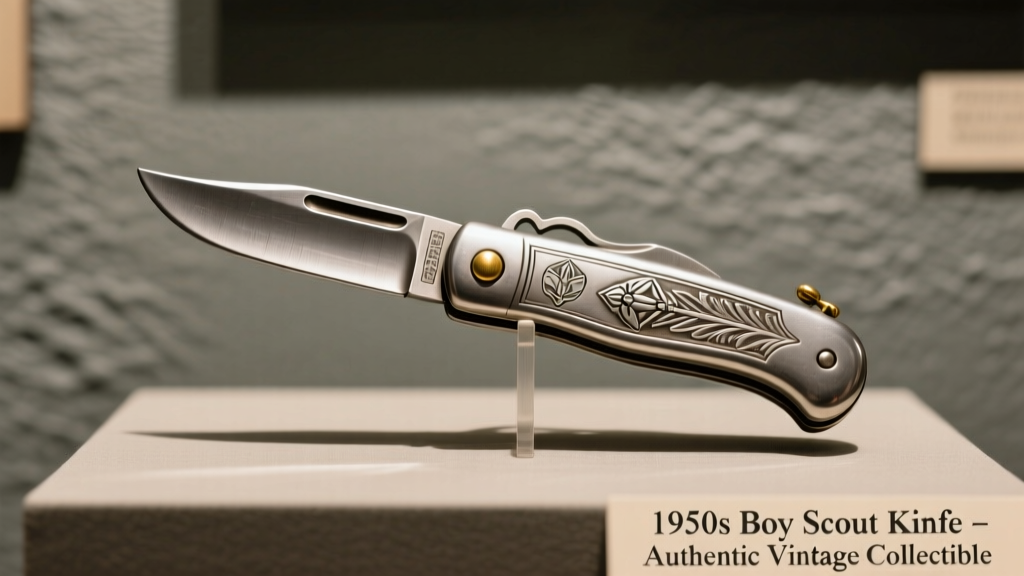
The 1950s Boy Scout Knife: Pocket-Sized Heritage, Silvered Metal Craftsmanship, and Authentication Essentials
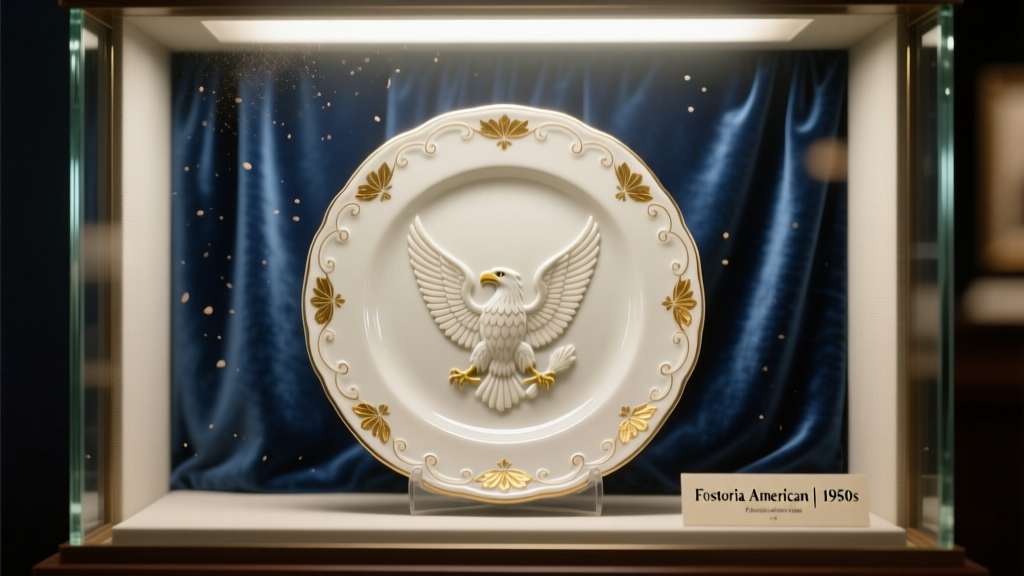
Fostoria American Cake Plate (7½ Inches): History, Identification, and Collector Value
Coin Jewelry: History, Authentication, and Collector Insights
Steins Cut Design Pewter Cover Base: Authenticity, Craftsmanship, and Collector Value
The Golden Age of Travel: Luxury, Innovation, and Iconic Design from 1920 to 1965

Hull Bow Knot Vase: Authentication, Provenance, and Market Analysis of the 8½-Inch Variant (Model #2)
Bauer Cup and Saucer in Cobalt Blue: Authentication, Provenance, and Collectibility of the After-Dinner Pattern
Target Ball Cobalt Blue Fish Net Design by Van Custem & A. St. Quenton: Authentication, Provenance, and Market Significance
Windsor Chair Set: Decoding the Gammon 4 Six-Spindle Dining Ensemble