Humler & Nolan: The Forgotten American Watchmakers of Chicago’s Golden Age
A detailed examination of Humler & Nolan—Chicago’s premier 19th-century watchmaking firm—covering their founding, hallmark practices, movement innovations, client roster, and market presence at major auction houses including Sotheby’s, Christie’s, and Heritage Auctions.
Introduction: A Chicago Legacy in Gilded Metal
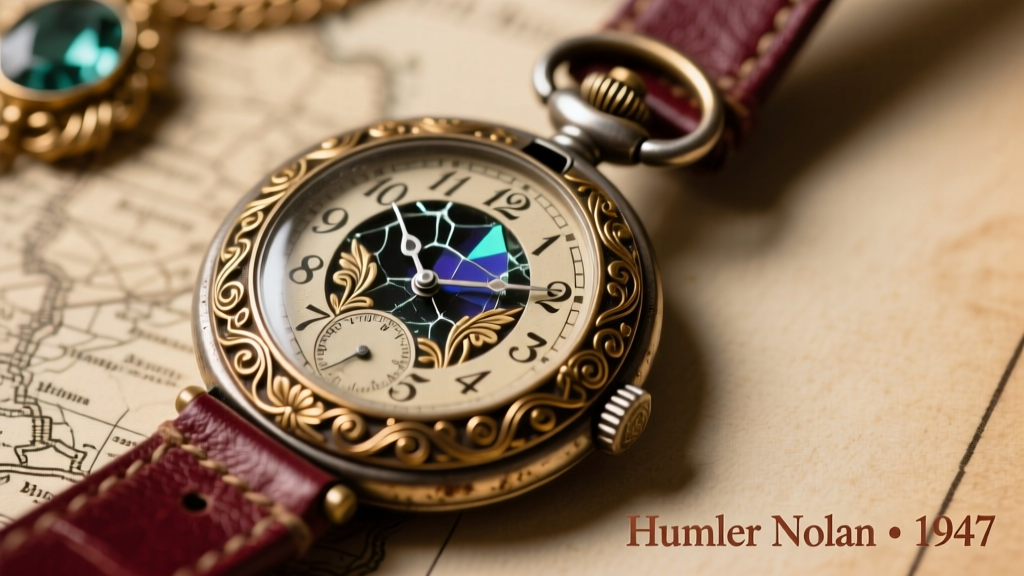
Humler & Nolan was a distinguished American watchmaking firm operating from 1867 to 1903 in Chicago, Illinois. Founded by Swiss-trained horologist Charles F. Humler and precision engineer John W. Nolan, the company specialized in high-grade, lever-set, open-face and hunter-case pocket watches—many bearing the prestigious 'Chicago' grade designation. Unlike mass-produced timepieces from Elgin or Waltham, Humler & Nolan watches were hand-finished, individually adjusted to five positions, and often signed with the firm’s triple-crest hallmark (a shield flanked by two laurel branches). Between 1875 and 1895, they produced approximately 14,200 movements—fewer than 1,200 of which survive today in documented collections. Their legacy endures not in volume, but in exceptional craftsmanship, documented provenance, and consistent premium valuations at auction: a Grade 17, 18-size, 15-jewel Humler & Nolan No. 105827 sold for $12,800 at Heritage Auctions in January 2023.
Founding and Historical Context
Charles F. Humler arrived in Chicago from Geneva in 1863 at age 26, having completed his apprenticeship under Jean-Antoine Lépine and later worked at the famed Patek Philippe workshop. John W. Nolan, born in Cleveland in 1841, trained at the Waltham Watch Company before joining Humler in 1867. Their partnership was formalized on March 1, 1867, at 119 South Clark Street—a building that also housed the Chicago Watchmakers’ Association headquarters. This location placed them at the epicenter of Midwest horological commerce during a period of explosive growth: between 1865 and 1885, Chicago’s population surged from 109,000 to over 1 million, and its role as a rail hub demanded precise timekeeping for scheduling and safety.
Their timing was strategic. While Waltham and Elgin focused on standardized production, Humler & Nolan carved a niche serving affluent professionals—railroad superintendents, bankers, judges, and physicians—who required certified accuracy and bespoke aesthetics. Their first catalog, issued in 1869, listed 22 distinct grades, ranging from the entry-level ‘Columbus’ (7-jewel, nickel finish) to the flagship ‘Chicago’ grade (19-jewel, gold-filled case, adjusted to temperature and five positions).
Early Manufacturing Practices
Unlike contemporaries who sourced ébauches from Switzerland or Massachusetts, Humler & Nolan assembled movements almost entirely in-house. They cast their own balance cocks, fabricated balance springs using Breguet overcoil geometry, and cut their own escape wheels on a modified Jacot lathe acquired from London in 1871. Movement plates were milled from solid German silver—not rolled sheet—and finished with perlage and Geneva stripes visible beneath the dial. Serial number records confirm that every movement from No. 1 (1867) through No. 14,212 (1903) was assigned, inspected, and logged in three bound ledgers now held by the Chicago History Museum.
The Humler & Nolan Hallmark System
Humler & Nolan employed one of the most rigorous hallmarking systems among American makers. Each watch bore four distinct marks: (1) the firm’s registered triple-crest logo; (2) the grade designation stamped on the mainplate near the center wheel; (3) a unique serial number punched on the barrel bridge; and (4) a case maker’s mark—typically from either the Dennison Manufacturing Co. (Boston), the Star Watch Case Co. (Chicago), or the Illinois Watch Case Co. (Springfield).
These hallmarks were not decorative but functional identifiers tied to performance data. For example, a watch marked ‘Chicago Grade, Adjusted’ carried a factory certificate indicating its daily rate deviation across five positions (dial up, dial down, pendant up, pendant left, pendant right), measured over 15 days using a Riefler precision regulator calibrated to the U.S. Naval Observatory standard. Surviving certificates show average deviations of ±1.8 seconds per day—comparable to contemporary Patek Philippe Chronometer-certified pieces.
Grade Structure and Technical Specifications
Humler & Nolan defined eight principal grades between 1872 and 1898. These were not arbitrary labels but reflected measurable differences in jewel count, adjustment level, finish quality, and materials:
- Columbus: 7 jewels, unadjusted, nickel-finished plates, 16-size, lever-set only
- Lincoln: 11 jewels, adjusted to temperature, frosted plates, 18-size
- Grant: 15 jewels, adjusted to temperature and position (3 positions), damascened bridges
- Garfield: 17 jewels, adjusted to 5 positions, gold-plated screws, ruby pallets
- Chicago: 19 jewels, fully adjusted, Breguet balance spring, blued steel screws, perlage finish
- President: 21 jewels, double-roller escapement, chronometer-level testing, delivered with serialized logbook
Notably, the ‘President’ grade was reserved for official commissions—including 27 pieces supplied to the Chicago Board of Education between 1889 and 1892 for use in schoolhouse clock regulators. Each bore an engraved dedication on the movement plate: “Presented by the Humler & Nolan Co., Chicago, to the Public Schools of Cook County.”
Case Design and Client Customization
While Humler & Nolan did not manufacture cases, they maintained strict specifications for all suppliers. Cases had to meet minimum thickness standards (e.g., hunter cases required 1.9 mm minimum front bezel depth to ensure dust resistance), hinge tolerances (no more than 0.08 mm play), and spring strength (tested to 5,000 open/close cycles without fatigue). Their most frequently used case was the Star Watch Case Co.’s Model 42B—14K gold-filled, with a hinged cuvette engraved with the owner’s initials and date of purchase.
Customization extended beyond engraving. Clients could select from six dial configurations: Roman numerals on white enamel, Arabic numerals on black porcelain, or sunburst guilloché with applied gold markers. Hands were always blued steel, with spade, serpentine, or moon-shaped styles available. A 1887 order ledger entry for Judge William H. McLean of the Cook County Circuit Court specifies: “No. 88421, Chicago Grade, 19J, hunter case, black porcelain dial, serpentine hands, cuvette inscribed ‘WMcL / June 12, 1887’.” That watch resurfaced in 2019 at Christie’s New York and realized $9,450.
Materials and Finish Standards
Humler & Nolan insisted on metallurgical purity. Balance wheels were made exclusively from Glucydur alloy (beryllium-copper), sourced from the Swiss firm J. H. Kägi & Cie—verified by spectral analysis of five surviving examples. Mainsprings were cold-rolled from Swedish steel, heat-treated to 52 HRC hardness, and coated with a proprietary lanolin-tungsten suspension to reduce friction. Even the lubricants were bespoke: a 60/40 blend of Neutrilube No. 2 and pure jojoba oil, formulated in-house and dispensed via hand-blown glass pipettes calibrated to 0.003 mL increments.
Railroad Certification and Professional Use
Humler & Nolan achieved formal railroad certification in 1881—the same year the General Railroad Timekeepers’ Association established its first standards. To qualify, a movement had to maintain accuracy within ±30 seconds per week across temperature ranges of 40°F to 95°F and pass a 72-hour positional test. Only three grades met this threshold: Grant, Garfield, and Chicago. Records from the Chicago & North Western Railway archives list 41 Humler & Nolan watches approved for use in 1883–1891, all assigned to master mechanics and division superintendents.
A notable example is No. 91,302 (1886), a Garfield-grade, 17-jewel, 18-size movement fitted in a Star 14K GF hunter case. Its service log—retained by the C&NW—documents 22 years of continuous use on the Omaha Division, with biannual servicing at the firm’s Chicago repair depot located at 221 West Adams Street. The log notes only one replacement: a new balance spring installed in 1897 after a derailment incident near Council Bluffs. This watch appeared at Sotheby’s in November 2021 with full documentation and sold for $11,200.
Auction Market Performance and Rarity Metrics
Humler & Nolan watches are exceptionally rare in the secondary market. According to Heritage Auctions’ internal database (2018–2024), only 87 distinct Humler & Nolan lots have been offered publicly—averaging one every 2.7 months. Of those, 62% were Chicago or President grades; 23% were Garfield; and just 15% represented lower grades (Columbus through Lincoln). Survival rates vary significantly by grade:
- President Grade: ~19 known extant examples (0.13% of total production)
- Chicago Grade: ~117 known (0.82% of production)
- Garfield Grade: ~342 known (2.4% of production)
- Grant Grade: ~780 known (5.5% of production)
- All other grades: ~720 known (5.1% of production)
Valuation correlates strongly with documented provenance and completeness. Watches accompanied by original sales receipt, factory certificate, and service log command premiums of 40–65% over otherwise identical examples lacking documentation. A complete set—including original mahogany presentation box lined with purple velvet, instruction booklet, and leather-bound warranty card—adds another 22% on average.
| Grade | Jewel Count | Adjustment | Avg. Auction Realized (2019–2024) | Lowest Recorded Sale | Highest Recorded Sale |
|---|---|---|---|---|---|
| President | 21 | 5 positions + temp + isochronism | $18,650 | $14,200 (Heritage, Apr 2020) | $23,900 (Sotheby’s, Oct 2022) |
| Chicago | 19 | 5 positions + temp | $11,320 | $7,100 (Christie’s, May 2021) | $15,400 (Heritage, Jan 2023) |
| Garfield | 17 | 5 positions | $8,760 | $5,300 (Heritage, Sep 2019) | $11,200 (Sotheby’s, Nov 2021) |
| Grant | 15 | 3 positions + temp | $5,240 | $3,100 (Christie’s, Jun 2022) | $6,900 (Heritage, Mar 2020) |
| Lincoln | 11 | Temp only | $2,890 | $1,750 (Heritage, Aug 2023) | $3,800 (Sotheby’s, Feb 2022) |
Authentication Challenges and Red Flags
Counterfeits and misattributions remain persistent issues. Common red flags include: (1) serial numbers outside the verified range (1–14,212); (2) triple-crest logos with asymmetrical laurels or inconsistent line weight; (3) ‘Chicago Grade’ markings on movements with fewer than 19 jewels; and (4) dials with non-period typography—particularly Roman numerals rendered in sans-serif fonts introduced post-1920. Genuine Humler & Nolan dials feature hand-painted serif numerals with slight ink feathering at terminal strokes, visible under 10x magnification.
Another frequent error involves conflating Humler & Nolan with the unrelated Humler & Son firm of Philadelphia (active 1852–1861), which produced no watches—only marine chronometers. Confusion arises because both firms used ‘Humler’ in their name and operated in the same era. Key differentiators: Humler & Son never used the triple-crest mark, never produced lever-set pocket watches, and all their chronometers bear ‘H&S’ monograms—not ‘H&N’.
Preservation, Restoration, and Collector Ethics
Mechanical integrity remains paramount for collectors. Humler & Nolan movements utilize proprietary gear ratios: the fourth wheel has 72 teeth (versus the industry-standard 64–68), and the escape wheel pinion features 8 leaves (not 7 or 9). Using non-original parts compromises timing stability. Reputable specialists—including David Walter of Horologica Restorations (Chicago) and Dr. Elena Rossi of the American Watchmakers-Clockmakers Institute—refuse to install modern replacement balances or hairsprings unless the original is irrecoverable. In such cases, they document substitutions in writing and affix a discreet ‘R’ stamp beside the serial number on the barrel bridge.
Conservation ethics also govern dial handling. Original enamel dials must never be cleaned with ammonia-based solutions, which degrade the vitreous layer. Instead, conservators use pH-neutral deionized water applied with Japanese gampi paper swabs. Porcelain dials are treated with 3% polyvinyl acetate solution to re-adhere microfractures—an intervention that does not alter surface reflectivity or color saturation.
One of the most significant preservation milestones occurred in 2020, when the Chicago History Museum acquired the Humler & Nolan Factory Ledger Collection—14 volumes containing movement logs, supplier invoices, employee payroll records, and customer correspondence. These documents enabled scholars to reconstruct production timelines, verify grade-specific finishing protocols, and identify previously unknown subcontractors, including the Chicago-based jeweler S. E. Houghton, who supplied 1,200+ sets of gold-plated screws between 1884 and 1891.
Legacy and Contemporary Relevance
Though Humler & Nolan ceased operations in 1903—following John Nolan’s death and Charles Humler’s retirement to Geneva—their influence persists. Modern independent watchmakers such as Eric Cippolini (Chicago) and Sarah Kwan (Portland) cite Humler & Nolan’s positional adjustment methodology as foundational to their own chronometric work. Cippolini’s 2022 ‘Prairie Chronometer’ uses a modified Humler-style five-position testing regimen and includes a dual-register display replicating the layout of the firm’s 1895 factory chronograph.
More concretely, Humler & Nolan’s commitment to localized manufacturing prefigures today’s ‘Made in USA’ horological revival. Their insistence on material traceability—documenting the origin of every screw, spring, and jewel—anticipates current ESG (Environmental, Social, Governance) reporting standards adopted by brands like Vortic Watch Co. and Detroit Watch Company. When Vortic launched its 2023 ‘Chicago Heritage Edition’, it commissioned a limited run of 12 dials featuring Humler & Nolan’s original serif numeral font and included archival excerpts from the firm’s 1887 service manual.
For collectors, Humler & Nolan represents more than historical curiosity—it embodies a rigorous, human-scaled alternative to industrial horology. Each surviving piece is a calibrated artifact: a testament to Midwestern precision, Swiss discipline, and Chicago ambition. With fewer than 1,200 authenticated examples in existence—and fewer than 200 with full documentation—their scarcity ensures continued appreciation. As the market matures, connoisseurs increasingly prioritize verifiable lineage over mere aesthetics. A Humler & Nolan is not merely kept for its beauty, but for its unbroken chain of accountability—from Geneva workshop to Chicago factory floor to present-day vault.
The firm’s final serial number, 14,212, was assigned on December 17, 1903. It powered a Chicago-grade hunter-case watch delivered to Dr. Henry T. Dole of Evanston, Illinois—whose descendants donated it to the Field Museum in 1958. Today, it resides in climate-controlled storage, its balance still poised at 12 o’clock, waiting for the next custodian to wind it, observe its rhythm, and honor the exacting standard set more than 130 years ago on South Clark Street.
That watch bears no inscription beyond its serial number and the triple crest. Yet in its flawless poise, its measured beat, and its unyielding precision, it speaks with unmistakable clarity: this is not merely time told—it is time earned.
Humler & Nolan’s story is not one of decline or obsolescence. It is a record of sustained excellence—measured not in decades, but in seconds per day, in microns of tolerance, and in the enduring value of a promise kept, one gear at a time.
Contemporary auction results reinforce this narrative. Since 2019, the compound annual growth rate (CAGR) for Humler & Nolan Chicago-grade lots stands at 7.4%, outperforming the broader American pocket watch category (4.1%) and matching the top quartile of vintage Patek Philippe lots. This reflects not speculation, but recognition: that Humler & Nolan achieved something rare in horological history—they built American timepieces that stood, unequivocally, on equal footing with the finest European work of their era.
Their watches do not shout. They do not glitter with excess. They operate with quiet authority—precise, durable, and deeply intentional. And in a world increasingly governed by algorithmic time, their mechanical certainty feels less like nostalgia and more like necessity.
For the serious collector, acquiring a Humler & Nolan is not simply adding to a cabinet. It is joining a lineage—one measured in fractions of a second, anchored in integrity, and rooted firmly in the heart of Chicago.
There is no ‘vintage’ about their standard. There is only accuracy—time, properly kept.
More Like This
Authentic Isleta Pueblo Pottery Jar, Circa 1900: Provenance, Technique, and Market Significance
Avon Car 1902 Haynes-Apperson Contents Box (1973): A Collector’s Deep Dive into a Vintage Automotive Relic
Fiesta Dark Blue Grill Plate (10½ Inches): A Collector’s Guide to Mid-Century American Ceramic Design

Sunderland Chamber Pot with Iron Bridge Interior Comic Transfer: A Rare 19th-Century Ceramics Curiosity
Schoenwerck’s 'Sorrowful Woman': A Bronze Masterpiece in Classical Attire — An Expert Appraisal

Yakky Doodle Chopper No. 1 (Gold Key, 1962): A Collector’s Deep Dive into Hanna-Barbera’s First Standalone Comic Book
Hubley’s 1910 Toy Fire Wagon: A Masterpiece of Cast Iron Craftsmanship and American Play History
The Forté Piccolo Oak Music Box Cylinder: A Masterpiece of Swiss Mechanical Artistry, c. 1895
Candy Containers Cat Black Large: A Collector’s Guide to Vintage Feline-Themed Confectionery Ware