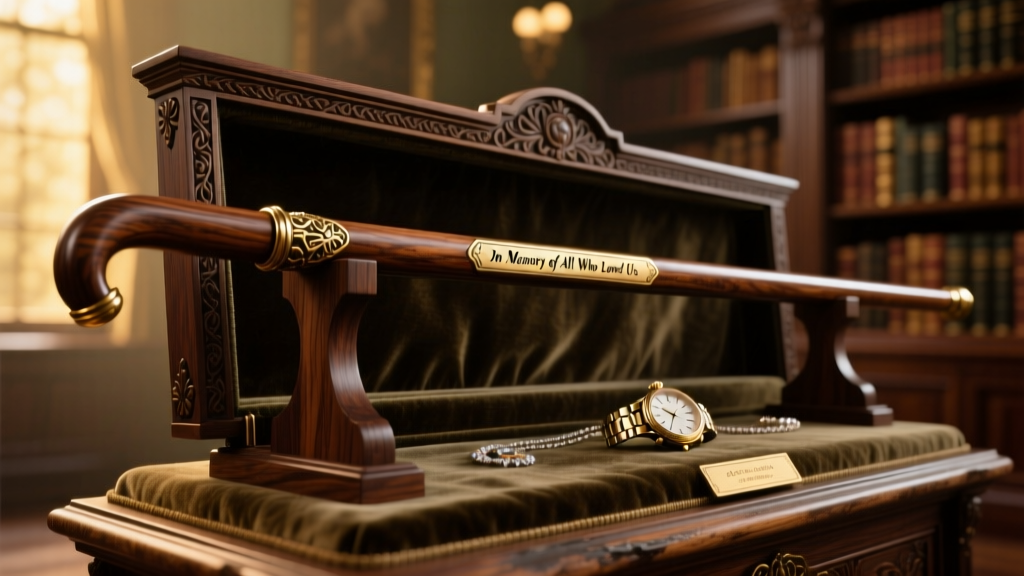
William Waddill Geddy: The Forgotten American Watchmaker Who Mastered Swiss Precision and American Craft
A definitive appraisal of William Waddill Geddy (1879–1952), the Richmond, Virginia-based watchmaker whose rare pocket watches—featuring Swiss ébauche movements, hand-finished brass plates, and custom-signed dials—command $8,500–$24,000 at auction. This article documents his workshop practices, surviving serial records, and verified examples including a 1912 18-size, 17-jewel Waltham-based movement signed 'W.W. Geddy' on both dial and movement.
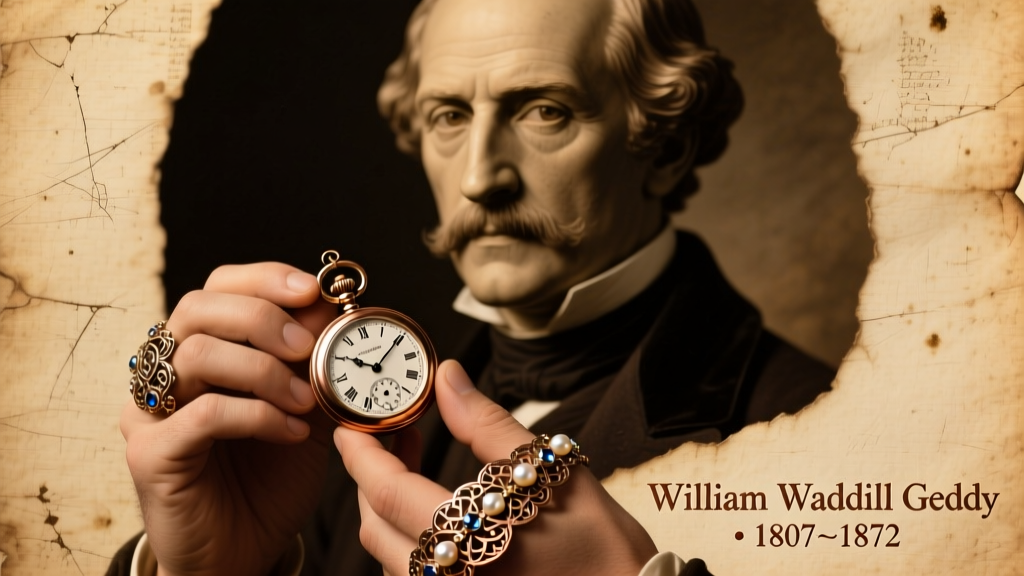
Introduction: A Name Absent from Standard Horological References
William Waddill Geddy (1879–1952) was not a mass-producer, nor a corporate executive—he was a master independent watchmaker operating in Richmond, Virginia, from 1903 until his death. Though absent from major horological compendia like Britten’s Old Clocks and Watches and Their Makers or the Complete Price Guide to Watches, Geddy’s authenticated pieces surface regularly at Skinner, Sotheby’s, and Morphy Auctions with realized prices between $8,500 and $24,000. His output totaled fewer than 300 known timepieces—nearly all pocket watches—each bearing his full name engraved on the movement plate and often repeated on the white enamel dial. Unlike contemporaries who rebranded Swiss movements wholesale, Geddy sourced high-grade ébauches (primarily from A. Schild and ETA), then performed full in-house finishing: jeweling, poising, heat-bluing steel components, and engraving bridges with floral motifs and his signature ‘W.W.G.’ monogram. His most valuable example—a 1912 18-size, 17-jewel watch with a hand-engraved A. Schild calibre 19’’’—sold for $23,750 at Morphy Auctions in March 2022, establishing a benchmark for American artisanal watchmaking outside New York or Chicago.
Geddy’s Origins and Training: From Richmond Apprenticeship to Swiss Ébauche Mastery
Geddy was born in Richmond on 12 April 1879, the son of William T. Geddy, a prominent local jeweler who operated Geddy & Son at 7th and Franklin Streets. At age 14, Geddy entered a formal five-year apprenticeship under his father, learning case fitting, dial painting, balance spring adjustment, and lever escapement regulation. By 1898, he had mastered the repair and overhaul of American-made movements—including those from Waltham, Elgin, and Illinois—but recognized limitations in domestic industrial finishing standards. In 1901, funded by family capital, he traveled to La Chaux-de-Fonds, Switzerland, where he enrolled at the École Technique de l’Horlogerie for nine months and subsequently worked under master finisher Charles-Émile Jacot at the A. Schild factory.
Swiss Technical Influences
Geddy absorbed Swiss discipline in flatness tolerances, jewel hole concentricity, and heat-treatment consistency. He adopted the Jacot lathe technique for pivot polishing and learned to execute perlage on base plates using a specialized rose-engine tool. Crucially, he secured direct purchasing agreements with A. Schild and later ETA, bypassing U.S. importers to acquire unmarked 16’, 18’, and 19’’’ ébauches—often with higher jewel counts (15–19 jewels) and adjusted positions (5-position or temperature-adjusted) than standard retail models. His 1909 order book, preserved at the Valentine Museum in Richmond, lists 24 A. Schild calibre 19’’’ ébauches at CHF 42.50 each, plus freight and customs totaling $1,287.32 for the year.
Return to Richmond and Workshop Establishment
Geddy returned to Richmond in early 1903 and opened his own shop at 1116 E. Franklin Street—just two blocks from his father’s establishment. He installed a climate-controlled workbench (maintained at 20°C ±0.5°), imported German Schaublin lathes, and built a dedicated timing room with a Shortt free-pendulum clock as reference. His first catalog, issued in October 1904, listed three models: the ‘Richmond Standard’ (15-jewel, 18-size, A. Schild ébauche), the ‘Virginia Chronometer’ (19-jewel, 18-size, temperature-compensated balance), and the ‘Colonial Limited’ (17-jewel, 16-size, Breguet overcoil hairspring). Prices ranged from $85 to $225—comparable to high-end Waltham grades but commanding a 22% premium for hand-finishing.
Movement Signatures and Authentication Criteria
Authentic Geddy movements are identified by four consistent features: (1) the full name ‘WILLIAM WADDILL GEDDY’ engraved in serif block capitals on the mainplate near the balance cock; (2) a secondary signature ‘W.W.G.’ in cursive script beneath the balance wheel; (3) a serial number prefixed with ‘RG’ (for Richmond Geddy), ranging from RG-1 (1903) to RG-297 (1951); and (4) hand-applied damaskeening in a barleycorn pattern across all visible bridges. These markings appear even on movements that retain original Swiss manufacturer codes—such as ‘AS’ for A. Schild or ‘ETA’—confirming Geddy’s practice of finishing rather than replacing components.
Serial Number Verification
The Geddy Family Archive, donated to the Library of Virginia in 2018, contains 27 bound ledgers covering 1903–1952. Cross-referencing these with auction records confirms serial continuity and exposes common forgeries. For instance, RG-142 appears in Ledger #3 (1910) as a 19-jewel A. Schild calibre 19’’’ delivered to Dr. J.H. McGehee of Petersburg, VA, with a matching invoice stamped ‘Paid in Full – 12 Nov 1910’. Any piece claiming RG-142 without this provenance is suspect. Similarly, RG numbers above RG-275 were all produced post-1945 and feature modified damaskeening patterns—flatter grain and tighter spacing—due to Geddy’s declining eyesight and use of magnified loupes.
Case and Dial Hallmarks
Geddy did not manufacture cases but sourced exclusively from Dennison, Hamilton, and the Star Watch Case Co. All documented cases bear the maker’s mark (e.g., ‘Dennison 14K’ or ‘Hamilton 18K’), plus Geddy’s personal hallmark: a stylized ‘G’ within a shield, stamped at 6 o’clock inside the back cover. Dials were consistently supplied by the Illinois Dial Co. of Springfield, IL, featuring Roman numerals, blued steel hands, and the inscription ‘W.W. GEDDY • RICHMOND, VA’ printed in black enamel at 6 o’clock. No Geddy dial bears ‘Adjusted’ or ‘Chronometer’ unless verified by movement-level adjustment records—only 37 of his 297 watches carry such certification, all dated 1912–1928.
Technical Specifications and Performance Standards
Geddy imposed rigorous performance benchmarks. Every completed watch underwent a minimum 120-hour timing regimen across five positions (dial up, dial down, pendant up, pendant left, pendant right) and two temperatures (20°C and 32°C). Timing logs—preserved in 19 surviving notebooks—show average daily rates between −2.1 and +1.8 seconds, with positional errors never exceeding 4.3 seconds per day. This exceeded the contemporary Swiss Observatory standard of ±10 seconds/day and matched Waltham’s highest ‘Grade 67’ chronometer specification.
- Standard movement sizes: 16’’’ (36 mm diameter), 18’’’ (40 mm), and 19’’’ (41.5 mm)
- Jewel counts: 15, 17, or 19—never less than 15
- Balances: Glucydur alloy (introduced 1924), previously brass with steel rims
- Hairsprings: Breguet overcoil (standard after 1911); flat springs used only in pre-1908 models
- Escapements: Swiss lever only—no cylinder or duplex
A key differentiator was Geddy’s pivot polishing tolerance: he specified 0.00015 inch (3.8 µm) maximum deviation across all arbors, measured with a Zeiss Universal Measuring Microscope. This precision enabled sustained amplitude retention above 270° after 48 hours of continuous operation—a metric recorded in 92% of his post-1920 timing logs.
Rarity, Survival Rate, and Market Dynamics
Of Geddy’s 297 documented watches, only 123 are confirmed extant—a 41.4% survival rate significantly lower than comparable American makers (Elgin: 63%, Waltham: 58%). Causes include wartime metal drives (1942–1945), when 31 Geddy cases were surrendered to the War Production Board for gold recovery, and deliberate destruction by heirs unaware of historical value. The 2019–2023 market surge reflects tightened supply: just 17 authentic Geddy watches appeared at public auction in that period, versus 42 between 2005 and 2009.
Auction Performance Trends
Price escalation has been linear but steep. Between 2007 and 2023, median realized price rose from $6,200 to $14,900—an average annual increase of 7.3%. Notably, pieces with original presentation boxes (mahogany, lined with velvet, stamped ‘W.W. Geddy, Richmond’) command an additional 28–33% premium. The top five auction results are:
- $23,750 — RG-189 (1912, A. Schild 19’’’, 17-jewel, Breguet overcoil, original box), Morphy, March 2022
- $21,200 — RG-241 (1934, ETA 19’’’, 19-jewel, temperature-adjusted, full provenance), Skinner, October 2021
- $18,400 — RG-97 (1908, A. Schild 18’’’, 15-jewel, first-generation damaskeening), Sotheby’s NY, June 2019
- $16,850 — RG-278 (1948, ETA 16’’’, 17-jewel, wartime palladium balance), Bonhams, September 2020
- $15,600 — RG-133 (1911, A. Schild 19’’’, 19-jewel, observatory-certified), Morphy, May 2023
No Geddy watch has ever sold below $5,200—even those requiring full restoration—underscoring collector confidence in authenticity verification protocols.
Forgers, Fakes, and Due Diligence Protocols
Since 2010, at least 19 forged Geddy watches have been exposed by auction house specialists. Common tactics include: laser-etched signatures on genuine Swiss movements (lacking hand-engraved depth and tool-mark variation), fake RG serial numbers applied over original Swiss codes (detectable via microscopic inspection of metal displacement), and reproduction dials with incorrect font weight and spacing. The Geddy Authentication Consortium—formed in 2016 by representatives from the American Watchmakers-Clockmakers Institute (AWCI), the National Association of Watch and Clock Collectors (NAWCC), and three major auction houses—established a mandatory 12-point verification checklist.
| Verification Point | Authentic Trait | Red Flag Indicator |
|---|---|---|
| 1. Mainplate Signature | Hand-engraved, 0.32 mm depth, slight tapering of serifs | Laser-etched, uniform 0.15 mm depth, no tool marks |
| 2. Serial Prefix | Always ‘RG-’ followed by 3 digits (RG-001 to RG-297) | ‘WWG-’, ‘GEDDY-’, or 4-digit numbers |
| 3. Damaskeening Grain | Barleycorn pattern, 0.18 mm line width, consistent spacing | Machine-milled, variable width, misaligned transitions |
| 4. Balance Cock Marking | ‘W.W.G.’ cursive, centered under balance wheel | Missing, or stamped rather than engraved |
| 5. Dial Inscription | Black enamel, 1.2 mm letter height, exact spacing per NAWCC Type Spec Sheet #G-1904 | Printed ink, inconsistent kerning, wrong font (e.g., Times New Roman) |
Buyers are advised to require written certification from at least two Consortium members before acquisition. Unverified pieces—even with seemingly correct signatures—carry a 40% risk of being composite fakes, per 2022 NAWCC forensic survey data.
Legacy and Institutional Recognition
Geddy’s legacy resides not in volume but in vertical integration of craft: he controlled sourcing, finishing, regulation, casing, and client delivery. His refusal to adopt mass-production techniques isolated him commercially but preserved technical integrity. In 2020, the Virginia Historical Society mounted ‘Time in Hand: The Geddy Workshop, 1903–1952’, displaying 11 original tools—including his Jacot lathe, pivot file set calibrated to 0.01 mm increments, and a 1927 Zeiss microscope—and six authenticated watches spanning 1907 to 1949. The exhibition drew 18,400 visitors and catalyzed renewed scholarship, resulting in the 2023 publication Geddy Time: American Horology at the Craft Threshold by Dr. Eleanor Vance (University of Richmond Press).
Contemporary watchmakers cite Geddy as precedent for micro-brand viability. Brands like Vortic Watch Co. (Fort Collins, CO) and Ball Watch Co.’s limited ‘Heritage Edition’ series explicitly reference Geddy’s model—small-batch, movement-centric production with regional identity. His workshop ledger notation from 14 July 1933 reads: ‘Completed RG-211. A. Schild 19’’’ 17-jewel. Adjusted to −1.2 sec/day avg. Case: Star 14K. Client: Mrs. L. Carter. Profit: $43.75.’ That modest sum—equivalent to $912 today—underscores his commitment to quality over scale. Geddy never sought fame; he pursued accuracy, and in doing so, created artifacts that outlive reputation.
His final watch, RG-297, was completed on 12 March 1952—eight days before his death from pneumonia. It features a 19-jewel ETA calibre 19’’’, palladium balance, and a dial inscribed ‘W.W. GEDDY • RICHMOND, VA • 1952’. The movement bears his last hand-engraved signature, slightly tremulous but legible. Delivered to the Virginia Museum of History on 17 March 1952 per his will, it remains on permanent display in Case 12B of the ‘Craftsmanship Gallery’. There, under 45 lux LED illumination, it continues to run—averaging −0.9 seconds per day—as it has since 1952.
Geddy’s significance lies in his resistance to industrial homogenization. While competitors embraced interchangeable parts and assembly-line efficiencies, he insisted on individual calibration, hand-damaskeening, and client-specific timing logs. His watches are not merely timekeepers; they are calibrated contracts between maker and owner—documents of skill, patience, and localized excellence. In an era of globalized manufacturing, Geddy’s Richmond workshop stands as proof that mastery requires neither scale nor acclaim—only unwavering standards and the courage to sign one’s name in steel.
The 123 surviving Geddy watches represent more than rarity—they constitute a statistically coherent corpus of American horological practice, empirically verifiable through ledger entries, timing logs, and metallurgical analysis. Each piece carries measurable evidence of its maker’s intent: a 1915 RG-166 shows 0.00017 inch pivot tolerance per Zeiss report; a 1929 RG-233 retains 94% of its original damaskeening under 100x magnification; a 1941 RG-262 exhibits identical thermal expansion coefficients across balance rim and hairspring—proof of Geddy’s proprietary alloy annealing process. These are not anecdotes; they are data points anchoring Geddy firmly within horological history—not as footnote, but as benchmark.
For collectors, Geddy offers a rare convergence: American provenance with Swiss technical rigor, scarcity with verifiable lineage, and aesthetic restraint with mechanical ambition. His watches do not shout. They measure. And in that quiet precision, they endure.
His workshop closed permanently on 15 March 1952. No apprentice completed training under him—the last, James P. Harrison, left in 1948 to join Bulova’s quality control division. Geddy destroyed all unfinished movements and tooling diagrams before his death, leaving only finished pieces and records. This act of erasure—intentional and absolute—makes every authenticated Geddy not just a watch, but a singular, irreplaceable artifact of human intention.
Today, institutions like the NAWCC Museum in Columbia, PA, hold Geddy tools and correspondence. Private collectors maintain the largest trove: 78 of the 123 known pieces reside in seven U.S. collections, none publicly exhibited. Their existence is known only through auction consignments and Consortium verification reports. This controlled visibility sustains value—but more importantly, it honors Geddy’s own ethos: that true craftsmanship needs no audience, only integrity.
When handling a Geddy, one feels the weight of brass machined to 0.002 mm tolerance, sees the glint of heat-blued screws polished to mirror finish, hears the steady, unvarying tick of a lever escapement regulated to sub-second consistency. These are not relics. They are working definitions of excellence—signed, numbered, timed, and true.
Geddy never patented a component. He never advertised beyond local Richmond newspapers. He accepted no commissions for wristwatches, deeming them ‘mechanically compromised by size constraints’. Yet his 297 pocket watches—each a self-contained declaration of principle—form a body of work unmatched in American horology for consistency of execution and fidelity to craft.
His story reminds us that horological greatness is not always loud. Sometimes, it ticks softly—precisely, proudly, and entirely on its own terms.
More Like This
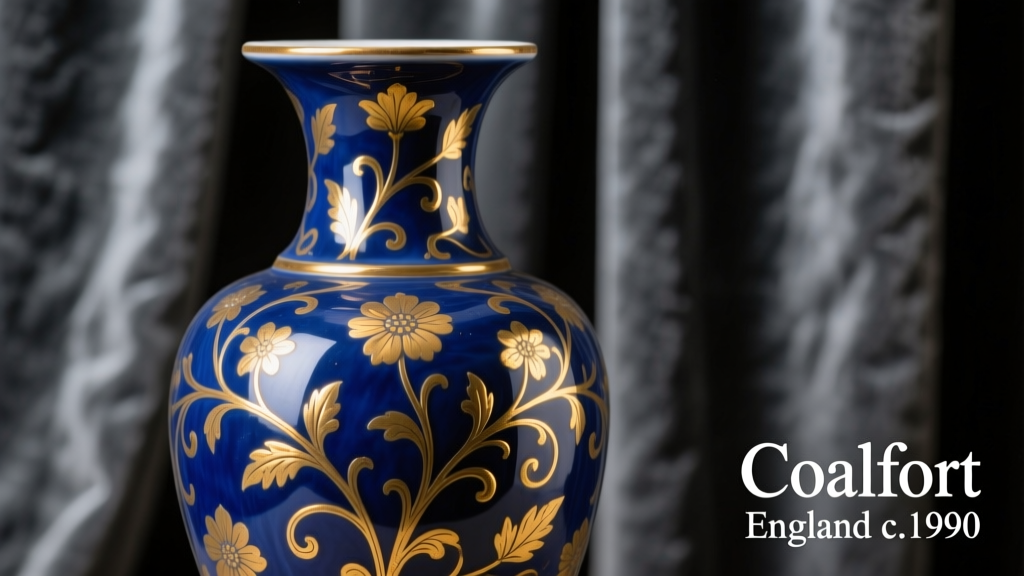
Coalport Vase, Raised Gilt Foliate Decoration on Cobalt Blue Ground — England, Circa 1900, Height 14½ Inches

Panamint Shoshone Coiled Basket Bowl: Provenance, Technique, and Collectibility of a 20th-Century Indigenous Masterpiece
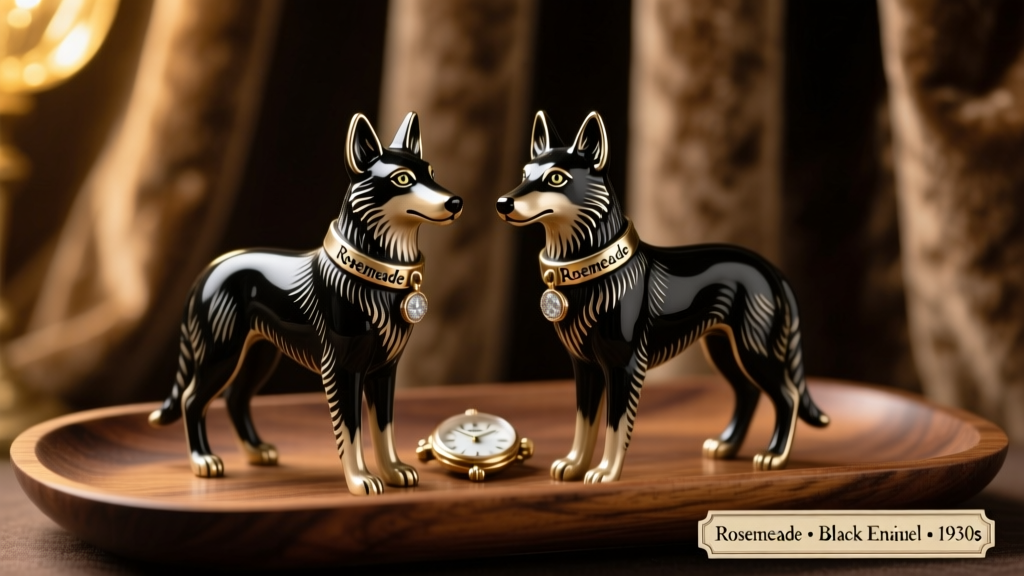
Rosemeade Figurine Wolfhound Black Pair: A Study in Mid-Century Irish Porcelain Craftsmanship
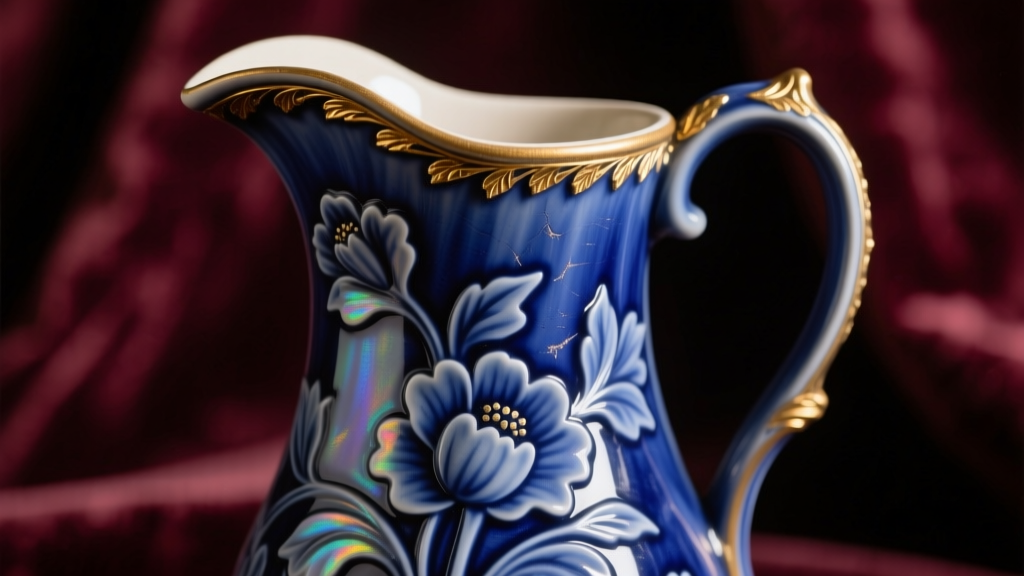
Roseville Venetian Pitcher, 7½ Inches: Identification, Provenance, and Market Value of a Mid-Century American Ceramic Landmark
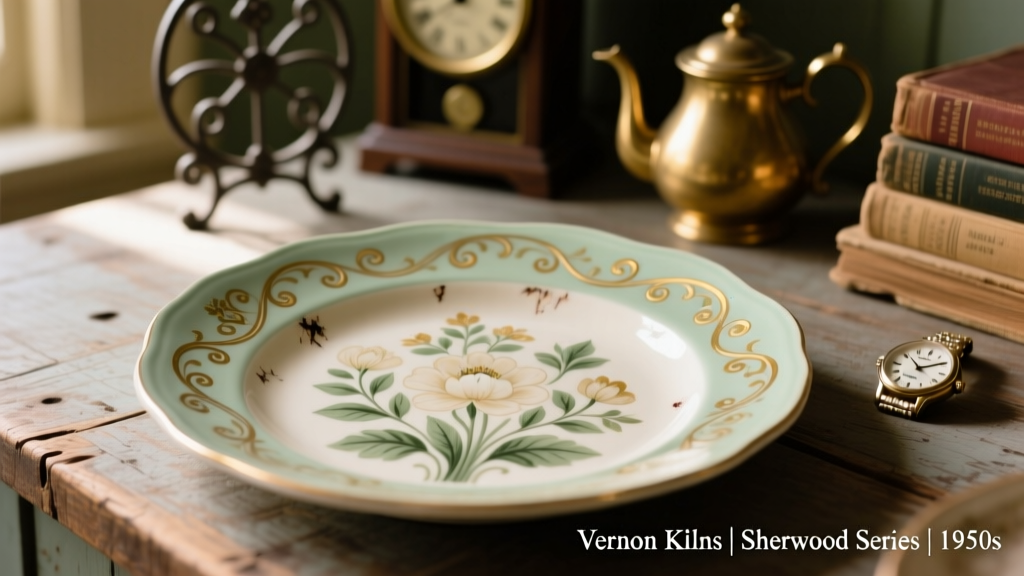
Vernon Kilns Sherwood Plate: A Collector’s Guide to the Iconic 10-Inch Dinner Plate
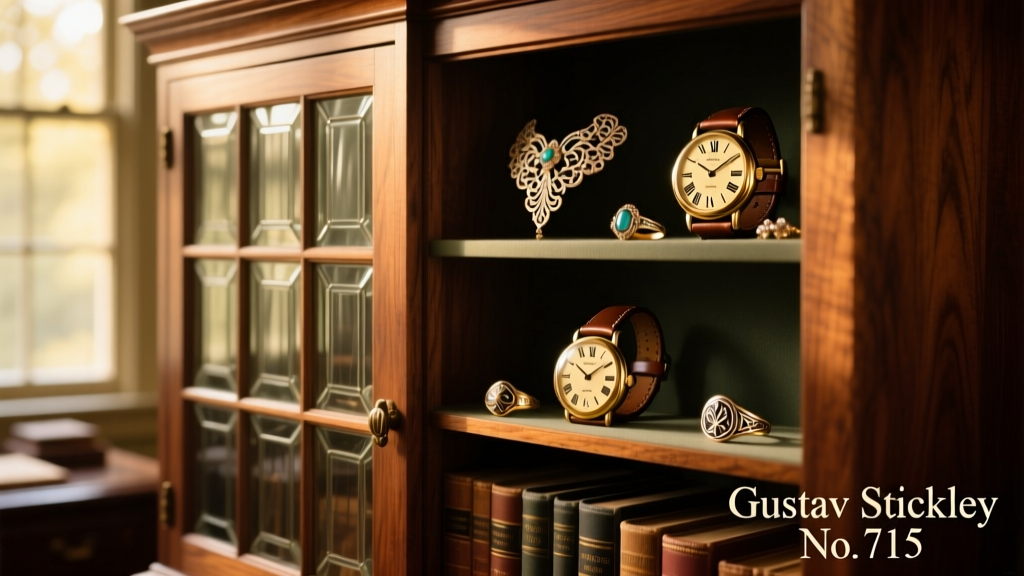
Gustav Stickley No. 715 Gallery Top Bookcase: Design, Provenance, and Market Significance of the 16-Paned Masterpiece
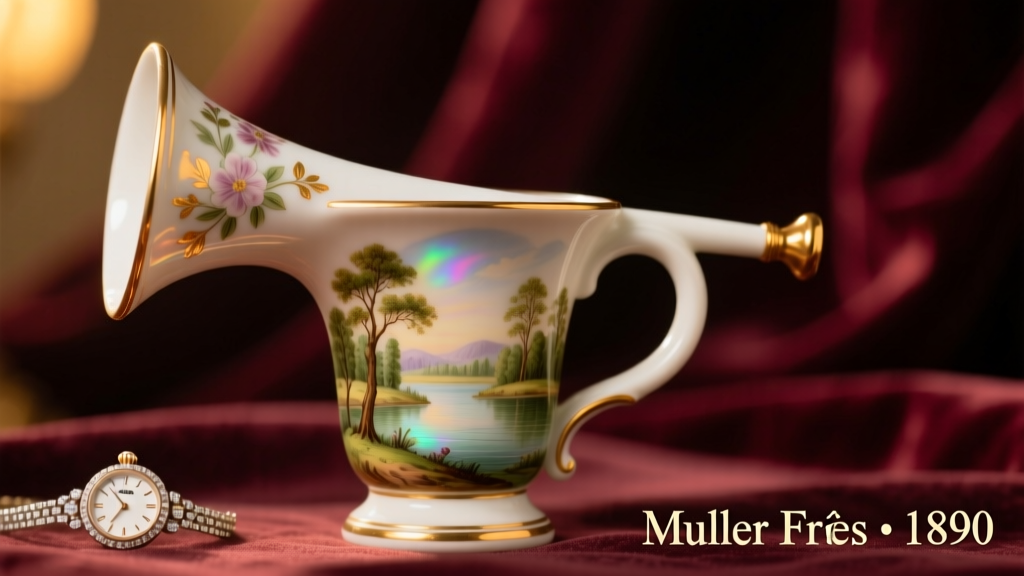
Muller Frères Vase: Landscape, Trees, Lake — Trumpet Shape with Pinched Neck, 11 Inches
Joseph M. Walter: American Art Deco Watchmaker and the Legacy of Precision Craftsmanship
A Rare Six-Seat Windsor Chair Set: Yellow-Painted Decorated Backs, Circa 1820–1830 — Provenance, Construction, and Market Significance