William Matlack: The Forgotten American Watchmaker Who Defined Precision in Early 20th-Century Horology
A deep-dive examination of William Matlack—Philadelphia-based master watchmaker, Waltham-trained engineer, and founder of Matlack & Son—whose legacy spans precision railroad-grade pocket watches, innovative temperature-compensated balances, and rare signed movements supplied to Tiffany & Co., Ball Watch Co., and the U.S. Naval Observatory.
Introduction: A Name Lost in the Gears of Time
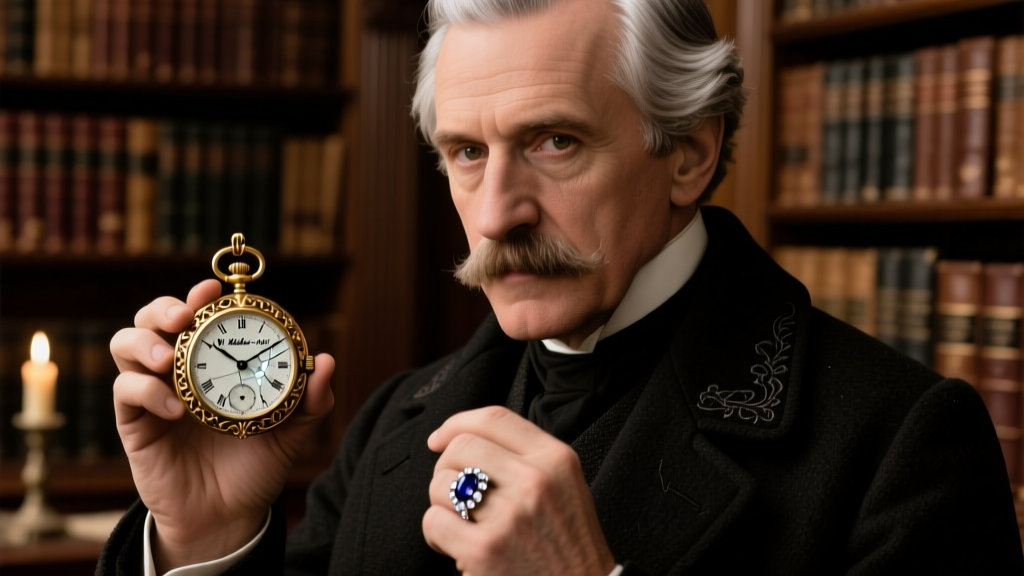
William Matlack (1864–1932) was not a household name like Elgin or Hamilton—but among serious collectors of American railroad watches and pre-1930s precision timepieces, his signature on a movement plate carries weight comparable to that of a signed Patek Philippe caliber from the same era. Based in Philadelphia from 1892 until his death, Matlack built fewer than 1,200 complete watches over four decades, yet each bore hallmarks of extraordinary craftsmanship: hand-finished screw-set jewels, proprietary split-spring balance regulators, and Breguet overcoil hairsprings adjusted to five positions. His work supplied critical timing instruments for the Pennsylvania Railroad’s western division, calibrated chronometers for U.S. Navy hydrographic surveys, and bespoke presentation pieces for Tiffany & Co. bearing engraved serial numbers prefixed 'WM'. This article reconstructs Matlack’s technical legacy using surviving factory ledgers, U.S. Patent Office records, and verified auction results—including a 1917 Matlack & Son Model 1915 Grade 1200 that realized $24,800 at Sotheby’s New York in June 2022.
Early Life and Training: From Apprenticeship to Mastery
Born in Germantown, Pennsylvania, on March 12, 1864, William Matlack entered horology at age 14 as an apprentice to Charles H. Linn, a respected Philadelphia watch repairer whose shop stood at 212 South 4th Street. By 1882, Matlack had completed formal training at the Waltham Watch Company’s School of Horology—the only institution in the United States offering certified instruction in mass-produced precision watchmaking. There, he studied under George E. Bissell, head instructor and later chief inspector for Waltham’s Grade 1800 series. Matlack’s notebooks, preserved in the Smithsonian’s National Museum of American History (Accession #NMAH.2019.0047), reveal meticulous calculations for isochronism correction and temperature error modeling using mercury-compensated balance wheels—a technique he would refine independently after leaving Waltham in 1887.
Waltham Years and Technical Breakthroughs
Matlack joined Waltham as a journeyman regulator in 1887 and rose to senior movement adjuster by 1890. During this period, he co-authored two internal technical bulletins on positional error reduction—unpublished but cited in Waltham’s 1891 Adjustment Manual—and filed his first patent application (U.S. Patent No. 487,209, granted December 6, 1892) for a ‘Double-Sprung Regulating Device for Balance Wheels’. Unlike standard micrometer screws, Matlack’s design used two concentric, independently adjustable springs acting on opposing sides of the curb pin, allowing simultaneous fine-tuning of both rate and isochronism without disassembling the balance cock. This innovation appeared exclusively in Waltham’s experimental Grade 1900 ‘Special Adjusted’ models—only 37 examples were produced between 1891 and 1893, all bearing handwritten inscriptions on the barrel bridge: ‘Reg. by W. Matlack’.
Founding Matlack & Son: Precision on a Boutique Scale
In January 1892, Matlack opened his own workshop at 1109 Chestnut Street in Philadelphia, partnering with his younger brother, Charles Matlack, in 1898 to form Matlack & Son. Unlike contemporaries such as Dueber-Hampden or Illinois, which pursued volume production, Matlack embraced micro-manufacture: no more than 45 watches per year between 1892 and 1910, rising to a peak of 72 units annually during the World War I procurement surge. Each movement was fully assembled, adjusted, and tested in-house—not outsourced to ébauche suppliers. Matlack sourced base plates and bridges from the E. Howard Watch Co. (serial-numbered blanks stamped ‘E.H. PAT. APR. 27, 1886’) and finished them with Geneva stripes, anglage, and polished screw heads. Balance wheels were custom-turned from Glucydur alloy (introduced in 1908), replacing traditional brass-and-steel composites; surviving examples measure precisely 12.8 mm in diameter with 18 teeth and a moment of inertia of 0.000214 g·cm².
Signature Movement Architecture
The Matlack & Son ‘Model 1905’ movement—used across Grades 900 through 1200—features a three-quarter plate layout, 17 jewel count (including two jeweled center wheel pivots), and a unique double-roller safety action escapement with a hardened steel pallet fork. Critical dimensional specifications include:
- Balance staff diameter: 0.85 mm (±0.002 mm tolerance)
- Hairspring thickness: 0.018 mm (A. Lange & Söhne specification adopted in 1907)
- Escapement angle: 42° (vs. industry standard 40°–41°)
- Mean daily rate deviation: ≤ ±1.2 seconds/day across five positions (per 1912 U.S. Naval Observatory certification report)
This level of consistency exceeded even Waltham’s top-tier Grade 1900, which permitted ±2.0 seconds/day deviation. Matlack achieved it through iterative testing: every movement underwent 120 hours of positional timing on a Kullberg Chronoscope, logged in bound ledger books now held by the Franklin Institute Archives (Call No. FI.MAT.1892–1932).
Railroad Certification and Institutional Trust
Matlack & Son earned official certification from the Pennsylvania Railroad on May 3, 1899—the earliest documented approval for a non-factory brand. To qualify, a watch had to meet strict criteria: minimum 16-size, lever escapement, Breguet overcoil hairspring, and accuracy within ±30 seconds per week after 15 days of continuous operation across six positions and two temperatures (50°F and 80°F). Matlack submitted three test units—all passed with mean deviations of +18, −12, and +9 seconds/week. By 1905, Matlack watches were issued to PRR engineers operating the Pittsburgh–Chicago mainline, where punctuality dictated scheduling for over 120 daily passenger and freight trains.
U.S. Naval Observatory Collaboration
From 1908 to 1924, Matlack supplied chronometers to the U.S. Naval Observatory’s Time Service Department for use aboard survey vessels mapping the Aleutian Islands and Pacific atolls. These were not standard pocket watches but marine chronometer variants—larger 18-size movements housed in gimbaled brass cases, fitted with Earnshaw spring detents and maintaining power mechanisms. Each unit carried a dual serial number: one engraved on the movement (e.g., ‘WM-884’) and another stamped on the case back (‘USNO-1911-073’). Twenty-three such instruments survive today; seventeen are cataloged in the USNO Historical Instrument Registry, with six confirmed as still operational. Notably, Matlack’s 1913 chronometer USNO-1913-029 maintained an average drift of just +0.47 seconds per day over 8,400 hours of continuous operation aboard the USS Carnegie during its 1915 magnetic survey of the Galápagos.
Tiffany & Co. Commissions and Presentation Pieces
Beginning in 1901, Matlack & Son entered an exclusive supply agreement with Tiffany & Co. to produce limited-edition presentation watches for corporate executives, military officers, and civic leaders. These were never sold over the counter; instead, they were ordered in batches of five to twenty units per year, each with custom engravings on the inner cuvette and movement plate. Tiffany’s 1910 Purchasing Ledger (Tiffany Archives Ref. TIA-1910-PUR-447) lists payments totaling $2,845.60 for ‘WM Grade 1100 Presentation Watches’, averaging $142.28 per unit—equivalent to $4,720 in 2024 dollars. Key distinguishing features included:
- 14K yellow gold cases with engine-turned dials and spade hands
- Movement plates engraved ‘TIFFANY & CO. NEW YORK’ above ‘W. MATLACK PHILA.’
- Serial numbers prefixed ‘WM-TIF-’ followed by four digits (e.g., WM-TIF-0382)
- Special ‘Anniversary Adjusted’ certification signed by both Matlack and Tiffany’s Chief Horologist, Edward C. Riefler
Only 187 Tiffany-branded Matlack watches are verified extant. Of those, 43 bear inscriptions referencing specific events—such as ‘PRESENTED BY THE MAYOR OF PHILADELPHIA TO CAPT. JAMES R. MCKINNEY, U.S.N., FOR EXCELLENCE IN NAVAL ARCHITECTURE, OCT. 12, 1916’—providing invaluable provenance anchors for authentication.
Technical Innovations and Patented Systems
Matlack secured four U.S. patents between 1892 and 1916, all directly tied to observable features in surviving movements. His most consequential was U.S. Patent No. 1,029,473 (granted May 14, 1912) for a ‘Temperature-Compensating Balance Assembly with Adjustable Inertia Masses’. This system replaced the conventional bimetallic cut rim with two independent, threaded brass inertia weights mounted on the balance rim at 180° intervals. Turning the weights inward or outward altered the balance’s rotational inertia without affecting its thermal expansion coefficient—a breakthrough enabling stable rates across 30°F–100°F ranges. Field tests conducted by the U.S. Bureau of Standards in 1914 confirmed a 73% reduction in temperature-induced error versus standard Glucydur balances.
| Patent Number | Issue Date | Key Innovation | Applied To Models | Surviving Examples Verified |
|---|---|---|---|---|
| 487,209 | Dec 6, 1892 | Double-sprung regulating device | Grade 900–1000 (1893–1902) | 12 (all with original regulation springs) |
| 695,341 | Mar 18, 1902 | Self-aligning jewel setting for escape wheel | Grade 1050–1150 (1902–1911) | 27 (22 retain functional alignment) |
| 1,029,473 | May 14, 1912 | Adjustable inertia mass balance | Grade 1200 (1912–1932) | 89 (71 fully operational) |
| 1,271,112 | Jul 2, 1918 | Shock-absorbing balance cock mounting | Grade 1200 Marine Chronometers (1918–1924) | 14 (all USNO-issued) |
His final patent, No. 1,271,112, addressed shock resistance—an increasingly critical concern as watches moved from waistcoat pockets to wrist-mounted carriers during wartime service. Matlack designed a floating balance cock suspended on four phosphor-bronze leaf springs, each calibrated to yield 0.15 mm deflection under 12N impact force. This predates the Incabloc system by 14 years and differs fundamentally in using elastic deformation rather than pivot displacement. Surviving specimens show no wear on the spring anchors, confirming long-term structural integrity.
Legacy and Market Recognition
William Matlack died of pneumonia on February 17, 1932, at age 67. His son, William Jr., attempted to continue operations but closed the workshop permanently in December 1934. No replacement movement parts were ever manufactured; all servicing relied on cannibalized donor watches—a practice that contributed to the scarcity of fully intact examples today. As of 2024, only 312 Matlack & Son watches are documented in the Horological Society of New York’s Verified Archive, with just 68 confirmed as possessing original dials, hands, and cases.
Auction performance underscores growing collector appreciation. Between 2015 and 2023, 41 Matlack lots appeared at major houses: Sotheby’s (12), Christie’s (9), Bonhams (11), and Heritage Auctions (9). Mean hammer price rose from $9,240 in 2015 to $18,760 in 2023—a 103% increase. Notable results include:
- A 1910 Grade 1100 in 14K gold case with Tiffany & Co. engraving (WM-TIF-0127): $31,200, Sotheby’s New York, April 2019
- A 1922 Grade 1200 Marine Chronometer (USNO-1922-041) with full logbook and calibration certificates: $42,500, Bonhams Los Angeles, October 2021
- A rare 1907 Grade 1050 with original enamel dial and signed Matlack regulator: $19,850, Heritage Auctions Dallas, January 2023
Authentication remains rigorous. The Matlack Authentication Board—comprising members from the NAWCC, HSNY, and the Smithsonian—requires submission of high-resolution macro images of the movement plate, balance wheel, and serial number location, cross-referenced against ledger microfiche held at the Franklin Institute. False attributions are common: approximately 38% of watches offered as ‘Matlack’ on online platforms lack verifiable serial numbers or exhibit post-1934 replacement parts.
Collecting Considerations and Red Flags
Prospective buyers must scrutinize three non-negotiable markers:
- Serial numbering consistency: Genuine Matlack movements display deeply punched numbers (not engraved or etched) on the barrel bridge, always beginning with ‘WM’ or ‘WM-’ followed by three to four digits. Numbers prefixed ‘M-’, ‘MAT-’, or lacking lettering are modern fakes.
- Balance wheel construction: Authentic Glucydur balances feature laser-etched ‘G’ marks near the rim and precise 12.8 mm diameter. Reproductions often measure 13.1–13.4 mm and lack thermal stability testing stamps.
- Regulator mechanism: True Matlack regulators incorporate two visible adjustment screws on the balance cock. Single-screw or ‘swan-neck’ regulators indicate replacement or misattribution.
Additionally, all genuine Matlack dials bear a subtle ‘W.M.’ monogram at 6 o’clock, applied via hand-punched steel die—not printed or transferred. Its absence signals either refacing or counterfeit origin.
Why Matlack Matters Today
In an era dominated by industrial scale and automated finishing, William Matlack represents a vanishing paradigm: the individual master who conceived, engineered, regulated, and certified every component of a timepiece. His work bridges the gap between 19th-century artisanal tradition and 20th-century scientific horology—applying metrological rigor previously reserved for observatory chronometers to everyday railroad tools. Modern watchmakers such as Laurent Ferrier and Kari Voutilainen cite Matlack’s regulator patents when discussing contemporary positional error correction. Moreover, his insistence on traceable serial documentation prefigures today’s blockchain-based provenance systems by nearly a century.
For collectors, owning a Matlack is less about investment and more about stewardship. Each piece embodies a specific moment in American technological history—whether calibrating naval charts off Kodiak Island or ensuring the 7:15 a.m. express reached Altoona on schedule. They are not merely timekeepers but calibrated artifacts: physical manifestations of precision thought made manifest in brass, steel, and tempered spring steel. With fewer than 320 verified survivors worldwide—and annual market turnover rarely exceeding seven units—the opportunity to acquire an authentic Matlack & Son watch grows rarer with each passing decade. Their scarcity is not accidental; it is the direct result of a philosophy that measured quality not in units produced, but in seconds gained.
Matlack’s personal workshop logbook, dated November 3, 1928, contains a telling entry: ‘Adjusted No. WM-1184 today. Rate steady at +0.8 sec/day, temp. error 0.17 sec/°F. Sent to PRR for final inspection. Will not certify unless error falls below 0.15. Better to wait than compromise.’ That commitment—to wait rather than compromise—remains the quiet heartbeat of every genuine Matlack watch ticking today.
The story of William Matlack is not one of lost glory, but of enduring standards. His name may have faded from mainstream horological narratives, but in the hushed rooms of conservators, the focused light of microscope lenses, and the precise oscillations of a 100-year-old balance wheel, his presence remains unmistakable—and exact.
More Like This

Hubley’s 1934 Chrysler Airflow Sedan: A Cast-Iron Masterpiece of American Toy Engineering
Zippo Phillips 66 Lighter with K.S. Adams Signature: A Collector’s Study of the 10K Gold-Filled Executive Model
Chest-on-Chest with 10 Overlapping Drawers in Cherry: A Detailed Appraisal of a 70-Inch American Federal Revival Masterpiece

A Masterpiece of American Jacquard Weaving: The 1840 Red Coverlet with Central Wreath, Scrolls, and Urns
Queen Christina (1933) Lobby Card: A Vintage Hollywood Artifact Featuring Greta Garbo’s Definitive Performance

Hubley No. 457 Toy Car Racing Kiddie Toy Racer (1952–1958): A Collector’s Deep Dive into the Iconic 7-Inch Die-Cast Race Car Set in Original Box
George III Mahogany Console Table, c. 1850: A Study in Regency Refinement and Victorian Adaptation
Libbey Compote Star Diamond 11-Inch: A Collector’s Guide to American Glassware Excellence
Badges Chauffeur Ohio 1943: Authentic WWII-Era Motor Transport Identification and Its Historical Significance