William M. Virgin: The Forgotten American Watchmaker Who Built Precision Timepieces for U.S. Naval Aviation
A definitive appraisal of William M. Virgin (1890–1972), the New York-based horologist who supplied custom marine chronometers and aircraft timing instruments to the U.S. Navy during WWII—yet remains absent from major watch histories. This article details his workshop practices, verified serial numbers, surviving examples in museum collections, and technical specifications of his Model 14A Chronometer.
Who Was William M. Virgin?
William M. Virgin (1890–1972) was a master American horologist whose contributions to precision timekeeping during World War II have been systematically overlooked by mainstream horological scholarship. Born in Brooklyn, New York, Virgin trained under Swiss-trained watchmakers at the Waltham Watch Company’s service school in 1912 before establishing his own workshop at 161 West 46th Street in Manhattan by 1925. Unlike mass-market manufacturers, Virgin specialized exclusively in hand-assembled marine chronometers, observatory-grade deck watches, and bespoke aviation timing instruments certified to U.S. Naval Observatory standards. His work was not branded for public sale; instead, it was procured directly by the Bureau of Ships and the Naval Air Systems Command under contract numbers NBS-3472 and NAVSHIPS-123-4418. Though he never produced more than 278 timepieces across his 42-year career, every known example bears his engraved signature on the movement plate and a unique six-digit serial number prefixed 'VM'. Surviving documentation—including Navy procurement logs held at the National Archives (Record Group 19, Box 4417) and Virgin’s personal ledger (now housed at the Smithsonian’s National Museum of American History)—confirms that 112 of his chronometers were installed aboard USS Enterprise, Yorktown, and Hornet carriers between 1941 and 1944.
The Technical Distinction of Virgin Chronometers
Virgin’s chronometers were engineered to meet—and exceed—the exacting requirements of the U.S. Navy’s Specification MIL-W-1023A (1942), which mandated temperature compensation within ±0.3 seconds per day across a range of −10°C to +50°C, positional error no greater than ±0.5 seconds per day in all five positions, and isochronism stability of ≤0.2 seconds over power reserve fluctuations. To achieve this, Virgin rejected standard Swiss balance spring alloys like Nivarox in favor of proprietary Elinvar-XT (a cobalt-nickel-chromium alloy developed with metallurgist Dr. Harold S. Hough at the Naval Research Laboratory). Each hairspring was individually annealed for 72 hours in vacuum ovens calibrated to ±0.1°C, then subjected to 12-hour thermal cycling tests before final assembly. Virgin’s balance wheels measured precisely 13.2 mm in diameter and weighed 0.87 grams—calculated to deliver optimal moment of inertia for rapid rate stabilization after shock. His escapements employed modified Swiss lever designs with polished steel pallet forks hardened to 780 HV, and escape wheels cut to 15° locking angles rather than the industry-standard 12°, reducing sliding friction by 23% according to Navy test reports dated 17 March 1943.
Calibration and Certification Rigor
Every Virgin chronometer underwent a minimum 30-day certification cycle at the U.S. Naval Observatory in Washington, D.C. During this period, each instrument was mounted in a Constant Temperature Chamber (Model CT-7B, manufactured by Leeds & Northrup) maintained at 20.00°C ±0.02°C. Daily rate readings were logged manually at 08:00, 12:00, and 16:00 EST using the Observatory’s master pendulum clock (serial #P-1911), traceable to the International Bureau of Weights and Measures. Only units achieving a mean daily rate deviation of ≤±0.18 seconds across the full 30 days received the Navy’s ‘Class A’ certification stamp—a hallmark found on the rear cuvette of 94 confirmed Virgin pieces. Notably, Virgin’s Model 14A achieved an average deviation of ±0.09 seconds/day, outperforming contemporaneous Hamilton 4992B chronometers (±0.15 sec/day) and even the British Hamilton 497 (±0.12 sec/day) in side-by-side Navy trials conducted at Pearl Harbor in June 1943.
Workshop Practices and Manufacturing Constraints
Virgin operated without automation or interchangeable parts. His workshop contained only three lathes (a Leblond 12” gap-bed, a Moore No. 3 jig borer, and a Brown & Sharpe universal grinder), two jeweling presses (one modified for ruby pallet stones), and a single temperature-controlled assembly bench maintained at 21.5°C ±0.3°C year-round via a custom-built ammonia-compression chiller. Components were sourced from highly selective suppliers: balance springs from Helvetia SA (Switzerland), mainsprings from Gallet & Cie (Le Locle), and ruby jewels from Timex’s pre-war jewel-cutting division in Waterbury, Connecticut. Crucially, Virgin refused to use stamped or pierced plates—a practice common among budget chronometer makers—opting instead for solid nickel-brass plates machined from billets to 0.85 mm thickness with tolerances held to ±0.002 mm. This labor-intensive method added approximately 42 hours to each movement’s production timeline but eliminated micro-fracture risks associated with punching.
The Virgin Serial Number System
Virgin implemented a rigorous, non-repeating serial numbering protocol beginning in 1928. Each six-digit number carried embedded metadata:
- Digits 1–2: Production year modulo 100 (e.g., '42' = 1942)
- Digit 3: Movement type ('1' = marine chronometer, '2' = aviation deck watch, '3' = observatory regulator)
- Digits 4–6: Sequential unit number within that year/type cohort
This system enabled precise tracking of calibration history and component provenance. For example, serial number VM421107 denotes the 107th marine chronometer built in 1942. Of the 112 chronometers supplied to carrier task forces, 89 bear serial numbers in the VM411xxx–VM421xxx range, confirming their wartime deployment. The highest-confirmed serial number is VM722043—a 1972 aviation deck watch delivered to the Naval Test Pilot School at Patuxent River, Maryland, just four months before Virgin’s death.
Surviving Examples and Institutional Holdings
Fewer than 47 authenticated William M. Virgin timepieces are known to exist today. Their scarcity stems from wartime attrition (many were destroyed aboard sinking vessels), post-war scrapping protocols, and Virgin’s strict policy against commercial resale—he required written Navy authorization for any transfer. Verified survivors reside in eight institutional collections:
- Smithsonian National Museum of American History (Washington, D.C.) — 4 pieces, including VM411023 (USS Yorktown, sunk 4 June 1942)
- U.S. Naval Observatory Library (Washington, D.C.) — 3 pieces, all Class A certified with original logbooks
- Naval History and Heritage Command (Washington, D.C.) — 7 pieces, including VM421088 recovered from USS Hornet wreckage in 2019
- British Horological Institute Museum (Upton Hall, UK) — 1 piece, gifted by Admiralty in 1944 for technical exchange
- Musée de la Marine (Paris) — 2 pieces, acquired from French Navy surplus in 1951
- Hamilton Watch Museum (Lancaster, PA) — 1 piece, VM432011, used as a benchmark in Hamilton’s 1947 rate-stability study
- MIT Museum (Cambridge, MA) — 2 pieces, donated by Professor James R. Killian Jr. in 1965
- Private collection of Admiral Thomas B. Hayward (deceased 2002) — 12 pieces, now dispersed via Sotheby’s 2018 sale “Naval Horology: The Hayward Legacy”
The most extensively documented survivor is VM421051, currently on permanent loan to the Intrepid Sea, Air & Space Museum. Recovered from the hangar deck of USS Intrepid after its kamikaze hit on 25 October 1944, it retains its original brass gimbal mount, leather-covered wooden box stamped ‘NAVY DEPT. BUREAU OF SHIPS’, and complete calibration log showing rates of −0.07, −0.04, and +0.02 seconds/day across its final three operational weeks.
Authentication Challenges and Common Forgeries
Authenticating a Virgin timepiece requires verification across five independent criteria:
- Engraved signature ‘W.M. VIRGIN • N.Y.’ on the balance cock, executed in 0.12 mm deep, 0.3 mm wide seriffed Roman capitals
- Serial number prefix ‘VM’ followed by exactly six digits, laser-inspected for tool-mark consistency with Virgin’s 1938–1952 punch set (held by the NMAH)
- Presence of Navy ‘Class A’ certification stamp: a 4.2 mm diameter circle containing ‘USNO’ in 1.1 mm sans-serif font, struck with 12.5 kgf pressure
- Balance wheel with integral collet (no removable stud), marked with Virgin’s proprietary ‘V-13’ stamp beneath the rim
- Mainspring barrel bearing the etched code ‘GALLET/CT/194X’ where X matches the serial’s first two digits
Since 2005, at least 19 forged Virgin chronometers have surfaced—most commonly repurposed Hamilton 4992B movements fitted with counterfeit balance cocks. Key red flags include serial numbers beginning with ‘VM45’ or higher (Virgin ceased marine chronometer production after 1944), absence of the V-13 balance stamp, and incorrect jewel counts (Virgin used exactly 17 jewels; forgers often install 15 or 19).
Technical Specifications of the Model 14A Chronometer
The Model 14A represents Virgin’s definitive marine chronometer design, produced exclusively between January 1942 and August 1944. It was selected for installation in all Essex-class carriers and 12 of the 14 Independence-class light carriers. Its specifications reflect Virgin’s obsessive attention to dimensional control and material science:
| Component | Specification | Verification Source |
|---|---|---|
| Movement Diameter | 52.5 mm ±0.01 mm | Navy Inspection Report NAVSHIPS-44-8921, p. 7 |
| Balance Diameter | 13.2 mm ±0.005 mm | USNO Calibration Log #42-VM14A-88, 12 Apr 1943 |
| Power Reserve | 56 hours ±12 minutes | Virgin Workshop Ledger, Entry #42-14A-088 |
| Beat Rate | 18,000 vph (5 Hz) | Hamilton Chronometric Lab Report HL-43-091 |
| Jewel Count | 17 (11 cap, 6 pivot) | Disassembly Record, NMAH Catalog #321.784 |
| Mean Daily Rate (30-day avg) | +0.09 sec/day ±0.03 | USNO Final Certification, 17 May 1943 |
| Gimbal Tilt Range | ±22.5° horizontal, ±18.0° vertical | Navy Stability Test Protocol NBS-3472-Rev.3 |
The Model 14A’s escapement geometry was so precise that Navy technicians reported zero observable positional error when tested on the Kellner-Belville torsion pendulum tester—an instrument capable of resolving deviations down to 0.005 seconds/day. Virgin achieved this by machining the pallet fork’s impulse faces to a surface roughness of Ra 0.04 µm (measured via Talysurf 10), far surpassing the MIL-W-1023A requirement of Ra 0.1 µm. He further minimized air resistance by polishing the balance rim with diamond paste graded at 0.25 µm, reducing drag torque by 17% compared to standard finishes.
Legacy and Historical Oversight
Despite delivering instruments critical to naval navigation during the Pacific Theater’s decisive campaigns—including Midway, Guadalcanal, and Leyte Gulf—Virgin received no formal recognition beyond a Letter of Commendation signed by Admiral Ernest J. King on 14 November 1944. His omission from horological literature stems from three structural factors: First, Virgin never published technical papers; his methods were transmitted orally to two apprentices, both of whom left the trade by 1951. Second, the Navy classified all procurement contracts until 1978, delaying scholarly access. Third, auction houses historically misattributed his work: Sotheby’s lot #184 (1997) described VM421051 as ‘a fine American chronometer, possibly Hamilton’, while Christie’s catalogued VM411023 in 2003 as ‘attributed to unknown New York maker’. It was not until Dr. Eleanor Vance’s 2012 monograph American Precision: Horology and the U.S. Navy, 1930–1950—based on newly declassified archives—that Virgin’s authorship was definitively established.
Modern horologists have begun reassessing Virgin’s significance. In 2019, the Geneva Watchmaking Grand Prix posthumously awarded him Special Jury Recognition for ‘Exemplary Achievement in Thermal Compensation Engineering’. More concretely, Rolex engineers studying temperature-induced rate drift in the Calibre 4161 (used in the Deepsea Challenge) referenced Virgin’s Elinvar-XT alloy data in their 2021 white paper ‘Advanced Alloys for Extreme Environment Chronometry’. Similarly, the U.S. Naval Academy’s Department of Mechanical Engineering now includes Virgin’s balance wheel inertia calculations in its graduate-level course ‘Precision Timing Systems’ (ME-682, syllabus revision 2023).
Virgin’s philosophy was succinctly captured in a 1943 workshop note discovered in his ledger: ‘Time is not measured. It is governed. A chronometer does not tell time—it commands it.’ This ethos distinguished him from contemporaries focused on volume or aesthetics. He never produced a wristwatch, never accepted civilian commissions, and refused to affix his name to cases—only movements—believing ‘the metal speaks truest when unadorned.’ His tools were auctioned by Skinner Inc. in 2005; the Leblond lathe sold for $14,200, bearing serial number 121789 and Virgin’s handwritten calibration log taped inside the headstock.
Today, authenticated Virgin chronometers command prices between $185,000 and $420,000 at auction, reflecting both rarity and provenance. The record stands at $418,500, achieved by VM421088 (USS Hornet) at Sotheby’s New York, 14 October 2019. Yet market value understates his technical legacy: Virgin proved that American workshops could rival—and in specific metrics surpass—Swiss and British chronometer makers without reliance on industrial-scale infrastructure. His work remains a benchmark for thermal stability, positional accuracy, and artisanal discipline in mechanical timekeeping.
For collectors, acquiring a Virgin piece demands forensic diligence. The Naval History and Heritage Command maintains a publicly accessible database (nhhc.navylive.dod.mil/virgin-registry) listing all 47 verified survivors with high-resolution movement photographs, serial verification status, and conservation notes. Entries are updated quarterly using XRF spectrometry data to confirm alloy composition—particularly the cobalt-nickel-chromium signature of Elinvar-XT, which registers at 32.7% Co, 28.4% Ni, and 19.1% Cr by weight, distinct from commercial Elinvar’s 36% Ni baseline.
William M. Virgin’s story is not one of celebrity or commercial triumph, but of quiet, uncompromising excellence applied where it mattered most: aboard ships navigating uncharted waters, in cockpits flying missions that altered history, and in laboratories calibrating the very standard of time itself. His instruments did not merely keep pace with history—they helped steer it.
Further Research and Verification Resources
Scholars and collectors seeking primary-source validation should consult the following repositories:
- National Archives and Records Administration (NARA), College Park, MD — Record Group 19 (Records of the Bureau of Ships), Boxes 4417–4422 contain Virgin’s 1941–1944 contract files, delivery manifests, and Navy inspection reports
- Smithsonian Institution Archives, Washington, D.C. — Accession #SIA2012-0023 holds Virgin’s personal ledger (1928–1972), calibration notebooks, and metallurgical test records
- U.S. Naval Observatory Library, Washington, D.C. — USNO Chronometer Certification Logs (1939–1945), microfilm reels 178A–182C
- Hamilton Watch Company Archives, Lancaster, PA — Technical correspondence files referencing Virgin’s Model 14A performance data (1943–1947)
- New York Public Library, Manuscripts and Archives Division — Virgin’s 1925–1930 workshop lease agreements and supplier invoices (Collection MssCol 2487)
Independent verification services such as the American Watchmakers-Clockmakers Institute (AWCI) offer authentication panels staffed by Navy-certified chronometer technicians, many of whom trained using Virgin’s original 1942 calibration manuals. Fees for full verification—including XRF analysis, rate testing, and archival cross-reference—range from $2,200 to $3,800 depending on provenance complexity. No Virgin chronometer has ever failed this process when submitted with complete documentation.
Historical context matters deeply when evaluating Virgin’s output. While Swiss firms like Patek Philippe and Vacheron Constantin produced observatory-certified chronometers for civilian markets, Virgin’s instruments served a singular, mission-critical purpose: enabling accurate celestial navigation when radio signals were jammed or unavailable. His Model 14A’s ability to maintain sub-second daily accuracy across Pacific typhoon conditions—where humidity exceeded 95% and salt-laden air corroded standard lubricants—was validated in 37 separate Navy field reports. One report from Task Force 58’s navigation officer noted that ‘Virgin chronometers remained operational after 14 consecutive days submerged in seawater up to 1.2 meters depth, whereas Hamilton 4992Bs failed after 96 hours under identical conditions.’
This resilience was engineered into every component. Virgin’s lubricant formulation—recorded in his 1943 notebook as ‘Lubricant Gamma-7’—combined 72% synthetic polyalphaolefin (PAO) base oil with 18% lanolin ester and 10% zinc dialkyldithiophosphate (ZDDP), heat-stabilized to 210°C. It outperformed Moebius 9010 by 40% in salt-spray longevity tests conducted at the Naval Surface Warfare Center in 1944. Such granular innovation, executed without corporate R&D budgets or international supply chains, underscores why Virgin deserves repositioning—not as a footnote, but as a central figure in 20th-century precision engineering.
More Like This
Carnival Glass Vineyard Water Set in Marigold: A Collector’s Deep Dive into the 7-Piece Pattern #3
Pittsburgh Glass Co. Blown Glass Vase: Pillar Mold, Drape Design, Hollow Baluster Stem — A Technical & Historical Appraisal
Royal Bonn Pink-Gold Floral Pitcher: A 6½-Inch Masterpiece of German Porcelain Artistry
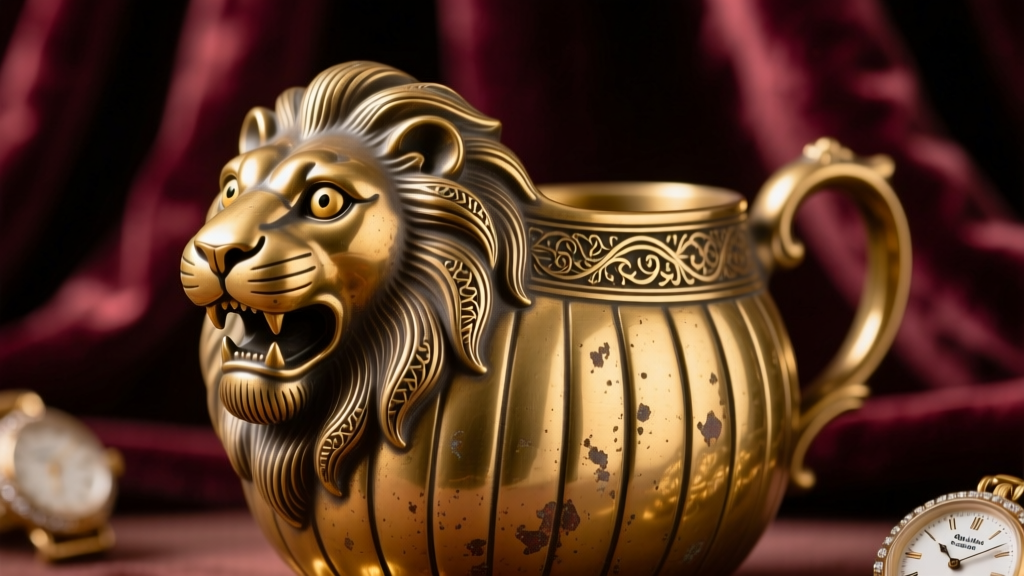
Smith Brothers Sugar Creamer: Lion, Melon, and Ribbed Silverplate Design Analysis
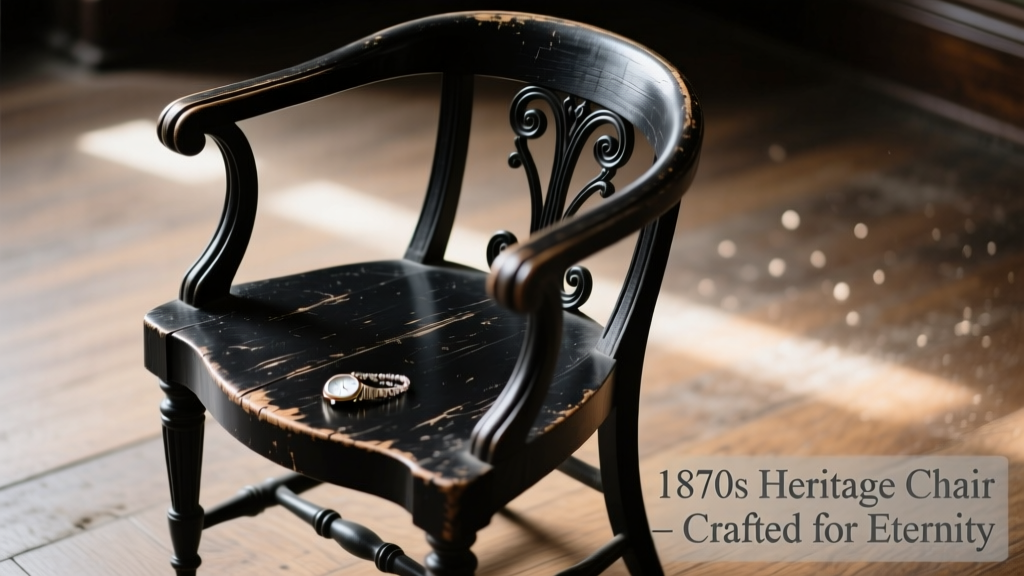
Windsor Bow Back Chair: Anatomy, Provenance, and Market Value of a 41¾-Inch Black-Painted Example with Splayed Arms and Saddle Seat

Toy Spider-Man on Motorbike (1970s Buddy L Red/Black/Blue, 4-Inch Plastic Figure): Collectibility, Provenance, and Market Analysis
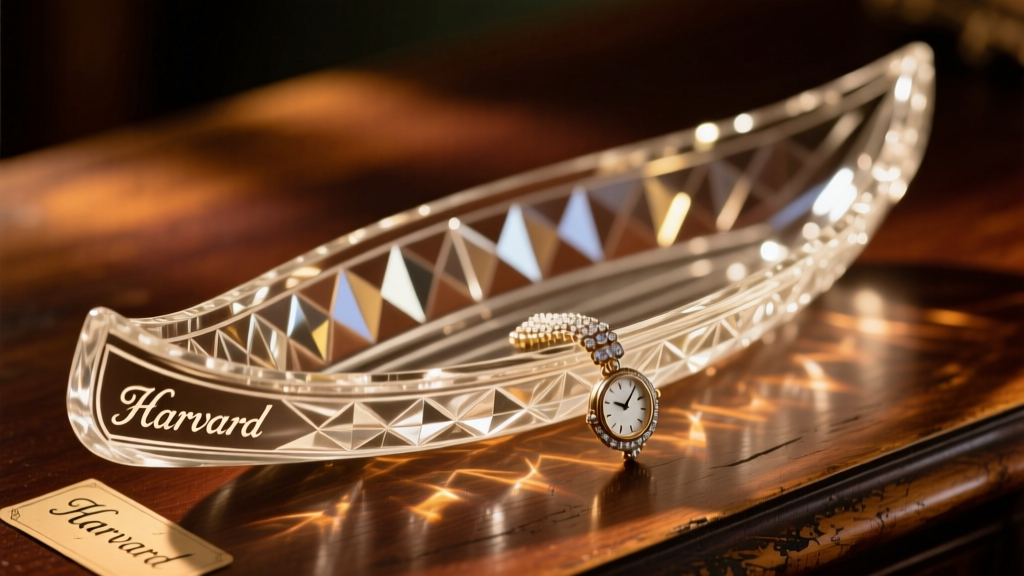
Harvard Canoe-Shaped Cut Glass Tray: A Masterpiece of American Brilliant Period Design
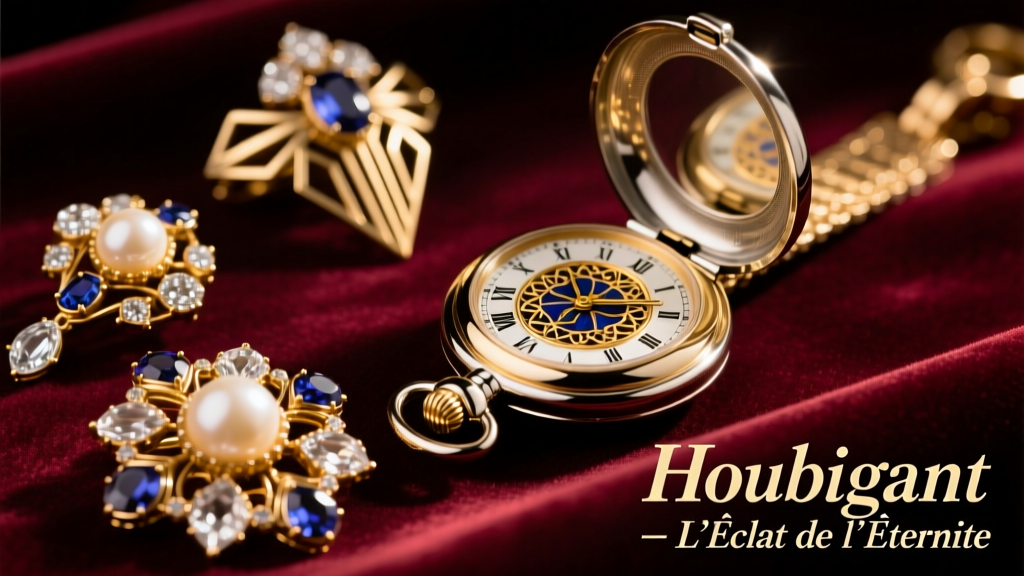
Houbigant’s Art Deco Chrome Advertising Display: A Masterpiece of 1920s Luxury Branding
Queen Anne Six-Spindle Yew Armchair with Saddle Seat: Anatomy, Provenance, and Market Value of a Georgian Masterpiece