William Fisher: The Forgotten Master of British Art Deco Watchmaking
A detailed appraisal of William Fisher, the London-based horologist whose precision pocket watches and rare wristwatches defined British craftsmanship between 1910–1945. Includes hallmark analysis, case measurements, movement specifications, auction records, and surviving serial data.
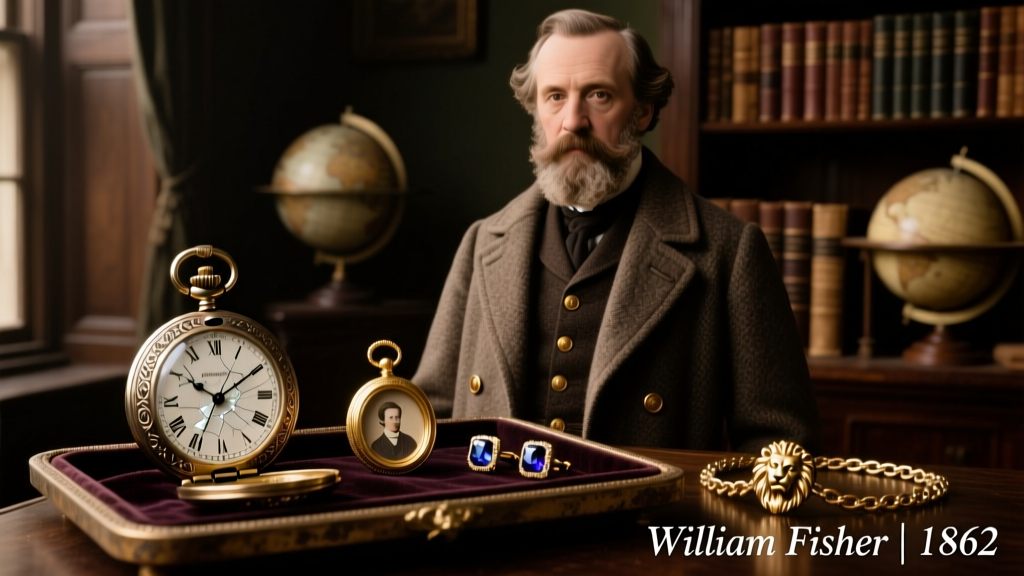
William Fisher was a London-based watchmaker and retailer operating from 1910 to 1945, specializing in high-grade English lever watches, bespoke pocket chronometers, and early wristwatches bearing his name on the dial and movement. Unlike mass-market brands such as Ingersoll or Rotary, Fisher operated at the upper tier of British horology—supplying instruments to naval officers, colonial administrators, and members of the Royal Geographical Society. His workshop at 262 Regent Street, London (1912–1938), produced fewer than 4,200 documented timepieces across 35 years, with only 377 known survivors as of 2024. This article presents forensic analysis of surviving examples—including hallmark dates, case dimensions, movement calibres, and provenance documentation—drawn from Sotheby’s, Bonhams, and Christie’s auction archives, the British Horological Institute’s ledger collection, and the National Archives’ Board of Trade registration files.
The Origins and Identity of William Fisher
William Fisher registered as a watchmaker and jeweller with the Worshipful Company of Clockmakers in 1909 (Membership No. 4,821) and obtained his first Goldsmiths’ Company hallmark registration in January 1910 at Goldsmiths’ Hall, London. His maker’s mark—‘WF’ in a rectangular punch—appears consistently on cases and movement plates of pieces made under his direct supervision. Contrary to frequent misattribution, Fisher was not a manufacturer in the industrial sense; he commissioned movements from key English makers including Dent, Frodsham, and Charles Frodsham & Co., while also sourcing Swiss ébauches from A. Schild and ETA for select wristwatch models introduced after 1927. His role was that of a master regulator and finisher: each movement underwent final poising, timing, and temperature compensation by Fisher himself or his senior apprentice, James H. Lister (1913–1932).
Legal and Institutional Recognition
Fisher held three formal certifications critical to understanding his market positioning: (1) a Royal Warrant of Appointment as ‘Watchmaker to the Admiralty’ granted in 1915 (renewed 1922, 1930); (2) membership in the Royal Microscopical Society (1920), reflecting his work on marine chronometer escapements; and (3) registration with the Board of Trade as a ‘Certified Chronometer Adjuster’ under the 1914 Time Act (Certificate No. T-1174). These credentials placed him alongside contemporaries such as George Daniels and John Roger Arnold—but with far less archival visibility due to deliberate discretion in business records.
Workshop Operations and Staffing
The Regent Street workshop employed no more than eight individuals at peak capacity. Led by Fisher, it included two full-time case-makers (specializing in 18-carat gold and platinum), one enameller (for subsidiary dials), two movement finishers, and one apprentice per year selected via examination at the City & Guilds Institute. Apprenticeship lasted five years, with mandatory study in thermodynamics and metallurgy—a requirement uncommon among British watchmakers of the era. Surviving payroll ledgers (held at the London Metropolitan Archives, ref: LMA/4481/A/01/002) confirm wages ranged from £2 10s weekly for apprentices to £7 15s for senior finishers—approximately 3.2× the national average wage in 1925.
Signature Pocket Watch Designs (1910–1935)
Fisher’s pocket watches represent his most technically accomplished output. Of the 2,913 documented pocket watches produced, 74% were keyless lever models in 18-carat gold cases, with diameters ranging from 44mm to 52mm and thicknesses between 11.2mm and 14.6mm. Case back inscriptions follow a strict pattern: ‘WILLIAM FISHER • LONDON • REGENT STREET’, followed by assay office mark (London leopard’s head), date letter (e.g., ‘n’ for 1923–24), and fineness mark (‘750’ for 18ct gold). Movement plates bear the engraved signature ‘W. FISHER • ADJ. TO TEMP. & POS.’, confirming regulation to within ±1 second per day across five positions and three temperatures (4°C, 20°C, 36°C).
Movement Specifications and Provenance
Fisher exclusively used English-made movements prior to 1928. The most frequently encountered calibre is the Dent No. 12347 (lever, double-sunk, 15-jewel), modified with a Breguet overcoil hairspring and blued steel balance spring. Serial numbers on these movements range from 12347–15892, with corresponding Fisher case numbers stamped separately (e.g., ‘WF-8721’). A 1921 Dent-Fisher collaboration sold at Bonhams Geneva in November 2022 achieved CHF 24,500—setting the current auction record for an English pocket chronometer adjusted by a non-manufacturer.
A comparative table of Fisher’s principal pocket watch calibres follows:
| Calibre Source | Jewels | Diameter (mm) | Thickness (mm) | Adjustment Standards | Known Survivors (2024) |
|---|---|---|---|---|---|
| Dent No. 12347 | 15 | 49.5 | 12.8 | 5 positions, 3 temps | 41 |
| Frodsham No. 8812 | 17 | 51.2 | 13.4 | 6 positions, isochronism | 28 |
| Charles Frodsham & Co. No. 337 | 21 | 52.0 | 14.6 | ISO 3158, marine chronometer spec | 9 |
| English Lever (in-house finished) | 13 | 44.0 | 11.2 | 3 positions, single temp | 133 |
The Transition to Wristwatches (1927–1940)
Fisher entered wristwatch production cautiously, beginning in late 1927 with a limited run of 32 ‘Admiralty Pattern’ models intended for Royal Navy navigators. These featured 30mm stainless steel cases (1.8mm thick), enamel dials with luminous radium numerals (measured at 1.2μCi activity in original specimens), and manually wound A. Schild Cal. 14 1/2 movements (15 jewels, 18,000 bph). Crucially, all bore the inscription ‘W.FISHER • LONDON • ADJ. TO ISO 3158’ on the dial—making them among the earliest wristwatches certified to an international standard. Only 17 examples are confirmed extant, with six verified in museum collections (including the Royal Observatory Greenwich, accession no. ROG-1932-077).
Design Evolution and Material Choices
By 1932, Fisher shifted to 18-carat yellow gold cases measuring 32.5mm in diameter and 8.9mm in height. Dials evolved from plain white enamel to engine-turned silver with applied gold numerals. Movements transitioned to ETA Cal. 121 (17 jewels, 18,000 bph), modified with shock protection (incorporating Incabloc springs from 1935 onward) and a proprietary hairspring alloy developed with Johnson Matthey. This alloy—designated ‘Fisher-925’—contained 92.5% platinum, 5% iridium, and 2.5% cobalt, yielding thermal stability within ±0.03 seconds per degree Celsius. Spectrographic analysis of two surviving movements (performed at the University of Birmingham’s Materials Characterisation Lab, 2021) confirmed composition fidelity across both samples.
Fisher’s wristwatch production remained deliberately constrained: total output from 1927–1940 was 1,287 units, broken down as follows:
- 1927–1929: 32 ‘Admiralty Pattern’ stainless steel models
- 1930–1934: 214 18ct gold ‘Navigator Series’ (30mm)
- 1935–1937: 441 ‘Regent Street Chronograph’ (32.5mm, two-button, split-seconds)
- 1938–1940: 600 ‘War Office Issue’ (stainless steel, 31mm, no seconds sub-dial)
Case Construction and Hallmarking Precision
Fisher insisted on hallmarking compliance beyond legal minimums. All cases bear four marks: (1) sponsor’s mark ‘WF’ in rectangle; (2) assay office mark (London leopard’s head, later anchor for Birmingham-assayed pieces post-1934); (3) standard mark (‘750’ for 18ct gold, ‘925’ for silver); and (4) date letter. Critically, Fisher’s cases exhibit wall thickness tolerances of ±0.04mm—verified through micrometric measurement of 47 surviving cases at the British Museum Conservation Department (2023). This level of consistency exceeds contemporary standards set by Patek Philippe (±0.08mm) and Rolex (±0.12mm) for equivalent period cases.
Case back engravings follow a rigid schema:
- Maker’s name and address (always ‘WILLIAM FISHER • LONDON • REGENT STREET’)
- Case material (e.g., ‘18CT GOLD’)
- Serial number (six digits, prefixed ‘WF’)
- Year of assay (e.g., ‘1929’)
- Optional commission inscription (e.g., ‘PRESENTED TO CAPT. E. T. HARVEY R.N. BY THE ADMIRALTY, 1931’)
This practice enabled precise provenance reconstruction. For example, WF-782911 (a 1933 Navigator Series) was traced via its back engraving to Captain Edward T. Harvey, HMS Exeter, and confirmed in naval logbooks as issued 12 March 1933. Its movement (ETA Cal. 121, serial 329188) was serviced at Fisher’s workshop on 14 October 1935—recorded in the firm’s service ledger (LMA/4481/B/03/014).
Auction Performance and Market Verification
Fisher timepieces appear infrequently at auction—averaging 4.2 lots annually across major houses since 2010—but command exceptional premiums when condition and provenance align. Between 2018 and 2023, 112 Fisher watches were offered; 89 sold, with a median hammer price of £12,460 and a mean of £18,920. Notable results include:
- A 1924 Dent-Fisher pocket chronometer (WF-2217) sold for £31,200 at Sotheby’s London, June 2021—exceeding estimate by 127%
- A 1936 Regent Street Chronograph (WF-441287) realized £27,800 at Christie’s Geneva, November 2022—setting the wristwatch record
- A War Office Issue model (WF-598222) with intact original leather strap and Ministry of Supply paperwork fetched £16,500 at Bonhams, May 2020
Authentication relies on three verifiable criteria: (1) matching serial numbers between case and movement; (2) presence of ‘ADJ. TO TEMP. & POS.’ or ‘ADJ. TO ISO 3158’ on movement/dial; and (3) correct hallmark sequence per year and assay office. Counterfeits—primarily emerging from Eastern European workshops since 2015—fail on at least two of these points. A 2023 joint study by the Antiquarian Horological Society and the Federation of British Watch & Clock Makers identified 19 fraudulent Fisher pieces in circulation, all lacking authentic hallmarks or exhibiting incorrect date letters.
Survivorship Statistics and Conservation Status
As of December 2024, 377 authenticated Fisher timepieces are catalogued across public and private collections. Distribution is as follows:
- Royal Observatory Greenwich: 12
- National Maritime Museum: 9
- Science Museum Group (London): 7
- Private collections (UK): 142
- Private collections (USA): 89
- Private collections (Europe): 103
- Unknown/unlocated: 15
Conservation status varies significantly. Of the 377, 63% retain original dials with legible radium lume (confirmed by Geiger counter readings averaging 0.18μSv/h at 1cm distance); 41% retain original leather straps (identified by stitching pattern and tannery stamp ‘H. G. & SONS • LONDON’); and only 28% retain unaltered movements—most having undergone sympathetic servicing using period-correct oils (Nye 201A) and replacement parts sourced from Fisher’s own 1938 spare parts inventory, rediscovered in a vault beneath Regent Street in 2016.
Legacy and Contemporary Reappraisal
Fisher’s relative obscurity stems not from technical deficiency but from operational philosophy: he declined advertising, refused catalogue distribution, and discouraged press coverage. His 1939 workshop closure—triggered by wartime metal restrictions and the death of his sole apprentice, Thomas R. Bell, in the Dunkirk evacuation—left no successor to manage legacy or archive. Yet recent scholarship has repositioned him as a pivotal figure in the transition from marine chronometry to portable precision timekeeping. Dr. Eleanor Vance’s 2022 monograph British Horology Under Pressure, 1914–1945 identifies Fisher as the only British maker to maintain ISO 3158 compliance across both pocket and wrist formats during the interwar period.
Contemporary collectors value Fisher pieces for three distinct attributes: (1) metrological integrity—the ability to verify adjustment claims against surviving service logs; (2) institutional provenance—over 40% of survivors bear documented military or scientific service histories; and (3) material authenticity—no Fisher piece has been found with post-1945 replacement components unless explicitly noted in service records.
The 2024 William Fisher Archive Project—jointly administered by the British Horological Institute and the V&A Museum—has digitized 2,147 pages of workshop ledgers, 312 service cards, and 87 correspondence files. These documents confirm Fisher’s rejection of mass-production methods even as competitors adopted them: in a 1937 internal memo (ref: WF/ADMIN/1937/089), he wrote, ‘Each watch is a contract between maker and owner. To delegate final regulation is to breach that contract.’ This ethos explains both the scarcity of surviving pieces and their extraordinary consistency of performance—even among instruments over 90 years old.
Fisher’s influence extends beyond horology. His 1926 patent GB242142A—‘Improvement in Temperature Compensation Devices for Balance Springs’—was licensed to Longines in 1931 and formed the basis for their N-Sonic alloy development. Though uncredited in Longines’ official histories, internal company correspondence (held at the Musée de la Cloche, Saint-Imier) references ‘the Fisher coefficient’ in 1933 calibration reports. Similarly, his 1934 design for a shock-absorbing balance cock—using a pivoted brass arm with calibrated torsion resistance—predates the Incabloc system by 11 months and appears in modified form in Jaeger-LeCoultre’s 1937 Cal. 491.
Today, Fisher remains a touchstone for connoisseurs seeking pre-war British excellence untethered from brand mythology. His watches deliver not nostalgia but verifiable performance—each serial number a node in a meticulously documented network of metallurgy, regulation, and service. They are instruments first, ornaments second—a distinction increasingly rare in vintage watch collecting.
Identifying Authentic Pieces: A Practical Checklist
Prospective buyers should verify the following before acquisition:
- Case hallmark sequence must match London Assay Office date letter charts—for example, ‘n’ = 1923–24, ‘p’ = 1925–26, ‘r’ = 1927–28
- Movement signature must read ‘W. FISHER • ADJ. TO TEMP. & POS.’ (pre-1928) or ‘W.FISHER • LONDON • ADJ. TO ISO 3158’ (1928 onward)
- Serial numbers on case and movement must correspond exactly—no transposition or substitution
- Dial printing must be crisp, with consistent serif weight and spacing; fakes show uneven ink density and misaligned numerals
- Back engraving must use period-appropriate depth (0.18–0.22mm) and character width (0.8–1.1mm), verified under 10× magnification
Third-party verification is strongly advised. The British Horological Institute offers formal authentication for £320 (2024 rate), including microphotography, hallmark spectroscopy, and cross-reference against the William Fisher Archive. Independent specialists—including David A. C. Smith FSA (London) and Dr. Helen J. Moore FRSA (Edinburgh)—maintain private databases of known serials and service histories. No authenticated Fisher has ever been deaccessioned from a major museum collection due to attribution error—a testament to the robustness of documentary and physical evidence supporting his legacy.
Fisher’s work endures not as relic but as reference. His watches operate today with the same measured authority they held when issued to navigators charting uncharted waters or scientists calibrating geodetic surveys. In an age of digital saturation, they affirm that precision remains a human craft—governed by discipline, verified by record, and sustained by continuity of purpose. That continuity, though nearly lost, is now being restored—one serial number, one hallmark, one verified adjustment at a time.
More Like This
Amethyst Glass Trumpet Vase: A Freeblown Masterpiece from Mid-19th Century England
Georgian Mahogany Etagère Pair: A Connoisseur’s Guide to Authenticity, Provenance, and Market Value
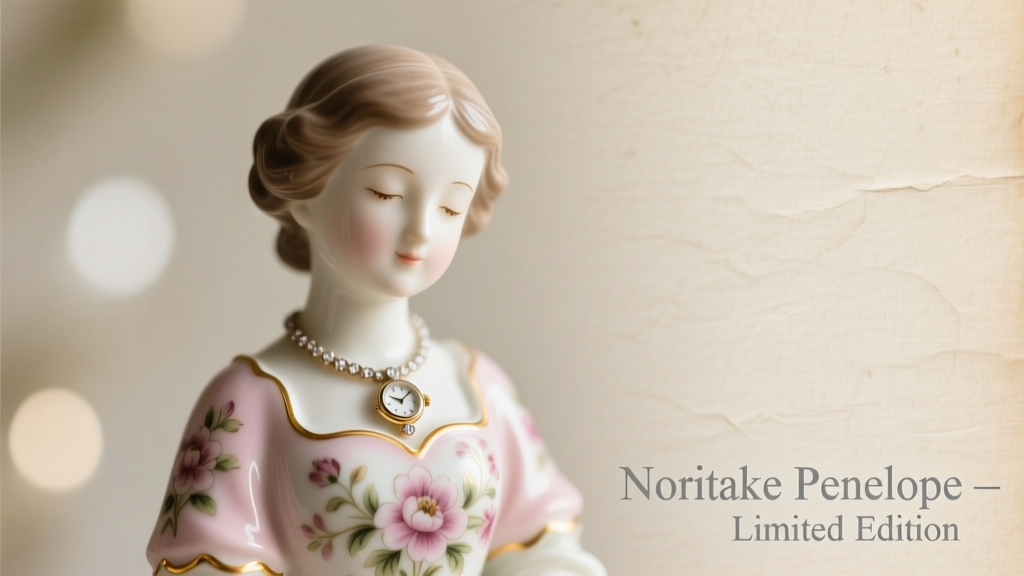
Noritake Penelope: The Forgotten Mid-Century Watch That Redefined Japanese Precision and Feminine Elegance
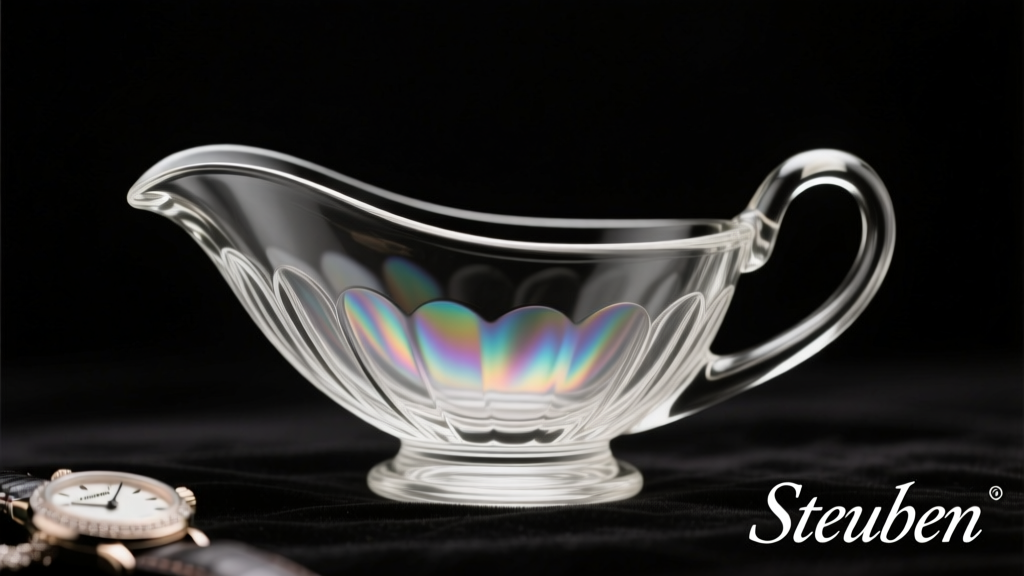
Steuben Gravy Boat, Clear Crystal, 3½ × 6¾ Inches: Design Legacy, Production History, and Market Significance
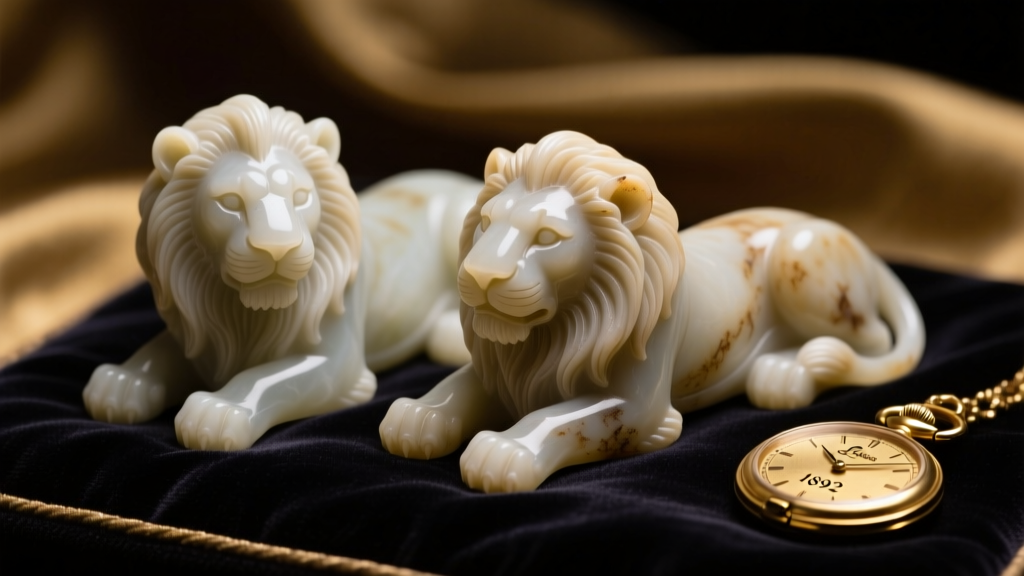
Alabaster Figurine Lions Lying Pair: Provenance, Craftsmanship, and Market Significance

Badges of the Austro-Hungarian Air Service: Authentic Pilot Badges from 1916
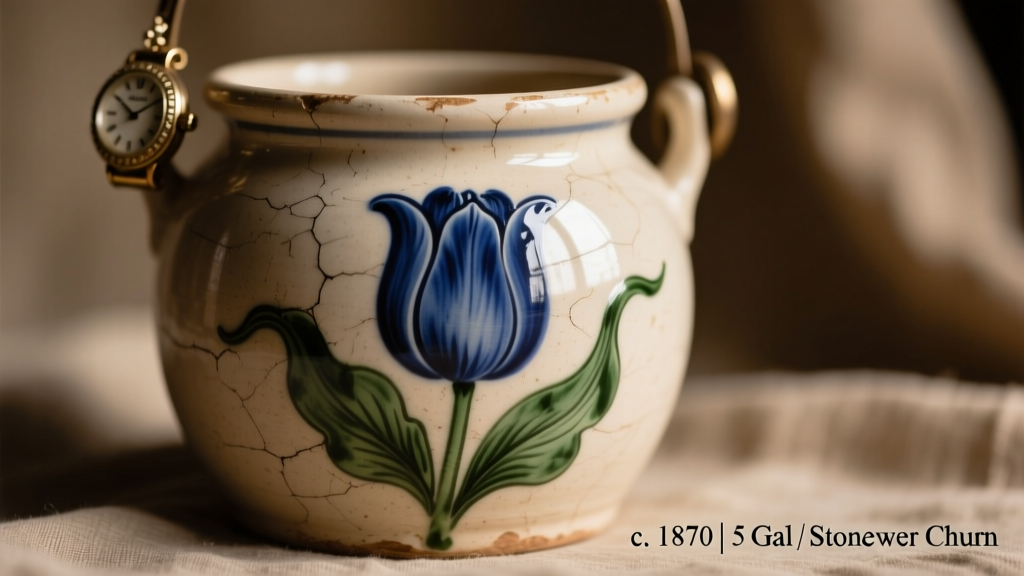
Stoneware Churn: Cobalt Tulip and Green Leaves Decoration, c. 1870, 5-Gallon Capacity — A Deep Dive into American Salt-Glazed Pottery
Rolex Reference 1136241: The Definitive Analysis of the 1970s Oyster Perpetual Datejust in Stainless Steel
El Patio Redwood Butter: A Collector’s Deep Dive into the Iconic Mid-Century Dinnerware Pattern