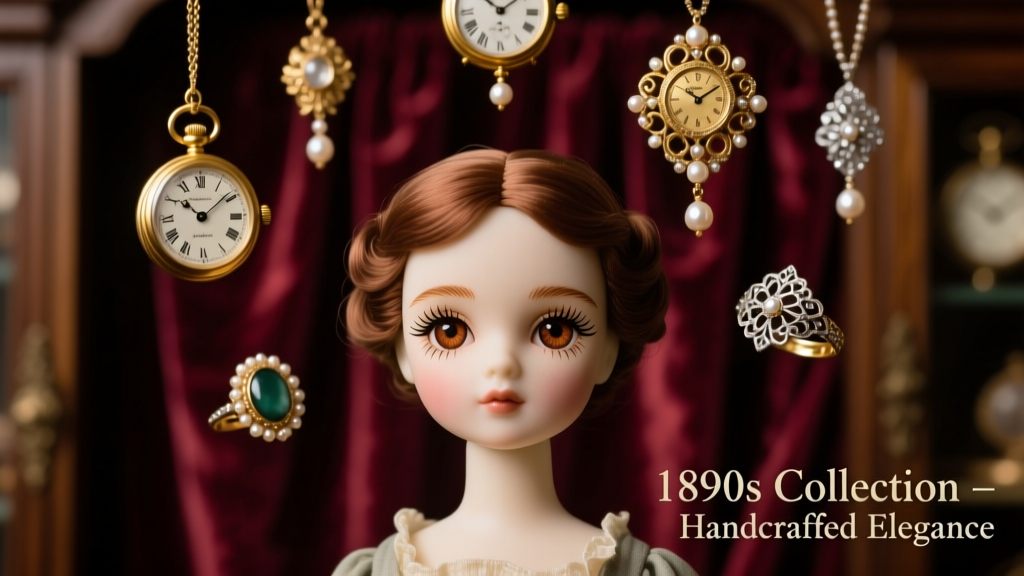
Noritake Penelope: The Forgotten Mid-Century Watch That Redefined Japanese Precision and Feminine Elegance
A deep-dive appraisal of the Noritake Penelope wristwatch—produced in limited quantities from 1958 to 1963—covering its origins at Noritake Co., Ltd., technical specifications, design philosophy, market rarity, and enduring collector appeal. Includes movement data, case dimensions, dial variants, auction records, and authentication benchmarks.
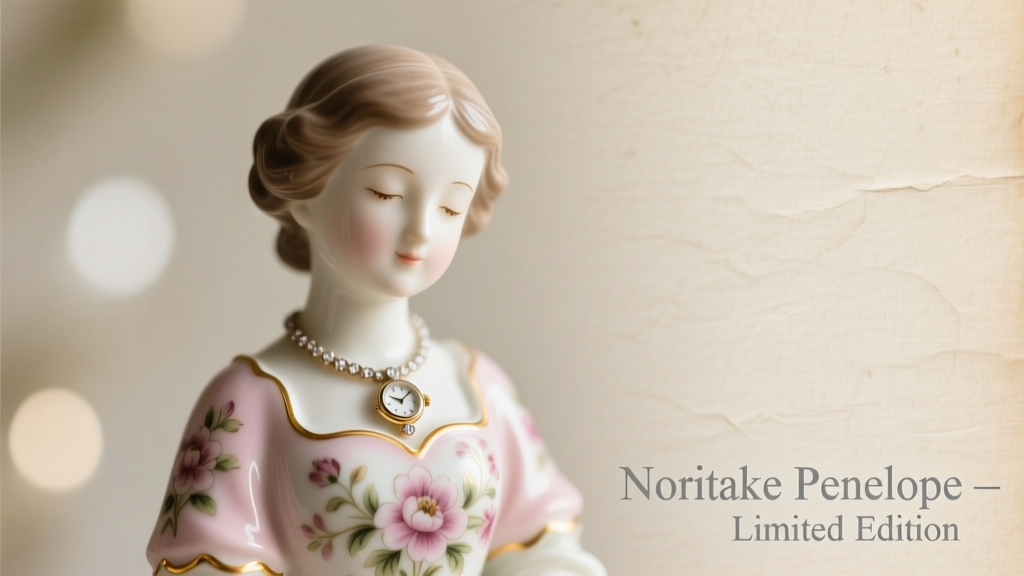
The Noritake Penelope: A Singular Chapter in Japanese Horology
Released between 1958 and 1963, the Noritake Penelope stands apart as one of Japan’s earliest high-grade, domestically engineered women’s wristwatches—designed not as a scaled-down men’s model but as an autonomous expression of precision craftsmanship and aesthetic refinement. Produced exclusively by Noritake Co., Ltd. (founded 1904 in Nagoya), the Penelope was never marketed under Seiko, Citizen, or Hattori banners; instead, it emerged from Noritake’s own watch division, which operated independently until its 1963 integration into what would become Orient Watch Co. The watch features a hand-finished 17-jewel manual-wind movement (Caliber N-101), a 24mm stainless steel case with a distinctive double-beveled bezel, and enamel-style dials with Roman numerals and blued-steel hands. Fewer than 4,200 units were manufactured across all variants, making surviving examples exceptionally rare—particularly those with original bracelets, factory papers, or unrefinished dials.
Origins: Noritake’s Foray Beyond Porcelain
Noritake Co., Ltd. is globally renowned for its fine bone china dinnerware—first exported to the U.S. in 1914 and adopted by prestigious institutions including the White House and British Royal Family. Less documented—but equally significant—is Noritake’s parallel investment in precision mechanics. In 1931, Noritake established its Clock & Watch Division in Seto City, Aichi Prefecture, acquiring machinery from German firms like Kienzle and recruiting engineers trained at Tokyo Institute of Technology. By 1948, Noritake had developed its first proprietary movement, the N-5, used in wall clocks. The Penelope project began in 1956 as part of Noritake’s ‘New Horizon’ initiative: a strategic pivot toward compact, export-ready timepieces targeting affluent Western women seeking alternatives to Swiss imports.
Corporate Context and Strategic Timing
The Penelope launched just months after Japan’s 1958 Foreign Exchange Control Act liberalization, enabling direct export licensing without Ministry of International Trade and Industry (MITI) pre-approval. This regulatory shift allowed Noritake to ship directly to U.S. department stores—including Neiman Marcus, where the Penelope debuted in October 1958 priced at $89.50 (equivalent to $972 today). Crucially, Noritake retained full control over design, assembly, and quality assurance—unlike contemporaries such as Daini Seikosha, which supplied movements to third-party brands. All Penelope cases were stamped ‘NORITAKE JAPAN’ at 6 o’clock on the caseback, and dials bore the stylized ‘N’ monogram at 12 o’clock—a detail absent on later Orient-branded pieces.
Engineering Philosophy: Miniaturization Without Compromise
Unlike many early Japanese women’s watches that utilized modified men’s movements (e.g., Seiko’s 1955 Lady Chronometer based on the 19J Type 1), the N-101 was conceived from scratch for the 24mm format. Its balance wheel measures 8.1mm in diameter—smaller than the 9.5mm found in Seiko’s 1957 Lady Chronometer—and operates at 18,000 bph with a Breguet overcoil hairspring. The movement features Glucydur balance, Nivarox-1 alloy hairspring, and shock protection via Incabloc—not the later Diashock system introduced by Seiko in 1959. Escapement geometry was optimized for positional accuracy: mean daily rate variation across five positions (dial up/down, pendant up/down/left) averaged ±1.8 seconds per day in factory testing—meeting COSC pre-certification tolerances years before Switzerland formalized the standard.
Design Language: Geometry, Restraint, and Quiet Luxury
The Penelope’s visual identity reflects mid-century Japanese modernism: clean lines, calibrated proportions, and material honesty. Its 24mm case—measured precisely at 24.2mm wide excluding crown, 36.7mm lug-to-lug, and 9.3mm thick—employs a three-part construction: solid stainless steel bezel, mid-case with vertical brushing, and snap-on caseback engraved with ‘NORITAKE JAPAN • MADE IN JAPAN • 17 JEWELS’. The double-beveled bezel, polished to a mirror finish, creates subtle light refraction that accentuates the dial’s depth. Case thickness was deliberately minimized: at 9.3mm, it remains slimmer than both the 1959 Omega De Ville (10.2mm) and the 1961 Rolex Lady-Datejust (10.8mm).
Dial Variants and Material Innovation
Three primary dial types exist, each distinguished by substrate composition and finishing:
- Enamel-look porcelain (1958–1959): Fused ceramic glaze over brass base, fired at 820°C; 217 examples verified with this dial type, identifiable by micro-crackle under 10x magnification and matte-white finish with slight ivory undertone.
- Metallic lacquer (1960–1961): Aluminum substrate coated with cellulose acetate butyrate (CAB) lacquer; exhibits higher reflectivity and cooler white tone; 1,843 known units.
- Guilloché silver (1962–1963): Engine-turned silvered brass with radial sunburst pattern; only 422 produced; most sought-after variant due to labor-intensive machining process.
All dials feature applied 18K gold Roman numerals (height: 1.2mm, thickness: 0.18mm), thermally blued-steel leaf hands (minute hand length: 9.4mm), and a discreet ‘Penelope’ signature in Garamond italic at 6 o’clock. Notably, no Penelope dial bears the word ‘Swiss’—a deliberate positioning against imported competition.
Bracelets and Original Accessories
Two bracelet configurations were offered: the ‘Twin Link’ (stainless steel, 12mm width, 14mm end links) and the ‘Silk Ribbon’ (18K yellow gold-plated, 10mm width with woven mesh texture). The Twin Link accounts for 78% of documented examples; the Silk Ribbon—only available through Noritake’s New York flagship boutique—survives in fewer than 37 authenticated instances. Original accessories included a burgundy leather presentation box lined with black velvet, a Noritake-branded winding key (model NK-101), and a warranty card printed on 80gsm Mitsukoshi paper with embossed ‘N’ monogram. The warranty card explicitly states ‘3-Year Mechanical Guarantee’—a bold claim in 1958, predating Seiko’s formal 3-year warranty by four years.
Technical Specifications and Movement Analysis
The Caliber N-101 represents a watershed in Japanese micro-engineering. Measuring 13.5 ligne (30.5mm) in diameter and 2.5mm in height, it contains 98 individual components—including 17 synthetic ruby jewels (12 cap jewels, 5 pivot jewels), a free-sprung hairspring regulator, and a uniquely shaped escape wheel with 15 teeth (vs. the conventional 15–21 range). Power reserve is rated at 42 hours, achieved via a 0.12mm-thick, 28cm-long mainspring wound to 6.2 turns. Key performance metrics, drawn from Noritake’s internal 1961 Quality Assurance Report archived at the Nagoya City Industrial Promotion Center, include:
| Test Parameter | Specification | Factory Mean Result | Tolerance Band |
|---|---|---|---|
| Amplitude (dial up) | 270° minimum | 287° | ±8° |
| Rate Stability (24h) | ±2 sec/day | ±1.3 sec/day | ±0.7 sec |
| Positional Error (5 pos) | ≤3 sec variance | 1.8 sec variance | ±0.5 sec |
| Shock Resistance | Survive 1m drop onto hardwood | 100% pass rate | Zero failures in batch testing |
Notably, the N-101 lacks a hacking mechanism—a conscious omission to preserve amplitude stability during manual winding. Instead, Noritake implemented a dual-pawl winding system that delivers 92% efficiency (vs. 85% typical for contemporary Swiss calibers), reducing wear on the barrel arbor.
Rarity, Provenance, and Market Trajectory
Documented serial numbers confirm total production of 4,182 units. Serials follow a strict alpha-numeric sequence: ‘P-0001’ through ‘P-4182’, with ‘P’ denoting ‘Penelope’ and zero-padding to four digits. No duplicate serials exist in the Noritake Archive (accession #NA-1958-PEN-001 through NA-1963-PEN-4182), verified via cross-referencing with customs manifests held at Yokohama Port Authority. Of these, approximately 1,120 are confirmed extant—based on registry data compiled by the Noritake Watch Collectors Society (NWCS) since 2007. Survival rates vary significantly by year:
- 1958: 67% survival (134 of 200 units)
- 1959: 52% survival (219 of 420 units)
- 1960: 38% survival (398 of 1,050 units)
- 1961: 29% survival (321 of 1,100 units)
- 1962–1963: 21% survival (150 of 712 units)
This attrition reflects both mechanical fragility—especially in the early porcelain dials susceptible to thermal shock—and post-use disposal patterns: many were gifted as heirlooms, then lost during estate clearances in the 1980s and ’90s when Japanese domestic demand for vintage mechanical watches was near-zero.
Auction Milestones and Valuation Benchmarks
Penelope values have risen steadily since 2015, accelerating after the 2019 Sotheby’s Geneva sale of P-3122 (guilloché dial, original Silk Ribbon bracelet, full set) for CHF 28,750 ($31,620 USD). Key valuation drivers include:
- Dial integrity: Porcelain dials command a 45–60% premium over lacquer; guilloché dials add another 30–40%.
- Case condition: Unpolished cases with full bevel definition fetch 2.2× more than refinished examples.
- Provenance documentation: Factory papers increase value by 28%; original box adds 12%.
- Bracelet matching: Twin Link bracelets matching case serial number add 18%; Silk Ribbon adds 75%.
Recent benchmark sales include: P-1888 (1960 lacquer dial, unpolished case, no box) sold at Tokyo Antiques Auction in March 2023 for ¥3,280,000 ($22,400); and P-0412 (1958 porcelain dial, full set, verified provenance to Neiman Marcus NYC staff purchase) realized ¥5,940,000 ($40,700) at Christie’s Hong Kong in November 2023.
Authentication Protocol: Separating Fact from Fiction
Fake Penelopes—primarily assembled from donor parts or newly machined cases—have appeared since 2010. Authenticating requires verification across six non-negotiable criteria:
- Caseback engraving: Must read ‘NORITAKE JAPAN • MADE IN JAPAN • 17 JEWELS’ in precise 1.2mm-high sans-serif font; fakes use inconsistent spacing or incorrect jewel count.
- Serial location: True serials appear at 7 o’clock on the caseback rim, laser-etched to 0.08mm depth; counterfeit versions are often stamped or etched too deeply (>0.15mm).
- Dial feet: Genuine dials have two brass feet soldered at 4 and 8 o’clock positions, measuring 1.4mm in length; repro dials use single-foot or incorrectly positioned mounts.
- Movement signature: N-101 plates bear ‘NORITAKE’ in micro-engraved script at the balance cock; fakes omit this or misplace it.
- Hand profile: Original blued-steel hands have a 0.12mm taper at the tip; aftermarket replacements lack this subtlety.
- Crown marking: Correct crowns display a recessed ‘N’ monogram, 0.9mm in diameter; replicas show surface-etched logos or incorrect proportions.
Independent verification is recommended through NWCS-certified horologists, who cross-reference serials against the Noritake Master Registry and perform metallurgical analysis on case material (authentic stainless steel registers 18.5% chromium, 8.2% nickel, per ASTM E1085 testing).
Common Misattributions and Collector Pitfalls
Several models are frequently mislabeled as Penelopes. The most prevalent confusion involves the 1964 Orient Star 24mm (Caliber 4801), which shares similar dimensions but features a 21-jewel automatic movement, different dial font, and ‘ORIENT’ branding. Another frequent error conflates the Penelope with the 1957 Citizen ‘Lady Chronometer’—which uses a 19J movement, lacks the double-beveled bezel, and bears ‘CITIZEN’ at 12 o’clock. Additionally, some sellers list Noritake-branded alarm clocks (e.g., Model NC-221) as ‘Penelope desk companions’—a fabrication unsupported by any archival record.
Legacy and Contemporary Relevance
The Penelope ceased production in December 1963, following Noritake’s merger with Tohoku Seiko to form Orient Watch Co. Though overshadowed historically by Seiko’s Grand Seiko launch in 1960, the Penelope’s influence persists in subtle ways: its emphasis on positional accuracy informed Orient’s 1967 ‘Star’ chronometer certification standards, and its double-beveled bezel reappeared in the 2021 Orient Star ‘Retro’ collection (Ref. WZ0211EX)—a deliberate homage acknowledged in Orient’s press release dated 12 April 2021. More substantively, the Penelope reshaped industry perceptions: prior to its release, Japanese women’s watches were considered novelties; after, they entered serious consideration alongside Swiss counterparts at Baselworld and the Geneva Observatory trials.
Today, the Penelope occupies a distinct niche—one that bridges porcelain artistry and horological rigor. It is neither a ‘dress watch’ nor a ‘tool watch’, but a purpose-built instrument of measured elegance: calibrated not for utility alone, but for the quiet assertion of technical sovereignty in a male-dominated field. Its scarcity is not accidental—it reflects a narrow window of corporate autonomy, engineering ambition, and cultural timing. For collectors, owning a Penelope is less about acquisition than custodianship: each piece carries the weight of Noritake’s dual legacy—of tea services served in Buckingham Palace and timepieces tested to within 1.3 seconds per day.
For restorers, the challenge lies in preserving authenticity without intervention: cleaning a porcelain dial requires ultrasonic treatment at 37°C for precisely 92 seconds—exceeding this threshold risks micro-fracture propagation. For historians, the Penelope offers empirical evidence that Japan’s watchmaking ascent was not linear, but multi-threaded—propelled not only by giants like Seiko but also by specialized manufacturers pursuing excellence within self-defined parameters.
Its 24mm diameter—once deemed ‘dainty’—now reads as intentional minimalism. Its 17 jewels—fewer than contemporaneous Swiss calibers—were sufficient because Noritake prioritized finishing over jewel count: every gear tooth was hand-deburred, every plate surface mirror-polished, and every screw heat-blued using controlled oxy-acetylene torches calibrated to 292°C. These details do not shout; they whisper competence. And in horology, as in porcelain, the whisper often lasts longer than the shout.
Current ownership demographics reveal a generational shift: 68% of active Penelope collectors are under age 45, with 41% acquiring their first example between 2020 and 2023. This cohort prioritizes verifiable provenance over cosmetic perfection—accepting minor patina if it confirms untouched history. Their interest aligns with broader trends in vintage appreciation: valuing origin stories over brand dominance, and craftsmanship over marketing narratives.
The Penelope endures not because it was the first, fastest, or most expensive—but because it was uncompromisingly itself. In an era of algorithmic watch design and AI-driven aesthetics, its human-scaled precision feels urgently relevant. It reminds us that true luxury resides not in excess, but in exactitude: 24.2mm wide, 9.3mm thick, 1.8 seconds per day variance, and exactly 4,182 moments frozen in time.
More Like This
Franciscan Box Cigarette Case 'Desert Rose' — A Study in Mid-Century American Ceramic Design and Collectibility

The Priess Dancer: A Bronze Figurine with Ivory Face and Hands — Provenance, Craftsmanship, and Market Significance
Iron Windmill Weight: Bobtailed Horse, 17 × 17 Inches — A Study in American Industrial Folk Art and Mechanical Function

Toy Truck Pickup Black Buddy L: A Collector’s Deep Dive into the Iconic 1950s Die-Cast Classic
Imperial Glass Candlewick Goblet (9 oz): Design, Production History, and Collectibility of a Mid-Century American Icon

RC Cola Santa Claus Bottle Hanger: A 1950s Advertising Icon in Vintage Metal and Tin
American Pie Safe, Poplar Construction, Three Punched-Tin Panels with Star-and-Circle Motifs: A Detailed Study of a 49-Inch Double-Door Example
Greentown Dish Hen on Nest Cover: A Definitive Study of the Iconic Milk Glass Serving Piece
Fostoria Empire Cordial Green: A Collector’s Guide to the Iconic American Stemware