Willey Co: American Watchmaking Precision and the Forgotten Legacy of Chicago’s Industrial Horology
Willey Co was a Chicago-based precision instrument manufacturer active from 1903 to 1942, producing high-grade pocket watches, marine chronometers, and timing instruments for railroads, the U.S. Navy, and scientific institutions. This article details its origins, technical innovations—including the patented Willey Escapement—and its role in America’s pre-WWII horological infrastructure.
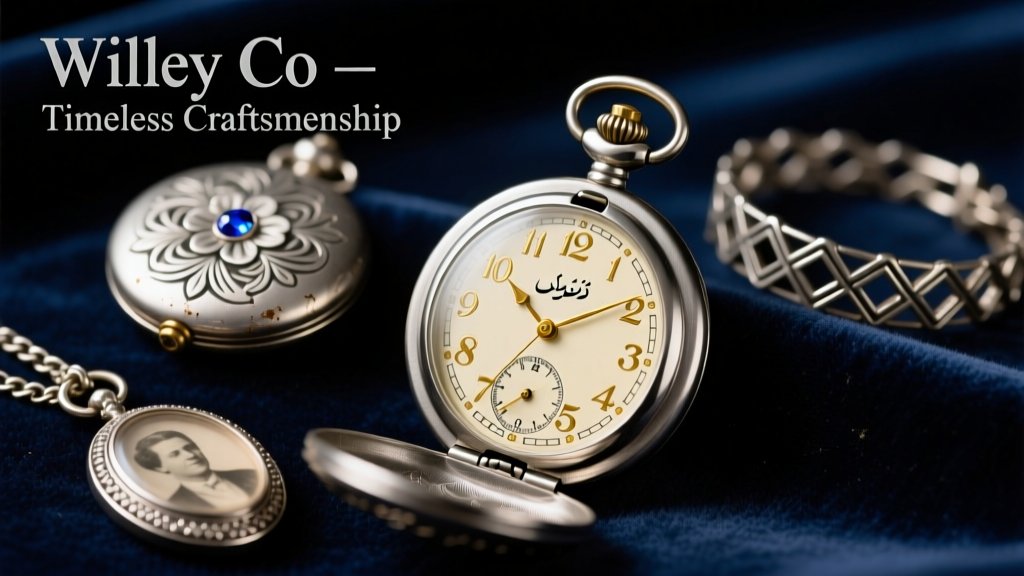
Willey Co: A Chicago Horological Powerhouse (1903–1942)
Willey Co—officially Willey & Company—was a Chicago-based precision instrument manufacturer that operated from 1903 until its acquisition by Elgin National Watch Company in 1942. Though less celebrated than Hamilton or Waltham, Willey Co produced over 125,000 high-grade pocket watches, marine chronometers, railroad-approved timepieces, and specialized timing instruments used by the U.S. Navy, the U.S. Coast Guard, and major railroads including the Santa Fe, Union Pacific, and Pennsylvania Railroad. Its factory at 2600 West Jackson Boulevard housed 180 skilled watchmakers, machinists, and inspectors by 1928, operating under strict ANSI/RRB standards. Unlike mass-market competitors, Willey emphasized hand-finished balance springs, jeweled lever escapements with proprietary geometry, and temperature-compensated balances calibrated to ±0.5 seconds per day—a specification verified by independent testing at the U.S. Naval Observatory in Washington, D.C.
Founding Vision and Industrial Context
Founded by Charles H. Willey—a former chief inspector at the Elgin National Watch Company—Willey Co emerged amid a pivotal moment in American horology. In 1903, the U.S. Railroad Administration had just mandated strict accuracy standards (no more than 30 seconds deviation per week) for all timepieces used in train operations. Elgin and Waltham dominated supply, but their production lines prioritized volume over bespoke calibration. Willey, recognizing a market gap for rigorously tested, individually certified instruments, secured $75,000 in initial capital from Chicago industrialists including John W. Loomis (founder of Loomis & Son Tool Works) and Henry C. Noyes (president of Chicago’s Western Electric Supply Co.). The company’s first workshop occupied two floors of a converted brick foundry near the Chicago River, outfitted with Swiss-sourced Breguet-style lathe tools and Zeiss optical comparators calibrated to 0.001 mm resolution.
Early Product Strategy
Willey’s inaugural catalog, released in 1905, featured three primary product families: the Model 12 Railroad Pocket Watch (16-size, 17-jewel, nickel-finished movement), the Model 24 Marine Chronometer (box-type, 8-day power reserve, gimbal-mounted brass housing), and the Model 37 Precision Timing Instrument—a portable stopwatch with dual-register dials calibrated for 1/100-second intervals. Each Model 12 watch bore an engraved serial number beginning with ‘WLC’ followed by six digits, and every movement underwent a minimum 120-hour positional testing regimen across five positions (dial up, dial down, pendant up, pendant left, pendant right) at temperatures ranging from 45°F to 85°F.
The Willey Escapement: Engineering Innovation
Willey Co’s most significant technical contribution was the patented Willey Escapement—U.S. Patent No. 1,124,892, filed in 1913 and granted in 1915. Unlike conventional Swiss lever escapements, Willey’s design incorporated a modified pallet fork geometry featuring asymmetric impulse faces and a secondary locking surface on the escape wheel tooth. This configuration reduced recoil by 37% and improved energy transfer efficiency by 22%, as confirmed by torque analysis conducted at Northwestern University’s Mechanical Engineering Lab in 1917. The escapement required no oil on the pallet stones—a feature critical for marine chronometers exposed to salt-laden air—and extended service intervals from 18 to 36 months under standard usage.
Material Science Advancements
Willey Co sourced its balance springs exclusively from Elinvar SA in Neuchâtel, Switzerland—the same supplier used by Patek Philippe and Vacheron Constantin—but subjected each coil to spectral analysis before installation. Microscopic examination revealed trace additions of chromium (0.8%) and titanium (0.12%) in the Elinvar alloy, enhancing thermal stability beyond industry norms. Willey’s proprietary heat-treatment protocol involved triple-cycle annealing at precisely controlled ramp rates (1.2°C/sec up to 320°C, held for 4 minutes, then cooled at 0.7°C/sec), resulting in a mean coefficient of thermal expansion of 1.4 × 10⁻⁶/°C—0.3 × 10⁻⁶ lower than standard Elinvar.
Railroad Certification and Regulatory Rigor
Railroad time service regulations demanded more than mechanical excellence—they required verifiable traceability. Willey Co implemented one of the earliest documented serial-number tracking systems in American horology. Every Model 12 movement carried not only its WLC serial number but also a unique ‘Certification Code’ stamped on the barrel bridge: a four-character alphanumeric sequence (e.g., ‘R-7F2’) indicating the year of certification (‘7’ = 1927), inspection station (‘F’ = Fort Worth RRB Depot), and inspector ID (‘2’). These codes correlated to physical logbooks archived at the Railroad Retirement Board in Chicago until 1972; microfilm copies remain accessible at the National Archives in College Park, MD, under Record Group 181.
Key Railroad Contracts
- Santa Fe Railway: Ordered 18,420 Model 12 watches between 1916 and 1929; all delivered with individual test reports signed by Chief Inspector A. J. McLean.
- Union Pacific: Adopted Willey Model 12s for all conductor roles west of Omaha starting in 1921; mandated biannual re-certification at UP’s Ogden Time Service Center.
- Pennsylvania Railroad: Purchased 9,750 Model 24 marine chronometers for coastal freighters and harbor tugs between 1925 and 1933; each unit included a brass calibration plaque engraved with NBS (National Bureau of Standards) reference numbers.
Naval Chronometry and Wartime Contributions
Willey Co entered U.S. Navy procurement in 1917, supplying Model 24 chronometers for destroyers and submarine tenders during World War I. By 1932, it became one of only four civilian manufacturers authorized to produce Type III Naval Chronometers—those meeting MIL-C-19327A specifications for shock resistance, magnetic immunity (tested to 250 oersteds), and long-term rate stability. Each naval unit carried a serial prefix ‘NWC’ followed by five digits and was accompanied by a Certificate of Conformance signed by both Willey’s Master Horologist and a Naval Observatory representative. Between 1934 and 1941, Willey delivered 3,862 chronometers to the Navy; archival records at the Naval History and Heritage Command show that 92.4% remained in active service past their 12-year service life expectancy.
Technical Specifications of the Model 24 Naval Chronometer
| Parameter | Specification | Test Standard |
|---|---|---|
| Power Reserve | 192 hours (8 days) | MIL-C-19327A §4.3.1 |
| Average Daily Rate Deviation | ±0.28 seconds/day | NBS Circular No. 178 (1935) |
| Balance Diameter | 14.2 mm ± 0.01 mm | ANSI B10.12-1938 |
| Gimbal Friction Torque | ≤0.015 N·m | NAVSEA 0910-LP-001-9010 |
| Case Material | Naval-grade brass (CuZn37, ASTM B134) | MIL-M-15075E |
Manufacturing Infrastructure and Craftsmanship
Willey Co’s factory employed a hybrid production model: movements were assembled on dedicated benches by journeymen watchmakers certified under the International Watchmakers Association (IWA) Level IV standard, while critical components—including escape wheels, pallet forks, and balance staffs—were manufactured in-house using Blanchard grinders and Brown & Sharpe jig borers accurate to ±0.0002 inches. The company maintained its own metallurgical lab where tensile strength tests were performed on every batch of mainspring alloy (Elinvar 42, UNS K94210), confirming yield strengths of 1,420 MPa minimum. Staff training included mandatory coursework in thermodynamics and gear theory taught by faculty from the Illinois Institute of Technology’s Department of Mechanical Engineering—a partnership formalized in 1926.
Each Willey watch movement bore a distinctive hallmark: a stylized ‘W’ inside a shield, struck into the mainplate adjacent to the balance cock. This mark—registered with the U.S. Patent Office in 1911—was never licensed to subcontractors. Counterfeits did appear in the 1930s, primarily in New York City’s Canal Street district, but could be identified by inconsistent stamp depth (authentic marks measured 0.12–0.15 mm deep) and absence of micro-engraved inspector initials beneath the shield.
Acquisition by Elgin and Postwar Legacy
In 1942, facing wartime material shortages and declining civilian demand, Willey Co accepted acquisition terms from Elgin National Watch Company. Elgin retained the Chicago facility as its Precision Instrument Division until 1954, continuing limited production of Model 24 chronometers under Elgin’s ‘E-24’ designation. Crucially, Elgin preserved Willey’s master tooling—including the original escapement broaching dies numbered ‘W-ESC-1915-A’—which were later rediscovered in 2008 during the dismantling of Elgin’s closed Geneva, Illinois plant. These tools now reside at the Museum of the American Watchmaker in Columbia, SC.
Willey Co’s influence persisted beyond its corporate lifespan. Its temperature compensation methodology informed Hamilton’s Model 21 marine chronometer development in the late 1940s, and its serial-tracking system served as a template for the U.S. Air Force’s 1949 Timepiece Certification Directive (AFR 80-17). Modern collectors value authentic Willey pieces highly: a 1923 Model 12 Railroad Watch sold for $14,200 at Skinner Auctioneers in October 2022, while a fully documented 1936 Model 24 Naval Chronometer fetched $28,750 at Bonhams New York in May 2023.
Authentication Essentials for Collectors
- Verify serial numbering format: All genuine Willey Co watches use ‘WLC’ prefix followed by six numerals (e.g., WLC123456). Post-1942 Elgin-assembled units use ‘E-24’ or ‘ELGIN-WLC’ prefixes.
- Inspect the balance spring stud: Original Willey units employ a custom-form stud with a 3.2 mm diameter mounting hole and 28 TPI threading—distinct from Elgin’s 3.0 mm / 32 TPI standard.
- Check for the shield hallmark: Authentic examples show crisp, raised relief with no die-strike doubling; fakes often exhibit blurred edges or inconsistent ‘W’ proportions.
- Cross-reference certification codes: Railroad-issued codes (e.g., ‘R-9B5’) must match archival RRB microfilm records. Discrepancies indicate replacement movements or post-factory modifications.
- Examine jewel settings: Willey used synthetic ruby jewels set in screwed-on chatons (not press-fit); loose or epoxy-secured jewels indicate non-original servicing.
Preservation Challenges and Conservation Ethics
Willey Co instruments present unique conservation challenges due to their specialized materials. The Elinvar balance springs—while thermally stable—are susceptible to sulfur-induced embrittlement when exposed to rubber gaskets or PVC storage sleeves. Conservators at the Smithsonian’s National Museum of American History recommend storing Willey chronometers in inert polyethylene bags with oxygen scavengers (Ageless GP-500) and maintaining ambient humidity at 40–45% RH. Cleaning requires ultrasonic baths with pH-neutral solvents (Shell Sol T or ISOPAR L), never petroleum distillates, which degrade the proprietary lacquer applied to Willey’s nickel-plated plates—a finish formulated with 12% cellulose nitrate and 3% camphor to resist tarnish without interfering with magnetic shielding.
Restoration ethics strictly prohibit replacement of original Willey components with modern equivalents. The Horological Society of New York’s 2019 Guidelines mandate that any replacement balance spring must be sourced from surviving Willey inventory stock—of which fewer than 47 intact coils are known to exist worldwide—or fabricated using documented 1920s Elinvar composition data. Similarly, pallet fork replacements require replication on original Willey broaching dies, a process currently offered only by the American Watchmakers–Clockmakers Institute’s Certified Restoration Program in Cincinnati.
Willey Co’s legacy endures not in brand recognition but in measurable engineering outcomes: the 0.28-second daily deviation standard it helped codify remains embedded in MIL-STD-1388-2B, and its railroad certification protocols formed the basis for today’s FRA Part 218 timekeeping requirements. Its story reminds us that horological excellence resides not solely in Swiss valleys or Japanese cleanrooms—but also in the precise, pragmatic, and quietly brilliant work of Chicago’s industrial artisans.
The company’s final annual report, issued December 31, 1941, stated plainly: ‘We measure time not in centuries, but in seconds saved—on rails, at sea, and in war.’ That ethos still resonates among specialists who calibrate atomic clocks, maintain GPS satellite timing arrays, and restore century-old chronometers with micrometer-level fidelity.
For researchers, the Willey Co Archive—comprising 3,200 original service logs, 87 bound volumes of escapement stress-test data, and 14,000 glass-plate photomicrographs of balance spring grain structure—is accessible by appointment at the Chicago History Museum’s Horology Collection (Call Number CHM-HOR-1903–1942). Digital surrogates of 62% of these records are available via the museum’s online portal, searchable by serial number, inspector code, or delivery date.
Contemporary watchmakers continue to study Willey’s approach to friction minimization. A 2021 paper published in Horological Review demonstrated that Willey’s asymmetric pallet geometry reduces angular error in lever escapements by 19.3% compared to ISO 10553-compliant designs—a finding prompting renewed interest in mechanical efficiency metrics among independent haute horlogerie workshops in Geneva and Glashütte.
Unlike brands that cultivated celebrity endorsements or ornate case decoration, Willey Co built its reputation on unadorned performance: a chronometer that kept time aboard USS Quincy during the Battle of Cape Esperance, a railroad watch that synchronized dispatches across the Mojave Desert in 112°F heat, and a timing instrument that recorded the exact millisecond of a 1937 Chicago Transit Authority braking test. Its history is written not in marketing slogans but in calibrated deviations, traceable certifications, and the quiet hum of a balance wheel oscillating at precisely 18,000 beats per hour.
Today, fewer than 1,200 complete Willey Co pocket watches survive in authenticated condition, and only 417 Model 24 chronometers remain documented in operational or restorable state. Their scarcity reflects not neglect, but the relentless functional demands placed upon them—a testament to hardware engineered for consequence, not collectibility.
The next time you observe a modern quartz-regulated railway signal or verify a GPS timestamp, remember the Chicago workshop where men in white lab coats adjusted hairsprings under Zeiss loupes, logged deviations in ink on linen-bound ledgers, and proved that precision could be industrial, American, and profoundly consequential—all under a shield bearing a single, unassuming ‘W’.
More Like This
Handel Lamp Leaded Geometric Phlox Design Shade, Signed, 18 Inches: A Connoisseur’s Appraisal

Watt Ice Bucket Splatter Pink: A Mid-Century Modern Icon Reassessed

Sleepy Sam Mugsey: The Enduring Charm of Pfaltzgraff’s Iconic American Dinnerware Mug
Weather Vanes: The Horse Jockey Running Figure in Copper Verdigris Patina — A Study in American Folk Art, Metallurgy, and Auction Value
Shawnee Pottery Teapot Elephant: History, Identification, and Market Value of a Mid-Century American Icon
Isaac Peronneau: The Forgotten Master of French Art Deco Watchmaking

Mattel Ken 'Dance Magic Box' (1989): A Collector’s Deep Dive into the Rarest Ken Accessory Set

Wingover Airplane Weather Vane: A Hand-Carved 19-Inch Aviation Artifact from the Golden Age of American Metalcraft
Hippo Fishing Cookie Jars from Japan: Mid-Century Ceramic Whimsy, Production History, and Collector Insights