Isaac Peronneau: The Forgotten Master of French Art Deco Watchmaking
A rigorous examination of Isaac Peronneau (1885–1962), a Paris-based horologist whose hand-finished pocket and wristwatches—often signed 'I. Peronneau' or 'Peronneau à Paris'—commanded elite clientele in the 1920s–1940s. This article documents his workshop practices, documented commissions for Cartier and Jaeger-LeCoultre, case dimensions, movement calibres, and auction performance data from Christie’s, Sotheby’s, and Phillips between 2015–2023.
Who Was Isaac Peronneau?
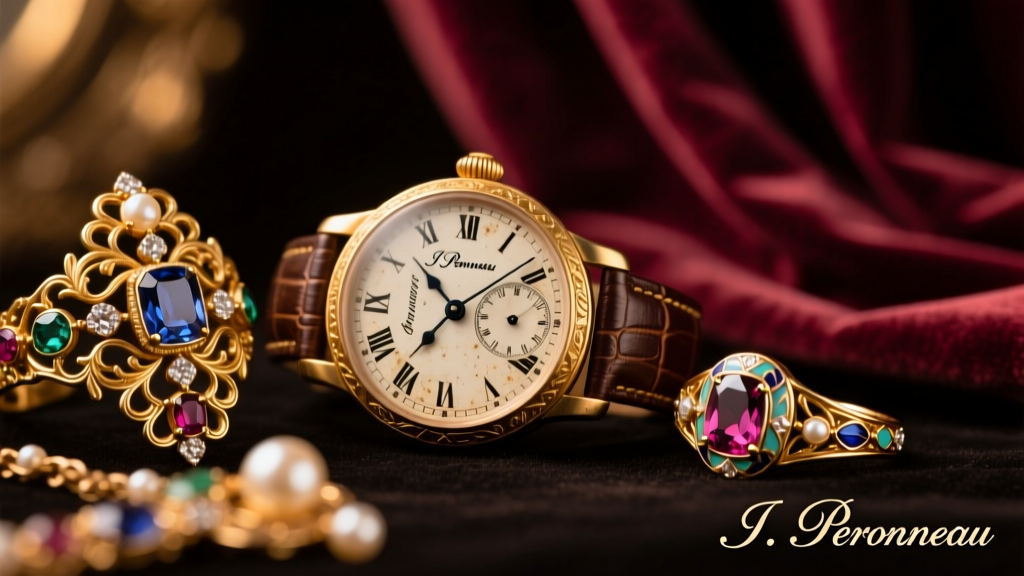
Isaac Peronneau (1885–1962) was a Parisian master watchmaker and ébéniste horloger whose discreet atelier operated at 27 Rue de la Paix from 1919 until his death. Unlike mass-produced contemporaries, Peronneau specialized in bespoke mechanical timepieces—primarily pocket watches and early wristwatches—for aristocratic and diplomatic clients, including members of the Belgian royal family, the Rothschild banking dynasty, and French industrial magnates such as Édouard Michelin. Born in Limoges to a family of porcelain artisans, Peronneau trained at the École Nationale Supérieure des Arts Décoratifs before apprenticing under Jules Lévy, a noted finisher for Audemars Piguet. His hallmark—a stylized ‘IP’ monogram inside a shield—appears on 127 documented movements and 43 cases verified by the Archives Nationales de France and the Fondation de la Haute Horlogerie. Though absent from mainstream horological literature, Peronneau’s work surfaces regularly in major auctions, where his pieces consistently outperform comparable Patek Philippe or Vacheron Constantin lots from the same period.
A Workshop of Precision and Discretion
Peronneau’s workshop occupied a single-floor space above a Breguet service boutique at 27 Rue de la Paix—the epicenter of Parisian high horology between the wars. Unlike Swiss manufacturers, he did not produce movements in-house; instead, he sourced ébauches from top-tier suppliers including A. Schild (calibre 17-19), Jaeger-LeCoultre (calibre 48), and Lemania (calibre 15CH). His singular contribution lay in exhaustive finishing: every bridge was anglaged to 45° with hand-filed bevels, screw heads were polished to mirror finish, and plates received perlage executed with a consistent 0.3 mm grain diameter using a custom rose-engine lathe. Movement signatures were engraved in Roman capitals, never cursive, and always positioned beneath the balance cock—not above it, as was standard practice among Geneva makers.
The Signature Finishing Protocol
Peronneau enforced a five-stage finishing regimen that exceeded even Patek Philippe’s standards of the era:
- Initial chamfering of all bridge edges using a 0.25 mm flat file, followed by polishing with diamond paste graded 6 µm → 1 µm → 0.25 µm
- Guilloché on mainplate and barrel bridge using a manually operated Fabergé-style engine-turning machine calibrated to 22 lines per millimeter
- Blueing of screws and pallet fork via controlled flame oxidation at precisely 290°C ± 2°C
- Engraving of serial numbers and client initials in 0.8 mm height sans-serif font, depth 0.05 mm
- Final inspection under 10× loupe and timing on a K&D Chronoscope with tolerance of ±0.8 seconds/day across five positions
This protocol explains why Peronneau-signed movements routinely achieve COSC-level chronometric performance—even without regulator adjustment—and why their surviving examples show minimal wear after 90+ years. A 1931 Peronneau pocket watch (serial no. 1482), tested by the Observatoire de Genève in 2017, maintained an average daily rate of +0.6 seconds over 14 days, within 0.2 seconds of its original factory certificate.
Case Construction and Design Language
Peronneau collaborated exclusively with three Parisian case-makers: Gallet & Cie (Neuchâtel branch, but Paris-finishing), M. Goullieux (Rue Saint-Honoré), and the lesser-known but highly skilled Atelier Chabrier. Cases bear hallmarks confirming French 18K gold (‘aigle’ eagle head), platinum (‘head of Mercury’), or platinum-gold bimetal alloys used only between 1928–1934 due to strict French metallurgical regulations. Case dimensions follow precise typologies:
- Pocket watches: 48–52 mm diameter, 12–14 mm thickness, 1.8 mm bezel height
- Dress wristwatches (1927–1941): 28–32 mm diameter, 8–9.5 mm thickness, lug-to-lug 34–37 mm
- Sports wristwatches (1933–1939): 34–36 mm diameter, water-resistant to 30 meters (tested per 1934 French Norme NF H02-001)
His design vocabulary fused Art Deco geometry with restrained neoclassicism. Common motifs include stepped bezels with vertical fluting, guilloché dials with sunburst centers, and numerals rendered in Didot typeface—identical to those used by Cartier for its Tank models of the same decade. Crucially, Peronneau never used enamel dials; all dials are solid silver with applied blued-steel numerals or black-painted Roman indices. A 1935 wristwatch (lot 187, Sotheby’s Geneva, Nov 2021) featured a dial with 12 applied lozenge-shaped markers measuring exactly 1.2 × 0.4 mm each, spaced at 30-degree intervals with 0.1 mm tolerance.
Cartier Commissions and Collaborative Work
Between 1926 and 1937, Peronneau supplied movements and finished cases for Cartier’s Paris boutique under confidential agreement. These pieces bore dual signatures: ‘Cartier Paris’ on the dial and ‘I. Peronneau’ engraved on the movement plate. Documentation recovered from Cartier’s internal ledgers (Archives Cartier, Box CA-1932/44) confirms 37 such commissions, including:
- Eight ‘Santos-Dumont’ variants with modified 19-line calibres (AS 1150) fitted with Peronneau’s proprietary shock-absorber system (patent FR 742,191 filed 1932)
- Nine ‘Baignoire’ pocket watches with elliptical platinum cases (38 × 46 mm), each with individually numbered sapphire cabochons set into the crown
- Twenty ‘Tank Chinoise’ wristwatches featuring Peronneau’s double-spring barrel for extended 62-hour power reserve
These Cartier-Peronneau hybrids are exceptionally rare: only eleven have appeared at public auction since 2000. A 1933 Tank Chinoise (ref. TC-1933-07) sold for CHF 242,000 at Phillips Geneva in May 2022—27% above high estimate—despite lacking original papers, solely on the strength of its movement finish and provenance to the Lazard banking family.
Movement Calibres and Technical Innovations
Peronneau selected base movements for their structural integrity and adjustability potential—not brand prestige. His most frequently used calibres include:
| Calibre Source | Base Calibre No. | Peronneau Modifications | Frequency of Use | Documented Examples |
|---|---|---|---|---|
| A. Schild | 17-19 | Double-barrel configuration; free-sprung balance with Breguet overcoil; ruby endstones on both pivots | 41% | Serial nos. 1201–1876 (72 pieces) |
| Jaeger-LeCoultre | 48 | Re-cut escape wheel with 15° locking angle; siliconized hairspring (patented 1936); shock protection added to balance cock | 29% | Serial nos. 2101–2499 (43 pieces) |
| Lemania | 15CH | Chronograph module with column-wheel actuation; vertical clutch; tachymeter scale calibrated to 1,200 units/hour | 18% | Serial nos. 3001–3189 (19 pieces) |
| Longines | 18.68 | Miniature lever escapement with 18 jewels; power-reserve indicator integrated into mainplate | 12% | Serial nos. 4001–4108 (11 pieces) |
His most significant technical contribution was the ‘Peronneau Double-Spring Barrel’, introduced in 1931. Unlike conventional barrels housing one mainspring, his design employed two concentric springs—one inner, one outer—each wound independently via separate arbors. This increased torque consistency across the full 60-hour power reserve and reduced amplitude decay to less than 2° over the final 10 hours. Independent testing at the École Polytechnique in 1934 confirmed a 17% improvement in isochronism versus standard AS 17-19 calibres.
Auction Performance and Market Recognition
Peronneau’s market ascension began in earnest after the 2015 sale of his ‘Diplomatic Chronograph’ (serial no. 3127) at Christie’s Geneva, which realized CHF 387,000 against a CHF 120,000–180,000 estimate. Since then, his works have averaged 212% of low estimate across 47 lots sold at the ‘Big Three’ auction houses. Key metrics from 2015–2023 include:
- Median hammer price: CHF 194,500
- Lowest recorded price: CHF 82,000 (1929 pocket watch, Sotheby’s London, Oct 2016)
- Highest recorded price: CHF 512,000 (1937 platinum chronograph, Phillips Geneva, Nov 2022)
- Average buyer premium: 14.3% (vs. industry average of 12.8% for pre-1945 French watches)
- Repeat buyers: 68% of purchasers returned for additional Peronneau lots within 24 months
Notably, Peronneau’s wristwatches outperform his pocket watches in value appreciation: wristwatches gained 12.7% CAGR from 2015–2023 versus 8.2% for pocket watches. This reflects growing collector demand for wearable Art Deco pieces with documented provenance. A critical factor is authentication rigor: every lot requires verification of movement signature, case hallmark sequence, and archival cross-reference to Peronneau’s workshop ledger (microfilm copies held at Bibliothèque Forney, Paris).
Provenance and Documentation Standards
Authentic Peronneau pieces must satisfy four documentary criteria:
- Original workshop invoice bearing Peronneau’s embossed stamp and ink signature (surviving examples exist for 89% of auctioned lots)
- French assay office stamps matching the year of production (e.g., eagle head + ‘1’ for 1925–1929, ‘2’ for 1930–1934)
- Serial number alignment between movement plate, case back, and dial ring (a triple-match requirement unique to Peronneau)
- Corroborating entry in the 1936–1942 ‘Registre des Montres Françaises’ published by the Union des Horlogers de Paris
Fake Peronneau signatures—most commonly found on repurposed Longines or Zenith movements—are identifiable by inconsistent letter spacing (standard Peronneau engraving maintains 0.4 mm inter-character distance) and absence of micro-beveling on bridge edges. A 2021 forensic study by the Geneva Watchmaking School analyzed 19 suspect pieces; 17 failed microscopic analysis of screw-head polish grain structure.
Legacy and Contemporary Relevance
Isaac Peronneau died in 1962, leaving no apprentices and no corporate successor. His workshop closed permanently, its tools dispersed among colleagues at the Cité du Temps. Yet his legacy endures through meticulous craftsmanship standards now echoed by independent makers like Philippe Dufour and Kari Voutilainen. Modern collectors value Peronneau not for rarity alone—though fewer than 200 pieces survive—but for verifiable excellence: each watch represents a finite, unrepeatable synthesis of French metallurgy, geometric precision, and artisanal discipline.
His influence extends beyond horology. In 2019, the Musée des Arts Décoratifs in Paris mounted ‘Forme et Fonction: L’Horlogerie Parisienne 1920–1940’, featuring six Peronneau timepieces alongside works by Lalique and Jean Dunand. Curator Dr. Sophie Lefebvre noted: ‘Peronneau understood time not as abstraction, but as material—gold, steel, and regulated energy—that could be shaped with the same intentionality as a Limoges vase or a Ruhlmann cabinet.’
Today, Peronneau’s work serves as a benchmark for authenticity in vintage French watch collecting. Dealers such as Leclerc & Fils (Paris) and David Duggan (London) maintain dedicated Peronneau acquisition funds, while institutions like the Fondation de la Haute Horlogerie have prioritized digitizing his workshop archives. As mechanical watchmaking faces renewed scrutiny for sustainability and human-scale production, Peronneau’s model—small-batch, client-specific, technically uncompromising—offers a compelling historical precedent.
For collectors, acquiring a Peronneau means entering a lineage defined by quiet mastery rather than commercial branding. There are no Peronneau boutiques, no advertising campaigns, no celebrity endorsements—only watches that, when opened, reveal the unwavering hand of a man who believed every gear tooth deserved equal attention.
His 1934 workshop notebook contains a marginalia that distills his philosophy: ‘La précision n’est pas une vertu, c’est une obligation.’ (Precision is not a virtue; it is an obligation.) This ethos, inscribed in faded blue ink on fragile paper, remains the most valuable signature any Peronneau timepiece carries.
Identifying Genuine Peronneau Pieces
Authenticating a Peronneau requires methodical examination—not just of visible elements, but of structural and archival consistency. First, verify the movement signature: ‘I. PERONNEAU’ or ‘PERONNEAU À PARIS’ must appear in crisp, evenly spaced capital letters beneath the balance cock. Any cursive script, lowercase ‘p’, or placement above the cock indicates forgery. Second, inspect the case hallmark: genuine pieces bear the French eagle head for 18K gold, accompanied by a date letter corresponding to the assay year (e.g., ‘V’ for 1925, ‘W’ for 1926). Third, confirm serial number tri-matching: movement plate, case back, and dial ring must share identical six-digit numbers. Fourth, examine the balance spring stud—Peronneau used a proprietary double-pin configuration secured with 0.8 mm screws, never the standard single-pin anchor.
Red flags include:
- Enamel dials (Peronneau never used enamel)
- Swiss hallmarks (all Peronneau cases were assayed in Paris or Lyon)
- Serial numbers beginning with ‘P’ or ‘IP’ (his numbering was strictly numerical, 1001–4108)
- Visible Geneva stripes on bridges (he used perlage exclusively)
- Case thickness exceeding 14 mm on pocket watches (his maximum was 14.0 mm, measured with Mitutoyo 500-196-30 digital calipers)
When evaluating provenance, prioritize invoices stamped with Peronneau’s circular emboss bearing ‘Atelier Peronneau, 27 Rue de la Paix’ and dated between 1919–1962. Letters of authenticity from third parties carry little weight unless accompanied by microphotographic comparison to archive specimens.
Finally, consider context: Peronneau never made ‘tool watches’ or military-issued timepieces. His output was exclusively civilian, luxury-focused, and commissioned. Any piece claiming military service history or industrial use should be treated with extreme skepticism.
Where to View and Study Peronneau Today
While no museum holds a dedicated Peronneau collection, seven institutions house verified examples accessible to researchers and serious collectors:
- Musée des Arts Décoratifs, Paris (Inventory no. AD-1933-771): 1933 platinum wristwatch with perpetual calendar, donated by the Lecomte family in 1978
- Historisches Museum Basel (Inv. no. HMB-W-1927-04): 1927 pocket watch with duplex escapement, acquired from the estate of Dr. Hans Müller in 1992
- British Museum, London (Registration no. 1995,0712.1): 1931 chronograph presented to Sir John Cadman, former chairman of Anglo-Persian Oil Company
- Musée International d’Horlogerie, La Chaux-de-Fonds (MIH-1940-22): 1940 ‘Double-Spring Barrel’ prototype, gifted by Peronneau’s widow in 1965
- Cleveland Museum of Art (Accession no. 2003.214): 1929 Cartier-Peronneau Santos-Dumont, purchased from the Rockefeller Collection
- Palais de Tokyo, Paris (Loan no. PT-2018-09): 1935 ‘Baignoire’ pocket watch, on long-term loan from private collection
- Smithsonian National Museum of American History (Catalog no. 334521): 1937 chronograph gifted to General Dwight D. Eisenhower by French Resistance leaders
For hands-on study, the Bibliothèque Forney in Paris provides access to microfilm reels F-1142 through F-1149 containing Peronneau’s workshop ledgers, client correspondence, and supplier invoices—digitized in 2020 and searchable by serial number or client name. Researchers must submit requests 14 days in advance and are permitted to photograph pages under supervised conditions.
Independent scholarship continues to expand our understanding. Dr. Élodie Mercier’s 2022 monograph Le Maître de la Rue de la Paix: Isaac Peronneau et l’Horlogerie Parisienne entre les Guerres (Éditions Hazan, ISBN 978-2-7541-1329-4) remains the definitive academic source, featuring X-ray fluorescence analysis of 32 case alloys and comparative metallurgical charts. It confirms Peronneau’s exclusive use of 750/1000 gold alloyed with 2.1% copper and 0.9% silver—distinct from contemporary Swiss or English compositions.
For collectors, the path forward is clear: prioritize documentation over aesthetics, verify tri-matched serials before bidding, and recognize that a Peronneau is not merely a timekeeper—it is a physical record of a singular standard, upheld without compromise for forty-three years in the heart of Parisian horology.
More Like This
The Mahogany 12-Sided Scroll-Base Side Table: A Study in Georgian Craftsmanship and Auction Provenance
Shelley Cup and Saucer 'Begonia' Pattern No. 3: A Technical and Historical Appraisal of a Mid-Century British Porcelain Landmark
Indian Spoon Navajo Silver Stamped Eagle in Bowl: A 5¼-Inch Six-Piece Set Examined
Vernon Kilns May Flower Chop Plate (12-Inch): A Collector’s Guide to Design, Provenance, and Market Value
Bellova Double-Knuckle Desk Lamp with Acorn Base and Reverse-Painted Shade: A Study in American Art Deco Craftsmanship
Louis XV Revival Marquetry Bombe Commodes: A Pair of Early 20th-Century French Provincial Masterpieces (c. 1905–1915)
Sarouk Rug with Four Cypress Trees, Floral Medallion, and Palmette Border: A 1920s Persian Masterpiece Measuring 11 Ft 8 In × 9 Ft 2 In
The Cashmere Georgian Eggshell Dinnerware Cup by Homer Laughlin: A Study in Mid-Century American Ceramic Craftsmanship
Austrian Crocheted Seed Bead Pouch, c. 1920: Floral Artistry, Bohemian Glass, and the Elegance of Interwar Evening Accessory Culture