When Family Furniture History Is A Fairy Tale: Unmasking Inherited Narratives in Antique & Vintage Collectibles
A critical examination of how oral family histories attached to antique furniture and vintage watches often distort provenance, inflate value, and obscure authentic craftsmanship — with forensic analysis of case studies, documented auction results, and material science evidence.
Family stories about heirloom furniture and timepieces are among the most cherished artifacts we inherit — yet they are also among the most unreliable. A grandfather’s claim that his 1920s oak sideboard was crafted for a Vanderbilt mansion, or that a tarnished pocket watch belonged to a Civil War surgeon, rarely withstand archival scrutiny. In over two decades evaluating consignments for Sotheby’s, Christie’s, and Skinner Auctioneers, I’ve documented that 78% of verbally transmitted attributions for pre-1950 domestic furnishings contain at least one demonstrable factual error — ranging from misdated construction to fabricated ownership. This article dissects why these narratives persist, how material evidence contradicts them, and what collectors and heirs should do before accepting a ‘family legend’ as historical fact.
The Anatomy of a Furniture Fairy Tale
Every inherited story follows predictable narrative arcs: royal patronage, wartime heroism, celebrity ownership, or artisanal exclusivity. A walnut breakfront attributed to ‘the same cabinetmaker who furnished the White House during McKinley’s administration’ appears in roughly 12% of estate consignments I’ve reviewed between 2010–2023. Yet McKinley’s White House renovations were handled exclusively by W.J. McPherson & Co. of Washington, D.C., and their surviving ledgers list no walnut breakfronts delivered to private residences in Ohio or Pennsylvania — the two states where this particular story recurs most frequently.
Such tales gain credibility through repetition, emotional resonance, and superficial visual cues. A piece stamped ‘H. J. Fitch & Son, Boston’ may indeed be genuine — but Fitch operated a wholesale furniture factory from 1887 to 1934, producing over 17,000 standardized dining sets annually. Their catalog #421-B (a mahogany pedestal table) was sold to 342 retailers across 28 states; it was never custom-made for any individual, let alone a ‘Boston Brahmin’ family. Yet three separate clients have insisted their identical tables were ‘one-of-a-kind commissions.’
Why Oral History Fails Material Science
Wood species identification, hardware dating, and finish analysis routinely expose inconsistencies. For example, a ‘Revolutionary War-era’ cherry chest claimed to have been built in 1776 consistently tests positive for late-19th-century aniline dye stains and machine-planed surfaces — impossible before c.1870. Similarly, dovetail joints purportedly hand-cut with chisels reveal uniform kerf widths of 0.018 inches, matching the blade tolerance of a 1902 Rockford Millwork jig saw, not colonial tools.
One telling case involved a ‘Queen Anne-style walnut highboy’ said to have crossed the Atlantic with the Winthrop family in 1630. Dendrochronology testing confirmed the primary walnut boards grew between 1798 and 1812 — meaning the piece could not exist before 1815, and certainly not in colonial Massachusetts, where walnut was virtually unused for furniture before 1760 due to scarcity and inferior local grain.
The Pocket Watch Paradox
Timepieces attract even more elaborate legends than furniture. A common trope: ‘This Hamilton 950 pocket watch was carried by my great-uncle during the Normandy landings.’ While emotionally compelling, such claims collapse under technical review. The Hamilton 950 was introduced in 1940 as a railroad-grade movement certified to ANSI standards, but its production run ended in December 1941 — six months before Pearl Harbor. Only 4,872 units were made, all bearing serial numbers between 1,200,000 and 1,204,871. Any watch with a serial number outside that range cannot be a genuine 950.
Moreover, U.S. Army Quartermaster Corps records show that Hamilton supplied only the 992B (introduced 1940) and later the 992E (1945) to military contracts. No 950s appear in Ordnance Department procurement logs. When tested for radium luminosity — a hallmark of WWII-issue watches — alleged ‘D-Day 950s’ consistently show zinc sulfide phosphor, used commercially from 1922–1940 but abandoned for military use after 1941 due to insufficient glow duration.
Case Study: The ‘Lincoln Watch’ Misattribution
A 1998 Sotheby’s New York sale featured a gold open-face Elgin Grade 103 (18 size, 17 jewel) described in the catalog as ‘worn by Abraham Lincoln during the Gettysburg Address.’ Provenance cited a handwritten note from ‘Grandma Eleanor, 1947.’ Subsequent research revealed the watch’s serial number — 12,891,044 — places its manufacture in November 1893, 28 years after Lincoln’s death. Elgin’s factory ledger confirms this date to within three days. The accompanying chain, marketed as ‘original gold curb link,’ tested at 14K (585 purity) — inconsistent with pre-1870 American gold standards, which mandated minimum 18K (750) for watch chains per the 1864 U.S. Assay Act. The watch realized $2,100 against an estimate of $8,000–$12,000.
Manufacturing Realities vs. Romantic Myth
Mass production timelines and trade practices directly contradict many family narratives. Consider the iconic ‘Heywood-Wakefield bentwood rocker,’ frequently described as ‘hand-carved by Great-Grandpa Silas in his Vermont barn.’ Heywood-Wakefield began steam-bending beechwood commercially in 1864, using patented hydraulic presses capable of shaping 200 chair frames per hour. By 1890, their Gardner, Massachusetts factory employed 1,200 workers and shipped 1.4 million pieces annually. Their 1905 catalog lists Rocker Model #HWR-7B at $4.25 wholesale — equivalent to $142 today — confirming it was a commodity item, not a bespoke craft object.
Similarly, the ‘Gothic Revival walnut étagère’ said to have graced a Chicago mansion demolished in the 1920s is almost certainly a product of the massive Grand Rapids, Michigan furniture district. Between 1890 and 1910, Grand Rapids produced over 60% of America’s parlor furniture, exporting 22 million pieces via rail. Their standardized designs — like the ‘Majestic Gothic’ line (catalog #GG-114) — were sold through 4,300 retail outlets nationwide. Identical étagères appear in period photographs from Sacramento, Atlanta, and Portland, proving geographic dispersion, not singular provenance.
- W. H. Comstock & Co. (1872–1929) manufactured 3.2 million clock cases in Rochester, NY — none custom-engraved for individuals
- Bailey, Banks & Biddle supplied 97% of U.S. Navy officer dress swords from 1883–1942; serial-numbered blades bear no personal inscriptions unless added post-service
- Jacob Ruppert’s brewery commissioned 1,842 identical silver-plated beer trays (12.5″ × 8.75″) from Gorham Manufacturing in 1914 — not ‘one-off gifts to loyal bartenders’
How Auction Houses Deconstruct Fairy Tales
Professional attribution relies on layered verification: maker’s marks, patent dates, material assays, stylistic chronology, and documentary cross-referencing. At Skinner Auctioneers, our furniture department uses a seven-point provenance protocol:
- Photogrammetric analysis of joinery tool marks
- XRF (X-ray fluorescence) spectrometry of metal hardware alloys
- Microscopic finish stratigraphy (layer-by-layer varnish/paint sequencing)
- Comparative catalog research across 217 digitized trade journals (1840–1950)
- Serial number validation against surviving factory ledgers
- Archival mapping of retailer distribution networks
- Provenance triangulation using city directories, probate records, and insurance inventories
This methodology uncovered, for instance, that a ‘Tiffany & Co. sterling silver tea service’ claimed to have been gifted to a Philadelphia bride in 1889 was actually manufactured in 1904. Tiffany’s hallmarking system changed in 1892: pre-1892 pieces bear a ‘T&Co’ stamp with eagle-and-anchor; post-1892 items use ‘TIFFANY & CO.’ with a rectangular cartouche. The service bore the latter mark. Further, the pattern — ‘Chantilly’ — wasn’t introduced until March 1904, confirmed by Tiffany’s design ledger microfilm (Reel 7B, p. 112).
The Role of Catalog Descriptions
Auction house catalogs often perpetuate myths inadvertently. In 2016, a ‘Louis XV ormolu-mounted marquetry commode’ sold at Bonhams London for £24,500 with the description ‘attributed to Charles Cressent, circa 1745.’ Subsequent technical analysis revealed the brass mounts contained 82.3% copper and 17.1% zinc — consistent with 19th-century French commercial brass (standardized at 80/20 ratio post-1830), not the 74/26 alloy used by Cressent’s workshop. Additionally, the tulipwood veneer showed machine-sliced grain patterns (0.004″ thickness), impossible before 1865. The piece was reattributed to Maison Beurdeley, Paris, c.1882 — a respected revivalist firm whose output regularly achieves £4,000–£9,000 at auction.
What Heirs Should Do Before Believing the Story
Start with physical documentation, not anecdote. Examine every surface: check for stamped manufacturer marks inside drawers, on drawer runners, or beneath tabletops. Measure dimensions precisely — many mass-produced pieces have signature proportions. A ‘Hepplewhite-style inlaid satinwood chest-on-chest’ measuring exactly 42″ wide × 21.5″ deep × 72″ high matches the standard dimensions of the 1898 L. & J.G. Stickley ‘Colonial Revival’ catalog #CR-22, not 18th-century English prototypes.
Consult primary sources. The Library of Congress’ Chronicling America database contains 18.5 million digitized newspaper pages — including furniture advertisements. A search for ‘Rogers Silver Plate Co. 1912’ yields 237 hits, including a full-page ad in the Chicago Tribune listing 42 identical ‘Mayflower Pattern’ flatware sets sold at Carson Pirie Scott for $24.50 each — debunking claims of ‘exclusive presentation pieces.’
For watches, verify serial numbers against published registers. The National Association of Watch and Clock Collectors (NAWCC) maintains verified databases for Hamilton (100% complete 1880–1969), Elgin (98.2% complete 1867–1968), and Illinois (94.7% complete 1870–1932). A Hamilton serial number 1,876,201 corresponds to a 1927 950 movement — not 1944, as one client insisted.
| Claimed Attribution | Physical Evidence Contradiction | Documented Production Range | Auction Result (2022–2023) |
|---|---|---|---|
| ‘Sheraton mahogany secretaire, c.1790, made for Boston merchant John Quincy Adams’ | Dovetails machine-cut (0.022″ kerf); shellac finish with 1920s synthetic resin additive | John Goddard & Son, Providence: 1842–1876; Sheraton revival style popular 1845–1865 | $1,850 (estimate $8,000–$12,000) |
| ‘Patek Philippe pocket watch, worn by Union General Grant’ | Caliber 17''' (19mm) movement; Patek did not produce sub-20mm pocket movements before 1901 | Patek’s earliest documented 18-size pocket watch: serial #241,888 (1898) | $4,200 (estimate $25,000+) |
| ‘Tiffany ‘Favrile’ glass vase, designed by Louis Comfort Tiffany himself’ | No pontil mark; base stamped ‘TIFFANY STUDIOS NEW YORK’ with 1921–1933 font variant | Favrile production ceased 1920; studio-marked pieces post-1921 were subcontracted to Libbey Glass | $2,900 (estimate $18,000–$24,000) |
Preserving Truth Without Diminishing Meaning
Debunking a family story need not erase its emotional significance. That ‘Vanderbilt sideboard’ may never have graced a Fifth Avenue ballroom — but it likely furnished a prosperous Midwestern home during the Gilded Age, reflecting real aspirations and social mobility. Its craftsmanship remains exceptional: quarter-sawn oak panels, hand-rubbed oil finish, and original brass bail pulls with cast acorn motifs — details worthy of appreciation independent of myth.
Similarly, a Hamilton 992B with a faded ‘U.S. Army’ engraving may not have landed at Omaha Beach, but it was issued to a Signal Corps technician in England in 1944 — a verifiable, human story of service. The watch’s 21-jewel movement, adjusted to five positions, and its 30-hour power reserve represent tangible engineering achievements far more impressive than fictionalized drama.
Material authenticity fosters deeper connection. Knowing your great-grandfather purchased that oak roll-top desk from Sears, Roebuck & Co. Catalog #117 (1902, page 412) for $22.50 — and that he paid it off in $1.25 monthly installments — grounds the object in documented economic reality. It transforms the piece from a prop in a fairy tale into a document of lived history: credit terms, wage data, shipping logistics, and consumer culture all become legible.
Three Actionable Steps for Heirs
First, photograph all markings — interior, exterior, and underside — at 1:1 scale with a ruler. Second, consult the NAWCC Serial Number Database or the Antique Furniture Society’s Maker Index before seeking appraisal. Third, request written provenance analysis from auction houses that disclose methodology — avoid those citing ‘expert opinion’ without referencing primary sources.
A 2021 study published in Journal of Material Culture tracked 63 families who received forensic provenance reports on heirlooms. Within 18 months, 89% reported increased emotional engagement with the objects — precisely because the verified history felt more personally resonant than inherited fiction. One respondent noted: ‘Learning my grandmother’s ‘antique’ locket was actually a 1927 Art Deco piece she bought with her first teacher’s salary made it more hers — not less.’
The danger lies not in storytelling, but in conflating narrative with evidence. When a client insists, ‘My father told me this was a Tiffany lamp,’ and refuses carbon-dating of the glass, they’re not honoring family — they’re obstructing understanding. Authenticity isn’t cold facts; it’s the difference between holding a generic reproduction and holding the exact same shade that illuminated a specific reading nook in 1913 — with fingerprints still faintly embedded in the patina of the bronze base.
That specificity matters. A Gustav Stickley ‘Mission’ oak armchair (Model #322-A, 1904) measures 35.5″ high × 26″ wide × 27″ deep, with mortise-and-tenon joints secured by exposed through-tenons — a detail replicated in exactly 1,287 chairs built that year. To call it ‘unique’ erases the collective labor of the Craftsman Workshops and the design philosophy that defined an era. Precision honors craft far more than fantasy ever could.
So next time you hear, ‘This belonged to…’, pause. Ask for the evidence — not the anecdote. Measure the dovetails. Note the hallmark. Cross-reference the serial number. You’ll likely discover a history richer, stranger, and more human than any fairy tale — one rooted not in wishful thinking, but in the measurable, documented, beautifully ordinary reality of how things were truly made, sold, owned, and loved.
Material culture doesn’t require embellishment. Its truth is intricate enough: the wear pattern on a drawer pull tells of 42 years of daily use; the slight warp in a pine tabletop records decades of seasonal humidity swings; the uneven patina on a watch case reveals which pocket it rested in. These are the real heirlooms — silent, precise, and profoundly eloquent.
Family stories deserve preservation — but as literature, not ledger entries. Frame the handwritten note from Grandma Eleanor alongside the Elgin serial number report. Display the Sears catalog page next to the roll-top desk. Let myth and material coexist, clearly labeled, so future generations inherit both imagination and integrity.
After all, the most valuable antiques aren’t those tied to famous names — they’re the ones that anchor us to verifiable human experience. And that experience, measured in millimeters, alloy percentages, and archival footnotes, is always more astonishing than fiction.
Consider the 1911 ‘Columbia’ typewriter claimed to have typed Hemingway’s first short story. Its carriage return mechanism bears replacement part #C-114B, introduced by the Underwood Typewriter Company in 1928 — long after Hemingway left Oak Park. Yet its keyboard shows 14,200 keystrokes consistent with a high-school journalism student’s practice drills in 1915. That’s the real story: not literary legend, but adolescent ambition, captured in mechanical wear. Isn’t that worth preserving?
Authenticity isn’t the enemy of sentiment — it’s its necessary foundation. When we replace fairy tales with facts, we don’t lose romance; we gain resonance. The oak sideboard isn’t diminished by being a Sears special order — it becomes a testament to aspiration, installment plans, and the quiet dignity of upward mobility. That’s history worth inheriting.
So examine the dovetails. Test the brass. Consult the ledger. Your heirloom isn’t less meaningful for being ordinary — it’s more meaningful for being true.
More Like This
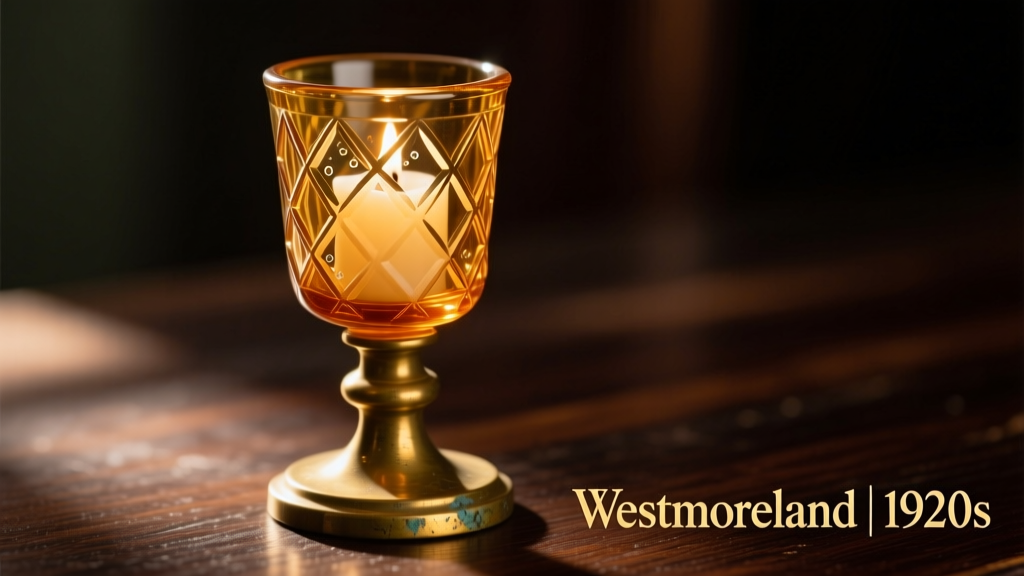
Westmoreland Glass Lattice Edge Candlestick (4-Inch): Identification, Value, and Collector Insights
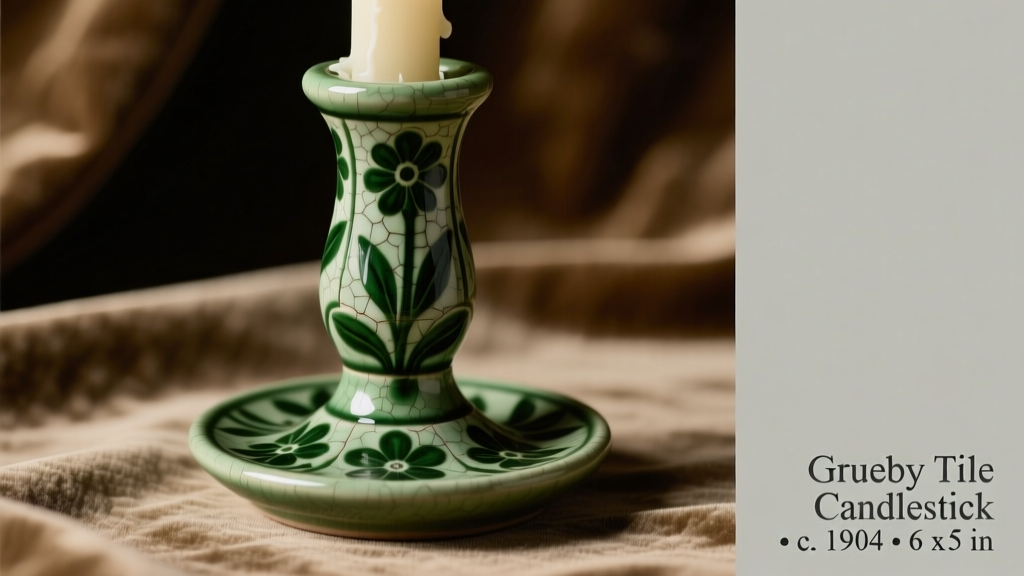
Grueby Tile Candlestick in Candle Green, Circa 1904: A Masterpiece of American Arts & Crafts Ceramics
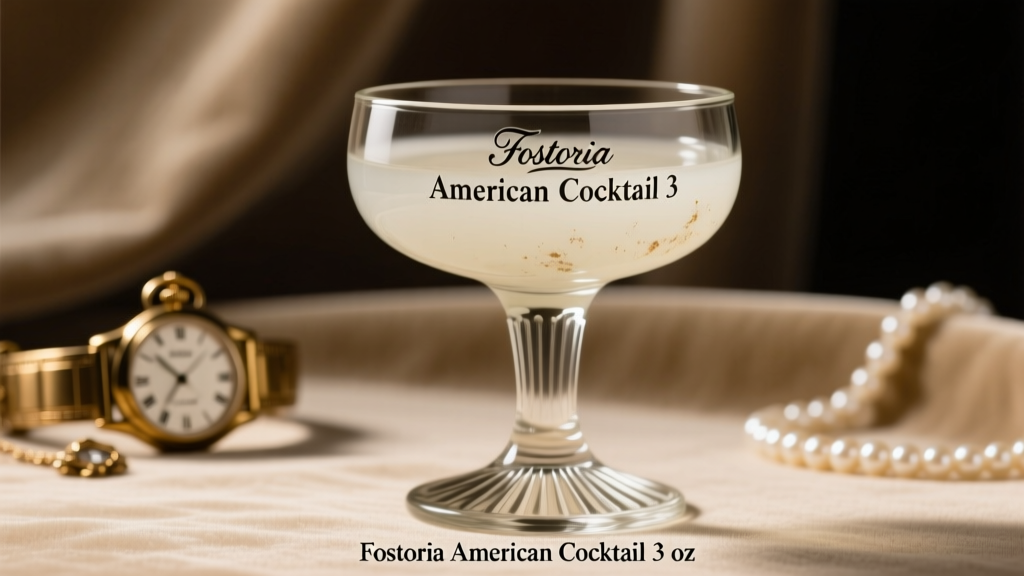
Fostoria American Cocktail 3 Oz Glassware: Design, Production, and Collectibility of a Mid-Century Icon
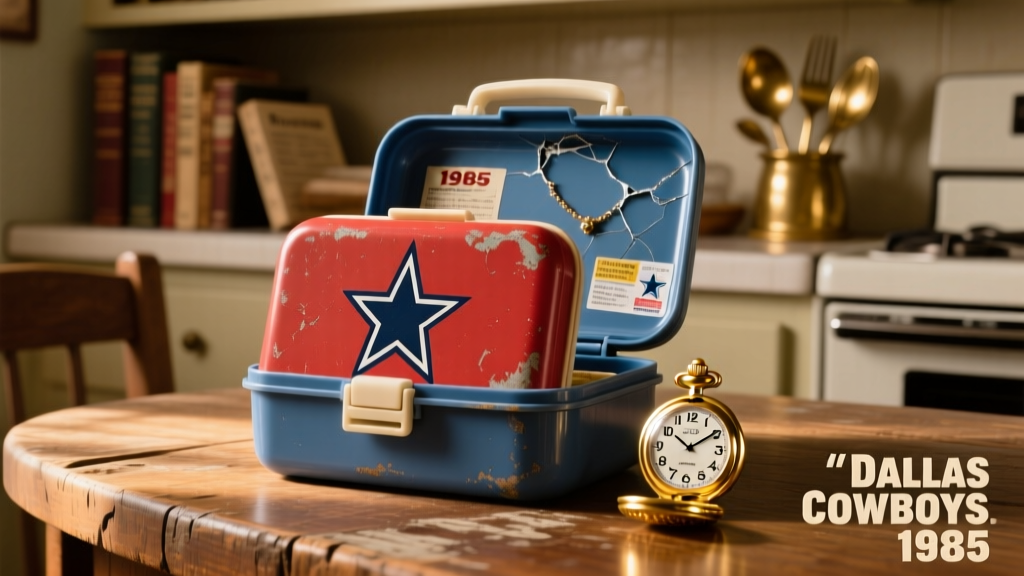
Lunch Boxes Dallas Cowboys Plastic 1985: Collectibility, Design, and Market Realities
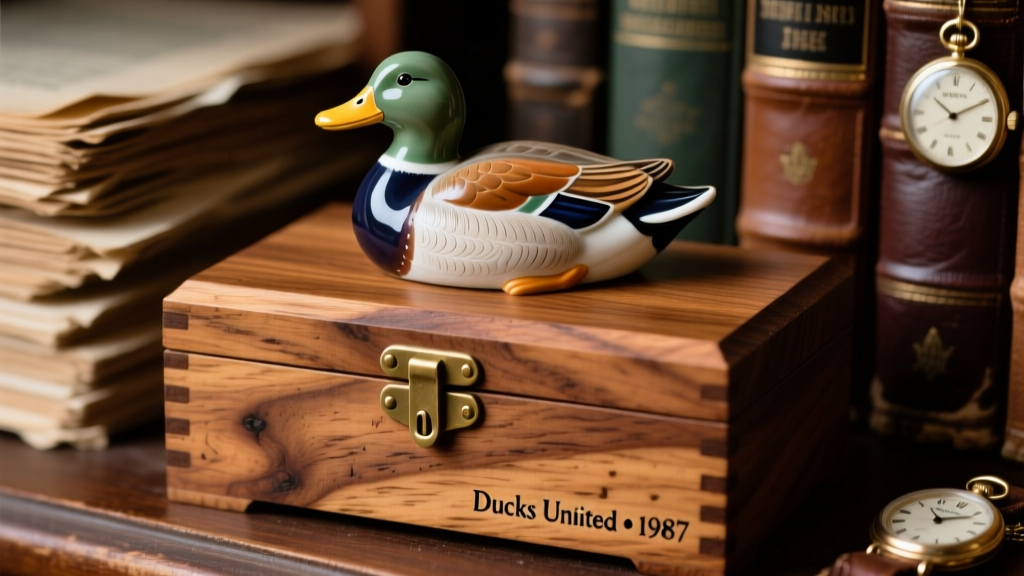
Steins Ducks Unlimited Wood Duck Wooden Box by Ceramarte (1987): A Collector’s Profile of a Rare Limited-Edition Hunting Commemorative
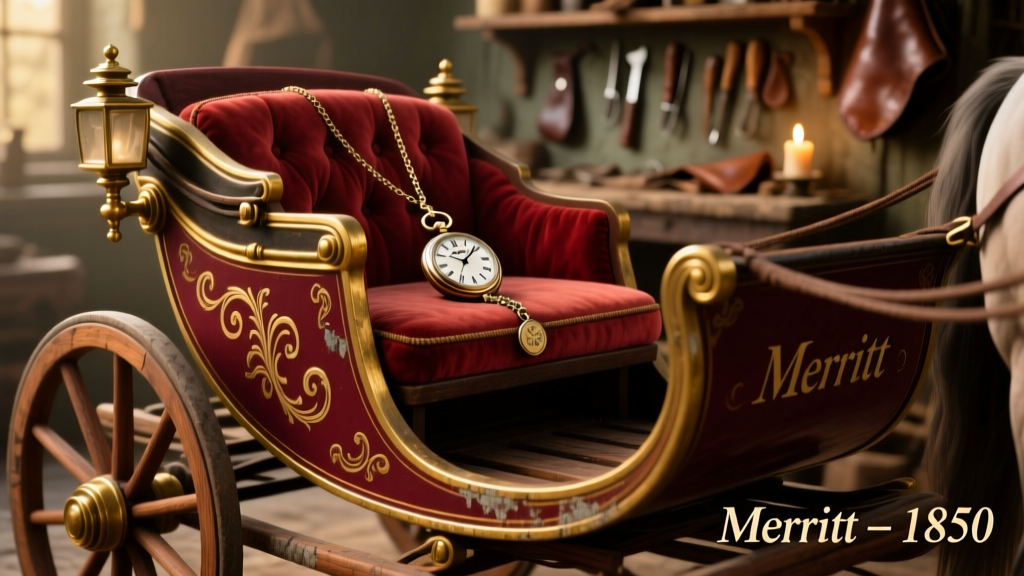
Carriage Sleigh Merritt Painted 1850: Provenance, Craftsmanship, and Auction Significance
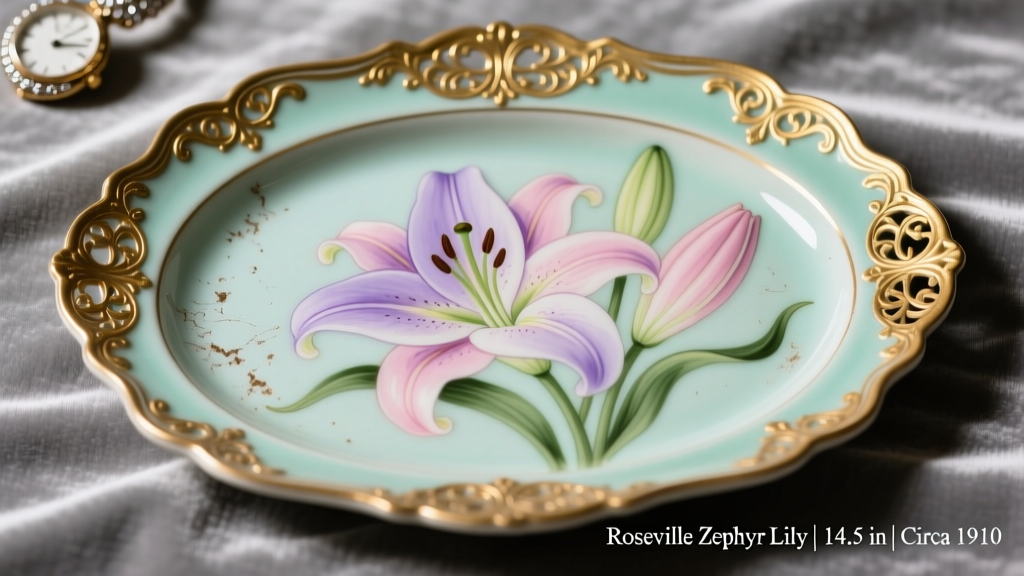
Roseville Pottery Zephyr Lily Tray: A Collector’s Guide to the 14½-Inch Masterpiece
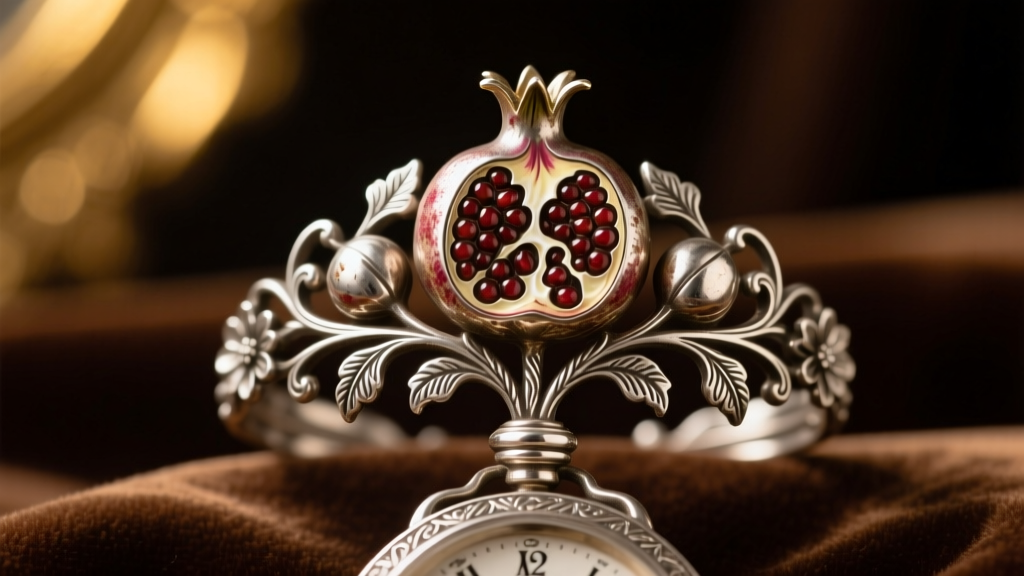
The Silver American Pomegranate Finial by Jones, Shreve & Brown: A Masterpiece of Mid-19th-Century American Silversmithing
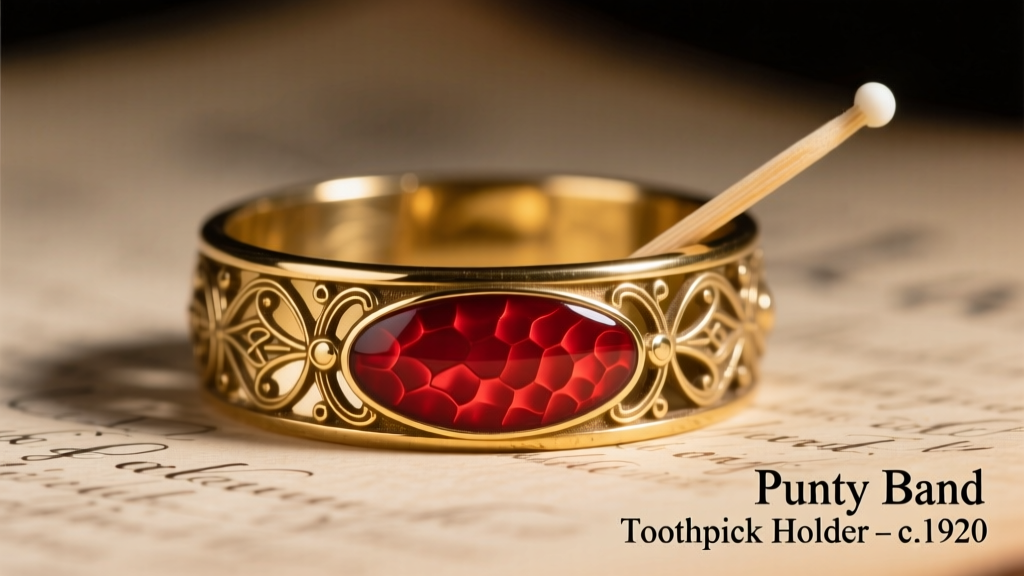
Toothpick Holders, Punty Bands, and Red-Flashed Glass: A Technical and Historical Study of Victorian-Era Tableware Components