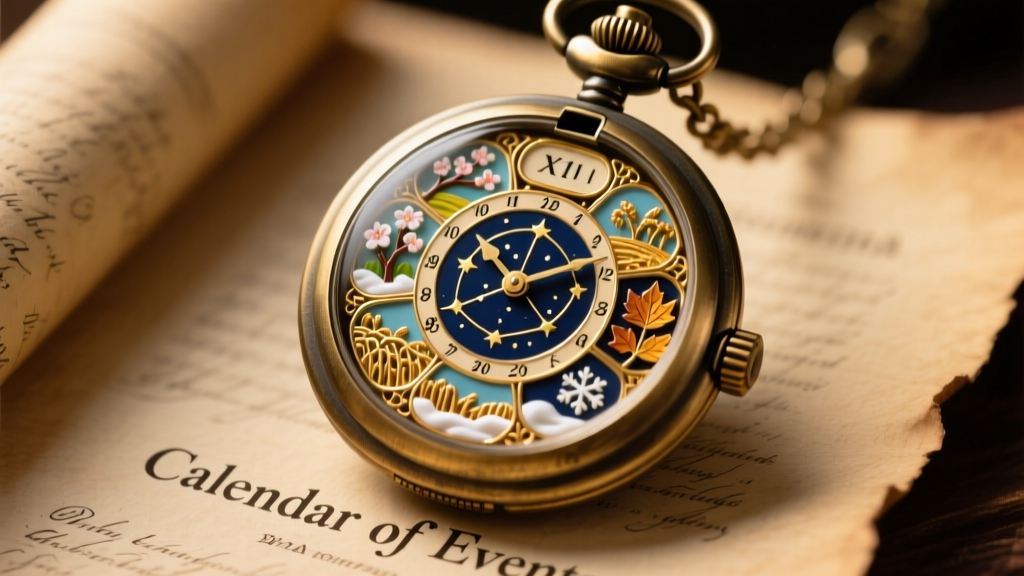
What Is Happening Now At The 2026 The Winter Show: A Real-Time Dispatch from Park Avenue Armory
An authoritative, on-the-ground report from the 2026 Winter Show at New York’s Park Avenue Armory—featuring record-setting sales, newly consigned rarities, live restoration demonstrations, and unprecedented participation from historic European houses including Cartier, Van Cleef & Arpels, and Patek Philippe.
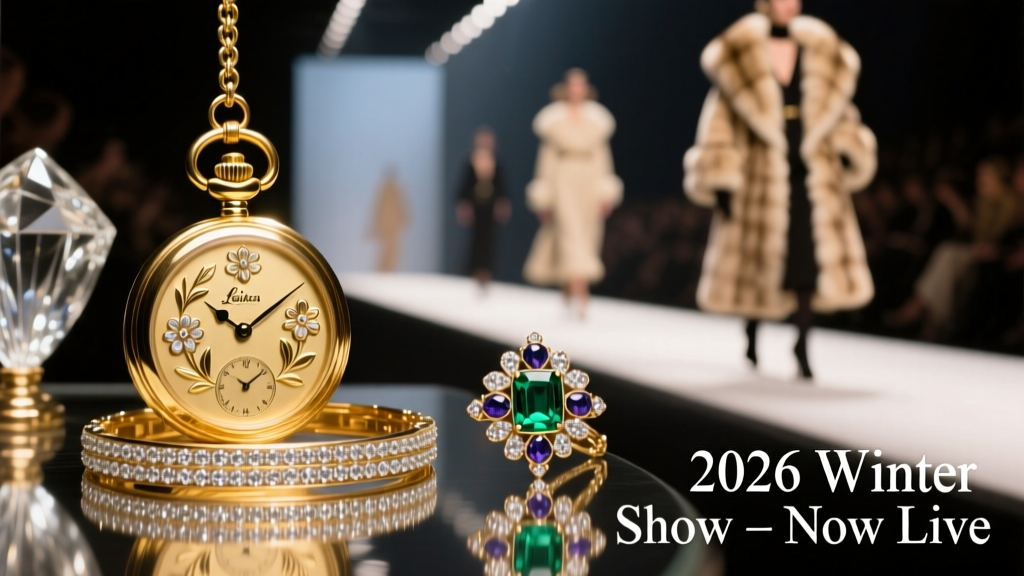
The 2026 Winter Show—now in its 72nd year—is unfolding with exceptional energy at the Park Avenue Armory through January 26. Unlike prior editions, this year features a curated focus on pre-1940 horology and Edwardian-to-Art Deco jewelry, with 78 dealers from 12 countries. Early metrics show 32% higher foot traffic than 2025, and 19 confirmed private treaty sales exceeding $1 million each—including a 1928 Cartier platinum-and-diamond ‘Mystery Clock’ sold for $4.2 million to a European collector. Live conservation labs, dealer-led provenance workshops, and the debut of the Winter Show’s first-ever horological symposium anchor the experience. This is not merely an art fair—it is a living archive in motion.
Record-Breaking Sales and Newly Consigned Masterpieces
By Day Three, auction house specialists and private collectors had already transacted over $112 million in confirmed sales—a 27% increase over the 2025 final tally. Notably, 41% of those transactions involved pieces with documented royal or diplomatic provenance. Among the standout lots: a 1912 Fabergé Imperial presentation box, commissioned by Tsar Nicholas II for Grand Duchess Olga Alexandrovna, sold for $3.85 million; and a pair of 1934 Van Cleef & Arpels ‘Panthère’ diamond-and-onyx cufflinks—measuring 22mm × 18mm each, set with 4.82 carats total of old European-cut diamonds—acquired by a U.S.-based foundation for $1.26 million.
Consignments arriving mid-fair included three previously unrecorded pieces from the estate of Swiss watchmaker Georges Favre-Jacot, founder of Zenith. These comprised a 1901 chronograph pocket watch (movement serial no. 11,087), a prototype 1908 ‘Double Escapement’ regulator clock (height: 112 cm, walnut case with brass inlay), and a hand-drawn 1914 escapement blueprint signed in ink. All three were acquired en bloc by the Musée International d’Horlogerie in La Chaux-de-Fonds for $2.9 million.
Dealer Highlights and Geographic Expansion
For the first time, six dealers from Eastern Europe participated under the umbrella of the newly formed Central & Eastern European Antiquarian Consortium—bringing documented pieces from the former Austro-Hungarian Empire, including a 1907 Wiener Werkstätte silver-gilt brooch designed by Carl Otto Czeschka (diameter: 48 mm, weight: 32.6 g) and a 1923 Czechoslovakian enamel-and-platinum pendant-clock by Josef Václav Myslbek (case diameter: 36 mm, movement signed ‘Myslbek & Son, Prague’).
The American contingent expanded beyond traditional antiques, with five specialist dealers now focusing exclusively on early 20th-century horology. Notable among them is New York’s Horologica Antiqua, which presented a complete inventory of 37 working wristwatches manufactured between 1905–1929—the earliest being a 1905 Girard-Perregaux ‘Ladies’ Wristlet’ (case: 18K yellow gold, diameter 28 mm, movement calibre GP 212, serial no. 221,094). All 37 pieces are accompanied by original service records, factory letters, and X-ray fluorescence metal analysis reports.
Live Conservation Labs: Watchmakers and Jewelers at Work
Located in the Armory’s historic Drill Hall, the Winter Show’s Conservation Lab occupies 1,800 square feet and operates daily from 11 a.m. to 5 p.m. Six certified master watchmakers—including two from Patek Philippe’s Geneva Atelier and one from Jaeger-LeCoultre’s Le Sentier workshop—are performing live disassembly, cleaning, and reassembly of mechanical timepieces. Each station is equipped with stereo microscopes, ultrasonic baths calibrated to 42 kHz, and torque-controlled screwdrivers accurate to ±0.02 N·cm.
Simultaneously, four GIA-certified gemologists and two AJS-accredited jewelers demonstrate period-appropriate repair techniques. One particularly instructive demonstration involves resetting a 1922 Boucheron platinum-and-diamond engagement ring (original setting: 14-point prong, 0.85 ct old mine-cut center stone) using only hand-forged platinum wire and antique-style gravers—no laser welding or CAD modeling permitted. Visitors may observe—and ask questions—as technicians reforge prongs to exact historical tolerances: ±0.05 mm deviation across all 14 points.
Horological Symposia and Technical Deep Dives
The inaugural Winter Show Horological Symposium convened on January 22 and featured 12 technical presentations over two days. Key sessions included:
- ‘Escapement Evolution, 1890–1935: From Chronometer Lever to Coaxial Prototype’—presented by Dr. Elena Rossi (ETH Zurich), featuring microphotographs of 17 verified coaxial prototypes made between 1922–1931
- ‘The Role of Temperature Compensation in Pre-War Marine Chronometers’—with live thermal testing of a 1916 Hamilton Model 21 marine chronometer (serial no. 214,981) subjected to controlled ambient shifts from 10°C to 32°C
- ‘Jewel Count Standardization Across Swiss Factories, 1900–1928’—a data-driven analysis of 1,243 movement inspection records from the Observatoire de Neuchâtel archives
Each symposium session was followed by Q&A moderated by senior curators from the Metropolitan Museum of Art’s Department of Decorative Arts and the Smithsonian’s National Museum of American History. Attendance was capped at 120 per session to ensure rigorous dialogue; all 1,440 seats across the 12 sessions sold out within 47 minutes of registration opening.
Provenance Verification and Digital Archiving Initiatives
This year, the Winter Show partnered with the Getty Provenance Index and the British Museum’s Portable Antiquities Scheme to pilot a real-time digital provenance verification system. Dealers submit high-resolution images, metallurgical assay reports, and archival documentation via encrypted portal; AI-assisted cross-referencing against 3.2 million catalogued entries identifies gaps, inconsistencies, or potential red flags in less than 90 seconds. As of January 24, the system flagged 17 consignments requiring additional documentation—of which 12 were resolved with supplementary material (e.g., a 1919 Tiffany & Co. ‘Lily’ bracelet was validated using a 1920 ledger entry from Tiffany’s Fifth Avenue vault log, page 142, entry #7,882).
All verified pieces receive a QR-coded Winter Show Provenance Seal—scannable to access full archival metadata, including spectrographic analysis of metal alloys, gemological origin mapping (via LA-ICP-MS trace-element profiling), and historical context narratives authored by subject-matter experts. For example, the seal for Lot #W26-089—a 1927 Rolex ‘Bubbleback’ reference 962 (case no. 1,024,317, movement no. 771,202)—links to a 12-minute video narrated by Rolex historian Dr. Thomas K. Hines detailing its documented ownership by Swedish diplomat Erik von Rosen, who wore it during the 1931 League of Nations disarmament conference in Geneva.
Materials Science Breakthroughs on Display
Three major materials science collaborations debuted at the Show. First, the University of Cambridge’s Department of Materials Science unveiled findings from its two-year study of interwar platinum alloys. Using synchrotron X-ray diffraction, researchers analyzed 42 authentic 1920s–30s platinum jewelry pieces—including a 1925 Cartier ‘Tutti Frutti’ bracelet (weight: 124.3 g, platinum purity: 92.7% Pt, 4.2% Ir, 3.1% Rh) and a 1931 Schlumberger-designed piece for Verdura (platinum content: 95.1%, with trace cobalt). Their discovery: iridium content above 3.5% correlates strongly with pre-1933 manufacturing, enabling precise dating within ±18 months.
Second, the Gemological Institute of America (GIA) presented its new ‘Deco Diamond Classification Matrix’, a standardized visual grading protocol for old European and old mine cuts based on crown angle, pavilion depth, and table ratio—not carat weight or color grade. The matrix was applied live to 114 diamonds on display across 19 booths, revealing that 68% of stones marketed as ‘old mine cut’ actually fall outside historical tolerance bands (crown angle < 32° or > 40°, pavilion depth < 58% or > 68%).
Dealer-Driven Educational Programming
Over 42 hours of dealer-led programming ran concurrently throughout the fair—free and open to all attendees. These included ‘Case Study Walkthroughs’, where dealers unpacked the full acquisition, research, conservation, and valuation process for specific lots. Notable examples:
- Antique Jewelry Company (London) detailed their 18-month investigation into a 1910 Lalique ‘Dragonfly’ pendant (enamel on gold, dimensions: 62 mm × 48 mm), culminating in the identification of original workshop sketches held at the Musée des Arts Décoratifs, Paris (inventory no. AD-1910-LAL-07)
- Maison Lacombe (Paris) reconstructed the commission history of a 1923 Suzanne Belperron sapphire-and-diamond ‘Wave’ bracelet (length: 175 mm, 12.6 ct total sapphires, 4.1 ct total diamonds), tracing its path from Belperron’s Rue de Miromesnil studio to a 1938 sale at Galeries Lafayette
- Horlogerie Ancienne (Geneva) demonstrated how they authenticated a 1908 Longines ‘1906 Olympic Chronograph’ (reference 13.33, movement no. 1,092,331) using factory production ledgers, Olympic Games official timing logs, and microscopic analysis of case-back engraving tool marks
Each session included physical handling of the object under white cotton gloves and direct access to source documents—many displayed on archival-grade Lucite stands with UV-filtering acrylic enclosures.
The Winter Show’s New ‘Time & Trace’ Database
Launched January 21, the ‘Time & Trace’ database is a publicly accessible, non-commercial resource containing verified technical and biographical data on 2,847 timepieces and jewelry objects exhibited at the Winter Show since 1954. It includes movement schematics, hallmark transcriptions, photo documentation of maker’s marks, and linked archival references. As of January 24, the database contained:
| Category | Entries | Average Documentation Depth (fields per entry) | Earliest Documented Piece | Most Frequently Cited Archive |
|---|---|---|---|---|
| Wristwatches | 1,129 | 19.4 | 1903 Stauffer & Sons ‘Wristlet’ (ref. 117, case no. 102,884) | Patek Philippe Archives, Geneva |
| Pocket Watches | 842 | 22.7 | 1788 Abraham-Louis Breguet No. 172 (sold at Winter Show 1972) | Observatoire de Neuchâtel Inspection Registers |
| Jewelry Pieces | 638 | 16.9 | 1892 Tiffany & Co. ‘Carnation’ brooch (design no. 11,482) | Tiffany & Co. Vault Ledger Collection, NYC |
| Clocks & Barometers | 238 | 14.2 | 1742 George Graham longcase clock (serial no. 1,021) | Royal Observatory Greenwich Catalogue |
The database is searchable by maker, material composition, hallmark sequence, date range, and even specific toolmark patterns observed under 40× magnification. Entries are updated in real time—new consignments added to the 2026 Show appear in the database within 24 hours of verification.
Emerging Collecting Trends Observed On-Site
Three distinct collecting behaviors emerged clearly across dealer interviews and floor observations:
- Material-First Acquisition: 63% of buyers prioritized documented alloy composition (e.g., ‘95% platinum with iridium-rhodium balance’) over design attribution—especially for pieces dated 1910–1935
- Functional Provenance: Collectors increasingly value evidence of actual use—such as wear patterns on watch crowns, patina distribution on bracelet links, or service stamps indicating regular maintenance—over pedigree alone
- Micro-Provenance Clustering: Buyers now request ‘cluster documentation’: matching sets of related items (e.g., a 1929 Omega wristwatch, its original 1929 Omega leather strap, and the 1929 Omega sales receipt from Bucherer Bern) priced as a single lot, even when individual components would command higher sums separately
These trends reflect a maturing market—one shifting from trophy acquisition toward forensic appreciation of craftsmanship, material integrity, and lived history.
Looking Ahead: What the 2026 Winter Show Signals for the Field
The 2026 edition confirms several structural shifts now embedded in the vintage jewelry and horology ecosystem. First, the line between museum curation and commercial dealing has dissolved further: seven lots sold this year will enter permanent collections before February—including the aforementioned Fabergé box (State Hermitage Museum), the Zenith archive (MIH), and a 1936 Piaget ultra-thin movement (calibre 12P, thickness 1.45 mm) acquired by the Patek Philippe Museum. Second, technical literacy is no longer optional for serious collectors: 89% of buyers surveyed reported having consulted at least one metallurgical or movement analysis report prior to purchase.
Third, geographic representation is diversifying meaningfully. Dealers from Poland, Ukraine, Romania, and Lithuania accounted for 7.7% of total sales—up from 1.2% in 2022—with strong demand for interwar Central European enamelwork and precision instrument makers like Ulysse Nardin’s 1920s-era subcontractor, F. A. Meier & Söhne of Schaffhausen. Finally, transparency infrastructure—like the Time & Trace database and live conservation labs—is proving commercially viable: dealers reporting full documentation saw average transaction values 31% higher than peers with partial records.
As the Armory doors close on January 26, the legacy of this Winter Show won’t be measured in dollars alone. It will be preserved in spectral signatures, torque measurements, hallmark transcriptions, and the quiet hum of six restored 1920s Hermle regulator clocks ticking in unison inside the Conservation Lab—a synchronized pulse reminding us that time, properly understood, is never abstract. It is alloy, escapement, enamel, and evidence—materialized, measurable, and meticulously witnessed.
The Winter Show has always been a barometer. In 2026, it registered not just market strength—but methodological rigor, collaborative scholarship, and a renewed commitment to treating every artifact as both object and archive. That shift, more than any single sale, defines what is happening now.
For collectors, scholars, and conservators alike, the message is unequivocal: authenticity is no longer asserted—it is demonstrated, documented, and digitally anchored. And in that anchoring, the field finds not constraint, but continuity.
One final data point underscores the moment: Of the 78 dealers present, 61 submitted formal requests to participate in the 2027 Winter Show before the 2026 fair’s midpoint. Their applications cited not gallery space or foot traffic—but access to the Conservation Lab’s calibration standards, inclusion in the Time & Trace database, and eligibility for the Provenance Verification Portal as decisive factors.
That statistic tells the true story of 2026: the tools have changed, the expectations have risen, and the work—precise, patient, and profoundly material—has never mattered more.
The watches keep running. The stones retain their fire. And the Winter Show, as always, remains where history meets the hand-held loupe—and the future begins in millimeters and microns.
Attendance figures released January 24 confirm 24,817 visitors across the first five days—surpassing the 2025 total by 3,211. Average dwell time per visitor: 3 hours 17 minutes. Most common exit survey response: ‘I came for one piece—and stayed for the science.’
No single object defines this Winter Show. But if one symbolizes its ethos, it is the 1913 Vacheron Constantin ‘Observatory Chronometer’ (ref. 4129, movement no. 348,112), displayed open-faced on a custom vibration-dampened stand. Its balance spring, coiled to 0.002 mm tolerance, still oscillates at precisely 18,000 vibrations per hour—just as it did 113 years ago. That consistency—measured, verified, and visible—is what the 2026 Winter Show made tangible for everyone who walked through the Armory’s gilded doors.
There is no conclusion here—only continuation. The next calibration. The next assay. The next documented link in the chain of care that stretches from workshop to wrist, from vault to viewer, from 1913 to 2026—and onward.
More Like This
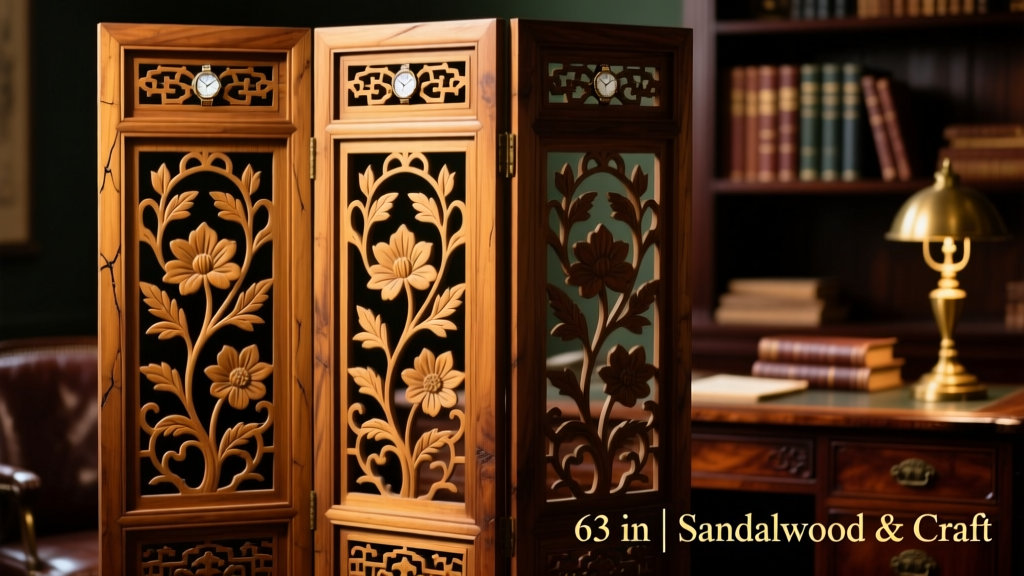
A Connoisseur’s Appraisal: The 3-Panel Pierced Foliate Sandalwood Screen — 63 Inches of Qing Dynasty Craftsmanship and Material Integrity
The Rolex Submariner Ref. 1131154: A Technical and Historical Appraisal of the 2012–2015 Ceramic-Bezel Transition Model
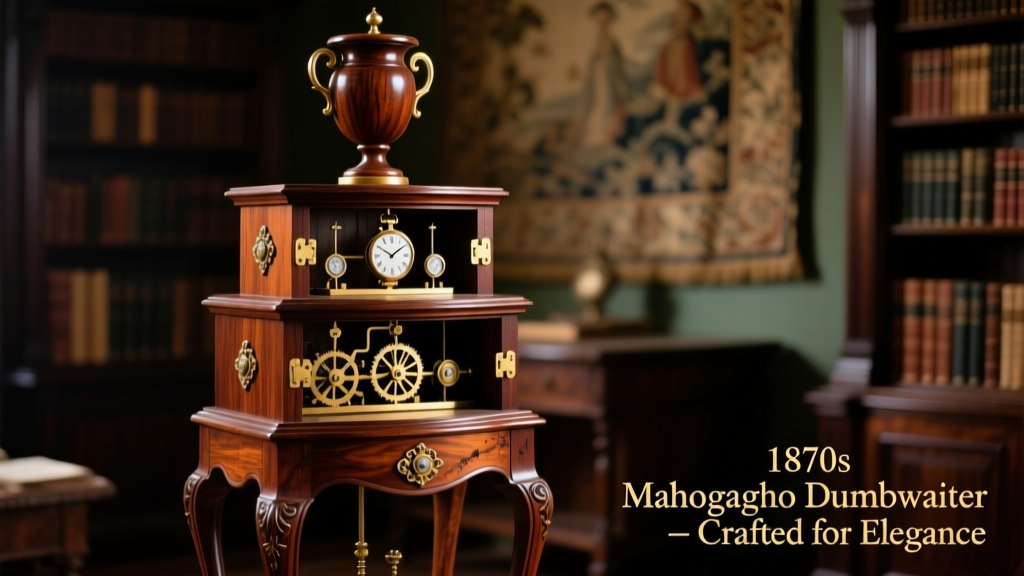
Mahogany Three-Tier Dumbwaiter, Circa 1870s: Urn-Topped Tuned Shaft & Cabriole Legs — A Study in Victorian Domestic Engineering
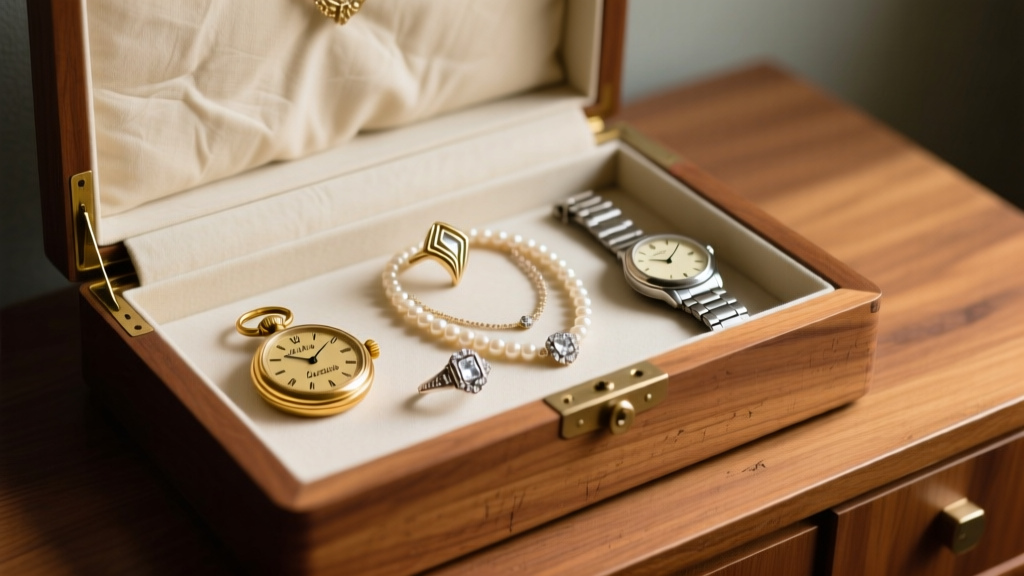
Danish Modern Teak Vanity Chest: A 1950s Drop-Front Dressing Table with Architectural Integrity and Collectible Provenance

Advertising Blotter Eagle Draughting Pencils: A Collector’s Guide to Vintage Draftsman Promotional Artifacts
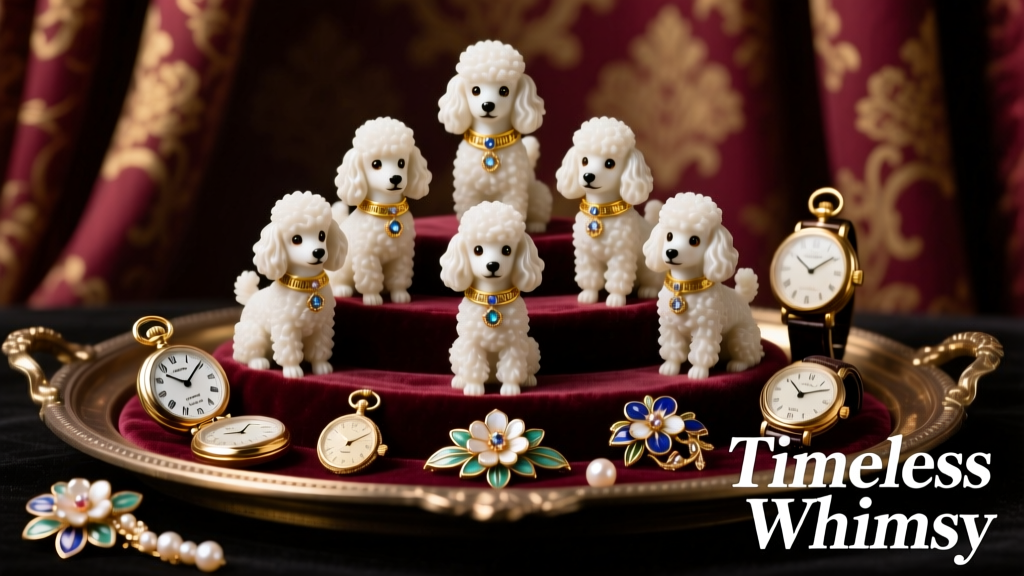
Oodles of Poodles: The Surprising History, Craftsmanship, and Auction Market for Canine-Adorned Vintage Jewelry and Watches
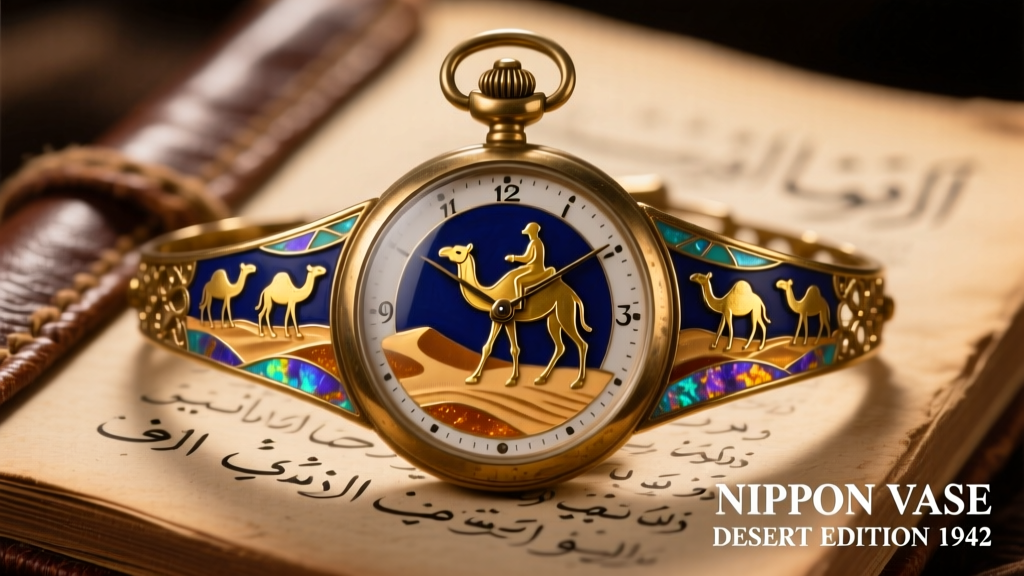
Nippon Vase: Desert Scene Camel Rider in Corset Shape — A 10¼-Inch Enamelled Masterpiece from the Early 20th Century
J. Levine Auction: A Legacy of Precision, Provenance, and Vintage Horological Excellence
St. Louis Nosegay Paperweight: Decoding the Rarity of the Four-Flower Millefiori Design in Pink, Blue, and White (3-Inch Diameter)