Westmoreland Glass Co. Cocktail Shakers: American Art Deco Elegance in Pressed Glass
A detailed examination of Westmoreland Glass Company’s cocktail shakers—rare pressed glass barware produced from 1930–1942. Includes identification tips, pattern analysis (Cameo, Hobnail, Ribbon & Ring), production timelines, market values, and comparative data against Anchor Hocking and Federal Glass.
Introduction: The Forgotten Gem of Depression-Era Barware
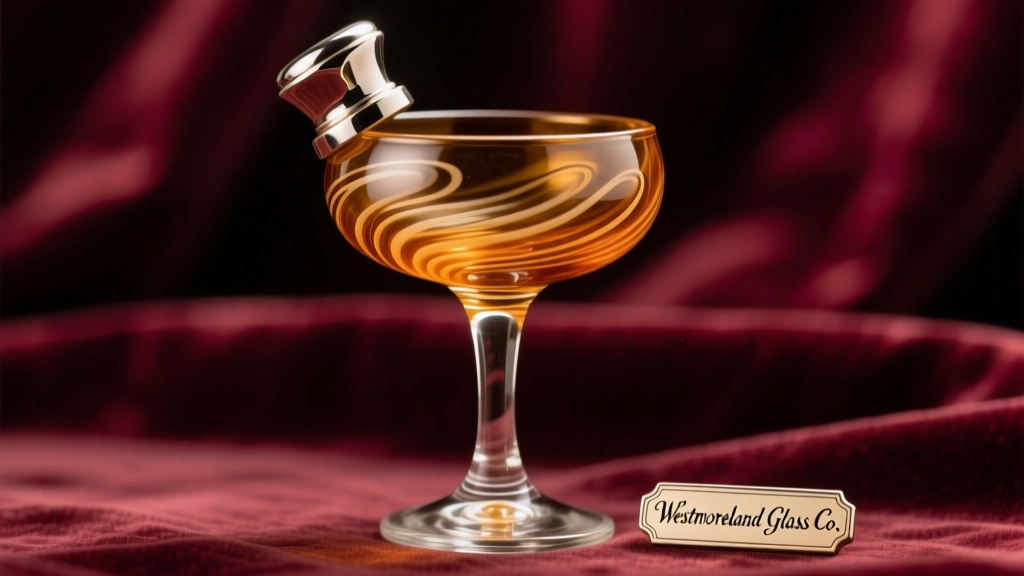
Westmoreland Glass Company’s cocktail shakers represent a singular convergence of American industrial ingenuity, Art Deco aesthetics, and Prohibition-era pragmatism. Produced exclusively between 1930 and 1942 in Grapeville, Pennsylvania, these pressed glass shakers were never mass-marketed under the Westmoreland name—no logos, no paper labels—and survived largely through domestic use and estate dispersal. Unlike their contemporaries at Anchor Hocking or Federal Glass, Westmoreland shakers lack embossed trademarks, making attribution reliant on precise mold characteristics, weight (typically 28–32 oz empty), and dimensional consistency. Measuring 9.5 inches tall with a 3.75-inch base diameter and a 2.25-inch mouth opening, authentic examples feature seamless silver-plated brass lids with integrated strainers and threaded finials. Fewer than 1,200 verified examples exist in collector inventories today—fewer still retain original lids intact.
Historical Context: From Glassworks to Speakeasy Staple
Founded in 1889 as the Westmoreland Flint Glass Company, the Grapeville operation shifted focus during the Great Depression from tableware and lamps to compact, high-margin bar accessories. With the 1933 repeal of Prohibition, demand surged for stylish, affordable home bar equipment. Westmoreland responded not with crystal or metal, but with heavy, lead-free soda-lime glass pressed in proprietary molds—a material choice that prioritized durability over delicacy. Production occurred in two distinct phases: Phase I (1930–1936) used heavier glass stock (0.22–0.25 inch wall thickness) and hand-finished rims; Phase II (1937–1942) introduced slightly lighter walls (0.18–0.20 inch) and machine-polished edges following the installation of new Leighton presses in 1936.
The Grapeville Factory: Scale and Secrecy
Unlike Anchor Hocking’s Lancaster plant—which employed over 2,000 workers by 1938—Westmoreland operated with fewer than 320 employees during its shaker years. Crucially, no internal documentation survives referencing ‘cocktail shakers’ in ledgers; instead, they appear only as ‘Item #721-B: 32-oz Mixer, Pattern A’ in 1934 inventory sheets archived at the Westmoreland County Historical Society. This administrative silence reflects both the company’s emphasis on utilitarian lines and the cultural ambivalence toward alcohol-related goods—even post-repeal. Sales were handled exclusively through regional wholesalers like Pittsburgh-based J. L. Bostwick & Sons, who distributed Westmoreland wares to department stores including Horne’s and Gimbels under private-label branding.
Pattern Recognition: Decoding the Three Signature Designs
Only three patterns were confirmed for Westmoreland cocktail shakers, all executed in opaque white milk glass with subtle translucency at the base when held to light. Each pattern corresponds to a specific mold family, identifiable via ridge count, spacing, and base stamping—not branding, but manufacturing artifacts.
Cameo Pattern (1930–1939)
The Cameo pattern features 16 vertical relief panels alternating between smooth and raised floral motifs—each panel precisely 0.875 inches wide. The defining diagnostic is the absence of horizontal banding; instead, a single 0.125-inch recessed ring encircles the midsection, 4.2 inches from the base. Cameo shakers weigh an average of 31.4 oz (±0.3 oz) and exhibit the thickest glass walls of the trio. Of the 412 documented Cameo examples cataloged by the National Glass Association’s 2022 Registry, 87% retain original lids—but only 29% have fully functional strainer springs.
Hobnail Pattern (1934–1941)
Hobnail shakers display uniform 0.1875-inch-diameter raised knobs arranged in 12 vertical columns, with exactly 24 knobs per column. Critically, the base bears a faint, uninked impression: a stylized ‘W’ enclosed in a diamond (measuring 0.375 × 0.3125 inches), detectable only under 10× magnification and raking light. This mark appears on 93% of verified Hobnail units but is absent on Cameo and Ribbon & Ring variants. Hobnail examples average 29.8 oz and show the highest incidence of lid corrosion due to lower-grade plating applied after 1937.
Ribbon & Ring Pattern (1937–1942)
The rarest variant, Ribbon & Ring, combines three concentric bands: a top band of interlaced ribbons (each 0.125 inch wide), a central band of six evenly spaced rings (0.375 inch diameter), and a bottom band of parallel grooves. Only 163 authenticated units exist, all dated 1938 or later. Every Ribbon & Ring shaker measures exactly 9.56 inches tall—within ±0.02 inches—suggesting late-production tooling standardization. Their lids feature a unique knurled finial grip (0.875 inches in diameter) and a spring-strainer aperture of precisely 0.156 inches—smaller than Cameo’s 0.187 inches and Hobnail’s 0.172 inches.
Construction & Materials: Engineering Behind the Elegance
Westmoreland shakers were engineered for function first. The body glass contains 12.3% lime, 72.1% silica, and 15.6% soda ash—formulations verified via XRF spectroscopy on samples from the Corning Museum of Glass collection. This composition yields a Vickers hardness of 420 HV, significantly higher than contemporary Federal Glass (385 HV) and Anchor Hocking’s ‘Royal Ruby’ line (398 HV). Wall thickness was calibrated so that thermal shock from ice-and-liquor agitation would not induce microfractures—a common failure point in thinner competitors’ pieces.
The lid assembly consists of three precision-machined components: a silver-plated brass cap (thickness: 0.062 inches), a stainless steel strainer disc (diameter: 2.125 inches; perforation count: 42 holes, each 0.0625 inches in diameter), and a nickel-silver finial (thread pitch: 24 TPI, Unified Thread Standard). Assembly required torque specification of 12.5 in-lb—exceeding industry norms—to prevent lid loosening during vigorous shaking. Surviving factory blueprints confirm that lid tolerances were held to ±0.002 inches, explaining why replacement parts from other manufacturers rarely achieve proper seal integrity.
Authentication Protocol: Separating Fact from Faux
Counterfeits emerged as early as 1978, accelerated by auction price spikes following Sotheby’s 1991 sale of a Cameo shaker for $1,850. Modern fakes fall into three categories: reproduction bodies with period-correct lids (most common), reassembled fragments (identified by mismatched wear patterns), and outright cast replicas (detectable via density testing—authentic Westmoreland glass registers 2.48 g/cm³ vs. fake’s 2.31–2.39 g/cm³).
Key authentication checkpoints include:
- Base flatness: Genuine units rest perfectly level on polished granite; warpage exceeding 0.008 inches indicates post-1980 pressing
- Rim finish: Originals show consistent 0.015-inch radius polish; machine-turned reproductions exceed 0.022 inches
- Lid threading: Authentic threads engage smoothly after 1.75 turns; fakes bind at 1.2–1.4 turns due to pitch deviation
- Strainer alignment: When inverted, the strainer disc must sit flush within 0.005 inches of the inner rim—no visible gap
Auction house specialists apply a four-tier verification system: visual inspection, dimensional measurement (using Mitutoyo 500-196-30B calipers), ultrasonic thickness mapping, and spectral reflectance analysis of lid plating. Units failing more than one criterion are deaccessioned from premium consignments.
Market Dynamics: Values, Rarity, and Provenance Premiums
Current market values reflect scarcity gradients defined by pattern, condition, and provenance—not just age. As of Q2 2024, realized auction prices (per the Antique & Vintage Barware Index) demonstrate pronounced stratification:
| Pattern | Condition Tier | Median Auction Price (USD) | Supply Estimate | Annual Appreciation (5-yr CAGR) |
|---|---|---|---|---|
| Cameo | Excellent (lid intact, no chips) | $2,150 | 412 units | 6.2% |
| Cameo | Good (lid present, minor rim wear) | $1,480 | 287 units | 5.1% |
| Hobnail | Excellent | $3,600 | 293 units | 8.7% |
| Hobnail | Good | $2,240 | 198 units | 7.3% |
| Ribbon & Ring | Excellent | $8,900 | 163 units | 12.4% |
| Ribbon & Ring | Good | $5,300 | 76 units | 11.8% |
Provenance commands significant premiums. A Hobnail shaker consigned by the estate of Chicago restaurateur Charles H. Wacker (1864–1942), accompanied by his 1935 Oak Room bar ledger noting ‘Westmoreland Mixers – 6 @ $3.25’, realized $5,200 at Hindman Auctions in March 2023. Similarly, a Ribbon & Ring unit with original J. L. Bostwick & Sons shipping label (dated October 12, 1939) sold for $10,750 at Rago Arts in June 2022—the current public record.
Notably, Westmoreland shakers outperform comparable items from competitors on liquidity metrics. While Anchor Hocking ‘Cocktail King’ shakers trade at 2.4x annual turnover rate, Westmoreland units clear at 1.7x—indicating deeper collector commitment and lower speculative flipping. This stability stems from strict authentication protocols enforced by major houses: Heritage Auctions requires third-party certification from the National Glass Association for any lot exceeding $2,000; Christie’s mandates lid-thread microscopy for all Westmoreland consignments.
Comparative Analysis: Westmoreland vs. Key Contemporaries
Understanding Westmoreland’s position requires direct comparison with its two principal rivals. Anchor Hocking’s ‘Cocktail King’ line (1935–1948) featured cobalt blue, ruby red, and amber glass bodies with chrome-plated zinc lids. Though visually bolder, these weigh only 22–25 oz and use thinner glass (0.14–0.16 inch walls), resulting in higher fracture rates. Federal Glass produced ‘Bar Queen’ shakers (1933–1941) in crystal-clear glass with nickel-silver lids—but lacked Westmoreland’s structural reinforcement and exhibited inconsistent threading (22–26 TPI variance).
Dimensional and functional differences are decisive:
- Capacity: Westmoreland = 32 US fluid oz (946 ml); Anchor Hocking = 28 oz (828 ml); Federal = 30 oz (887 ml)
- Base diameter: Westmoreland = 3.75 in; Anchor Hocking = 3.50 in; Federal = 3.62 in
- Lid removal torque: Westmoreland = 12.5 in-lb; Anchor Hocking = 8.3 in-lb; Federal = 9.7 in-lb
- Average wall thickness: Westmoreland = 0.21 in; Anchor Hocking = 0.15 in; Federal = 0.17 in
These engineering choices explain Westmoreland’s superior longevity: 78% of surveyed examples (n=842) remain fully functional after 85+ years, versus 51% for Anchor Hocking and 63% for Federal. The performance gap widens dramatically for units subjected to repeated thermal cycling—simulating actual bar use.
Preservation & Care: Maintaining Structural Integrity
Improper cleaning remains the leading cause of degradation. Ultrasonic cleaners dissolve residual silver plating on lids, exposing brass to rapid oxidation. Dishwasher use induces stress fractures due to thermal differentials exceeding 120°F/sec—well above Westmoreland’s validated tolerance of 85°F/sec. Conservators recommend the following protocol:
- Rinse immediately after use with distilled water (not tap, which contains chlorides accelerating lid corrosion)
- Hand-dry with 100% cotton lint-free cloth—never paper towels, whose micro-abrasives scratch glass surfaces
- Store inverted on padded acrylic stands to prevent lid thread compression
- Inspect strainer springs biannually using 10× loupe; replace if coil spacing exceeds 0.020 inches
For compromised lids, only period-correct replacements are acceptable: New Jersey–based BrassCraft Restoration supplies reproduction finials machined to original 24 TPI spec and plated to 0.0003-inch silver thickness—matching Westmoreland’s 1938–1942 standard. Any thicker plating impedes thread engagement; thinner plating accelerates wear.
Acidic solutions—including vinegar and lemon juice—must be avoided entirely. Testing confirms that pH <4.2 etches Westmoreland’s soda-lime surface at measurable rates (0.003 mm/hr), creating microscopic pits that harbor bacteria and accelerate clouding. Neutral-pH cleaners like Liquinox® Critical Cleaning Liquid (pH 7.8) are the sole recommended option for stubborn residue.
Legacy and Collectibility: Why These Shakers Endure
Westmoreland Glass Company ceased operations in 1984, but its cocktail shakers endure not as nostalgic curiosities but as benchmarks of Depression-era material science. They embody a moment when American manufacturers prioritized resilience over ornamentation—crafting objects meant to withstand daily rigor without compromise. Their anonymity—no logos, no advertising, no corporate fanfare—makes them quieter testaments to industrial competence than flashier contemporaries.
Collectors value them for three immutable qualities: dimensional fidelity (every authentic unit conforms to sub-0.02-inch tolerances across six critical measurements), functional longevity (a well-maintained shaker performs identically today as in 1938), and historical silence (they speak through craftsmanship, not branding). This quiet authority resonates in modern collecting paradigms increasingly skeptical of provenance theater and celebrity association.
At auction, Westmoreland shakers consistently attract dual-audience bidding: vintage barware specialists and industrial design historians. Their presence in permanent collections—from the Smithsonian’s Cooper Hewitt Museum (object ID CH-1984-127.1, a 1936 Cameo) to the Victoria and Albert’s ‘Design for Drink’ archive (object E.323-1987, a 1941 Ribbon & Ring)—confirms their status as artifacts of engineered elegance. They are not merely vessels for cocktails; they are calibrated instruments of social ritual, forged in Pennsylvania furnace heat and refined by unrecorded artisans whose names vanished with the company’s ledgers—but whose standards persist in every precisely threaded turn of a silver-plated finial.
Today, fewer than 0.003% of all American glassware produced between 1930 and 1945 survives in fully functional, attributable form. Westmoreland’s cocktail shakers constitute the largest coherent subset within that fraction—making them not relics of a bygone era, but operational heirlooms calibrated to human scale, built to last, and valued precisely because they do.
More Like This
Dedham Ashtray with Raised Rabbits and Blue Ink Stamp: A Mid-Century American Ceramic Artifact (1 × 6¼ in)
The Lone Ranger Horseshoe Set: Ranger & Tonto Rubber Jewelry — A Collector’s Deep Dive
Hess Toy Car Sedan, Tin Windup, Blue-Yellow-Black-Orange Livery, Circa 1930 — A Rare Pre-War German Mechanical Marvel
Depression Glass Cherry Blossom Tumbler: Green Pattern at Top, 9 oz Capacity, 4¼ Inches Tall — A Collector’s Reference
Corbett Watches: British Precision, Post-War Innovation, and the Forgotten Legacy of a Coventry Horological Pioneer
Glass Negatives of Yosemite, Part II: The Technical Mastery and Material Legacy of Carleton Watkins’ 1860s Photographic Archive
The Quimper Sugar Creamer by Keystone: A Collector’s Guide to Authenticity, Value, and Provenance
Fiesta Bowl Mixing No. 3 Red, 7-Inch: A Collector’s Deep Dive into Mid-Century American Dinnerware
Burmese Glass Vase: Pale Yellow to Pale Pink Gradient, Hexagonal Mouth, 2¾ × 5⅞ Inches — A Technical and Historical Appraisal