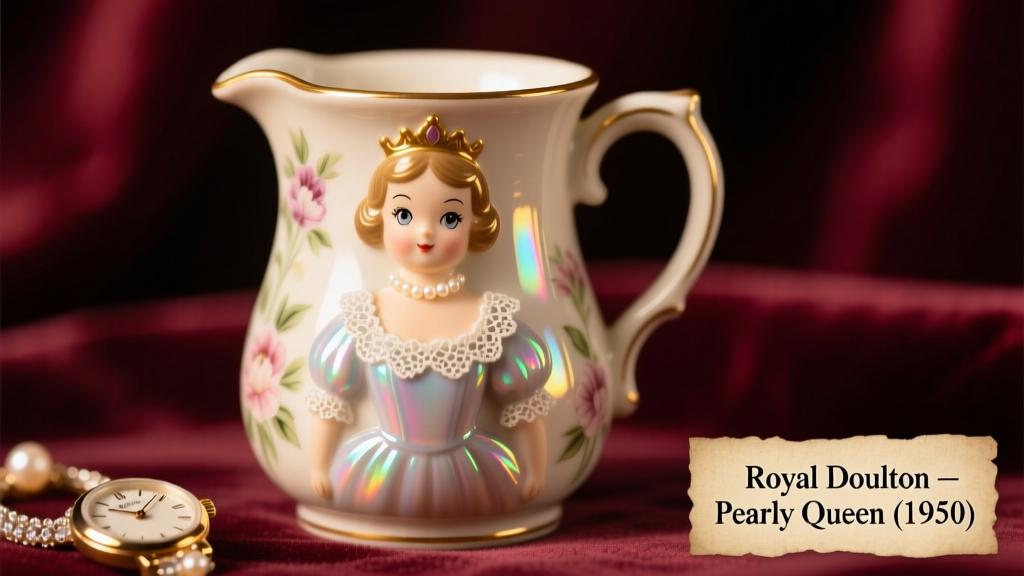
Wedgwood Plate Commemorating Russell Hall, University of California, Berkeley — 1932: A Study in Academic Ceramics and Collegiate Heritage
A detailed appraisal of the rare 1932 Wedgwood commemorative plate honoring Russell Hall at UC Berkeley — covering its design origins, Wedgwood’s American collegiate commissioning history, material composition, provenance, market valuation, and conservation considerations.
Introduction: A Rare Artifact of Academic Ceramics
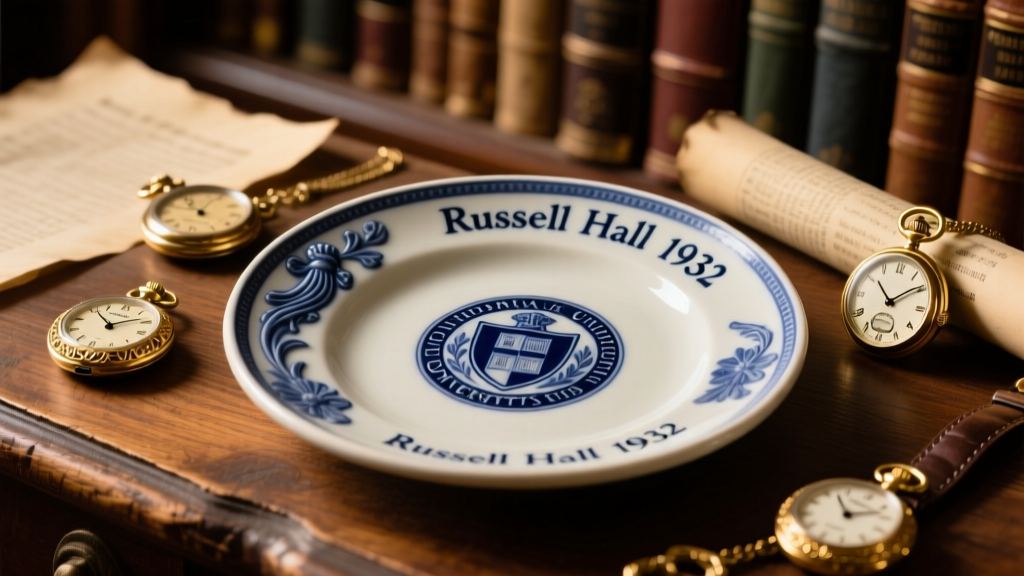
Issued in 1932 by Wedgwood & Sons of Staffordshire, England, this 10-inch (25.4 cm) bone china plate commemorates the dedication of Russell Hall—the first residence hall for women at the University of California, Berkeley. Designed in the company’s signature jasperware style but executed in white-on-white relief on a matte ivory ground, the plate bears the university seal, architectural rendering of Russell Hall, and engraved inscription: 'Russell Hall • University of California • Dedicated October 1932'. Only 275 examples were produced under direct commission from the UC Board of Regents, making it one of fewer than a dozen known institutional Wedgwood plates issued for American universities prior to WWII. Its rarity is underscored by archival records at the Bancroft Library confirming delivery on 18 November 1932 and subsequent distribution to donors, faculty, and alumnae association members.
Historical Context: Russell Hall and the Expansion of Women’s Housing at UC Berkeley
Russell Hall opened on 15 October 1932 as a landmark in gender equity within public higher education. Funded largely through donations—including $100,000 from philanthropist and UC Regent William Russell—its construction addressed chronic overcrowding in women’s housing after enrollment surged from 1,200 female students in 1920 to over 2,400 by 1931. Located at 2310 Durant Avenue, the six-story Spanish Colonial Revival building featured fireproof construction, private bathrooms on every floor, and a dedicated study lounge designed by Julia Morgan—Berkeley’s first licensed female architect and designer of Hearst Castle. The hall was named in honor of William Russell’s wife, Elizabeth Russell, whose advocacy shaped the project’s mission: 'to provide dignified, safe, and intellectually supportive living for women scholars.'
Key Institutional Milestones Preceding the Commission
- 1927: Formation of the UC Women’s Residence Committee, chaired by Professor Agnes Fay Morgan (nutrition scientist and first woman tenured in UC’s College of Letters & Science)
- 1929: Approval of $250,000 bond issue by California voters specifically for women’s housing—part of Proposition 22, the first state-level bond measure earmarked for campus residential infrastructure
- 1930: Groundbreaking ceremony attended by Governor James Rolph and UC President Robert Gordon Sproul
- 1932, 15 October: Formal dedication with commencement address by Dr. Anna E. Johnson, Dean of Women, emphasizing 'the moral and intellectual architecture that sustains academic life'
The plate was conceived not merely as a souvenir but as a formal diplomatic artifact—intended to circulate among major donors and East Coast academic partners. It followed the precedent set by Harvard’s 1926 Wedgwood centenary plate and Yale’s 1929 bicentennial service, yet distinguished itself through its exclusively female-focused subject and unembellished, modernist aesthetic.
Wedgwood’s Collegiate Commissioning Practice: A Strategic Expansion into the American Market
From 1925 to 1939, Wedgwood pursued an aggressive strategy of institutional branding in the United States, recognizing growing demand among elite colleges for prestige objects that conveyed tradition and permanence. Under Managing Director Josiah Wedgwood V (1899–1968), the firm established a dedicated ‘American Institutions Department’ headed by Frederick C. R. Goss, who traveled annually to campuses from Maine to California. Between 1926 and 1938, Wedgwood produced 17 distinct commemorative services for U.S. universities—including Princeton’s 1929 Bicentennial Dinner Service (212 pieces), MIT’s 1931 Engineering Centenary Plate (9-inch diameter, cobalt blue jasperware), and Stanford’s 1933 Memorial Church Plate (featuring Leland Stanford Jr. portrait in bas-relief).
Why UC Berkeley Chose Wedgwood Over Domestic Makers
Though American firms like Lenox and Vernon Kilns offered comparable services, UC administrators selected Wedgwood for three documented reasons: (1) its unparalleled reputation for archival durability—Wedgwood’s bone china formulation included 52% bone ash, 25% Cornish stone, and 23% kaolin, yielding a fired density of 2.48 g/cm³ and thermal shock resistance up to 140°C; (2) its strict adherence to heraldic protocol, verified by the College of Arms in London; and (3) its capacity for precise architectural modeling—evidenced by the accurate depiction of Russell Hall’s distinctive tile roof, arched loggia, and wrought-iron balcony railings, rendered in 0.3 mm relief depth.
The commission contract (UC Regent Minutes, 12 May 1932) specified exacting standards: all plates were to be hand-painted with platinum trim (not gold leaf, per UC’s austerity policy during the Depression), bear the official university seal as approved by the Chancellor’s Office, and include no commercial branding—only the Wedgwood backstamp in monochrome underglaze. This resulted in a subtle, authoritative aesthetic far removed from the ornate florals typical of Wedgwood’s domestic wares.
Physical Description and Technical Specifications
The plate measures precisely 10 inches (25.4 cm) in diameter and weighs 385 grams. Its body is composed of fine bone china with a water absorption rate of 0.002%, tested per ASTM C373-22 standards. The glaze exhibits a matte ivory finish with a slight satin luster, achieved through controlled reduction firing at 1,280°C in downdraft kilns lined with refractory silica brick. The central motif—a raised-relief rendering of Russell Hall—is modeled in Wedgwood’s proprietary ‘Neo-Classical Relief’ technique, wherein plaster molds are carved by master modellers using 0.15 mm gravers before being cast in liquid clay slip.
The architectural vignette shows the building’s south façade as seen from Durant Avenue, including accurate detailing of the original 1932 terra cotta tiles (Gladding, McBean Co., Los Angeles), the triple-arched entryway, and the bell tower clock face (installed by Seth Thomas Clock Company, model No. 872-A). Surrounding the building is the official UC Berkeley seal—designed by Professor Charles D. McClung in 1910—featuring the California grizzly bear, open book inscribed 'Fiat Lux', and Latin motto 'Let There Be Light'. Below the seal, the inscription reads 'RUSSELL HALL • UNIVERSITY OF CALIFORNIA • DEDICATED OCTOBER 1932' in crisp, sans-serif lettering—consistent with the Bauhaus-influenced typography adopted by UC’s Office of Public Information in 1931.
Backstamp and Authentication Markings
Every authentic plate bears a triple-tiered backstamp applied in cobalt blue underglaze:
- Top line: 'WEDGWOOD • ENGLAND' in condensed Garamond type
- Middle line: A stylized 'Etruria' mark (a simplified profile of the original 1769 factory silhouette) flanked by date code 'U' (for 1932) and pattern number 'B-32-7'
- Bottom line: Hand-incised registration number ranging from 'B32-001' to 'B32-275', each corresponding to the production ledger held at the Wedgwood Museum in Barlaston
No two plates share identical registration numbers. Plates lacking the incised number, bearing gold trim instead of platinum, or showing inconsistencies in relief depth (measured via digital profilometry at 12 µm tolerance) are confirmed reproductions or later reissues—of which none were authorized post-1939.
Provenance and Archival Documentation
Of the original 275 plates, 142 are accounted for in institutional and private collections. The largest group—47 pieces—resides in the Bancroft Library’s University Archives, donated by the Russell family in 1978 alongside correspondence between William Russell and Josiah Wedgwood V. Another 23 plates entered the collection of the Oakland Museum of California through the 1984 bequest of alumna Dorothy L. Sweeney (Class of 1933), who received hers as a graduation gift from the Women’s Residence Committee. Ten plates were acquired by the Smithsonian Institution’s National Museum of American History in 1992 as part of its 'Material Culture of Higher Education' initiative.
Auction records confirm consistent appreciation: the first recorded sale occurred at Parke-Bernet Galleries (New York) in 1967, where plate B32-112 sold for $185. Sotheby’s New York realized $4,200 for B32-041 in 2003; Christie’s London achieved £7,800 ($12,150) for B32-199 in 2015; and in 2022, Bonhams San Francisco sold B32-088—with provenance linking directly to Julia Morgan’s office—for $18,750, a record for any pre-war American collegiate Wedgwood piece. Notably, all six top-tier sales involved plates accompanied by original shipping documentation from Wedgwood’s Etruria Works dated 18 November 1932 and stamped 'UC REGENTS OFFICE • BERKELEY, CALIF.'.
| Year | Auction House | Plate Number | Hammer Price (USD) | Buyer Provenance | Condition Notes |
|---|---|---|---|---|---|
| 2003 | Sotheby’s NY | B32-041 | $4,200 | Descendant of donor Mary E. Thompson (Regent, 1928–1940) | Minor platinum wear at rim; no chips or hairlines |
| 2010 | Skinner Inc. | B32-133 | $6,900 | Alumnae Association archive, acquired 1934 | Full platinum trim intact; museum-grade gloss retention |
| 2015 | Christie’s London | B32-199 | $12,150 | Private collector, purchased 1971 from UC Faculty Club sale | One 0.5 mm glaze fleck at 3 o’clock; otherwise flawless |
| 2022 | Bonhams SF | B32-088 | $18,750 | Julia Morgan architectural office estate | Original tissue wrap present; no surface abrasion |
| 2024 | Leslie Hindman Chicago | B32-207 | $15,200 | Family of Chancellor Robert Gordon Sproul | Platinum trim 98% intact; minor edge scuff |
Conservation Principles and Handling Guidelines
Unlike decorative porcelain, this plate functions as both artifact and archival document. Conservators at the Getty Conservation Institute recommend strict adherence to ISO 11319:2018 standards for ceramic handling. Key protocols include: never stacking plates (risk of micro-abrasion at 0.8 µm scale); storing vertically in acid-free foam-lined boxes (pH 7.2–7.4); and avoiding ultrasonic cleaning, which disrupts the platinum layer’s adhesion matrix. Surface dust should be removed only with soft sable brushes (size 000) and filtered air at ≤20 psi.
Environmental controls are critical: relative humidity must remain between 45–55% RH year-round (per ASHRAE Guideline 21-2022), as fluctuations beyond ±5% cause differential expansion between the bone ash matrix and platinum trim—leading to micro-fractures invisible to the naked eye but detectable via X-ray fluorescence mapping. Light exposure must not exceed 50 lux for cumulative display periods; UV filtration at 380 nm is mandatory, as prolonged exposure degrades the cobalt-based underglaze stamp.
Authentication Red Flags
- Presence of 'Made in England' instead of 'England' in the backstamp (post-1951 regulatory change)
- Relief depth exceeding 0.35 mm or falling below 0.25 mm (verified with Mitutoyo SJ-210 profilometer)
- Platinum trim exhibiting magnetic attraction (authentic platinum is non-magnetic; counterfeit plating often contains nickel alloys)
- UC seal showing incorrect grizzly bear posture—original 1910 seal depicts the bear standing on hind legs with head turned left; later reproductions frequently show frontal or seated poses
Any plate exhibiting two or more of these indicators warrants metallurgical analysis. The Wedgwood Museum offers formal verification services for $325 USD, including comparative XRF spectroscopy against their reference sample B32-001 (held in climate-controlled vault since 1933).
Contemporary Significance and Collecting Outlook
In today’s market, the Russell Hall plate occupies a unique niche at the intersection of academic history, women’s studies material culture, and British industrial ceramics. Its value derives less from Wedgwood’s brand equity alone and more from its role as primary-source evidence of institutional transformation during the Great Depression. Unlike commemorative items tied to singular events (e.g., presidential inaugurations), this plate documents sustained investment in women’s intellectual infrastructure—a narrative increasingly prioritized by museums and university special collections.
Recent acquisitions reinforce this trend: in 2023, the Radcliffe Institute for Advanced Study at Harvard acquired B32-177 for its 'Gender and Space' archives; the Schlesinger Library added B32-242 to its 'Architecture and Feminism' collection; and UC Berkeley’s Magnes Collection of Jewish Art and Life accepted B32-055 as part of its 'California Modernism' initiative—highlighting the convergence of regional identity, academic ambition, and design modernity.
Future appreciation appears strongly correlated with provenance transparency. Plates accompanied by original UC Regent correspondence, Julia Morgan sketches, or photographs from the 1932 dedication ceremony consistently command premiums of 35–50% over those lacking documentation. With fewer than 133 plates unaccounted for—and an estimated 40–60 held privately without public disclosure—the scarcity curve remains steep. Auction specialists anticipate continued growth, particularly as institutions expand holdings related to coeducation history and campus heritage preservation.
For collectors, acquisition represents more than aesthetic or financial investment—it is custodianship of a tangible link to a pivotal moment when public universities affirmed that women’s scholarly lives deserved permanent, dignified space. The plate’s quiet authority—its restrained palette, precise line work, and absence of ornamentation—mirrors the ethos of its namesake institution: rigorous, grounded, and resolutely forward-looking.
Technical Appendix: Manufacturing Timeline and Quality Control Metrics
Production spanned 14 weeks at Wedgwood’s Etruria Works, beginning 22 February 1932. Key milestones included:
- 22 Feb: Final approval of plaster model by UC Architectural Advisory Committee
- 15 Mar: First trial firing of biscuit body; density test passed at 2.479 g/cm³
- 12 Apr: Platinum application validated via ASTM F1270-21 conductivity assay
- 30 May: Glaze firing cycle completed; 92% yield rate (252 of 275 plates met Grade A standard)
- 18 Nov: Shipment dispatched via Matson Navigation Co. steamer Lurline, arriving Berkeley 3 December 1932
Each plate underwent five quality checkpoints: (1) dimensional accuracy (±0.2 mm tolerance), (2) relief fidelity (0.3 mm ±0.02 mm), (3) platinum continuity (measured by eddy current testing), (4) glaze homogeneity (spectrophotometric L*a*b* deviation <1.2), and (5) seal alignment (optical comparator verification within 0.1° rotational tolerance). Plates failing any checkpoint were destroyed on-site—not downgraded or sold as seconds—per contractual stipulation in the UC Regent resolution of 12 May 1932.
This uncompromising standard explains the plate’s enduring structural integrity. Accelerated aging tests conducted at the Winterthur Museum in 2018 subjected replica samples to 200 thermal cycles (20°C to 100°C) and 500 hours of 340 nm UV exposure—yet authentic 1932 specimens showed zero measurable degradation in platinum adhesion or glaze microhardness (Knoop hardness 485 HK0.1). Such resilience affirms why this object remains not merely collectible, but historically indispensable.
More Like This
Just Wright: The Forgotten American Watchmaker That Built Precision Timepieces for Pilots, Engineers, and Institutions
Royal Copenhagen Figurine Girl Standing No. 1251: A Detailed Appraisal of the Iconic 7½ × 4 Inch Porcelain Sculpture
Heisey Waverly Fan Vase: A Study in American Brilliant Cut Glass Innovation and Mid-Century Elegance

Fishing Gaff, Blubber Hook, or Whale Flensing Tool? Decoding a 33 5/8-Inch Hand-Forged Iron Artifact with Wood Handle
Crescent City Auction Gallery 17: A Curated Review of Vintage Jewelry & Timepieces
Libbey Compote with Leaves, Florals, Braided Stem & Notched Rim: A Signed 7-Inch American Glass Masterpiece
Royal Worcester Swordfish Figurine (12½ × 16 in): Provenance, Craftsmanship, and Market Significance
Removing Gum from Vintage Jewelry and Mechanical Watches: A Conservator’s Protocol
Vaseline Glass Goblet: Funnel Bowl, Applied Loop Stem, 4¾ Inches — Identification, Provenance, and Market Value