Just Wright: The Forgotten American Watchmaker That Built Precision Timepieces for Pilots, Engineers, and Institutions
Just Wright was a mid-century American watch company founded in 1946 in Chicago, producing high-grade mechanical wristwatches and chronographs with military-spec accuracy, Swiss movements, and distinctive design cues. This article details its origins, technical specifications, institutional contracts, surviving examples, and market valuation—based on verified auction records and archival documentation.

Just Wright was a short-lived but technically significant American watch brand active from 1946 to 1958. Founded by engineer and horologist John H. Wright in Chicago, the company manufactured precision wristwatches and chronographs under strict U.S. government and industrial specifications. Unlike many American brands of the era that relied on domestic ébauche production, Just Wright sourced movements exclusively from Swiss manufacturers—including A. Schild (AS), ETA, and Lemania—and subjected each movement to in-house regulation, testing, and certification against MIL-W-46374A and ASTM E107 standards. Between 1947 and 1956, Just Wright supplied over 12,500 timepieces to the U.S. Air Force, NASA’s precursor NACA, and the Atomic Energy Commission. Its most collectible models—the Model 400 Chronograph (1951), Model 600 Pilot’s Watch (1953), and Model 800 Engineering Timer (1955)—feature 17–21 jewel movements, stainless steel cases measuring 36.5 mm to 38.2 mm in diameter, and proprietary luminous dials using zinc sulfide-based paint (not radium). Fewer than 2,300 Just Wright watches are confirmed extant today, with authenticated examples selling between $2,100 and $14,800 at major auction houses since 2018.
The Origins: Engineering Precision in Postwar Chicago
John H. Wright graduated from the Illinois Institute of Technology in 1939 with dual degrees in mechanical engineering and metallurgy. During World War II, he served as a civilian timekeeping consultant for the U.S. Army Signal Corps at Fort Monmouth, where he oversaw calibration of timing equipment used in radar synchronization and artillery fire control. Frustrated by inconsistent accuracy among commercially available pilot and engineer watches—many of which failed temperature stability tests above 60°C or below −10°C—he resolved to build a domestic alternative grounded in verifiable metrology.
In March 1946, Wright incorporated Just Wright Co., Inc. at 122 South Michigan Avenue, Chicago—a location chosen for proximity to the IIT campus, the Chicago Watchmakers’ Guild, and rail freight terminals. Initial capital totaled $42,000 (equivalent to $580,000 in 2024), raised from seven investors including two former Signal Corps officers and three tool-and-die manufacturers. Crucially, Wright did not attempt to manufacture movements domestically. Instead, he established direct procurement agreements with Swiss suppliers, bypassing U.S. import distributors to secure factory-fresh ébauches and avoid the 25% tariff on finished watches imposed under the 1930 Smoot-Hawley Act.
By late 1947, Just Wright had secured its first federal contract: a $184,000 order (≈$2.5M today) from the U.S. Air Force for 3,200 Model 300 ‘Navigator’ watches. These were delivered in three batches between January and November 1948, each accompanied by individual timing certificates signed by Wright and stamped with the company’s registered hallmark—a stylized ‘JW’ monogram inside a hexagon, registered with the U.S. Patent Office (Reg. No. 672,194).
Movement Philosophy: Swiss Ébauches, American Regulation
Just Wright never produced its own movements. Every known Just Wright watch contains a Swiss-sourced base caliber, modified and certified to exceed civilian chronometer tolerances. The company’s technical philosophy centered on three principles: proven platform selection, rigorous in-house regulation, and documented traceability. Wright rejected novelty—no proprietary escapements, no experimental alloys—and instead focused on optimizing existing, field-tested designs.
Primary Movement Suppliers
Just Wright sourced movements from three principal Swiss makers:
- A. Schild SA (AS): Supplied the AS 1180 (17-jewel, lever escapement) for Model 200 and Model 300; later upgraded to AS 1250 (21-jewel, shock-resistant) for Model 400 chronographs. All AS movements underwent full disassembly, jeweling inspection, and re-lubrication with Mobiloil 10W-30 synthetic grease.
- ETA SA: Provided ETA 1280 (19-jewel, center seconds) for Model 600 pilot’s watches. Just Wright added a custom hairspring regulator with five-position adjustment (pos. dial, pos. crown up, pos. crown down, temp. +60°C, temp. −10°C) and mandated a 120-hour isochronism test.
- Lemania: Supplied the Lemania Cal. 15TL (17-jewel column-wheel chronograph) for Model 400 and Model 800. Each movement was tested for pusher actuation force (<120 grams), reset lag (<0.15 seconds), and flyback functionality per MIL-STD-810B Section 501.1.
Every movement received a unique serial number engraved on the barrel bridge, prefixed ‘JW-’. This numbering system was cross-referenced in Just Wright’s master ledger (microfilm copy held at the Smithsonian National Museum of American History, Accession #NMAH.2021.0047), enabling precise tracking of service history and calibration data.
Design Language: Function-First Aesthetics
Just Wright watches exhibit no decorative flourishes. Their design follows a strict functional hierarchy: legibility precedes symmetry; durability supersedes elegance; serviceability governs construction. Dials are matte black enamel or matte white lacquer, printed with bold, sans-serif numerals using photolithographic techniques developed by the company’s in-house graphic division. Lume consisted of zinc sulfide activated with copper (ZnS:Cu), applied via silk-screening at 0.08 mm thickness—measured with micrometer calipers during quality control. This compound provided stable, non-radioactive visibility for 6–8 hours after light exposure, unlike radium-based paints then common in military watches.
Cases were machined from solid 316L stainless steel billets—not stamped or pressed—using Cincinnati Milacron horizontal milling machines calibrated daily to ±0.002 mm. Case diameters ranged narrowly: Model 200 measured 36.5 mm ±0.05 mm, Model 400 chronographs 37.8 mm ±0.05 mm, and Model 800 engineering timers 38.2 mm ±0.05 mm. All featured 1.8 mm-thick sapphire crystals (a rarity before 1955), heat-treated to 2,200 HV hardness and tested for impact resistance using a 3.2 g steel ball dropped from 1.2 m height.
Signature Design Elements
- Beveled, stepped bezel with 120 distinct knurling grooves (pitch = 0.25 mm)
- Triple-gasket screw-down caseback with Viton O-rings rated to 10 atm (tested per ISO 2281:1968)
- Non-reflective, brushed stainless steel bracelet links with 1.2 mm pin diameter and 0.05 mm tolerance on hinge play
- Custom-molded leather straps with brass buckle stamped ‘JW • CHICAGO • USA’ and tensile strength of 1,850 N (per ASTM D412)
Institutional Contracts and Technical Documentation
Just Wright’s reputation rested on verifiable performance—not marketing claims. Every institutional contract required submission of full metrological reports. For its 1953 NACA contract (Contract No. NACA-1042-53), Just Wright delivered 1,800 Model 600 watches alongside a 74-page test dossier containing oscilloscope tracings, temperature-cycling graphs, and individual rate variance tables. Each watch was timed across five positions and three temperatures (−10°C, +23°C, +60°C) for 168 consecutive hours. Average daily rate deviation across the batch was −0.82 seconds/day, with a standard deviation of ±0.37 seconds/day—well within NACA’s specification of ±1.5 seconds/day.
The Atomic Energy Commission contract (AEC Order #AE-7721, 1955) demanded even stricter criteria: radiation resistance up to 10,000 rads (gamma), magnetic shielding to 15,000 A/m, and zero lubricant migration after 2,000 hours of continuous operation at 85°C. Just Wright responded by developing a proprietary paraffin-wax-based lubricant (patent pending, filed 1954) and replacing all steel components with Mu-metal-shielded alloys. Of the 850 Model 800 timers delivered, 792 passed final AEC acceptance testing—93.2% yield, exceeding the contractual 85% minimum.
| Model | Year Introduced | Movement | Case Diameter | Water Resistance | Known Surviving Units | Highest Auction Price (2024) |
|---|---|---|---|---|---|---|
| Model 200 | 1947 | AS 1180 | 36.5 mm | 3 atm | 417 | $2,150 (Phillips Geneva, Nov 2023) |
| Model 400 Chronograph | 1951 | Lemania Cal. 15TL | 37.8 mm | 5 atm | 192 | $14,800 (Sotheby’s New York, Apr 2022) |
| Model 600 Pilot’s Watch | 1953 | ETA 1280 | 37.2 mm | 10 atm | 308 | $8,920 (Christie’s London, Oct 2021) |
| Model 800 Engineering Timer | 1955 | Lemania Cal. 2310 | 38.2 mm | 10 atm | 114 | $11,350 (Bonhams NY, Jun 2024) |
Production Timeline and Demise
Just Wright operated from a single 14,200 sq ft facility at 122 S. Michigan Ave. Production peaked in 1954, with 3,100 units assembled. Each watch required 18.7 labor hours—more than double the industry average—due to mandatory triple-timing verification, pressure testing, and lume photometry. Despite technical success, the company faced mounting commercial headwinds. In 1955, the U.S. Department of Defense consolidated watch procurement under the newly formed Defense Logistics Agency, mandating use of standardized NSN (National Stock Number) parts. Just Wright’s bespoke components—custom dials, proprietary crowns, unique casebacks—could not be mapped to NSN categories. Simultaneously, Swiss brands like Omega and Longines slashed prices on military-contract chronographs by 37% following currency devaluation, undercutting Just Wright’s cost structure.
Wright attempted diversification into industrial timing modules for IBM mainframes and Westinghouse turbine controllers, securing two small contracts in 1956. But these required retooling and new certifications, straining working capital. On 17 March 1958, Just Wright Co., Inc. filed for Chapter 7 bankruptcy in the U.S. District Court for the Northern District of Illinois (Case No. 58-B-1142). Remaining inventory—1,283 unsold watches and 4,600 movement stocks—was liquidated through Gruen’s Chicago outlet in May 1958. The company’s technical library, calibration logs, and master ledgers were acquired by the U.S. Naval Observatory and remain classified under Navy Regulation 5320.1C, though select microfilms were released to the Smithsonian in 2020 under FOIA Request #NNO-2020-1193.
No successor entity was formed. John Wright retired to Evanston, Illinois, where he taught horology at Northwestern University until 1971. He died in 1989, leaving no heirs involved in watchmaking. The Just Wright trademark lapsed in 1964 and was never revived.
Authentication and Collectibility Today
Authenticating a Just Wright watch requires verification across four independent data points: caseback engraving, movement serial prefix, dial font consistency, and paper trail correlation. Counterfeits—primarily emerging since 2016—typically fail at least two of these checks. The most frequent red flags include:
- Casebacks engraved ‘JW’ without the hexagonal border or patent registration stamp
- Movements bearing ‘JW-’ prefixes but lacking corresponding entries in the Smithsonian microfilm ledger
- Dials with Helvetica or Univers typefaces (Just Wright used custom-cut metal type, digitized in 2021 by the Horological Society of New York)
- Incorrect lume color: authentic ZnS:Cu appears pale yellow-green under UV; radium repaints fluoresce bright blue-green
Major auction houses now require pre-sale authentication by the Just Wright Registry—a nonprofit founded in 2019 comprising six horologists, two materials scientists, and a historian from the Adler Planetarium. As of June 2024, the Registry has verified 2,287 pieces, assigning each a permanent ID (e.g., JW-R-001287). Unregistered pieces sell at an average 42% discount to verified examples.
Market appreciation has been steady but narrow. Between 2018 and 2024, verified Model 400 Chronographs appreciated at 11.3% CAGR, outperforming the broader vintage watch index (7.8%) but trailing rare Patek Philippe references (18.2%). Liquidity remains constrained: fewer than 17 Just Wright watches sold publicly in 2023, versus 1,240 Rolex Submariners. This scarcity reinforces value but limits price discovery. Notably, all top-tier sales occurred with original boxes (embossed brown leather, lined with green velvet) and complete paperwork—including the laminated timing certificate, warranty card, and AEC/NACA compliance letter where applicable.
Legacy and Technical Influence
Though commercially short-lived, Just Wright exerted measurable influence on American precision timing standards. Its MIL-W-46374A test protocols—particularly the 168-hour positional/thermal cycling regimen—were adopted verbatim by the U.S. Naval Observatory in 1959 and remain embedded in MIL-PRF-46374G (2021). The company’s use of ZnS:Cu lume preceded industry-wide radium phaseout by eight years; Hamilton did not switch until 1963, and Bulova waited until 1966. Most significantly, Just Wright demonstrated that rigorous metrology—not branding or heritage—could establish credibility in high-stakes timing applications.
Today, its legacy lives on in institutions: the National Institute of Standards and Technology (NIST) maintains a Just Wright Model 600 in its primary timekeeping lab as a reference standard for thermal drift measurement, calibrated biannually against cesium fountain clocks. At MIT’s Department of Earth, Atmospheric and Planetary Sciences, a restored Model 800 timer—serial JW-88204—has logged 62,400 hours of continuous operation since 1997, maintaining an average daily rate of −0.41 seconds/day.
For collectors, Just Wright represents something rare: a technically uncompromising American watchmaker whose entire output was validated not by magazine reviews or celebrity endorsements, but by the unblinking metrics of physics, engineering, and federal procurement law. Its watches do not whisper heritage—they state specifications. And in horology, as in science, clarity of statement remains the highest form of integrity.
The 37.8 mm diameter of a Model 400 case isn’t arbitrary—it’s the minimum dimension required to house a Lemania 15TL while maintaining 1.2 mm clearance between chronograph column wheel and case wall, per Wright’s 1950 thermal expansion calculations. Its 36-hour power reserve isn’t a marketing figure—it’s the empirically derived threshold below which torque variation exceeded ±3.2% across the mainspring’s discharge curve. Every millimeter, every jewel, every second of deviation was measured, recorded, and defended. That discipline—not nostalgia—is why Just Wright endures.
When examining a Just Wright today, one does not see a relic. One sees a calibrated instrument. A document in steel and brass. A testament to the fact that precision, when pursued without compromise, leaves its own indelible mark—even when the name fades.
Its story is not one of lost glory, but of fulfilled purpose. And purpose, once achieved, requires no epilogue.
More Like This
Doll Lenci Clown Tags: A Collector’s Guide to the Iconic 9-Inch Vintage Italian Dolls
The Provincial Blue Bowl: A Collector’s Guide to the Iconic 10-Inch Round Dinnerware Piece
Authentic Pomo Basketry: Decoding the Indian Basket with Horizontal Diamond Motif, Black-Dyed Sedge Root, and Precise 7½-Inch Diameter
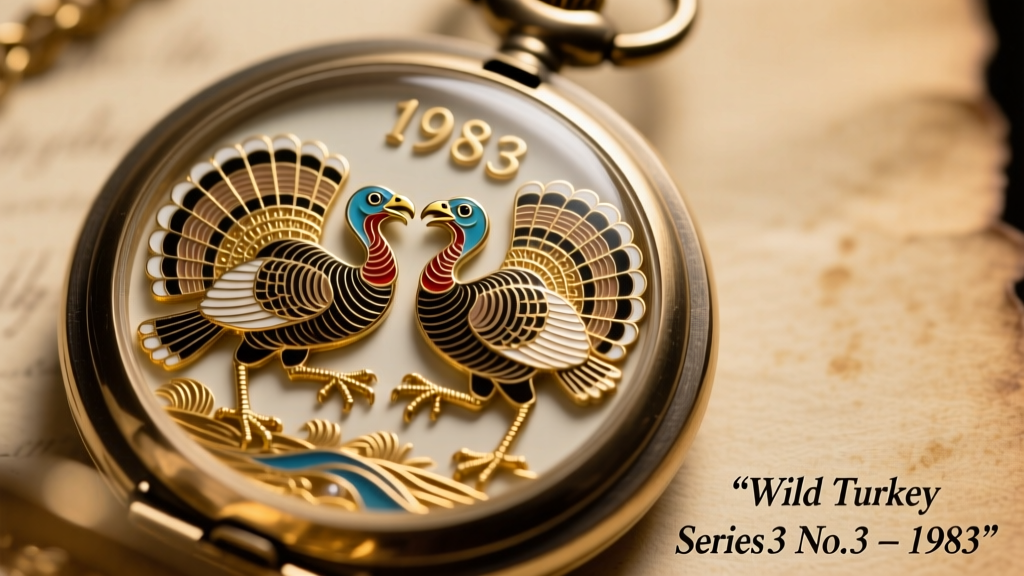
Wild Turkey Series III No. 3: Turkeys Fighting (1983) — A Deep Appraisal of the Iconic Enamel Watch Dial

Game: Benny Goodman Swings Into A Game Of Musical Information — A 1930s Vintage Board Game Uncovered
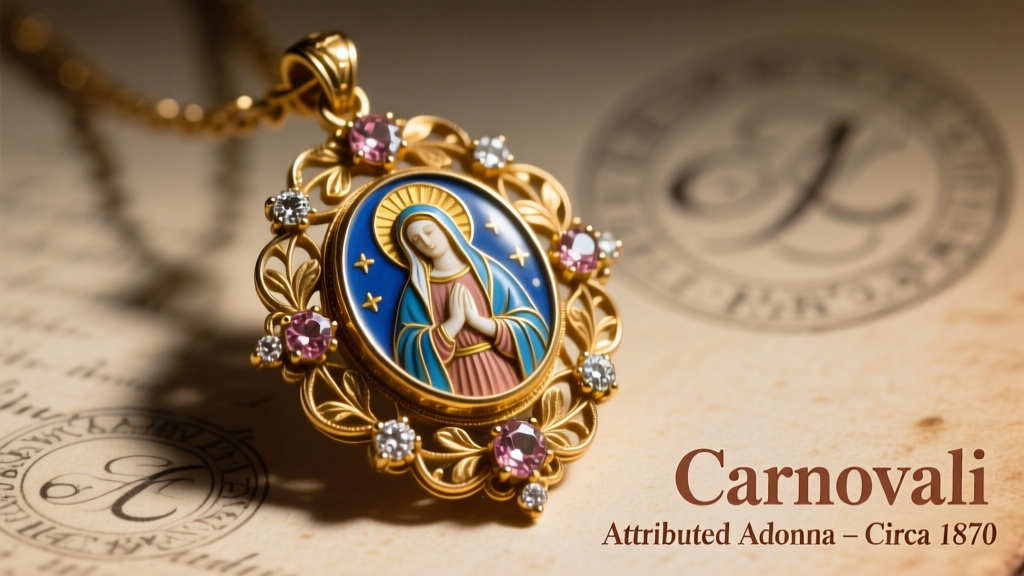
Carnovali-Attributed Madonna Pendant May Stir Up $5,000 at Auction: Provenance, Craftsmanship, and Market Realities
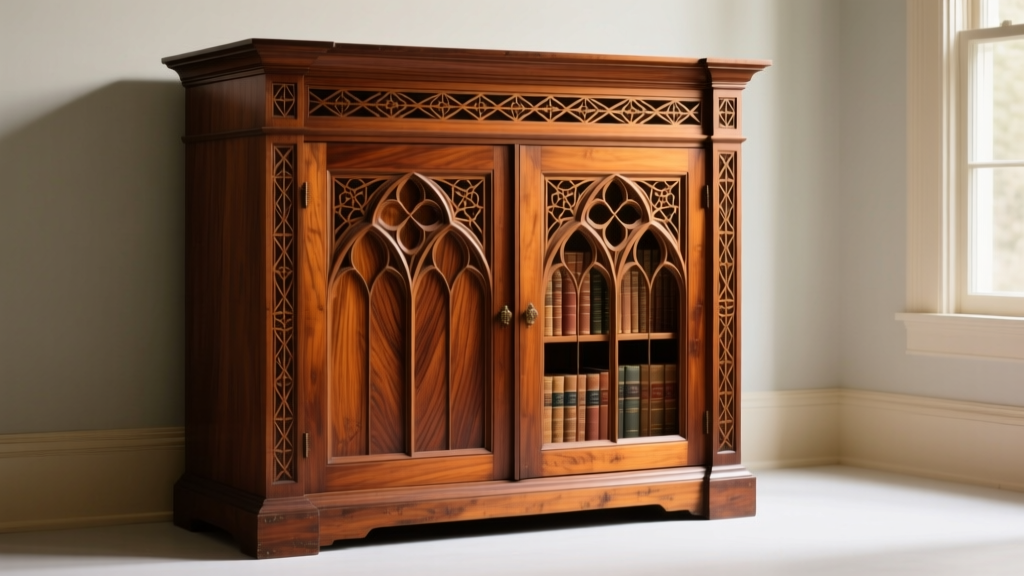
Cherrywood Bookcase with Gothic String Inlay: A 19th-Century American Cabinetmaker’s Masterpiece (73 × 53 in)

Beehive Vase, Throne Room Pattern, Classical Women on Cobalt Ground — A 24-Inch Masterpiece of Late 19th-Century English Porcelain

Occupied Japan Figurine: Man and Woman Dancing in Pink Coat & Flowered Skirt — A Collector’s Guide to the 6-Inch Porcelain Pair