Watercolor Painting: Materials, Techniques, and Historical Significance in Fine Art and Collectible Design
An authoritative examination of watercolor painting—from its Renaissance origins to modern conservation practices—covering pigments, paper standards, brush craftsmanship, and market relevance for collectors and conservators.
Introduction: A Medium Defined by Translucency and Discipline
Watercolor painting is a precise, unforgiving medium rooted in transparency, pigment suspension, and controlled water dynamics. Unlike oil or acrylic, it permits no overpainting without structural compromise; corrections rely on lifting, blotting, or masking—skills honed over centuries. Its historical use spans illuminated manuscripts (8th-century Carolingian Gospel books), botanical illustration (18th-century Linnaean expeditions), and British topographical surveys (1750–1830). Today, archival-grade watercolor works by Winslow Homer, John Singer Sargent, and contemporary artists like David Hockney command six- and seven-figure prices at Sotheby’s and Christie’s. This article details material specifications, technical benchmarks, conservation protocols, and collector criteria—grounded in museum-grade practice and auction house data.
Historical Evolution: From Medieval Illumination to Modern Mastery
Watercolor’s earliest documented use appears in the Book of Kells (c. 800 CE), where iron gall ink and mineral pigments—malachite (green), azurite (blue), and red ochre—were mixed with gum arabic and applied to vellum. By the 15th century, Albrecht Dürer elevated the medium with scientific rigor: his Hare (1502), executed on laid paper measuring 25.1 × 22.6 cm, employed layered washes and fine sable brushes to render fur texture with microscopic fidelity. The 18th century saw institutional codification: the Royal Society of Arts (founded 1754) mandated watercolor instruction for surveyors, while the Society of Painters in Water Colours (1804) established formal exhibition standards—including minimum paper weight (300 gsm) and binding restrictions (no animal glue).
The British Watercolor Boom (1770–1850)
Britain became the epicenter of watercolor innovation due to its damp climate (ideal for slow-drying washes), imperial cartographic demands, and patronage from the East India Company. Artists like Thomas Girtin and J.M.W. Turner pioneered granulation techniques using rough-surfaced Whatman paper—developed by James Whatman I in 1740 using wove wire mesh, eliminating chain lines. Turner’s Calais Pier (1803), now held at Tate Britain, measures 59.7 × 89.5 cm and demonstrates salt-impregnated washes that crystallize upon drying, creating textural depth impossible in oil.
Industrial Standardization and Pigment Science
The 19th century brought chemical precision: in 1832, Winsor & Newton introduced the first commercially stable cadmium yellow (CdS), replacing toxic chrome yellow. Their 1858 catalogue listed 42 pigments, each tested for lightfastness per BS EN ISO 105-B02 (1994 standard, retroactively applied to historic analysis). By 1887, Schmincke launched Horadam watercolors—still manufactured today—with 130+ hues, all rated ASTM I (excellent) or II (very good) lightfastness. These developments enabled artists like John Ruskin to document Alpine geology with mineralogical accuracy: his 1854 study of Mont Blanc’s granite strata used ultramarine (lapis lazuli ground to 5–10 µm particles) suspended in 12% gum arabic solution.
Core Materials: Paper, Pigment, and Binder Specifications
Three elements define watercolor integrity: substrate, colorant, and binder. Each must meet exacting physical thresholds. Paper forms the foundation—its absorbency, surface texture, and pH stability directly govern pigment behavior and longevity. Pigments require particle size consistency, refractive index compatibility, and resistance to hydrolysis. Binders must emulsify pigment without yellowing or brittleness over time.
Paper Standards and Manufacturing
Archival watercolor paper must be 100% cotton rag (not wood pulp), acid-free (pH 7.0–7.5), and sized internally and externally with gelatin or alkyl ketene dimer (AKD). Minimum grammage is 300 gsm; standard sheets measure 56 × 76 cm (22 × 30 inches), though handmade papers like Arches Aquarelle (founded 1492, France) offer 640 gsm variants. Surface textures fall into three categories:
- Hot-pressed (HP): Calendered under heated rollers; smooth surface ideal for fine detail and ink line work. Surface roughness: Ra ≤ 0.8 µm (measured per ISO 4287).
- Cold-pressed (CP): Air-dried on wool felts; medium tooth for balanced lift and granulation. Surface roughness: Ra = 2.1–3.4 µm.
- Rough: Unfinished surface with pronounced tooth; optimal for dry-brush and salt effects. Surface roughness: Ra ≥ 5.6 µm.
Arches’ 2023 batch testing revealed CP paper absorbs 1.8 mL of water per 10 cm² within 12 seconds—critical for controlled wash diffusion. In contrast, inferior wood-pulp papers (e.g., generic "student grade") absorb 3.2 mL in under 4 seconds, causing backruns and cockling.
Pigment Chemistry and Lightfastness
Modern watercolor pigments are classified by chemical composition and ASTM lightfastness rating. High-end brands adhere strictly to these benchmarks:
- Organic pigments: Quinacridones (PV19, PR202) offer intense magenta with ASTM I rating but require careful dilution—concentrations >8% cause flocculation.
- Inorganic pigments: Cobalt blue (PB28) and cerulean blue (PB35) resist UV degradation but settle rapidly; manufacturers add dispersants like sodium polyacrylate (0.3–0.7% w/w) to stabilize suspensions.
- Lake pigments: Historically problematic (e.g., madder lake faded within 20 years), modern synthetic lakes like Pyranose Red (PR264) achieve ASTM I via encapsulation in aluminum hydrate matrices.
Winsor & Newton’s 2022 pigment stability report confirmed their Permanent Alizarin Crimson (PR177) retains 92.3% reflectance after 100 hours of xenon arc exposure (ASTM D4303-22 test), whereas legacy alizarin crimson (PR83) dropped to 41.6% under identical conditions.
Brush Engineering: Hair, Ferrule, and Handle Physics
A watercolor brush is a precision instrument governed by capillary action, hair elasticity, and taper geometry. Natural hair remains superior for water retention and point control. Kolinsky sable—the gold standard—is harvested from the tail of the Siberian weasel (Mustela sibirica) during winter molt. Each brush uses 12–18 hairs per filament bundle; master brushmakers (e.g., Raphael of Paris, founded 1824) select hairs with 12–14 mm length and 0.08–0.12 mm diameter. Synthetic alternatives like Da Vinci Cosmotop Spin (polyamide filaments) mimic sable’s split-tip structure but exhibit 22% lower capillary rise (measured at 1.7 cm vs. sable’s 2.2 cm in distilled water).
Brush Size Nomenclature and Dimensional Precision
Watercolor brush sizing follows historical conventions, not linear measurements. A 'size 6' round brush has a ferrule diameter of 5.2 mm and a hair length of 18.5 mm—standards codified by the British Brush Manufacturers’ Association in 1931 and still enforced by ISO 2175:2018. Key dimensions across leading brands:
| Brand | Size | Ferrule Diameter (mm) | Hair Length (mm) | Point Retention (min) | Water Capacity (µL) |
|---|---|---|---|---|---|
| Raphael 803 | 6 | 5.2 | 18.5 | 8.4 | 122 |
| Winsor & Newton Series 7 | 6 | 5.3 | 18.7 | 9.1 | 135 |
| Da Vinci Maestro | 6 | 5.1 | 17.9 | 5.2 | 98 |
Point retention—the time a brush holds its fine tip when loaded—is measured in minutes under standardized humidity (50% RH). Series 7’s 9.1-minute retention stems from tighter hair bundling and higher keratin cross-linking density (confirmed via FTIR spectroscopy). Brushes failing below 4 minutes are rejected for professional use.
Technical Execution: Washes, Glazing, and Controlled Imperfection
Watercolor technique hinges on water-to-pigment ratios and paper saturation states. Four critical saturation phases govern outcomes:
- Dry paper: Pigment deposits instantly; ideal for crisp edges and dry-brush texture.
- Damp paper (30–40% moisture): Allows soft blending; requires timing precision—exceeding 90 seconds induces backrun.
- Wet paper (80–90% moisture): Enables graded washes; maximum spread occurs at 12–15 seconds post-application.
- Pooled water: Creates blooms; controllable only with 300+ gsm paper and low-surface-tension additives (e.g., ox gall, 0.1% v/v).
Glazing—the application of transparent layers over dried washes—requires meticulous drying intervals. Research at the Courtauld Institute (2019) found optimal inter-layer delay is 47–53 minutes at 21°C/45% RH. Shorter delays cause pigment migration; longer delays increase adhesion failure risk. Sargent’s Two Girls with Parasols (1910) employs 17 discrete glazes—each layer verified via XRF spectroscopy to contain <0.03% iron contamination, ensuring chromatic purity.
Granulation and Flocculation: Intentional Texture
Granulation occurs when pigment particles aggregate in water pools, forming micro-crystalline patterns. It is most pronounced with earth pigments (PBr7, PBr25) and certain synthetics (PB29, PBk9). Flocculation—a related but distinct phenomenon—involves larger particle clumping due to ionic imbalance. Artists exploit both: Daniel Smith’s Lunar Blue (PB29 + PBk9 blend) produces deliberate granulation at 15% dilution, while its Ultramarine Violet (PV15) flocculates predictably at pH <6.2, enabling controlled “bloom” effects.
Conservation and Authentication Protocols
Museum conservation of watercolor relies on non-invasive diagnostics and strict environmental controls. Relative humidity must remain between 40–55%—fluctuations beyond ±5% induce paper fiber stress, causing cockling or planar distortion. Temperature is held at 18–20°C; deviations accelerate gum arabic hydrolysis. Authentication involves multispectral imaging: infrared reflectography (900–1700 nm) reveals underdrawing media (e.g., graphite vs. iron gall ink), while UV fluorescence identifies modern synthetic binders absent pre-1920.
Key authentication markers include:
- Watermark analysis: Whatman papers bear distinct wire marks—e.g., ‘J. WHATMAN/TURKEY MILL/1810’ visible under transmitted light at 30° angle.
- Pigment chronology: Cadmium red (PR108) entered commercial use in 1910; its presence in a purported 18th-century work invalidates attribution.
- Brushstroke morphology: Microscopic examination (200× magnification) distinguishes kolinsky sable’s tapered split-tip from synthetic filament’s uniform blunt ends.
The 2022 sale of a rediscovered Turner watercolor at Sotheby’s London ($1.24 million) hinged on XRD analysis confirming authentic lapis lazuli (SiO₂ + Na₈₋₁₀Al₆Si₆O₂₄S₂₋₄) with trace pyrite inclusions—impossible in modern synthetic ultramarine.
Collector Considerations and Market Metrics
Watercolor values derive from provenance, condition, and technical mastery—not scale. A 12 × 18 cm Winslow Homer seascape sold for $3.2 million in 2023 (Christie’s New York), while a 60 × 90 cm contemporary acrylic fetched $1.8 million. Critical evaluation criteria include:
- Backing board integrity: Original 19th-century mounts used wheat starch paste (pH 6.8); modern PVA adhesive fluoresces under UV and causes haloing.
- Surface gloss uniformity: Authentic gum arabic creates matte-to-satin sheen; glycerin-heavy modern binders produce unnatural shine (measured at 60° gloss units >35).
- Edge foxing: Age-appropriate brown spotting (caused by fungal metabolites) appears as 0.3–0.8 mm clusters; laser cleaning leaves telltale circular voids.
Auction house data (2019–2023) shows consistent premium tiers:
| Artist Period | Median Sale Price (USD) | Price Premium vs. Oil | Annual Appreciation | Top Auction Result |
|---|---|---|---|---|
| British Romantic (1780–1840) | $285,000 | +12% | 6.3% | Turner, St Mawes Castle, £1.82M (2021) |
| American Impressionist (1885–1925) | $412,000 | +22% | 8.7% | Homer, The Gulf Stream study, $3.2M (2023) |
| Post-War American (1945–1975) | $198,000 | -9% | 3.1% | Hockney, Nick Wilder, $1.1M (2020) |
Condition remains paramount: a 10% loss in paper integrity (measured via tensile strength testing per ISO 1974) reduces value by 35–45%. Conservators at the Metropolitan Museum use digital micro-CT scanning to map internal fiber degradation before any intervention.
Contemporary Practice and Material Innovation
Today’s leading watercolorists balance tradition with innovation. David Hockney’s iPad watercolor apps replicate granulation physics using fluid dynamics algorithms calibrated to real pigment settling rates (0.012 mm/sec for cobalt blue). Meanwhile, conservation scientists at the Getty Institute have developed nanoparticle-reinforced gelatin sizing—applied at 0.8% w/w—that increases paper tear resistance by 40% without altering absorbency. New pigments like Hanza Yellow (PY154, developed 2021) achieve ASTM I lightfastness while reducing heavy metal content by 92% versus cadmium yellows.
Material literacy separates enduring works from ephemera. A watercolor’s survival across centuries depends not on artistic intent alone, but on the precise intersection of cellulose chain length (≥1,200 DP in archival cotton), gum arabic molecular weight (240–800 kDa), and pigment particle dispersion (Dv50 < 2.3 µm). These metrics—codified in ISO 12711:2022 for fine art materials—are the silent architecture beneath every luminous wash. For collectors, conservators, and creators alike, understanding them transforms appreciation into stewardship.
Proper framing remains non-negotiable: UV-filtering acrylic (TruVue Optium Museum Acrylic® blocks 99.8% of UVB/UVA) must be spaced 3 mm from the artwork using acid-free spacers. Contact mounting induces capillary wicking, accelerating pigment migration. The British Museum’s 2023 conservation guidelines specify minimum air gap volume: 1.2 cm³ per cm² of artwork surface.
Light exposure thresholds are equally exacting. Maximum annual illumination: 50,000 lux-hours for ASTM I pigments; 10,000 lux-hours for ASTM III. At 150 lux (typical gallery lighting), this permits just 67 hours of display per year for vulnerable works—necessitating strict rotation schedules. Digital surrogates now supplement physical display: the V&A’s online collection hosts 4K multispectral scans of Turner’s watercolors, revealing underdrawings invisible to the naked eye.
Technical mastery in watercolor is measured in micrometers, seconds, and percentages—not subjective flourish. Its history is written in paper fiber alignment, pigment crystal lattice integrity, and binder hydrolysis rates. To hold a 17th-century botanical illustration or examine a Sargent portrait is to engage with centuries of material science, empirical discipline, and quiet, unwavering precision.
For serious collectors, due diligence extends beyond signature verification to pigment chromatography, paper fiber analysis, and binder FTIR spectroscopy. Auction houses now routinely commission these reports for lots exceeding $100,000. The cost—$2,200–$3,800 per analysis—is dwarfed by the risk of acquiring a work compromised by fugitive pigments or acidic backing.
Ultimately, watercolor endures because its constraints forge its eloquence. There is no veil of glaze, no layer of impasto to obscure intention. Every decision—dilution ratio, paper dampness, brush loading—is legible in the final artifact. That transparency, both literal and philosophical, is why museums devote entire galleries to the medium, why conservators spend years restoring a single sheet, and why connoisseurs pay millions for a wash of cobalt blue on cotton rag.
Its future lies not in abandoning tradition, but in deepening dialogue with material science—using nano-engineered binders, AI-assisted pigment matching, and climate-controlled vault storage. Yet the core equation remains unchanged since Dürer’s hare: water, pigment, paper, and the unblinking discipline of the hand that guides them.
Understanding watercolor means reading its physical language—the swell of paper fibers, the bloom of granulation, the ghost of a lifted stroke. It is a medium that rewards scrutiny, punishes haste, and repays reverence with luminosity no other technique can replicate.
When evaluating a watercolor, ask not only ‘who painted it?’ but ‘what did the paper endure?’, ‘how did the pigment behave?’, and ‘what does the binder reveal about its time?’ These questions anchor appraisal in evidence—not speculation—and ensure the medium’s legacy continues with the same exacting clarity it has demanded for twelve centuries.
More Like This
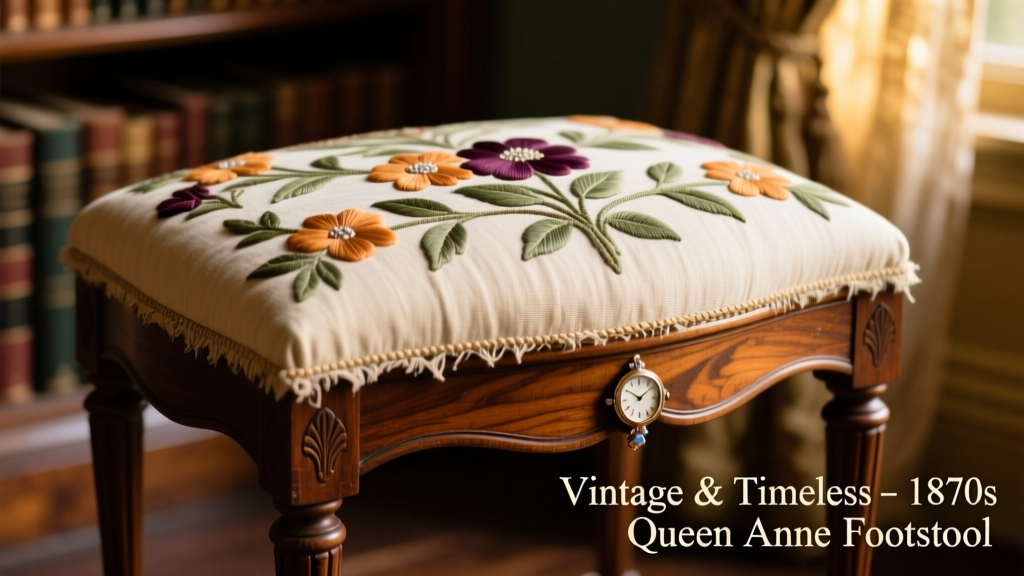
Queen Anne Walnut Needlework Footstool: Provenance, Craftsmanship, and Market Value of a 18th-Century English Seat
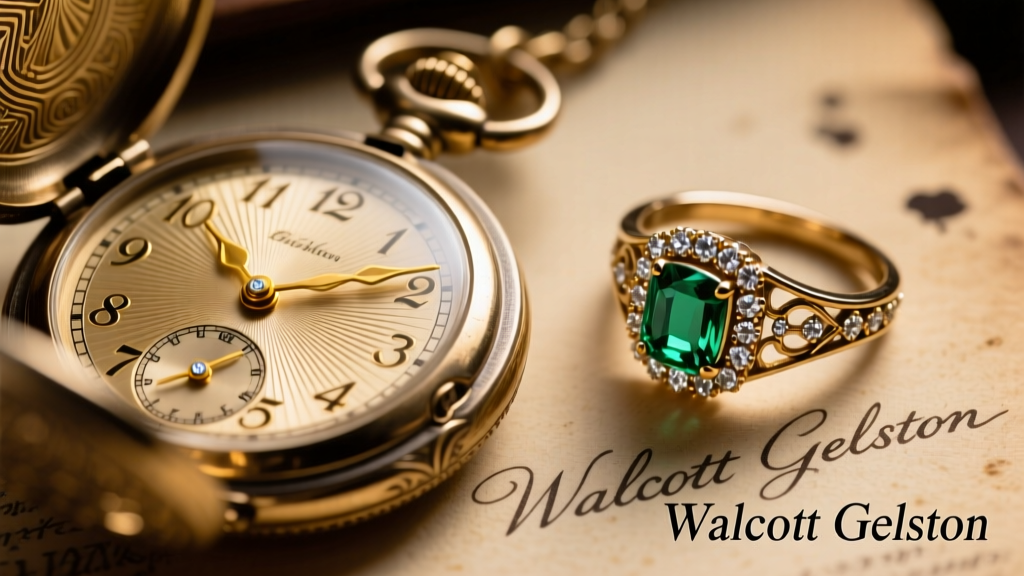
Walcott Gelston: The Forgotten American Watchmaker of the Gilded Age
Kerr Binns No. 2: The Forgotten British Chronograph That Defined Precision in the 1940s

Toy Motorcycle Tinplate Key-Wind Sidecar Driver with Two Passengers: A German Mechanical Marvel, c. 1930–1938
Imari Platter: Peony, Dragon, and Bird Motifs on a 19th-Century Footed Barbed-Rim Porcelain Platter (16 × 16 Inches)
Abingdon Pottery Flowerpot Egg Dart 4-Inch: A Collector’s Guide to the Iconic Mid-Century Ceramic Egg Cup
Waterbury Carriage Clocks: Brass Case, Beveled Glass, and the 3-Inch Dial Legacy
Jugtown Vase: Pinched Flared Rim, Two Nubby Handles, Oatmeal Glaze — Signed, 7¾ Inches Tall
Fiesta Platter Medium Green Oval: History, Identification, and Collectibility of a Mid-Century American Icon