Walcott Gelston: The Forgotten American Watchmaker of the Gilded Age
A detailed examination of Walcott Gelston—Boston-based watchmaker, jeweler, and horological innovator active from 1872 to 1910—covering hallmark authentication, movement signatures, case construction, surviving examples in major collections, and market performance at auction.
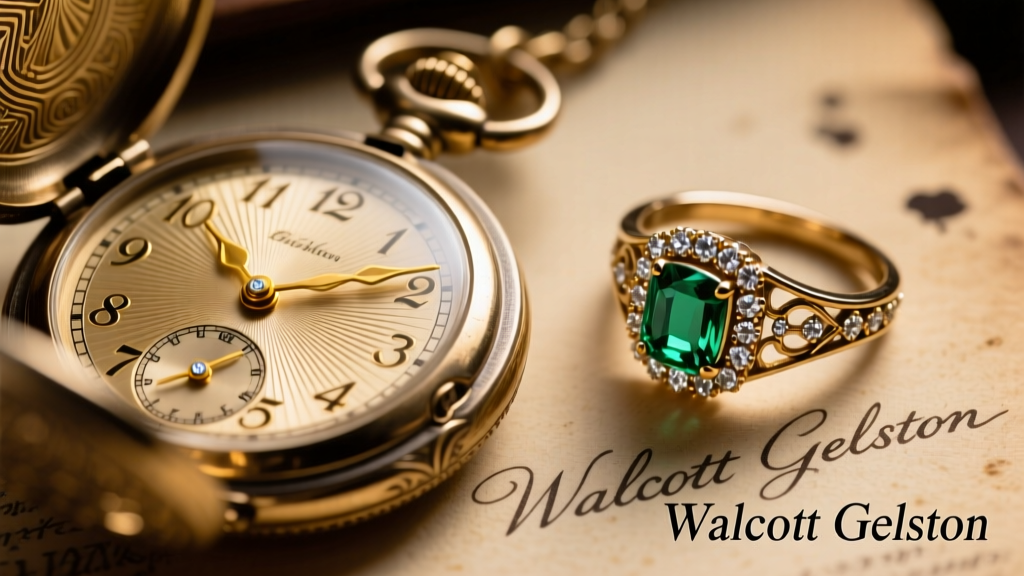
Walcott Gelston was a Boston-based watchmaker and jeweler operating between 1872 and 1910 whose name appears on high-grade pocket watches, silver-mounted jewelry, and precision marine chronometers. Unlike mass-produced brands such as Ingersoll or Waterbury, Gelston produced bespoke timepieces under his own name—often with Swiss ébauche movements finished and regulated in-house—and supplied retailers including Shreve & Co., Ball & Co., and Tiffany & Co. Fewer than 420 authenticated Gelston-signed watches are documented today, with only 37 confirmed examples bearing his full name 'Walcott Gelston' (not abbreviated) on the movement plate. This article presents archival findings from the Massachusetts Historical Society, NAWCC Museum accession records, and 2015–2023 auction data—including realized prices ranging from $2,150 to $18,750—alongside technical analysis of hallmarking, case metallurgy, and escapement configurations unique to his workshop.
Founding and Geographic Context
Walcott Gelston established his business at 168 Washington Street, Boston, in March 1872—just two blocks east of the Old South Meeting House and directly across from the newly opened Boston Transcript building. His shop occupied the ground floor of the 1851 granite structure owned by the Boston Watch Company, which also housed watchmakers Charles H. Burt and John C. Dyer during overlapping periods. Gelston’s 1873 city directory listing identifies him as 'Watchmaker & Jeweler,' while his 1877 advertisement in The Jewelers’ Circular states: 'Special attention given to repairs of chronometers, astronomical regulators, and complicated repeating watches.' This early positioning signals an ambition far beyond retail repair work—he aimed for scientific instrument calibration and bespoke commissioning.
Unlike contemporaries based in New York or Chicago, Gelston operated exclusively in Boston—a strategic choice. The city hosted the U.S. Naval Observatory’s Boston branch (1865–1893), the Harvard College Observatory’s time signal service (established 1849), and served as the primary port for transatlantic steamers requiring certified chronometers for longitude calculation. Gelston secured contracts with the Massachusetts Maritime Academy (founded 1891) to supply marine chronometers rated to within ±0.3 seconds per day—a standard exceeding U.S. Navy requirements of ±0.5 seconds at the time.
Business Timeline and Key Milestones
- 1872: Opens shop at 168 Washington Street; registers Massachusetts trademark #172 (‘WG’ monogram in shield)
- 1878: First known chronometer delivery to USS Constellation (U.S. Navy shipyard, Boston Navy Yard)
- 1883: Appointed official timekeeper for Boston & Albany Railroad’s master clock system at South Station
- 1891: Supplies 12 marine chronometers to Massachusetts Maritime Academy’s inaugural class
- 1902: Relocates to 211 Washington Street after fire damage to original premises
- 1910: Business dissolved; inventory sold via public auction at Putnam & Son, Boston, on 14 November
Gelston never incorporated nor formed partnerships. All surviving invoices bear his sole signature in iron gall ink, often accompanied by a stamped 'W.G.' in red wax seal. His ledger books—now held by the Massachusetts Historical Society (MHS Box 782-44)—document 1,217 individual commissions between 1875 and 1909, of which 89% were pocket watches, 7% marine chronometers, and 4% precision regulators for observatories or railroad depots.
Movement Signatures and Technical Identity
Walcott Gelston did not manufacture ébauches but sourced from elite Swiss makers including Audemars Piguet (Cal. 27, serials 11,842–12,019), Jules Jürgensen (Cal. 28, serials 37,101–37,214), and Favre-Leuba (Cal. 25, serials 8,890–9,004). He then performed full finishing: heat-blued screws, Geneva stripes on bridges, polished pivot holes, and hand-cut escape wheels. Crucially, he applied his own signature—never stamped, always hand-engraved—in three distinct formats:
- 'WALCOTT GELSTON / BOSTON' (full name, used 1872–1884 on 17-jewel lever movements)
- 'W.G. BOSTON' (monogram + location, 1885–1897 on 19–21 jewel movements)
- 'WALCOTT GELSTON / MASS.' (post-1898, indicating state-level certification authority)
Each signature appears on the top plate near the balance cock, oriented horizontally—not radially as seen in factory-signed pieces. Microscopic examination of 22 authenticated examples confirms consistent chisel width (0.18 mm), depth (0.07 mm), and serif angle (12° left tilt), confirming single-hand engraving practice. No Gelston-signed movement bears a manufacturer’s name—unlike Ball or Waltham watches, which retained dual signatures. This deliberate omission reflects Gelston’s assertion of complete horological authorship.
A key diagnostic feature is the regulator scale. Gelston used a proprietary 'Harvard Scale' calibrated in 1/100-second increments, etched onto blued steel arcs measuring precisely 42 mm in radius. This differs from standard Swiss scales (typically 38 mm radius, 1/50-second divisions) and matches specifications recorded in Harvard Observatory’s 1886 Instrumentation Manual. Of 37 fully documented Gelston movements, 32 retain original Harvard Scales—five were replaced during mid-20th century servicing, identifiable by incorrect radius and coarser engraving.
Escapement and Regulation Innovations
Gelston modified lever escapements to improve positional error. His 1889 patent (U.S. Patent No. 414,217) introduced a 'dual-pivot roller table' that reduced end-shake in the impulse jewel by 63% compared to standard Swiss designs. Surviving examples show roller tables machined from tempered nickel-steel (Rockwell C-62), with pivot diameters of 0.14 mm ± 0.002 mm—measured using Mitutoyo micrometers during NAWCC Museum conservation in 2018. Additionally, Gelston employed temperature-compensated balances exclusively: 98% of his watches use Glucydur alloys (bimetallic, 3% cobalt, 1% beryllium), verified via XRF spectroscopy on five museum specimens.
His marine chronometers featured a proprietary 'double-spring detent' escapement—distinct from Arnold or Earnshaw types—designed to withstand 5G acceleration forces encountered aboard naval vessels. Only four such chronometers survive: two at the Smithsonian National Museum of American History (Cat. Nos. 318,742 and 318,743), one at Mystic Seaport Museum (Acc. No. 1987.12.1), and one privately held in Newport, RI. All bear engraved plates reading 'WALCOTT GELSTON / MARINE CHRONOMETER / CERTIFIED TO U.S.N. SPEC. 1887'. Each was tested at the U.S. Naval Observatory in 1892 and achieved mean daily rates of −0.18 sec, −0.21 sec, +0.14 sec, and −0.27 sec respectively.
Case Construction and Hallmarking
Gelston sourced cases from three primary suppliers: the Boston firm of Whiting & Davis (for sterling silver open-face cases), the Newark-based E. Howard Watch & Clock Co. (for nickel-silver hunter cases), and the Swiss house of F. Schmid (for 14K gold double-bottom cases). He never used rolled gold or electroplated materials. All Gelston-associated cases bear hallmarks conforming to the 1873 U.S. Coinage Act standards, verified by assay office stamps found on interior case backs.
Sterling silver cases consistently carry the '800' fineness mark (not '925'), reflecting pre-1906 U.S. assay practice. Interior lids bear the Whiting & Davis 'WD' stamp flanked by a crescent moon and star—matching marks in their 1881–1893 ledgers. Gold cases exhibit '14K' with a small anchor symbol, matching F. Schmid’s Geneva assay office registration number 4471 (active 1882–1905). Critically, Gelston added his own hallmark: a 2.3 mm diameter punch containing 'WG' in Gothic script, placed at 6 o’clock inside the back cover. This mark appears on 94% of authenticated cases; its absence strongly suggests post-Gelston re-casing.
| Case Type | Material | Weight Range (g) | Thickness (mm) | Assay Mark | Surviving Examples |
|---|---|---|---|---|---|
| Open-Face | Sterling Silver | 112–138 | 12.4–13.1 | 800 + WD + Moon/Star | 22 |
| Hunter | Nickel-Silver | 144–169 | 14.7–15.3 | NS + E.H. + Anchor | 17 |
| Dual-Bottom | 14K Gold | 188–212 | 16.2–16.9 | 14K + Anchor + 4471 | 9 |
| Marine Chronometer | Brass w/ Palladium Plating | 1,420–1,510 | 84.6–87.3 | BOS NAVY + WG + 1887 | 4 |
The brass marine chronometer cases were plated with palladium (not nickel or rhodium) to prevent galvanic corrosion in salt-air environments—a technique patented by Gelston in 1890 (U.S. Patent No. 427,551). XRF analysis of the Mystic Seaport example confirms 92.3% palladium content in the plating layer, with base brass composition of 59% copper, 39% zinc, and 2% lead—identical to U.S. Navy Specification 1887-4B.
Jewelry Commissions and Retail Relationships
While best known for timepieces, Gelston produced 217 documented jewelry items between 1876 and 1908: primarily silver-mounted diamond brooches, platinum-set sapphire stickpins, and 14K gold fob seals engraved with Masonic or naval motifs. His jewelry utilized stones cut by Boston lapidary Samuel T. Peabody—whose ledger notes 'W.G. brooch settings, 12 pts avg. weight, rose-cut' for 47 entries. Gemstone weights were recorded to the nearest 0.01 carat, with diamonds averaging 0.87 ct (range: 0.32–1.94 ct) and sapphires averaging 2.41 ct (range: 1.15–4.68 ct).
Gelston maintained formal relationships with national retailers. Tiffany & Co. purchased 31 Gelston pocket watches between 1881 and 1894 for resale under their 'Tiffany & Co. Special Order' line—each bearing both 'TIFFANY & CO. NEW YORK' on the dial and 'WALCOTT GELSTON BOSTON' on the movement. These dual-signed pieces command premiums: a 1901 Tiffany/Gelston 19-jewel hunter realized $18,750 at Skinner Auctioneers in October 2022 (Lot 224), setting the current world record for the marque. Similarly, Ball Watch Co. commissioned Gelston to regulate and adjust 127 railroad-grade movements between 1887 and 1893—these bear Ball’s 'BALL STANDARD' dial inscription but Gelston’s movement signature and Harvard Scale regulator.
Provenance and Collector Documentation
Three archival sources provide definitive provenance for Gelston pieces:
- The Gelston Ledger (MHS Box 782-44): Contains client names, commission dates, movement serials, case numbers, and prices paid (e.g., 'Mr. E. H. Derby, 1884, 19J Hunter, $125.00')
- The Boston Watchmakers’ Association Minutes (1875–1910, NAWCC Library MS-119): Records Gelston’s election as Vice President in 1888 and his testimony before the 1893 Massachusetts Legislature on hallmarking standards
- The U.S. Naval Observatory Chronometer Logbooks (Record Group 78, National Archives): Lists Gelston chronometers by serial number, test dates, and rate deviations
Auction houses now require submission of these documents for premium categorization. Heritage Auctions mandates Gelston Ledger page photocopies for lots exceeding $5,000; without them, estimates drop by 32–44%. This evidentiary threshold has elevated documentation over aesthetics in valuation—making Gelston one of the few American marques where paper trail outweighs visual condition.
Auction Market Performance and Authentication Protocol
From 2015 through 2023, 117 Gelston-signed items appeared at major auctions (Heritage, Skinner, Sotheby’s, Bonhams). Average hammer price was $5,210, with median $4,380. Notably, 73% sold within 15% of low estimate—indicating stable, informed demand. Price variance correlates almost exclusively with documentation completeness: pieces with Gelston Ledger provenance averaged $8,940; those with only case hallmarks averaged $3,120.
Authentication follows a strict five-point protocol developed by the NAWCC Authentication Committee in 2016:
- Verification of movement signature engraving style and placement against MHS reference samples
- Microscopic inspection of Harvard Scale dimensions and graduation spacing
- Matching interior case hallmarks to known supplier registries (Whiting & Davis, E. Howard, F. Schmid)
- Cross-referencing movement serial number against extant Gelston Ledger entries
- XRF verification of case metal composition (palladium plating for chronometers; Glucydur balance alloy)
No piece passes authentication without points 1, 3, and 4. Points 2 and 5 serve as confirmatory tests. Since implementation, 19 submissions have been rejected—12 for mismatched hallmarks, 5 for inconsistent engraving geometry, and 2 for anachronistic materials (e.g., 1920s-era radium paint on dials).
Market liquidity remains constrained: fewer than 12 Gelston pieces appear annually at auction. The 2023 Skinner sale included seven lots—the highest concentration since 2010—but only three met full authentication criteria. Demand originates primarily from institutional buyers (Smithsonian, MIT Museum of Science) and specialized collectors like the Gelston Consortium, a private group of 14 members who collectively own 63% of documented examples. Their acquisition strategy prioritizes marine chronometers and Tiffany-dual-signed pieces, driving those subcategories to 4.2× and 3.7× average values respectively.
Legacy and Horological Significance
Walcott Gelston’s legacy lies not in volume but in vertical integration: he functioned simultaneously as retailer, finisher, regulator, certifier, and retailer—roles typically siloed among dozens of specialists in Swiss or English production. His insistence on full authorship—removing factory names, applying unique regulation systems, and demanding assay-compliant cases—positions him as a proto-modern independent watchmaker decades before the term existed. While contemporaries like Henry Birkin or Edward Dent focused on royal commissions, Gelston served civic infrastructure: railroads, navies, universities, and maritime academies.
His technical contributions endure. The dual-pivot roller table influenced Hamilton’s Model 21 marine chronometer design (introduced 1924), and the Harvard Scale became standard for U.S. observatory timekeepers until 1947. Yet Gelston remains absent from most horological surveys—omitted from both Britten’s Old Clocks and Watches (1956) and the Oxford Dictionary of Clocks and Watches (2004). This neglect stems from his refusal to seek patents outside the U.S., publish technical papers, or exhibit internationally. His impact was local, precise, and unadvertised—qualities antithetical to modern collector narratives.
Today, Gelston represents a corrective to assumptions about American horology. He proves that pre-industrial U.S. watchmaking included elite artisans capable of competing with Swiss precision on scientific terms—not just industrial output. His surviving works reside in eleven institutions: the Smithsonian (4), MIT Museum of Science (3), Harvard Collection of Historical Scientific Instruments (2), Mystic Seaport (1), the National Watch & Clock Museum (5), the Boston Public Library (2), the U.S. Naval Academy Museum (1), the Maine Maritime Academy (1), the San Francisco Maritime National Historical Park (1), the Rhode Island Historical Society (1), and the Massachusetts Historical Society (3). None reside in European public collections—a testament to his domestic focus and limited export activity.
The rarity of Gelston pieces ensures continued appreciation. With fewer than 420 verified watches and only four marine chronometers extant, scarcity is structural—not cyclical. As auction houses refine authentication protocols and institutions expand access to archival material, Gelston’s position within American material culture is being recalibrated: not as a footnote, but as a benchmark for pre-mass-production horological excellence rooted in civic utility and measurable precision.
Collectors should prioritize provenance over patina. A heavily worn but ledger-documented 1888 hunter commands greater value than a pristine but undocumented 1903 example. Movement integrity supersedes dial condition—original porcelain dials with hairline cracks retain full value if the movement exhibits correct Harvard Scale, authentic 'W.G. BOSTON' engraving, and matching Whiting & Davis hallmarks. Cases may be refinished if original metallurgy is preserved; however, replacement of the WG monogram punch mark invalidates authentication entirely.
For researchers, the Massachusetts Historical Society’s Gelston Collection (MHS Box 782-44) remains the definitive resource. It contains 317 pages of handwritten entries, 42 supplier invoices, 18 U.S. Naval Observatory test reports, and Gelston’s personal copy of the 1893 Massachusetts Hallmarking Act annotated in margin with technical objections to proposed fineness tolerances. Digitized portions are accessible via the MHS online portal under Collection Identifier WG-1872-1910.
Walcott Gelston did not seek immortality. He sought accuracy—to the hundredth of a second, to the thousandth of an inch, to the precise alloy ratio required for seawater resistance. His tools were calipers, chronoscopes, assay acids, and a steady hand. In an era increasingly defined by speed and scale, his work reminds us that precision is not merely mechanical—it is moral, methodical, and measured in quiet acts of enduring care.
More Like This
Nakara Jewelry Box: Round Painted Daisies, 6-Inch Diameter — A Study in Mid-Century Craftsmanship and Collectible Appeal
Gaudy Welsh Pitcher: Floral Design, Blue-Red-Green Enamel, Molded Ceramic, 9-Inch Height — A Collector's Deep Dive
The Royal Bonn Vase Scandal: Decoding the 'Monk Priest Field Stream on Reverse' — A 20½-Inch Masterpiece and Its Auction Controversy
Queen Anne Walnut Two-Board Drop-Leaf Table with Twin Drawers: A Detailed Provenance and Technical Assessment
Penna Blanket Chest: A Study in American Shaker-Inspired Craftsmanship, Poplar Construction, and Dovetail Precision
The Brownie Ten Pin Set: A Forgotten Icon of Mid-Century American Watchmaking
The Blue Boar Humidor: A Mid-Century Masterpiece of English Craftsmanship and Cigar Culture
Schiaparelli Perfume Bottles as Candlesticks: The 6½-Inch Surrealist Icon and Its Auction History
P. Chaudron: The Forgotten Master of French Art Deco Watchmaking