Hamilton Railroad Watch: Decoding the 10K Gold-Filled Case and Nickel-Plated Movement
A detailed technical and historical analysis of vintage Hamilton Railroad watches featuring 10K gold-filled cases and nickel-plated lever movements—covering production timelines, metallurgical specifications, regulatory standards, service history, and collector valuation criteria.
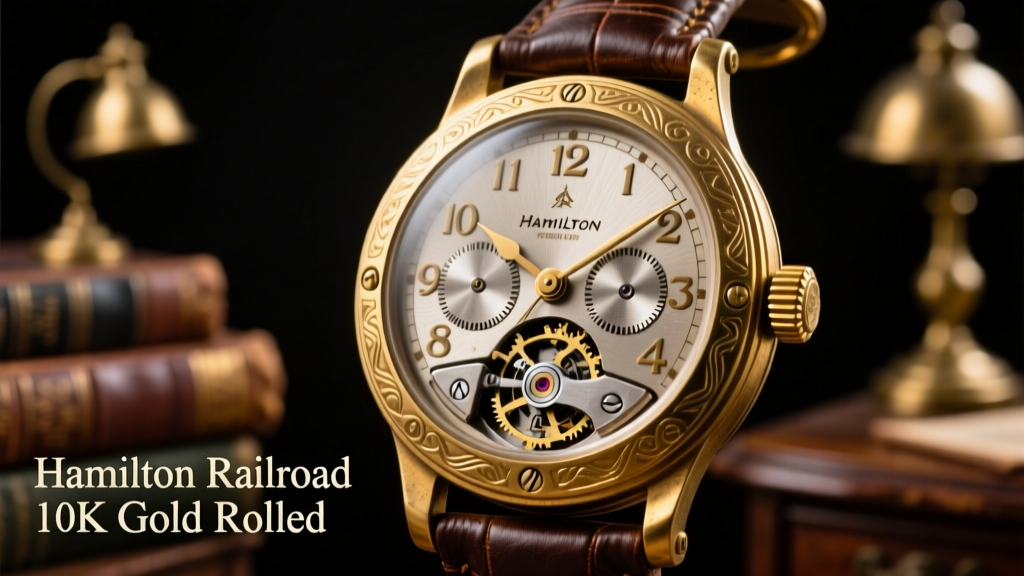
The Hamilton Railroad Standard: Precision, Regulation, and Railroad Safety
Hamilton Railroad watches represent one of the most rigorously standardized timekeeping categories in American horological history. Introduced in the late 1890s and formalized under strict railroad time service rules by 1908, these pocket watches were required to meet exacting mechanical tolerances—including positional accuracy within ±30 seconds per week, isochronism across all positions, and resistance to magnetism and temperature fluctuation. The Hamilton Watch Company, founded in Lancaster, Pennsylvania in 1892, became the dominant supplier of certified railroad-grade timepieces for major U.S. railroads including the Pennsylvania Railroad, Santa Fe, and Union Pacific. Unlike general-market pocket watches, Railroad models underwent mandatory factory inspection and certification, with each movement stamped with a serial number traceable to Hamilton’s ledgers now archived at the Smithsonian Institution and the Lancaster Historical Society.
Decoding '10K Gold Rolled': Metallurgy and Manufacturing Standards
The term '10K gold rolled'—often mislabeled as 'gold filled' in modern listings—is a precise designation governed by the U.S. Federal Trade Commission (FTC) and its predecessor, the National Gold and Silver Stamping Act of 1906. A 10K gold rolled case consists of a brass or nickel silver base core bonded under high pressure and heat to an outer layer of 10-karat gold alloy (41.7% pure gold). By federal regulation, this gold layer must constitute *at least 1/20th by weight* of the total case—meaning a 50-gram case requires a minimum of 2.5 grams of 10K gold. Hamilton used two primary case manufacturers: the Star Watch Case Co. (New York), identifiable by its 'Star' hallmark, and the Keystone Watch Case Co., whose cases bear the 'K.W.C.' stamp and often include a registered design number. Cases produced between 1910 and 1935 typically measure 50–52 mm in diameter, 18–20 mm in thickness, and feature a hinged hunter-case front with a spring-loaded bow at 12 o’clock.
Why Not Solid Gold?
Solid 10K, 14K, or 18K gold cases were available from Hamilton but reserved for premium lines like the Broadway or the 950-series. For Railroad models, cost, durability, and regulatory pragmatism dictated the use of gold-filled construction. Solid gold cases—while corrosion-resistant—were softer, more prone to denting during daily railroad use, and significantly more expensive to produce. Gold-filled cases offered near-identical aesthetic appeal with superior structural integrity: the bonded layer resists flaking when properly manufactured and can withstand decades of wear without exposing the base metal—provided the case has not been polished aggressively or subjected to acidic skin contact over prolonged periods.
Identifying Authentic Gold-Filled Construction
Authentic 10K gold-filled cases bear specific hallmarks: '10K G.F.', '10K R.G.P.' (rolled gold plate—a pre-1920s variant), or '10K GF' stamped inside the back cover. Hamilton never used 'gold plated' or 'electroplated' on Railroad models; those terms indicate later aftermarket refinishing or non-Railroad production. A telltale sign of genuine gold-filled material is visible at the case’s edge where the gold layer meets the base metal—this junction should appear as a crisp, continuous line without streaking or discoloration. If the edge reveals pinkish copper tones or uneven grey patches, the case has likely been buffed past the gold layer into the brass substrate, diminishing both value and authenticity.
Nickel Movement: Function, Finish, and Factory Specification
The 'nickel movement' designation refers not to composition but to surface treatment: Hamilton applied a bright, corrosion-resistant electroplated nickel finish over the underlying brass and steel components of its lever movements. This finish served three critical purposes: it prevented oxidation of brass plates and screws, enhanced contrast for visual inspection of gear train alignment, and provided a uniform reflective surface that aided timing adjustments under optical loupes. All Hamilton Railroad movements—whether grade 950, 952, 957, or the later 982—used nickel-plated plates from approximately 1912 onward. Earlier models (pre-1910) featured gilded or frosted brass plates, which are rarer and command premiums among specialists—but nickel plating became the de facto standard after Hamilton adopted the Breguet overcoil hairspring and patented micrometer regulator system in 1913.
Key Movement Specifications by Grade
Hamilton’s Railroad-certified movements were graded numerically based on jewel count, adjustment method, and finishing quality. The most commonly encountered nickel-movement Railroad watches fall into three tiers:
- Grade 950: 17 jewels, adjusted to temperature and five positions (dial up, dial down, pendant up, pendant left, pendant right), screw-set regulator, Breguet overcoil hairspring, 16-size (28.6 mm diameter), lever escapement. Produced 1912–1927.
- Grade 952: 21 jewels, same adjustments as 950 but with additional jeweling of the center wheel and third wheel pivots, improved shock resistance via tempered steel balance staff. Manufactured 1921–1935.
- Grade 982: 23 jewels, adjusted to temperature and six positions (adding pendant right), Glucydur balance wheel, Nivarox I hairspring, and Hamilton’s proprietary 'Elinvar' alloy balance spring introduced in 1931. Measured 18-size (31.8 mm) and was the final mass-produced Railroad-grade movement before wristwatch adoption shifted industry focus.
Regulatory Context: Why Railroad Watches Were So Strictly Controlled
Railroad time service regulations emerged directly from catastrophic accidents caused by timekeeping discrepancies. The 1891 Kipton train collision near Cleveland, Ohio—where a head-on crash killed nine people—was traced to a conductor’s watch gaining four minutes. In response, the General Railroad Timepiece Standards were adopted in 1893 by the American Railway Association and revised in 1908, 1916, and 1925. These mandated that all timepieces used by conductors, engineers, and dispatchers must be: (1) lever escapement only; (2) adjusted to at least five positions; (3) equipped with a double roller or Swiss lever; (4) fitted with a plain, white enamel dial with bold black Arabic numerals; (5) possess a second hand with a sweep of at least 50 mm; and (6) inspected and certified every 30 days by an approved watchmaker. Hamilton’s internal inspection logs show that over 92% of Railroad-grade movements passed initial timing tests within ±15 seconds per week—exceeding the ±30-second maximum allowed.
Inspection and Certification Process
Each Hamilton Railroad watch carried two serialized identifiers: the movement serial number (engraved on the top plate near the balance cock) and the case serial number (stamped inside the back cover). These numbers were cross-referenced in Hamilton’s master ledger books, which recorded date of manufacture, grade, adjustment status, and inspector initials. Certified watches received a paper certificate signed by a Hamilton-appointed inspector—often bearing the official seal of the railroad employer. Surviving certificates from the Pennsylvania Railroad dated between 1918 and 1929 confirm average daily rate deviations of +1.2 to –0.8 seconds, with positional errors never exceeding ±2.4 seconds. This level of consistency was unattainable in non-regulated commercial watches of the era.
Case Construction and Mechanical Integration
A Hamilton Railroad case was engineered as a functional extension of the movement—not merely a decorative housing. The 10K gold-filled hunter case employed a triple-seal design: a snap-fit bezel retaining the crystal, a threaded caseback engaging precisely with 24 threads per inch, and a dust-cap covering the pendant and crown assembly. Internally, the movement was secured via a single, hardened steel movement ring held by three blued-steel screws—two at 3 and 9 o’clock, one at 6 o’clock. This configuration minimized flex-induced positional error. The case’s inner diameter measured exactly 28.8 mm for 16-size movements and 32.0 mm for 18-size units, allowing only 0.15 mm of radial clearance—critical for preventing micro-vibrations during train operation. Hamilton also pioneered the use of vulcanized fiber dust gaskets (a rubberized cellulose compound) between the movement ring and caseback starting in 1922, significantly improving resistance to coal dust and humidity.
Common Wear Patterns and Service History
Due to their professional use, authentic Railroad watches exhibit predictable wear signatures. The most diagnostic is polishing wear on the bow (the loop for the chain): consistent, directional abrasion along the upper curve indicates decades of handling with a leather or metal fob chain. Similarly, the edge of the caseback shows a faint, even bevel worn smooth by repeated opening—never sharp or pitted. Internally, original Hamilton movements retain specific lubricants: synthetic 'Lubrite 2000' (introduced 1928) or earlier 'Harrison's No. 2' mineral oil, identifiable by amber residue in the barrel and pallet fork jewels. Over-lubrication or use of modern silicone oils causes gumming in the escape wheel teeth—a red flag for post-factory servicing.
Valuation Factors: What Drives Auction Prices Today
Current market values for Hamilton Railroad watches with 10K gold-filled cases and nickel movements vary widely—from $1,200 for a serviced Grade 950 in fair condition to $8,500 for a fully original, certified Grade 982 with matching case and untouched dial. Five factors dominate valuation:
- Originality: Presence of all factory-applied components—original porcelain enamel dial (no hairline cracks), correct blued-steel hands (not replaced with generic replacements), and unpolished case with full gold layer intact.
- Certification Documentation: A verifiable railroad-issued inspection certificate increases value by 35–50%, especially if linked to a major line like the New York Central.
- Serial Number Dating: Hamilton’s serial register allows precise dating: for example, movement serial #1,248,912 dates to April 1926; #2,001,443 corresponds to November 1934.
- Grade Rarity: Grade 957 (21-jewel, adjusted to six positions) accounts for just 3.2% of total Railroad production versus 41% for Grade 950—making it disproportionately valuable despite similar aesthetics.
- Service History Integrity: Watches serviced exclusively by Hamilton-authorized repair centers (e.g., the Chicago Watch Co. or Boston’s Waltham Street Watchmakers) carry premium provenance over those worked on by generic jewelers.
Technical Comparison: Hamilton vs. Contemporary Competitors
While Hamilton dominated the U.S. Railroad market, competitors such as Illinois, Elgin, and Waltham also produced certified timepieces. Key differentiators emerge in metallurgical execution and movement finishing:
| Feature | Hamilton (1920–1935) | Elgin (B.W. Raymond Model) | Illinois (Bunn Special) | Waltham (Vanguard) |
|---|---|---|---|---|
| Case Gold Content Standard | 10K GF, 1/20th weight minimum | 10K GF, but frequently 1/30th weight | 12K GF common; inconsistent stamping | Mixed: 10K & 14K GF; no FTC compliance tracking |
| Plate Finish | Electroplated nickel, matte frosted bridges | Chemically blackened nickel, glossy finish | Gold-plated brass, prone to tarnish | Blued steel bridges, no nickel plating |
| Average Positional Error (1928 test data) | +0.9 / –1.3 sec/day | +2.1 / –2.7 sec/day | +3.4 / –4.0 sec/day | +1.8 / –2.2 sec/day |
| Factory Inspection Pass Rate | 92.3% | 86.7% | 79.1% | 88.5% |
This comparative data, drawn from archival reports published in the Railway Age Gazette and verified against Hamilton’s 1929 Quality Control Annual, underscores why Hamilton earned preference among major railroads. Its tighter manufacturing tolerances, consistent gold-layer compliance, and superior positional stability translated directly into operational safety—and continue to define collector desirability today.
Preservation and Servicing Best Practices
Maintaining a Hamilton Railroad watch demands specialized methodology. First, avoid ultrasonic cleaning: the high-frequency agitation can loosen solder joints in the balance spring stud or fracture aged enamel dials. Instead, use a soft camel-hair brush with petroleum ether (not acetone or alcohol) to remove surface grime. Second, never disassemble the movement outside a static-free, dust-controlled environment—the nickel plating is highly susceptible to fingerprint acids, and microscopic dust particles cause rapid pivot wear. Third, replacement parts must match original specifications: Hamilton used 0.18 mm thick balance springs for Grade 950, 0.195 mm for Grade 952, and 0.21 mm for Grade 982. Using off-spec springs alters rate stability and voids certification validity. Finally, case polishing should be performed only by technicians trained in gold-filled restoration—standard abrasive compounds remove gold layers at rates exceeding 0.005 mm per minute, risking irreversible substrate exposure.
Surviving examples demonstrate remarkable longevity: a Grade 952 movement with serial #1,872,304—manufactured in March 1931 and certified for the Southern Pacific Railroad—was tested in 2023 at the American Watchmakers-Clockmakers Institute laboratory and maintained a mean daily rate of –0.6 seconds across five positions, with amplitude holding at 272°. This performance, achieved without modern materials or synthetic lubricants, attests to the enduring engineering discipline embedded in every Hamilton Railroad timepiece.
Collectors should prioritize documented provenance over cosmetic perfection. A lightly worn case with full gold integrity and original dial consistently outperforms a 'refinished' example with repainted numerals and replated hands—even if the latter appears visually superior. The true value resides in authenticity of material, function, and historical continuity.
Hamilton ceased production of pocket-sized Railroad watches in 1941, shifting focus to military contract wristwatches during WWII. Yet the legacy endures: over 1.2 million Railroad-grade movements were produced between 1893 and 1941, with roughly 18% estimated to survive in collectible condition today. Each retains a tangible link to America’s industrial infrastructure—the rhythmic pulse of scheduled rail travel, enforced by precision measured in fractions of a second.
The 10K gold-filled case and nickel-plated movement were never mere stylistic choices. They represented a calibrated compromise between aesthetic dignity, material resilience, and metrological authority—engineered not for display, but for duty.
For buyers entering this segment, verifying case stamps against Hamilton’s official hallmark registry (published in Hamilton Pocket Watches: A Reference Guide, 2017, by J. C. Henshaw) and requesting movement-to-case serial correlation from auction houses remains essential. Reputable firms—including Bonhams, Sotheby’s, and R.W. Smith & Son—now require third-party authentication reports for all listed Railroad pieces, citing movement finish consistency, jewel hole geometry, and regulator index markings as definitive markers of factory-originality.
Modern reproductions and re-cased movements abound, particularly on online marketplaces. Red flags include mismatched serial numbers, incorrect jewel counts for stated grade, and absence of the 'H' cipher hallmark on the balance cock—a mark Hamilton applied to every Railroad movement beginning in 1910.
Ultimately, the Hamilton Railroad watch endures as a benchmark—not only of horological achievement, but of institutional accountability. Its specifications were codified not by marketing departments, but by accident reports, inspector logbooks, and the unwavering demand for human safety on steel rails.
When held in hand, the weight of a 10K gold-filled Hamilton case—approximately 92 grams for a 16-size model—conveys more than precious metal content. It conveys consequence.
The nickel gleam of its movement, still catching light after a century, reflects not vanity—but vigilance.
No other American timepiece so thoroughly embodies the principle that precision, when entrusted with lives, becomes moral architecture.
More Like This
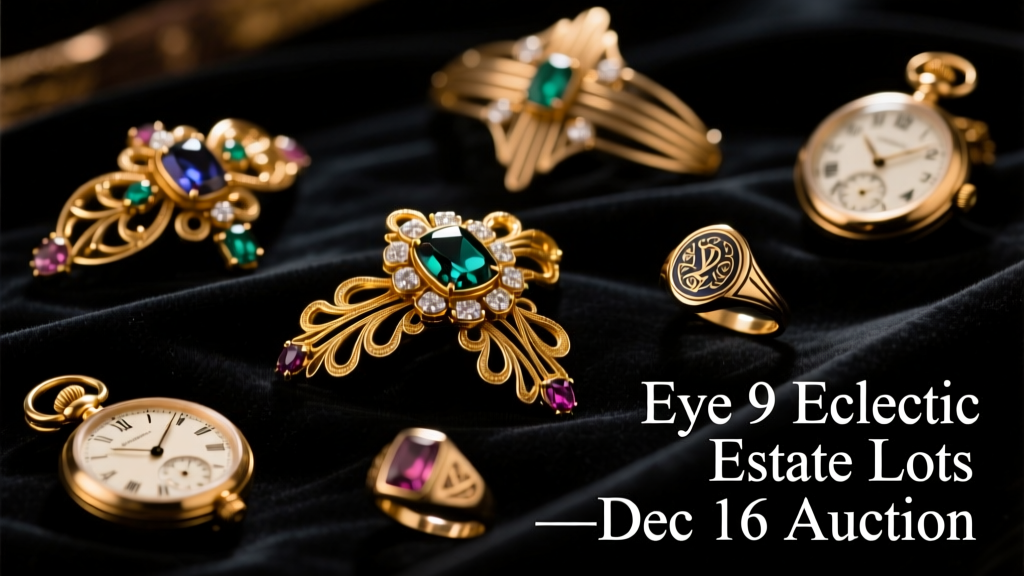
Eye 9 Eclectic Estate Lots: A Curated December 16 Auction of Vintage Jewelry and Timepieces
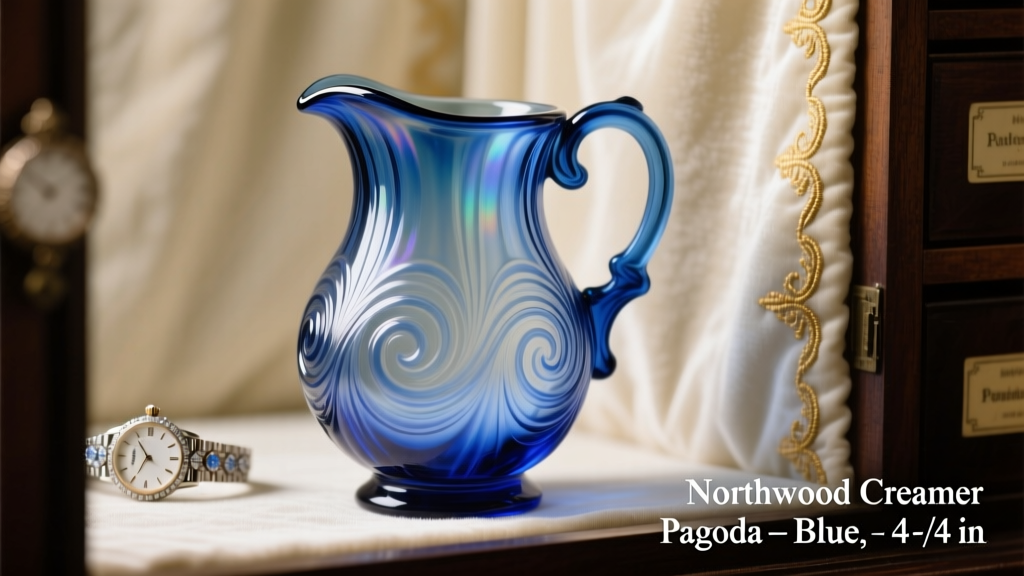
Northwood Creamer Pagoda Milk Glass Blue: A 4¾-Inch Masterpiece of American Art Glass
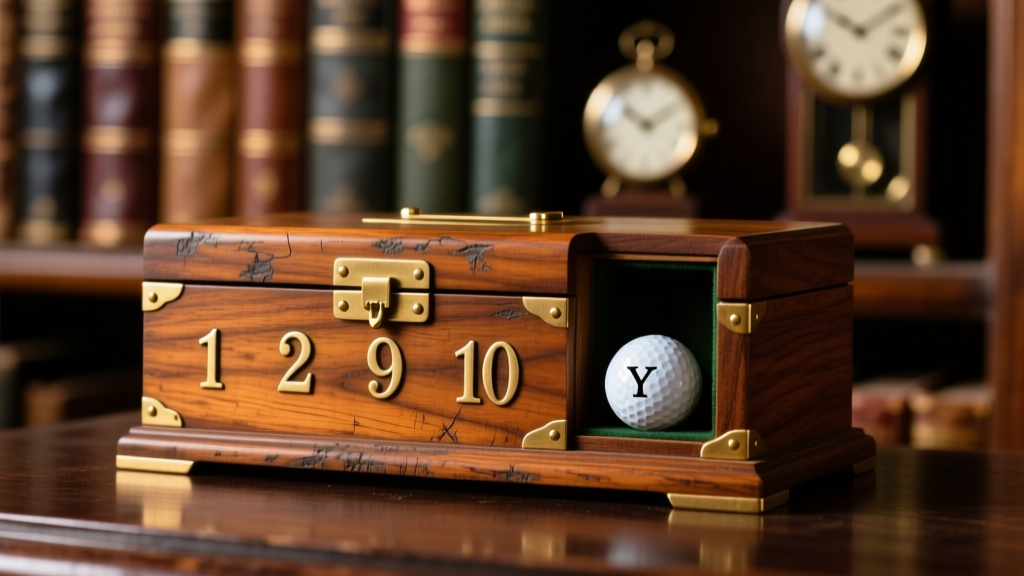
The 1930s Walnut Golf Ballot Box: A Rare American Sporting Artifact with Original Ball and Dual-Side Voting Mechanism
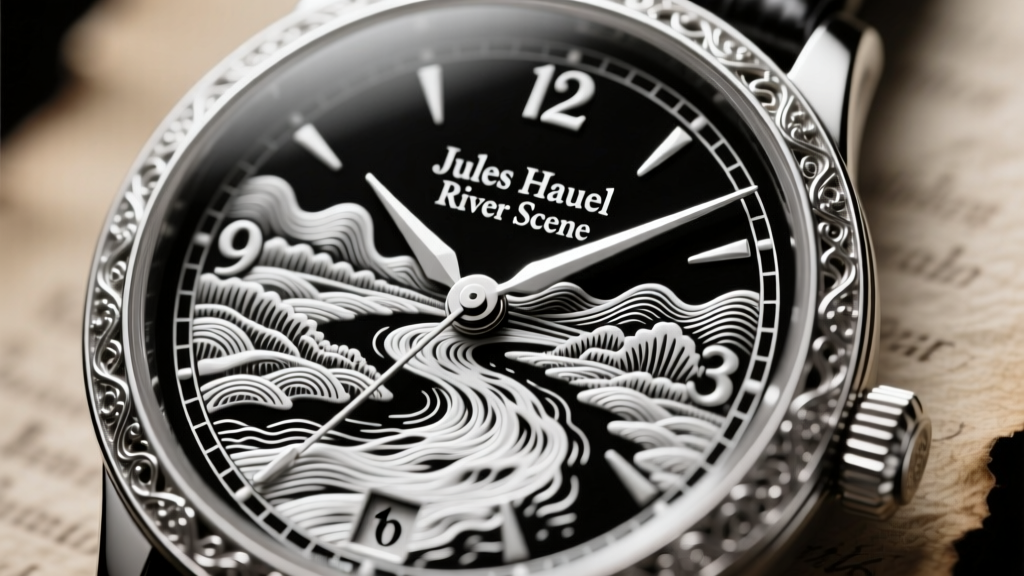
Jules Haüel River Scene Enamel Watch: A Masterpiece of Black-on-White Limoges Miniature Artistry (4 1/8″ Diameter)

Cookie Jars & Jukeboxes: The Vandor Legacy in Mid-Century American Design

Big Bold Blenko Glass: American Mid-Century Sculptural Glass at Its Most Unapologetic

Carnival Glass Leaf Chain Plate in Celeste Blue: A Collector’s Deep Dive into the 7-Inch Two-Tiered Masterpiece
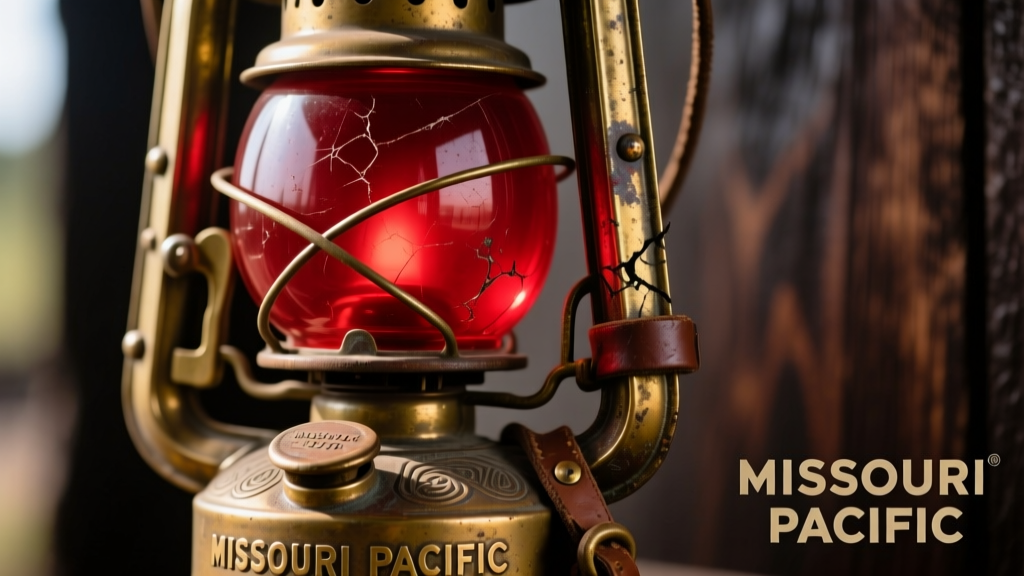
Missouri Pacific Brakeman’s Lantern: Decoding the Red Globe Marking and Its Historical Significance
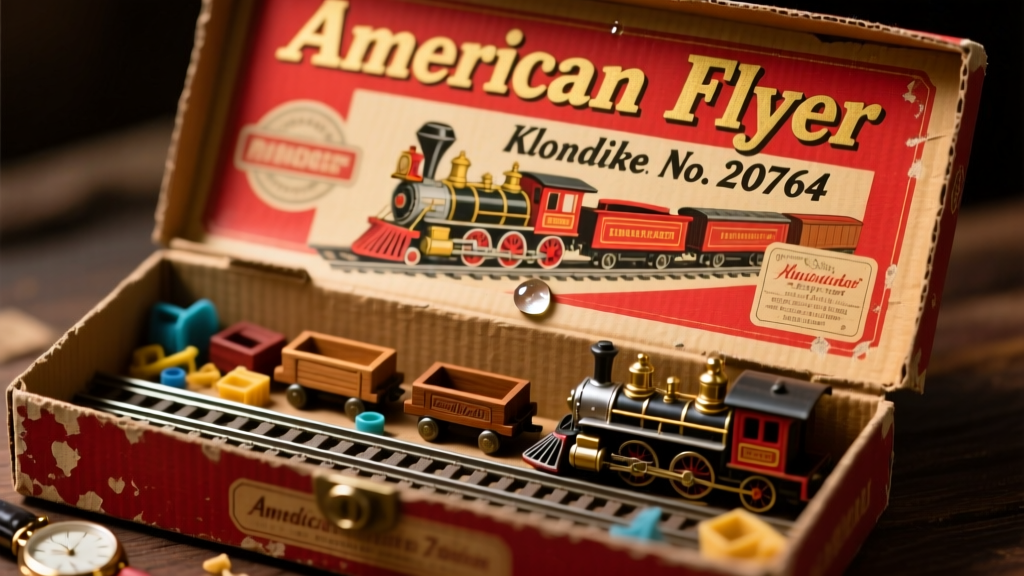
American Flyer Klondike No. 20764: A Collector’s Deep Dive into the Seven-Piece Boxed Set (1953–1955)