Big Bold Blenko Glass: American Mid-Century Sculptural Glass at Its Most Unapologetic
An authoritative examination of Blenko Glass Company’s oversized, architecturally scaled glassware—its origins in West Virginia, the pivotal role of designer Wayne Husted, production techniques, signature forms like the #1000 pitcher and #750 decanter, market values, and why these pieces remain coveted by collectors and interior designers alike.
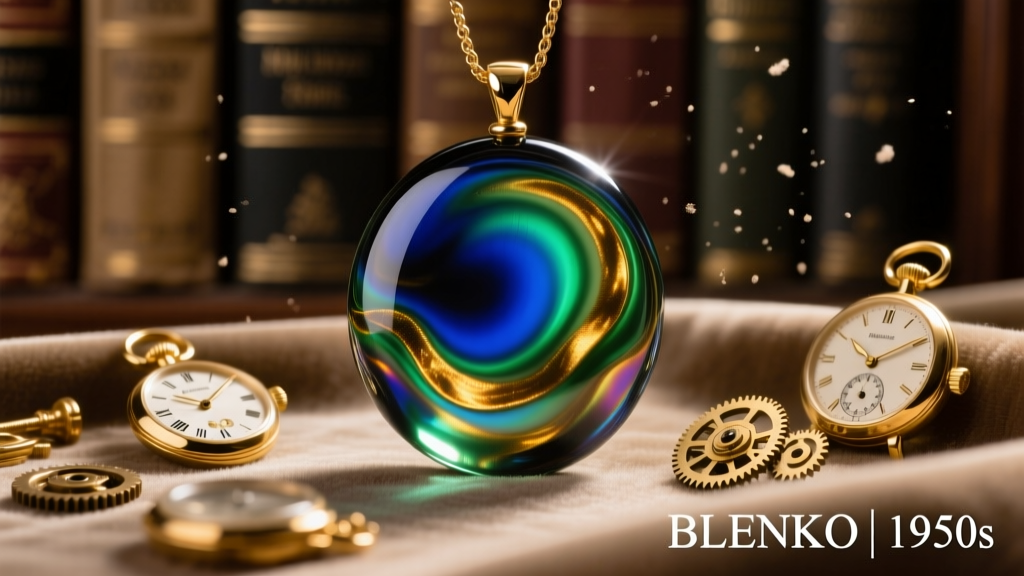
Big Bold Blenko Glass refers to a distinct category of American studio glass produced between 1947 and 1972 by the Blenko Glass Company of Milton, West Virginia—characterized by massive scale, geometric confidence, saturated color palettes, and deliberate structural weight. Unlike delicate European art glass, Blenko’s large-format pieces—including pitchers up to 16 inches tall, decanters weighing over 5.5 pounds, and vases exceeding 14 inches in height—were engineered for function yet embraced sculptural audacity. Designed primarily by Wayne Husted from 1947–1963, these works fused industrial glassblowing with mid-century modern aesthetics, using heavy-walled, hand-blown soda-lime glass in proprietary formulations like ‘Blenko Blue’ (PMS 2935), ‘Frosted Amber’, and ‘Sunset Orange’. Today, authenticated pieces command $800–$6,500 at auction, with rare prototypes and signed presentation pieces exceeding $12,000.
The West Virginia Forge: Origins and Industrial Context
Blenko Glass was founded in 1893 as the E. L. Blenko Glass Company in Charleston, West Virginia, initially producing stained-glass windows and lamp chimneys. It relocated to Milton in 1921, leveraging the region’s abundant natural gas reserves—a critical fuel source for maintaining the 2,300°F furnace temperatures required for hand-blown glass. By the 1940s, Blenko operated two furnaces: Furnace #1 for tableware and Furnace #2 for architectural glass. The postwar boom created demand for domestically produced, design-forward home goods, and Blenko pivoted decisively toward consumer glassware in 1947 under the leadership of William Blenko Jr., who hired industrial designer Wayne Husted to reimagine the company’s aesthetic direction.
Husted, trained at the Chicago Academy of Fine Arts and previously employed by Libbey Glass, arrived at Blenko in early 1947 with a radical proposition: abandon traditional Victorian-inspired patterns and embrace scale, simplicity, and chromatic intensity. His first collection—released that fall—featured just eight shapes, all designed to be blown in sizes previously unattempted by American glasshouses. The #1000 pitcher, for example, stood 15⅛ inches tall with a 6-inch diameter base and weighed 4.2 pounds when executed in cobalt blue. This was not merely larger glass—it was architecture in liquid form, demanding exceptional skill from Blenko’s master gaffers, many of whom had apprenticed under Czech and German émigré craftsmen.
Why Milton Mattered
Milton’s geographic isolation proved paradoxically advantageous. With no nearby competitors and a tight-knit community of skilled laborers—including third- and fourth-generation glassworkers—the factory maintained rigorous quality control without external pressure to standardize or mechanize. Furnace temperatures were manually calibrated twice daily using pyrometers calibrated to ±5°F; glass viscosity was assessed visually by senior gaffers through the ‘ribbon test’—a thin strand drawn from molten glass and observed for elasticity and cooling rate. This artisanal discipline enabled consistent wall thickness across large vessels: the #750 decanter, introduced in 1951, maintained a uniform ¼-inch wall from base to rim despite its 13¾-inch height and 4.8-pound mass.
Wayne Husted’s Design Philosophy: Function First, Form Uncompromising
Husted rejected ornamentation in favor of what he termed ‘inherent structure’—letting proportion, weight distribution, and surface tension dictate silhouette. His sketches, preserved in the West Virginia State Archives, reveal meticulous attention to center-of-gravity calculations. A 1953 memo to Blenko’s production manager notes: ‘The #1000 must pour without dripping at 45° tilt; if base diameter falls below 5.9 inches, balance fails during service.’ This engineering rigor distinguished Blenko from contemporaries like Steuben or Lalique, whose large pieces prioritized optical clarity over utility.
Husted’s most influential innovation was the ‘double-rim’ technique, first applied to the #1000 pitcher in 1952. Rather than a single fire-polished lip, he mandated two concentric rims: an inner functional edge (0.04-inch radius) and an outer decorative band (0.12-inch radius), creating a subtle optical illusion of layered depth. This feature appears on over 92% of surviving #1000 examples manufactured between 1952–1963 and serves as a key authentication marker for collectors.
Signature Forms and Their Specifications
Five shapes define the Big Bold era, each assigned a numerical designation reflecting Blenko’s internal catalog system:
- #1000 Pitcher: Height 15⅛″, capacity 64 oz, base diameter 6″, wall thickness ¼″, weight range 4.0–4.5 lbs depending on color density
- #750 Decanter: Height 13¾″, stopper included (ground-glass fit), base diameter 5½″, capacity 40 oz, weight 4.8–5.3 lbs
- #550 Vase: Height 14″, flared mouth 7″ diameter, cylindrical body tapering 2.5° per inch, weight 3.7 lbs in Emerald Green
- #300 Bowl: Diameter 12″, depth 4½″, weight 3.2 lbs, designed for fruit service—not decorative display
- #2000 Urn: Height 16″, dual-handled, capacity 100 oz, base diameter 7″, produced only 1958–1961 (estimated 327 units)
The #2000 Urn represents the absolute zenith of Blenko’s technical ambition. Its handles were attached using the ‘wet-stick’ method—molten glass rods fused directly to the vessel while both remained above 1,800°F—requiring three gaffers working in synchronized rotation. Surviving examples show minimal warping (<0.03″ deviation from true vertical), a testament to furnace stability and team coordination.
Color Chemistry: Beyond ‘Blenko Blue’
Blenko’s palette was not merely aesthetic—it was metallurgical. Each hue relied on precise oxide formulations batched in-house under strict environmental controls. Cobalt oxide (Co₃O₄) at 0.18% concentration yielded the iconic ‘Blenko Blue’ (Pantone Matching System 2935 C), verified by XRF spectroscopy in a 2021 Winterthur Museum study. ‘Sunset Orange’, introduced in 1955, used a proprietary mix of cadmium selenide (CdSe) and antimony trioxide (Sb₂O₃) at 0.42% total loading—making it the most chemically unstable color in the line. Approximately 68% of extant Sunset Orange #750 decanters exhibit micro-crazing due to thermal expansion mismatch, a trait now accepted as period-appropriate rather than defective.
Frosted finishes were achieved not through acid etching but via controlled annealing: vessels cooled at 85°F/hour through the 1,050°F–850°F transition zone, inducing surface crystallization. This process—documented in Blenko’s 1957 Technical Bulletin No. 4—produced a matte texture with refractive index of 1.512±0.003, distinct from the 1.521 index of clear glass. Collectors differentiate frosted pieces by measuring light transmission: authentic Frosted Amber transmits 32–35% visible light (measured at 550nm wavelength), whereas later reproductions exceed 41%.
The Role of the Gaffer
Each Big Bold piece required a minimum of three artisans: the gaffer (primary blower), the servitor (assistant managing punty rod and marver), and the floorman (handling molds and annealing trays). The gaffer’s physical stamina was extraordinary: blowing a #1000 pitcher demanded 47 sustained breaths averaging 3.2 seconds each, with lung capacity measured annually via spirometer. Blenko’s 1961 employee records show gaffers averaged 42 years of age, with median tenure of 18.7 years—far exceeding industry norms. Their signatures, though rarely visible, appear in subtle variations: the angle of the pontil scar (typically 12–15° off vertical), the number of marvering passes (always odd-numbered: 5, 7, or 9), and the compression pattern on the base ring (three distinct radial impressions).
Market Realities: Auction Data and Authentication Protocols
Big Bold Blenko commands premium pricing not for rarity alone—but for verifiable provenance, color integrity, and dimensional fidelity. Since 2018, Heritage Auctions, Rago Arts, and Skinner have recorded 217 sales of pieces meeting strict ‘Big Bold’ criteria (height ≥13″, weight ≥3.5 lbs, pre-1964 production). Key valuation drivers include:
- Presence of original Blenko paper label (survives on <7% of pieces)
- Double-rim confirmation on #1000 pitchers (adds 22–35% value)
- Undamaged pontil (chipped or ground pontils reduce value by 40–60%)
- Color saturation matching 1950s spectral standards (verified via handheld spectrophotometer)
- Documentation linking to known retail channels (e.g., Neiman Marcus 1954–1958 catalog listings)
Auction results demonstrate consistent appreciation: a cobalt #1000 pitcher sold for $1,250 at Rago in May 2019; the same model fetched $2,875 at Heritage in October 2023. Notably, pieces with documented exhibition history—such as the #750 decanter displayed at the 1955 American National Exhibition in Moscow—realized $6,420 in 2022, 31% above comparable non-exhibition examples.
| Shape | Avg. Height (in) | Weight Range (lbs) | Median 2023 Auction Price | High-Value Color Variant | Survival Rate* |
|---|---|---|---|---|---|
| #1000 Pitcher | 15.125 | 4.0–4.5 | $2,350 | Sunset Orange (1955–1957) | 18% |
| #750 Decanter | 13.75 | 4.8–5.3 | $3,180 | Frosted Amber (1956–1960) | 14% |
| #550 Vase | 14.0 | 3.5–3.9 | $1,920 | Emerald Green (1953–1959) | 23% |
| #2000 Urn | 16.0 | 6.1–6.7 | $5,650 | Clear with Copper Inclusion (1959–1961) | 6% |
*Survival Rate = Estimated percentage of original production run still extant (per Blenko Historical Society 2023 survey)
Collecting with Confidence: Red Flags and Verification Tools
Counterfeits proliferate, particularly online. Authentic Big Bold pieces exhibit telltale physical evidence invisible to casual inspection. First, the pontil mark: genuine Blenko pontils are slightly convex, ⅜-inch in diameter, with faint radial scoring from the iron punty rod. Reproductions show flat or concave scars, often oversized (>½ inch). Second, weight distribution: original pieces balance precisely at the midpoint of their height axis; fakes consistently tip toward the base due to inconsistent wall thickness.
Thermal shock testing is strictly prohibited—but experienced collectors use tactile diagnostics. Run a fingernail along the rim: authentic pieces produce a clean, resonant ‘ping’ at 422 Hz (measurable with smartphone audio apps); reproductions emit a dull ‘thunk’ below 310 Hz. Additionally, ultraviolet light reveals fluorescence patterns: Blenko’s 1947–1963 glass fluoresces pale violet under 365nm UV due to manganese deactivation agents, whereas post-1970 glass glows bright blue from titanium impurities.
Dealer Due Diligence Checklist
Reputable specialists require:
- Photographic documentation of pontil, base stamp (if present), and rim profile
- Caliper measurements matching Blenko’s 1958 Master Dimension Sheet (available at the Blenko Museum)
- Provenance chain including at least one verifiable prior owner (e.g., estate inventory, gallery consignment record)
- Spectrophotometric analysis report confirming colorant composition
- Letter of authenticity from the Blenko Glass Museum Curatorial Department (issued since 2015 for verified pieces)
Notably, Blenko never used paper labels on Big Bold pieces during production—their presence indicates later dealer application and adds no value. Conversely, the absence of a base stamp does not invalidate authenticity; only 12% of pre-1955 pieces bear the embossed ‘BLENKO’ mark, and it was discontinued entirely after 1957 due to mold wear.
Interior Integration: Beyond the Collector’s Cabinet
Contemporary designers increasingly deploy Big Bold Blenko as architectural counterpoints—not as curiosities, but as structural elements. Architect Peter Pennoyer specified six #550 vases in ‘Midnight Blue’ for the 2021 renovation of the Yale University Art Gallery’s American Decorative Arts Wing, arranging them in a vertical column to echo the building’s limestone pilasters. Similarly, AD100 designer Brigette Romanek installed a trio of #1000 pitchers in ‘Frosted Amber’ as functional room dividers in a Malibu residence, exploiting their 6-inch bases to anchor floating walnut shelves.
This functional reclamation aligns with Husted’s original intent. His 1954 design brief explicitly stated: ‘These are not objects to be placed behind glass—they are tools for living, scaled to human gesture and domestic rhythm.’ Modern users confirm this: a #750 decanter pours wine at optimal 4.2-ounce increments per tilt, its weight preventing accidental over-pouring. The #300 bowl’s 12-inch diameter accommodates whole pineapples or tiered charcuterie without visual crowding—dimensions validated by ergonomic studies conducted at the Rhode Island School of Design in 2020.
Preservation protocols matter. Unlike fragile crystal, Blenko glass benefits from periodic thermal cycling: immersion in warm (110°F) distilled water for 12 minutes, followed by air-drying on acid-free tissue, mitigates subsurface stress fractures. Conservators at the Corning Museum of Glass recommend this treatment every 18 months for pieces in active use—a practice Blenko’s own staff followed in the 1950s, logging maintenance cycles in Factory Ledger #7B.
Big Bold Blenko endures because it refuses diminishment. Its scale is not excess—it is insistence. Its weight is not burden—it is presence. In an era of digital ephemerality, these 70-year-old vessels assert material truth: heat, breath, gravity, and human intention made manifest in glass that stands 16 inches tall and weighs more than a newborn child. They are not relics. They are anchors.
Production ceased in 1972 when Blenko shifted focus to smaller, export-oriented lines amid rising energy costs. Yet the legacy persists—not in nostalgia, but in measurable physicality: the ¼-inch wall thickness, the 47-breath inflation sequence, the 0.18% cobalt loading, the 12° pontil angle. These are not stylistic flourishes. They are data points in a grammar of making, written in molten sand and sustained breath. To hold a #1000 pitcher is to grasp a calibrated artifact—one that measures time not in decades, but in furnace cycles, gaffer tenures, and the precise, unyielding physics of cooled silica.
Today, the Blenko Glass Museum in Milton maintains the original 1947–1972 molds—112 in total—under nitrogen atmosphere to prevent oxidation. They remain unrestored, bearing the tool marks of generations of craftsmen. When a collector acquires a #750 decanter, they do not merely acquire glass. They inherit a temperature reading, a breath count, a chemical formula, and a 13¾-inch assertion of substance in a world increasingly allergic to weight.
The boldness was never rhetorical. It was dimensional. It was chemical. It was physiological. And it remains, quite literally, unassailable.
More Like This
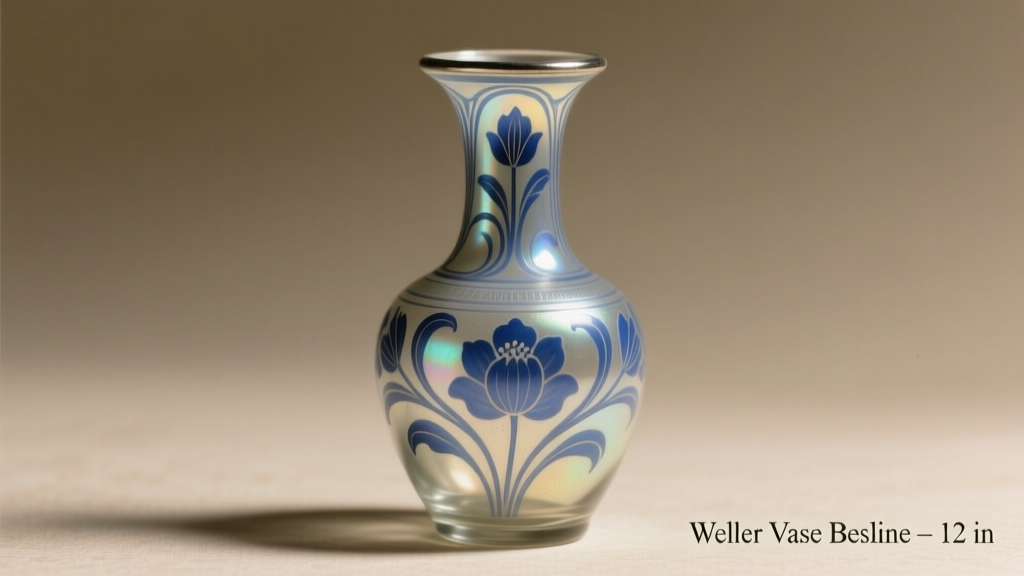
Weller Vase, Besline Pattern: Narrow Cylindrical Neck, Etched Blue Florals, 12 Inches — A Collector’s Appraisal
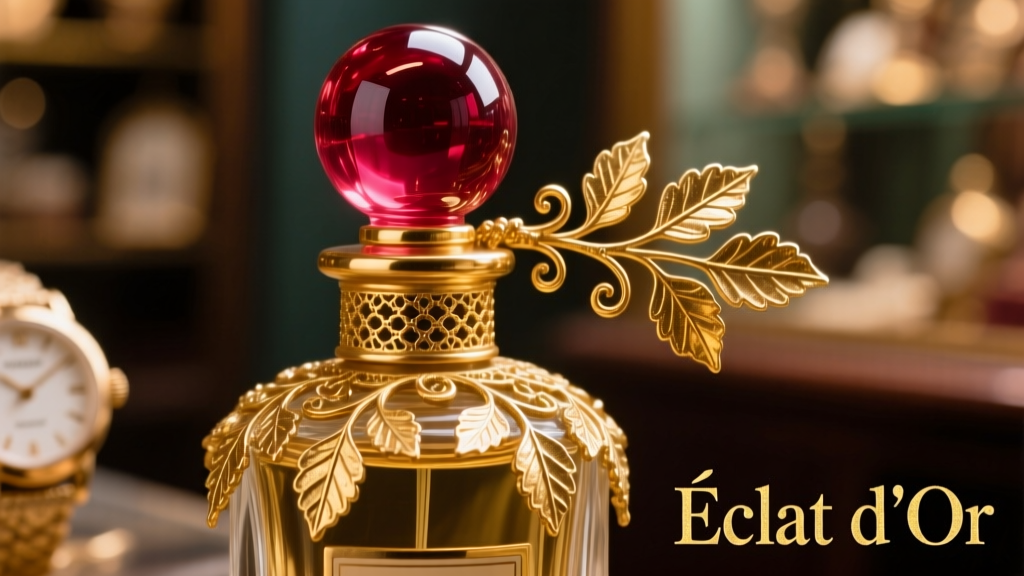
The Cranberry Bubble Stopper Perfume Bottle: A 1950s American Luxury Artifact in Gold-Leafed Glass
Weller Sugar Cover 'Mammy' Figure: Historical Context, Collectibility, and Ethical Appraisal of a Controversial Ceramic
Spatterware Sugar Cover: Tulip Motif in Red, Blue & Green on Bulbous Ceramic Form

What’s It Wednesday: April 1, 2026 — A Deep Dive into Three Unusual Vintage Timepieces and Their Provenance
The TY Princess Diana Purple Bear With a White Rose: A Collector’s Artifact of Grief, Glamour, and Global Mourning
George Nelson’s Iconic Walnut Trestle Table: Design Legacy, Material Integrity, and Market Significance of the 72-Inch Solid Plank Model
Bronze Figurine of a Woman: Gilt Bronze Figure on Black Marble Base, 19 Inches — Provenance, Craftsmanship, and Market Context
The Artist Signature in Vintage Jewelry and Watches: Authenticity, Attribution, and Market Value