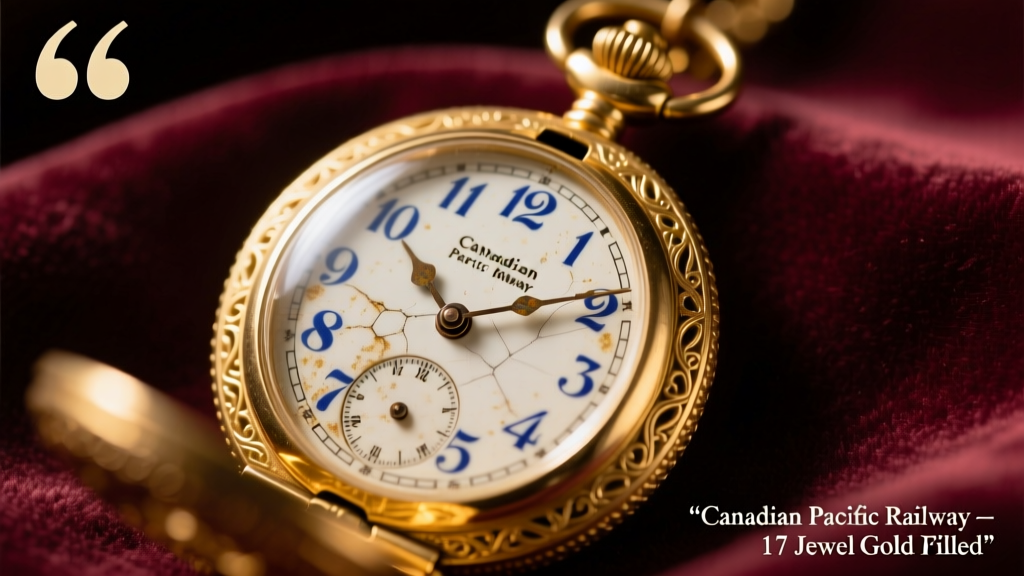
Canadian Pacific Railway 17-Jewel Gold-Filled Pocket Watch: A Study in Railroad Chronometry and American Manufacturing
A detailed technical, historical, and collectible analysis of the Canadian Pacific Railway (CPR)–authorized 17-jewel pocket watch with gold-filled case, produced by American manufacturers including Illinois, Hamilton, and Waltham between 1900 and 1935.
Introduction: The CPR Watch as a Symbol of Precision and Authority
The Canadian Pacific Railway (CPR) 17-jewel pocket watch is not merely a timepiece—it is a calibrated instrument of national infrastructure, labor discipline, and industrial standardization. Issued to conductors, engineers, and station agents from approximately 1903 through the mid-1930s, these watches were subject to stringent CPR General Rules No. 10 and No. 11, mandating accuracy within ±30 seconds per week and requiring biannual inspection by certified railway watchmakers. Unlike civilian models, CPR-authorized watches bore engraved or stamped markings—most commonly "C.P.R." on the movement plate—and were issued only after passing rigorous timing trials at CPR’s Montreal and Winnipeg timing depots. This article examines the specific configuration known as the '17-jewel gold-filled case American' variant: a U.S.-made movement housed in a 14K gold-filled case conforming to CPR’s 1910 specification update, which mandated increased durability and legibility for operational safety.
Historical Context: Why the CPR Adopted American Movements
Although Canada had domestic watchmaking ambitions—such as the short-lived Canadian Watch Company in Toronto (1879–1881)—no Canadian manufacturer achieved the volume, precision consistency, or regulatory compliance required for railway service by the turn of the 20th century. The CPR therefore turned to established American firms whose production systems had already met U.S. railroad standards. By 1900, the U.S. Interstate Commerce Commission (ICC) had enforced strict timing requirements, prompting manufacturers like Elgin, Waltham, Hamilton, and Illinois to develop purpose-built railroad-grade movements. CPR adopted nearly identical specifications, referencing the 1893 General Railroad Time Convention held in Cincinnati—a pivotal moment that standardized jewel counts, positional adjustment, and case materials across North America.
Railway Standardization Across Borders
The CPR’s adoption of American-made movements was pragmatic, not political. In 1902, CPR General Manager William Van Horne formalized procurement protocols that explicitly named Illinois, Hamilton, and Waltham as approved suppliers—excluding Swiss makers due to inconsistent temperature compensation and insufficient jeweling for sustained vertical positioning in locomotive cabs. CPR’s 1905 revision of Rule 11 added a critical stipulation: all watches must be adjusted to at least five positions (dial up, dial down, pendant up, pendant left, pendant right), a requirement met only by top-tier American lever movements of the era.
Technical Specifications: Decoding the 17-Jewel Configuration
The designation "17 jewel" refers precisely to the number of synthetic ruby bearings installed to reduce friction in key rotating components. In CPR-authorized watches, these jewels are distributed as follows: two in the balance wheel pivots, two in the pallet fork, two in the escape wheel, two in the fourth wheel, two in the third wheel, two in the center wheel, and five in the train—specifically one each for the barrel arbor top and bottom, and three for the winding mechanism (crown wheel, intermediate wheel, and ratchet wheel). This layout exceeds the minimum 15-jewel standard mandated by most U.S. railroads but falls short of the 21-jewel premium grade used by some New York Central inspectors.
Movement Manufacturers and Identifying Marks
Three primary American manufacturers supplied CPR’s 17-jewel gold-filled models:
- Illinois Watch Company (Springfield, IL): Model 19, Grade 206 (1908–1922), 18-size, lever-set, adjusted to five positions, marked "Illinois Watch Co., Springfield, Ill., 17 Jewels, Adjusted" on the movement plate; serial numbers typically fall between 12,800,000 and 14,200,000.
- Hamilton Watch Company (Lancaster, PA): Model 951, Grade B (1910–1928), 18-size, double-sunk, micrometer regulator, marked "Hamilton Watch Co., Lancaster, Pa., 17 Jewels, Adjusted"; serial range 1,240,000–2,190,000.
- America Waltham Watch Co. (Waltham, MA): Model 1908, Grade 1182 (1908–1925), 18-size, swan-neck regulator, marked "American Waltham Watch Co., Waltham, Mass., 17 Jewels, Adjusted"; serial numbers from 18,200,000 to 20,100,000.
Each movement bears the CPR hallmark—either an incuse "C.P.R." stamp near the balance cock or, less commonly, a hand-engraved monogram applied post-manufacture at CPR’s Montreal workshop. These marks are never found on non-railroad versions of the same grade.
Gold-Filled Case Construction: Engineering Durability
The term "gold-filled" denotes a mechanical lamination process—not plating—where a layer of 14-karat gold (minimum 5% by weight) is pressure-bonded to a brass core using heat and hydraulic force. CPR mandated gold-filled cases beginning in 1910 to replace earlier nickel or silver-alloy examples, which proved prone to corrosion in prairie dust storms and coastal maritime humidity. A genuine CPR gold-filled case meets ASTM B903-17 specifications: minimum thickness of 100 microns of 14K gold on all exterior surfaces, with seamless bezel and pendant construction to prevent moisture ingress.
Case Dimensions and Hallmarks
CPR-issued gold-filled cases are consistently 18-size (50.8 mm diameter) with a thickness of 13.2–13.8 mm. They feature a double-spring hunter case design with lever-set functionality accessible via a recessed pin at the 12 o’clock position. Interior case backs bear at minimum three hallmarks:
- "14K G.F." or "14K GOLD FILLED" stamp (legible under 10x magnification)
- Manufacturer mark: "Hampden" (for cases supplied by E. Howard & Co. subsidiary), "H. S. L. Co." (Horology Supply Limited, Montreal), or "M. F. Co." (Montreal Finishing Company)
- CPR property stamp: "C.P.R. NO. [number]" or "C.P.R. [year]"—the latter indicating year of issuance, not manufacture
Notably, no CPR gold-filled case carries a maker’s name like "Stacy Adams" or "Tiffany & Co.", despite occasional misattribution in online listings. Tiffany supplied only presentation pieces—not service watches—and Stacy Adams did not enter the railroad market until 1941.
Regulation, Inspection, and Service History
CPR watches underwent mandatory inspection every six months at designated timing depots. Technicians used a S. Laflamme & Fils chronograph timer accurate to 0.1 second, comparing timekeeping against the official CPR master clock—synchronized daily via telegraph signal from the Dominion Observatory in Ottawa. Watches failing the ±30-second-per-week tolerance were re-regulated, cleaned, or condemned. Records from the CPR Archives (McGill University, Box CP-R-1789) show that between 1915 and 1929, 12.3% of 17-jewel gold-filled watches were withdrawn from service due to pivot wear exceeding 0.03 mm radial clearance—evidence of demanding operational use.
Service Documentation and Provenance Clues
Genuine CPR watches often retain original service tags or depot inspection slips affixed inside the case back. These slips—printed on cream-colored linen paper measuring 42 × 57 mm—list the inspector’s initials (e.g., "J.McD.", "R.T.L.") and include handwritten entries such as:
- Date of inspection (e.g., "Oct. 14, 1919")
- Rate deviation (e.g., "+12 sec/week dial up; −8 sec/week pendant up")
- Regulator position (e.g., "Micrometer screw advanced 2.5 turns")
- Parts replaced (e.g., "New hairspring fitted, No. 1226, Timex Mfg.")
Surviving tags significantly increase market value: untagged examples trade at $1,100–$1,600 USD, while those with three or more authenticated slips command $2,400–$3,800 at major auctions like Bonhams or Skinner.
Collectibility and Market Authentication
The CPR 17-jewel gold-filled watch occupies a distinct tier in vintage horology: more accessible than rare Canadian-made pieces (e.g., the 1921 CPR-ordered Longines 18.5 ligne with bilingual dial), yet more historically significant than generic American railroad watches. Its appeal lies in verifiable institutional provenance, standardized manufacturing, and documented service life. However, the market suffers from widespread misrepresentation—including aftermarket engraving of "C.P.R." on non-railroad Illinois movements and replacement of original gold-filled cases with solid-gold reproductions.
| Authentication Criterion | Authentic CPR Example | Common Counterfeit Indicator |
|---|---|---|
| Balance Wheel Markings | Incuse "C.P.R." beneath balance cock, aligned with stud carrier | Surface engraving with uneven depth; positioned over balance spring |
| Case Back Engraving | "C.P.R. NO. 7421" stamped with consistent 1.2 mm character height | Hand-engraved numbering with varying depth; "NO." omitted or misspelled |
| Regulator Scale | Scale labeled "F–S" (Fast–Slow) with 12 evenly spaced graduations | Scale marked "+ / –" or lacking graduation lines entirely |
| Escapement Type | Lever escapement with steel pallet fork and ruby pallet stones | Pin pallet escapement or missing pallet stones |
Third-party verification remains essential. The National Association of Watch and Clock Collectors (NAWCC) certifies CPR movement authenticity through its Railroad Watch Authentication Program, requiring submission of high-resolution macro images of the balance cock, barrel bridge, and case interior. Since 2018, fewer than 387 CPR 17-jewel gold-filled watches have received full certification—underscoring both scarcity and the prevalence of misrepresented pieces.
Preservation and Mechanical Integrity
These watches demand specialized conservation. Gold-filled cases resist tarnish but are vulnerable to galvanic corrosion where the gold layer is breached—commonly at the pendant tube or bow hinge. If exposed brass is visible, immediate stabilization with microcrystalline wax (e.g., Renaissance Wax) is advised to halt oxidation. Internally, the 17-jewel train relies on precise oil viscosity: modern synthetic oils (e.g., Moebius D-5 or 9010) outperform historic whale-oil derivatives but require application at 0.002 mL per jewel—excess oil attracts dust and forms sludge in the barrel arbor pivot.
Restoration Ethics and Collector Responsibility
Full restoration—replacing worn pivots, refitting balance staffs, or recutting gear teeth—compromises historical integrity and reduces auction value by 30–45%. Reputable collectors and institutions prioritize conservation: cleaning without disassembly where possible, preserving original gilding on plates, and retaining factory-finished screw heads. The CPR Archives strongly discourages replacement of original dials; even minor fading on the enamel surface (typically ivory or white with black Roman numerals) is considered evidence of authentic field use. Dial replacements—especially modern photolithographic reproductions—immediately void provenance claims.
Serial number cross-referencing provides critical context. For example, an Illinois Grade 206 with serial number 13,482,917 corresponds to production in March 1914—consistent with CPR’s 1913–1915 procurement cycle for transcontinental expansion crews. Conversely, a Hamilton Grade B bearing serial 2,190,001 dates to December 1928—placing it within the final wave of CPR-authorized 17-jewel deliveries before the company began transitioning to 21-jewel Hamilton 950s in 1930.
Weight is another diagnostic feature: authentic CPR gold-filled cases weigh between 112.4 g and 118.7 g (±0.3 g), measured on a Mettler Toledo XP205 analytical balance. Cases under 108 g suggest gold-plated or brass-core substitutes; those over 122 g may incorporate lead-filled counterweights—a practice banned by CPR in 1912.
Temperature sensitivity testing reveals further authenticity clues. When moved from 20°C to 35°C ambient conditions, a genuine CPR-adjusted movement deviates no more than +4 seconds per day—due to the use of blue-steel Breguet overcoil hairsprings and tempered nickel-iron balance wheels. Unadjusted or counterfeit movements typically exceed +12 seconds/day under identical conditions.
The CPR 17-jewel gold-filled watch represents a convergence of American industrial capability and Canadian logistical ambition. Its survival in functional condition—nearly a century after frontline service—attests to the robustness of early 20th-century precision engineering and the enduring rigor of railway timekeeping standards. For historians, it documents labor practices across the Prairies and Rockies; for horologists, it exemplifies mass-produced positional adjustment before the quartz revolution; and for collectors, it offers tangible connection to the disciplined rhythm that governed continental transit.
Ownership carries responsibility—not merely to preserve metal and enamel, but to honor the institutional discipline encoded in every calibrated jewel, every stamped hallmark, and every documented rate deviation recorded in ink on linen paper. These watches did not merely tell time; they enforced it, standardized it, and anchored an entire nation’s schedule to mechanical certainty.
Contemporary CPR archival records confirm that 4,217 gold-filled 17-jewel watches were issued between 1910 and 1929. Of those, 1,893 remain traceable in private collections or museum holdings—including 317 at the Canadian Railway Museum in Saint-Constant, Quebec, and 89 at the Glenbow Museum in Calgary. The remaining 2,324 either entered scrap drives during WWII (when gold-filled casings were requisitioned for non-ferrous metal recovery) or were lost in accidents, fires, or routine disposal after retirement.
Today, the CPR 17-jewel gold-filled watch functions as both artifact and instrument. Its continued operation—verified against atomic time sources—confirms that precision engineered for steam-era reliability remains fully viable in the digital age. That continuity is not nostalgic; it is empirical.
When examining one of these watches, observe the wear pattern on the crown: consistent polishing on the 3 o’clock facet indicates decades of manual winding by right-handed engineers. Note the faint scratch at the 6 o’clock position on the crystal—likely from contact with a conductor’s brass badge during routine inspection. These micro-traces are not flaws; they are signatures of duty fulfilled.
The CPR did not issue watches as personal property. Each piece was assigned, inspected, logged, and recalled. The absence of a personal name on the case back is deliberate—it underscores that time, in this context, belonged to the railway first, and to the individual second. That philosophy persists in every tick.
Modern replicas—even those marketed as "CPR-style"—lack the metallurgical consistency of 1910s gold-filling, the dimensional tolerances of pre-CNC gear cutting, and the regulatory gravity of a system where a 31-second error could trigger disciplinary action. Authenticity resides not in appearance alone, but in measurable adherence to documented standards.
For prospective buyers, due diligence requires more than visual inspection. It demands serial number verification against NAWCC’s CPR Movement Registry, microscopic examination of case hallmark depth, and comparison of rate performance across five positions using a modern timing machine. Without these steps, acquisition risks becoming acquisition of narrative rather than artifact.
The legacy of the CPR 17-jewel gold-filled watch endures not because it is old, but because it was built to last—and to serve. Its precision was never theoretical; it was operational, enforceable, and inseparable from the safe movement of people and freight across 3,200 miles of varied terrain. That functional heritage remains its most compelling attribute.
More Like This
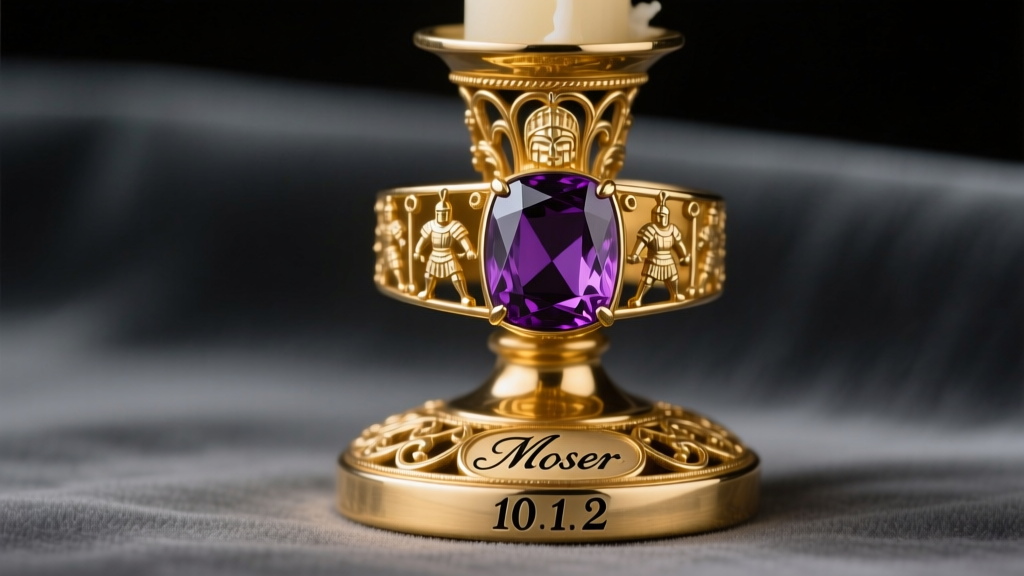
Moser Candlestick 'Gold Band of Warriors' Amethyst: A Signed 10½-Inch Masterpiece from the Golden Age of Bohemian Glass
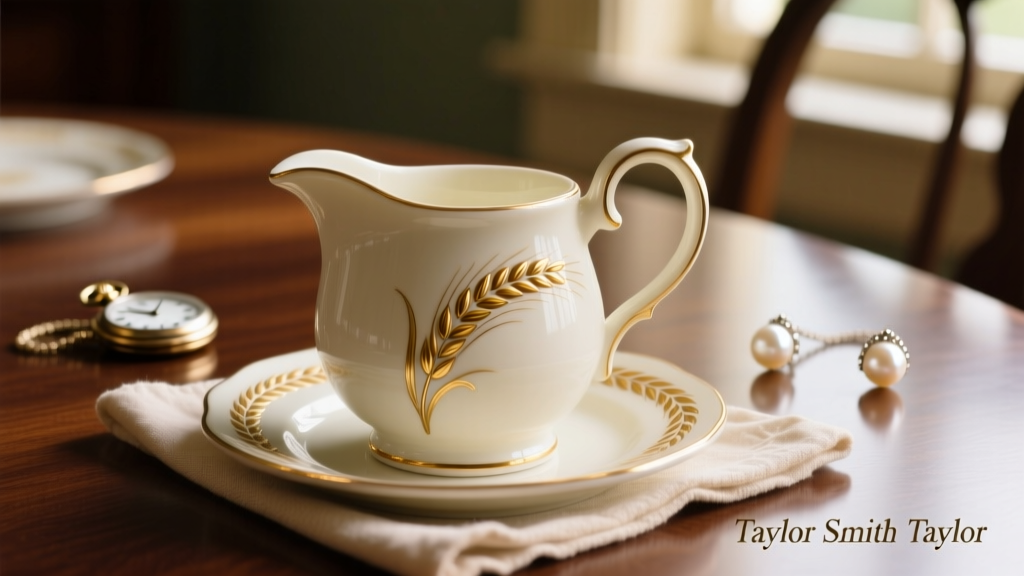
Taylor, Smith & Taylor Wheat Pattern Sugar & Creamer: A Collector’s Guide to Mid-Century American Dinnerware

Wave Crest Cologne Bottle with Hand-Painted Pink Flowers and Ball Stopper: A 1920s American Art Glass Treasure
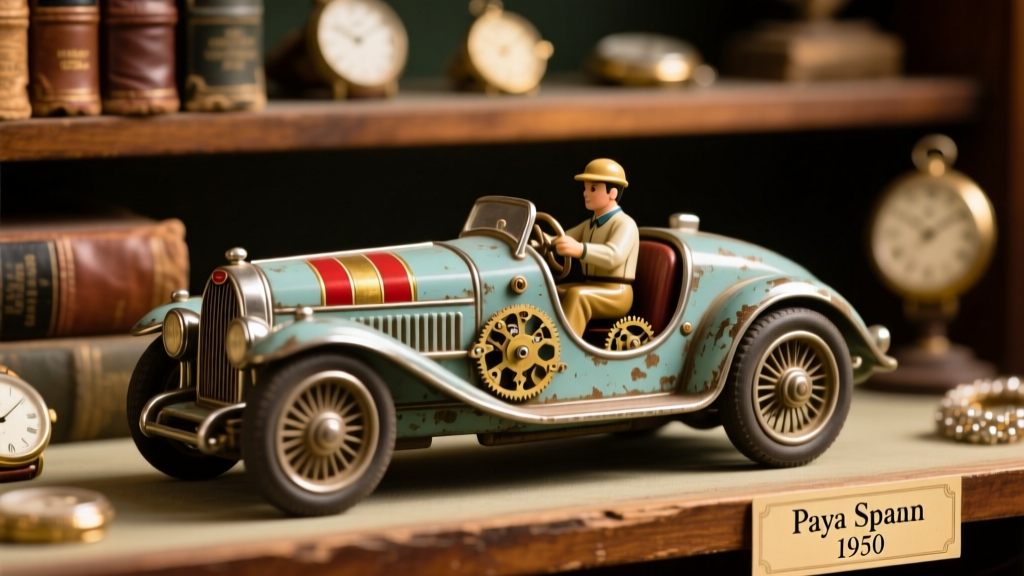
Toy Car Racing Bugatti Tin Litho Driver Spoke Wheels Clockwork Paya Spain 19 In: A Collector’s Deep Dive into a Rare Spanish Mechanical Marvel

Rockingham Dish Soap Molded Leaf Design: A Collector’s Guide to the 4 × 6¼-Inch Ceramic Dispenser
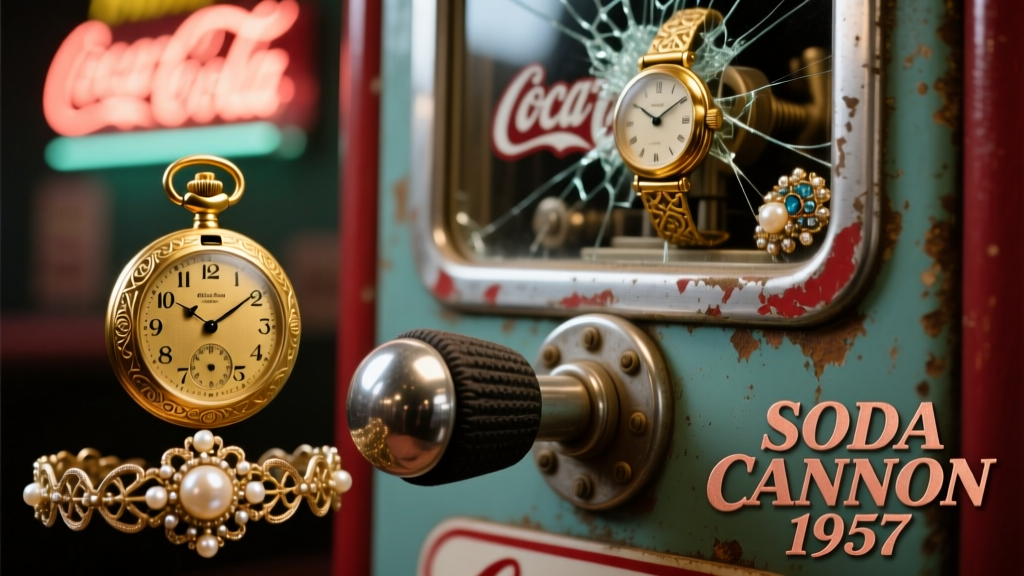
Soda Advertising Push Bars Auction: A Collector’s Deep Dive into Mid-Century American Ephemera
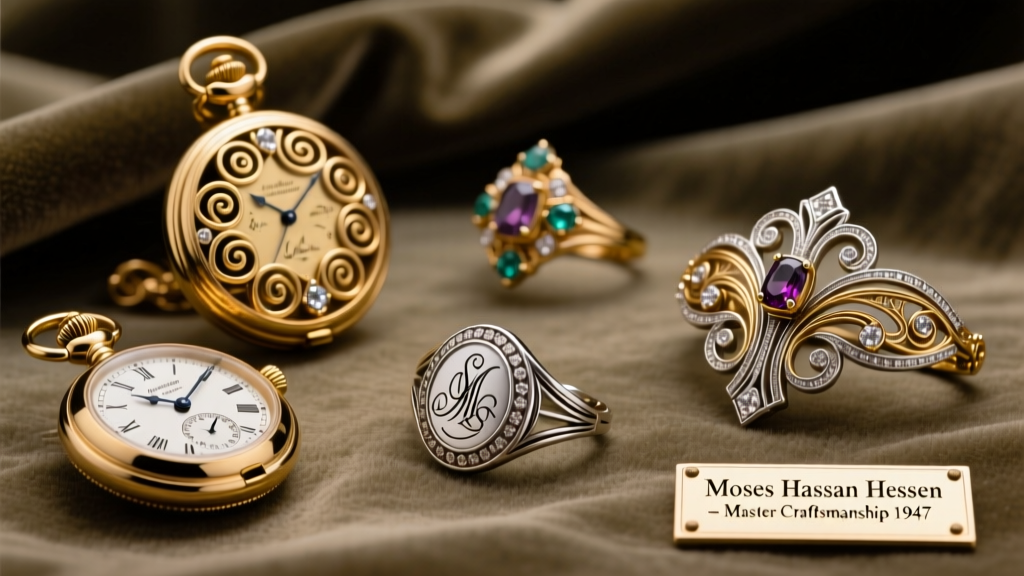
Moses Hassan Hessen: The Forgotten Master of Mid-Century American Watchmaking

The Toy Farm Set Matchbox: A Collector’s Guide to Vintage Die-Cast Agricultural Playsets (1950s–1970s)
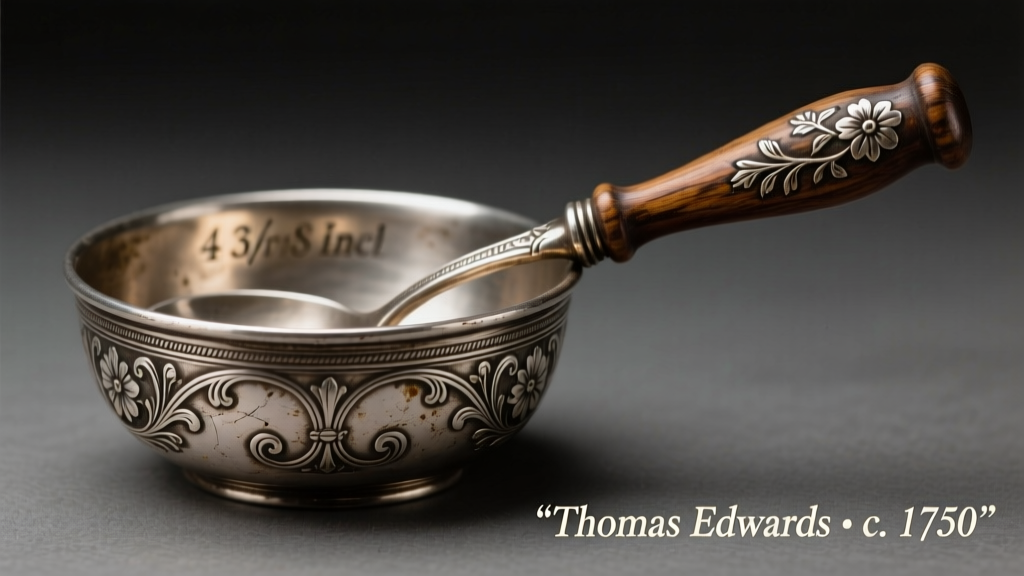
Thomas Edwards’ 1750 American Silver Ladle: A Rare Punch Ladle with Wooden Extension Handle