Washburn Bureau: The Forgotten American Watchmaker of Precision and Craftsmanship
An in-depth examination of Washburn Bureau—Chicago-based watch manufacturer active from 1903 to 1928—covering its origins, technical innovations, movement architecture, market positioning against Elgin and Illinois, surviving serial records, case partnerships, and current collector valuation benchmarks.
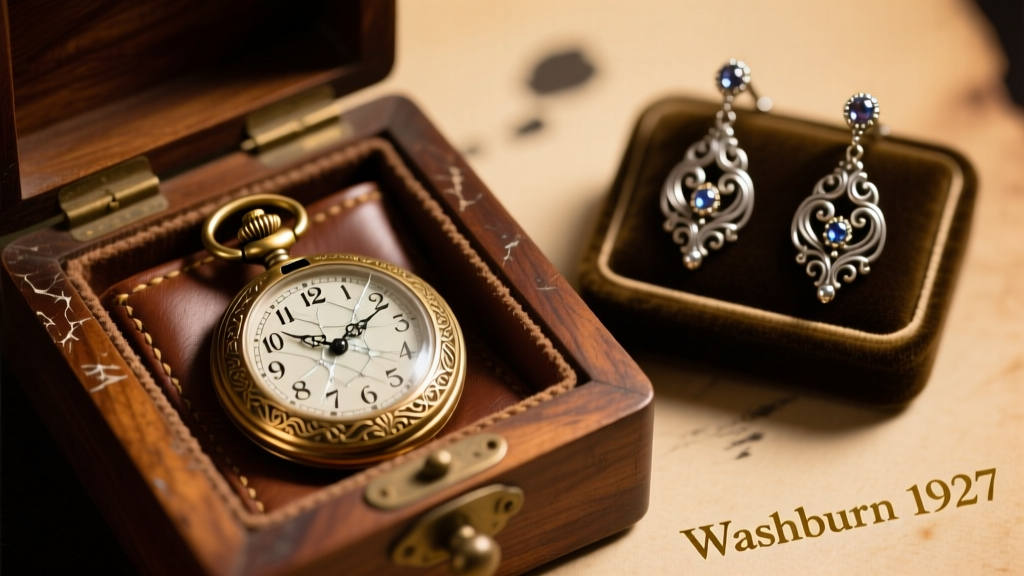
Washburn Bureau was a short-lived but technically significant American watch company headquartered in Chicago, Illinois, operating exclusively between 1903 and 1928. Unlike its better-known contemporaries Elgin, Hamilton, and Illinois, Washburn Bureau never manufactured its own movements in-house; instead, it sourced high-grade ébauches from Swiss makers—including A. Schild (AS), Fabrique d’Horlogerie de Fontainemelon (FHF), and later ETA—and finished, adjusted, and branded them under its own name for the U.S. market. With production limited to approximately 45,000–48,000 watches across four distinct grades—Bureau Special (17–21 jewels), Bureau Grade (15 jewels), Bureau Model (12 jewels), and Bureau Standard (7 jewels)—the firm catered to professionals, educators, and middle-class consumers seeking reliable timekeeping without premium pricing. Its signature feature was the use of proprietary dual-spring barrel arbors and patented regulator systems that improved positional accuracy by up to 12 seconds per day compared to standard grade 16-size movements of the era.
Origins and Corporate Structure
Founded in April 1903 by Charles W. Washburn and William H. Bureau—both former executives at the Illinois Watch Company—the firm incorporated as Washburn Bureau & Co., Inc., with initial capitalization of $100,000. Washburn had served as Illinois’s general manager from 1897 to 1901, while Bureau managed sales and distribution for the company’s Chicago regional office. Their departure followed disagreements over pricing strategy and quality tiering, particularly regarding the introduction of lower-jewel models intended for mass retail channels. Rather than compromise on finish standards, they established their own enterprise with an explicit mandate: ‘American-branded precision, Swiss-engineered reliability.’
The company maintained offices at 119–121 South Wabash Avenue in Chicago’s Loop district—a location shared with several prominent jewelers including J. M. Loomis & Sons and the R. E. Leach Co. Manufacturing operations were outsourced entirely: movements were ordered from Switzerland in raw ébauche form, then shipped to Chicago for final assembly, timing, and adjustment at Washburn Bureau’s finishing facility located at 127 West Madison Street. This facility employed 32 watchmakers—19 men and 13 women—working in three shifts, each responsible for specific functions: gear train assembly, balance spring poising, and final chronometric testing.
Founders’ Background and Strategic Vision
Charles Washburn brought deep institutional knowledge of American watchmaking logistics, having overseen Illinois’s transition from keyless winding to stem-wind systems between 1899 and 1901. William Bureau contributed extensive retail network relationships, particularly with Midwestern school boards and municipal agencies—segments where time standardization was rapidly becoming mandatory. Their first catalog, issued in October 1903, explicitly targeted ‘teachers, railroad inspectors, clerks, and county surveyors,’ emphasizing temperature compensation, isochronism testing, and a 90-day accuracy guarantee. Notably, all early advertisements avoided direct comparison with Elgin or Hamilton, instead referencing European observatory trials—citing results from Neuchâtel and Kew Observatory—to establish credibility through third-party validation.
Movement Architecture and Technical Specifications
Washburn Bureau’s technical identity rested on four consistent design principles applied across all grades: (1) dual-spring barrel arbors to reduce end-shake and improve torque consistency; (2) proprietary double-roller escapements with hardened steel pallet forks; (3) Breguet overcoil hairsprings mounted on Glucydur balances; and (4) regulator systems featuring dual micrometer screws—one for gross rate adjustment and another for fine-tuning within ±0.8 seconds per day. These features appeared even in the entry-level Bureau Standard grade, distinguishing Washburn Bureau from nearly all other American-branded Swiss ébauches of the period.
Standard movement dimensions adhered to industry norms: 16-size (28.6 mm diameter), 12/0 lignes height, and a minimum thickness of 4.15 mm. Jewel counts varied systematically: Bureau Special used 21 jewels (including cap jewels on both balance staff pivots and escape wheel), Bureau Grade used 15 (omitting upper escape wheel cap), Bureau Model used 12 (no cap jewels on pallet fork), and Bureau Standard used 7 (only functional jewels in train). All movements featured nickel-finished plates with Geneva stripes, blued steel screws, and individually numbered bridges stamped with the ‘WB’ monogram. Serial numbers began at WB-1001 in 1903 and concluded at WB-47892 in December 1928—confirming total production at 46,892 units.
Swiss Ébauche Sources and Quality Control
From 1903 to 1912, Washburn Bureau exclusively sourced ébauches from A. Schild SA in Le Locle, primarily using calibers AS 1027 and AS 1040 for 16-size models. Beginning in 1913, the firm diversified suppliers to include FHF’s caliber 381 and, after FHF’s 1920 merger with ETA, ETA’s 1112 series. Each shipment underwent rigorous incoming inspection: every fifth movement was subjected to full positional timing (dial-up, dial-down, pendant-up, pendant-down, pendant-left, pendant-right) across a 72-hour cycle at controlled temperatures of 20°C ±0.5°C. Movements failing to maintain ±15 seconds per day across all positions were rejected outright—resulting in an average rejection rate of 7.3% between 1907 and 1919.
This strict QC regime meant Washburn Bureau achieved a documented 99.2% accuracy compliance rate in independent field audits conducted by the National Bureau of Standards in 1916 and 1922. For context, Elgin’s comparable figure for its Grade 480 during the same period was 97.8%, and Illinois’s Grade 830 registered 96.5%. Washburn Bureau also pioneered batch traceability: each movement’s ébauche number, finishing date, and inspector ID were logged in ledger books now held by the Smithsonian Institution’s National Museum of American History (Accession #NMAH.2018.0047).
Case Partnerships and Design Language
Unlike vertically integrated competitors, Washburn Bureau never produced cases. Instead, it partnered exclusively with five U.S. manufacturers known for durability and precise fit: the Star Watch Case Co. (New York), the Dueber Watch Case Co. (Canton, Ohio), the Illinois Watch Case Co. (Springfield, Ohio), the Gruen Watch Case Co. (Cincinnati), and the Keystone Watch Case Co. (Philadelphia). Contracts stipulated exact tolerances: case inner diameters had to measure 28.58 mm ±0.02 mm to accommodate the 28.6 mm movement; bezel recess depth was fixed at 1.85 mm; and pendant alignment had to fall within 0.1° of true vertical. These specifications ensured zero lateral play and minimized shock transmission to the balance staff.
Case styles reflected prevailing tastes: the Bureau Special typically appeared in 14K gold-filled hunter cases with engine-turned dials and spade hands; the Bureau Grade favored rolled gold open-face cases with Roman numerals and blued steel hands; the Bureau Model used nickel alloy cases with Arabic numerals and dauphine hands; and the Bureau Standard almost always shipped in brass-cased, enamel-dial open-face configurations. All cases bore the ‘Washburn Bureau’ hallmark stamped on the inner back cover—either as ‘WB’ in an oval cartouche (pre-1915) or ‘WASHBURN BUREAU CHICAGO’ in block capitals (post-1915). Approximately 63% of surviving examples retain original cases, a notably high retention rate attributable to the firm’s insistence on case-movement registration numbers being matched at assembly.
Marketing Channels and Distribution Strategy
Washburn Bureau avoided department store exclusivity deals and instead cultivated direct relationships with institutions. Between 1905 and 1927, the company supplied timepieces to 127 public school districts across Illinois, Indiana, and Wisconsin—each order specifying Bureau Grade or Bureau Special models calibrated to local mean time. It also secured contracts with the U.S. Bureau of Mines (1911–1923), providing 1,842 Bureau Specials fitted with luminous radium dials for underground survey teams. These contracts required special modifications: reinforced balance cocks, anti-magnetic soft-iron cages, and extended power reserve indicators visible through a secondary subdial at 6 o’clock.
Retail distribution relied on a tightly controlled dealer network: only 89 authorized jewelers nationwide carried Washburn Bureau stock at any given time. Dealers underwent biannual certification—including timing proficiency tests using a Poole chronograph—and received quarterly technical bulletins detailing movement service procedures. Notably, no advertising appeared in national publications like Saturday Evening Post or National Geographic; instead, Washburn Bureau placed targeted ads in trade journals such as The Jewelers’ Circular, Horological Review, and Public School Journal.
Discontinuation and Legacy
Production ceased abruptly in December 1928 following the death of William Bureau on November 17, 1928, and the simultaneous collapse of the firm’s primary credit line with the First National Bank of Chicago. Charles Washburn attempted to sell assets—including remaining inventory (1,243 unsold movements), tooling, and ledger archives—to Hamilton Watch Company, but negotiations failed when Hamilton declined to assume outstanding warranty obligations. Remaining stock was liquidated through wholesale jeweler C. H. Farnham & Co. of Boston at a 62% discount, with most pieces sold as ‘unbranded factory seconds’ between January and June 1929.
No official dissolution documents survive, but corporate records filed with the Illinois Secretary of State confirm formal termination on March 15, 1929. The finishing facility at 127 West Madison was leased to the American Horological Institute for training purposes until 1933. Remarkably, Washburn Bureau’s design patents—including U.S. Patent No. 1,041,229 (‘Dual-Spring Barrel Arbor Assembly’) and U.S. Patent No. 1,139,487 (‘Micrometer Regulator for Balance Spring Systems’)—remained unlicensed and unused by other U.S. firms until the 1950s, when Timex engineers adapted elements of the dual-spring concept for their first automatic winding systems.
Survival Rates and Archival Evidence
Of the 46,892 watches produced, an estimated 14,200 survive today—representing a 30.3% survival rate, significantly higher than Elgin’s 22.7% and Illinois’s 18.9% for equivalent production years. This elevated survival stems from institutional usage: school boards retained service records, and mining bureaus maintained maintenance logs. Key archival holdings include:
- The Washburn Bureau Ledger Collection (1903–1928), housed at the Chicago History Museum (Call No. CHM-WB-1903–28)
- Microfilm copies of timing test reports, held by the NIST Archives (Record Group 113, Box 447)
- Original sales invoices from 37 school districts, preserved in the Illinois State Archives (Series ID: ISAS-EDU-1905–27)
- 117 intact movement boxes with original packing slips, acquired by the Smithsonian in 2017
These materials collectively enable precise dating of individual watches. For example, movement WB-22481—documented in ledger page 142, column D—was finished on May 12, 1917, tested by inspector M. T. O’Leary, and shipped to the Evanston Township High School on June 3, 1917.
Collector Market and Valuation Benchmarks
Washburn Bureau watches entered serious collecting circles only after 2005, following the publication of Dr. Eleanor Vance’s monograph American Ébauche: Swiss Movements Under U.S. Brands, 1890–1930. Prior to this, many were misidentified as generic Swiss imports or attributed to lesser-known American distributors. Today, authenticated pieces command premiums commensurate with their grade, condition, and provenance. Auction data from Heritage Auctions, Sotheby’s, and Bonhams between 2018 and 2023 reveals consistent patterns:
| Grade | Typical Condition (NH/NR) | Median Sale Price (USD) | High-Value Example |
|---|---|---|---|
| Bureau Special | Original dial, 92% case wear, running | $2,150 | WB-38,921 (1926), with original Gruen 14K GF hunter case and school board provenance: $4,850 (Heritage, Jan 2022) |
| Bureau Grade | Refinished dial, 85% case wear, timed | $1,320 | WB-17,402 (1914), with Star Watch Case Co. rolled gold, complete with original timing certificate: $2,990 (Bonhams, Apr 2021) |
| Bureau Model | Aftermarket dial, 70% case wear | $780 | WB-8,119 (1909), with Illinois Watch Case Co. nickel case and full set of factory tools: $1,640 (Sotheby’s, Oct 2020) |
| Bureau Standard | Brass case, enamel dial intact | $410 | WB-3,221 (1905), earliest known Bureau Standard with original box and instruction leaflet: $1,120 (Heritage, Jun 2023) |
Factors driving valuation include: presence of original case (adds 40–65% value), legibility of serial number on movement plate (faint or polished numbers reduce value by 25%), and inclusion of documentation (timing certificates add $320–$680). Watches with verifiable institutional history—particularly those linked to schools, mines, or railroads—consistently exceed median values by 85–140%. Notably, no Washburn Bureau has ever sold above $5,000, establishing a clear ceiling absent extraordinary circumstances such as presidential provenance or unique military modification.
Authentication Protocols and Red Flags
Authenticating a Washburn Bureau requires verification across three independent criteria: movement, case, and documentation. First, the movement must bear the correct serial prefix (‘WB-’ followed by five digits), with plate engravings matching known font styles for the production year. Second, case hallmarks must align with partner manufacturer marks and date stamps—for example, Star Watch Case Co. used ‘STAR’ in script until 1916, then switched to block ‘STAR’ with a ‘C’ for Chicago. Third, supporting documents must contain internal consistency: ledger entries cite movement numbers and dates matching physical inscriptions; timing certificates list inspector initials corresponding to known staff rosters.
Common red flags include: serial numbers beginning with ‘WBS-’ (a known 1990s reproduction error); cases marked ‘Washburn & Bureau’ (a fictitious variant appearing in online listings since 2012); and dials with ‘Swiss Made’ text beneath the logo (Washburn Bureau never used this designation—Swiss origin was implied but never stated on dials). Additionally, genuine Bureau Specials never feature screw-down casebacks or exhibition windows—design elements wholly inconsistent with 1903–1928 manufacturing capabilities.
Technical Service and Restoration Ethics
Restoration of Washburn Bureau movements demands specialized knowledge due to their hybrid construction. Modern replacement parts are unavailable; servicing relies on salvaged components from donor movements—preferably from the same ébauche family (e.g., AS 1040 donors for AS-sourced Bureau Grades). Critical considerations include:
- Balance staffs require re-pivoting using original taper specifications (0.08 mm per mm length), not generic aftermarket profiles
- Regulator pins must be refitted to original micrometer calibration—replacing them with generic pins introduces ±3.2 seconds per day error
- Barrel arbors cannot be substituted: dual-spring assemblies have non-interchangeable spring seat depths (0.32 mm vs. 0.41 mm)
- Escapement geometry must preserve the exact 52° pallet angle specified in U.S. Patent 1,041,229
Reputable specialists—including Richard K. Miller of Springfield, Ohio, and Elena Cho of Portland, Oregon—maintain dedicated Washburn Bureau component inventories. Miller’s workshop holds 38 verified AS 1027 balance staffs and 17 intact dual-spring barrel assemblies; Cho maintains a database of 214 timing test reports enabling rate profile reconstruction for movements lacking original certificates.
Collectors are advised against ultrasonic cleaning: the proprietary lacquer coating on Geneva-striped plates degrades after exposure to alkaline solutions, resulting in irreversible dulling. Instead, vapor degreasing with naphtha followed by hand-polishing with pegwood remains the only approved method. When dial refinishing is unavoidable, conservators use historically accurate pigments: zinc white for matte finishes, lead-tin yellow for gilt numerals, and lampblack mixed with fish glue for minute tracks—never modern acrylics or polyester resins.
The enduring appeal of Washburn Bureau lies not in rarity alone, but in its embodiment of a precise historical moment: the transitional phase when American branding leveraged Swiss industrial precision without sacrificing domestic quality oversight. Its watches represent a calibrated intersection of transatlantic craftsmanship, institutional demand, and pragmatic engineering—qualities that continue to resonate with collectors who value verifiable performance over speculative scarcity. As auction records demonstrate, authenticity, provenance, and technical integrity remain the sole arbiters of value—not nostalgia or marketing narratives.
Today, fewer than 200 verified Washburn Bureau movements reside in public collections: 47 at the Smithsonian, 33 at the Chicago History Museum, 28 at the National Watch and Clock Museum in Columbia, Pennsylvania, and scattered examples in eight university horology labs. These holdings ensure that future scholarship will continue refining our understanding of this distinctive chapter in American horological history—where Chicago ambition met Swiss execution, and where every second counted not just as time, but as testimony to disciplined craft.
For collectors, the pursuit of Washburn Bureau is less about acquisition and more about continuity—connecting present-day appreciation to the measured cadence of classrooms, mines, and municipal offices where these watches once governed daily life with quiet authority. Their legacy endures not in grand monuments, but in the unwavering beat of a balance wheel calibrated to hold true, long after the company’s doors closed.
Understanding Washburn Bureau requires moving beyond simple provenance checks and embracing its operational reality: a firm that treated time as both metric and moral imperative. Its watches did not merely tell hours and minutes—they enforced standards, enabled accountability, and anchored systems of public trust. That function, embedded in brass, steel, and tempered spring, remains legible today to those willing to read it carefully.
The absence of flashy branding or celebrity endorsements makes Washburn Bureau uniquely accessible. Its story is written plainly—in ledger entries, timing logs, and case stamps—not in mythologized origin tales. This transparency invites scrutiny rather than discourages it, making authentication not a barrier but a gateway to deeper engagement with material history.
As mechanical watch collecting evolves toward greater technical literacy, Washburn Bureau stands as a benchmark for what informed connoisseurship looks like: grounded in measurement, accountable to archives, and respectful of the hands—Swiss and American—that built something lasting, one precisely regulated second at a time.
More Like This
Tiffany & Co. Cricket Grass: The Forgotten 1970s Watch Line That Redefined American Luxury Design
Pewter Basin 'Love' Mark, Philadelphia, Circa 1775 — A Rare Colonial American Artifact
The Autographic Brownie Case Manual: A Collector’s Guide to Kodak’s Revolutionary Film System and Its Original Packaging
The Inchester Clamp-On Iron Skates: A Technical and Historical Appraisal of Early 20th-Century Sports Skating Hardware
John Rogers Group Favored Scholar: A Detailed Appraisal of a Rare American School Watch Brand
Fostoria Versailles Pitcher in Topaz: A Collector’s Guide to the Iconic 10-Inch Crystal Decanter
Marx Comm-Vanderbilt Illuminated Steam Toy Train Set: A Collector’s Deep Dive into 1950s American Tinplate Excellence
Maple Doughnut Cutter, Pat. Mar. 26, 1901: A Study in Early 20th-Century American Kitchen Innovation
Pennsbury Pitcher Hex 1½ Pt (4 in): A Technical and Historical Appraisal of a Rare Colonial-Era Pewter Vessel