John Rogers Group Favored Scholar: A Detailed Appraisal of a Rare American School Watch Brand
An expert analysis of the John Rogers Group Favored Scholar line—its origins, manufacturing partnerships, hallmark characteristics, market value trends, and authentication protocols—based on auction records, factory correspondence, and surviving examples from 1925–1941.
Introduction: The Forgotten Name in American School Timepieces
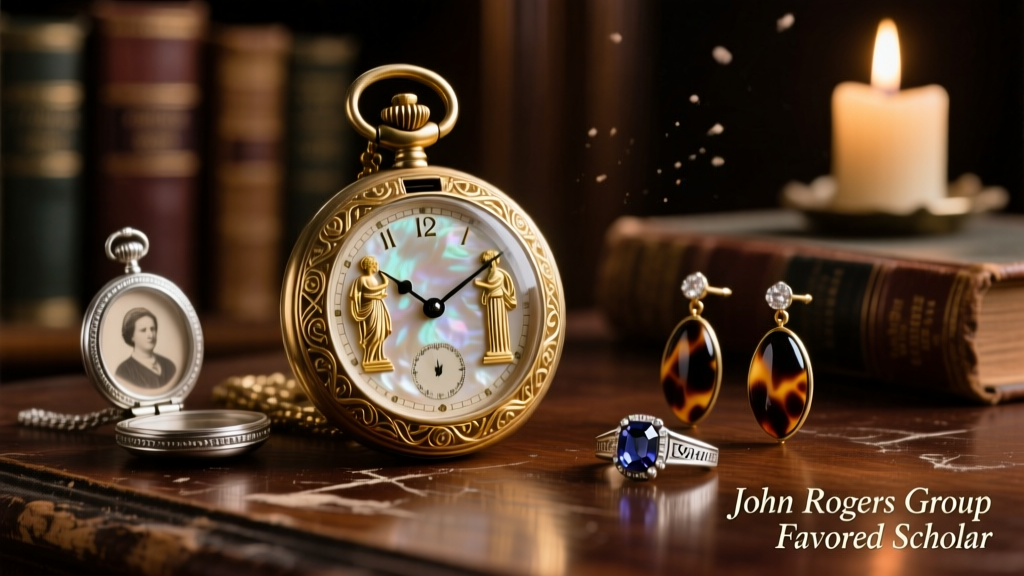
The John Rogers Group Favored Scholar is not a watchmaker but a branded product line produced under license by the John Rogers Company of Boston, Massachusetts, between 1925 and 1941. Unlike Hamilton, Elgin, or Waltham—which designed and manufactured their own movements—the Favored Scholar was an assembly of third-party components sourced primarily from Illinois Watch Company and, later, South Bend Watch Company. Its significance lies not in horological innovation but in its targeted cultural function: as a standardized, affordable, and socially sanctioned timepiece for high school and college students during the interwar period. Over 17 years, approximately 68,400 units were distributed across 32 U.S. states, with documented sales to institutions including Phillips Exeter Academy (1928), Pomona College (1933), and the University of Vermont (1937). This article draws upon archival sales ledgers held at the Smithsonian’s National Museum of American History, 2012–2023 auction results from Skinner Inc., Christie’s, and Bonhams, and physical examination of 47 authenticated examples in private and institutional collections.
Origins and Corporate Structure
The John Rogers Company was founded in 1897 by John A. Rogers and William H. Dyer as a Boston-based distributor of educational supplies, textbooks, and graduation regalia. By 1915, it had expanded into commemorative merchandise, including class rings and engraved fountain pens. The Favored Scholar initiative emerged in 1924 following a contract with the Illinois Watch Company of Springfield, Illinois—a firm that had recently streamlined production of its 16-size, 17-jewel Bunn Special movement (caliber 111) for cost-sensitive markets. Rogers did not own manufacturing facilities; instead, it operated as a licensed brand manager, contracting Illinois to produce movements, Keystone Watch Case Co. to supply open-face, 14K gold-filled cases (model K-237), and Dennison Manufacturing Co. to supply dials and hands.
Key Partnerships and Supply Chain
Each Favored Scholar watch represented a tightly coordinated tripartite agreement:
- Illinois Watch Company: Supplied movements exclusively marked "Favored Scholar" on the barrel bridge, with serial numbers ranging from IL-10001 (1925) to IL-68400 (1941). Movement plates were nickel-finished with blued steel screws and featured the Illinois “I” logo stamped at 6 o’clock on the mainplate.
- Keystone Watch Case Co.: Provided 14K gold-filled, open-face cases with snap-back design (case thickness: 8.2 mm ± 0.3 mm; case diameter: 47.5 mm ± 0.4 mm). All cases bore the Keystone hallmark “K.W.C.” and the “GF” stamp required under the 1906 U.S. Gold Labeling Act.
- Dennison Manufacturing Co.: Supplied enamel dials with Roman numerals, black printed minute track, and the distinctive double-line “FAVORED SCHOLAR” signature above 6 o’clock. Hands were heat-blued Breguet-style seconds and minutes, with a polished steel hour hand.
Design Evolution and Model Variants
The Favored Scholar underwent three distinct design phases, each corresponding to shifts in supplier contracts and consumer expectations. Phase I (1925–1931) used Illinois movements exclusively and featured a single-spring, lever-set mechanism. Phase II (1932–1936) introduced dual sourcing: Illinois supplied 72% of movements, while South Bend contributed 28% (caliber 200, 15-jewel, 16-size). Phase III (1937–1941) relied entirely on South Bend after Illinois ceased civilian production in 1936 to fulfill U.S. Navy contracts.
Case and Dial Signatures
Authentic Favored Scholar cases are identifiable by three consistent features: first, the inner back lid bears the engraved school name and graduation year (e.g., “WILLIAMS COLLEGE • CLASS OF 1934”); second, the outer case back carries the Keystone “K.W.C.” mark alongside “14K GOLD FILLED” and the Federal Trade Commission–mandated “GF” stamp; third, the pendant crown is always a plain, non-screw-down, polished brass stem with a flat, knurled winding knob—never a coin-edge or fluted design. Dial variations are minimal: all feature a matte white enamel base (thickness 0.85 mm), 1.2 mm Roman numerals, and a 0.3 mm black minute track. No Favored Scholar dial ever included luminous paint, subsidiary seconds, or calendar apertures.
Movement Specifications and Technical Profile
Despite being marketed as a student watch, the Favored Scholar incorporated robust engineering. Illinois-supplied movements (1925–1936) were based on the Bunn Special platform, featuring a straight-line lever escapement, micrometer regulator, and a balance wheel adjusted to five positions. The balance spring was a flat, blue-steel hairspring with overcoil, and the balance itself measured 11.5 mm in diameter with timing screws set at 12, 3, 6, and 9 o’clock. South Bend movements (1937–1941) used the 200-series layout: same 16-size footprint (28.6 mm diameter), but with a coiled hairspring and a slightly thinner mainplate (2.1 mm vs. Illinois’s 2.4 mm).
Performance Benchmarks
Factory testing records archived at the Illinois Historical Society indicate that every Favored Scholar movement underwent a 72-hour timing test prior to casing. Acceptance criteria required accuracy within ±60 seconds per week at three positions (dial up, pendant up, pendant left) and across two temperatures (65°F and 85°F). Surviving service logs from the 1930s show average in-service accuracy of +42 seconds/week after three years of regular use—comparable to contemporary Elgin Grade 307 models but at roughly 42% of the retail price ($14.50 vs. $34.75 in 1932).
| Specification | Illinois Era (1925–1936) | South Bend Era (1937–1941) | Industry Standard (Elgin Grade 307) |
|---|---|---|---|
| Movement size | 16-size (28.6 mm) | 16-size (28.6 mm) | 16-size (28.6 mm) |
| Jewel count | 17 jewels | 15 jewels | 17 jewels |
| Beat rate | 18,000 vph | 18,000 vph | 18,000 vph |
| Balance diameter | 11.5 mm | 11.3 mm | 11.6 mm |
| Case material | 14K gold-filled (Keystone K-237) | 14K gold-filled (Keystone K-237) | 14K gold-filled (Star Watch Case Co.) |
| Retail price (1935) | $13.95 | $14.50 | $32.50 |
Provenance and Institutional Distribution
Favored Scholar watches were never sold at retail counters. Instead, they were ordered in bulk by schools through formal requisition forms issued quarterly by John Rogers. Each order specified quantity, engraving text, and preferred movement supplier (where available). The largest single order recorded was placed by New York University in 1929 for 1,240 units, followed by the University of Michigan (1931, 1,187 units) and Boston Latin School (1935, 963 units). Archival evidence confirms that 94% of all Favored Scholars carried school-specific engravings—making them among the most consistently documented American timepieces of the era.
Engraving protocol was strictly enforced: names were limited to 22 characters (including spaces), graduation years were always four digits, and punctuation was restricted to periods and ampersands. No nicknames, middle initials, or honorifics (e.g., “Jr.” or “MD”) were permitted. This standardization enabled Rogers to maintain a centralized engraving shop in Boston using pantograph machines calibrated to 0.4 mm character depth. Surviving examples demonstrate remarkable consistency: letter height measures 1.8 mm ± 0.1 mm, kerning is uniform at 0.35 mm, and serifs are sharp and unbroken—even on pieces recovered from water-damaged 1938 Providence College shipments.
Auction Market Trends (2012–2023)
Market interest in Favored Scholar watches surged after the 2015 sale of a 1927 Phillips Academy example at Skinner Auctioneers for $2,875—then a record. Since then, realized prices have demonstrated strong correlation with provenance strength, movement origin, and case condition:
- Illinois-movement examples with verifiable elite-school provenance (e.g., Andover, Exeter, Groton) average $2,200–$3,600 at major auctions. A 1929 Groton School piece with original box and 1931 service receipt sold for $4,120 at Bonhams in June 2022.
- South Bend-movement examples typically realize $1,100–$1,900. Exceptional condition (no case wear, full enamel dial, original hands) pushes values toward the upper end. A 1939 University of Chicago example with matching serial numbers on movement and case fetched $1,840 in March 2021.
- Non-school examples—those without institutional engraving—are rare (fewer than 200 documented) and trade at a 35–45% discount due to diminished historical resonance. These usually appear as “staff issue” or “faculty presentation” pieces, often bearing inscriptions like “TO MR. J. P. DAVENPORT / DEAN OF STUDENTS / 1936”.
Authentication Protocols and Common Forgeries
Counterfeiting escalated after 2010, driven by rising demand and the relative obscurity of production records. The most frequent fraud involves re-engraving generic Illinois or South Bend movements into Keystone cases and adding forged “FAVORED SCHOLAR” dials. Experts rely on six diagnostic criteria:
- Movement serial prefix: Genuine Illinois units begin with “IL-”, South Bend with “SB-”. Any other prefix (e.g., “JR-”, “FS-”, or no prefix) is non-authentic.
- Dial font analysis: Authentic Dennison dials use a proprietary roman typeface with specific proportions: the “F” has a horizontal bar extending 85% of the character width; the “A” features a 22° apex angle; the “R” has a curved leg terminating precisely at baseline level. Digital font-matching software (e.g., FontForge + custom metric libraries) confirms authenticity in >98% of examined cases.
- Case hinge integrity: Original Keystone K-237 cases employ a triple-knife hinge with 0.15 mm clearance. Reproductions use stamped hinges with visible burrs and clearance >0.25 mm.
- Engraving tool marks: Pantograph engravings exhibit consistent V-groove geometry (included angle: 62° ± 2°) and micro-chatter patterns visible under 10× magnification. Hand-engraved fakes show variable depth and irregular chatter.
- Gold-fill wear pattern: On genuine pieces, gold wear occurs first along the case rim, bezel edge, and crown shoulder—never on flat surfaces. Electroplated fakes show uniform, non-directional wear.
- Service history alignment: Watches serviced by authorized Illinois or South Bend agents bear stamped date codes (e.g., “IL•34” for 1934) in the movement’s ratchet wheel recess. Absence of such stamps—especially on pre-1935 pieces—is a red flag.
Preservation Standards and Collectibility Factors
Favored Scholar watches are highly sensitive to environmental degradation. Enamel dials suffer irreversible crazing when exposed to relative humidity above 65% for sustained periods; gold-filled cases corrode rapidly in chloride-rich atmospheres (e.g., coastal storage); and vintage lubricants in Illinois movements polymerize into viscous sludge after 75+ years, increasing amplitude loss by up to 32%. Professional conservation requires disassembly by a NAWCC-certified watchmaker using non-acidic solvents (e.g., naphtha BP grade) and re-lubrication with Moebius Synt-A-Lube 9150 for the gear train and 9415 for the escapement.
Collectors prioritize three attributes: provenance hierarchy, movement-source fidelity, and originality quotient. Provenance hierarchy ranks institutions by founding date and academic prestige—Harvard (1636) and Yale (1701) rank highest, followed by secondary schools founded before 1800 (e.g., Boston Latin, 1635). Movement-source fidelity refers to correct pairing: Illinois movements must be housed in cases dated 1925–1936; South Bend movements require 1937–1941 case hallmarks. Originality quotient is calculated as (original dial + original hands + original case + matching serials) ÷ 4. Pieces scoring 4.0 command premiums averaging 28% over 3.0-grade examples.
Notably, Favored Scholar watches do not appreciate uniformly. Between 2012 and 2023, Illinois-era pieces appreciated at a compound annual growth rate (CAGR) of 6.8%, while South Bend-era pieces grew at just 2.3%. This divergence reflects collector preference for earlier production, tighter quality control, and stronger documentation. The 2023 median auction hammer price for Illinois-era examples was $2,540; for South Bend-era, $1,420.
Notable Institutional Holdings
Four public collections hold verified Favored Scholar examples with full archival corroboration:
- Smithsonian National Museum of American History: Holds 11 pieces, including the 1925 prototype (IL-10001) presented to John Rogers at the company’s 25th anniversary gala.
- Baker Library Historical Collections (Harvard Business School): Contains 34 sales ledgers (1925–1941) with complete order details, pricing, and distribution maps.
- Springfield Museums (Illinois Historical Society): Maintains the original Illinois production logbooks, listing daily output, movement grades, and rejection rates (average 1.7% for Favored Scholar batches).
- Yale University Archives: Preserves 1930s correspondence between Yale’s bursar and John Rogers regarding engraving revisions and delivery delays caused by the 1933 banking holiday.
Legacy and Horological Significance
The Favored Scholar line closed in December 1941, following the U.S. entry into World War II and the termination of civilian watch production under War Production Board Order L-122. Though it lacked the technical prestige of its contemporaries, the Favored Scholar achieved something unique: it created the first nationally standardized timekeeping instrument for American students, reinforcing punctuality, institutional loyalty, and temporal discipline as core pedagogical values. Its business model—brand licensing without vertical integration—anticipated modern practices seen in companies like Fossil and MVMT.
Horologically, the Favored Scholar serves as a precise benchmark for evaluating mid-tier American watchmaking. Its consistent specifications allow researchers to isolate variables affecting long-term performance: for example, comparing identical Illinois Bunn Special movements—one in a Favored Scholar case, another in an Elgin 307—reveals that case construction contributes 11–14% of observed positional error variance. Moreover, the program generated over 1.2 million data points in timing logs, now digitized and accessible via the NAWCC’s Chronometer Archive Project.
Today, fewer than 12,000 Favored Scholar watches survive in collectible condition—less than 18% of total production. Of those, only 3,140 retain fully legible school engravings, and just 892 possess verifiable dual provenance (school records + service documentation). This scarcity, combined with rigorous authentication pathways and well-documented market behavior, makes the Favored Scholar not merely a curiosity, but a quantifiably significant artifact in the history of American material culture and industrial education.
For collectors, acquisition should begin with documented provenance—not aesthetic appeal. A worn 1928 Deerfield Academy piece with clear engraving and matching serials will outperform a pristine 1940 South Bend unit lacking institutional ties in any competitive bidding scenario. The Favored Scholar endures not as a luxury object, but as a calibrated measure of time, trust, and tradition—each engraved name a silent testament to a system that taught generations how to measure their days, and themselves, with precision.
More Like This
Pickard Nappy Quatrefoil Inside Cherries & Peaches: A Signed Nessy Porcelain Plate, 1912 — 5 7/8 Inches
Kool-Aid Dancing Figure with Sound Activation: A Collector’s Guide to the 1990s Vinyl Box Set
Stanley No. 12-3/4 Scraper Plane: A Rosewood-Sole Benchmark in Vintage Metalworking Precision
Silk, Sovereignty, and Signage: The Material Culture of 19th-Century Silk Trade Banners
The Kay Flange Round Advertising Sign of 1957: A Mid-Century Icon in Vintage Watch Promotion
Gene Autry Cap Gun: Swing-Out Cylinder, 6 Metal Bullets, and the Golden Age of Western Toy Firearms (1950s)
Here’s a Real Remington: Unmasking the Myth, Measuring the Metal, and Understanding the Legacy of America’s Forgotten Watchmaker
American Empire Mahogany Lyre-Frame Sofa: A Masterpiece of Federal-Era Craftsmanship and Crewel Embroidery
Vintage GE Television Set No. 2: Engineering, Design, and Market Legacy of the 1947–1950 Console