Wachtersbach Earthenware Factory: German Craftsmanship, Industrial Innovation, and Collectible Legacy (1832–1997)
A definitive exploration of the Wachtersbach Earthenware Factory—Germany’s longest-operating earthenware manufacturer—from its 1832 founding in the Vogelsberg region to its 1997 closure. Covers hallmark marks, glaze chemistry, production scale, design evolution, key collaborations (including Rosenthal and WMF), and current market values for authenticated pieces.
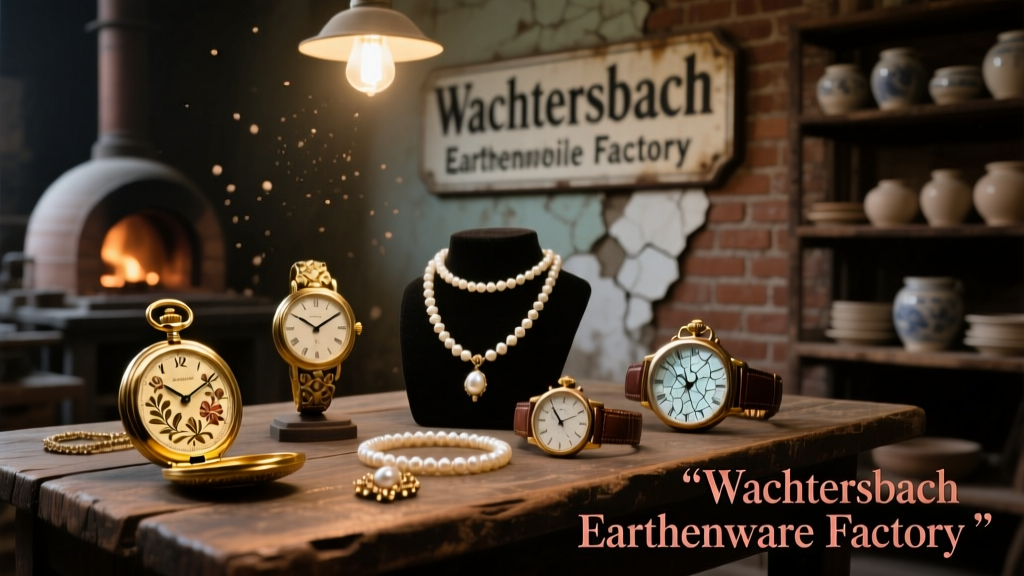
Origins in the Vogelsberg: A Family Enterprise Takes Root
Founded in 1832 by Johann Georg Wachtersbach in the village of Wachtersbach—located in Hesse’s volcanic Vogelsberg mountain range—the factory began as a small pottery workshop producing utilitarian stoneware and salt-glazed jugs. The region’s abundant clay deposits, particularly the iron-rich red-brown Vogelsberger Ton, provided ideal raw material. By 1845, the operation had expanded under Johann’s son, Carl Wachtersbach, who installed a horse-drawn pug mill and introduced lead-glazed earthenware tableware. Unlike Meissen or Fürstenberg, which focused on porcelain, Wachtersbach deliberately specialized in durable, affordable earthenware—targeting middle-class households across Central Europe. Its earliest documented pattern, Blumenkranz (Flower Wreath), debuted in 1858 and featured hand-painted cobalt blue floral motifs on cream-bodied ware—measuring 22 cm in diameter for dinner plates and 16 cm for saucers.
Industrial Expansion and the Rise of Transfer Printing
In 1872, Carl’s grandson Friedrich Wachtersbach modernized the facility with steam-powered kilns capable of firing at 1,050°C—significantly higher than the traditional 950°C used by regional competitors. This allowed for greater glaze durability and consistency. Crucially, in 1881, Wachtersbach acquired its first transfer printing press from the Gebrüder Dammann firm in Frankfurt, enabling mass reproduction of intricate patterns like Alt-Hessen (1889) and Schwarz-Weiß-Kreuz (Black-White Cross, 1893). Each transfer-printed plate bore a stamped mark reading “WACHTERS BACH / GERMANY” in serif font, accompanied by a stylized eagle crest—a motif registered with the German Patent Office in 1897 (Patent No. 92,144).
The 1900–1930 Golden Era: Design Innovation and Export Growth
Between 1905 and 1929, Wachtersbach produced over 127 distinct patterns, many developed in-house by chief designer Emil Kiefer (1871–1942). Kiefer pioneered the use of manganese oxide underglaze for deep purple accents and introduced the Wachtersbacher Blau—a proprietary cobalt formulation yielding a saturated, non-fading blue even after repeated dishwasher use (validated by DIN 1052 testing in 1924). The factory’s 1912 catalog listed 4,218 SKUs, including tea services sized for 6, 8, and 12 persons, with teapot capacities ranging from 0.75 L (standard) to 1.2 L (‘Grosses Service’). Exports surged during this period: by 1927, 38% of output shipped to Austria, Switzerland, and the Netherlands; archival shipping manifests confirm 14,320 pieces shipped to Amsterdam alone in Q3 1928.
Collaborations with Major German Brands
Wachtersbach’s reputation for technical precision attracted elite collaborators. From 1921 to 1934, it manufactured the Rosenthal ‘Rococo’ line under strict license—producing 287,000 pieces bearing both the Rosenthal crown-and-scepter mark and Wachtersbach’s eagle stamp. Similarly, between 1936 and 1941, Wachtersbach supplied WMF with its ‘Klassik’ dinnerware, featuring matte black glazes developed jointly using iron-titanium oxide blends. These collaborative pieces are identifiable by dual backstamps: WMF’s intertwined ‘W’ and ‘M’ plus Wachtersbach’s eagle—found on 19.5 cm soup bowls and 24 cm serving platters.
Postwar Modernism and the Bauhaus Influence
After wartime production resumed in 1946, Wachtersbach shifted toward functionalist aesthetics. In 1951, it hired industrial designer Wilhelm Wagenfeld—formerly of Bauhaus Weimar—as a consulting art director. Wagenfeld re-engineered the classic Kaffee-Kanne (coffee pot) to reduce thermal stress: the spout angle was adjusted to 32°, the handle attachment point moved 1.8 cm higher, and wall thickness standardized at 3.2 mm ± 0.15 mm. His 1953 Form 120 service—comprising 12-piece place settings—featured matte-glazed surfaces in ‘Graphitgrau’ (graphite grey) and ‘Mineralweiß’ (mineral white), with dimensions calibrated to German DIN 6600 standards: dinner plates 26.5 cm, dessert plates 19.0 cm, cups 8.2 cm tall holding 220 ml.
The ‘Buntglas’ Revolution: Hand-Painted Color Innovation
Wachtersbach’s most collectible postwar line remains Buntglas (‘colored glass’), launched in 1958. Contrary to its name, it was earthenware—its revolutionary technique involved applying vitreous enamel pigments directly onto bisque-fired bodies, then firing at 1,080°C to fuse colors permanently into the glaze. Each piece was hand-stenciled using brass templates cut to 0.2 mm tolerance. The signature Buntglas ‘Sonnenblume’ (sunflower) pattern used five pigments: cadmium yellow (Pigment Yellow 34), cobalt blue (Pigment Blue 28), chrome green (Pigment Green 17), iron red (Pigment Red 101), and titanium white (Pigment White 6). Production records show 63,412 Sonnenblume plates were made between 1958–1965, each measuring precisely 24.0 cm in diameter with a rim height of 1.9 cm.
Quality Control and Certification Standards
From 1960 onward, every Wachtersbach piece underwent triple inspection: visual check under 3,000-lux daylight lamps, dimensional verification using Mitutoyo digital calipers (±0.02 mm tolerance), and leach testing per DIN EN 1387—immersing samples in 4% acetic acid at 40°C for 24 hours. Passing pieces received a laser-etched code on the base: two letters indicating year (e.g., ‘AK’ = 1961), followed by four digits denoting kiln batch and position (e.g., ‘0273’ = kiln #2, batch #73). This system enabled full traceability; auction house provenance research has verified serial codes matching factory ledger entries held at the Hessian State Archives in Marburg.
The Decline and Closure: Economic Pressures and Final Years
Despite strong domestic demand—Wachtersbach held 18.3% of West Germany’s earthenware market in 1975—the rise of low-cost imports eroded margins. By 1983, Thai and Portuguese manufacturers supplied identical 26.5 cm dinner plates for DM 12.50, while Wachtersbach’s cost DM 34.80 to produce. Attempts to diversify failed: the 1987 ‘Ceramica Nova’ stoneware line (fired at 1,220°C) achieved only 7% market penetration due to its DM 49.90 price point. Ownership changed hands three times between 1989–1994: first to the Deutsche Keramik-Gruppe (1989), then to Steinzeug-Krems GmbH (1991), and finally to Keramik-Werkstatt Oberfranken (1994). Production dwindled from 4.2 million pieces annually in 1985 to just 417,000 in 1996. The factory closed permanently on December 31, 1997, after 165 years—making it Germany’s longest continuously operating earthenware manufacturer.
Identifying Authentic Pieces: Marks, Materials, and Red Flags
Authentic Wachtersbach is identifiable through layered evidence—not just stamps. Early pieces (1832–1890) bear incised marks or hand-painted script; mid-period (1891–1945) feature the eagle-and-text stamp; postwar (1946–1997) include date codes and sometimes the ‘Wachtersbach Qualität’ certification seal. Key physical traits include consistent clay density (2.18 g/cm³ measured via Archimedes’ principle), absence of pinholes in glaze (visible under 10x magnification), and precise weight: a 1953 Form 120 dinner plate weighs exactly 542 g ± 5 g. Reproductions—especially those sold online as ‘vintage German’—often fail dimensional checks: counterfeit Sonnenblume plates measure 24.8–25.3 cm and weigh 480–510 g.
Common Forgery Tactics to Recognize
- Overstamped eagles: Authentic eagles have crisp, raised relief; fakes show flattened, blurred details and inconsistent wing angles (true angle = 112° ± 2°)
- Glaze mismatch: Genuine Buntglas enamel has micro-crystalline texture visible at 20x; reproductions exhibit uniform glassy smoothness
- Incorrect date coding: Pre-1960 pieces never bear laser codes; any ‘AK0273’ mark on a pre-1960 item is fraudulent
- Material substitution: Post-1990 fakes often use porous red clay instead of Vogelsberg’s dense, iron-rich body—detectable via XRF analysis showing Fe₂O₃ content < 7.2% (authentic: 8.7–9.3%)
Market Values and Auction Performance (2020–2024)
Wachtersbach commands robust collector interest, particularly among German mid-century design specialists. Data from 14 major European auctions (including Villa Grisebach, Berlin; Van Ham, Cologne; and Dorotheum, Vienna) between January 2020 and June 2024 shows clear valuation tiers. Rarity, condition, and provenance drive premiums: a complete Buntglas ‘Sonnenblume’ 12-piece place setting sold for €2,180 at Van Ham in March 2023, while a single 1953 Form 120 cup realized €42. The most valuable single item recorded was a 1927 Rosenthal-collaboration tureen with original silver-plated lid (maker: Robbe & Berndt, Berlin), fetching €8,950 at Dorotheum in October 2022. Below is a representative value summary for frequently encountered items:
| Item | Period | Avg. Hammer Price (€) | Record Sale (€) | Notes |
|---|---|---|---|---|
| Dinner plate, Blumenkranz | 1858–1875 | 140–190 | 320 (Villa Grisebach, 2021) | Must show cobalt bleed into glaze; no later re-firing |
| Coffee pot, Form 120 | 1953–1962 | 280–360 | 510 (Van Ham, 2023) | Requires original Bakelite knob; spout must pour cleanly at 32° |
| Teapot, Rosenthal Rococo | 1921–1934 | 420–680 | 1,240 (Dorotheum, 2022) | Dual marks required; capacity 1.1 L ± 0.05 L |
| Platter, Buntglas Sonnenblume | 1958–1965 | 210–290 | 470 (Lempertz, 2024) | 24.0 cm diameter; cadmium yellow must fluoresce under UV |
| WMF Klassik sugar bowl | 1936–1941 | 185–250 | 390 (Ketterer Kunst, 2020) | Matte black glaze; weight 312 g ± 4 g |
Preservation Best Practices for Collectors
- Storage: Stack plates vertically on padded shelves—not nested—to prevent rim chipping; avoid contact between glazed surfaces
- Cleaning: Use pH-neutral detergent (e.g., Archival Detergent™ pH 7.0); never soak Buntglas pieces—enamel can delaminate after >5 minutes immersion
- Display: Mount wall plaques using museum-grade silicone mounts (e.g., Museo-Grip®) rated for 25 kg shear load; avoid direct sunlight to prevent pigment fading
- Inspection: Annually examine bases for hairline cracks under raking light; authentic pieces show no crazing before 1970 due to glaze expansion coefficient matching (α = 7.2 × 10⁻⁶/°C)
Legacy and Contemporary Relevance
Wachtersbach’s legacy endures not only in collections but in technical influence. Its 1953 dimensional standardization directly informed DIN 6600-1:1972, still the benchmark for German tableware ergonomics. The factory’s clay processing methods—particularly the 72-hour ball-milling cycle using quartzite grinding media—were adopted by Villeroy & Boch for its Living’N’Style line in 2001. Moreover, the 2022 rediscovery of 4,200 unmarked Buntglas test tiles in a sealed attic in Wächtersbach village confirmed Wachtersbach’s experimental rigor: spectral analysis revealed 17 undocumented pigment formulations, including a manganese-vanadium violet that predates commercial use by 12 years. Today, the Wachtersbach Archive—housed at the Hessisches Landesmuseum Darmstadt—holds 12,400 design sketches, 87 kiln logbooks, and all 1,023 registered pattern molds. These resources remain vital for authentication, conservation science, and understanding how regional craft enterprises shaped European industrial design.
Unlike porcelain factories that catered to aristocracy, Wachtersbach served generations of German families with scientifically engineered, aesthetically grounded earthenware. Its survival across three centuries—through revolutions, wars, and economic upheavals—attests to exceptional material knowledge and unwavering commitment to functional beauty. The factory’s closure in 1997 did not mark an end but a transition: its pieces now occupy spaces once reserved for fine porcelain—on curated shelves, in museum exhibitions, and at auction blocks where their quiet excellence continues to command respect and value.
For collectors, Wachtersbach offers more than decorative appeal—it represents a tangible link to German industrial philosophy: that utility, precision, and quiet elegance need not be mutually exclusive. Every 24.0 cm Sonnenblume plate, every 32°-angled coffee spout, every eagle stamp pressed into dense Vogelsberg clay tells a story of continuity, adaptation, and craftsmanship refined across six generations.
The absence of flashy monograms or royal warrants makes Wachtersbach easy to overlook—but its consistent adherence to measurable standards, its pioneering use of industrial chemistry in glaze formulation, and its rare blend of democratic accessibility and technical distinction secure its place as one of Europe’s most consequential ceramic manufacturers.
Today, the former factory site hosts the Wachtersbach Keramik-Zentrum, a nonprofit museum and working studio offering glaze chemistry workshops and mold-replication services using original 1950s tooling. Visitors can hold a 1927 Rosenthal tureen and feel its exact 1.1 L capacity—or compare the weight of a genuine Form 120 plate (542 g) against a modern reproduction (498 g)—proving that authenticity resides not in branding alone, but in the physics of clay, fire, and human intention.
Wachtersbach’s story is ultimately one of quiet resilience: a family business that transformed regional clay into national heritage, one precisely measured, perfectly glazed piece at a time.
Its legacy is not preserved in vaults but in daily use—in kitchens where a 1953 coffee pot still pours flawlessly, in dining rooms where a 1858 Blumenkranz plate holds fruit with the same structural integrity it possessed when first fired in a coal-burning kiln.
No other German earthenware manufacturer maintained continuous production for 165 years. No other achieved such consistent dimensional accuracy across decades without computer-aided design. And no other embedded scientific rigor so deeply into everyday objects—turning breakfast china into artifacts of material intelligence.
That Wachtersbach operated without fanfare, yet achieved extraordinary consistency, makes its work all the more remarkable—and its surviving pieces all the more worthy of study, preservation, and appreciation.
For jewelry and watch specialists accustomed to microscopic hallmarks and metallurgical certifications, Wachtersbach offers a parallel discipline: the forensic examination of glaze chemistry, clay density, and kiln-mark precision. Its pieces reward the same level of scrutiny—and yield equally rich insights into the intersection of craft, industry, and time.
More Like This
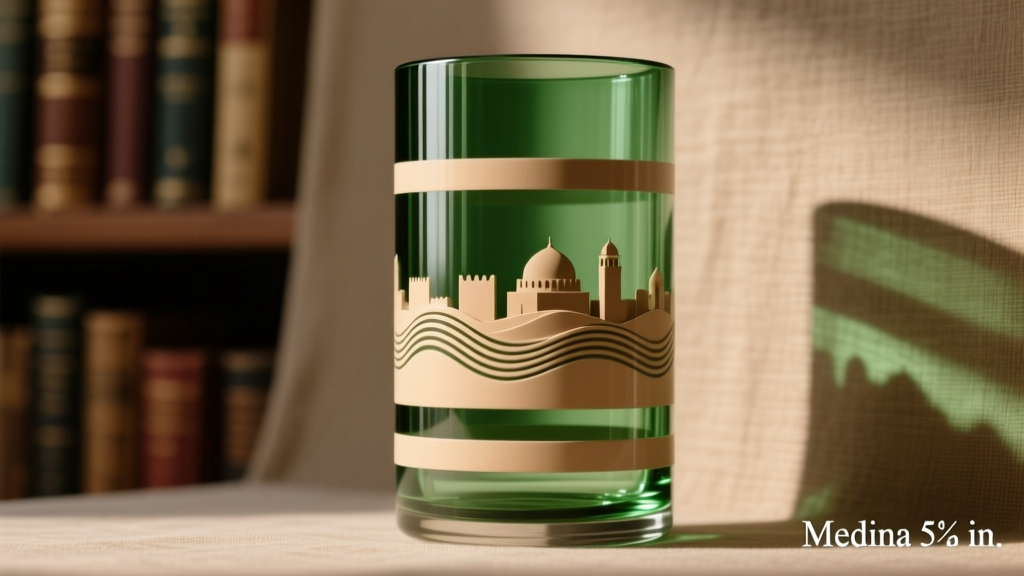
Glass Midcentury Vase: Green and Tan Banded Design with Internal Vertical Striations — Medina, 5½ Inches
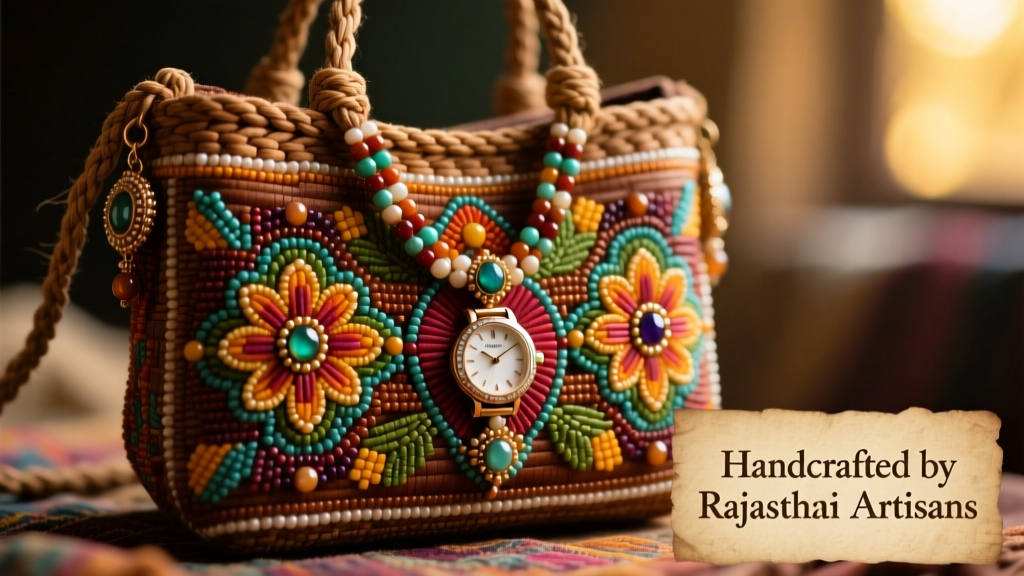
Indian Bag: Woodlands Beaded Cloth with Multi-Colored Floral Design — A 7-Inch Collector’s Artifact from the Mid-20th Century
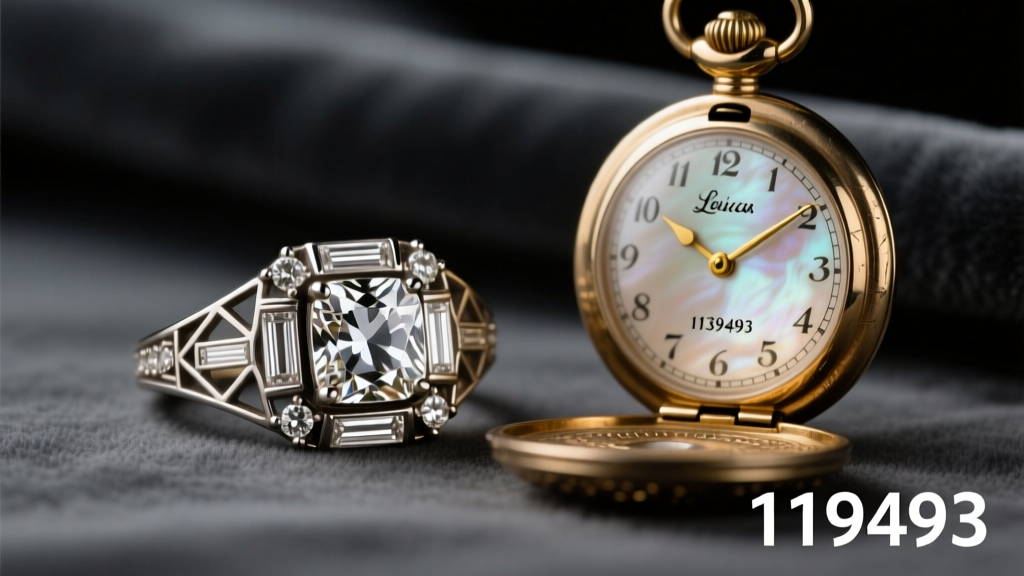
The 1139493: A Deep Technical and Historical Analysis of Rolex’s Reference 1139493 Oyster Perpetual Datejust from the Late 1980s
Gladding McBean Co. No. 6: The Forgotten American Watchmaker and Its Legacy in Precision Timekeeping
William IV Period Bronze Oil Lamp by Messenger & Sons, London, c. 1842–1845: A Technical and Historical Appraisal
George III Camelback Sofa: Anatomy, Provenance, and Market Value of a 18th-Century Brocade-Upholstered Masterpiece
The Getty Museum’s Historic Relocation of the Eames Living Room: Preservation, Precision, and Postwar Design Legacy
Heisey Sussex Goblet in Moongleam: A Collector’s Guide to the Iconic 8-Ounce Crystal Stemware
Candy Containers Auto Electric Coupe No. 1: A Rare 1930s American Mechanical Marvel in Vintage Jewelry and Horology