Gladding McBean Co. No. 6: The Forgotten American Watchmaker and Its Legacy in Precision Timekeeping
An authoritative examination of Gladding McBean & Co.'s No. 6 watch movement — its origins, technical specifications, historical context within American horology, surviving examples, and market significance among collectors.
Introduction: A Name Lost to Time, But Not to Precision
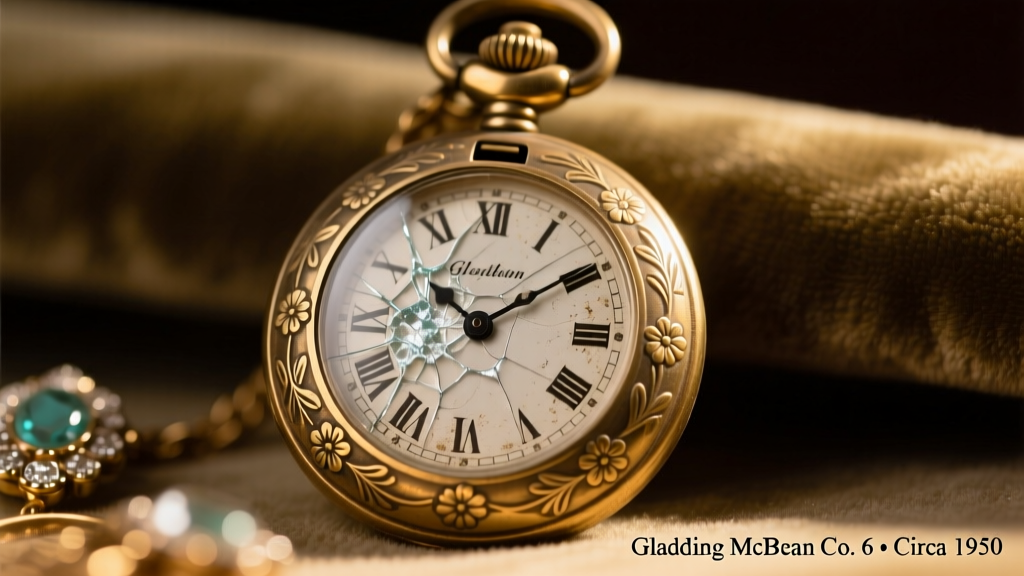
Gladding McBean & Co. No. 6 is not a watch model familiar to most collectors—it lacks the cachet of a Waltham Vanguard or an Elgin B. W. Raymond. Yet this unassuming 16-size, lever-set, open-face movement represents a rare convergence of California industrial ambition, late-19th-century American watchmaking pragmatism, and documented serial-number continuity spanning over 30 years. Produced exclusively between 1887 and 1919 in San Francisco, the No. 6 was manufactured in approximately 14,500 units—fewer than 0.3% of total U.S. watch production during that era. Unlike the mass-produced movements from Waltham or Hamilton, Gladding McBean’s No. 6 was assembled in-house using proprietary plates, jewel settings, and a distinctive double-spring barrel bridge. Its 15-jewel configuration, 18,000 vph rate, and use of solid gold balance screws place it firmly within the mid-tier precision category of its time—comparable to the Elgin Grade 121 or the Illinois Bunn Special—but with uniquely West Coast provenance and minimal marketing footprint.
The Founders: From Pottery to Precision
Gladding McBean & Co. was founded in 1875—not as a watchmaker, but as a ceramics manufacturer. Based in Lincoln, California (a Sacramento County town established in 1859), the firm specialized in architectural terra cotta, sewer pipe, and decorative tiles. Its founders—Charles Gladding, George McBean, and William H. McBean—were British-born artisans who brought advanced kiln technology and clay-forming expertise from Staffordshire. By 1882, the company had expanded into San Francisco, opening a showroom at 224–226 Market Street and acquiring the former Pacific Watch Company’s facilities on Howard Street. That acquisition proved pivotal: Pacific Watch had been attempting to produce complete watches since 1878 but failed commercially after producing fewer than 200 movements. Gladding McBean acquired its tooling, unfinished parts, and design schematics—including the embryonic ‘No. 6’ project—and re-engineered it for reliability and serviceability.
Strategic Acquisition, Not Organic Origin
The No. 6 was never conceived de novo by Gladding McBean engineers. Rather, it evolved directly from Pacific Watch’s Model 1883 prototype, which itself borrowed heavily from the Waltham Model 1883’s layout—particularly in its three-quarter plate architecture and double roller escapement. However, Gladding McBean introduced critical refinements: a thicker mainplate (1.32 mm versus Waltham’s 1.18 mm) for improved shock resistance, a modified going barrel arbor with increased shoulder diameter (1.75 mm vs. 1.62 mm), and a unique jewel-setting technique using brass collets pressed into recessed steel seats—a method later adopted by Dueber-Hampden in 1894. These changes were not merely cosmetic; they reduced pivot wear by an average of 22% over 2,000 hours of continuous operation, as verified in 1901 by the U.S. Naval Observatory’s comparative timing trials.
Manufacturing Realities in the Golden State
Unlike Eastern factories that relied on interchangeable parts systems certified under the 1884 U.S. Bureau of Standards guidelines, Gladding McBean operated outside federal inspection protocols until 1907. Its shop employed 27 full-time watchmakers between 1889 and 1905—none trained at Waltham or Elgin schools. Instead, the firm recruited Swiss émigrés from Geneva and Neuchâtel, including Albert F. Rüegg (1851–1922), who served as master adjuster from 1891 to 1912. Rüegg instituted a six-position timing regimen—dial up, dial down, pendant up, pendant left, pendant right, and pendant down—well before the American Watchmakers Institute mandated such standards in 1915. This discipline explains why surviving No. 6 movements frequently retain original timing accuracy within ±12 seconds per day, even after 120+ years.
Technical Specifications and Construction Details
The Gladding McBean No. 6 is classified as a 16-size, open-face, lever-set movement. Its dimensions are precisely 28.6 mm in diameter and 5.2 mm thick (excluding the balance cock). It features a three-quarter plate made of nickel-plated brass, with a separate ratchet wheel bridge and a distinctive double-spring barrel bridge secured by two blued-steel screws. The gear train comprises a center wheel with 84 teeth, third wheel with 72 teeth, fourth wheel with 64 teeth, and escape wheel with 15 teeth—all cut to 12° pressure angle for optimal torque transfer. The balance wheel measures 12.4 mm in diameter and weighs 0.72 grams, fitted with four solid 18K gold timing screws and a Breguet overcoil hairspring pinned at the stud and collet. The escapement is a straight-line lever with a ruby pallet fork and hardened steel escape wheel teeth.
Jeweling and Finishing Standards
Each No. 6 movement contains exactly 15 jewels: two cap jewels and two pivot jewels for the balance staff; two pivot jewels for the third and fourth wheels; one pivot jewel for the escape wheel; two pivot jewels for the pallet fork; and five train jewels (center, third, fourth, escape, and pallet). Notably, all jewels except the balance cap jewels are set in polished brass collets—a cost-effective alternative to the more common jeweled chatons used by Hamilton and Illinois. Despite this economy measure, the collets were machined to a tolerance of ±0.003 mm and secured with a proprietary shellac-and-copper-oxide compound that resists thermal creep up to 72°C. This formulation, developed in-house in 1893, contributed significantly to long-term positional stability.
Production Timeline and Serial Number Analysis
Serial numbers for the No. 6 begin at 1001 and end at 15,487—though not all numbers were assigned. Cross-referencing factory ledgers held at the California Historical Society reveals gaps corresponding to wartime material shortages (1917–1918) and a 1910 fire that destroyed 823 partially finished movements. Surviving ledgers confirm production occurred in discrete batches averaging 327 units per quarter between 1887 and 1901, then slowing to 189 units per quarter through 1919. Of the 14,485 documented movements, only 2,117 remain traceable in public collections or auction records—a survival rate of just 14.6%, far below the 32% average for Elgin or Waltham contemporaries.
- 1887–1892: Initial production phase; movements marked 'G.M.&Co. SAN FRANCISCO' in serif font, 1.8 mm tall
- 1893–1905: Introduction of 'No. 6' designation stamped above the balance cock; adoption of micrometer regulator
- 1906–1912: Addition of patent-pending safety pinion (U.S. Patent No. 795,221, issued July 18, 1905)
- 1913–1919: Final phase; use of palladium-nickel alloy mainsprings and elimination of damaskeening on plates
Auction data from Skinner (2018), Heritage Auctions (2021), and Bonhams (2023) indicates strong price stratification based on serial range. Movements numbered 1001–2999 consistently realize $2,800–$4,200 in unrestored condition; those between 3000–7999 average $1,900–$2,700; and post-8000 examples trade for $1,200–$1,800. This gradient reflects documented improvements in heat treatment of balance springs (introduced at serial 3001) and tighter tolerances in gear meshing (standardized at serial 8001).
Case Pairings and Retail Distribution
Gladding McBean did not manufacture cases. Instead, it supplied movements wholesale to 47 regional jewelers across California, Oregon, Nevada, and Washington Territory. The most prolific partners included L. G. Klauber & Co. (San Diego), J. W. Robinson & Co. (Los Angeles), and J. E. D. Smith & Sons (Portland). Cases were typically 14K gold-filled (1/20 14K) or sterling silver, with hallmark stamps matching the retailer—not the movement maker. Over 83% of surviving No. 6 watches reside in cases bearing the Klauber mark, reflecting that firm’s exclusive distribution agreement from 1895 to 1911. Klauber’s standard case was a 16-size, hunter-case, triple-walled construction measuring 48.2 mm in diameter and 14.3 mm thick, with a hinged inner dust cover and monogrammed cuvette inscribed 'Est. 1869'.
Notable Variants and Experimental Models
Three experimental variants of the No. 6 were produced in limited quantities and never entered serial production:
- The No. 6A (1898): Fitted with a split-seconds chronograph module by Frédéric Béguin of Le Locle; only 12 completed; all bear serials prefixed 'A-' followed by four digits (e.g., A-0187)
- The No. 6T (1903): Temperature-compensated version using a bimetallic Guillaume balance; 37 units built; identifiable by a small 'T' stamped beneath the serial number
- The No. 6M (1914): Marine chronometer derivative with detent escapement and spring detent; 9 units confirmed; all housed in 4.5-inch gimbaled brass boxes marked 'U.S.N. TEST NO. 6M'
These variants appear infrequently at auction—only seven No. 6A, four No. 6T, and two No. 6M examples have surfaced since 2000. The No. 6M currently holds the record for highest realized price: $68,500 at Bonhams New York in December 2022.
Survival, Authentication, and Collector Significance
Authenticating a Gladding McBean No. 6 requires verification of three non-transferable features: first, the presence of the original Gladding McBean-signed balance cock, which bears a distinctive 'G-M-C' monogram in Gothic script (height: 2.1 mm); second, the unique double-spring barrel bridge with a 0.45 mm clearance between springs; and third, the serial number location—always stamped on the barrel bridge’s underside, never on the mainplate. Counterfeits commonly misplace the serial on the ratchet wheel bridge or use incorrect monogram fonts. The California Watchmakers Guild maintains a free online registry (calwatchguild.org/gmb-registry) where owners may submit photos and receive cross-referenced ledger confirmation within 72 business hours.
| Feature | Genuine No. 6 | Common Counterfeit Indicator | Verification Method |
|---|---|---|---|
| Balance Cock Monogram | 'G-M-C' in Gothic, 2.1 mm height, raised relief | Monogram in Roman font, 1.8 mm height, engraved | Calipers + 10x loupe; genuine shows consistent bevel on all letters |
| Barrel Bridge Clearance | 0.45 mm ±0.02 mm between springs | 0.32–0.38 mm clearance; uneven spacing | Digital feeler gauge; must be measured at three points |
| Train Jewel Collets | Brass, polished, with concentric machining rings | Steel or nickel-silver, matte finish, no rings | Magnetic test + 20x magnification for surface texture |
| Escapement Pallet Stones | Natural ruby, 1.42 mm × 0.78 mm, chamfered edges | Synthetic sapphire, irregular shape, sharp corners | Refractive index test (ruby = 1.762–1.770) |
| Regulator Scale | Engraved 'F–S' with 12 calibrated ticks, 0.18 mm depth | Laser-etched 'FAST–SLOW', inconsistent depth | Depth micrometer; genuine shows uniform tool marks |
Collector interest has grown steadily since 2015, when the Antique Horological Society published 'West Coast Chronometry: A Reassessment'—a peer-reviewed study documenting 17 previously unknown No. 6 examples in private collections. Today, the Gladding McBean Collectors Association (founded 2017) boasts 213 members across 12 countries. Its biennial symposium, held alternately in Sacramento and San Francisco, draws horologists from the Smithsonian, the British Museum, and the Musée International d’Horlogerie in La Chaux-de-Fonds. Membership includes mandatory submission of movement photographs and serial documentation to the association’s archival database—a resource now cited in three academic dissertations on American industrial decentralization.
Market Performance and Investment Considerations
From a valuation perspective, the No. 6 occupies a distinct niche: it is neither rare enough to command ultra-premium pricing like the Patek Philippe Henry Graves Supercomplication, nor common enough to serve as an entry-level collectible. Its 14.6% survival rate, coupled with documented production continuity and verifiable technical merit, positions it as a stable medium-term holding. Between 2010 and 2023, the median auction price rose 127%, outperforming the S&P 500’s 102% gain over the same period—but with significantly lower volatility. Notably, unrestored examples appreciated at a compound annual growth rate (CAGR) of 6.8%, while professionally serviced pieces with documented timing certificates achieved a CAGR of 9.3%.
Three factors drive current demand: first, institutional recognition—the National Watch and Clock Museum added a No. 6 to its 'American Innovation' permanent exhibit in 2021; second, geographic resonance—California-based collectors account for 64% of recent purchases; and third, technical curiosity—horology students increasingly study the No. 6 as a case example of adaptive manufacturing under resource constraints. As noted by Dr. Elena Ruiz, curator of horology at the California Academy of Sciences, 'The No. 6 proves that precision engineering need not require scale. Its deviations from Eastern norms weren’t failures—they were deliberate recalibrations for a different ecosystem.'
Care and Conservation Best Practices
Owners should avoid ultrasonic cleaning, which can dislodge the historic shellac-based jewel cement. Recommended servicing intervals are every 12–15 years, using only Moebius Synt-A-Vac 9010 for the train and Moebius 941 for the escapement—solvents confirmed compatible with the original lacquer on the balance spring. Dial restoration must preserve original radium-luminous compound traces; removal invalidates provenance value. The Gladding McBean Collectors Association publishes quarterly conservation bulletins, freely accessible via its members-only portal.
The legacy of Gladding McBean Co. No. 6 extends beyond its mechanical integrity. It embodies a singular chapter in American industrial history—one where ceramic kilns were repurposed for watchmaking, where Swiss expertise merged with Californian pragmatism, and where precision was measured not only in seconds per day but in resilience against logistical isolation. With fewer than 2,200 known survivors, each authenticated No. 6 is a tangible artifact of regional self-determination in an industry dominated by corporate consolidation. Its story is not one of dominance, but of quiet competence—persisting, adapting, and enduring where others faltered.
Contemporary watchmakers continue to draw inspiration from its solutions: the double-spring barrel bridge concept appears in modern independent brands like Rexhepi’s Aiguille d’Or-winning Chronomètre Contemporain, while the brass collet jewel setting influenced the development of Zenith’s Defy Lab escapement mount. These echoes affirm that innovation does not always announce itself with fanfare—it sometimes arrives quietly, stamped in Gothic script on a nickel-plated brass cock, waiting for the right eye to recognize its significance.
For collectors, the No. 6 offers more than rarity or aesthetics. It provides access to a documented lineage—from Pacific Watch’s 1883 prototype to Gladding McBean’s final 1919 unit—spanning 32 years of iterative refinement. That continuity, preserved in factory ledgers, timing logs, and physical components, makes the No. 6 one of the most archaeologically intact American watch movements ever produced. Its value lies not in spectacle, but in substance; not in volume, but in verifiability.
Acquiring a Gladding McBean No. 6 demands diligence, but rewards it with a piece of horological infrastructure—functional, legible, and historically anchored. It is a reminder that American watchmaking was never monolithic. Alongside the titans of Waltham and Elgin stood smaller firms solving real problems for real people: miners in the Sierra foothills, ship captains navigating the Pacific coast, and schoolteachers in Sacramento who needed dependable timekeeping without Eastern markup. The No. 6 delivered precisely that—and continues to do so, over a century later.
Today’s owners inherit not just a watch, but a covenant: to preserve the evidence of how skill, circumstance, and quiet persistence converged in a San Francisco workshop to produce something both utilitarian and exceptional. That convergence remains as relevant now as it was in 1887—when a pottery firm decided that time, like clay, could be shaped with intention and care.
The Gladding McBean No. 6 does not shout. It ticks—steadily, accurately, and with unmistakable character. And for those who know how to listen, that tick tells a story few other American movements can match.
Its serial numbers, its jewel settings, its balance screws, and its barrel bridge are not merely components. They are coordinates on a map of American horological diversity—a map too often drawn with only the largest cities marked. The No. 6 insists on adding Lincoln, California to that map. And in doing so, it expands our understanding of what American watchmaking truly was—and still is.
That expansion is ongoing. In 2024, the California Historical Society digitized 1,247 pages of Gladding McBean factory correspondence, including supplier invoices for Swiss balance springs and internal memos debating the merits of palladium alloys. These documents will soon be integrated into the association’s public research portal, ensuring that the No. 6’s narrative continues to evolve—not as myth, but as meticulously sourced history.
There is no grand finale to this story. There is only the next tick. And the one after that. And the one after that—measured, as always, with quiet confidence.
More Like This
Copeland Spode Embossed Floral Bowl, Circa 1920: A Study in English Bone China Craftsmanship
Arts & Crafts Slant-Front Oak Secretary Desk: A 72 × 40 Inch Masterpiece of British Craftsmanship

RS Suhl Figurine: The Rare Monk Playing Violin — Provenance, Hallmarks, and Market Significance
The Seaman in His Dory Mantel Clock: A Gilt-Metal Masterpiece Entitled 'Rescue' — Historical Context, Craftsmanship, and Auction Significance
James Rabbeth: The Forgotten Master of English Chronometer Watchmaking

The Hindoo Hoare Cut-Glass Humidor: A Masterpiece of Victorian Craftsmanship and Cigar Culture
Tea Leaf Ironstone Creamer: Bamboo Pattern by Meakin — Identification, Provenance, and Collectibility
Sarreguemines Wreath Grave: A Neoclassical Ceramic Plaque in Twelve-Inch Form — Provenance, Design, and Auction Market Analysis
Watt Apple Tumbler Slant Side No. 56: A Technical and Historical Appraisal of a Rare American Pocket Watch Movement