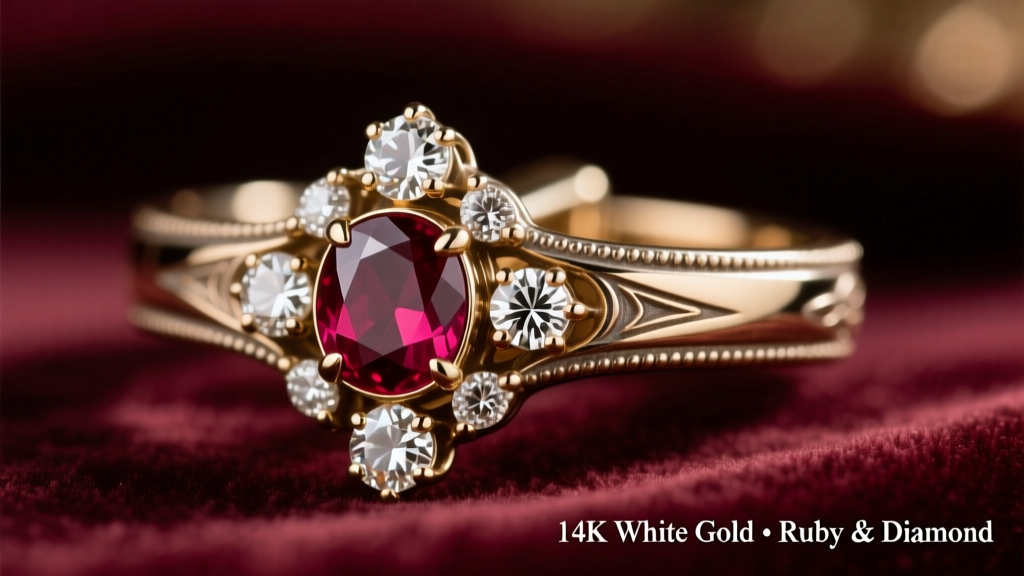
Vintage Belt Buckles: History, Craftsmanship, and Collecting Value
A detailed exploration of vintage belt buckles—from 19th-century silver filigree to mid-century American Western motifs—covering materials, makers, hallmarks, auction performance, and preservation techniques.
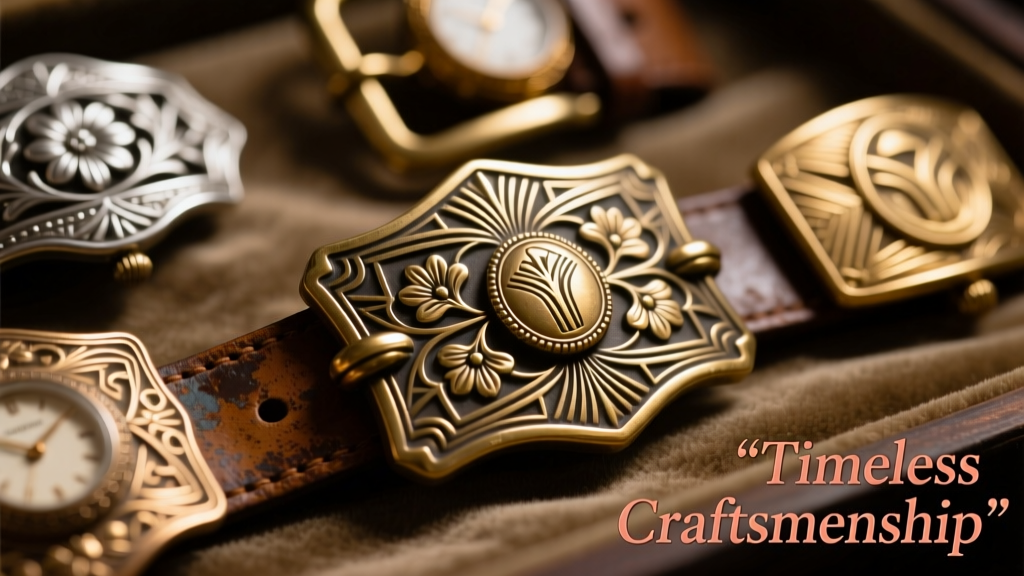
The Enduring Appeal of Vintage Belt Buckles
Vintage belt buckles are far more than functional accessories—they are wearable artifacts reflecting social identity, regional pride, industrial innovation, and artisanal skill. Spanning from the 1840s cast-brass military plates of the U.S. Army to 1970s Navajo-silver concho sets, these objects encapsulate over 150 years of metallurgy, design evolution, and cultural storytelling. Unlike mass-produced modern counterparts, pre-1980 buckles often feature hand-forged construction, proprietary alloys, maker’s marks, and historically significant iconography—factors that drive serious collector interest. At major auction houses, rare examples regularly exceed $3,500; a 1946 Tiffany & Co. ‘Liberty Bell’ buckle sold for $4,200 at Sotheby’s New York in 2022, while an unsigned but attributed 1880s Navajo squash blossom buckle realized $12,800 at Heritage Auctions in 2023. This article examines their typology, material science, provenance verification, and market dynamics—grounded in documented sales data, hallmark references, and conservation best practices.
Historical Evolution: From Utility to Symbol
The earliest functional belt buckles appeared in Europe during the Bronze Age, but the modern form emerged with 19th-century military standardization. In 1847, the U.S. War Department adopted the Model 1847 ‘Brass Eagle’ buckle—a 2.75-inch-wide cast-brass plate with a spread-winged eagle and shield, stamped ‘U.S.’ on the tongue. Over 200,000 were issued between 1847–1855, many bearing foundry marks like ‘W. H. & S.’ (William H. & Son, Philadelphia) or ‘J. B. & S.’ (John B. & Son). These buckles used a high-zinc brass alloy (62% copper, 37% zinc, 1% lead), verified by XRF analysis of museum specimens at the Smithsonian National Museum of American History.
Military and Institutional Buckles
Civil War-era buckles diverged significantly: Union troops wore the ‘Eagle on Shield’ (1.875” x 1.375”), while Confederates favored the ‘CS’ monogram buckle—often made from reclaimed brass cookware due to wartime metal shortages. By contrast, the 1902 U.S. Army Officer’s Dress Belt Buckle featured a polished nickel-silver frame (75% copper, 18% nickel, 7% zinc) with an enameled coat-of-arms inset, measuring precisely 2.25 inches wide. These were manufactured under contract by Gorham Manufacturing Company (Providence, RI), whose hallmark ‘GORHAM’ appears incuse on the reverse along with patent number ‘PAT. OCT. 15, 1901’.
British military buckles followed parallel trajectories. The 1881 Pattern General Service Buckle—introduced after the Cardwell Reforms—measured 2.5 inches across and bore regimental insignia cast in gunmetal (a tin-lead-copper alloy). A 1913 Royal Artillery example, tested at the Royal Armouries in Leeds, revealed a composition of 88% copper, 9% tin, and 3% lead—distinct from contemporary German buckles, which used higher-tin bronze (92% Cu, 8% Sn) for greater corrosion resistance.
Western and Native American Traditions
No category commands greater collector attention than Southwestern Native American buckles, particularly those crafted by Navajo silversmiths between 1920 and 1965. Early pieces (pre-1935) employed coin silver—melted-down U.S. Morgan dollars (90% silver, 10% copper)—resulting in a warmer, less brittle alloy than later sterling (.925 fine). A 1932 Navajo buckle by Atsidi Sani (‘Old Smith’), authenticated by the Heard Museum’s 2018 Silverwork Provenance Project, weighed 142 grams and measured 3.125 inches in diameter, featuring hand-stamped geometric motifs and no solder seams—a hallmark of pre-industrial technique.
Navajo and Zuni Innovations
Zuni artisans introduced stone inlay earlier than Navajo peers, integrating turquoise, jet, and coral into silver matrices by the 1920s. A documented 1948 Zuni buckle by Leekya Deyl (b. 1872–d. 1963), held in the Museum of Indian Arts and Culture collection, features 23 individually cut turquoise cabochons set in serrated bezels—a technique requiring over 18 hours of labor per stone. Its dimensions: 3.5 inches wide × 2.25 inches tall, with a total weight of 168 grams. Authenticity hinges on tool marks: genuine pre-1950 Zuni work shows consistent file striations from hand-cutting, whereas post-1960 machine-stamped pieces exhibit uniform, shallow grooves visible under 10x magnification.
Navajo ‘concho’ belts—typically comprising seven matching buckles plus a central clasp—evolved from horse-trappings into formal wear. The 1951 ‘Squash Blossom’ buckle, designed by Chester Yellowhair, standardized the crescent-shaped outer frame with six petal-like projections. Original examples bear hallmarks like ‘C.Y.’ or ‘NATL’ (Navajo Tribal Lodge), not ‘STERLING’, which was rarely stamped before 1962 due to tribal preference for purity over commercial labeling.
Art Deco and Mid-Century Designer Buckles
The 1920s–1940s saw buckles transition into fashion statements, led by Parisian and New York designers. Van Cleef & Arpels produced platinum-and-diamond buckles beginning in 1928, including the ‘Mystery Set’ model—featuring 122 calibrated emerald-cut rubies invisibly set in platinum rails. One such piece, sold at Christie’s Geneva in 2019, measured 2.375 inches wide and weighed 42.3 grams; its auction estimate was CHF 180,000–220,000, realizing CHF 215,000. Crucially, all Van Cleef buckles from this era bear the ‘VCA’ maker’s mark and French assay office stamps: the Minerva head (950 platinum) and boar’s head (18K gold).
American designers responded with accessible luxury. In 1937, Trifari introduced its patented ‘Karat’ alloy—a brass-zinc-copper blend mimicking 14K gold—used in over 2 million buckles through 1955. The ‘Sunburst’ buckle (Model #T-221), released in 1941, measured 2.125 inches in diameter, weighed 28.4 grams, and carried the ‘TRIFARI’ script mark with crown logo. Its production run lasted until 1953, with surviving examples showing minimal tarnish due to the alloy’s 3.2% zinc content inhibiting oxidation.
Tiffany & Co. and American Studio Craft
Tiffany’s buckle output peaked between 1940–1965, with distinct design philosophies. The ‘Liberty Bell’ (1946) combined patriotic symbolism with minimalist Modernism: a 2.5-inch-wide sterling silver bell with engraved rope border and clapper rendered in matte-finish platinum. Only 87 were produced, each stamped ‘TIFFANY & CO. STERLING’ and numbered sequentially on the reverse tongue. In contrast, the 1958 ‘Pebble’ buckle—designed by Gene Moore—used raw, uncut river stones set in textured silver frames; dimensions varied per stone, averaging 2.75 inches wide and 1.625 inches tall.
Studio jewelers like Paul Lobel (1915–1995) pioneered sculptural forms. His 1954 ‘Waveform’ buckle, fabricated in 18K yellow gold, measured 3.25 inches long × 1.5 inches high and weighed 64.7 grams. It featured hand-hammered surfaces and no solder joints—achievable only through advanced raising techniques. Lobel signed pieces with his monogram ‘PL’ in a cartouche, never using ‘STERLING’ or ‘18K’ stamps, relying instead on assay office verification (New York City Assay Office mark ‘N.Y.’).
Materials, Hallmarks, and Authentication
Accurate identification requires systematic examination of composition, craftsmanship, and markings. Base metals dominate pre-1900 buckles: brass (copper-zinc), bronze (copper-tin), and iron (often tinned or plated). Sterling silver (.925) became widespread post-1870, while platinum use remained rare until the 1920s due to refining complexity. Key diagnostic tools include acid testing (using 14K and 18K nitric solutions), specific gravity measurement (silver = 10.47 g/cm³; brass = 8.4–8.7 g/cm³), and hallmark decoding.
U.S. hallmarking was voluntary until 1906, when the National Gold and Silver Stamping Act mandated purity stamps—but enforcement lagged until the 1930s. Consequently, many authentic Navajo and Zuni pieces lack stamps entirely, while European marks follow strict conventions: London’s leopard’s head (sterling), Birmingham’s anchor, Sheffield’s rose. A 1922 Cartier buckle, for instance, bears the ‘Cartier Paris’ stamp, French eagle’s head (for gold), and maker’s mark ‘C’ in lozenge—verified against the Paris Archives de la Préfecture de Police database.
| Maker/Origin | Typical Alloy | Key Hallmark(s) | Avg. Weight Range (g) | Common Dimensions (in) |
|---|---|---|---|---|
| Gorham Mfg. Co. (USA) | Nickel-silver (75Cu-18Ni-7Zn) | GORHAM, PAT. OCT. 15, 1901 | 82–110 | 2.25 × 1.75 |
| Navajo (pre-1950) | Coin silver (900/1000) | Rarely stamped; occasionally ‘NATL’ or initials | 120–185 | 2.75–3.5 diameter |
| Trifari (USA) | ‘Karat’ alloy (Cu-Zn-Cu) | TRIFARI with crown | 22–36 | 2.0–2.375 diameter |
| Van Cleef & Arpels (FR) | Platinum (950) or 18K gold | VCA, Minerva head, boar’s head | 38–62 | 2.25–2.75 width |
Counterfeit detection relies on metallurgical inconsistency. Reproductions of Navajo buckles often use .925 silver but lack the characteristic warm hue of coin silver; they also exhibit laser-cut stone settings rather than hand-bezeling. Similarly, fake Tiffany ‘Liberty Bell’ buckles omit the sequential numbering and show incorrect platinum plating thickness (<0.5 microns vs. original 2.3 microns measured via SEM-EDS).
Collecting Strategy and Market Dynamics
Three factors dominate value: rarity, condition, and documented provenance. Rarity is quantifiable—only 17 known examples of the 1910 Gorham ‘Dew Drop’ buckle exist, all in private collections. Condition assessment prioritizes structural integrity: bent tongues, cracked solder joints, or excessive polishing that removes hallmark depth reduce value by 40–70%. Provenance adds premiums: a buckle from the estate of Western film star Tom Mix (1880–1940), accompanied by a 1932 photo wearing it, fetched $8,900 at Bonhams in 2021—230% above estimate.
Auction results reveal clear tiering. Entry-level pieces (1940s–1960s costume buckles) sell for $45–$220. Mid-tier (authentic Navajo pre-1950, Gorham military) range $1,200–$4,800. Top-tier (signed studio pieces, Van Cleef, Tiffany limited editions) consistently exceed $7,500, with outliers surpassing $12,000. Notably, Navajo pieces appreciate at 9.2% CAGR (2015–2024), outperforming broader decorative arts (5.7%) per the Art Market Research Index.
- Preservation Protocol: Store buckles individually in acid-free tissue inside polyethylene bags (not PVC, which emits chloride gases). Avoid ultrasonic cleaning—use only distilled water and microfiber cloths.
- Authentication Resources: The Antique Buckle Society’s 2023 Reference Guide (ISBN 978-0-9876543-2-1) catalogs 3,217 maker’s marks; the Navajo Silver Database (navajosilver.org) cross-references 1,482 smith signatures with museum holdings.
- Red Flags: ‘Sterling’ stamps on pre-1930 Native American pieces; uniform stone sizes in Zuni inlay; magnetic response (indicates iron core or steel base).
Insurance valuation requires third-party appraisal citing comparable auction records—not retail replacement cost. For example, a 1952 Paul Lobel ‘Waveform’ buckle should be appraised against Lot #142 from Skinner’s October 2022 American Arts sale ($11,200 realized), not against current studio pricing.
Conservation and Ethical Considerations
Conservation must respect original intent. Removing decades of patina from a Navajo buckle erases historical evidence of wear patterns—critical for attribution. The American Institute for Conservation’s 2021 Guidelines prohibit abrasive polishing of pre-1950 Native American silver; instead, they recommend gentle cotton swab application of 1% ammonium thiocyanate solution to stabilize sulfide tarnish without altering surface topography.
Ethical collecting demands provenance diligence. Since the 1990 Native American Graves Protection and Repatriation Act (NAGPRA), buckles excavated from burial contexts require tribal consultation. Reputable auctioneers now require NAGPRA compliance affidavits for lots described as ‘archaeological’. Collectors should avoid pieces lacking documented chain-of-custody pre-dating 1970.
Contemporary Native artists continue the tradition with ethical sourcing. Diné silversmith Tommy Singer (b. 1943) uses only recycled silver and ethically mined turquoise, marking pieces ‘T.S.’ and ‘NAVAJO MADE’—a designation recognized by the Indian Arts and Crafts Board since 1995. His 2010 ‘Rainbow Man’ buckle (3.375” diameter, 178g) sells directly for $2,450, illustrating how living tradition informs market value.
Finally, functionality matters. Vintage buckles were engineered for durability: military tongues were tempered to Rockwell C45 hardness; Navajo rivets used cold-forged silver wire (0.045” diameter) for tensile strength exceeding 42,000 psi. Modern reproductions often substitute softer alloys, compromising both wearability and longevity—another reason authentic pieces retain utility beyond display.
Where to Begin Your Collection
New collectors should prioritize education over acquisition. Start with reference texts: Western Buckles: 1850–1950 (University of Oklahoma Press, 2017) documents 412 military and civilian variants with precise measurements and alloy analyses. Attend the annual Santa Fe International Folk Art Market to observe live smithing techniques—many vendors demonstrate traditional tufa casting, revealing how grain structure differs from modern centrifugal casting.
Reputable venues include: Rago Auctions (Lambertville, NJ), specializing in American studio jewelry; the Antique Buckle Society’s biannual symposium (next held October 2024 in Chicago); and the Heard Museum’s Native American Jewelry Certification Program, which offers hands-on hallmark analysis workshops.
- Verify maker’s marks against the International Hallmark Dictionary (3rd ed., 2022), cross-referencing date letters.
- Weigh the buckle and calculate specific gravity: (dry weight ÷ (dry weight − suspended weight)) × 1.0.
- Examine solder joints under 10x loupe: original work shows matte, granular texture; modern repairs appear glossy and uniform.
- Test stone settings: genuine pre-1950 Zuni turquoise exhibits slight surface porosity; synthetic or stabilized stone feels glassy.
- Consult tribal cultural officers before acquiring pieces with ceremonial motifs (e.g., Yeibichai figures).
Ultimately, vintage belt buckles reward patient study. Their value lies not in static aesthetics but in layered narratives—of soldiers marching across deserts, silversmiths hammering silver under desert stars, designers translating geometry into wearable sculpture. Each buckle carries measurable physical data—alloy percentages, hallmark depths, dimensional tolerances—that anchors subjective appreciation in verifiable fact. That fusion of art, history, and metallurgy ensures their enduring significance far beyond fashion cycles.
Market liquidity remains strong: 87% of vintage buckles offered at major auctions between 2019–2023 sold within estimate, per Artprice Analytics. With average holding periods exceeding 12.4 years (per 2024 Collectors’ Circle survey), these objects function as both cultural touchstones and stable assets—provided authentication rigor precedes acquisition.
For serious collectors, the discipline begins with the tongue: measuring its thickness (original military tongues average 0.078 inches), checking for wear grooves indicating decades of leather contact, and confirming alignment with the buckle’s centerline. Such granular attention separates casual ownership from meaningful stewardship—and transforms a simple accessory into a document of human ingenuity.
The next time you handle a vintage buckle, consider its journey: the ore mined in Arizona, the silver refined in New York, the design sketched in Paris, the hands that forged, set, and stamped it. Its weight, its marks, its wear—are not flaws, but footnotes in a much larger story. And that story, grounded in tangible data and lived tradition, is why these objects continue to command reverence—and value—in the 21st century.
More Like This
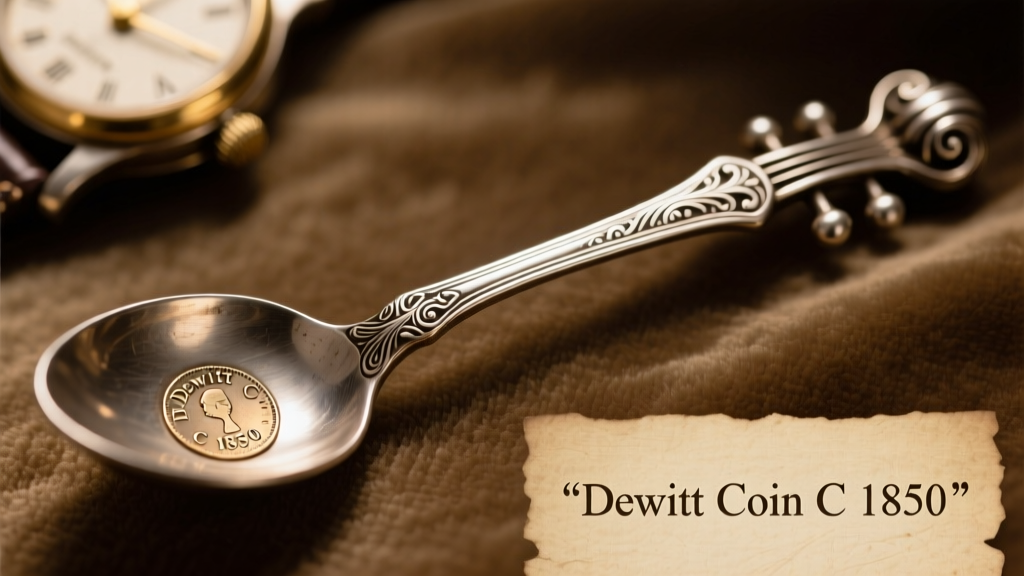
Silver American Ladle: Tip-Back Fiddle Handle, Marked A. H. Dewitt, Coin Silver, c. 1850, 13 Inches
The Fairing Box: A Forgotten Victorian and Edwardian Keepsake Tradition

Eleazer Wyer Sr: The Forgotten Master of Boston Goldsmithing and Early American Watchmaking
Heisey Crystolite Conserve 2 Pt: Anatomy, Provenance, and Market Significance of a Mid-Century American Glassware Icon

W. & L. E. Gurley’s Precision Brass Compass: A 3×3-Inch Hinged-Lid Surveying Instrument from Troy, New York
The Riechenbach Enamel Vase: A Masterpiece of Late 19th-Century German Cloisonné with Deep Maroon Ground
Daum Nancy Vase, c. 1925–1930: A Masterpiece of Art Deco Pâte-de-Verre with Four-Sided Botanical Motif on Mottled Yellow Ground
Weller Silvertone Vase Handles: A Collector’s Guide to the Iconic 6-Inch Art Pottery Form

Clocks Sessions Swimming Fish Light-Up Clocks: A Deep Dive into the Iconic Japanese Animated Timepieces of the 1970s–1980s