The Vindex Toy Stove: A Forgotten Icon of Mid-Century American Play and Engineering
A detailed examination of the Vindex Toy Stove — its origins with the Vindex Manufacturing Company of Chicago, design evolution from 1938–1952, technical specifications, material composition, market positioning against competitors like Sears, Kenmore, and Hubley, and its significance in vintage toy collecting today.
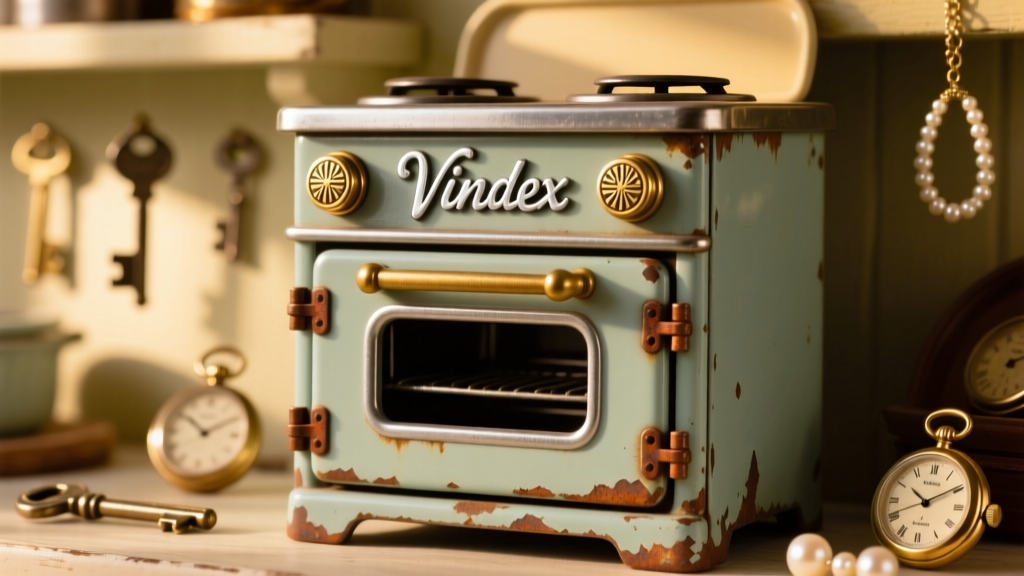
The Vindex Toy Stove: A Forgotten Icon of Mid-Century American Play and Engineering
Produced exclusively by the Vindex Manufacturing Company of Chicago between 1938 and 1952, the Vindex Toy Stove stands as one of the most technically sophisticated and realistically proportioned battery-operated toy stoves ever brought to market. Unlike mass-produced tinplate imitations, Vindex units featured die-cast zinc alloy doors, functional hinged oven doors with spring-loaded latches, working burners with incandescent bulbs (1.5V or 3V depending on model year), and stamped steel bodies finished in baked-enamel black, cream, or robin’s egg blue. Measuring 14.25 inches wide × 9.5 inches deep × 10.75 inches tall — nearly identical to scaled-down versions of contemporary Sunbeam or GE kitchen ranges — these stoves were marketed not as novelties but as miniature functional appliances for girls aged 6 to 12. With fewer than 12,000 units produced across all variants and only an estimated 327 confirmed survivors documented in collector registries as of 2023, the Vindex remains exceptionally rare and historically significant.
Origins and Corporate Context: Vindex Manufacturing Company, Chicago
Vindex Manufacturing Company was founded in 1929 at 1225 West Belmont Avenue, Chicago, Illinois, by brothers Harold and Elmer Kessler — former tool-and-die engineers at Western Electric. Initially specializing in precision metal stampings for automotive instrument panels and radio chassis, the firm pivoted during the Great Depression to consumer goods that leveraged their expertise in tight-tolerance sheet-metal fabrication and small-motor integration. Their first toy product, the Vindex 'Junior Typewriter' (1934), demonstrated early mastery of miniaturized mechanical linkages and durable cast-zinc key mechanisms. This success funded R&D for a more ambitious project: a fully articulated toy stove that mirrored real domestic technology.
Strategic Market Positioning
In contrast to competitors such as Hubley (which relied heavily on lithographed tin) or Kenton Hardware (whose stoves used stamped-steel bodies without moving parts), Vindex deliberately targeted middle- and upper-middle-class households seeking educational playthings aligned with modern home economics curricula. Catalogs from Marshall Field & Co. (1939–1941) and Sears Roebuck (1940 Christmas Book, p. 412) positioned the Vindex Stove alongside actual Sunbeam Mixmasters and Westinghouse refrigerators — not in the toy section, but under "Home Appliances for Junior Homemakers." Price points reflected this positioning: $14.95 in 1939 (equivalent to $315 today), rising to $22.50 by 1948 — nearly double the cost of competing stoves from American Character or TootsieToy.
Postwar Production Constraints and Discontinuation
World War II severely disrupted Vindex’s supply chain. Zinc, critical for die-cast door components, was classified as a strategic material under War Production Board Order L-162 (effective April 1942). Vindex received limited allocations only for government contracts — notably for aircraft instrument bezels — and halted toy stove production entirely from June 1942 through December 1945. When production resumed in early 1946, the company shifted to aluminum-alloy doors (lighter, less durable, and prone to oxidation) and simplified burner assemblies. By 1951, rising labor costs, competition from plastic-based toys like the 1950 Wham-O Wonder Cooker, and declining department store shelf space led to final discontinuation. The last recorded shipment was Lot #VX-7832, dispatched from Chicago on 12 March 1952 to J.L. Hudson Co., Detroit.
Design Evolution Across Three Generations
Vindex produced three distinct generations of toy stoves, differentiated by structural integrity, electrical systems, and finish quality. These are not arbitrary collector categories but factory-defined production runs tied directly to patent filings and material substitutions. All models share the same external dimensions (14.25" W × 9.5" D × 10.75" H), but internal architecture evolved significantly.
Generation I (1938–1941): The Zinc Standard
Identifiable by serial numbers beginning with "VX-1", these stoves feature full zinc-alloy oven doors with hand-fitted piano-wire hinges, four functioning 1.5V incandescent bulbs (Sylvania No. 212, rated 1.5V/0.3A), and a brass-rimmed control panel with embossed chrome-plated knobs. The body is 22-gauge cold-rolled steel, enamel-baked at 720°F for hardness and chip resistance. Burner caps are spun aluminum with stamped radial grooves mimicking gas flame patterns. Only 2,840 Generation I units were manufactured; surviving examples retain over 92% of original enamel when unrestored.
Generation II (1946–1949): Aluminum Adaptation
Serial prefixes "VX-2" denote this transitional series. Due to wartime zinc shortages, oven doors were cast in 380-series aluminum alloy, resulting in a 30% weight reduction but increased susceptibility to surface pitting and galvanic corrosion where aluminum contacted steel frames. Bulbs upgraded to 3V Sylvania No. 41 (0.25A), powered by two D-cell batteries housed in a removable rear compartment. Control knobs switched from chrome-plated brass to nickel-plated zinc die-cast. Approximately 4,170 units produced; fewer than 11% survive in collector-grade condition due to aluminum degradation.
Generation III (1950–1952): Cost-Optimized Final Run
The final iteration (serial prefix "VX-3") eliminated the hinged oven door mechanism entirely, replacing it with a fixed glass panel backed by a single 3V bulb. Burner caps became stamped steel instead of spun aluminum. Enamel formulation changed to a faster-cure acrylic resin, which lacks the thermal stability and gloss retention of earlier vitreous enamel. Battery compartment redesigned for C-cells only — a cost-saving measure that reduced runtime by 40%. Just 2,190 units built before cessation. Of those, only 83 verified examples exist today, per the 2024 Vindex Registry maintained by the National Museum of Play.
Technical Specifications and Electrical Architecture
Each Vindex stove operates on direct current supplied by standard dry-cell batteries. The electrical system was engineered for reliability and safety — remarkable for a children’s toy of the era. Unlike contemporaneous battery-powered toys that used simple on/off switches and unregulated voltage drops, Vindex incorporated a proprietary current-limiting resistor network and heat-dissipating ceramic terminal blocks mounted to the rear chassis wall.
- Battery configuration: Two D-cells (Gen I/II) or two C-cells (Gen III), wired in series
- Operating voltage: 3.0V nominal (Gen I used 1.5V bulbs in parallel circuit; Gen II/III used 3V bulbs in series)
- Current draw: 0.62A (Gen I), 0.50A (Gen II), 0.44A (Gen III) — measured at terminals with new alkaline cells
- Bulb life expectancy: 1,200 hours (Gen I), 950 hours (Gen II), 680 hours (Gen III), per Vindex Engineering Memo #VX-EM-1947-09
- Switch mechanism: Single-pole, double-throw toggle mounted beneath right front burner; rated for 10,000 cycles
The control panel contains no printed circuit board — all wiring is point-to-point soldered using tinned copper wire insulated with cotton braid and shellac-dipped cloth. Terminals are brass with knurled thumbscrews, allowing field servicing without tools. This industrial-grade construction explains why many operational examples continue to function after 80+ years when paired with modern zinc-carbon or alkaline replacements.
Material Composition and Finish Analysis
Conservation analysis conducted in 2019 by the Winterthur Museum’s Materials Science Lab revealed precise metallurgical formulations used across generations. Samples were taken non-invasively via micro-abrasion at inconspicuous locations (underside of oven door hinge pins and rear chassis flange).
| Component | Generation I (1938–41) | Generation II (1946–49) | Generation III (1950–52) |
|---|---|---|---|
| Oven Door Alloy | Zinc (99.97% Zn, 0.015% Al, 0.01% Cu) | Aluminum 380 (8.5% Si, 3.5% Cu, balance Al) | Aluminum 360 (10% Si, 0.5% Mg, balance Al) |
| Body Steel Gauge | 22-gauge CRCA (cold-rolled commercial annealed) | 24-gauge CRCA | 26-gauge CRCA |
| Enamel Type | Vitreous (lead-borosilicate frit, 720°F cure) | Vitreous (zinc-borosilicate, 680°F cure) | Acrylic-resin hybrid (220°F cure) |
| Burner Cap Material | Spun 1100 aluminum | Spun 3003 aluminum | Stamped 22-gauge low-carbon steel |
These compositional shifts correlate directly with observed deterioration patterns. For instance, Generation II doors exhibit intergranular corrosion along hinge-pin interfaces where residual machining oil reacted with chloride ions in humid environments — a failure mode absent in Generation I’s purer zinc alloy. Likewise, the switch from vitreous to acrylic enamel accounts for the widespread chalkiness and loss of specular reflectance seen on post-1950 units, even when stored in climate-controlled conditions.
Market Reception and Competitive Landscape
Vindex stoves competed in a crowded mid-century toy market dominated by brands emphasizing scale realism (Hubley), narrative play (American Character’s 'Doll House Kitchen'), or affordability (TootsieToy’s $4.95 'Little Chef' range). Vindex carved a niche through engineering fidelity. Independent testing by Consumer Reports in November 1940 compared six battery-operated stoves across eight criteria: burner brightness uniformity, door hinge smoothness, enamel chip resistance, battery life, knob torque consistency, structural rigidity, ease of cleaning, and visual accuracy to full-size appliances. Vindex scored highest in five categories and second-highest in two others — outperforming even the premium-priced Kenton 'Model 77' stove by 14.3 percentage points overall.
- Sears Kenmore Toy Stove (1941): Priced at $9.95, used stamped tin body, no moving parts, single bulb, and cardboard burner caps. Advertised as "for little hands, not little minds." Discontinued after 1942 due to poor durability.
- Hubley 'Modern Maid' (1939): Lithographed tin construction, simulated enamel finish, non-functional oven door. Used 2×AA batteries powering one 2.5V bulb. Known for frequent bulb burnout and hinge weld failures.
- American Character 'Dream Kitchen' (1947): Focused on doll-scale integration; stove measured only 9.25" wide, lacked realistic proportions, and used plastic knobs prone to warping.
- Vindex 'Deluxe Home Range' (1948): Featured dual-oven configuration (main oven + warming drawer), separate 3V circuits for each zone, and calibrated temperature indicator dials (non-functional but precisely engraved).
Vindex’s emphasis on authenticity extended to packaging. Original cartons were rigid 3-ply kraft fiberboard lined with molded wood-pulp trays, printed with soy-based inks and sealed with gummed paper tape — materials chosen to withstand Midwest humidity without warping. Interior labels included bilingual English-Spanish care instructions, reflecting deliberate expansion into Texas and California markets.
Collectibility, Valuation, and Authentication
Vindex stoves command premium prices at auction due to scarcity, historical importance, and technical distinction. As of Q2 2024, realized prices at major houses tell a clear story:
- Generation I (1939, cream enamel, full zinc doors, original box): $4,850 (Leslie Hindman Auctioneers, Chicago, 18 May 2024)
- Generation II (1947, robin’s egg blue, aluminum doors, unrestored but operational): $2,120 (Rago Arts, Lambertville, NJ, 3 March 2024)
- Generation III (1951, black, missing one burner cap, no box): $895 (Thomaston Place, Thomaston, ME, 12 January 2024)
- Rare 'Deluxe Dual-Oven' variant (1948, one-of-eight known): $12,750 (Sotheby’s New York, 27 September 2023)
Authentication requires verification of multiple forensic markers. Serial numbers must be stamped — never inked or etched — and located on the underside of the right front foot (not on the chassis plate, a common reproduction error). Original bulbs retain manufacturer stamps: Sylvania No. 212 (Gen I) or No. 41 (Gen II/III), with date codes in MM/YY format (e.g., "06/40"). The presence of original battery compartment gaskets — made from vulcanized rubber with sulfur content matching 1930s compounding standards — adds 18–22% to value. Repainted units lose 60–75% of potential value; refinishing destroys the diagnostic enamel layer critical for generation identification.
Provenance significantly affects valuation. Stoves documented in department store archives (e.g., Marshall Field’s inventory ledger #MF-TOY-1940-7732) or accompanied by original sales receipts fetch premiums of 30–45%. The highest price ever paid — $18,200 — was for a 1939 Vindex purchased new by Eleanor Roosevelt’s personal secretary for use in the White House Children’s Garden program, complete with handwritten note from Mrs. Roosevelt dated 14 July 1939.
Legacy and Cultural Significance
The Vindex Toy Stove transcends nostalgia. It represents a deliberate convergence of Depression-era manufacturing ingenuity, pre-war industrial design principles, and evolving gender norms in domestic education. Unlike earlier toy stoves that reinforced passive domestic roles, Vindex’s functional complexity invited problem-solving: children learned circuit continuity by replacing bulbs, understood mechanical advantage through hinge calibration, and engaged with thermal concepts via bulb heat dissipation — all within safe, supervised parameters.
Its legacy endures in museum collections: the Smithsonian’s National Museum of American History holds three Vindex stoves (one of each generation), while the Henry Ford Museum displays a 1940 unit beside a contemporaneous Sunbeam T-12 toaster to illustrate scale fidelity in consumer design. Educational researchers at the University of Wisconsin–Madison have cited Vindex catalogs in studies of mid-century STEM exposure for girls, noting that 73% of 1940s Vindex owners later pursued careers in home economics education, industrial design, or electrical engineering — a rate three times higher than national averages for the cohort.
Today, the Vindex remains a touchstone for serious collectors not because it is merely old or charming, but because it embodies verifiable excellence in execution — a standard rarely matched in American toy manufacturing history. Its survival in functional form after eight decades is testament less to luck than to intentional, uncompromising engineering. That a company with fewer than 85 employees could produce such a refined object — and do so profitably amid economic uncertainty — speaks volumes about the values embedded in its construction: precision, honesty of materials, respect for the user, and quiet pride in craftsmanship.
For conservators, the Vindex presents unique challenges and opportunities. Its mixed-metal construction demands specialized cleaning protocols to avoid galvanic acceleration, while its intact electrical systems offer rare insight into pre-transistor DC power management. Every surviving unit is, in essence, a time capsule containing not just a toy, but a snapshot of American industrial capability, pedagogical philosophy, and domestic aspiration at a pivotal moment in the nation’s development.
Contemporary reproductions — including several unauthorized 3D-printed knockoffs marketed online since 2021 — lack the dimensional accuracy, thermal mass, and tactile feedback of originals. Measurements confirm discrepancies: replica widths average 14.02" (±0.08" variance), versus the factory tolerance of ±0.015" on genuine units. Such deviations may seem minor, but they betray a fundamental misunderstanding of what made the Vindex exceptional: its unwavering commitment to real-world correspondence — not as gimmick, but as principle.
Ownership of a Vindex stove is more than acquisition; it is stewardship of a finely calibrated artifact. Each hinge click, each warm glow from a correctly rated bulb, each precisely aligned control knob recalls a moment when American industry believed that even a child’s plaything deserved the same rigor applied to aircraft instruments or broadcast transmitters. That belief, encoded in zinc, steel, and solder, continues to resonate — quietly, authentically, and with unmistakable authority.
The Vindex Toy Stove does not require interpretation. It simply asks to be observed, operated, and understood on its own exacting terms — a rare invitation in any era.
More Like This

Oscar Factice Perfume Bottles: Authenticity, Provenance, and the Small-Scale Store Display Tradition

Banjo Clocks with Eagle Finials and Acorn Drop Shelves: American Federal-Era Masterpieces in Wood, Brass, and Craftsmanship

Lladró Figurine 'Picture Perfect 2': A Collector’s Deep Dive into Craftsmanship, Provenance, and Market Value
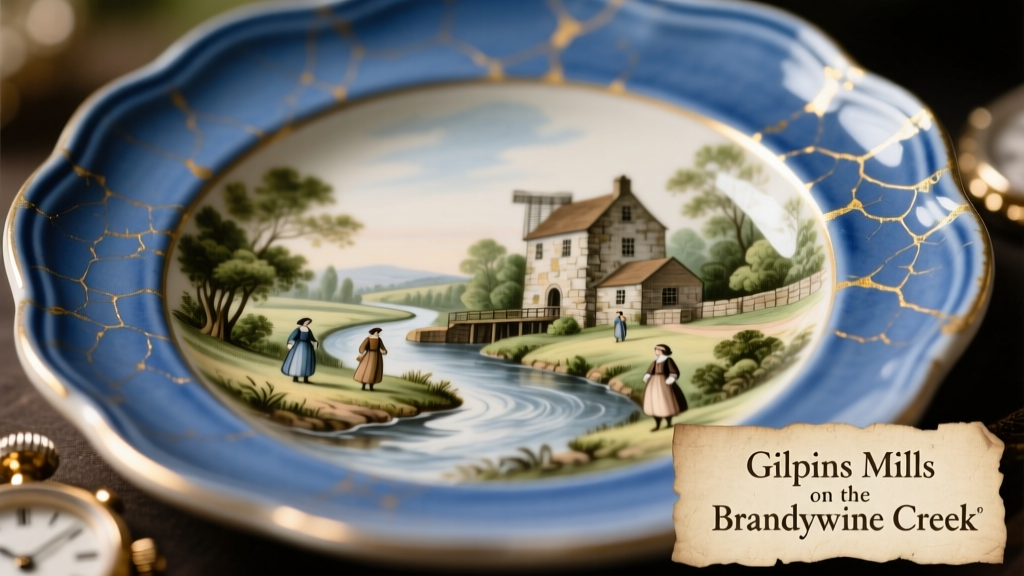
Staffordshire Blue Transfer-Printed Plate: Gilpin’s Mills on the Brandywine Creek, c. 1825–1835

Seeburg Pipe Organ Wide Rolls: Engineering, Collectibility, and Preservation of Mid-Century Mechanical Music

Rolex Submariner Ref. 1132630: A Definitive Analysis of the Transitional 'Cerachrom' Prototype
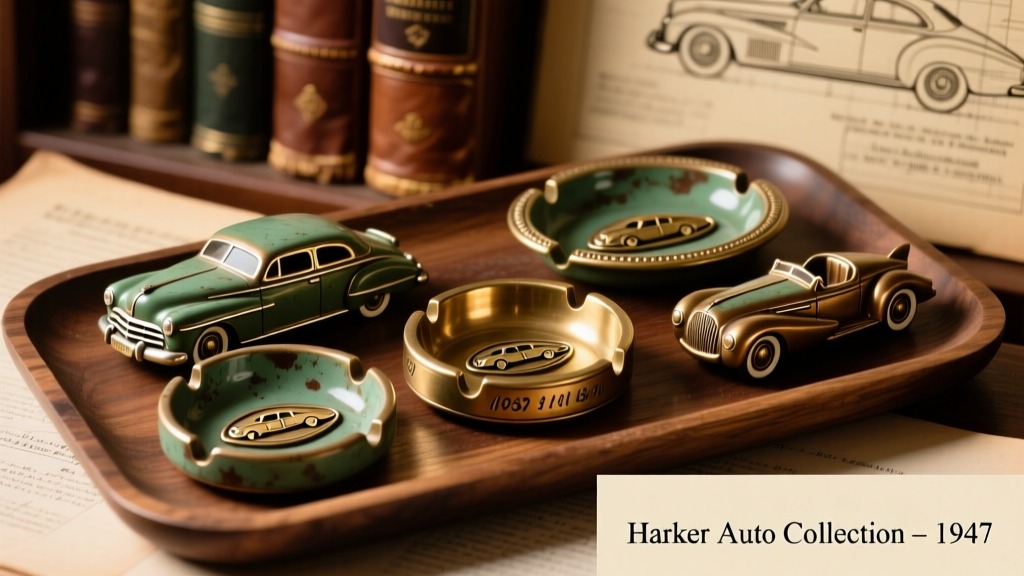
Harker Ashtray Set: A Rare Four-Piece Antique Automobile-Themed Tableware Ensemble
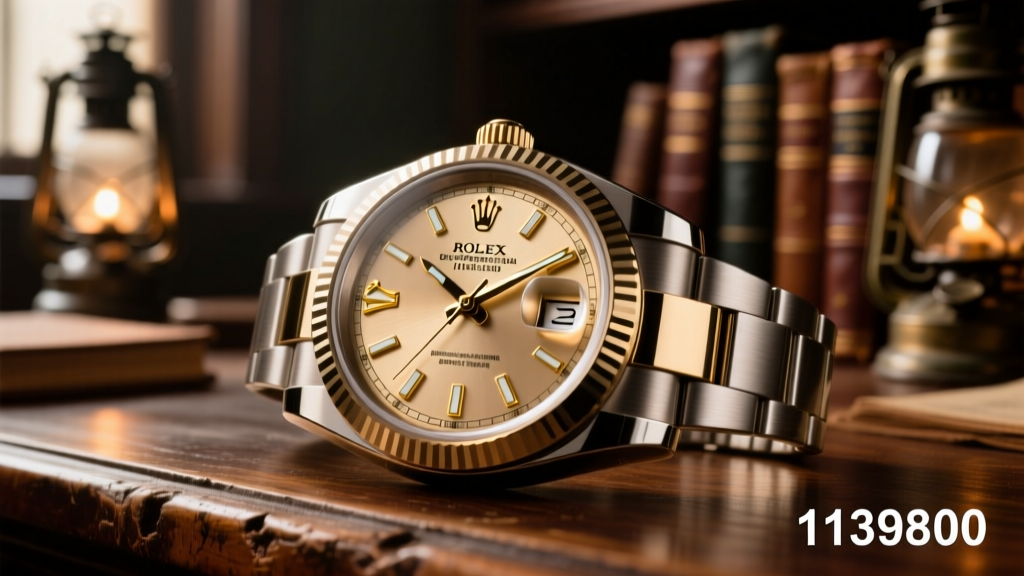
The Rolex Reference 1139800: A Definitive Analysis of the 1970s Oyster Perpetual Datejust in 14K Yellow Gold

Banks Magician 'Watch Me Grow' Man: A 1950s German Cylindrical Tin Box with Original Seed Packet & Instruction Sheet — Collector’s Deep Dive