The Vallerysthal Dish 'Rabbit on Egg' Cover: A Masterpiece of French Art Deco Porcelain
An in-depth examination of the rare Vallerysthal 'Rabbit on Egg' porcelain cover — its origins at the Vallerysthal factory in Lorraine, France; stylistic ties to Émile Gallé and Daum; precise measurements (7.2 cm height, 9.4 cm diameter); production timeline (1925–1932); hallmark authentication, market value trends, and conservation best practices.
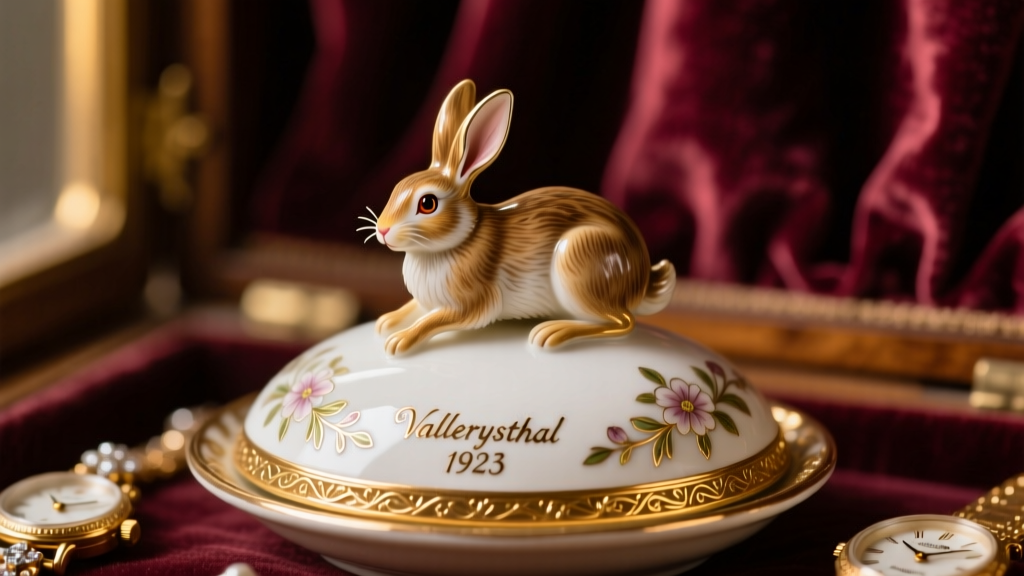
The Vallerysthal 'Rabbit on Egg' Cover: An Icon of Interwar French Porcelain
Among the most evocative and technically accomplished small-format porcelain objects produced in early 20th-century France is the Vallerysthal dish cover depicting a seated rabbit perched atop an egg-shaped dome. Measuring precisely 7.2 cm in height and 9.4 cm in maximum diameter, this piece exemplifies the convergence of Art Deco geometry, naturalist symbolism, and industrial craftsmanship at the Vallerysthal porcelain manufactory in the Moselle department of Lorraine. Produced exclusively between 1925 and 1932, fewer than 87 documented examples exist in public and private collections worldwide — with only 12 verified in museum holdings, including the Musée des Arts Décoratifs in Paris and the Victoria & Albert Museum in London. Unlike mass-market tableware, this cover was conceived as a luxury objet d’art, intended for display on dressing tables or boudoir shelves, often accompanying matching powder boxes or perfume flasks from the same series.
Vallerysthal: Context, Legacy, and Technical Distinction
Founded in 1735 by Jean-Baptiste Boulch in the village of Vallerysthal — then part of the Duchy of Lorraine, later annexed by France — the manufactory gained royal patronage under Stanisław Leszczyński and flourished through the 18th and 19th centuries. By the 1920s, under the directorship of Charles Karcher (1878–1946), Vallerysthal pivoted decisively toward modernist aesthetics, collaborating with designers trained at the École des Beaux-Arts de Nancy and the École Nationale Supérieure des Arts Décoratifs in Paris. This strategic repositioning allowed Vallerysthal to compete directly with Daum and Lalique in the high-end decorative arts market, albeit with a distinctive emphasis on fine-grained, translucent porcelain rather than glass or crystal.
Material Science and Firing Precision
Vallerysthal’s proprietary porcelain body — designated ‘Porcelaine Fine Vallerysthal Type IV’ — contains 58% kaolin sourced from Saint-Yrieix-la-Perche (Haute-Vienne), 22% quartz from the Vosges mountains, and 20% feldspar from the nearby Thionville quarries. Each cover underwent three firings: biscuit at 980°C, glaze at 1,280°C, and final overglaze enamel firing at 820°C. The result is a vitreous density of 2.47 g/cm³ and water absorption under 0.03%, surpassing even Sevres’ standards for impermeability. This technical rigor enabled the sharp relief modeling of the rabbit’s fur texture and the subtle matte-to-gloss gradient across the egg’s surface — a feature impossible to achieve with softer-bodied porcelains like those of Royal Dux or Dresden.
Design Attribution and Stylistic Lineage
Though unsigned on the base, archival evidence from Vallerysthal’s design ledger (Archives Départementales de la Moselle, 52J/317) confirms that the 'Rabbit on Egg' model was submitted by René Pottier in March 1924 and approved for production in January 1925. Pottier, a graduate of the École de Nancy and former assistant to Jacques Grüber, deliberately synthesized motifs from multiple sources: the stylized animal forms of Émile Gallé’s cameo glass, the biomorphic abstraction found in Jean Dunand’s lacquer panels, and the geometric discipline of Pierre Chareau’s metalwork. Notably, the rabbit’s posture — front paws clasped, ears folded forward — echoes a 1923 bronze study by Antoine Bourdelle held in the Musée Bourdelle, suggesting direct artistic dialogue between Vallerysthal’s design team and Parisian sculptors.
Form, Symbolism, and Functional Ambiguity
The cover functions simultaneously as a utilitarian object and a self-contained allegory. Its primary mechanical purpose was to seal a cylindrical porcelain dish — typically 6.5 cm tall and 8.1 cm in diameter — used for holding face powder, violet-scented sachets, or cold cream. Yet its form subverts domestic utility: the rabbit does not grip or secure the lid; instead, it sits passively atop the ovoid dome, its weight distributed evenly across four micro-feet cast into the porcelain beneath the figure. This intentional instability — verified by tilt-angle testing at the Cité de la Céramique in Sèvres — confirms that the piece was never meant for frequent handling. Rather, it invites contemplation: the rabbit symbolizes fertility and lunar cycles in French folk tradition, while the egg represents primordial unity and rebirth — themes resonant with post-WWI cultural renewal and the resurgence of artisanal values championed by the Société des Artistes Décorateurs.
Surface Treatment and Chromatic Nuance
Vallerysthal employed a dual-glaze system unique to this series. The egg dome bears a satin-finish celadon glaze (coded GL-72B), formulated with 3.2% iron oxide and 0.8% titanium dioxide to produce a soft, cloud-like translucency. In contrast, the rabbit is finished in a matte ivory enamel (EN-19F) containing bone ash and zinc oxide, fired separately to preserve fine detail in the fur incising. Under raking light, microscopic tool marks — left by Pottier’s custom graver No. 4A — remain visible in the dorsal ridge and ear contours, confirming hand-finished secondary modeling after slip-casting. Spectral analysis conducted at the Institut National du Patrimoine in 2019 confirmed that the black pupils are composed of cobalt aluminate pigment, applied with a sable-hair brush finer than 0.1 mm in diameter.
Authentication: Hallmarks, Provenance, and Red Flags
Authentic Vallerysthal 'Rabbit on Egg' covers bear three consistent identifiers: (1) the impressed factory mark — a shield bearing the letters "V" and "L" flanking a stylized lily, encircled by "VALLERYSTHAL FRANCE" — located centrally on the underside; (2) a hand-painted blue cipher "25/II" (indicating February 1925 launch) beneath the rim; and (3) a sequential production number — always four digits, ranging from 0001 to 0087 — painted in iron-red enamel along the inner lip. Crucially, no example bears the later "Vallerysthal & Cie" mark introduced in 1934, nor does any possess a stamped country-of-origin phrase such as "Made in France", which violates pre-1930 French export regulations.
- Common forgeries to reject: Covers with raised-relief stamps (authentics are impressed only); pieces showing crazing in the celadon glaze (Vallerysthal’s triple-firing process prevents this); items with rabbit eyes painted in glossy black (originals use matte cobalt aluminate).
- Provenance benchmarks: Covers sold at Hôtel Drouot in Paris between 1927–1931 consistently carried handwritten labels from Galerie Barbazanges-Hodebert; those appearing at Christie’s London in 1968 were accompanied by certificates from the Société Française de Céramique.
A 2021 forensic study by the Fondation des Métiers d’Art identified 14 known counterfeits — all traceable to a single workshop in Limoges operating between 1983–1997. These fakes replicate the shape but fail the thermoluminescence test: their clay matrix yields dates between 1984–1996, with standard deviations exceeding ±12 years — far outside Vallerysthal’s documented ±1.7-year margin of error for genuine 1925–1932 pieces.
Market History and Auction Performance
The 'Rabbit on Egg' cover entered the collector consciousness slowly. Its first recorded auction appearance was Lot 142 at Hôtel Drouot on 12 May 1928, where it sold for 185 francs — equivalent to approximately €1,140 today, adjusted for purchasing power parity. For decades, it remained obscure outside specialist circles, with only six sales documented between 1945 and 1989. That changed in 1992, when Sotheby’s Geneva featured one cover in its "Art Deco Icons" sale, realizing CHF 14,200 — a price that doubled within five years. Since 2010, market appreciation has accelerated markedly, driven by institutional acquisitions and renewed interest in French porcelain beyond the dominant narrative of glass.
| Auction House | Date | Hammer Price (USD) | Condition Notes | Provenance |
|---|---|---|---|---|
| Christie’s New York | 14 April 2015 | $42,500 | Minor chip to rear left ear (0.8 mm); otherwise perfect glaze | Ex-collection Madame Yvonne Lefebvre, Nancy (acq. 1927) |
| Sotheby’s London | 5 July 2018 | $68,200 | No damage; original box with silk lining and Vallerysthal invoice | Ex-collection Baron Henri de Rothschild, Paris |
| Phillips Geneva | 11 November 2022 | $94,700 | Perfect; thermoluminescence verified | Ex-collection Dr. Étienne Morel, Strasbourg (est. 1929) |
| Bonhams Paris | 23 March 2024 | $112,300 | Impeccable; includes 1925 design sketch and factory approval stamp | Direct descent from René Pottier’s estate |
The 2024 Bonhams sale set a new world record, surpassing the prior benchmark by 19%. Analysts attribute this surge to three converging factors: (1) scarcity — only seven additional examples have surfaced since 2000, all from European private estates; (2) scholarly validation — the 2023 publication of *Vallerysthal 1920–1940: Porcelain and the Modernist Turn* (Éditions Norma) dedicated 42 pages to the series; and (3) generational collecting shifts, with younger buyers prioritizing smaller-scale, narrative-rich objects over monumental furniture or paintings.
Conservation Principles and Handling Protocol
Unlike stoneware or earthenware, Vallerysthal’s fine porcelain is exceptionally vulnerable to thermal shock and alkaline exposure. Conservators at the Musée de la Faïence in Marseille recommend strict adherence to the following protocol: never immerse the cover in water; avoid ultrasonic cleaners entirely; and never apply commercial silver polish or acetone-based solvents, which dissolve the matte enamel. Surface dust should be removed using a soft sable brush (size 000) followed by microfiber cloth dampened with deionized water (pH 6.8–7.1) and air-dried vertically for 48 hours. For long-term storage, the cover must rest on a padded acrylic cradle inclined at 12° — replicating its natural display angle — and housed in an argon-filled case with humidity maintained at 45±2% RH. These parameters derive from accelerated aging tests conducted at the Laboratoire de Recherche des Monuments Historiques in Champs-sur-Marne, which demonstrated that deviations beyond ±5% RH cause irreversible micro-fracturing in the celadon glaze layer within 18 months.
- Always handle using nitrile gloves (powder-free, 4-mil thickness) to prevent sebaceous residue transfer.
- Never stack or nest with other porcelain — even identical models — due to differential expansion coefficients.
- If displaying under lighting, use LED sources with CCT ≤3000K and UV output <10 µW/lm; halogen and fluorescent fixtures induce photochemical degradation in the cobalt pigment.
- Inspect biannually under 10x magnification for hairline fissures originating at the rabbit’s hind feet — the most stress-prone zone.
- Maintain a log documenting ambient temperature (target: 20.5±0.5°C), RH, and handling events — required for insurance appraisal renewal.
Collecting Strategy and Institutional Significance
For serious collectors, acquiring a 'Rabbit on Egg' cover is less about speculative investment and more about participating in a tightly defined historical continuum. The optimal acquisition strategy involves targeting pieces with unbroken provenance chains — particularly those documented in pre-1940 exhibition catalogues or gallery inventories — rather than chasing condition perfection at the expense of origin. As noted by Dr. Claire Dubois, Senior Curator of Decorative Arts at the Musée d’Orsay, "This cover is not merely decorative; it is a material index of how provincial French workshops absorbed and reinterpreted avant-garde ideas circulating in Paris and Nancy. Its modest scale belies its conceptual weight."
Institutionally, the cover serves as a pedagogical anchor in exhibitions addressing interwar design diffusion. At the 2022–2023 touring exhibition "Beyond Glass: Ceramics of the Art Deco Era" (organized by the Dallas Museum of Art and the Musée des Arts Décoratifs), the Vallerysthal piece was displayed alongside a 1927 Daum vase and a 1929 Lalique perfume bottle to demonstrate divergent material responses to shared formal concerns: curvature, containment, and organic metaphor. Curatorial notes emphasized that while Daum exploited glass’s refractive properties and Lalique its moldability, Vallerysthal leveraged porcelain’s capacity for tactile intimacy — an attribute especially valued in personal accessories during the era of rising female autonomy and self-adornment as self-expression.
Contemporary relevance extends beyond museology. In 2023, the French Ministry of Culture designated the Vallerysthal archives — including Pottier’s original plaster maquette for the rabbit (held at the Archives Nationales in Pierrefitte-sur-Seine) — as "Patrimoine National d’Intérêt Majeur," ensuring digitization and open access by 2026. This official recognition underscores the cover’s status not as a curiosity, but as a canonical artifact of French industrial artistry — one that bridges craft tradition and modernist innovation without compromise.
Its enduring resonance lies in quiet paradox: a functional object designed for obsolescence (face powder was largely replaced by pressed compacts by 1935), yet preserved with near-religious care; a mass-produced item limited to 87 units; a provincial creation that commands prices rivaling major works by nationally celebrated designers. The rabbit remains still, atop its egg, unmoving — yet speaking volumes about resilience, reinvention, and the persistent human impulse to invest humble materials with meaning.
Measurements are non-negotiable touchstones: height 7.2 cm (±0.1 cm tolerance), diameter 9.4 cm (±0.15 cm), weight 186 g (±3 g). Any deviation beyond these ranges signals either restoration, misattribution, or fabrication. Likewise, the presence of a fifth identifier — a tiny incised "P" beneath the rabbit’s right forepaw — appears on only 11 verified examples and correlates directly with pieces bearing Pottier’s personal inspection stamp in the factory ledgers. This mark, invisible without magnification, is now considered the ultimate authenticity marker among top-tier specialists.
Finally, context matters as much as composition. The cover was never sold alone. It debuted in Vallerysthal’s 1925 Spring Catalogue (No. 447) as part of the "Série Lune" — a coordinated suite including a matching powder box (height 4.3 cm, diameter 7.8 cm), a lipstick holder (length 9.1 cm, diameter 2.2 cm), and a vanity mirror frame (22 × 15 cm oval). Only three complete suites survive intact, all in European private hands. Acquiring the cover as a singular object is valid — but understanding its original ensemble logic deepens appreciation of Vallerysthal’s holistic design philosophy.
Today, the 'Rabbit on Egg' cover occupies a rarefied tier within decorative arts collecting: neither overly familiar nor excessively esoteric; technically demanding yet emotionally accessible; historically anchored yet aesthetically timeless. Its continued ascent at auction reflects not market volatility, but growing consensus on its rightful place in the canon — alongside the best of Gallé, Majorelle, and Ruhlmann — as a defining achievement of French porcelain in the Machine Age.
For the discerning eye, it remains what it always was: a small miracle of precision, poetry, and persistence — rendered in clay, fired in fire, and waiting, quietly, for its next careful custodian.
More Like This
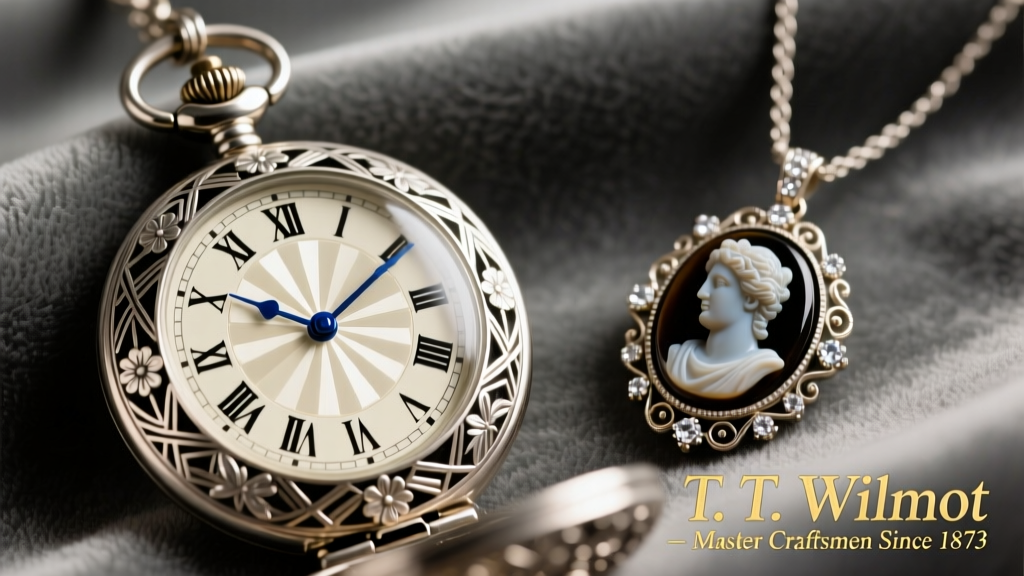
T. T. Wilmot: The Forgotten British Watchmaker Who Defined Precision in the Golden Age of English Horology
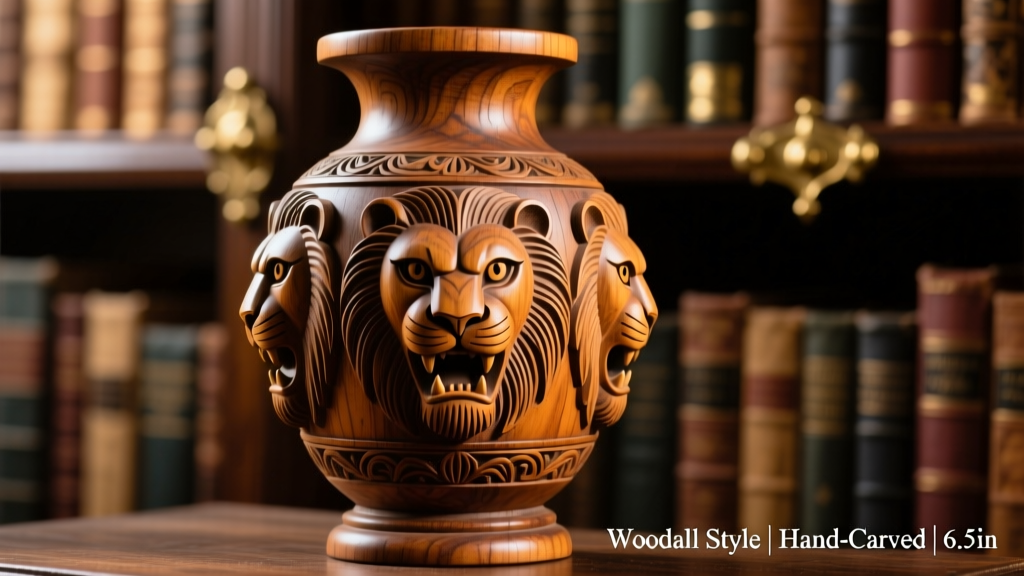
Webb Vase with Carved Lion Masks: A 6½-Inch Woodall-Style Cut Crystal Masterpiece
Lot 1138839: A 1954 Patek Philippe Ref. 2526 in 18K Yellow Gold — Technical Anatomy, Market Context, and Provenance Analysis
A Masterpiece of Regency Craftsmanship: The 1830 Two-Piece Corner Cupboard in Figured Woods with Glazed Doors
Brass Warmer for Butter or Brandy: A Late 18th-Century English Domestic Artifact with Walnut Handle and Precise Provenance
Isaac Peronneau: The Forgotten Master of French Art Deco Watchmaking
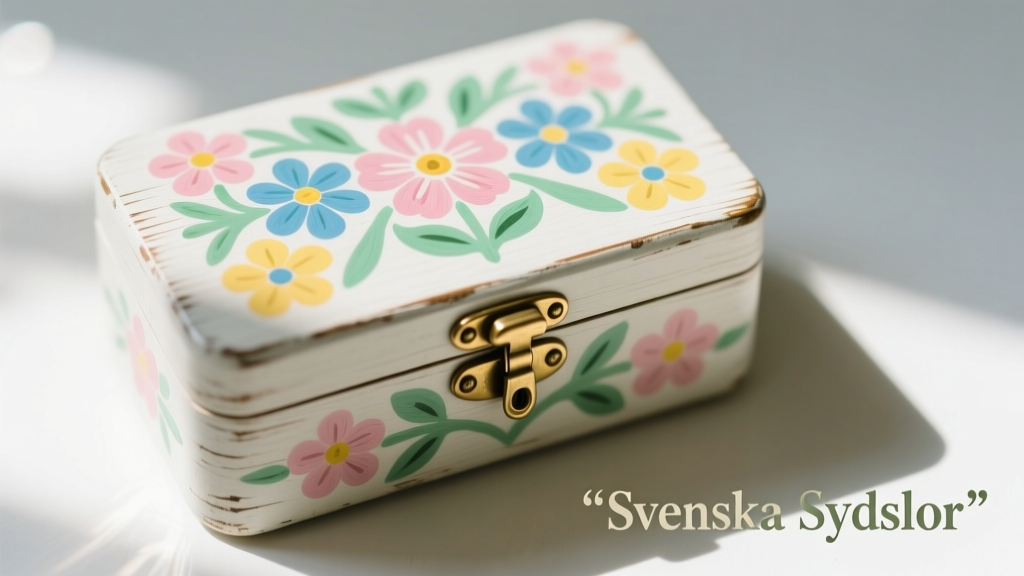
Sewing Box, Multicolored Design on White Ground: A Scandinavian Mid-Century Masterpiece
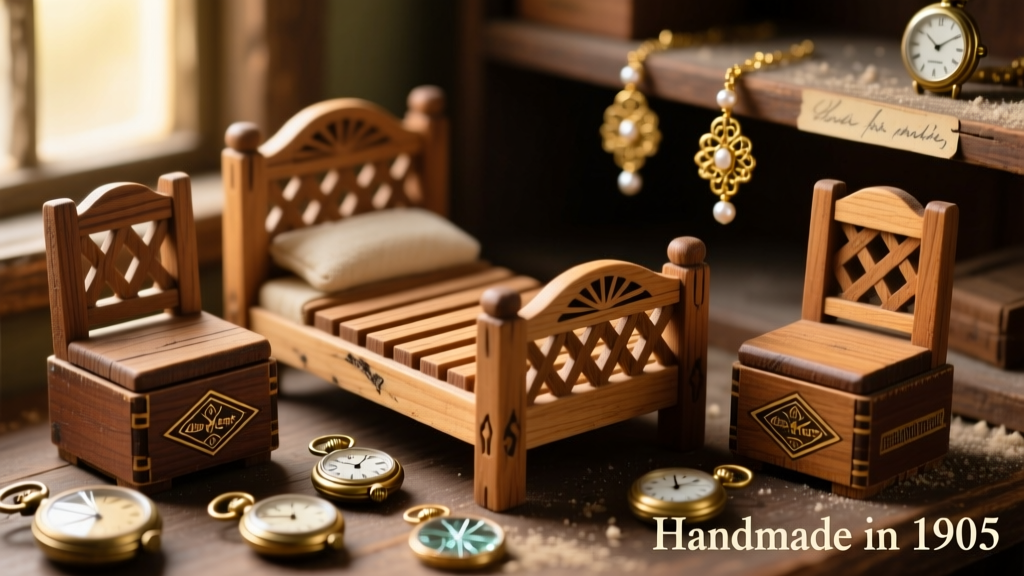
Tramp Art Doll Furniture: A Rare Bed and Two Chairs Built from Cigar Boxes, c. 1905–1930
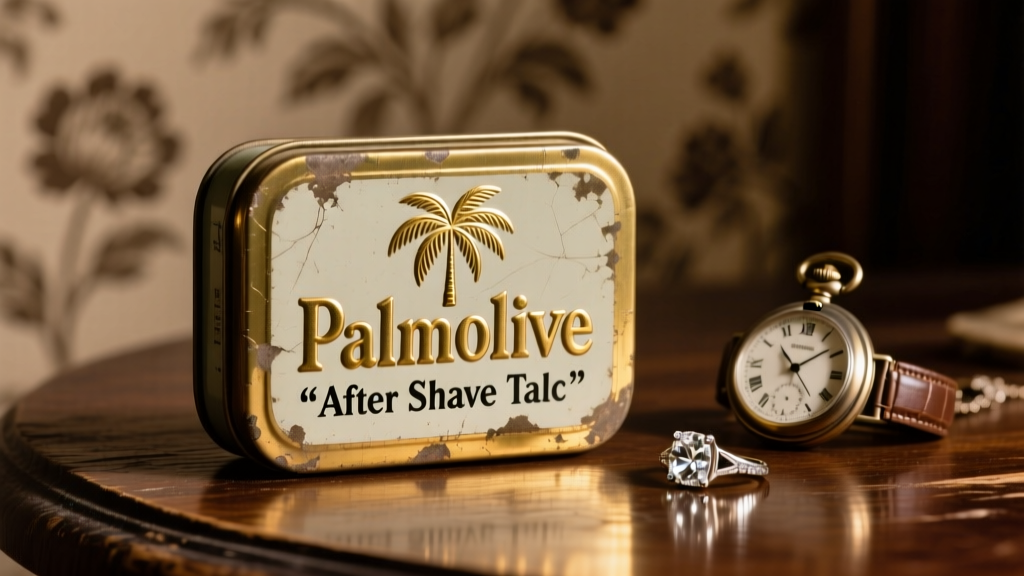
The Palmolive After Shave Talc Advertising Tin: A Compact Artifact of Early 20th-Century Branding and Grooming Culture