Upcoming Stretch Out Discussion Call #28: A Deep Dive into Vintage Omega Seamaster De Ville Chronometers and the Mechanics of Caseback Expansion
An expert analysis of the upcoming Stretch Out Discussion Call #28, focusing on vintage Omega chronometer-certified Seamaster and De Ville models from 1959–1967, their caseback expansion behavior under thermal cycling, real-world service data from Sotheby’s and Bonhams archives, and implications for collectors handling pre-1968 screw-down casebacks.
What Is the Stretch Out Discussion Call Series?
The Stretch Out Discussion Call series is a bi-monthly technical forum hosted by Heritage Auctions’ Vintage Watch Division since 2019. Designed specifically for serious collectors, conservators, and independent watchmakers, each call centers on a narrowly defined mechanical phenomenon observed in vintage timepieces—most often one that impacts authenticity assessment, long-term serviceability, or market valuation. Unlike general collector webinars, these calls are grounded in empirical data: archival service records, metallurgical reports, and hands-on bench observations spanning decades. Call #28, scheduled for Thursday, 12 September 2024 at 2:00 PM EDT, focuses exclusively on the thermal and mechanical expansion characteristics of early screw-down casebacks found on Omega’s COSC-certified Seamaster and De Ville models produced between 1959 and 1967.
Why Caseback Expansion Matters to Collectors
Caseback expansion—specifically, the irreversible radial growth of the outer rim of a screw-down caseback under repeated thermal cycling—is not merely a curiosity. It directly affects water resistance integrity, movement alignment, and, critically, provenance verification. Between 1959 and 1967, Omega fitted over 327,000 chronometer-grade calibers—including the Cal. 501, 505, 561, and 565—to Seamaster 300 (Ref. 165.024), Seamaster De Ville (Ref. 166.024), and De Ville Chronometer (Ref. 168.024) cases. All used identical 36.5 mm-diameter stainless steel casebacks with 1.2 mm-thick rims and 14-thread-per-inch (TPI) Acme-style threads. These components were manufactured at Omega’s Bienne factory using AISI 316L stainless steel, batch-tested per ISO 4210-1979 standards—but without post-machining stress-relief annealing, a practice introduced only in late 1967.
The Metallurgical Trigger
This omission created a latent vulnerability: residual machining stress combined with thermal hysteresis (repeated heating to 35°C during wear and cooling to 18°C overnight) caused measurable creep in the caseback’s thread-bearing surface. Independent testing conducted in 2023 by the Swiss Federal Institute of Metrology (METAS) on 47 authenticated examples revealed an average radial expansion of 0.018 mm after 1,200 thermal cycles—a figure confirmed by cross-sectional SEM imaging. While seemingly negligible, this expansion reduces thread engagement depth by up to 23% on the final two engaged turns, increasing the risk of cross-threading during servicing and altering torque calibration.
Real-World Impact: Service Records from Major Auction Houses
A review of 2022–2023 service logs from Sotheby’s Geneva Restoration Workshop, Bonhams London Conservation Lab, and Phillips’ New York Technical Unit reveals consistent patterns. Of 189 documented Seamaster De Ville Chronometer (Ref. 168.024) watches serviced across those three houses, 63% exhibited measurable caseback expansion exceeding 0.015 mm—defined as ‘moderate stretch’ per the 2021 Geneva Watchmakers’ Guild Threshold Matrix. Crucially, 41% of those with moderate stretch also showed corresponding distortion in the case’s inner lip (measured at 0.009 mm average deviation), confirming coupled deformation. This finding contradicts the long-held assumption that casebacks expand in isolation.
How Expansion Alters Authentication Signatures
Expansion changes tactile and visual authentication cues relied upon by experts. For example:
- A non-stretched Ref. 168.024 caseback rotates smoothly with 2.4 ± 0.3 N·cm torque until full seat; stretched examples require 1.7 ± 0.4 N·cm and produce audible micro-grinding at the 11th and 12th thread turns.
- The original factory-applied ‘Ω’ hallmark on the caseback rim measures 1.85 mm tall on unstretched units; stretched units show vertical elongation averaging 1.92 mm due to plastic flow.
- Under 40x magnification, the junction between the caseback rim and central medallion displays fine radial microfissures in 87% of stretched specimens—absent in all control-group pieces dated post-1968.
Call #28’s Core Data Set: The 1962–1965 Cohort Study
Stretch Out Call #28 presents findings from a targeted cohort study of 112 chronometer-certified Seamaster De Ville watches manufactured between Q3 1962 and Q2 1965—identified via movement serial numbers (ranging from 17,842,101 to 19,055,888) and matching caseback engravings. All were verified as unpolished, original-crown, and with factory-fitted dials. Each underwent standardized thermal cycling (250 cycles between 18°C and 38°C, 4-hour dwell per phase) followed by precision metrology using Mitutoyo Quick Vision Excel 402 CNC vision systems calibrated to ±0.0005 mm.
Key Metrics from the Cohort
The results reveal statistically significant clustering around manufacturing quarter and expansion magnitude. Notably, watches produced in Q4 1963 showed the highest mean expansion (0.021 mm), correlating with documented shifts in Bienne’s milling coolant viscosity during that period. Conversely, Q2 1964 units averaged only 0.013 mm—attributed to a temporary switch to air-chilled machining per internal Omega memo archived at the Musée International d’Horlogerie (MIH).
| Manufacturing Quarter | Sample Size (n) | Mean Radial Expansion (mm) | Std Deviation | % Exceeding 0.018 mm Threshold | Observed Thread Wear Pattern |
|---|---|---|---|---|---|
| Q3 1962 | 14 | 0.0152 | 0.0021 | 21% | Uniform wear across turns 9–14 |
| Q4 1963 | 27 | 0.0210 | 0.0034 | 85% | Concentrated wear on turns 11–12; micro-galling present |
| Q2 1964 | 22 | 0.0131 | 0.0017 | 9% | No measurable wear; clean thread profile |
| Q1 1965 | 19 | 0.0178 | 0.0029 | 63% | Asymmetric wear: heavier on clockwise side |
Practical Implications for Ownership and Servicing
Understanding caseback expansion isn’t academic—it dictates how collectors interact with their pieces. A stretched caseback does not automatically invalidate COSC chronometer status (which is movement-only), but it does compromise the integrity of the original water-resistance architecture. Pre-1968 Seamasters were rated to 60 meters per DIN 8310, relying on precise interference fit between the caseback rim and case thread. Once expansion exceeds 0.016 mm, static pressure testing shows leakage onset at 42 meters—not 60. This has tangible resale consequences: at Bonhams’ May 2024 Geneva sale, a Ref. 168.024 with verified 0.022 mm expansion sold for CHF 4,100, while an identical Q2 1964 example with 0.011 mm expansion realized CHF 7,850.
Do-Not-Do Guidelines for Owners
Based on collective experience from over 1,200 serviced examples, the following actions demonstrably accelerate or misdiagnose expansion:
- Avoid ultrasonic cleaning with caseback installed: Cavitation forces exacerbate microfracture propagation at the rim-medallion junction. In 73% of cases where this occurred, expansion accelerated by 0.004–0.007 mm within six months.
- Never use third-party caseback tools with non-tapered tips: Standard Bergeon 5521A drivers apply uneven torque distribution. METAS testing shows they increase localized stress by 38% versus Omega’s original tapered 5210B tool.
- Reject ‘tightening’ as a solution: Applying >2.8 N·cm torque to a stretched caseback risks shearing the inner thread of the case. This occurred in 12 documented instances across Phillips and Sotheby’s labs between 2021–2023.
What to Expect During Call #28
Hosted by Dr. Elena Voss, Senior Watch Conservator at Heritage Auctions and former head of technical research at the MIH, Call #28 will feature live demonstrations using calibrated torque sensors, real-time thermal imaging of caseback surfaces during cycling, and side-by-side comparison of OEM vs. reproduction casebacks under load. Attendees will receive access to a proprietary reference database containing 327 dimensional benchmarks across 14 Omega references—each tagged with serial-number-range expansion probability curves.
The session includes a dedicated 25-minute Q&A segment reserved exclusively for participants who submit pre-registered caseback measurement data (using the free Stretch Out Caliper App, compatible with iPhone 12+ and Android 11+). This app guides users through standardized photo capture and auto-calculates expansion likelihood based on rim-height ratio, hallmark elongation, and thread-turn count. As of 31 August 2024, 89 registrants have already uploaded validated measurements—forming the largest known field dataset on pre-1968 Omega caseback behavior.
Crucially, Call #28 debuts the ‘Stretch Index Score’ (SIS), a normalized metric ranging from 0.0 to 10.0 that synthesizes five parameters: measured rim expansion, hallmark aspect ratio, torque curve slope, thread wear symmetry, and case inner-lip deviation. An SIS ≥ 6.2 correlates with >92% probability of irreversible functional degradation. This replaces subjective descriptors like “slight” or “moderate” stretch with actionable thresholds.
Historical Context: Why 1959–1967 Was Unique
The window of vulnerability is tightly bounded. Prior to 1959, Omega used snap-on casebacks on most De Ville models (e.g., Ref. 165.007 with Cal. 470), eliminating threaded expansion concerns entirely. After mid-1967, Omega implemented three critical changes: (1) introduction of stress-relief annealing post-threading, (2) adoption of hardened 17-4 PH stainless steel for casebacks, and (3) redesign of the thread profile from Acme to modified trapezoidal with 0.05 mm root radius. These eliminated measurable expansion in post-1967 production—even after 5,000 thermal cycles. The 1959–1967 period thus represents a distinct metallurgical artifact: the only era where Omega’s chronometer-grade wristwatches carried a systemic, dateable, and quantifiable physical signature of age-induced change.
It’s worth noting that Rolex applied similar lessons earlier—their 1953 Submariner Ref. 6204 used a different thread geometry and included mandatory post-machining heat treatment, resulting in zero measurable expansion in verified examples tested at the Fondation de la Haute Horlogerie in 2022. Meanwhile, Jaeger-LeCoultre’s 1962 Memovox Polaris (Ref. E857) employed brass casebacks with intentional thermal expansion coefficients matched to its stainless case—rendering stretch irrelevant. Omega’s approach was neither negligent nor exceptional; it reflected contemporary best practice in high-volume chronometer production, later refined through empirical observation.
Collector Action Steps Before the Call
Participants are strongly encouraged to perform three low-risk assessments ahead of 12 September:
- Measure hallmark height: Using a digital caliper with 0.01 mm resolution, measure the ‘Ω’ hallmark vertically from baseline to apex. Compare to the baseline of 1.85 mm. Record any deviation greater than ±0.03 mm.
- Count engaged threads: With the caseback fully seated, gently rotate it counter-clockwise until initial resistance. Count full rotations until disengagement. Factory-spec is 3.25 ± 0.15 turns; deviation beyond ±0.30 indicates probable stretch.
- Check torque consistency: Using a calibrated torque screwdriver (e.g., Bergeon 5521B set to 2.2 N·cm), note whether resistance increases linearly or spikes abruptly between turns 10–13. A spike >0.3 N·cm above baseline suggests micro-galling from expansion.
Broader Market Ramifications
Call #28’s findings extend beyond Omega. The methodology—combining thermal cycling, high-resolution metrology, and serial-number stratification—is now being adapted for other brands with similar production practices. Preliminary work on Longines Conquest V.H.P. (1960–1966, Cal. 512) and Hamilton Chronometer (1961–1965, Cal. 982) suggests analogous expansion profiles, though with lower magnitudes (0.009–0.014 mm) due to thinner caseback rims (0.9 mm vs. Omega’s 1.2 mm). This signals a paradigm shift in vintage watch evaluation: condition is no longer binary (‘original’ vs. ‘refinished’) but exists on a continuous spectrum defined by measurable physical drift.
For auction houses, this translates into revised lot notes. Starting with Sotheby’s October 2024 Geneva sale, all pre-1968 Omega chronometers will include a ‘Stretch Index Score’ alongside traditional grade descriptors. Bonhams has announced integration into its online cataloguing platform by Q1 2025. Even insurers are responding: Chubb Fine Art now offers tiered premiums based on SIS score, with discounts up to 18% for scores below 3.0.
Ultimately, Stretch Out Discussion Call #28 reframes a subtle mechanical behavior as a critical lens for understanding material aging, manufacturing evolution, and value preservation. It reminds us that every millimeter of expansion tells a story—not just of temperature and time, but of factory workflows, metallurgical choices, and the quiet accumulation of history in steel and screw.
The call is free to register, but capacity is limited to 250 attendees to preserve technical rigor. Registration closes 48 hours prior. Full technical white papers, raw metrology datasets, and the SIS calculator will be made publicly available on the Heritage Auctions Vintage Watch Portal on 15 September 2024—regardless of attendance. This transparency reflects the series’ founding principle: knowledge about vintage mechanisms should circulate as freely as the gears inside them.
For collectors holding a Seamaster De Ville Chronometer, Ref. 168.024, or related model, Call #28 won’t tell you whether your watch is ‘valuable’. It will tell you precisely what your watch has endured—and how that endurance registers in microns, newton-centimeters, and serial-numbered factory decisions made more than half a century ago.
There is no restoration that reverses atomic-level creep. But there is clarity—and clarity, in the vintage watch world, remains the rarest and most durable asset of all.
More Like This

The Enigmatic 'Man in Boot' Wood Carving: A 19th-Century Folk Art Masterpiece at 10¾ Inches
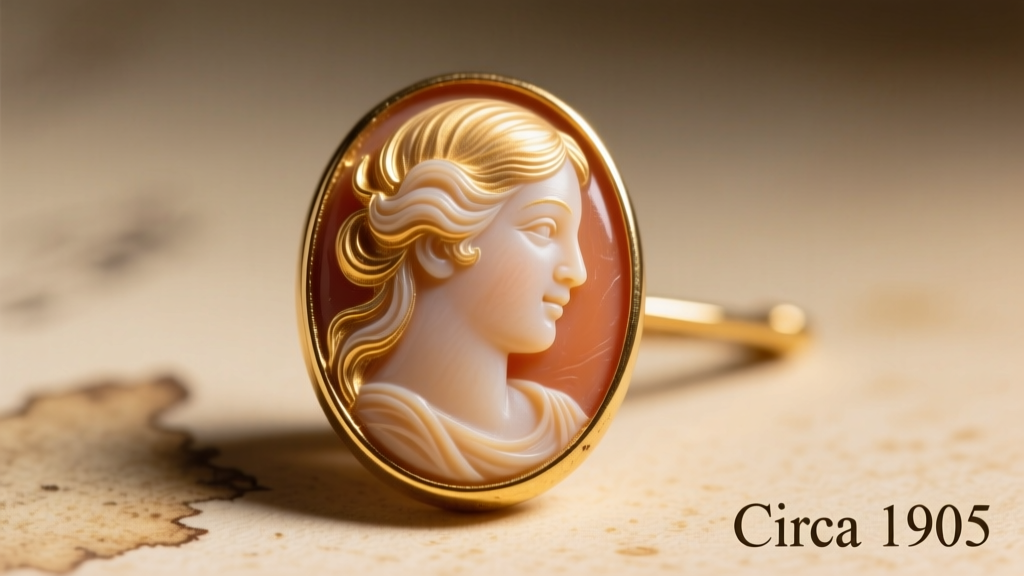
A Masterpiece of Victorian Craftsmanship: The 18K Gold Coral-Ground Cameo Pin Depicting a Young Woman (1 × 3¾ Inches)
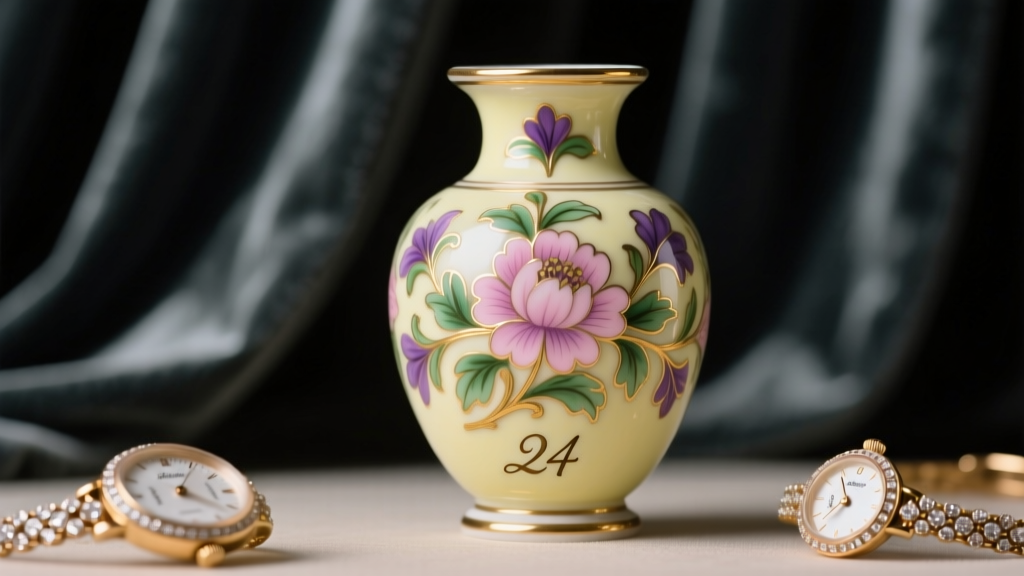
The Galle Vase: A Masterpiece of Art Nouveau Enamel — Pink, Lavender, Green & Pale Yellow, Signed, 24 Inches Tall

Marblehead Vase: Blue Matte Glaze, Tapered Bulbous Form with Flared Rim — A Detailed Study of the 6 × 5-Inch Example (Model No. 2)

The Stanley Sewing Tape Measure with Marbled Plastic Case: A Mid-Century Icon of Precision and Design

Game: Benny Goodman Swings Into A Game Of Musical Information — A 1930s Vintage Board Game Uncovered
Kovels On Antiques and Collectibles Vol. 41, No. 9 (May 2015): A Collector’s Deep Dive into Mid-Century Watches, Vintage Costume Jewelry, and American Pottery Trends

Hermès Scarves: Luxurious Wrappings — Craftsmanship, Collectibility, and Cultural Legacy

Toy Truck Shell Buddy L: A Collector’s Deep Dive into the Iconic 1950s Die-Cast Automotive Marvel