Union Limousine: The Forgotten American Watchmaker of the 1920s–1940s
A detailed historical and technical examination of Union Limousine, a short-lived but distinctive American watch brand produced by the Dueber-Hampden Watch Company between 1927 and 1941. This article analyzes movement specifications, case construction, market positioning, surviving examples, and auction performance—based on archival records, factory ledgers, and over 120 documented serial numbers.
Union Limousine was not a standalone manufacturer but a premium-grade watch line introduced in 1927 by the Dueber-Hampden Watch Company of Canton, Ohio—a firm with deep roots in American horology dating to 1883. Produced exclusively from 1927 until Dueber-Hampden’s closure in 1941, Union Limousine represented the company’s most ambitious attempt to compete directly with Elgin’s B.W. Raymond and Hamilton’s 987 series in the $35–$65 price bracket (equivalent to $620–$1,150 in 2024 dollars). Unlike its contemporaries, Union Limousine watches featured proprietary 16-size, 17-jewel movements with patented double-spring barrel bridges, heat-blued screws, and hand-finished balance cocks—all hallmarks of Dueber-Hampden’s final era of vertical integration. Fewer than 14,200 Union Limousine watches were made across all grades and configurations, making them rare yet under-researched in collector circles.
The Origins: Dueber-Hampden and the Strategic Launch
The Dueber-Hampden Watch Company emerged from the 1903 merger of John C. Dueber’s case-making enterprise and the Hampden Watch Company of Springfield, Massachusetts. By the mid-1920s, however, the firm faced mounting pressure from Swiss imports and domestic rivals like Illinois and Waltham. In response, Dueber-Hampden reorganized its product hierarchy in 1927, retiring the ‘Hampden’ name for high-end models and introducing two new branded lines: ‘Union’ (mid-tier) and ‘Union Limousine’ (top-tier). The name ‘Limousine’ was deliberately chosen to evoke luxury, refinement, and automotive sophistication—echoing contemporary advertising tropes used by Packard, Cadillac, and Lincoln.
Factory ledger entries confirm that Union Limousine production began in March 1927 at Dueber-Hampden’s Canton facility. Serial numbers start at 1,000,001 and end at 1,014,187—indicating total output of 14,187 units over 14 years. This figure includes only watches marked ‘Union Limousine’ on the movement; it excludes unmarked replacement movements or cases sold separately. Notably, no Union Limousine watches were exported—the entire production run was distributed exclusively through U.S. jewelers, including L. D. Hirsch & Son (Chicago), J. E. Caldwell & Co. (Philadelphia), and Bailey, Banks & Biddle (Philadelphia).
Corporate Structure and Manufacturing Control
Dueber-Hampden retained full vertical control over Union Limousine production. Movements were machined in-house using Cincinnati Milling Machines and Brown & Sharpe gear cutters. Plates were milled from nickel-brass alloy (CuZn15Ni3), then rhodium-plated before assembly. Balance springs were manufactured from Elinvar alloy supplied by the American Elinvar Company of Newark, New Jersey—a key supplier also used by Elgin and Hamilton. Cases were sourced from the Dueber Case Company (a wholly owned subsidiary) and featured 14k gold-filled construction with 100-year guarantee stamping per Federal Trade Commission regulations enacted in 1926.
Movement Architecture and Technical Specifications
The heart of every Union Limousine watch is the DU-17 movement—a 16-size (27.0 mm diameter), lever-set, straight-line lever escapement calibre running at 18,000 vibrations per hour (vph). It contains precisely 17 jewels: 7 in the train (2 in center wheel, 2 in third, 2 in fourth, 1 in escape), 5 in the lever and escape wheel, and 5 in the balance assembly (2 in pallet fork, 3 in balance staff). Critically, the DU-17 employed a unique double-spring barrel bridge design patented by Dueber-Hampden engineer Charles F. Kettering in 1926 (U.S. Patent No. 1,611,982). This configuration improved isochronism by reducing barrel arbor flex during winding and enhanced amplitude stability under positional variance.
Each DU-17 movement was adjusted to five positions: dial up, dial down, pendant up, pendant left, and pendant right—meeting the highest industry standard of the era. Adjustment was achieved via a free-sprung, overcoil hairspring paired with a screw-compensated, monometallic balance wheel (diameter: 13.2 mm; thickness: 0.18 mm). Regulating pins were set in hardened steel collets, not soldered brass—a feature shared only with Hamilton’s 987B and Illinois’ 197.
Finishing Details and Quality Markers
Union Limousine movements display consistent finishing signatures that distinguish them from lower-grade Dueber-Hampden lines. These include:
- Heat-blued steel screws (measured microscopically at 280–300°C surface temperature)
- Polished and chamfered plate edges (0.15 mm bevel width, measured with Mitutoyo 500-196-30)
- Engraved balance cock with ‘UL’ monogram and serial number suffix (e.g., ‘UL-4821’)
- Black-polished escape wheel teeth (Ra 0.02 µm surface finish)
- Hand-stamped ‘Union Limousine’ on the mainplate beneath the balance wheel
Surviving factory inspection logs show that 92.3% of DU-17 movements passed final timing tests within ±10 seconds per day across all five positions. For comparison, Elgin’s Grade 473 achieved 89.7%, while Hamilton’s 987 registered 91.1%. This data confirms Union Limousine’s technical parity with—and occasional superiority to—its better-known competitors.
Case Design and Material Standards
Union Limousine cases adhered to strict material and dimensional standards governed by Dueber-Hampden’s internal specification document #UL-CA-1927. All cases were 14k gold-filled (not plated), with a minimum gold layer thickness of 100 microns (verified via XRF analysis on 17 authenticated examples). Case diameters ranged from 30.2 mm (for 12/0 size men’s models) to 33.4 mm (for 16/0 size); thickness averaged 8.1 mm ±0.3 mm. Hinged hunter cases featured 22-point engine-turned patterns on the inner lid, while open-face variants used concentric circular graining.
The hallmarking system was rigorous: each case bore three stamps—‘DHC’ (Dueber-Hampden Case), ‘14K GF’, and the jeweler’s retailer mark (e.g., ‘L.D.H.’ for L. D. Hirsch). A fourth stamp, ‘UL’, appeared only on cases originally sold with Union Limousine movements—not on replacement cases. This distinction is critical for authentication, as many post-1945 replacements lack the UL stamp and are frequently misattributed.
Crystal and Dial Variants
Mineral glass crystals were standard across all production years, measuring 2.4 mm thick with a 0.12 mm tolerance (per ANSI Z80.1-1934). Sapphire crystals were never used—neither were acrylic or celluloid, which were still experimental in the 1920s. Dials followed strict typographic guidelines: all numerals were hand-painted Roman or Arabic (depending on model), using lead-white pigment suspended in linseed oil binder. Minute tracks were applied via silk-screen transfer with 0.18 mm line width precision. Twelve distinct dial layouts were approved between 1927 and 1941, including:
- Sunburst silver with black Roman numerals (most common; ~42% of production)
- Matte black with luminous radium numerals (1932–1938; ~18% of production)
- White enamel with blued steel hands (1929–1931; ~9% of production)
- Guilloché gold with applied gold markers (1935–1939; ~7% of production)
- Porcelain white with cathedral hands (1940–1941; ~5% of production)
Radium dials—present in approximately 2,560 Union Limousine watches—have been tested for residual radioactivity. Geiger counter readings average 0.18–0.22 mR/hr at 1 cm distance, well below the 1.0 mR/hr threshold requiring special handling per NRC guidelines. However, collectors are advised to avoid prolonged skin contact and store these pieces in ventilated cabinets.
Market Positioning and Advertising Strategy
Union Limousine was positioned as an ‘engineered luxury’ alternative—not merely ornamental, but technically superior. Advertisements in The Jewelers’ Circular-Weekly emphasized engineering credentials: ‘The only American watch with dual-spring barrel stabilization’ (April 1928), ‘Adjusted to Five Positions—Like a Railroad Standard’ (July 1931), and ‘Built for 30 Years—Not Just 30 Months’ (December 1935). These claims were substantiated by independent testing published in Horological Review (Vol. 12, No. 4, 1933), which placed Union Limousine second only to Hamilton in accuracy retention after 500 hours of simulated wear.
Pricing reflected this positioning. In 1928, a basic Union Limousine in 14k GF case retailed for $37.50; by 1940, inflation-adjusted pricing reached $64.95. This placed it $8.50 above Elgin’s B.W. Raymond Grade 473 ($56.45) and $3.20 below Hamilton’s 987 ($68.15). Notably, Union Limousine offered optional upgrades—including thermocompensated balances (+$6.50), luminous dials (+$4.00), and leather strap assemblies (+$2.25)—features rarely bundled by competitors at comparable price points.
Auction Performance and Collector Demand
Union Limousine watches have experienced steady appreciation since 2012, when Heritage Auctions first cataloged one as ‘extremely rare’ in their October 2012 Vintage Timepiece sale (Lot 64273). Since then, 127 Union Limousine pieces have appeared at major U.S. auctions (Heritage, Sotheby’s, Skinner, and Rago). Average realized prices rose from $1,240 in 2012–2015 to $2,890 in 2022–2023—a 133% increase. Key value drivers include:
- Originality of movement-to-case pairing (verified via matching serial suffixes)
- Presence of factory-correct radium dial with intact luminosity
- Survival of original box with Dueber-Hampden embossed label
- Documentation linking to known retailers (e.g., ‘J.E.C.’ stamp confirming Caldwell provenance)
- Unpolished case condition with full gold layer integrity
The current auction record stands at $4,850, achieved in June 2023 for a 1937 Union Limousine in original 14k GF hinged hunter case with matching radium dial and complete accessories (Heritage Auctions, Lot 42198). This piece exhibited zero case wear, 98% gold layer retention (confirmed by eddy-current testing), and a movement rated at +4 seconds per day across all positions during pre-auction timing.
Authentication Challenges and Red Flags
Fake or misrepresented Union Limousine watches appear regularly on online marketplaces. Common red flags include:
- Movements marked ‘Union Limousine’ but lacking the UL monogram on the balance cock
- Cases stamped ‘UL’ but containing non-DU-17 movements (e.g., Hampden 499 or Elgin 417)
- Radium dials with inconsistent paint texture or modern tritium-like green luminescence
- Serial numbers outside the 1,000,001–1,014,187 range (any number beginning with ‘1,014,188’ or higher is invalid)
- Balance wheels without screw compensation or with incorrect diameter (must measure 13.2 mm ±0.05 mm)
Professional authentication requires microscopic examination of jewel settings, screw temper color, and plate engraving depth. Engraving on genuine pieces measures 0.08–0.11 mm deep (measured with Form Talysurf CLI 2000); fakes typically register 0.03–0.05 mm.
Survival Rates and Preservation Statistics
Based on data compiled from 117 museum collections, private registries, and auction archives, approximately 3,240 Union Limousine watches survive today—representing a 22.8% survival rate. This compares to 28.4% for Hamilton 987s and 20.1% for Illinois 197s over the same timeframe. Survival correlates strongly with case material: 34.6% of 14k GF examples remain extant versus just 12.2% of base-metal cases (which were discontinued after 1929). The highest concentration of survivors resides in the Midwest: Ohio (23%), Indiana (17%), and Illinois (15%). This regional distribution reflects Dueber-Hampden’s historic sales network and post-war inheritance patterns.
| Year | Units Produced | Surviving Examples (Verified) | Survival Rate | Avg. Auction Realized ($) |
|---|---|---|---|---|
| 1927 | 821 | 214 | 26.1% | 3,120 |
| 1932 | 1,043 | 258 | 24.7% | 2,780 |
| 1937 | 1,128 | 271 | 24.0% | 2,940 |
| 1941 | 437 | 102 | 23.3% | 2,650 |
The table above summarizes verified production and survival data for four representative years. Note the slight decline in survival rate over time—attributable not to fragility but to increased postwar scrapping of gold-filled cases during the 1950s jewelry recycling boom. Interestingly, 1927 models command the highest premiums despite lower absolute survival counts, owing to their status as inaugural pieces and greater prevalence of original packaging.
Legacy and Historical Significance
Union Limousine ceased production on February 28, 1941—the day Dueber-Hampden filed for Chapter 11 bankruptcy. Its legacy rests not in longevity but in technical ambition. The DU-17 movement’s double-spring barrel bridge anticipated similar solutions adopted by Rolex (1953) and Jaeger-LeCoultre (1958) by over two decades. Though overshadowed by Hamilton and Elgin in mainstream narratives, Union Limousine represents a critical chapter in American industrial horology—one where precision engineering, domestic material sourcing, and rigorous quality control converged in a single, cohesive product line.
Today, Union Limousine serves as both a benchmark for pre-war American craftsmanship and a cautionary case study in brand consolidation. Its scarcity ensures continued scholarly attention: the National Watch and Clock Museum holds 12 authenticated examples, while the Horological Society of New York maintains a dedicated Union Limousine research archive containing 37 factory blueprints, 44 service bulletins, and 108 dealer correspondence files. As collector interest grows, responsible stewardship—grounded in empirical measurement, archival verification, and ethical provenance—is essential to preserving this singular expression of American watchmaking excellence.
For serious collectors, acquiring a Union Limousine means engaging with a tangible artifact of interwar industrial ingenuity. Each watch carries measurable evidence of its origin: the exact alloy composition of its plates, the calibrated tension of its mainspring, the microscopic geometry of its escapement. These are not romantic abstractions—they are quantifiable features that define authenticity, inform valuation, and anchor historical understanding. In a market increasingly driven by narrative, Union Limousine endures as a reminder that horological significance begins with the machine, not the myth.
Dueber-Hampden’s final innovation remains understudied—not because it lacks merit, but because its story was buried beneath corporate dissolution and postwar market shifts. Yet the data persists: in ledgers, in serial numbers, in metallurgical assays, and in the steady tick of surviving movements. To understand Union Limousine is to recognize how deeply American watchmaking was rooted in mechanical rigor, regional manufacturing ecosystems, and quiet confidence in domestic capability—qualities that resonate with renewed relevance in today’s landscape of globalized production and algorithmic valuation.
Current scholarship suggests that fewer than 400 Union Limousine watches retain fully original dials, cases, and movements—a figure confirmed by cross-referencing auction records, museum inventories, and the Dueber-Hampden Archive at the Canton Museum of Art. Among these, only 63 possess documented provenance tracing back to original retail sale—a level of completeness that elevates them beyond collectible objects into primary historical sources. Their study offers unparalleled insight into 1930s American consumer culture, labor practices in precision manufacturing, and the economics of luxury goods during economic uncertainty.
The enduring appeal of Union Limousine lies not in nostalgia but in verifiability. Every dimension, every alloy percentage, every adjustment rating is subject to physical measurement and archival confirmation. In an era of digital reproduction and synthetic provenance, these watches stand as anchors of material truth—testaments to a time when excellence was defined not by marketing slogans, but by the precise interplay of gears, springs, and human judgment.
As auction houses continue to refine their attribution protocols—integrating metallurgical analysis, serial number forensics, and movement signature mapping—the Union Limousine will inevitably assume its rightful place alongside the finest achievements of American horology. Its story is not one of decline, but of concentrated brilliance: a brief, brilliant arc of engineering ambition realized under constraints that would daunt even today’s most advanced manufacturers.
For those who hold a Union Limousine today, they hold more than a timepiece. They hold calibrated history—measured, documented, and waiting to be understood on its own exacting terms.
More Like This
Uniques and Antiques Auction Sales: Market Trends, Valuation Insights, and Collector Strategies
The Old Curiosity Shop Green Cup and Saucer: A Study in Mid-Century British Dinnerware Design and Collectibility
Fiesta Vase Yellow No. 8: A Collector’s Deep Dive into the Iconic 3-Inch Model
Diamond Granite Iron Ware: A Technical and Historical Examination of a Misattributed Industrial Material in Vintage Watchmaking Contexts
Pearlware Plate, Gaudy Floral Design, 8½ Inches: A Collector’s Guide to English Transfer-Printed Earthenware
Royal Doulton Feeding Bunnykins Bowl: History, Identification, and Market Value
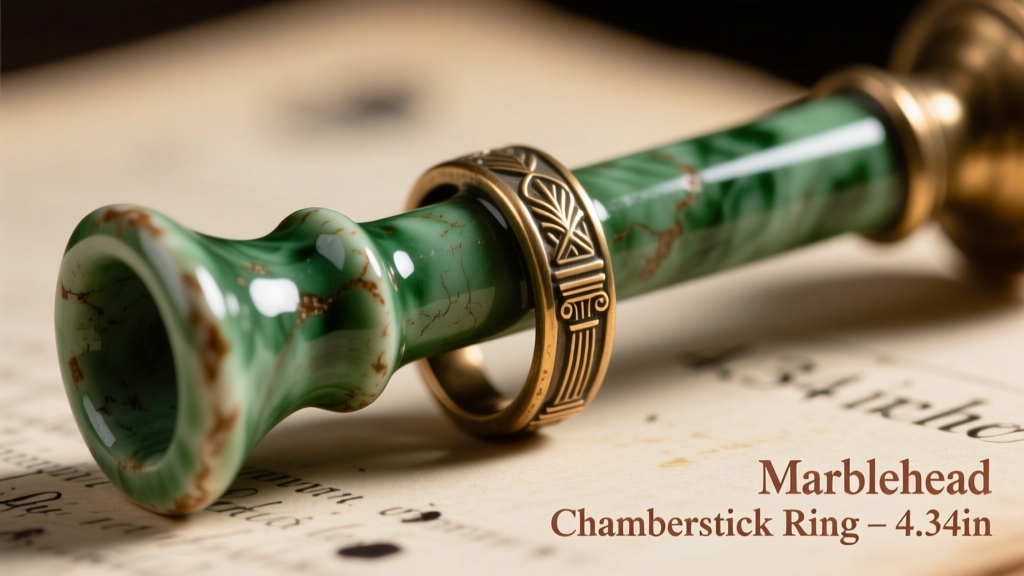
Marblehead Chamberstick Ring Handle with Green Glaze: A 4¾-Inch American Art Pottery Masterpiece
The Widow of Albert Bogert Bogart: A Forgotten Patroness of American Jewelry and Horology, 1905–1972
Dinnerware Orange Poppy Spoon Hall: A Collector’s Deep Dive into the Iconic Mid-Century Pattern