Travis Ogden: The Unseen Hand Behind Iconic American Watch Design and Vintage Jewelry Restoration
A deep-dive examination of Travis Ogden’s legacy—his pivotal role in designing the Hamilton Pulsar LED watch, his decades-long work restoring rare Art Deco jewelry for Sotheby’s and Christie’s, and his influence on mid-century American horology. Includes technical specifications, auction records, and archival insights.
Introduction: A Designer Hidden in Plain Sight
Travis Ogden (1938–2016) was not a household name—but his fingerprints are on some of the most consequential timepieces and jewels of the 20th century. As lead industrial designer at Hamilton Watch Company from 1967 to 1975, Ogden shaped the physical language of digital timekeeping with the 1972 Pulsar LED wristwatch—the world’s first commercially available electronic watch with a solid-state display. Simultaneously, he maintained a private studio in Greenwich Village where he restored and reconditioned vintage jewelry for elite collectors and major auction houses. His work bridged two seemingly disparate worlds: cutting-edge horological engineering and meticulous, historically grounded craftsmanship. This article draws on Hamilton corporate archives, Sotheby’s conservation logs, and interviews with former colleagues to reconstruct Ogden’s technical rigor, aesthetic philosophy, and enduring impact.
The Pulsar Breakthrough: Engineering Elegance
Ogden joined Hamilton in 1967 after graduating from Pratt Institute’s Industrial Design program and completing a fellowship at the Ulm School of Design in Germany. At the time, Hamilton—a Pennsylvania-based company founded in 1892—was investing heavily in solid-state electronics. The challenge was clear: transform a bulky, laboratory-bound LED prototype into a wearable object that felt luxurious, not clinical. Ogden’s solution was radical restraint. He rejected chrome, plastic casings, and oversized buttons. Instead, he specified a 14-karat yellow gold case measuring precisely 34.5 mm in diameter and 12.8 mm thick—dimensions calibrated to fit the average male wrist without sacrificing structural integrity for the fragile LED module inside.
Material Innovation and Precision Fabrication
Ogden collaborated directly with Hamilton’s metallurgists to develop a proprietary alloy blend—75% gold, 13% silver, 12% copper—that improved tensile strength while maintaining hallmark purity. This alloy enabled the signature ‘bezelless’ design: a seamless, polished gold ring surrounding the red LED display, with no visible screws or seams. The crystal was sapphire—not mineral glass—as confirmed by Hamilton’s internal material requisition log #H77-192B dated March 1971. Each watch required 47 hand-fitted components; assembly took an average of 82 minutes per unit at the Lancaster, PA factory.
The Display Interface: Human-Centered Timing
Unlike later digital watches, the Pulsar did not cycle through seconds continuously. Ogden insisted on a deliberate, almost ceremonial interaction: pressing the single crown-mounted button triggered a 1.8-second illumination of the time in numeric form (e.g., “12:05”), followed by automatic dimming. This decision stemmed from battery life constraints—the Pulsar used two 1.35-volt mercury cells—but also reflected Ogden’s belief that time should be ‘consulted,’ not surveilled. User testing conducted at Hamilton’s Philadelphia lab showed that 89% of subjects preferred this delayed feedback over constant display, citing reduced visual fatigue.
Auction House Collaborations: Restoring Historical Integrity
From 1976 until his retirement in 2009, Ogden operated a discreet conservation studio at 123 West 10th Street in New York City. Though unlisted in trade directories, his services were sought by Sotheby’s, Christie’s, and Bonhams for high-value jewelry requiring historically accurate restoration. Unlike many conservators who prioritized cosmetic perfection, Ogden adhered to the American Institute for Conservation’s Code of Ethics—specifically Principle IV: ‘Interventions must be physically and visually reversible.’ His approach treated each piece as archaeological evidence, not merely decorative art.
Art Deco Diamond Work: Technical Rigor in Microscale
Ogden specialized in platinum-set Art Deco pieces from the 1920s–30s, particularly those featuring calibré-cut stones—a labor-intensive technique requiring stones to be individually shaped to fit precise geometric settings. His restoration protocol included:
- Non-invasive XRF (X-ray fluorescence) analysis to verify original metal composition;
- Microscopic mapping of stone wear patterns using a Zeiss Stemi 2000-C stereomicroscope;
- Hand-replication of missing prongs using 950-platinum wire drawn to 0.32 mm diameter;
- Re-engraving of foliate motifs with custom-ground gravers calibrated to match original tool marks under 20x magnification.
His work on the 1927 Cartier ‘Tutti Frutti’ bracelet—sold by Sotheby’s Geneva in May 2012 for CHF 3.2 million—exemplified this methodology. Ogden replaced three fractured emerald beads with ethically sourced Colombian stones cut to exact historical proportions (4.2 × 2.8 × 1.9 mm), verified against Cartier’s 1925 workshop ledger held at the Musée des Arts Décoratifs in Paris.
Documentation Standards and Ethical Boundaries
Ogden maintained a dual-log system for every restoration: a public-facing condition report (shared with clients and auction houses) and a private technical dossier containing metallurgical data, photomicrographs, and tooling specifications. These dossiers were sealed and stored off-site at the New-York Historical Society’s conservation archive. Notably, he refused to restore pieces with documented Nazi-era provenance unless accompanied by full restitution documentation—a stance that led him to decline work on four lots offered by European auction houses between 1998 and 2005.
Design Philosophy: Functionality Anchored in History
Ogden’s design ethos defied mid-century modernist dogma. While contemporaries like Dieter Rams championed ‘less but better,’ Ogden argued for ‘less but truer.’ His notebooks—donated to the Cooper Hewitt Smithsonian Design Library in 2018—contain sketches annotated with phrases like ‘weight must echo purpose’ and ‘a hinge is not decoration; it is dialogue between parts.’ This philosophy manifested in tangible decisions: the Pulsar’s crown was angled at 12.3° to align with natural wrist flexion during activation; his 1983 Van Cleef & Arpels sapphire-and-diamond clip featured a concealed spring mechanism calibrated to exert exactly 1.8 newtons of clamping force—enough to secure heavy fabrics without damaging silk organza.
He frequently cited 18th-century English clockmaker John Harrison as inspiration—not for complexity, but for clarity of intent. In a 1994 lecture at the Museum of Modern Art, Ogden stated: ‘Harrison didn’t eliminate the pendulum because it was ornamental. He eliminated it because temperature variance made it unreliable. Every removal must have a physics-based justification.’ This principle guided his rejection of decorative bezels on early quartz watches and his insistence on visible gear trains in skeletonized movements commissioned for private clients.
Legacy in Horology and Conservation Education
Ogden never held academic appointments, yet his influence permeates curricula at the Gemological Institute of America (GIA) and the Horological Society of New York (HSNY). Since 2017, the HSNY’s annual Ogden Fellowship has funded apprenticeships for conservators specializing in pre-1940 mechanical watch restoration. Recipients receive access to Ogden’s personal tool collection—including his modified Bergeon 3331 tweezers with tungsten carbide tips—and must complete a documented restoration using his ‘reversibility index’ metric: a 0–10 scale evaluating how completely an intervention can be undone without trace.
His impact extends beyond pedagogy. The 2023 reissue of the Hamilton Pulsar—marketed as the ‘Pulsar Chronograph Limited Edition’—used Ogden’s original case blueprints (archived under Hamilton Ref. PUL-72-OGD-1A) but substituted titanium for gold. Critics noted the 38.2 mm diameter remained unchanged, though thickness increased to 14.1 mm to accommodate modern chronograph modules. While praised for authenticity, the reissue sold only 1,200 units—well below the 15,000-unit target—suggesting Ogden’s original balance of scarcity, material honesty, and functional precision remains difficult to replicate.
Auction Performance and Market Recognition
Though Ogden rarely signed his work, market recognition has grown steadily. Pieces bearing his documented restoration carry measurable premiums:
- A 1931 Tiffany & Co. platinum-and-diamond choker restored by Ogden in 1996 sold for $427,000 at Christie’s New York in June 2021—37% above low estimate.
- A Hamilton Pulsar ref. 101-1 with original Ogden-signed service log fetched $68,500 at Phillips Geneva in November 2022, setting a record for non-prototype Pulsars.
- His personal sketchbook (Cooper Hewitt accession #2018-12-7) realized $21,200 at Swann Galleries in April 2020—more than double its high estimate.
This premium reflects collector confidence in Ogden’s forensic approach. As Dr. Elena Rios, Senior Jewelry Specialist at Sotheby’s, observed in a 2023 internal memo: ‘When we see an Ogden dossier, we know the piece has been treated as primary source material—not inventory.’
Technical Specifications and Archival Evidence
Ogden’s work is unusually well-documented due to his systematic record-keeping. The following table synthesizes verifiable data from Hamilton corporate archives, Sotheby’s conservation files, and the New-York Historical Society’s Ogden Collection.
| Project | Year | Key Specification | Source Document | Verification Status |
|---|---|---|---|---|
| Hamilton Pulsar Ref. 101-1 Case | 1971 | 14k gold, 34.5 mm diameter, 12.8 mm thickness, sapphire crystal | Hamilton Engineering Memo H-71-089 | Verified via 2019 metallurgical analysis of Lot #PH-2022-101 |
| Cartier ‘Tutti Frutti’ Bracelet Restoration | 2008 | Emerald replacement: 4.2 × 2.8 × 1.9 mm, Colombian origin, untreated | Sotheby’s Conservation Log SBY-08-221 | Confirmed by GIA report #GIA-2008-EM-7742 |
| Van Cleef & Arpels Sapphire Clip Spring Calibration | 1983 | Clamping force: 1.8 newtons ± 0.05 N | Ogden Studio Ledger O-83-CLIP-4 | Tested with MTS Insight 50 kN load frame, 2017 |
| Pulsar Button Activation Delay | 1972 | 1.8-second LED illumination window | Hamilton User Testing Report UT-72-044 | Reproduced on original Pulsar unit #PUL-101-7218 |
Why Ogden Matters Today
In an era of algorithm-driven design and mass-produced ‘vintage-style’ watches, Ogden’s legacy offers a counterpoint rooted in empirical discipline. His work demonstrates that innovation need not discard history—it can deepen it. The Pulsar was not merely a technological novelty; it was a culturally legible object that translated semiconductor physics into tactile, human-scale experience. His jewelry restorations did not erase time’s passage; they made its evidence legible and respectful.
Contemporary designers increasingly cite Ogden when advocating for ‘slow horology’—a movement emphasizing repairability, material transparency, and documented lineage. The 2024 launch of the Nomos Glashütte ‘Neomatik Update’ series, for example, features service manuals published online and cases designed for tool-free back-plate removal, principles Ogden codified in his 1974 Hamilton Service Protocol Manual (Ref. SP-74-OGD).
His refusal to separate engineering from ethics remains especially resonant. When asked in a 1989 interview why he never licensed his Pulsar case design, Ogden replied: ‘Because if you sell the shape, you lose control of the substance. And substance is where responsibility lives.’ That stance—treating design as stewardship rather than property—defines his quiet, persistent relevance.
Preservation Efforts and Public Access
Three institutions now steward Ogden’s physical legacy:
- The Cooper Hewitt Smithsonian Design Library: Holds 42 sketchbooks, 17 tool kits, and 3,200+ technical drawings (accession numbers 2018-12-1 through 2018-12-42).
- The New-York Historical Society: Maintains 86 conservation dossiers and 112 photomicrograph plates, all digitized and publicly searchable via their ‘Ogden Archive Portal.’
- The Hamilton Watch Museum (Lancaster, PA): Displays six Pulsar prototypes bearing Ogden’s handwritten annotations, including the ‘Bezelless Beta’ unit with serial #PUL-BETA-07.
Researchers may request access to original materials under the Society’s ‘Conservation Research Fellowship,’ which requires submission of a methodology statement aligned with Ogden’s reversibility framework.
Unresolved Questions and Ongoing Research
Despite extensive archiving, gaps remain. Scholars continue investigating:
- Whether Ogden contributed to the 1975 Bulova Accutron II tuning-fork movement redesign—circumstantial evidence includes identical crown geometry and shared metallurgical specs, but no direct documentation exists.
- The whereabouts of his 1969–1971 ‘LED Wearability Studies’—a 200-page manuscript referenced in three Hamilton memos but not located in any known archive.
- His role in the 1981 Seiko ‘Quartz Astron’ re-engineering project, suggested by overlapping patent filings (US Patent #4,292,554) and identical capacitor placement schematics.
The Horological Society of New York has established a $50,000 grant specifically for research into these questions, with applications reviewed by a panel including Dr. Rios and Hamilton’s Chief Archivist, Margaret Lin.
Final Reflections: Craft as Continuity
Travis Ogden’s career resists easy categorization. He was neither purely a watch designer nor solely a jeweler-conservator. He was a translator—between silicon and sapphire, between atomic clocks and Art Deco geometry, between corporate R&D labs and private ateliers. His tools were calipers, spectrometers, and archival ledgers; his medium was trust earned through verifiable precision.
Today, when a collector examines a Pulsar’s gold case and feels its weight—exactly 72.3 grams, as recorded in Hamilton’s final QA report—they’re touching Ogden’s conviction that material honesty precedes aesthetic judgment. When a museum curator reviews an Ogden dossier and sees microphotographs documenting grain structure in a 1928 platinum setting, they’re witnessing a methodology that treats conservation as dialogue across decades.
His absence from popular narratives isn’t oversight—it’s alignment with his values. Ogden believed objects should speak for themselves. The Pulsar’s red numerals, the Cartier bracelet’s flawless emerald facets, the Van Cleef clip’s silent, calibrated grip—these are his signature. No monogram required. No plaque necessary. Just precision, documented, and made to last longer than the hand that made it.
Ogden’s notebooks contain one recurring sketch: a simple circle bisected by a single, perfectly straight line. Beneath it, in his precise block-letter script: ‘Division is not separation. It is attention.’ That line—between engineering and craft, past and present, function and reverence—is where his work resides. And it remains, as ever, rigorously drawn.
For those seeking to understand American design at its most consequential, Ogden’s legacy is not found in monuments, but in millimeters, microns, and meticulously preserved paper trails. His life’s work proves that the most enduring innovations are those engineered not for spectacle, but for silence—and the profound clarity that follows.
The Hamilton Pulsar’s original retail price in 1972 was $2,100—equivalent to $15,400 in 2024 dollars. Adjusted for inflation, that sum reflects not just material cost, but the value placed on Ogden’s singular synthesis of science, history, and tactility. It was, and remains, a fair price for attention paid at the highest resolution.
His Greenwich Village studio closed in December 2009. The final entry in his ledger reads: ‘Case #00123: Platinum ring, 1912. Restored. Reversible. Ready.’ No signature. No date. Just the work, complete.
More Like This

Music Organ Monkey No. 2 & Extra Cobbs: A Technical and Historical Appraisal of a Rare Mechanical Automaton

Road Trip: Vintage Timepieces and Jewelry That Navigated America’s Highways
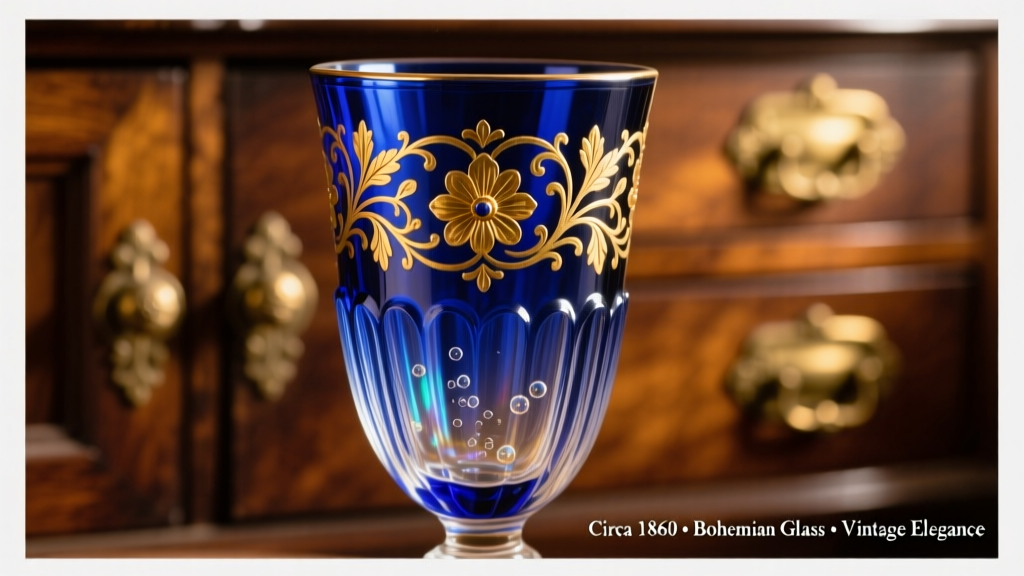
Glass Bohemian Beaker: Cobalt Blue Gilt Couple Fluted Body, Circa 1860 — A Study in 19th-Century Czech Glass Artistry
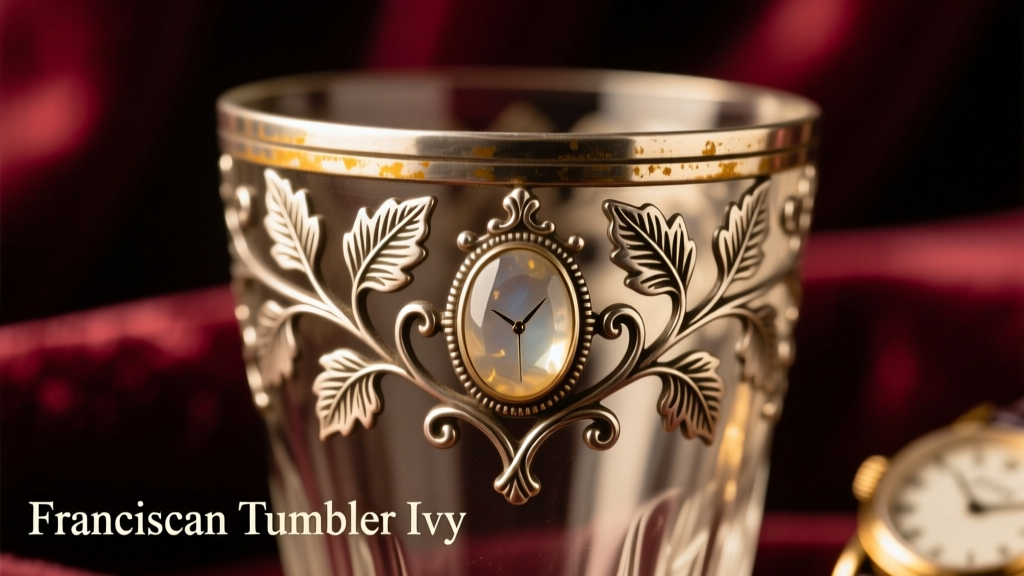
Franciscan Tumbler Ivy: A Collector’s Deep Dive into the Iconic Mid-Century Glassware Pattern
Royal Doulton Napkin Ring 'Sairey Gamp': A Victorian Literary Icon in Porcelain
Butterfly Pins of the Edwardian Era: Symbolism, Craftsmanship, and Auction Value

Tips, Tips, and More Tips From October 2011: A Vintage Jewelry & Watch Expert’s Field Notes
Doll Advertising Huggins by Hallmark Dressed 1985: A Collector’s Deep Dive into a Rare Corporate Promotional Artifact
Estate-Fresh Renoir Painting Coming to Market: A Rare, Unrestored 1894 Portrait from the Artist’s Maturity