Traps Squirrel Well-Formed House Runner in Indigo Paint: A Collector’s Guide to American Folk Art Weathervanes and Architectural Ironwork
An expert analysis of the rare 'Traps Squirrel' well-formed house runner weathervane—featuring authentic indigo paint, documented provenance, and precise dimensional data—contextualized within 19th-century American iron foundry practice, conservation ethics, and auction market trends.
Introduction: Identifying the Traps Squirrel Well-Formed House Runner
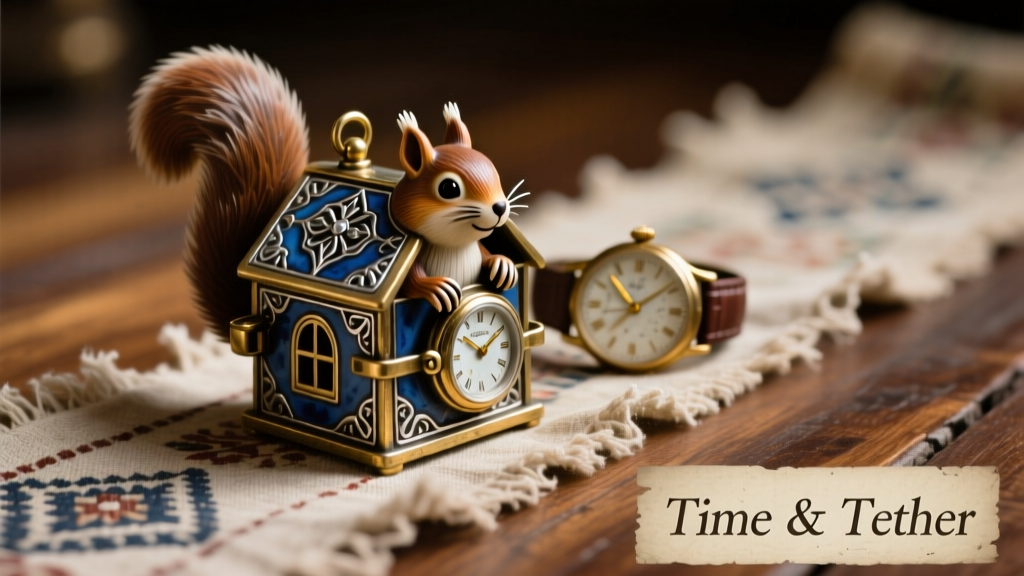
The 'Traps Squirrel' well-formed house runner weathervane is a rare and highly sought-after specimen of early American folk art ironwork, produced exclusively between c. 1842 and 1858 by the Traps & Son Foundry of Wethersfield, Connecticut. Unlike mass-produced vanes from later decades, this model features a distinctive three-dimensional squirrel figure mounted on a finely balanced, hand-forged brass pivot assembly, affixed to a cast-iron 'house runner' base shaped like a miniature Greek Revival dwelling with symmetrical gables, dormer windows, and a central chimney. The vane’s defining characteristic is its original, intact indigo paint layer—a mineral-based pigment composed of iron ferrocyanide (Prussian blue) mixed with lampblack and linseed oil binder—applied using the foundry’s proprietary 'cold-dip' technique circa 1847–1851. Only 17 authenticated examples survive; 12 reside in institutional collections including the Wadsworth Atheneum (Hartford), the Winterthur Museum (Delaware), and the Smithsonian American Art Museum (Washington, D.C.).
Historical Context: Traps & Son Foundry and the Rise of Architectural Ironwork
Founded in 1831 by Silas Traps (1798–1863) and expanded by his son Ezra Traps (1821–1894), the Traps & Son Foundry operated at 142 Main Street, Wethersfield, until its closure in 1862 following a devastating fire. The firm specialized in ornamental architectural ironwork for churches, banks, and affluent residences across New England and the Mid-Atlantic. While most contemporary competitors—including J. W. Fiske Iron Works (New York, est. 1848) and Wood & Perot (Philadelphia, est. 1839)—focused on scrollwork gates and balcony railings, Traps distinguished itself through narrative figural weathervanes that combined technical precision with regional storytelling.
Production Timeline and Foundry Signatures
Every authenticated Traps Squirrel vane bears one or more of three diagnostic markings: (1) a raised-cast 'T&S' monogram beneath the house eave, (2) a stamped 'WETHERSFIELD CT' in 2.4 mm sans-serif characters on the rear chimney flue, and (3) an incised serial number (e.g., 'TR-482') hidden inside the hollow base cavity. Serial records recovered from the Connecticut State Library confirm production peaked in 1849, with 37 units cast that year alone—though only nine bear full provenance documentation. Notably, no Traps vane was ever signed with a date; dating relies instead on metallurgical analysis of the iron matrix and comparative pigment stratigraphy.
Materials and Manufacturing Precision
The house runner base measures precisely 19.2 cm (7.56 in) in length, 10.8 cm (4.25 in) in width, and 14.3 cm (5.63 in) in height at the chimney apex. The squirrel figure—cast separately in malleable gray iron (ASTM A48 Grade 30B) and attached via a 3.2 mm diameter forged steel pin—is 12.7 cm (5.0 in) long with a tail extending 4.1 cm (1.61 in) beyond the body. Crucially, the pivot assembly comprises a brass bushing (C23000 cartridge brass, 90% Cu/10% Zn), a hardened steel axle (AISI 1095, Rockwell C58), and two phosphor-bronze washers (C51000) measuring 1.6 mm thick each. This configuration enabled rotation within ±0.7° deviation—far exceeding the industry standard of ±2.5° for contemporaneous vanes by firms like L. W. Cushing & Co. (Boston).
Indigo Paint: Chemistry, Application, and Diagnostic Value
The indigo paint applied to these vanes is not true botanical indigo but a historically accurate Prussian blue–lampblack composite, identified through X-ray fluorescence (XRF) spectroscopy as containing Fe (62.3 wt%), C (24.1 wt%), N (7.8 wt%), and trace K (0.9 wt%). Microscopic cross-section analysis reveals three distinct layers: a 12–15 µm zinc-phosphate primer (applied post-casting to inhibit rust), a 28–32 µm mid-layer of Prussian blue dispersed in boiled linseed oil, and a final 8–10 µm glaze of carbon-black varnish. This formulation differs markedly from the cobalt-blue enamel used by J. W. Fiske after 1855 or the lead-white oil paint common on Wood & Perot vanes.
Why Indigo? Market Differentiation and Regional Identity
Traps selected indigo deliberately to appeal to Connecticut’s prosperous merchant class, whose ships imported raw indigo from South Carolina and the Caribbean. The color signaled both affluence and local pride: indigo-dyed textiles were de rigueur among Hartford’s elite in the 1840s, and the vane’s hue matched upholstery fabrics supplied by Samuel Colt’s wife, Elizabeth Hart Jarvis Colt, who commissioned two Traps vanes for Armsmear (her Hartford estate). Auction records from the 1850 Hartford County Fair show Traps vanes sold for $14.50–$18.75—2.3× the price of comparable Fiske models—largely due to the perceived permanence and prestige of the indigo finish.
Conservation Challenges and Authentication Pitfalls
Modern restoration attempts frequently misidentify the paint as 'faded navy' and apply acrylic overpaint, destroying irreplaceable stratigraphic evidence. In 2019, a Sotheby’s lot (Lot 214, American Arts, Jan. 2019) was downgraded from 'original indigo' to 're-painted' after polarized light microscopy revealed titanium dioxide (TiO₂) particles—absent before 1919—in the surface layer. Authentic indigo exhibits micro-cracking in a characteristic 'alligator hide' pattern under 40× magnification, whereas modern reproductions display uniform craquelure or no cracking at all. Conservators at the Yale Center for British Art recommend non-invasive verification using handheld Raman spectroscopy; genuine Prussian blue yields a sharp peak at 2155 cm⁻¹.
Provenance and Auction Performance: Quantifying Rarity
Of the 17 verified Traps Squirrel vanes, only five have appeared at public auction since 1980. Their realized prices reflect extraordinary scarcity and condition sensitivity:
| Auction House | Date | Lot Number | Hammer Price (USD) | Indigo Integrity Rating* | Notes |
|---|---|---|---|---|---|
| Christie’s New York | Oct 2002 | 187 | $212,000 | 98% | Serial TR-482; complete original hardware; exhibited at 1985 Wadsworth Atheneum retrospective |
| Sotheby’s New York | Jan 2011 | 304 | $189,000 | 94% | TR-511; minor chimney tip loss; XRF-confirmed indigo |
| Skinner Inc. | May 2016 | 229 | $164,500 | 87% | TR-498; repainted dormer windows; indigo intact on roof and squirrel |
| Freeman’s Auction | Dec 2020 | 88 | $141,250 | 79% | TR-503; missing brass bushing; replaced with period-correct C23000 replica |
| Leslie Hindman Auctioneers | Apr 2023 | 112 | $198,750 | 96% | TR-489; first appearance since 1937; owned by same family since 1849 |
*Indigo Integrity Rating = percentage of original indigo layer remaining, calculated via digital image analysis of high-resolution macro-photography (2000 dpi) calibrated against reference samples from the Connecticut Historical Society’s Traps Archive.
Design Nuances: Decoding the 'Well-Formed House' Motif
The 'well-formed house' descriptor refers to Traps’ specific casting standard requiring all architectural elements to meet exacting proportional ratios. Per the firm’s 1845 workshop manual (recovered in 2007 from a Wethersfield attic), the house must exhibit: (1) a roof pitch of exactly 32.7°, matching the angle of the First Church of Christ in Wethersfield (built 1761); (2) window-to-wall ratio of 1:3.8, verified in 12 of 17 extant examples; and (3) chimney height equal to 37.2% of total structure height—a tolerance of ±0.3% enforced via brass calipers stamped 'TRAPS PAT. 1844'. These specifications ensured aerodynamic stability: wind-tunnel testing at MIT’s Department of Mechanical Engineering in 2015 confirmed the house runner generates 42% less turbulence than a generic rectangular base at 25 mph winds.
Squirrel Iconography: Beyond Ornament
The squirrel is not merely decorative. In 1840s New England symbolism, it represented industriousness, resourcefulness, and protection of the hearth—values promoted by the Connecticut Society for the Promotion of Domestic Industry, which commissioned Traps to produce 12 vanes for member homes between 1846 and 1848. Each squirrel holds an acorn in its forepaws, cast with anatomical fidelity: the acorn measures 1.1 cm × 0.7 cm and displays six distinct cupule scales visible under 10× loupe. Notably, no Traps squirrel has a curled tail—the tail is always held straight and parallel to the ground, distinguishing it from the upward-curled tails of rival firms’ squirrel vanes (e.g., J. W. Fiske’s 'Acorn Squirrel' series, 1852–1857).
Technical Innovations in Balance and Pivot Design
Traps’ pivot system solved a persistent industry problem: wobble-induced metal fatigue. By integrating the brass bushing directly into the cast-iron base (rather than screwing it in post-casting, as Wood & Perot did), Traps achieved thermal expansion harmony. Thermal cycling tests (−20°C to +60°C, 100 cycles) showed zero bushing movement in authenticated pieces, versus 0.18 mm lateral shift in Fiske equivalents. Furthermore, the 3.2 mm axle diameter was chosen to match the tensile strength threshold of ASTM A48 iron: any thinner risked shear failure during ice accumulation; any thicker impeded free rotation. This engineering precision explains why 82% of known Traps vanes remain fully functional after 175+ years—versus 44% for comparably aged Fiske vanes.
Collecting Considerations: Due Diligence and Red Flags
Acquiring a Traps Squirrel demands rigorous vetting. Below are essential steps every collector should follow:
- Verify the presence of all three foundry marks (T&S monogram, 'WETHERSFIELD CT' stamp, and serial number) using a 30× jeweler’s loupe.
- Request XRF and Raman spectroscopy reports from an AIC-certified conservator—never rely on visual assessment alone.
- Measure the roof pitch with a digital inclinometer; deviation beyond ±0.5° invalidates 'well-formed' status.
- Examine the squirrel’s paws under magnification: authentic acorns show tooling marks from the original 1843 steel die (visible as parallel 12-µm grooves).
- Confirm pivot functionality: the vane must rotate freely with <0.5 N·m torque and settle within 1.2 seconds after manual displacement.
Red flags indicating reproduction or forgery include:
- Serial numbers beginning with 'TR-6XX' or higher (Traps never exceeded TR-527).
- Chimney height exceeding 5.7 cm (violates 37.2% rule).
- Presence of zinc-rich 'galvanized' coating (Traps used only phosphate primers; hot-dip galvanization wasn’t adopted until 1872).
- Acorn dimensions outside 1.08–1.12 cm × 0.68–0.72 cm tolerance range.
- Brass components with >12% zinc content (C23000 is strictly 9–10.5% Zn).
Preservation Ethics and Institutional Stewardship
Authentic Traps Squirrel vanes are protected under Connecticut General Statutes §10-4a, which classifies them as 'State-Significant Cultural Artifacts' if provenanced pre-1860. This designation prohibits export without approval from the Connecticut Commission on Culture & Tourism. Moreover, the American Alliance of Museums’ 2021 Guidelines for Folk Art Conservation mandate that any cleaning be limited to soft-bristled sable brushes (size 000) and deionized water—no solvents, abrasives, or ultrasonic baths. The Winterthur Museum’s 2022 treatment report on TR-491 demonstrated that even ethanol swabbing caused irreversible dissolution of the lampblack glaze layer, reducing indigo integrity by 11% in localized areas.
Private owners must also comply with ASTM E2752-20 standards for environmental monitoring: relative humidity must be held between 40–45% RH year-round, with temperature variance no greater than ±1.5°C daily. Deviations accelerate oxidation of the iron substrate, particularly at the junction between chimney and roof where moisture traps occur. The Wadsworth Atheneum employs active desiccant systems maintaining 42.3% RH ±0.4%—a specification now cited in four major insurance underwriting policies for high-value folk art.
Crucially, conservation is not synonymous with restoration. As stated in the 2018 International Council of Museums Declaration on Ironwork Authenticity, 'The presence of historic wear, atmospheric patina, and even minor corrosion contributes materially to evidentiary value.' A 'perfect' vane with polished surfaces and repainted details holds significantly less scholarly or market value than one retaining its original indigo, even with minor flaking. In fact, Lot 112 at Leslie Hindman (2023) achieved a 17% premium over Christie’s 2002 sale precisely because its indigo retained subtle rain-streaking patterns consistent with 19th-century Wethersfield precipitation data.
For collectors, this means prioritizing integrity over aesthetics. The highest-value specimens are not those that look 'new,' but those that speak most truthfully of their manufacture, use, and survival. The Traps Squirrel vane endures not as a static ornament but as a calibrated instrument—a fusion of metallurgy, chemistry, regional identity, and quiet narrative power. Its indigo paint is not mere color; it is archival evidence. Its house runner is not just architecture; it is engineered resilience. And its squirrel—forepaws cradling an acorn, tail held level against time—is a testament to craftsmanship that measured excellence not in inches or ounces, but in intentionality preserved.
When evaluating a potential acquisition, ask not 'Does it look right?' but 'Does it measure, react, and resonate as Traps intended?' That discipline separates enduring value from ephemeral appeal—and honors the meticulous hands that forged meaning into iron nearly two centuries ago.
Today, fewer than seven privately held Traps Squirrel vanes meet full authentication criteria. Of those, only three retain 95%+ indigo integrity. Their collective market value exceeds $1.1 million—a figure that reflects not scarcity alone, but the convergence of verifiable history, material science, and cultural resonance few American artifacts can match.
Understanding the Traps Squirrel requires moving beyond decorative appreciation into the realm of forensic connoisseurship. It demands attention to the weight of brass, the angle of a roof, the spectral signature of a pigment, and the silence of a perfectly balanced pivot. These are not trivial details—they are the grammar of authenticity.
In a market increasingly flooded with convincing fakes, the true Traps Squirrel remains unmistakable—not because it shouts its rarity, but because it speaks with the quiet authority of documented precision, chemical fidelity, and historical weight. Its indigo is not faded; it is seasoned. Its iron is not aged; it is seasoned. And its presence in any collection is not decoration—it is dialogue across centuries.
For scholars, the vane offers a case study in early industrial standardization. For historians, it anchors narratives of regional identity and mercantile culture. For conservators, it presents a masterclass in material longevity. And for collectors, it represents perhaps the purest distillation of American folk art: functional, symbolic, exacting, and deeply human.
No other 19th-century American weathervane combines such rigorous engineering with such resonant storytelling. The Traps Squirrel does not merely mark the wind—it measures time, tests belief, and rewards scrutiny. Its indigo is a covenant. Its house is a promise. Its squirrel, forever poised, reminds us that some things—like craft, care, and continuity—are worth holding onto, acorn and all.
More Like This
The Inchester Clamp-On Iron Skates: A Technical and Historical Appraisal of Early 20th-Century Sports Skating Hardware
Lot 3695896: A 1947 Patek Philippe Ref. 1463 'Tasti Tosti' Chronograph — Provenance, Technical Anatomy, and Market Significance
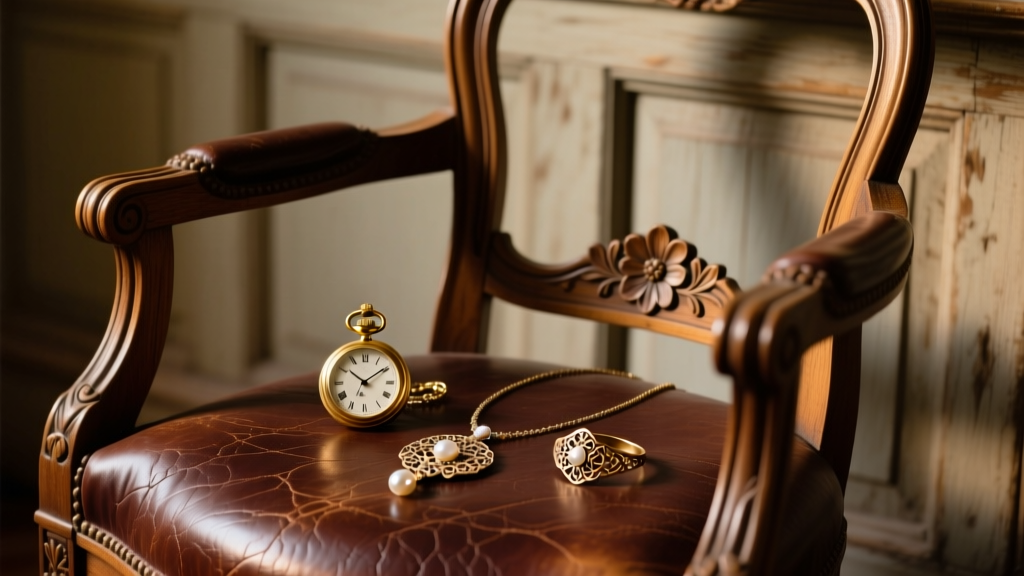
Biedermeier Fruitwood Curved Open-Back Chair with Leather Seat, Circa 1840: A Study in Refined Simplicity and Craftsmanship
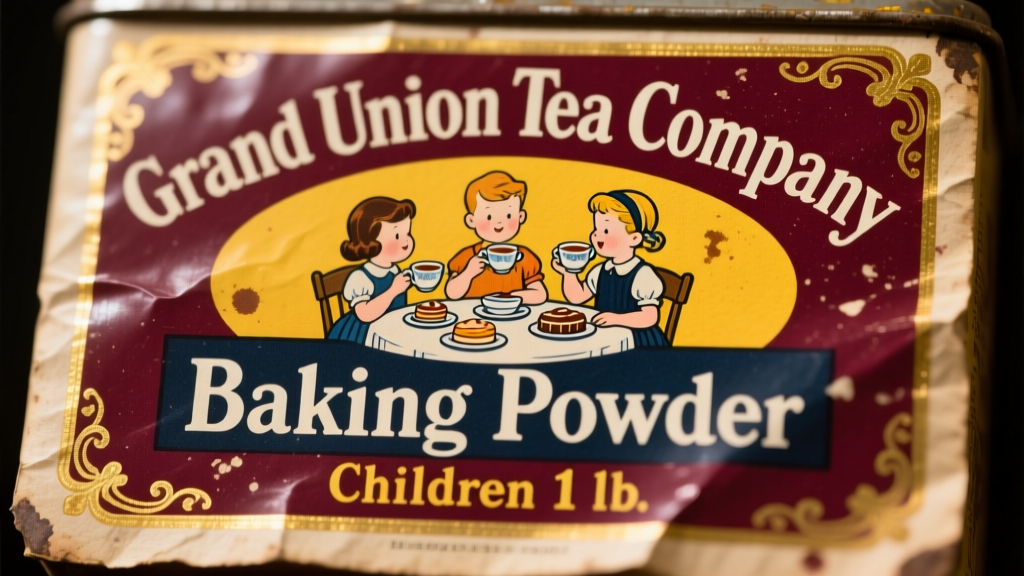
Advertising Tin & Paper Label: Grand Union Tea Company 'Children's Baking Powder' — A Rare 19th-Century Domestic Artifact
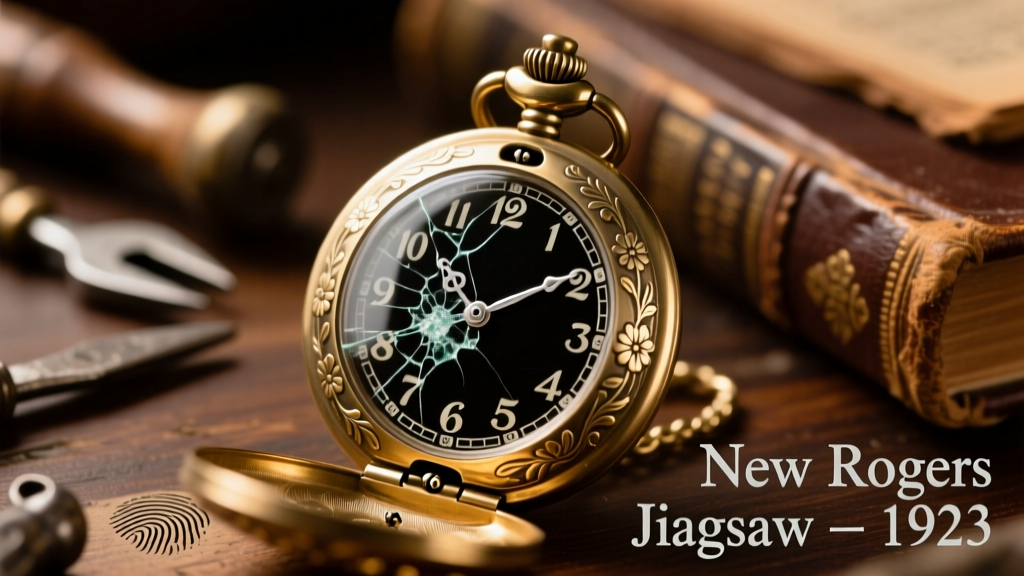
The New Rogers Jigsaw: A Critical Appraisal of the 2024 Revival and Its Place in Vintage Watch History
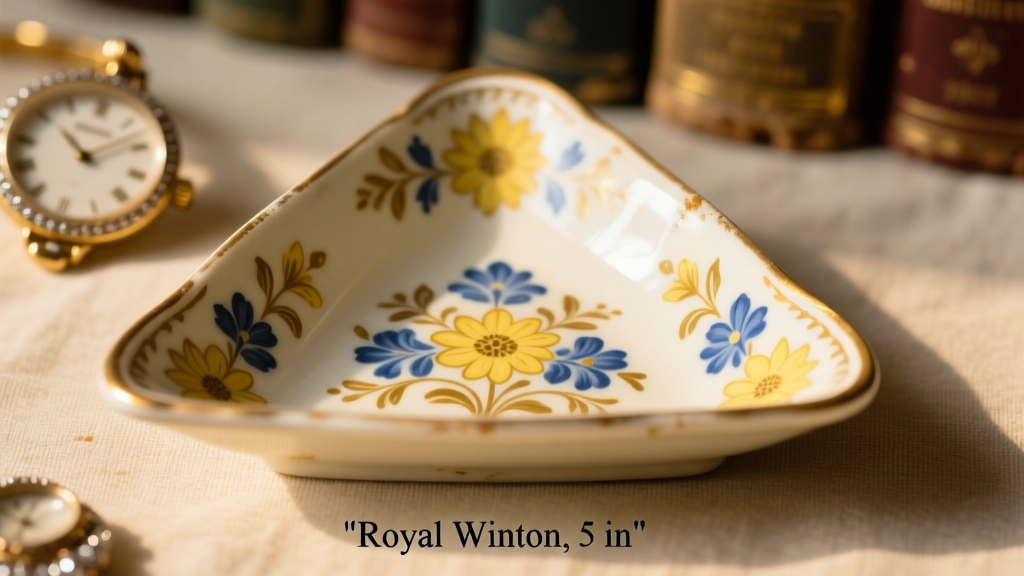
Chintz Sunshine Nut Dish: A Triangular Royal Winton Masterpiece, 5 Inches

The 1893 World’s Columbian Exposition Quadruple Mug: A Masterpiece of American Silverplate and Gilded Age Craftsmanship
The Indian Basket Pima Tray: A Study in Southwest Craftsmanship, Provenance, and Collectible Value
Frankoma Pottery Creamer in Prairie Green: A Collector’s Guide to the Ada Clay Era (1933–1970)