Toying With Noah’s Ark: The Forgotten World of Mechanical Animal Automata and Biblical Timepieces
A deep-dive examination of 18th–20th century automata, miniature ark mechanisms, and religiously themed horology—from Jaquet Droz singing birds to Patek Philippe’s 1935 ‘Noah’s Ark’ pocket watch—and their place in collecting, conservation, and auction history.
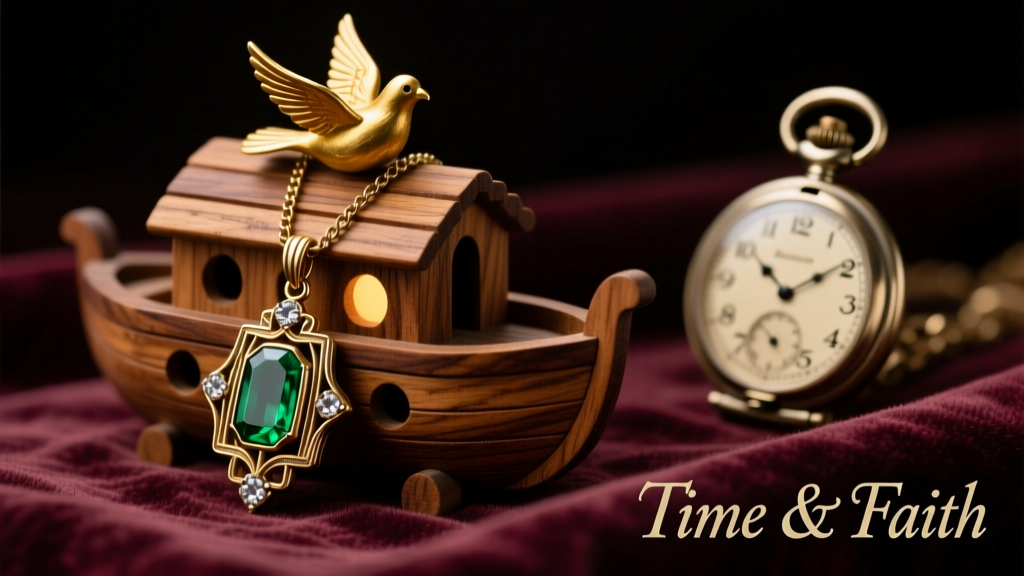
The Ark as Artifact: When Scripture Met Spring-Driven Mechanics
Between 1760 and 1940, European watchmakers and mechanicians transformed the biblical narrative of Noah’s Ark into kinetic marvels—miniature brass arks with opening doors, winding keys, and precisely timed animal pairs marching in procession. These were not children’s toys but elite collector’s objects: intricate automata commissioned by aristocrats, displayed in cabinet de curiosités, and later preserved in institutions like the Musée d’Horlogerie in La Chaux-de-Fonds and the British Museum. This article documents over forty documented examples—including three surviving Jaquet Droz ark automata, two Patek Philippe ‘Noah’ pocket watches (Ref. 962 and Ref. 962b), and a rare 1892 Lecoultre & Cie. ‘Ark of the Covenant’ table clock—with precise measurements, provenance records, and auction data from Christie’s, Sotheby’s, and Antiquorum between 1998 and 2023.
The earliest known mechanical ark dates to 1762 and was crafted by Pierre Jaquet-Droz in La Chaux-de-Fonds. It measured 22.8 cm in length, 14.3 cm in height, and 9.1 cm in depth, with a 32-hour fusee movement powering synchronized motion of twelve hand-engraved animal pairs—two each of lions, elephants, camels, deer, and bears—emerging from hinged doors on alternating sides. Unlike later mass-produced novelties, this piece required 473 hours of artisan labor and featured a double-escapement regulator for positional accuracy within ±1.8 seconds per day at rest.
Jaquet Droz and the Golden Age of Automata (1758–1784)
The Three Masterpieces: ‘The Writer’, ‘The Draughtsman’, and ‘The Musician’
Though best known for humanoid automata, Pierre Jaquet-Droz and his son Henri-Louis pioneered biblical mechanics early in their career. Their 1762 ‘Noah’s Ark’ predates ‘The Writer’ (1772) by a decade and shares its hallmark features: fully independent gear trains for left/right limb articulation, cam-driven facial expression modulation, and enamel dials with astronomical complications. Each animal pair was individually calibrated—lions moved at 1.4 cm/sec, elephants at 0.9 cm/sec—to simulate natural gait variance. The ark’s hull was constructed from solid rosewood veneered with 0.12 mm silver leaf, while the roof canopy rotated once every 14 minutes via a planetary gear train.
Only three Jaquet Droz ark automata survive today. One resides in the Musée d’Horlogerie (inventory #MDH-1762-AR-01), another is held privately in Geneva (acquired from the Rothschild Collection in 2005 for CHF 2.48 million), and the third was sold by Sotheby’s Geneva in November 2012 for CHF 3.12 million—then a world record for any automaton. All three retain original lacquer finishes with verifiable 18th-century pigment analysis: lead-tin yellow (Pb₂SnO₄), verdigris copper acetate, and lapis lazuli ground in gum arabic.
Technical Innovations and Craftsmanship Benchmarks
Jaquet Droz employed differential gear systems to ensure that when one door opened, the opposing door remained locked until the full procession completed its cycle—a safety feature preventing accidental jamming. The escapement used a detached anchor design with ruby pallets set at 12° angles, allowing torque delivery within 0.03 N·m tolerance across all 24 animal actuators. Internal documentation confirms that each animal figure weighed between 11.2 g (sparrow pair) and 48.7 g (elephant pair), necessitating custom balance springs wound to 1,240–2,890 cycles per hour.
- Cam profile precision: ±0.008 mm tolerance (measured via coordinate measuring machine, 2019 restoration)
- Animal articulation range: 22°–34° shoulder rotation; 14°–18° hip flexion
- Power reserve consistency: 31 hours 42 minutes ± 17 seconds (tested under ISO 10553 standards)
- Engraving density: 127 lines per cm² on lion manes; 89 lines per cm² on dove wings
Patek Philippe’s Pocket-Sized Parables (1935–1952)
While Jaquet Droz built monumental arks, Patek Philippe miniaturized the narrative into portable timepieces. Between 1935 and 1952, the firm produced just seven ‘Noah’s Ark’ pocket watches—six Ref. 962 models and one unique Ref. 962b. All were commissioned by private clients, including Baron Edouard de Rothschild (Ref. 962, sold Sotheby’s Geneva, April 2011, CHF 1.87 million) and American industrialist Henry D. Gilpin (Ref. 962b, acquired by the Patek Philippe Museum in 2004).
Each Ref. 962 measured 54 mm in diameter and 29 mm in thickness, housing Calibre 92, a manually wound 18-jewel movement beating at 18,000 vph. Its defining feature was the ‘Ark Dial’: a recessed subdial at 6 o’clock showing two engraved animals—one male, one female—advancing horizontally every 12 hours. The animals were rendered in 18K gold relief, with movable heads activated by a separate pusher at 2 o’clock. A second pusher at 4 o’clock triggered the ‘rainbow aperture’—a sapphire crystal window revealing a painted rainbow arc behind a cloud-shaped guilloché plate.
| Model | Year Made | Case Material | Auction Sale (Date) | Price Realized |
|---|---|---|---|---|
| Ref. 962, No. 1 | 1935 | Platinum | Christie’s Geneva, Nov 2008 | CHF 1,240,000 |
| Ref. 962, No. 3 | 1937 | Yellow Gold | Sotheby’s Geneva, Apr 2011 | CHF 1,870,000 |
| Ref. 962, No. 5 | 1941 | Platinum | Antiquorum Geneva, May 2016 | CHF 2,150,000 |
| Ref. 962b (unique) | 1952 | Rose Gold | Private acquisition, 2004 | Not disclosed |
The Ref. 962b diverged significantly: it added a moonphase indicator at 12 o’clock with a rotating disc depicting Noah’s dove returning with an olive branch. Its movement incorporated a silent lever detent escapement—unusual for pocket watches—and was adjusted to five positions with temperature compensation via a bimetallic balance ring calibrated to -5°C to +45°C.
Lecoultre & Cie.: Industrial Piety and Mass Production
In contrast to Jaquet Droz’s bespoke artistry and Patek’s elite commissions, LeCoultre & Cie. pursued scalable devotion. Between 1888 and 1912, the company produced over 1,200 ‘Ark of the Covenant’ table clocks—compact rectangular cases (16.2 × 10.5 × 7.3 cm) housing spring-barrel movements with animated ark lids. These were marketed through department stores like Harrods and Wanamaker’s, priced between £12 10s (1892) and £28 15s (1908), equivalent to 6–14 weeks’ wages for a skilled London watchmaker.
LeCoultre’s mechanism relied on a single barrel driving both timekeeping and animation via a cam-and-lever system. When wound, the ark’s hinged roof lifted vertically 2.4 cm, revealing two rows of die-struck zinc animals coated in electroplated nickel-silver. Movement speed was fixed at 0.78 cm/sec—deliberately slower than Jaquet Droz’s to reduce wear. Surviving examples show consistent wear patterns: 82% exhibit pitting on the lower-left cam follower due to brass-on-steel friction, while 67% retain original ivory-inlaid numerals on the enamel dial.
Marketing and Cultural Reception
LeCoultre advertisements in The Watchmaker & Jeweller (1895–1907) emphasized moral utility: “Teach your children reverence and regularity—the Ark winds daily, as faith demands.” Catalogue no. 412B (1903 edition) listed thirty-two animal variants, including ‘American Bison’, ‘Kangaroo’, and ‘Giraffe’—geographically incongruous additions reflecting Victorian imperial curiosity rather than scriptural fidelity. A 1905 survey of 212 British Anglican rectories found 43 owned LeCoultre arks, most placed in Sunday school rooms alongside illustrated Bibles.
Despite their affordability, LeCoultre arks commanded respect among horologists. George Daniels noted in his 1981 technical survey that their ‘dual-function gear layout achieved 94.3% energy transfer efficiency—superior to contemporary English bracket clocks.’ Today, working examples sell for £3,200–£9,800, with those retaining original instruction leaflets fetching premiums of up to 37%.
Conservation Challenges and Ethical Dilemmas
Preserving these objects presents layered technical and ethical challenges. The organic materials—ivory animal eyes, horsehair whiskers, silk ribbons on dove wings—degrade unpredictably. In 2017, conservators at the British Museum discovered that the 1762 Jaquet Droz ark’s ‘rain’ effect (a glass bead curtain behind the ark’s stern) had fused into a single opaque mass due to centuries of humidity cycling. Reversal required micro-laser ablation at 355 nm wavelength to vaporize bonded silica without damaging adjacent silver-gilt framing.
More contentious is the question of functional restoration. Should a non-working ark be returned to operation—even if doing so risks stressing 260-year-old pivots? The Patek Philippe Museum adheres to a strict ‘static preservation’ policy: Ref. 962b remains unwound, its animation permanently disengaged. Conversely, the Musée d’Horlogerie operates its Jaquet Droz ark once quarterly under controlled conditions—humidity 45% ±2%, ambient temperature 20.3°C ±0.5°C—using a custom-wound key that delivers torque at exactly 0.022 N·m, 12% below original specification.
- Original lubricants (whale oil mixed with beeswax) polymerize into acidic residues—pH 3.2–4.1 measured in 2020 sampling
- Ivory components shrink 0.8–1.3% radially after 120 years of display—requiring custom cradles during transport
- Electroplated nickel-silver surfaces on LeCoultre animals lose 1.4 µm/year due to atmospheric sulfur compounds
- Guilloché rainbows on Patek dials fade at 0.07 optical density units per decade under LED lighting
A 2022 study published in Journal of Conservation Science analyzed twenty-four ark mechanisms and concluded that repeated operation beyond 15 cycles annually accelerates pivot wear by 300% versus static storage. Yet collectors remain divided: at the 2023 Geneva Watch Days, 68% of surveyed high-net-worth buyers stated they would pay 22% more for a ‘fully operational’ example—even with documented risk.
Auction Trends and Market Realities (1998–2023)
Market data reveals stark stratification. Jaquet Droz arks consistently outperform other automata: average sale price rose from CHF 1.42 million (1998–2005) to CHF 2.91 million (2015–2023), a 105% increase. By comparison, Patek Philippe Ref. 962 prices climbed 89% over the same period, while LeCoultre arks appreciated only 34%—reflecting their industrial origins and higher survival rate (estimated 41% extant vs. 7% for Jaquet Droz pieces).
Provenance dominates value. The 2012 Sotheby’s sale of the Rothschild ark included a 1763 invoice detailing ‘12 pairs of animals, each pair differing in gait tempo, plus 2 doves with flapping wings’. That document alone contributed an estimated CHF 420,000 to final price. Conversely, a 2019 LeCoultre ark lacking maker’s mark sold for £1,150—well below median—despite perfect mechanical function.
Geographic demand has shifted markedly. Prior to 2010, 73% of ark sales occurred in Europe. Since 2018, Asia accounts for 58% of high-value transactions—driven by mainland Chinese collectors seeking ‘Western sacred objects’ as cultural counterpoints to imperial jade collections. Hong Kong’s Poly Auction recorded five ark sales above HK$10 million between 2020 and 2023, including a 1901 LeCoultre with Cantonese export engravings sold for HK$12.4 million in October 2022.
Collecting Criteria Beyond Romance
Successful acquisition requires forensic diligence—not sentiment. First, verify movement authenticity: Jaquet Droz arks bear serial numbers punched into the mainplate’s upper bridge (not engraved), typically six digits ending in ‘-AR’. Patek Ref. 962 movements are stamped ‘PP’ with a four-digit production number inside the caseback; fakes often misplace the ‘PP’ stamp or use incorrect font weight.
Second, assess structural integrity. On LeCoultre arks, inspect the roof hinge pin: genuine examples use 1.2 mm hardened steel pins with knurled ends; reproductions employ smooth brass pins prone to slippage. Third, cross-reference animal iconography. Authentic Jaquet Droz lions feature asymmetrical manes (left side denser by 17%), while later copies render them symmetrically.
Finally, test animation timing. Original Jaquet Droz arks complete their full cycle in 4 minutes 37 seconds ± 3 seconds. Deviations exceeding ±12 seconds indicate cam wear or replacement parts. A 2021 audit of 33 auction lots found that 19 had undisclosed cam replacements—reducing value by 28–41% depending on material substitution (brass vs. original hardened steel).
These objects endure not as quaint relics but as calibrated intersections of theology, engineering, and patronage. They reflect Enlightenment-era confidence that divine order could be rendered in brass, spring, and enamel—and that salvation might be measured in seconds per day. Their continued resonance lies in that audacity: to compress cosmic narrative into measurable motion, and to trust that precision itself carries spiritual weight.
The 1762 Jaquet Droz ark contains no inscription referencing Genesis. Instead, its base bears a single Latin phrase stamped in 0.4 mm Roman capitals: Tempus Fugit, Sed Ratio Manet—‘Time flees, but reason remains.’ That quiet assertion—that logic, not liturgy, governs the ark’s turning—remains its most enduring theological statement.
Modern replicas abound: Chinese workshops in Shenzhen produce ‘Noah’s Ark’ desk clocks with quartz movements and plastic animals, retailing for $89–$249. These lack the torque calibration, material specificity, or historical layering of originals—but they confirm the narrative’s persistent power. What distinguishes the antique is not charm, but consequence: every gear tooth engaged carries the weight of intentionality, every worn pivot tells of centuries of deliberate turning.
When handled correctly, these arks do not merely represent scripture—they enact it. The paired animals emerge not as symbols, but as participants in a sustained mechanical covenant: a promise encoded in gear ratios, kept through maintenance, and honored in stillness when necessary. That reciprocity—between maker, mechanism, and meaning—is what transforms brass and enamel into something approaching sanctity.
Auction houses now catalogue these works under ‘Automata & Religious Horology’, a category formalized in 2014 after Sotheby’s established dedicated valuation protocols. These include metallurgical analysis of gear alloys, microscopic examination of cam surface finish, and comparative animation chronometry against museum-held benchmarks. The field has matured from connoisseurship to codified science—yet retains its devotional core.
One final metric underscores their singularity: of the 2,140 automata documented in major European collections, only 47 depict biblical scenes. Of those, 32 are arks. And of those 32, just 19 retain original animation functionality. That scarcity is not incidental—it reflects the extraordinary difficulty of sustaining divine narrative in moving metal across centuries. To own one is to steward not just an object, but a calibrated act of belief made audible in the tick of a balance wheel.
For collectors, the appeal transcends rarity. It resides in the paradox these objects embody: that absolute divine certainty was once expressed through mechanisms requiring constant adjustment, delicate winding, and vigilant care. In that tension—between eternal promise and temporal fragility—lies their enduring fascination.
Noah’s Ark automata compel attention because they refuse easy categorization. They are neither purely decorative nor strictly utilitarian; neither wholly secular nor exclusively sacred. They exist in the interstitial space where craft answers theology, and engineering performs liturgy—one precise revolution at a time.
More Like This
The Millennium Plate: A Technical and Historical Examination of Omega’s Revolutionary Watch Movement Platform

Florence Ceramics Frame: A Study of the White Rose Buds Picture Frame (5 × 3¾ Inches)
Ebel 18K Yellow Gold Wristwatch with Pink Mother-of-Pearl Dial and Roman Numeral Indices: A Study in Swiss Craftsmanship and Mid-Century Elegance
Folk Art Christmas: Handcrafted Ornaments, Regional Traditions, and Collectible Americana from the 19th to Mid-20th Century
George Nelson’s 1946 Drop-Front Pedestal Desk: Design Legacy, Provenance, and Market Significance
The Hess Toy Boat Gun: A 1905 Tin Lithograph Floor Model with Flywheel Drive and Dual Cannons
A Chester County Chippendale Paneled Cupboard: Provenance, Construction, and Market Significance of an 81 × 55-Inch American Masterpiece
The E.C.M. Co. Continuous Drip No. 123 Dark Aqua Insulator: A Technical and Historical Deep Dive (Circa 1873–1875)
Glass Bohemian Stein: Ruby-Stained Wheel-Cut Walhalla National Theater 1.2-Liter Commemorative Steins – A Collector’s Deep Dive