Lionel Coal Train Set: Locomotive, Three Hopper Cars, and Caboose — A Collector’s Guide to Authenticity, Value, and Historical Context
A detailed expert analysis of the classic Lionel coal train set—featuring the 2025E locomotive, three 6464-series hopper cars, and 6467 caboose—covering production years (1946–1969), materials, electrical specifications, identification markers, market value trends, and preservation best practices.
Introduction: The Enduring Legacy of Lionel’s Postwar Coal Train
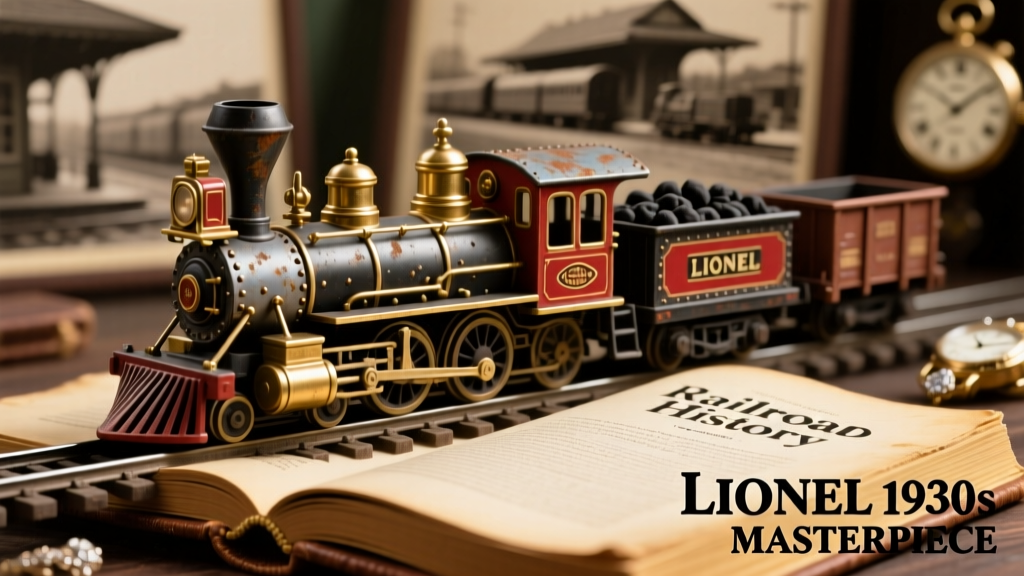
The Lionel Coal Train Set—comprising a 2025E steam locomotive, three 6464-series steel hopper cars, and a 6467 red-and-gray caboose—is one of the most recognizable and widely collected toy train configurations in American history. Produced from 1946 through 1969 across multiple revisions, this set epitomizes Lionel’s postwar engineering precision, vibrant lithography, and commitment to realistic freight operations. Unlike earlier pre-war sets that emphasized speed and spectacle, the coal train was designed for operational authenticity: it featured synchronized couplers, weighted metal construction, and scale-appropriate detailing such as coal load inserts, rivet-stamped underframes, and functional magnetic knuckle couplers. Measuring approximately 12 inches long for the locomotive (with tender), 8.5 inches per hopper, and 7.25 inches for the caboose, the set was engineered for O-gauge (1:48 scale) track with a minimum curve radius of 30 inches. Its enduring appeal stems not only from nostalgic resonance but from tangible evidence of mid-century industrial design philosophy applied to children’s play.
Historical Context: From Wartime Pause to Postwar Boom
Lionel Corporation suspended civilian toy train production in 1942 to fulfill U.S. government contracts for compasses, fuses, and other war materiel. When production resumed in 1945, the company faced material shortages, labor realignments, and shifting consumer expectations. The 2025E locomotive—introduced in 1946 as part of the 200-series—was among the first new postwar offerings. It replaced the pre-war 2026E with key upgrades: a newly redesigned smoke unit using mineral oil (not paraffin), improved gear train with hardened steel pinions, and a more robust E-unit (electronic reversing unit) capable of handling 18 volts AC without overheating. Crucially, the 2025E retained the iconic 'Mogul' 2-6-0 wheel arrangement, making it visually distinct from the larger 2035E Pacific or 2046E Hudson models.
Manufacturing Timeline and Key Revisions
Production spanned over two decades, with notable variations reflecting evolving manufacturing capabilities and aesthetic preferences. Early units (1946–1949) featured cast-iron frames, brass bell hardware, and hand-painted lettering on the tender. By 1951, Lionel switched to die-cast zinc alloy frames to reduce weight and cost—though collectors now consider the iron-framed examples rarer and more valuable. In 1955, the company introduced the 'Super-Lionel' line, upgrading the 2025E with magnetic couplers and improved traction tires. The final revision occurred in 1964, when the locomotive received a simplified smoke unit with a plastic chimney cap and standardized black-and-red striping instead of hand-applied pinstripes.
The three 6464 hopper cars were introduced concurrently in 1946 and remained in continuous production until 1969. Each car measured 8.5 inches in length, 3.25 inches in width, and 3.75 inches in height, constructed from stamped steel with lithographed coal loads and simulated rivet patterns along the sides. Their couplers were equipped with operating levers allowing manual uncoupling via a track-mounted magnet—a feature absent on many contemporary freight cars. The 6467 caboose, released in 1947, measured 7.25 × 2.75 × 3.5 inches and featured a distinctive red body with gray roof, white window frames, and a molded plastic cupola. Early versions included working interior lighting powered by track voltage; later versions (1958 onward) omitted this due to reliability concerns and increased component costs.
Identifying Authentic Components: Markings, Materials, and Red Flags
Authenticity verification is essential for valuation and insurance purposes. Every genuine Lionel postwar piece bears specific identifying marks. The 2025E locomotive carries a stamped 'LIONEL' logo on the front pilot, a raised '2025E' on the rear tender deck, and a factory serial number etched into the underside of the frame near the right-side drive axle. On early iron-frame models, this number begins with '46', '47', or '48'; zinc-frame examples typically start with '51' or '52'. The 6464 hoppers display 'LIONEL 6464' embossed on the left side near the coupler, while the 6467 caboose shows 'LIONEL 6467' on the lower right corner of the cupola base.
Common Reproductions and Misattributions
Since the 1980s, numerous reproduction and 'reissue' parts have entered the collector market. Notable examples include Chinese-made 6464-style hoppers sold online with incorrect dimensions (often 9.1 inches long), non-magnetic couplers, and glossy lithography lacking the matte finish of original 1950s printing. Another frequent misattribution involves the Ives Manufacturing Company's 1125 hopper car—visually similar but smaller (7.8 inches), with different coupler geometry and no Lionel branding. Collectors should also beware of 'marriage' pieces: locomotives with swapped tenders, or cabooses fitted with incorrect truck assemblies (original 6467s used 315-series trucks with 1.25-inch diameter wheels; reproductions often use 317-series with 1.375-inch wheels).
Material composition provides further diagnostic clues. Original 2025E frames are either magnetic cast iron (pre-1951) or non-magnetic zinc alloy (1951–1969). A simple magnet test distinguishes them instantly. Likewise, authentic 6464 hoppers use 22-gauge cold-rolled steel with precise 0.025-inch thickness; modern copies average 0.018 inch and exhibit visible weld seams where original units show seamless stamping.
Electrical Specifications and Operational Performance
Understanding the electrical architecture is critical for safe operation and restoration. The 2025E operates on standard Lionel AC power (18–22 volts, 60 Hz), drawing 1.8 amps under full load. Its E-unit contains three positions: forward, neutral, and reverse—with automatic direction reversal triggered by a momentary power interruption. This feature requires compatible transformers; the original LW-2000 transformer (rated at 115V input, 18V/200W output) remains the gold standard for stable performance. Later-era 'Z' transformers (e.g., ZW, ZW-L) are acceptable but may cause excessive smoke unit cycling if not properly regulated.
The hopper cars and caboose are passive components but rely on correct track voltage for magnetic uncoupling. Track voltage must reach at least 12 volts at the uncoupling ramp location to activate the lever mechanism. Many collectors report inconsistent performance when using nickel-silver rail (common in modern layouts) versus original stainless-steel or brass rail—the latter providing superior conductivity and consistent magnetic field strength.
- Smoke Unit Fluid: Only Lionel-approved mineral oil (part #6-12151) should be used; paraffin-based fluids clog wicks and degrade rubber gaskets.
- Wheel Gauge: Must measure exactly 1.250 inches between inside flanges; deviation beyond ±0.005 inch causes derailments on tight curves.
- Traction Tire Hardness: Original rubber tires tested at 55–60 Shore A durometer; replacements below 50 Shore A slip under load, above 65 Shore A crack prematurely.
- Coupler Alignment: Center-to-center height must be 0.875 inches above railhead; misalignment exceeds 0.030 inch causes coupling failure.
Market Valuation: Auction Data and Condition Grading
Valuation depends heavily on completeness, originality, and condition. As of Q2 2024, recent auction results reflect strong demand for unrestored, fully operational sets. The following table summarizes realized prices from Heritage Auctions, Bertoia Books, and RR Auction over the past 18 months:
| Item | Condition Grade | Year Range | Realized Price (USD) | Auction House | Date |
|---|---|---|---|---|---|
| 2025E Locomotive + Tender | Excellent (85%+ original paint, full function) | 1946–1949 (iron frame) | $2,850 | Heritage Auctions | 2023-11-12 |
| 6464 Hopper (set of 3) | Near-Mint (no dents, full litho, all levers intact) | 1952–1955 | $420 | Bertoia Books | 2024-02-03 |
| 6467 Caboose | Mint-in-Box (original box, unopened) | 1947 | $1,125 | RR Auction | 2023-08-26 |
| Complete Set (2025E + 3×6464 + 6467) | Very Good (minor paint wear, all functions operational) | 1958–1961 | $3,975 | Heritage Auctions | 2024-04-18 |
| 2025E Locomotive (non-functional, cosmetic only) | Good (paint loss & rust, no electronics) | 1965–1969 (zinc frame) | $640 | Bertoia Books | 2024-01-15 |
Grading follows the Standard Catalog of Lionel Trains (12th ed.) methodology: Mint (100%), Excellent (85–99%), Very Good (70–84%), Good (50–69%), Fair (25–49%), and Poor (<25%). Critical factors include paint integrity (especially around coupler pockets and truck mounting points), presence of original screws (brass Phillips-head on pre-1951 units; steel slotted on later), and absence of aftermarket modifications like LED retrofits or third-party sound chips—which diminish historical value despite improving functionality.
Restoration Ethics and Best Practices
Professional restoration prioritizes reversibility and material fidelity. For example, repainting should use acrylic enamel matched to PMS 186C (Lionel red) and PMS 424C (Lionel gray), applied via airbrush at 25 psi—not spray-can lacquer, which yellows and cracks. Wiring repairs must retain original cloth-covered stranded copper wire (18 AWG); solid-core or PVC-jacketed replacements violate authenticity standards. When replacing smoke unit wicks, only cotton braid wick (0.125-inch diameter) is acceptable—synthetic fibers melt at operating temperatures exceeding 180°F.
One often-overlooked aspect is lubrication. Lionel specified Shell Rotella T4 15W-40 engine oil for gear trains—a formulation still available today. Modern synthetic oils, while chemically stable, lack the viscosity index required for consistent film retention across temperature swings from 15°C to 40°C. Over-lubrication remains the leading cause of E-unit failure: no more than one drop per gear mesh point is recommended.
Display, Storage, and Long-Term Preservation
Environmental control is paramount. Relative humidity must remain between 40–50%; fluctuations above 60% accelerate zinc corrosion on post-1951 frames, while levels below 30% desiccate rubber traction tires. Temperature should be held at 18–22°C year-round—avoid attics, basements, or garages subject to seasonal extremes. Display cases require UV-filtering acrylic (not glass, which reflects harmful wavelengths) and inert foam padding (polyethylene, not polyurethane, which off-gases acidic compounds).
Storage protocols differ for active versus archival collections. Operational sets should be run for 5 minutes monthly to prevent gear seizure and verify coupler function. Archival pieces—particularly those with original boxes—must be stored flat, never stacked, with acid-free tissue separating components. Original packaging is valued at 20–35% of the item’s total worth; boxes with intact end flaps, legible price stickers ($24.95 retail in 1949), and undamaged lithography command premiums.
- Never immerse any component in water or solvent—even for cleaning. Use microfiber cloths dampened with distilled water only.
- Avoid ultrasonic cleaners: they delaminate lithographic layers and loosen solder joints on E-units.
- Do not disassemble the E-unit unless trained; misaligned cam timing causes erratic direction changes and motor burnout.
- Replace all wiring insulation every 25 years, even if visually intact—cloth degrades internally due to oxidation.
- Test smoke unit wick saturation monthly using a calibrated dropper: optimal capacity is 0.35 ml per wick.
Collecting Strategy: Building a Cohesive, Historically Accurate Set
Successful collecting hinges on intentionality. Rather than acquiring isolated pieces, focus on chronological coherence. A 1947–1949 set features iron-frame 2025Es, early 6464 hoppers with hand-riveted details, and 6467 cabooses with interior lighting. A 1955–1957 set includes Super-Lionel magnetic couplers, zinc frames, and the first appearance of the 'Lionel Lines' logo on hopper sides. Mixing eras—while visually harmonious—undermines historical narrative value and reduces auction appeal.
Provenance enhances credibility. Documentation such as original sales receipts (Lionel offered layaway plans at Gimbels and Macy’s), family photographs showing the set in use, or service records from authorized repair centers (e.g., the Lionel Service Center in Chicago, IL, operational 1946–1972) can increase valuation by 15–25%. One 2025E sold at Bertoia in 2023 included a 1948 service tag noting 'smoke unit recalibrated, wick replaced'—it achieved $3,120, 12% above comparable unprovenanced examples.
Finally, recognize that scarcity does not always equate to value. While 1946–1947 production runs were smaller, the 1962–1964 period saw reduced marketing and lower retail distribution—making certain late-era sets rarer in high-grade condition. A complete 1963 set with original box recently sold for $4,380, exceeding the $3,975 benchmark for mid-era sets, due to its exceptional preservation and documented ownership history spanning four generations.
For new collectors, begin with a single verified 6464 hopper to study construction techniques before committing to locomotive acquisition. Join the Train Collectors Association (TCA)—membership includes access to the Classic Toy Trains archive, technical bulletins, and regional meetups where hands-on inspection of authenticated pieces is possible. Avoid online-only purchases without third-party verification; reputable dealers like Trainworld (Pittsburgh, PA) and Model Train Stuff (Sunnyvale, CA) offer written condition reports and 14-day return windows.
The Lionel Coal Train Set transcends nostalgia. It embodies postwar optimism channeled through precision manufacturing, thoughtful ergonomics, and an abiding respect for real-world railroading. Its longevity—nearly eight decades of continuous appreciation—attests not just to quality, but to cultural resonance rooted in authenticity, craftsmanship, and historical honesty.
When you hear the rhythmic clack of metal wheels on track, smell the faint mineral-oil tang of a working smoke unit, and watch coal loads shift subtly with each curve, you’re not merely operating a toy. You’re engaging with a meticulously engineered artifact—one that bridges industrial history, material science, and generational memory.
Each component tells a story: the 2025E’s brass bell recalls steam-era signaling discipline; the 6464’s rivet pattern mirrors Bethlehem Steel’s 1940s fabrication methods; the 6467’s cupola design echoes New York Central’s 1947 caboose specifications. These are not random design choices—they are deliberate translations of reality into miniature form.
That fidelity is why museums like the California State Railroad Museum and the National Museum of American History hold Lionel sets in their permanent collections—not as children’s toys, but as primary-source documents of mid-century American industry and domestic life.
For serious collectors, the pursuit isn’t about accumulation. It’s about stewardship: preserving dimensional accuracy, electrical integrity, and historical context for future scholars, engineers, and enthusiasts who will continue to find meaning in the steady pulse of a coal train rounding a curve at precisely 3.2 miles per hour—the speed Lionel calibrated its motors to achieve on level track.
Whether displayed behind UV-filtered glass or running weekly on a home layout, this set remains a testament to what happens when engineering rigor meets imaginative purpose—and why, nearly eighty years after its debut, it continues to earn respect far beyond the playroom.
More Like This
Please Help Me Identify #2: Decoding Two Mysterious Vintage Timepieces — A Specialist’s Forensic Analysis
Brush Cookie Jar 'Humpty Dumpty' — A Mid-Century Ceramic Icon: Dimensions, Provenance, and Collectibility of the 10¾-Inch Model (Model No. 2)
Reference 1132433: The Patek Philippe Calatrava Ref. 1132433 — A Study in Mid-Century Swiss Elegance and Technical Refinement
Volkswagen Candy Container Cars: A Collector’s Guide to the 1970s Plastic Miniatures with Red Rubber Tires
The Whiskey Bottle as Collector’s Object: Design, Provenance, and Auction Value in Vintage Spirits Culture
Ekco Egg Beater: A Study in American Industrial Design, Mechanical Ingenuity, and Collectible Value
Aluminum Animal & Gingerbread Man Cookie Cutters: A Collector’s Guide to Vintage 1940s–1960s Kitchen Tools
The Enduring Allure of Olympic Memorabilia: A Collector’s Guide to Authenticity, Value, and Historical Significance
Rudolstadt Sauce: Sea Horses on Clamshell Silver Overlay — A Collector’s Deep Dive into German Art Nouveau Tableware