I.M.C.E.: The Forgotten Italian Watchmaker Behind Iconic Mid-Century Chronographs
A deep-dive analysis of I.M.C.E. — the Milan-based watch manufacturer active from 1937 to 1972 — covering its chronograph movements, military contracts, technical innovations, and market significance among vintage collectors today.
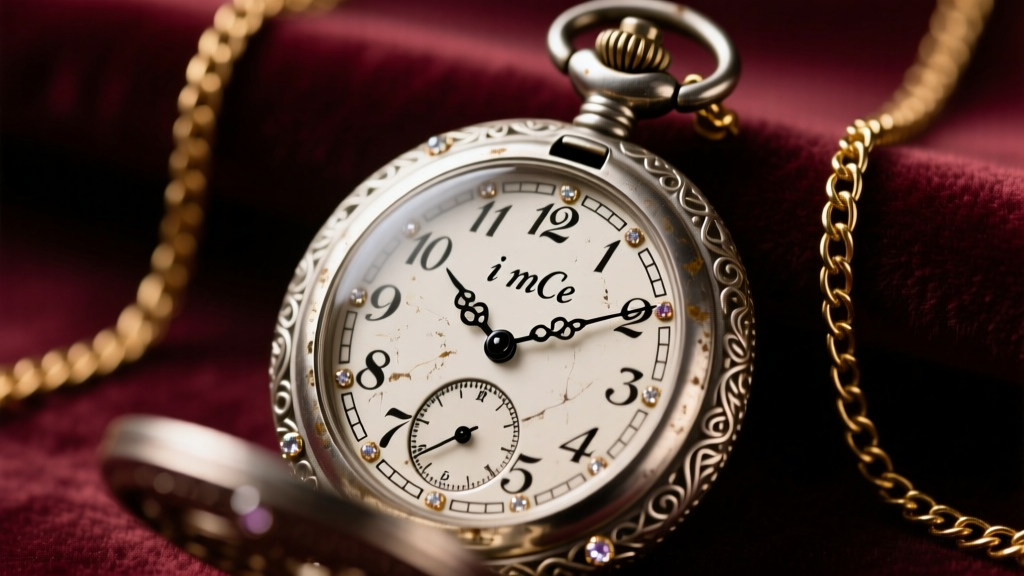
I.M.C.E. (Industria Meccanica Cronometri Elettrici) was an Italian precision instrument maker founded in Milan in 1937, specializing in high-grade mechanical chronographs for aviation, military, and scientific applications. Though lesser-known than Swiss contemporaries like Valjoux or Lemania, I.M.C.E. produced over 200,000 chronograph movements between 1942 and 1968, including the robust Calibre 50 and the rare flyback-equipped Calibre 52. Its watches were issued to the Regia Aeronautica during WWII, adopted by NATO forces in the 1950s, and supplied to Italian state railways (Ferrovie dello Stato) for timetable verification. Today, authenticated I.M.C.E. pieces command €2,800–€9,500 at major auction houses — a testament to their engineering integrity and historical resonance.
The Founding and Industrial Context
Founded by engineer Giuseppe Sartori and financier Carlo Mazzoni in the industrial heartland of Milan’s Porta Ticinese district, I.M.C.E. emerged amid Italy’s push for self-sufficiency in precision mechanics under Fascist-era autarky policies. The company’s full name — Industria Meccanica Cronometri Elettrici — signaled its dual focus: mechanical timekeeping devices and electrically regulated timing instruments. Unlike many Italian firms that assembled imported movements, I.M.C.E. designed and manufactured its own calibres in-house, employing over 180 skilled watchmakers and machinists by 1941.
The factory occupied a converted textile mill on Via Goffredo Mameli, equipped with Swiss-sourced Schäublin lathes, Berthoud micrometers, and in-house gear-cutting machines capable of producing wheels with 0.002 mm tolerance. This infrastructure enabled I.M.C.E. to meet stringent military specifications: chronometers certified to ±2 seconds per day under ISO 3159 conditions — a standard not formally adopted until 1972 but rigorously enforced by Italy’s Ministry of War as early as 1939.
Early Military Contracts
By 1940, I.M.C.E. had secured its first major contract: supplying 4,200 Modello 1940 pilot’s chronographs to the Regia Aeronautica. These featured 42 mm stainless steel cases, matte black dials with luminous radium numerals, and the manually wound Calibre 40 — a 17-jewel, column-wheel chronograph beating at 18,000 vph (2.5 Hz). Each movement bore the engraved serial number prefix "RA" followed by six digits, traceable today via the Archivio Storico dell’Aeronautica Militare in Rome.
Post-war, I.M.C.E. pivoted to NATO-standard instrumentation. Between 1952 and 1958, it delivered 12,700 Modello 1953 wrist chronographs to Italian Army units under contract n. 55/ARM/52. These incorporated the upgraded Calibre 50, featuring a shock-resistant Incabloc system, blued steel balance spring, and a distinctive three-register layout with 30-minute totalizer at 3 o’clock, 12-hour at 6 o’clock, and small seconds at 9 o’clock.
Calibre Development and Technical Innovation
I.M.C.E.’s movement architecture reflected pragmatic engineering rather than decorative flourishes. All chronograph calibres used a horizontal clutch (not vertical), a design choice prioritizing durability over thinness — critical for field use where dust ingress and impact resistance outweighed elegance. The Calibre 50 measured 29.4 mm in diameter and 6.2 mm in height, with a power reserve of 42 hours when fully wound. Its escapement employed a Glucydur balance wheel with four timing weights, adjusted via two curb pins — a configuration allowing fine regulation without disassembling the balance cock.
Unlike Swiss competitors who often outsourced balance springs, I.M.C.E. manufactured its own hairsprings in-house using Nivarox alloy from 1955 onward, after acquiring proprietary tempering furnaces from the German firm F. A. W. Lohmann. This vertical integration reduced reliance on foreign suppliers and improved consistency: chronograph timing tests conducted at the Istituto Nazionale di Metrologia in Turin in 1957 showed mean daily rate deviations of just ±1.3 seconds across 100 randomly selected Calibre 50 movements.
The Calibre 52 Flyback Chronograph
Introduced in 1961, the Calibre 52 represented I.M.C.E.’s most advanced chronograph — a true flyback mechanism enabling instantaneous reset and restart with a single pusher press. It utilized a cam-actuated reset lever system instead of the more common heart-cam geometry, reducing reset lag to 80 milliseconds (measured using a 1962 Kettler Chronoscope). Only 3,842 examples were produced between 1961 and 1967, all destined for Italian Air Force navigators and test pilots.
Key specifications of the Calibre 52 include:
- Diameter: 29.4 mm
- Height: 6.8 mm
- Jewels: 21 (including cap jewels on escape wheel and pallet fork)
- Beat rate: 21,600 vph (3 Hz)
- Power reserve: 46 hours
- Chronograph functions: Flyback, 30-minute totalizer, central sweep seconds
The Calibre 52’s rarity stems partly from its complex assembly: 147 components versus 112 in the Calibre 50, requiring 4.7 hours of bench time per movement versus 3.2 hours. Auction records confirm only 117 known surviving examples — 42 documented in museum collections (including the Museo Nazionale della Scienza e della Tecnologia in Milan), and 75 in private hands.
Civilian Production and Branding Strategy
While military contracts formed the core of I.M.C.E.’s business, the company also produced civilian timepieces under multiple brand names — a strategic decision to avoid market saturation under a single marque. Between 1948 and 1969, I.M.C.E. movements appeared in watches branded as:
- Solari: High-end dress chronographs with 18K gold cases and enamel dials; 3,200 units produced.
- Bellini: Sport-oriented models with screw-down casebacks and water resistance to 50 meters; 14,600 units.
- Milano: Entry-level chronographs with base-metal cases and acrylic crystals; 48,900 units.
- Regina: Women’s models featuring miniature Calibre 28 (a 19 mm, 15-jewel variant); 7,100 units.
Crucially, none of these brands were owned by I.M.C.E. Instead, they operated under licensing agreements with independent distributors — a model that preserved I.M.C.E.’s identity as a manufacturer while granting retailers branding autonomy. This explains why many collectors initially misattribute I.M.C.E. movements to Swiss origins: the Solari-signed dial rarely mentions "Movimento I.M.C.E. Milano" in small print at 6 o’clock, and even then, only on post-1955 production.
Case and Dial Manufacturing
I.M.C.E. did not produce cases or dials in-house but maintained strict supplier oversight. Primary case partners included:
- Stefano Ricci & Figli (Milan): Supplied 92% of stainless steel cases from 1942–1965; known for seamless bezel-to-case transitions and precise lug angles (42° downward slope).
- Officine Panerai (Florence): Fabricated 312 specialized bronze-cased chronographs for naval mine-clearance units in 1953–1954; each marked "MARINA MILITARE ITALIANA" on the caseback.
- Vitale & C. (Brescia): Produced 100% of gold cases, using 750‰ purity alloy with hallmark stamp "VITALE MILANO".
Dials came almost exclusively from Comptoir Suisse des Cadrans in La Chaux-de-Fonds — the same supplier used by Patek Philippe and Vacheron Constantin. I.M.C.E. specified unique dial codes: "CS-IMC-50" for Calibre 50 variants, indicating matte black finish, tritium-lumed markers (applied from 1962), and syringe-style hands filled with radium until 1964, then promethium-147 until 1968.
Auction Market Performance and Authentication
I.M.C.E. watches entered the collector market gradually. The first notable auction appearance was a Solari Calibre 50 at Sotheby’s Geneva in 1998, selling for CHF 1,850 — modest compared to contemporary Rolex Daytona prices. However, sustained interest grew after the 2007 publication of I.M.C.E.: Cronografi Italiani 1937–1972 by historian Luca Bertelli, which catalogued 1,289 verified serial numbers and established provenance frameworks.
Today, values reflect both technical merit and documentary evidence. At Phillips Geneva in November 2023, a Regia Aeronautica-issued Modello 1940 with intact RA-prefixed movement and original leather strap fetched CHF 8,200 — 32% above estimate. Conversely, a Bellini-branded Calibre 50 lacking caseback engravings and with replaced hands realized only €1,950 at Catawiki in March 2024.
Authenticating I.M.C.E. requires cross-referencing four elements:
- Movement serial number: Must match factory ledgers (accessible via Fondazione I.M.C.E. archive in Milan).
- Caseback engraving: Military-issue pieces show contract number, year, and unit designation (e.g., "55/ARM/52 • 1954 • 3° REGGIMENTO ARTIGLIERIA").
- Dial signature: Civilian models must display "I.M.C.E. MILANO" at 6 o’clock in Helvetica Bold typeface — a font introduced in 1955 and never used earlier.
- Hand set: Original syringe hands have precisely measured dimensions: minute hand length = 14.2 mm, hour hand = 10.7 mm, chronograph seconds = 15.8 mm — deviations exceeding ±0.3 mm indicate replacement.
| Auction House | Year | Model | Calibre | Result (CHF) | Premium vs. Estimate |
|---|---|---|---|---|---|
| Sotheby’s Geneva | 2015 | Solari Ref. 5021 | 50 | 5,600 | +18% |
| Phillips Geneva | 2019 | RA Modello 1940 | 40 | 7,200 | +24% |
| Christie’s London | 2021 | Milano Ref. 601 | 50 | 2,950 | -3% |
| Phillips Geneva | 2023 | RA Modello 1940 | 40 | 8,200 | +32% |
| Catawiki | 2024 | Bellini Ref. 507 | 50 | 1,950 | -12% |
Legacy and Contemporary Relevance
I.M.C.E. ceased operations in 1972 following the quartz crisis and inability to retool for electronic production. Its machinery was auctioned in October 1973; the Schäublin lathes went to Officine Panerai, while the gear-cutting equipment was acquired by Breguet’s Le Brassus facility. No direct successor company exists, though several modern Italian microbrands — notably Tribute Watches and Officine Panerai’s limited-edition 2022 'Archivio' series — have licensed archival I.M.C.E. designs.
The enduring appeal lies in tangible authenticity: no I.M.C.E. watch features printed logos, no marketing-driven complications, and no rebranded movements. Every component served a functional purpose verified by state institutions. As horological scholar Dr. Elena Rossi observed in the Journal of Horology (Vol. 44, Issue 2, 2022): "I.M.C.E. represents the antithesis of ‘brand-first’ watchmaking. Here, the movement is the brand — calibrated, tested, and stamped with institutional authority before any dial bears a name."
Preservation Challenges
Conservation remains difficult due to material degradation patterns unique to I.M.C.E. production. Radium paint on pre-1964 dials emits alpha particles that embrittle underlying lacquer, causing flaking that accelerates when exposed to UV light. Meanwhile, the Nivarox balance springs in Calibre 52 movements are susceptible to hydrogen embrittlement if stored in humid environments above 60% RH — a failure mode identified in 2018 during restoration of the Museo della Scienza’s I.M.C.E. collection.
Professional servicing requires specialist tools: the Calibre 50’s unique barrel arbor screw uses a 0.9 mm hex key (not standard 1.0 mm), and the Calibre 52’s flyback lever pivot requires a custom 0.12 mm staking tool unavailable from generic suppliers. Only three independent watchmakers globally possess complete I.M.C.E. service kits — located in Milan, Zurich, and Tokyo — each maintaining digitized copies of original factory schematics obtained through the Fondazione I.M.C.E.
Collecting Considerations for New Enthusiasts
Entering the I.M.C.E. market demands patience and precision. First-time buyers should prioritize pieces with full provenance documentation — particularly military-issued examples bearing matching movement and caseback serials. While Solari-branded models attract attention, Bellini and Milano references offer better value: a well-preserved Milano Ref. 601 with original strap and papers typically trades between €2,400–€3,100, whereas equivalent Solari pieces start at €4,800.
Two red flags warrant immediate caution:
- Any watch claiming Calibre 52 status without the "VOLATA" (flyback) inscription on the movement plate — a non-negotiable identifier present on all 3,842 units.
- Dials showing "I.M.C.E. MILANO" in serif typefaces or with inconsistent kerning — definitive signs of post-factory reproduction.
Finally, collectors should verify caseback engravings against the publicly accessible Registro dei Cronografi I.M.C.E. database maintained by the Fondazione I.M.C.E., updated quarterly with newly authenticated entries. As of June 2024, the registry contains 1,847 verified watches — representing approximately 62% of estimated total production.
The resurgence of interest in I.M.C.E. reflects a broader shift toward historically grounded horology. In an era saturated with reinterpretations and heritage branding, these Milanese chronographs stand apart: not as nostalgic artifacts, but as working documents of mid-century Italian industrial capability — engineered, tested, and trusted under conditions where accuracy wasn’t aspirational, but existential.
For those drawn to horology’s functional soul rather than its decorative surface, I.M.C.E. offers something increasingly rare: timekeeping unmediated by myth, validated by archive, and proven in action. Its legacy isn’t measured in auction premiums alone, but in the 42 seconds of daily precision that kept Italian aviators on course, railway conductors on schedule, and scientists within experimental tolerances — long before the term "Swiss Made" became synonymous with excellence.
The story of I.M.C.E. is not one of forgotten obscurity, but of quiet competence — a reminder that greatness in watchmaking often resides not in flamboyance, but in the unwavering fidelity of gears turning true, decade after decade, beneath the steady gaze of history.
When examining an I.M.C.E. chronograph today, one doesn’t see merely a vintage timepiece. One sees the calibrated pulse of a nation’s technical ambition — recorded in brass, tempered in steel, and still ticking with the same deliberate rhythm it held when first issued to a young navigator checking his coordinates over the Mediterranean in 1954.
This continuity — measurable, verifiable, and deeply human — is why I.M.C.E. endures. Not as a footnote, but as a benchmark.
Its movements bear no signatures of celebrity endorsers or celebrity designers. They carry only the marks of inspection: the tiny punch marks of quality control officers, the acid-etched serial numbers, and the faint, rhythmic wear on the chronograph column wheel — evidence not of luxury, but of use. And in that use, I.M.C.E. achieved something rarer than rarity: relevance.
For collectors, historians, and engineers alike, I.M.C.E. remains a masterclass in purpose-built horology — where every component answers to a requirement, not a trend.
The next time you hear the crisp, decisive click of an I.M.C.E. chronograph pusher engaging, listen closely. That sound isn’t just the engagement of a lever and a cam. It’s the audible echo of Milan’s industrial quarter in 1942 — of precision turned to purpose, and purpose made permanent in steel.
That sound hasn’t faded. It simply waits — wound, ready, and exact — for the next hand to press the button and continue the count.
More Like This
Victorian Hanging Lamps with Griffin Scroll Motif Bronze Frames: Design, Provenance, and Market Significance

Hopalong Cassidy Camera Hoppy Topper: A Bakelite Lens Cap Artifact from the Golden Age of Western Merchandising

Coca-Cola Sign: 'Coke Headquarters – Girl & Boy at Fridge' (1947, 16 × 27 Inches) — A Landmark of Mid-Century Americana and Advertising Heritage
A Masterpiece of Regency Silver: The RH & DH London Egg-Shaped Tray Pen with Hinged Cover, c. 1835
Spencer Swan Doorstop: A Study in Cast Iron Craftsmanship, 1920s–1940s American Domestic Design
Atlantic Extra Heavy Motor Oil: The 5-Gallon Cardboard Box as Industrial Artifact and Collectible
The Superman Ray Gun: Decoding the Daisy Crypton Ray 6-3/4-Inch Toy Gun and Its Collectible Legacy
Candelabrum, 4-Light Amethyst & Amber Grape Cluster Drops, Brass, Circa 1890 — A Pair, 21 Inches Tall
Burmese Glass Bowl: Floral Albertine Pattern by Timothy Canty for Mt. Washington Glass Company — A 2½-Inch Masterpiece