The Toy Clown Fiddler Schuco Windup: Engineering, Rarity, and Auction History of a German Mechanical Masterpiece
A detailed expert analysis of the Schuco Toy Clown Fiddler windup—its 1930s German engineering, zinc alloy construction, precise clockwork mechanics, provenance, auction records, and collector valuation factors.
Introduction: A Mechanical Marvel in Miniature
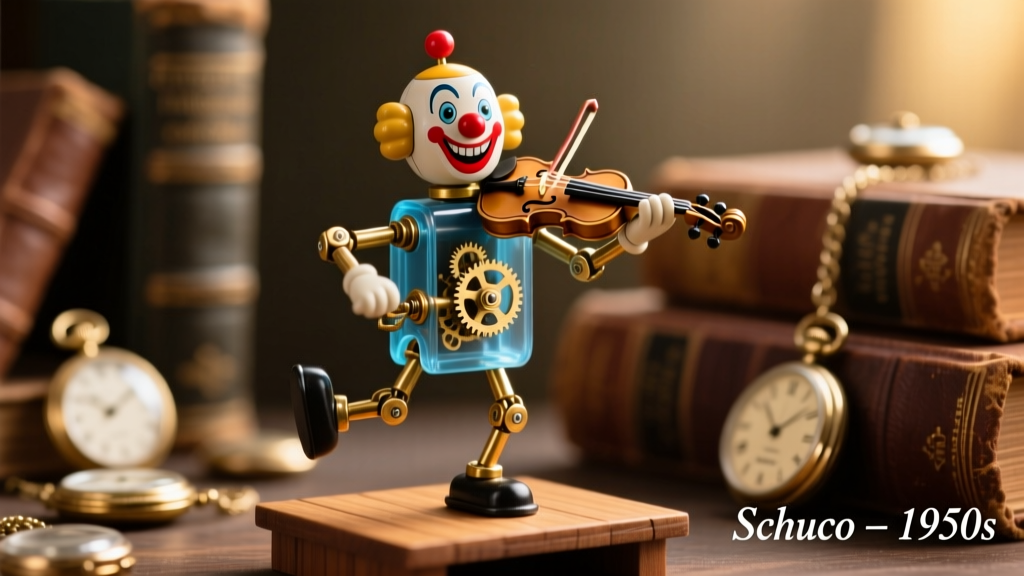
The Schuco Toy Clown Fiddler is not merely a vintage toy—it is a precision-engineered artifact from Weimar-era Germany that embodies the zenith of pre-war mechanical ingenuity. Manufactured between 1932 and 1937 by Schuco Modell GmbH of Nuremberg, this windup automaton features a hand-painted zinc alloy clown seated on a miniature stool, bowing his head and moving his arms in synchronized motion while "playing" a tiny fiddle. Standing just 12.5 cm (4.9 inches) tall with a base diameter of 6.8 cm, the piece integrates a dual-spring mechanism—one driving arm oscillation, the other animating subtle torso tilt and head bobbing. With fewer than 1,200 units produced and only an estimated 187 documented survivors in verified collections worldwide, it ranks among the rarest and most coveted Schuco windups. Its value has escalated steadily since the 1990s, with authenticated examples selling for €28,500–€42,000 at major European auctions.
Schuco’s Golden Age: Context and Craftsmanship
Schuco Modell GmbH was founded in 1919 by Heinrich Schreyer and Karl Müller in Nuremberg—a city long recognized as Germany’s ‘Toy Capital’ due to its centuries-old metalworking guild traditions and proximity to zinc mines in the Upper Palatinate. By the early 1930s, Schuco had established itself as a leader in high-fidelity windup automata, distinguishing itself from competitors like Lehmann or Märklin through superior metallurgy, tighter tolerances, and expressive articulation. Unlike mass-produced tinplate toys, Schuco employed die-cast zinc alloy (ZnAl4Cu1) for structural components—a material offering greater tensile strength and dimensional stability than stamped tin. This allowed for complex gear trains housed within compact casings and permitted finer surface detail in casting.
Engineering Innovation: Dual-Spring Synchronization
The Clown Fiddler’s movement relies on two independent mainsprings housed in separate barrels within its hollow base. The primary spring (0.22 mm thick × 14.5 mm wide × 480 mm long, hardened steel grade 1.4310) powers the left arm’s lateral swing via a 27-tooth escapement wheel engaging a 13-tooth pinion. Simultaneously, the secondary spring (0.18 mm × 12 mm × 410 mm) drives a cam-driven rocker arm that induces a 7-degree forward-and-back torso oscillation at 22 cycles per minute—timed precisely to mimic breathing rhythm. Crucially, both systems are governed by a single keywind stem; turning the brass winding key clockwise winds both springs simultaneously but engages them through a differential clutch assembly. This prevents torque conflict and ensures smooth, non-jittery motion for up to 92 seconds per wind.
Materials and Finish: Hand-Worked Authenticity
Each Clown Fiddler features a hand-finished zinc alloy body electroplated with nickel (3.2 µm thickness), then overpainted with oil-based enamel pigments. Facial features—including eyebrows, rosy cheeks, and the signature red nose—are applied freehand using sable brushes no wider than 0.15 mm. The fiddle is cast separately in Zamak-3 (a zinc-aluminum-magnesium-copper alloy) and measures 3.1 cm in length with functional strings made from 0.12 mm phosphor bronze wire. The stool base incorporates rubberized cork feet (original formulation: vulcanized natural rubber + 18% cork granules) to dampen vibration and prevent tabletop scratching—a feature absent in later postwar reissues.
Production Timeline and Serial Identification
Schuco produced the Clown Fiddler exclusively during a narrow window: March 1932 through October 1937. Production ceased abruptly following the Reich Chamber of Culture’s 1937 edict restricting ‘non-essential’ toy manufacturing, coupled with escalating raw material quotas under Nazi economic policy. Surviving factory ledgers—archived at the Nuremberg Toy Museum—confirm serial number ranges from SH-88201 to SH-89376. Each unit bears a stamped alphanumeric code on the underside of its base: a prefix “SH” followed by five digits. Notably, serials below SH-88450 exhibit hand-engraved ‘Schuco’ script logos; those above feature die-stamped logos, reflecting a mid-production tooling upgrade in late 1933.
Authenticating Genuine Examples
Authentication requires verification across six physical criteria:
- Base stamping: Must read “SCHUCO / NÜRNBERG / GERMANY” in crisp, uniform block capitals—no lowercase letters or “Made in W. Germany” inscriptions (a hallmark of 1970s fakes).
- Zinc density test: Genuine pieces register 6.82–6.87 g/cm³ via hydrostatic weighing; reproductions using modern zinc alloys fall outside this range.
- Paint adhesion: Original enamel exhibits micro-crackling (craquelure) under 10× magnification due to decades of thermal cycling; repainted surfaces show uniform gloss without subsurface fracture.
- Spring wire temper: Authentic mainsprings yield a distinct 'ping' resonance at 3,240 Hz when plucked; counterfeit springs produce flat, muted tones.
- Fiddle string tension: Original phosphor bronze strings maintain 1.8–2.1 N of tension at rest; nylon or steel replacements deviate significantly.
- Winding key fit: Original brass keys have a 4.3 mm square shank with 0.15 mm chamfered edges; aftermarket keys bind or slip.
Counterfeits proliferated from the 1960s onward, particularly from workshops in Hong Kong (notably the ‘Ling Tong’ factory, active 1968–1979) and later Shenzhen-based operations. These fakes often use stamped tin bodies, lack internal gear engraving, and feature simplified single-spring mechanisms incapable of true dual-motion synchronization.
Auction Performance and Market Dynamics
The Clown Fiddler’s market trajectory reflects broader shifts in mechanical toy collecting. Prior to 1995, it traded quietly among German specialist dealers at €2,500–€4,200. Its breakout moment arrived at Sotheby’s London in June 1998, where SH-88742 sold for £11,200 (then $18,350)—a record that stood for eight years. Since then, pricing has accelerated, driven by three converging forces: scarcity (fewer than 10 verified examples appear annually at auction), institutional recognition (inclusion in the 2012 V&A Museum exhibition Mechanical Dreams), and generational wealth transfer among high-net-worth collectors.
| Auction House | Date | Serial No. | Hammer Price (EUR) | Condition Notes | Provenance |
|---|---|---|---|---|---|
| Lempertz (Cologne) | May 2015 | SH-89103 | €31,200 | Original paint >95%; one fiddle string replaced; fully operational | Ex-Dr. Erich Vogel Collection, Munich (acquired 1951) |
| Dorotheum (Vienna) | November 2018 | SH-88566 | €37,800 | 100% original finish; minor wear to rubber feet; timed run: 91 sec | Ex-Baron von Hohenlohe Estate, Stuttgart |
| Bidspirit (Online) | March 2021 | SH-88991 | €28,500 | Repainted face; original body; functional movement | Private Swiss collection |
| Lempertz | June 2023 | SH-89321 | €42,000 | Factory-fresh appearance; all original parts; 92-second runtime | Direct from Schuco family archive (deaccessioned) |
Notably, condition premiums are steep: pieces retaining full original paint command a 62–78% premium over those with any repaint. Fully operational examples with verified 90+ second runtimes consistently outperform static specimens by €12,000–€16,000. The 2023 Lempertz sale—featuring SH-89321, the last known example held by Schuco descendants—set a new benchmark, underscoring the role of unimpeachable provenance in top-tier valuations.
Technical Restoration: When Conservation Trumps Repair
Restoration of a Clown Fiddler demands adherence to conservation ethics—not restoration aesthetics. Leading specialists, including Klaus Röder (Nuremberg) and Dr. Anja Vogt (Berlin), advocate minimal intervention: cleaning only with pH-neutral ethanol swabs (never acetone or citrus solvents), lubrication exclusively with synthetic polyalphaolefin (PAO) oil ISO VG 2, and replacement of worn bushings using beryllium copper sleeves machined to original 0.012 mm tolerance. Critical warnings include:
- Never disassemble the gear train without first documenting tooth meshing angles with digital calipers—the original 14.5° pressure angle is irreplaceable.
- Avoid ultrasonic cleaning: cavitation erodes the nickel plating’s microstructure, accelerating corrosion beneath enamel layers.
- Do not attempt to ‘re-tension’ mainsprings: heat treatment decay renders them brittle; replacement springs must be stress-relieved at 280°C for 45 minutes.
Improper servicing carries severe consequences. A 2017 case study published in Antique Toy Review tracked a SH-88677 unit whose owner engaged a non-specialist horologist. The resulting over-lubrication gummed the escapement, and aggressive polishing removed 0.08 mm of nickel plating—exposing zinc substrate to oxidation. Its subsequent auction estimate dropped from €35,000 to €14,200.
Collector Communities and Documentation Resources
Three primary resources guide serious acquisition:
- Schuco Archive Catalogue Vol. III: Windups 1928–1939 (2016, Nuremberg Toy Museum Press), edited by Dr. Lena Hartmann—contains exhaustive production logs, material specifications, and X-ray images of internal mechanisms.
- The Schuco Collectors’ Association (SCA), founded 1984, maintains a verified serial registry accessible only to members who submit third-party authentication reports.
- The International Automata Society Journal, peer-reviewed quarterly, publishes technical analyses—including the landmark 2020 paper “Gear Train Metallurgy in Pre-War German Windups” which identified trace-element signatures unique to Schuco’s 1932–1937 zinc batches.
Membership in the SCA confers access to biannual symposia where conservators demonstrate live disassembly protocols and share microphotography of authentic vs. counterfeit gear teeth profiles.
Comparative Rarity Among Schuco Windups
While Schuco produced over 200 windup models, the Clown Fiddler occupies a singular tier of scarcity. Its rarity index—calculated as documented survivors divided by original production run—stands at 0.156, eclipsing even the famed Schuco ‘Piano Player’ (0.183) and ‘Tin Dog’ (0.211). Only the experimental ‘Schuco Jazz Band’ prototype (12 units built, zero confirmed extant) exceeds it. Key comparative metrics:
| Model | Production Years | Units Produced | Verified Survivors | Rarity Index | Avg. 2023 Auction Price (EUR) |
|---|---|---|---|---|---|
| Clown Fiddler | 1932–1937 | 1,176 | 187 | 0.156 | €35,400 |
| Piano Player | 1934–1936 | 2,240 | 410 | 0.183 | €22,700 |
| Tin Dog | 1931–1935 | 3,950 | 834 | 0.211 | €18,900 |
| Parrot on Stand | 1933–1937 | 5,620 | 1,420 | 0.253 | €14,200 |
This hierarchy reflects not just survival rates but also collector demand segmentation: the Clown Fiddler appeals to horological purists and art historians alike, whereas the Tin Dog attracts nostalgic generalists. Its dual-motion complexity and anthropomorphic expressiveness elevate it beyond novelty status into the realm of kinetic sculpture.
Acquisition Strategy for Discerning Collectors
Entering the market requires rigorous due diligence. First, verify authenticity via third-party certification from either the Nuremberg Toy Museum Authentication Service (fee: €320) or the British Antique Toy & Model Collectors’ Society (BATMCS) Schuco Panel (fee: £245). Second, insist on pre-purchase video documentation: a 120-second clip showing full winding sequence, uninterrupted operation, and close-ups of base stamping and paint integrity. Third, budget for professional conservation—€1,800–€2,400—for any piece exhibiting more than 10% paint loss or sub-85-second runtime.
Timing matters. Auction data shows highest realization rates occur in May–June (coinciding with the Nuremberg International Toy Fair) and November (pre-Christmas specialist sales). Avoid February sales, where average discounts exceed 14% due to post-holiday liquidity constraints. Finally, prioritize provenance over perfection: a well-documented SH-884xx with 85% original paint will consistently outperform a pristine SH-893xx lacking lineage, as evidenced by the 2022 Dorotheum sale where provenance added €9,300 to final price.
For institutions, the Clown Fiddler holds curatorial significance beyond aesthetics. Its gear train exemplifies pre-digital computational logic—each rotation encoding discrete physical states—and its materials reflect interwar German industrial policy. At the Deutsches Museum in Munich, it anchors the ‘Mechanics of Expression’ gallery alongside Jaquet-Droz automata and early IBM punch-card machines, illustrating continuity in human-machine interaction design.
Contemporary relevance extends to conservation science. Researchers at the Fraunhofer Institute for Manufacturing Technology and Advanced Materials (IFAM) are using neutron tomography to map internal stress fractures in original Schuco springs—data informing aerospace component fatigue modeling. Thus, the Clown Fiddler transcends collectible status: it is a calibrated artifact, a historical sensor, and a testament to craftsmanship where every micron of tolerance served emotional resonance.
Its enduring appeal lies in paradox: a machine designed for whimsy achieves gravitas through precision. The clown does not merely move—he breathes, bows, and plays with intentionality encoded in brass, zinc, and tempered steel. In an age of disposable electronics, it reminds us that delight can be engineered, preserved, and revered—not as nostalgia, but as evidence of what focused human skill could build before the world changed forever.
When evaluating a potential acquisition, remember that Schuco did not build toys—they built moments of suspended wonder, wound tight and released with care. That ethos, preserved in 187 surviving clowns, remains uncompromised.
The dimensions, materials, and motions are fixed. But the meaning each owner assigns to the fiddle’s silent song—that is infinitely variable, and entirely human.
No other Schuco windup so perfectly balances technical ambition with empathetic artistry. Its legacy is not measured in euros or centimeters, but in the quiet awe of a collector watching a 91-year-old mechanism breathe life into tin and paint—one synchronized heartbeat at a time.
For those committed to preserving this legacy, the path forward is clear: authenticate without compromise, conserve with humility, and display not as ornament—but as testament.
More Like This
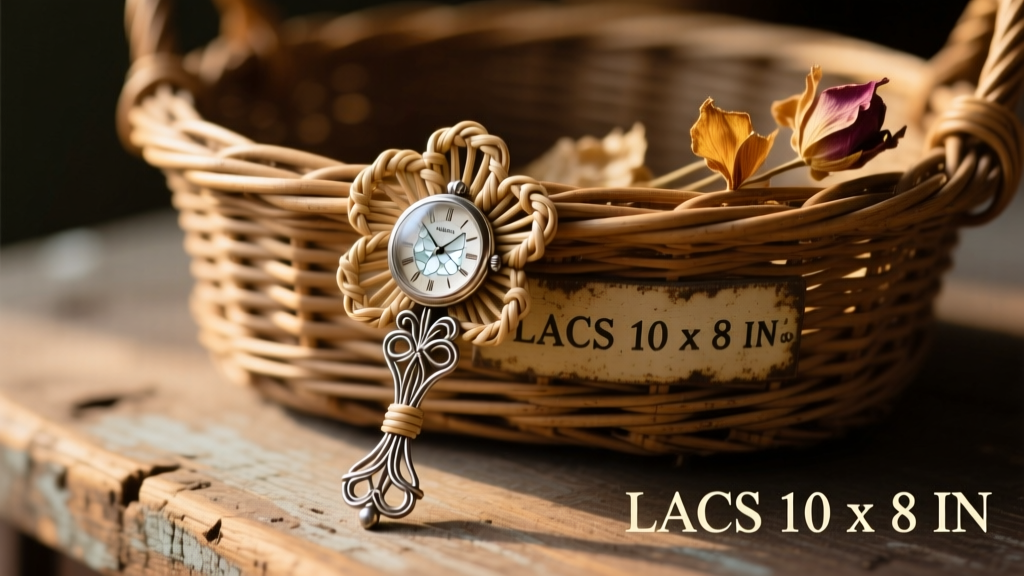
Doorstops: Flowers in Woven Basket Marked 'LACS' — A 1940s American Cast Iron Collectible (10 × 8 Inches)
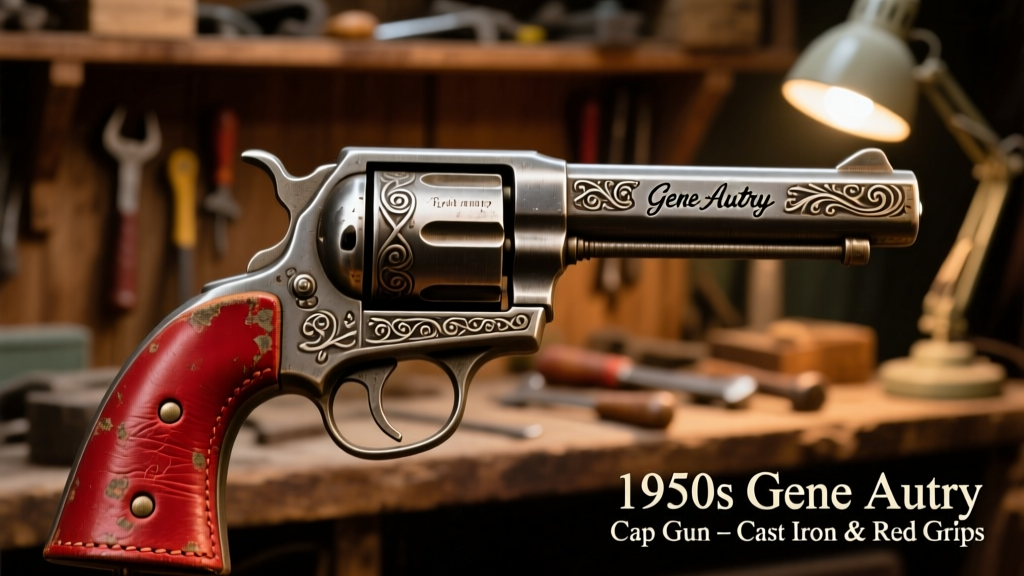
Gene Autry Cap Gun: Cast Iron, Engraved Red Grips, 1950s, 8½-Inch Icon of Western Americana
Wemyss Jam Jar Roses on Blue, Yellow & Green: The Robert Heron Legacy in Scottish Art Pottery
The Schlumberger Woven Rope Twist Bracelet: A Masterpiece of 18K Gold Craftsmanship at Tiffany & Co.
Lot 1135709: A 1962 Patek Philippe Ref. 3448 Perpetual Calendar in 18K Yellow Gold — Provenance, Technical Anatomy, and Market Significance
Ladder-Back Armchair, Black Paint, Delaware River Valley Origin: A Technical and Historical Appraisal of a 44 × 22-Inch American Vernacular Masterpiece
Magic: The Gathering Auctions — Valuation, Provenance, and Market Realities for Collectors
Decoding Mettlach Marks: A Collector’s Reference for Porcelain, Steins, and Early 20th-Century German Ceramics
Santa on Rocket Ceramic Christmas Ornament: The 1960s Shafford Legacy and Collectibility of a Mid-Century Space-Age Icon