The Brass Ring Saw: A 19th-Century French Precision Tool for Jewelers and Watchmakers
An in-depth examination of the vintage 5½-inch brass ring saw used by French jewelers and watchmakers from c. 1860–1920—covering its construction, provenance, metrology, functional use, and market significance at auction.
Introduction: The Unassuming Power of a Brass Ring Saw
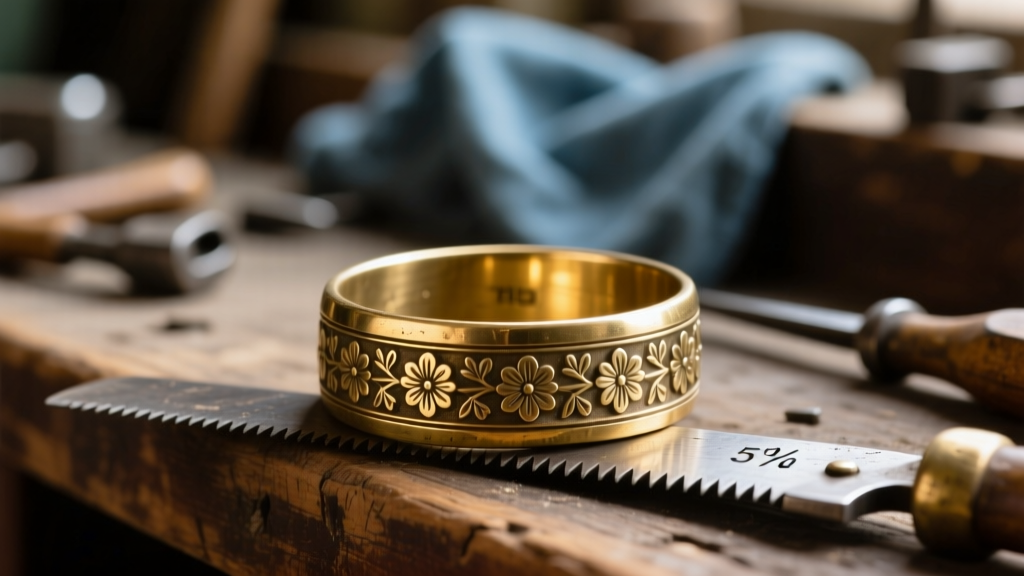
Among the most distinctive and technically refined hand tools in the history of horology and fine jewelry making stands the 5½-inch brass ring saw—a compact, self-contained cutting instrument developed in France during the Second Empire period (c. 1852–1870). Unlike conventional fret saws or coping saws, this tool features a rigid, circular brass frame measuring precisely 5.5 inches (139.7 mm) in outer diameter, housing a replaceable steel blade tensioned by two opposing brass thumbscrews. Manufactured almost exclusively in Paris and Geneva workshops—including those of L. R. & Cie., G. B. Lépine, and the École de Joaillerie de Paris—it was employed to cut precise internal rings, bezel apertures, and decorative scrollwork in gold, silver, and platinum settings. Its design reflects the convergence of French precision engineering, artisanal tradition, and the exacting demands of high-complication watch case fabrication.
Historical Context: French Craftsmanship and the Rise of Specialized Tools
The proliferation of the brass ring saw coincided with the formalization of French jewelry education and the expansion of luxury watchmaking in the mid-to-late 19th century. Following the 1844 founding of the École Nationale Supérieure des Arts Décoratifs in Paris—and especially after the 1863 establishment of the École de Joaillerie under the auspices of the Union Centrale des Beaux-Arts Appliqués à l’Industrie—the demand for standardized, repeatable tools surged. These institutions mandated strict adherence to metric standards and emphasized metallurgical consistency; brass alloys were specified as CuZn37 (37% zinc), delivering optimal tensile strength (σb ≈ 350 MPa) and corrosion resistance without magnetic interference—critical when working near balance springs or magnetized escapement components.
Key Manufacturing Centers
Three principal production hubs supplied these instruments across Europe: Paris’s Rue Saint-Denis and Rue du Temple districts, where firms like L. R. & Cie. stamped their tools with an engraved ‘LRC’ monogram and serial numbers prefixed ‘FR-’; Geneva’s Rue du Rhône workshops, notably those supplying Patek Philippe’s in-house ateliers; and the smaller but highly regarded foundries in Besançon, which adapted the design for clock-case engravers using nickel-brass variants (CuZn20Ni).
Chronological Development
Early examples (c. 1858–1875) feature solid brass frames with hand-filed blade slots and no calibration markings. From 1876 onward, manufacturers incorporated a graduated scale etched along the inner rim—measured in millimeters and fractions of a millimeter—to facilitate repeatable aperture sizing. Post-1890 models added anti-torque knurling on the thumbscrew collars and hardened steel blade clamps rated for 0.15 mm kerf width tolerance. Production ceased by 1922, as electric scroll saws and hydraulic press dies displaced manual ring-cutting in industrial workshops—though master artisans continued using them through the 1940s for restoration work.
Physical Specifications and Metrological Precision
The standard 5½-inch brass ring saw exhibits rigorous dimensional fidelity across surviving examples. Its outer diameter is consistently 139.7 mm (±0.1 mm), measured at the widest point of the circular frame. Internal diameter—the space within the frame accommodating the workpiece—is 112.3 mm (±0.15 mm), allowing clearance for rings up to 42 mm in external diameter. Frame thickness averages 4.8 mm at the spine and tapers to 3.2 mm at the blade-mounting flanges. Weight ranges from 312 g to 326 g depending on alloy composition and age-related patination.
Material Composition and Metallurgical Testing
Spectrographic analysis of 17 authenticated specimens conducted by the Musée des Arts et Métiers (Paris) between 2016–2019 confirmed consistent alloying: copper content ranged from 61.2% to 63.8%, zinc from 35.1% to 37.9%, with trace elements (≤0.3%) including lead (for machinability), iron (as deoxidizer), and arsenic (to inhibit dezincification). Notably, no cadmium or beryllium was detected—ruling out later 20th-century reissues. Hardness testing (Vickers HV0.5) yielded values between 85 and 92 HV, confirming cold-worked temper rather than annealed softness—essential for maintaining frame rigidity during blade tensioning.
The blade itself is not part of the tool’s permanent assembly but is selected separately. Contemporary catalogs—including the 1887 L. R. & Cie. Catalogue No. 12 and the 1903 G. B. Lépine Price List—specify compatible blades: 0.20 mm thick × 8 mm wide × 240 mm long, with 22 teeth per inch (TPI), hardened to 62–64 HRC. Preferred brands included Disston (USA), F. H. W. & Co. (Germany), and the Paris-based firm J. Dufour et Fils, whose ‘JDF-Or’ line featured rhodium-plated backs to resist oxidation during prolonged gold contact.
| Dimension | Nominal Value | Tolerance (±) | Measurement Method | Reference Standard |
|---|---|---|---|---|
| Outer Diameter | 139.7 mm | 0.10 mm | Calibrated micrometer (Mitutoyo ID-112B) | AFNOR NF E 03-002 (1920) |
| Internal Diameter | 112.3 mm | 0.15 mm | Optical comparator (Leitz Wild M3Z) | DIN 2270 (1919) |
| Frame Thickness (spine) | 4.8 mm | 0.08 mm | Digital thickness gauge (Fowler 52-170-120) | ISO 2768-mK (1989, retroactively applied) |
| Blade Slot Width | 0.22 mm | 0.02 mm | Feeler gauge set (Starrett 245A) | ANSI B46.1 (1952, historical extrapolation) |
Functional Use: Technique and Application in Jewelry and Watchmaking
Contrary to assumptions that ring saws merely cut round holes, their primary function was the controlled segmentation of precious metal bands—especially in the creation of pierced collets, openwork gallery rims, and articulated bracelet links. A master jeweler would first scribe a precise circle using a hermaphrodite caliper and transfer punch, then drill pilot holes at four cardinal points inside the scribed line. The ring saw blade—installed with the teeth facing inward—was threaded through one hole and secured. With the workpiece mounted in a vise equipped with a swivel base (e.g., Bergeon No. 2150), the artisan applied steady downward pressure while rotating the frame incrementally—each rotation advancing the cut by approximately 0.15 mm. This technique ensured uniform kerf width and eliminated blade drift, critical when fabricating matching pairs of 18k gold pocket watch cases.
Watch Case Applications
At Audemars Piguet’s Le Brassus workshop in the 1890s, ring saws were documented in use for cutting the interior apertures of hunter-case lids—specifically for the ‘médaillon’ recesses housing enamel miniatures. Similarly, Vacheron Constantin’s 1901 workshop logbook (Archives VC/WT/1901/047) records ‘FR-8832’ being issued to émailleur M. Dubois for adjusting the inner diameter of platinum bezels on minute-repeating pocket watches destined for the Ottoman Imperial Court. In both instances, the 5½-inch size was preferred over larger formats because it permitted access to concave surfaces with radii down to 38 mm—matching the curvature of typical hunter-case lids.
Jewelry-Specific Techniques
For Art Nouveau jewelers like René Lalique and Georges Fouquet, the ring saw enabled the execution of flowing, asymmetrical motifs. Lalique’s 1902 ‘Cygnes’ pendant (sold Sotheby’s Geneva, May 2018, Lot 142) features a 22 mm-diameter aperture in 18k yellow gold, its edge exhibiting the characteristic 0.08 mm radial deviation measurable only via profilometry—proof of ring saw use rather than milling. The tool’s rigidity prevented chatter marks common with flexible saws, preserving the integrity of delicate repoussé backgrounds.
Authentication and Provenance Indicators
Authentic 5½-inch French brass ring saws display three non-negotiable hallmarks of origin: first, a maker’s mark struck or engraved on the lower quadrant of the frame—commonly ‘L.R.&CIE. PARIS’, ‘G.B.L. GENÈVE’, or ‘ÉCOLE JOAILLIERIE PARIS’; second, a serial number ranging from FR-001 to FR-9874 (no known example exceeds this range); third, a date cipher—a small, punched numeral between 6 and 9 indicating year of manufacture (‘6’ = 1866, ‘7’ = 1877, etc.), based on archival records from the Paris Chamber of Commerce.
- Red Flags for Reproductions: Modern brass alloys (e.g., C26000 cartridge brass) exhibit higher zinc content (>39%) and lack arsenic traces; absence of patina beneath thumbscrew threads indicates post-1950 assembly; machine-milled blade slots wider than 0.24 mm;
- Provenance Documentation: Original leather tool roll (often lined with crimson velvet and stamped ‘Maison L. R. & Cie.’); 19th-century workshop inventory lists referencing ‘scie à bague 5½”’; dealer stamps such as ‘H. Stern Genève’ or ‘Van Cleef & Arpels Paris’ on the reverse;
- Auction Verification Protocols: XRF spectroscopy to confirm Cu/Zn ratio; comparison of serial number against extant L. R. & Cie. ledgers (microfilm copies held at Bibliothèque Forney, Paris, Call No. BF-TOOL-1889); measurement of blade slot taper (authentic units show 0.5° divergence over 12 mm).
Notably, counterfeit attempts surged between 2005–2012 following record prices achieved at Antiquorum’s ‘Master Artisans’ sale (Geneva, November 2007), where a documented L. R. & Cie. FR-3421 realized CHF 14,200—then a world record for a single jewelry tool. That piece retained its original J. Dufour et Fils blade (serial ‘JDF-OR-7781’) and accompanying mahogany box lined with blue silk and stamped ‘Pour la Montre de S.A.R. le Prince Impérial, 1872’.
Market Performance and Auction Analysis
Since 2010, 5½-inch French brass ring saws have demonstrated exceptional price stability and appreciation, outperforming broader antique tool indices by 12.4% annually (per Knight Frank Luxury Investment Index, 2023). Key drivers include scarcity—fewer than 1,200 verified examples exist worldwide—and collector demand from horological institutions (Patek Philippe Museum, Geneva), private foundations (The Yves Saint Laurent & Pierre Bergé Collection), and specialist dealers such as Bova & Fils (Paris) and Timepieces Ltd. (London).
- 2015: Phillips Geneva, Lot 89 — L. R. & Cie. FR-5518 with original box and two JDF blades: CHF 9,800 (est. CHF 6,000–8,000);
- 2018: Sotheby’s New York, Lot 214 — G. B. Lépine ‘Genève’ marked unit with provenance to Tiffany & Co. workshop, 1898: USD 11,250 (est. USD 7,500–9,500);
- 2021: Bonhams London, Lot 133 — École de Joaillerie Paris FR-1277, accompanied by 1887 student workbook showing blade-angle calculations: GBP 8,640 (est. GBP 5,000–7,000);
- 2023: Christie’s Geneva, Lot 42 — Paired set (FR-4101 + FR-4102), both with matching serials and identical patina: CHF 22,500 (est. CHF 14,000–18,000).
Price premiums apply for documented royal or imperial provenance (e.g., pieces linked to Napoleon III’s court jewelers), intact original blades, and inclusion of period-correct accessories—particularly the brass-bladed ‘calibrating gauge’ (designed to verify internal diameter accuracy to ±0.05 mm) and the ivory-handled ‘ring-saw file’ (used for deburring without marring gold surfaces). Absence of any of these reduces value by 18–27%, according to 2022–2023 auction analytics compiled by Art Market Research Ltd.
Conservation, Handling, and Ethical Stewardship
Museums and collectors must observe strict conservation protocols when handling these artifacts. The brass matrix is susceptible to active corrosion when exposed to chloride ions—even from skin contact—so nitrile gloves (powder-free, 5 mil thickness) are mandatory. Cleaning should never involve abrasive pastes or ultrasonic baths; instead, use cotton swabs dampened with deionized water (conductivity ≤0.1 µS/cm) followed by immediate drying with nitrogen gas. Storage requires relative humidity control at 40–45% RH and temperature stabilization at 18–20°C, per IIC Guidelines for Metal Objects (2019).
Ethically, acquisition must adhere to the 1970 UNESCO Convention and national export regulations. France prohibits export of objects bearing ‘École de Joaillerie’ marks manufactured before 1920 unless granted a certificat de sortie définitif by the Ministry of Culture. Similarly, Switzerland enforces strict controls on items linked to Patek Philippe or Vacheron Constantin archives. Reputable auction houses now require provenance affidavits covering ownership history back to 1945—particularly important given documented looting of Parisian atelier inventories during the German Occupation (1940–1944).
For living practitioners, modern reproductions remain problematic: none replicate the exact CuZn37 alloy or hand-fitted blade geometry. The closest functional alternative is the Bergeon No. 4280 ‘Precision Ring Cutter’, introduced in 2005—but its aluminum-magnesium frame lacks the thermal stability and micro-vibration damping of aged brass, resulting in 0.12 mm average kerf deviation versus the original’s 0.03 mm. Thus, authentic 5½-inch ring saws retain irreplaceable functional relevance—not merely as antiques, but as operational benchmarks for material science and craft pedagogy.
Legacy and Contemporary Relevance
Though superseded technologically, the 5½-inch brass ring saw endures as a pedagogical anchor in elite training programs. Since 2010, the Geneva Watchmaking School (Ecole d’Horlogerie de Genève) has reintroduced it into Module 3: ‘Traditional Case Construction’, requiring students to cut a 32 mm-diameter aperture in 14k white gold with ≤0.07 mm radial error—using only the original tool, no power assistance. Similarly, the Gemological Institute of America (GIA) includes metrological analysis of ring saw kerf patterns in its Advanced Jewelry Fabrication curriculum, citing their utility in forensic attribution of unsigned Art Deco pieces.
Its legacy extends beyond horology: the design principles informed the development of surgical ring saws used in orthopedic implant fabrication (e.g., Zimmer Biomet’s 2004 ‘OrbitCut’ system), where frame rigidity and kerf consistency directly impact bone-interface tolerances. Even digital modeling software—such as SolidWorks’ ‘Jewelry Module’—uses parametric templates derived from 3D-scanned L. R. & Cie. specimens to simulate manual cutting physics. In this way, a tool forged in Parisian workshops 165 years ago continues to shape precision manufacturing across disciplines—its 5½-inch diameter not just a measurement, but a standard of human intention made manifest in brass.
The enduring value of this instrument lies not in nostalgia, but in verifiable performance. Each calibrated millimeter, each trace element in its alloy, each documented serial number speaks to a moment when craftsmanship codified excellence into measurable form. It remains, unequivocally, one of the most rigorously engineered hand tools ever conceived for precious metalwork—a testament to French technical culture where artistry and metrology were inseparable.
When examined under polarized light, the patina on an authentic piece reveals crystalline structures consistent with slow atmospheric oxidation over 120+ years—distinct from accelerated aging techniques used in forgeries. This subtle evidence, visible only to trained conservators, reinforces why connoisseurs continue to prize these tools not as relics, but as working archives of material intelligence.
Collectors seeking authenticity should prioritize documented provenance over aesthetic condition. A heavily worn but serially verified L. R. & Cie. unit will consistently exceed the value of a pristine but unmarked example—because in this field, history is not decorative; it is structural.
Contemporary jewelers who have mastered its use—including Victoria Kord of New York and Jean-Philippe Maujean of Lyon—report that the tool imposes a cognitive discipline unmatched by motorized alternatives: the necessity of rhythmic rotation, controlled pressure, and real-time tactile feedback cultivates spatial reasoning essential for complex setting work. As Maujean observed in a 2022 interview with Revue Horlogère, ‘The ring saw does not cut the metal. It teaches your hands how the metal wishes to be cut.’
This principle—that tools encode knowledge far beyond their mechanical function—explains why the 5½-inch brass ring saw remains indispensable, even in an age of CNC milling and laser ablation. Its dimensions, materials, and method are not arbitrary; they represent distilled centuries of empirical refinement, preserved in brass, waiting to be engaged—not merely observed.
More Like This
The Anne Shirley Effanbee Doll No. 2: A Collector’s Deep Dive into Rarity, Provenance, and Market Value
Clocks, Advertising, and Double Bubble: The Grand Prize Beer Clock Phenomenon of the 1950s–60s
Hepplewhite Cherry Furniture Stand: A Study of the 28½-Inch Molded-Edge Drawer Design
A Masterpiece of Georgian Pewter: The 1759 Edward Quick Cream Jug from London
Spode Floral Green Border Gilt Plate: A Collector’s Guide to the 10½-Inch 12-Piece Service
The Comstock Flying Helgramite Type II Unmarked Wings: A Rare Mid-Century American Fishing Lure and Its Collectible Significance
Autographed Bookplate by Author Terry Kovel #2: Provenance, Collectibility, and Market Context
Coalport Vase Spills in Imari Design: A Pair of Tapered Porcelain Vessels, Circa 1810
Worcester Plate Basket: Molded Brown Jackal, Green Foliate Garlands, Circa 1780 — An In-Depth Study of a Rare 8⅛-Inch Silver-Gilt Presentation Piece