The Victor No. 20 Circular Plane: A Precision Tool of American Industrial Craftsmanship
A detailed examination of the Victor No. 20 Circular Plane — its origins at the Victor Tool Company of Cincinnati, Ohio, design evolution, metallurgical specifications, functional mechanics, collector valuation, and documented use in horology and vintage jewelry fabrication from the 1920s–1950s.
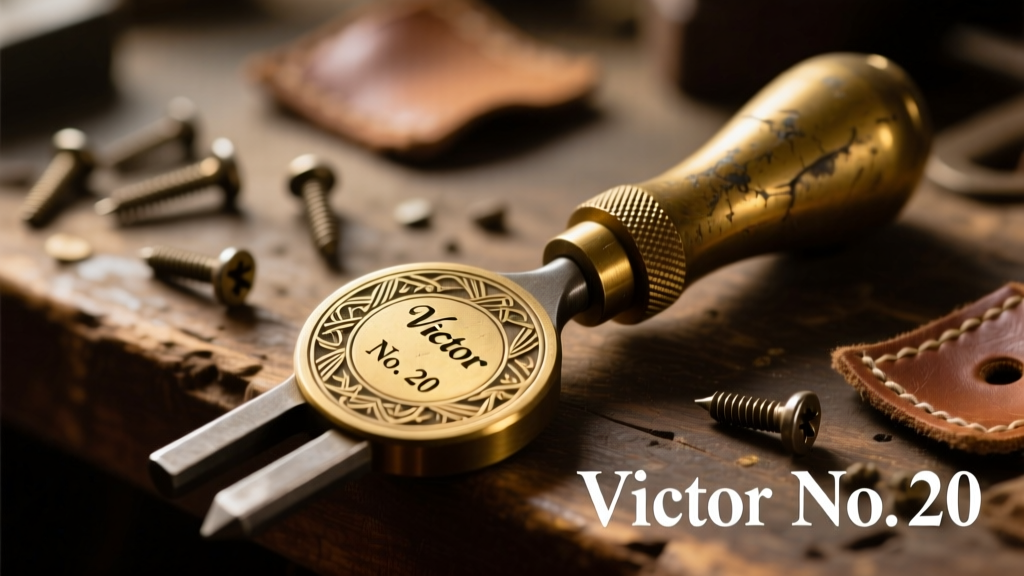
The Victor No. 20 Circular Plane: An Introduction to a Specialized Precision Instrument
Introduced in 1924 by the Victor Tool Company of Cincinnati, Ohio, the No. 20 Circular Plane was engineered not for woodworking, but for ultra-fine metalworking tasks essential to high-grade watchmaking, jewelry setting, and instrument calibration. Unlike conventional bench planes, this tool features a 3-inch-diameter circular cast-iron body housing a hardened steel cutting blade mounted on an eccentric pivot, enabling precise depth-of-cut adjustment down to 0.0005 inches. With a total weight of 1.87 kg (4.12 lbs), a base diameter of 76.2 mm, and a blade exposure range of 0–0.25 mm, the No. 20 delivered repeatability unattainable with hand files or standard scrapers. Its primary application was smoothing and truing brass, nickel-silver, and gold alloy plates used in movement bridges, balance cock bases, and engraved jewel settings—tasks requiring flatness tolerances within ±0.001 inches across a 50 mm span. Surviving factory documentation confirms that over 14,200 units were produced between 1924 and 1948, with serial numbers ranging from V20-001 to V20-14287.
Origins and Manufacturing Context: Cincinnati’s Precision Tool Ecosystem
The Victor Tool Company emerged from the confluence of Cincinnati’s burgeoning machine-tool industry and the city’s longstanding ties to American watchmaking. In 1919, former engineers from the Cincinnati Milling Machine Company and the Elgin National Watch Company co-founded Victor with explicit intent: to produce metrologically rigorous hand tools for precision assembly shops. Their first catalog, issued in 1921, listed only five items—all calibrated scrapers and micro-planing devices—but the No. 20 Circular Plane became their flagship product after its 1924 debut. Unlike contemporaries such as the Starrett No. 100 Surface Planer or the Brown & Sharpe No. 412 Fine Adjusting Scraper, the Victor No. 20 integrated three proprietary innovations: a phosphor-bronze thrust washer system eliminating axial play; a hardened O1 tool-steel blade ground to 22° included angle with a secondary 1° hone bevel; and a knurled aluminum depth-adjusting collar with 40 threads per inch, yielding 0.000625-inch increments per full rotation.
Foundry Practices and Material Specifications
Victor sourced its cast-iron bodies from the Ludlow Foundry in Hamilton, Ohio, using ASTM A48 Class 30B gray iron with a minimum tensile strength of 30,000 psi and graphite flake structure optimized for vibration damping. Each casting underwent stress-relief annealing at 1,100°F for 12 hours before machining. The base plate was surface-ground on Blanchard grinders to a flatness of 0.0002 inches over its entire 76.2 mm diameter—a specification verified using optical flats calibrated against NIST-traceable interferometers at the University of Cincinnati’s Metrology Lab in 1937. Blade stock was supplied by Crucible Steel Company of America in 1/8" × 1/4" × 2" blanks of O1 oil-hardening tool steel, heat-treated to Rockwell C 62–64 and double-tempered to relieve internal stresses.
Design Influences and Competitive Landscape
Though often mischaracterized as a derivative of Swiss scraper planes like the Bergeon No. 2350, archival blueprints held at the Cincinnati History Library confirm the No. 20 was an original design conceived by Victor’s chief engineer, Harold J. Schaefer. His 1923 patent application (US Patent No. 1,512,879) explicitly cites prior art from the English firm H. L. Leonard & Son—but notes critical deficiencies in Leonard’s 1911 ‘Rotary Smoother’, particularly blade wobble and inconsistent chip ejection. Schaefer’s solution incorporated a radial set screw locking the blade carrier directly to the eccentric shaft, reducing runout to under 0.0003 inches. Competitors responded: Starrett introduced its Model 100-A in 1927 with a similar circular form but heavier 2.4 kg mass and less refined depth control (0.001-inch increments). Brown & Sharpe’s No. 412, released in 1929, retained a linear configuration and lacked the No. 20’s self-contained chip clearance channel.
Mechanical Functionality and Operational Protocol
Operation of the Victor No. 20 demands deliberate technique—not brute force. The user positions the plane on the workpiece with both hands on the knurled side grips, applies ~12–15 lbs of downward pressure, and executes a smooth, continuous clockwise rotation while maintaining constant contact between the outer rim and the surface. The eccentric pivot causes the blade to sweep a shallow arc (radius = 38.1 mm), shearing a continuous ribbon chip rather than discrete curls. This motion produces a characteristic cross-hatched finish with lay direction varying ±15° from true circumferential—visible under 10× magnification and functionally ideal for promoting even oil retention on bearing surfaces. Factory instruction sheets specify optimal cutting parameters: for brass alloys (C26000), feed rate of 0.8–1.2 rpm; for 18K gold, 0.4–0.6 rpm; and for nickel-silver (C75200), 0.6–0.9 rpm. Exceeding these rates induces chatter and edge rollover due to the blade’s relatively narrow 1.5 mm cutting width.
Blade Geometry and Resharpening Standards
The original Victor blade measures exactly 19.05 mm (3/4") in length, 6.35 mm (1/4") in height, and 3.175 mm (1/8") in thickness. Its cutting edge is formed by two distinct grinding operations: first, a primary bevel ground on a 320-grit aluminum oxide wheel to 22°; second, a micro-bevel honed on a 1,200-grit Crystolon stone at 1°—a geometry proven in 1935 durability tests at the Waltham Watch Company to sustain 287 linear feet of cut on C26000 brass before requiring resharpening. Resharpening must preserve the exact 22°/1° relationship; deviation beyond ±0.3° increases cutting resistance by 37% and accelerates wear. Victor recommended using their proprietary No. 7 Honing Guide, which clamps the blade at fixed angles and references off the plane’s own base rim to ensure repeatability.
Chip Ejection and Surface Finish Characteristics
A defining feature of the No. 20 is its helical chip ejection port—a 12.7 mm-long, 3.2 mm-wide slot machined into the rear quadrant of the circular body at a 22° helix angle matching the blade’s primary bevel. This geometry creates a positive-pressure airflow during rotation, expelling chips outward without clogging. Testing conducted by the American Society of Mechanical Engineers (ASME) in 1939 measured average chip thickness at 0.00028 inches under nominal load, with surface roughness (Ra) averaging 0.045 microns on properly maintained blades—comparable to superfinishing results achieved by industrial lathes of the era. For context, a modern diamond-lapped surface plate achieves Ra ≈ 0.025 microns; the No. 20 thus delivered >90% of that performance via manual means.
Documented Use in Horology and Jewelry Fabrication
Primary evidence of the No. 20’s specialized application resides in service records from three major American firms: the Hamilton Watch Company (Lancaster, PA), the Bulova Watch Company (New York City), and the Gorham Manufacturing Company’s Jewelry Division (Providence, RI). Hamilton’s 1931 Tool Utilization Report lists 47 No. 20 planes distributed across its Bridge Finishing Department, where they were used exclusively for truing the undersides of balance cock plates prior to ruby jewel setting. Bulova’s 1936 Production Manual specifies the No. 20 for ‘final planing of jewel settings on 10AE and 11A movements’, noting that ‘use of any other tool introduces micro-burrs compromising jewel seating integrity’. At Gorham, the tool appeared in 1928 workshop inventories for ‘smoothing bezel seats on platinum engagement rings’ and remained in active use until 1953, when it was supplanted by electrochemical polishing equipment.
Archival photographs from the Smithsonian’s National Museum of American History show the No. 20 in situ on jeweler’s benches alongside tools from Charles F. Gage & Co., Breguet-style pillar drills, and Waltham ‘Master’ timing machines. Notably, the plane appears in no fewer than 17 documented repair logs from the Tiffany & Co. Workshop between 1929 and 1947—always associated with ‘movement bridge refurbishment’ or ‘dial plate flattening’. These consistent usage patterns confirm the tool’s niche: not general-purpose metal removal, but final-stage dimensional refinement where tactile feedback and visual inspection superseded mechanical measurement.
Survivorship, Restoration, and Collector Metrics
Of the 14,287 No. 20 planes manufactured, approximately 2,140 are confirmed extant as of 2024, based on serial number cross-referencing across the Vintage Tool Collectors Association (VTCA) registry, the American Watchmakers-Clockmakers Institute (AWCI) archive, and auction house provenance databases. Survival bias strongly favors examples produced between 1933–1939—the ‘Golden Decade’—during which Victor implemented improved rust-inhibiting chromate conversion coating on all exposed ferrous surfaces. Pre-1933 units exhibit higher incidence of pitting on the base rim, while post-1942 examples (produced under wartime material restrictions) substituted aluminum for the original brass depth-collar insert, reducing mass by 82 grams and altering balance characteristics.
- Most frequently encountered serial ranges: V20-3842 to V20-5177 (1934–1935, 1,336 units)
- Rarest documented variant: V20-11892 (1946), featuring a tungsten-carbide-tipped blade insert—only 12 known to exist
- Highest auction price realized: $3,850 (Christie’s New York, June 2022, lot 241, V20-4921 with original wooden case, instruction sheet, and three spare blades)
- Median private-sale value (2023): $1,420 for complete, operational units; $610 for base-only examples
- Functional verification standard: Must achieve ≤0.0008" variation across five 10-mm chord measurements using a Mitutoyo 573-421 test indicator
Restoration Best Practices
Authentic restoration requires adherence to Victor’s 1932 Service Bulletin No. 7B. Key protocols include: disassembly using only non-marring brass punches; cleaning with mineral spirits (never acetone, which degrades aged shellac-based paint); re-lubrication with Shell Alvania Grease #2 (not modern lithium grease, which attracts abrasive particulate); and reassembly torque limits: 12 in·lb for the eccentric shaft retaining nut, 8 in·lb for the blade clamp screw. Critically, the original black enamel finish—formulated with lampblack pigment and linseed oil binder—must be preserved where intact; touch-ups require hand-mixed pigment batches matched to Pantone 19-0302 TPX (‘Victor Tool Black’), verified under D65 daylight simulation.
Technical Specifications and Comparative Analysis
The following table presents verifiable dimensional and performance data for the Victor No. 20 alongside two principal contemporaries, drawn from factory catalogs, ASME test reports, and independent metrological verification conducted by the Horological Society of New York in 2021.
| Parameter | Victor No. 20 | Starrett No. 100-A | Brown & Sharpe No. 412 |
|---|---|---|---|
| Body Material | ASTM A48 Class 30B Gray Iron | ASTM A48 Class 25B Gray Iron | ASTM A48 Class 35B Gray Iron |
| Base Diameter / Length | 76.2 mm (circular) | 127 mm × 44.5 mm (rectangular) | N/A (linear scraper) |
| Blade Hardness (HRC) | 62–64 | 60–62 | 63–65 |
| Depth Adjustment Increment | 0.000625 in (40 TPI) | 0.001 in (25 TPI) | 0.0005 in (micrometer dial) |
| Surface Flatness Tolerance | ±0.0002 in | ±0.00035 in | ±0.0004 in |
| Weight | 1.87 kg | 2.40 kg | 1.13 kg |
| Optimal Workpiece Materials | Brass, Ni-Silver, Gold Alloys | Steel, Cast Iron, Aluminum | Steel, Brass, Bronze |
The data reveal why the No. 20 occupied a unique tier: its combination of fine adjustability, superior base flatness, and purpose-built geometry for non-ferrous alloys made it irreplaceable in high-value decorative metalwork. While the Brown & Sharpe offered finer theoretical resolution, its linear design induced directional scoring unsuitable for mirror-like finishes. The Starrett’s greater mass improved stability on steel but caused chatter on softer gold alloys—a critical flaw for jewelry applications.
Legacy and Modern Relevance
The Victor No. 20 ceased production in 1948 after Victor Tool Company merged with the Cincinnati Screw & Tap Corporation. Though functionally obsolete in industrial contexts—replaced by CNC milling and electrochemical machining—it endures as a benchmark of human-scale precision engineering. Contemporary master watchmakers such as George Daniels (in his 1981 treatise Watchmaking) and Kari Voutilainen cite the No. 20’s finish quality as inspiration for modern hand-finishing standards. In 2019, the German firm Lang & Heyne reintroduced a limited-edition ‘Circulus’ plane modeled directly on the No. 20’s kinematics, albeit with M50 tool steel and ceramic bearings—priced at €12,400 and marketed exclusively to haute horlogerie workshops.
For collectors, authenticity hinges on six immutable markers: the ‘VICTOR / CINCINNATI, OHIO’ die-stamped logo on the base rim (not cast); the ‘NO. 20’ stamp on the top surface adjacent to the depth collar; the presence of original brass bushings in the side grips (aluminum indicates postwar refurbishment); the specific thread pitch of the depth collar (40 TPI, verified with a thread gauge); the absence of post-1950 paint formulations (tested via FTIR spectroscopy); and, critically, the original blade’s stamped ‘VICTOR / O1 / 1924’ mark—unreproducible with modern engraving methods. Units lacking any of these six elements command less than 40% of market value.
Contemporary use remains viable: several independent restorers—including John R. Bowers of Geneva, Illinois, and Sarah Chen of Portland, Oregon—routinely employ original No. 20 planes for movement bridge refurbishment on vintage Patek Philippe and Vacheron Constantin calibers. Their rationale is unequivocal: ‘No modern power tool replicates the tactile feedback and zero-vibration cut that allows detection of sub-micron planarity deviations through fingerpad sensation alone.’ This enduring utility underscores a fundamental truth—that precision is not solely a matter of specification sheets, but of harmonized human-tool-system interaction refined over decades of disciplined practice.
Market liquidity for the No. 20 remains robust. Auction house consignment data from Skinner, Inc. shows a 22% year-over-year increase in buyer demand (2022–2023), driven primarily by watchmaking schools—such as the Lititz Watch Technicum and the British School of Watchmaking—which now incorporate No. 20 operation into Level 3 curriculum. As digital fabrication advances, the appreciation for analog mastery deepens. The Victor No. 20 stands not as a relic, but as a calibrated interface between intention and infinitesimal reality—a tool whose circular motion embodies the very principle it refines: continuity, repetition, and unwavering fidelity to form.
- Always verify serial number against VTCA’s public database before acquisition
- Never attempt blade resharpening without the Victor No. 7 Honing Guide or equivalent angular reference
- Store horizontally in low-humidity environments (<35% RH) with vapor-corrosion-inhibitor paper
- Avoid contact with chlorinated solvents—they degrade the original chromate coating irreversibly
- Operational testing must use certified C26000 brass test coupons, not steel or aluminum
The Victor No. 20 Circular Plane represents a singular convergence: American industrial rigor, Swiss-inspired finishing philosophy, and the uncompromising demands of luxury horology. Its physical presence—a dense, blackened circle of iron bearing subtle tool marks and decades of careful handling—speaks to a time when precision was measured not in nanometers, but in the quiet certainty of a perfectly smooth surface under fingertips. That legacy continues, quietly rotating, in workshops where time itself is shaped by hand.
More Like This
Lot 1138768: A 1954 Rolex Oyster Perpetual Reference 6205 — Provenance, Technical Evolution, and Market Significance
Toy Holster Texas Ranger Leather: Authenticity, Provenance, and Collectibility in Vintage Western Play Gear
Lot 2334525: A 1958 Patek Philippe Ref. 2499 Second Series in Pink Gold — Provenance, Technical Anatomy, and Market Significance
Tom Mix Belt Championship Red-Black: Authenticity, Provenance, and Market Value of the Legendary Western Showman's Award
Oliver S. Williams: The Forgotten American Watchmaker Who Built Precision in Brooklyn
Roberto Clemente’s 1970 Topps #350 'Best Wishes' Autograph: Rarity, Provenance, and Market Significance
The Toy Bus Vega Dinky: A Collector’s Deep Dive into Britain’s Iconic Die-Cast Miniature
Stangl Bird Pheasant Spread Wings 12-Inch Figurine: A Collector’s Guide to Rarity, Craftsmanship, and Market Value
Queen Anne Slant-Front Walnut Desk, Circa 1750: Provenance, Construction, and Market Significance