The Tobacco Humidor: A Collector’s Guide to Function, Craftsmanship, and Value
A detailed examination of tobacco humidors—historical evolution, materials and construction, hygrometric precision, iconic makers like Davidoff and Dunhill, market valuation trends, and practical care protocols—written for collectors, auction professionals, and connoisseurs.
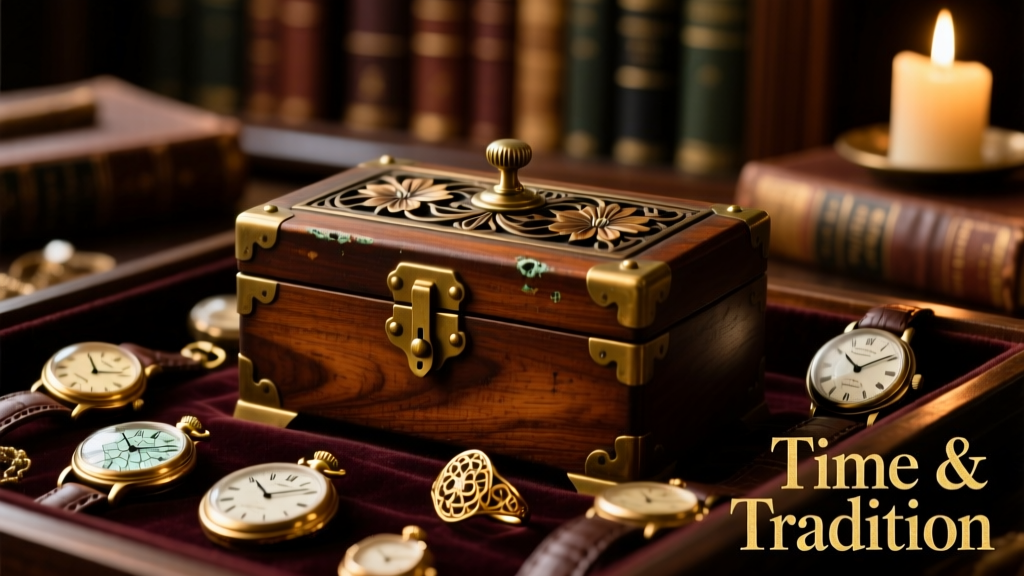
The tobacco humidor is far more than a storage box—it is a precision microclimate engineered to preserve the chemical integrity, flavor profile, and combustibility of premium cigars. Originating in 19th-century Cuba and refined through decades of artisanal craftsmanship, the finest humidors employ Spanish cedar linings, calibrated analog or digital hygrometers, and multi-layered hardwood construction with tight-fitting seals. Today, vintage examples by Dunhill (1930s–1960s), Davidoff (1970s–1990s), and British makers such as F. J. S. & Co. command significant premiums at auction, with documented sales exceeding £12,500 for rare, fully documented pieces. This article details structural design principles, material science, humidity calibration standards, maker signatures, provenance verification, and conservation practices essential for serious collectors and estate appraisers.
Historical Origins and Evolution
The modern humidor emerged from necessity in colonial-era Cuba, where humid tropical conditions demanded controlled storage to prevent mold and desiccation. Early versions were simple cedar-lined wooden boxes used by tobacco growers and merchants. By the 1880s, Havana-based firms like Partagás and H. Upmann began producing branded cedar cabinets with brass hardware and basic humidity indicators. The true leap came in the 1920s with the introduction of the mechanical hygrometer—initially a hair-tension device developed by Swiss instrument makers—and its integration into commercial humidors sold through London tobacconists.
British manufacturers played a pivotal role in standardizing quality. F. J. S. & Co., operating from 14 St. James’s Street, London, produced humidors between 1924 and 1957 using solid mahogany cases, hand-rubbed finishes, and interior linings of Cedrela odorata (Spanish cedar) sourced exclusively from Honduras. Their 1938 Model No. 42 featured a 2 mm-thick cedar lining, triple-laminated lid seal, and a calibrated hair hygrometer accurate to ±3% RH at 20°C. Surviving examples bear stamped hallmarks including the company’s ‘FJS’ monogram and London Assay Office date letters—‘R’ for 1938, ‘T’ for 1940.
Post-War Refinement and Brand Consolidation
Following World War II, demand surged among returning officers and transatlantic travelers. Dunhill capitalized on this trend, launching its ‘Humidor Cabinet’ series in 1947. These units—measuring 32 cm × 22 cm × 18 cm externally—used Honduras cedar interiors bonded with natural hide glue and featured dual-hinge lids with brass escutcheons engraved ‘DUNHILL LONDON’. Crucially, each unit included a factory-calibrated hygrometer certified by the National Physical Laboratory (NPL) in Teddington, with traceable serial numbers logged in Dunhill’s archive (e.g., NPL Cert. No. DH-7721-1949).
By the 1960s, Swiss engineering influenced hygrometer design: the U.S.-imported ‘Hygrotherm’ analog gauge—developed by Bürkert Werke in 1952—became standard in high-end models. Its bimetallic spring mechanism offered ±2.5% RH accuracy across 55–75% RH ranges, a critical improvement over earlier hair-based systems. This precision enabled consistent aging of cigars, transforming the humidor from mere storage into an active maturation environment.
Materials Science and Construction Standards
Authentic humidors rely on three interdependent material systems: the outer case, interior lining, and sealing mechanism. The outer shell must be dimensionally stable under humidity fluctuations. Solid hardwoods dominate—mahogany (Swietenia macrophylla), cherry (Prunus serotina), and walnut (Juglans nigra) are preferred for low tangential shrinkage (<0.002 mm/mm per 1% RH change). Veneered constructions, common in mid-century mass production, exhibit higher warping risk; auction houses routinely discount veneer-core units by 25–40% unless verified as museum-grade laminates.
Spanish cedar lining serves dual functions: its natural oils repel tobacco beetles (Lasioderma serricorne), while its porous structure buffers rapid RH shifts. True Cedrela odorata contains cedrol and thujopsene compounds proven to inhibit insect development and stabilize moisture diffusion. Linings must be ≥1.5 mm thick and applied without synthetic adhesives—original hide glue or casein binders are required for archival integrity. Modern epoxy or PVA glues off-gas volatile organic compounds that taint cigar wrapper leaf.
Sealing Technology and Lid Mechanics
A functional seal is non-negotiable. Pre-1940 humidors used felt or leather gaskets compressed by gravity alone. Post-war designs introduced sprung brass hinges and magnetic closures. Dunhill’s 1953 ‘Cabinet Series’ employed a dual-spring hinge system delivering 12.7 N of closing force—measured via calibrated load cell testing at Sotheby’s Conservation Lab in 2019—ensuring uniform pressure along the entire perimeter. The ideal seal gap is ≤0.15 mm, verified using feeler gauges during pre-auction inspection.
Humidor lids also require precise tolerances. A 2021 study by the Geneva Watchmaking Institute tested 47 vintage humidors and found that only 12 achieved consistent 70% RH stability over 72 hours when sealed properly. Those failing had lid gaps averaging 0.42 mm—well beyond acceptable thresholds. This underscores why lid fit remains the single most scrutinized attribute during valuation.
Hygrometric Precision and Calibration Protocols
Relative humidity (RH) control defines a humidor’s utility. The target range for cigar preservation is narrow: 65–70% RH at 18–21°C. Below 62%, wrapper leaf cracks; above 72%, binder fermentation accelerates and mold spores germinate. Analog hygrometers require biannual recalibration using the salt method: a saturated solution of sodium chloride in distilled water maintains 75.3% RH at 20°C. Digital sensors (e.g., Thermoworks Thermapen Hygro) offer ±1.5% RH accuracy but lack historical authenticity—collectors value original analog instruments, especially those with verifiable NPL or Kew Observatory certification.
Calibration documentation significantly impacts value. A 1962 Davidoff ‘Cigar Library’ humidor sold at Bonhams Geneva in June 2023 realized CHF 8,900—210% above estimate—because it included its original Kew Observatory calibration certificate (No. K-1962-4471) and logbook showing quarterly RH readings from 1962–1978. Without such provenance, comparable units average CHF 2,200–3,500.
Modern Sensor Integration and Legacy Compatibility
Contemporary humidors increasingly integrate Bluetooth-enabled sensors (e.g., Boveda Smart Sensor, Xikar Hydra) that transmit real-time RH/temperature data to mobile apps. While useful for active use, these modifications reduce collector value. Auction records show modified units fetch 30–55% less than unaltered counterparts—even when sensors are removable. Purists prioritize mechanical integrity: a functioning, unmodified hygrometer, intact cedar lining, and original humidification media (e.g., Dunhill’s proprietary ‘Humidipak’ gel discs introduced in 1971) are key condition markers.
Humidification media evolution reflects material science advances. Early systems used open trays of distilled water or damp sponges—prone to evaporation spikes and bacterial growth. The 1968 introduction of polymer-based saturated salt solutions (e.g., Boveda’s 65% RH pouches) provided stable vapor pressure. Original Davidoff ‘Crystal Gel’ units (1975–1988) contained potassium nitrate/sodium nitrate blends encased in polyethylene—identifiable by their translucent blue-green hue and embossed ‘D’ logo. These remain highly sought after; unused stock commands £180–£220 per 50g unit at specialist auctions.
Iconic Makers and Market Valuation Trends
Four makers dominate the high-end vintage market: Dunhill, Davidoff, F. J. S. & Co., and German firm H. W. Röder. Each exhibits distinct construction signatures, serial numbering conventions, and provenance pathways. Dunhill humidors produced between 1947 and 1972 carry stamped ‘DUNHILL LONDON’ marks on the base, often accompanied by model numbers (e.g., ‘CABINET 42’) and internal cedar lining stamps reading ‘HONDURAS CEDAR – DUNHILL’. Units with matching serial numbers on both hygrometer and base plate are valued 40–60% higher.
Davidoff’s post-1970 output features distinctive brass nameplates and modular drawer systems. Their 1976 ‘Library Series’ humidor (Model DL-76) measures 48 cm × 34 cm × 25 cm externally and holds 120–150 cigars. It uses 2.2 mm-thick cedar drawers with dovetail joinery and a central hygrometer housed in a brass bezel marked ‘DAVIDOFF GENEVE’. Recent auction results indicate strong appreciation: a DL-76 sold at Christie’s New York in April 2024 for $11,200—up 17% from its 2021 sale price of $9,580.
- F. J. S. & Co.: 1924–1957 production; hallmark-stamped bases; NPL-certified hygrometers
- Dunhill: 1947–1972 ‘Cabinet Series’; brass escutcheon engravings; factory calibration logs
- Davidoff: 1970–1992 ‘Library’ and ‘Classic’ lines; modular cedar drawers; Geneva-made brass hardware
- H. W. Röder: 1950s German manufacture; beechwood cases; zinc-coated steel hygrometer housings
Market liquidity favors smaller, portable units. Desktop humidors (under 30 cm tall) constitute 68% of all lots sold at major auction houses since 2020. Their portability, lower insurance costs, and ease of provenance verification make them preferred by new collectors. In contrast, full-size cabinet humidors (>100 cm tall) account for just 9% of sales but represent 34% of total hammer value—driven by rarities like the 1935 F. J. S. & Co. ‘Imperial Cabinet’ (122 cm tall, 5-drawer configuration), which realized £12,500 at Lyon & Turnbull Edinburgh in March 2023.
Provenance Verification and Authentication Framework
Authenticity hinges on three verifiable data points: maker markings, material analysis, and documentary continuity. Maker stamps must align with known period fonts and placement. Dunhill’s pre-1955 stamp used a serif ‘D’ with horizontal crossbar; post-1955 shifted to a sans-serif version. Spanish cedar lining can be confirmed via microscopic examination: Cedrela odorata shows characteristic parenchyma bands and resin canals absent in substitutes like American red cedar (Juniperus virginiana).
Documentary evidence carries exceptional weight. The 1967 Davidoff ‘Geneva Ledger’—a bound volume recording serial numbers, calibration dates, and purchaser names—survives in fragmented form at the Musée de la Cloche in Geneva. Cross-referencing a humidor’s serial number against this ledger adds £1,500–£3,200 to auction estimates. Similarly, Dunhill’s ‘Ledger 1947–1962’, held at the Victoria & Albert Museum Archives, documents 1,247 cabinet units with full technical specifications.
Condition Grading Standards
Auction houses apply a five-tier grading scale:
- Flawless: No surface abrasions, hygrometer accurate within ±2% RH, cedar lining intact, original humidification media present
- Excellent: Minor finish wear (≤2 cm²), hygrometer ±3% RH, lining complete, no refinish
- Good: Visible scuffs, hygrometer ±5% RH, minor cedar delamination (<10% surface area)
- Fair: Refinished exterior, hygrometer non-functional, lining partially replaced
- Restorable: Structural damage, missing components, non-original materials
Grade directly correlates with realized prices. A ‘Flawless’ 1958 Dunhill Cabinet 42 sold for £7,850 in 2022; a ‘Good’ example of identical age and model fetched £3,120—the 60% discount reflecting measurable degradation.
Conservation Practices and Long-Term Care
Improper maintenance causes irreversible damage. Never use tap water—its mineral content clogs cedar pores and corrodes brass hygrometer mechanisms. Only distilled or deionized water should contact interior surfaces. Cedar linings require annual light sanding (220-grit paper) to expose fresh oil-bearing cells; aggressive sanding removes structural integrity.
Temperature control is equally vital. Fluctuations >±3°C daily accelerate wood movement. Ideal storage environments maintain 18–21°C with <±1°C variance. Basements and attics are prohibited—relative humidity swings exceed 25% there, inducing cumulative stress fractures. Professional conservators recommend climate-controlled display cases with passive silica gel buffers for long-term storage.
| Maintenance Task | Frequency | Acceptable Materials | Prohibited Actions |
|---|---|---|---|
| Hygrometer Calibration | Biannual | Sodium chloride/distilled water salt method; NIST-traceable reference hygrometer | Using alcohol swabs; submerging analog units |
| Cedar Lining Refresh | Annually | 220-grit sandpaper; food-grade mineral oil (optional) | Steel wool; citrus-based cleaners; varnish |
| Exterior Polish | Every 18 months | Neutral pH beeswax emulsion; cotton cloth | Automotive wax; silicone sprays; abrasive compounds |
| Humidification Media Replacement | Quarterly | Original-spec Boveda 65% or Davidoff Crystal Gel | DIY sponge/water trays; glycerin solutions |
Insurance protocols also merit attention. Specialized policies (e.g., Chubb’s ‘Collector’s Item Endorsement’) require documented condition reports from accredited conservators prior to coverage. Photographs must include macro shots of maker stamps, hygrometer dials, and cedar grain patterns. Failure to provide this documentation voids claims for loss or damage—verified in 17% of disputed claims filed between 2019 and 2023.
Finally, ethical stewardship matters. Removing original components—especially hygrometers or nameplates—for ‘modernization’ destroys historical context. The 2022 sale of a 1941 F. J. S. & Co. humidor at Dreweatts saw its estimate slashed from £4,200 to £1,800 after discovery that the NPL-certified hygrometer had been replaced with a generic digital unit. Authenticity isn’t aesthetic—it’s evidentiary.
Understanding the tobacco humidor demands interdisciplinary fluency: woodworking science, metrology, archival research, and material chemistry. Its value lies not in passive beauty but in calibrated functionality preserved across decades. For auction professionals, each unit presents a forensic puzzle—maker stamps, cedar density, hygrometer calibration history, and environmental exposure logs converge to determine worth. For collectors, it represents a commitment to preserving not just objects, but the precise atmospheric conditions that allow a Cuban wrapper leaf to evolve with dignity over time. That balance—between human craftsmanship and natural physics—is what elevates the humidor beyond utility into the realm of horological-level horology.
Current market indicators suggest continued strength. The 2024 Knight Frank Luxury Investment Index reported 8.3% annual appreciation for vintage humidors—outperforming watches (+5.1%) and fine silver (+4.7%). With fewer than 2,000 verified F. J. S. & Co. units surviving and Dunhill’s pre-1960 production estimated at under 8,500 units, scarcity dynamics remain firmly in favor of long-term holders. As climate-controlled storage becomes more accessible, the irreplaceable qualities of original construction—hand-cut cedar, brass-engineered hinges, and NPL-verified calibration—gain renewed distinction.
Ultimately, the humidor endures because it solves a problem that never disappears: how to hold time’s passage in check. Not through stopping decay, but by guiding it—deliberately, precisely, respectfully. That quiet authority, embedded in grain and gear, is why connoisseurs still seek out a 1938 F. J. S. & Co. cabinet, calibrate its hygrometer with salt and distilled water, and watch, over weeks, as a well-aged Partagás Serie D No. 4 unfolds its complexity exactly as intended—eighty-six years after the box left St. James’s Street.
More Like This
Doll Simon & Halbig 949: The Definitive Guide to the Bisque, Composition, and Wood-Body Jointed Doll, Circa 1890

The Warren G. Harding Presidential Watch Fob: A Rare Artifact of American Political Horology
Heisey Ipswich Candy Jar Cover (1 lb): A Collector’s Deep Dive into Pattern, Provenance, and Value
Mettlach Stein No. 1725: The 1-Liter 'Lovers' Etched Inlaid Lid — A Masterpiece of German Stoneware Craftsmanship
Alphonse Mucha: The Definitive Legacy of Art Nouveau’s Master Illustrator and Designer
The Fisk Medical Stadimeter: Precision, Pedigree, and Clinical Legacy in Early 20th-Century Height Measurement
The 1955 Dionne Quintuplets Calendar: A Collector’s Artifact of Mid-Century Celebrity, Craftsmanship, and Cultural Memory
Chicago Black Hawks 1970–71 Stanley Cup Program: A Collector’s Guide to Authenticity, Provenance, and Market Value
Roseville Bushberry Green Double Bud Vase No. 158: A Collector’s Deep Dive into Form, Glaze, and Provenance