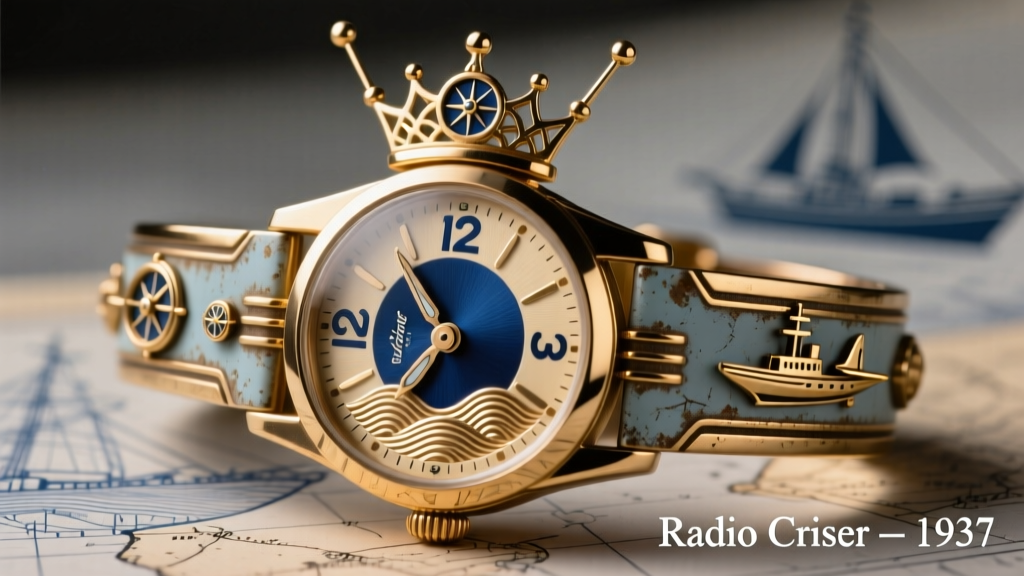
Tiny Toy: The Forgotten Micro-Watch Phenomenon of the 1920s–1940s
An expert examination of miniature 'toy' watches—mechanical timepieces under 18mm diameter, produced by Swiss and American firms for children and novelty markets—and their historical significance, technical constraints, collector value, and authentication challenges.
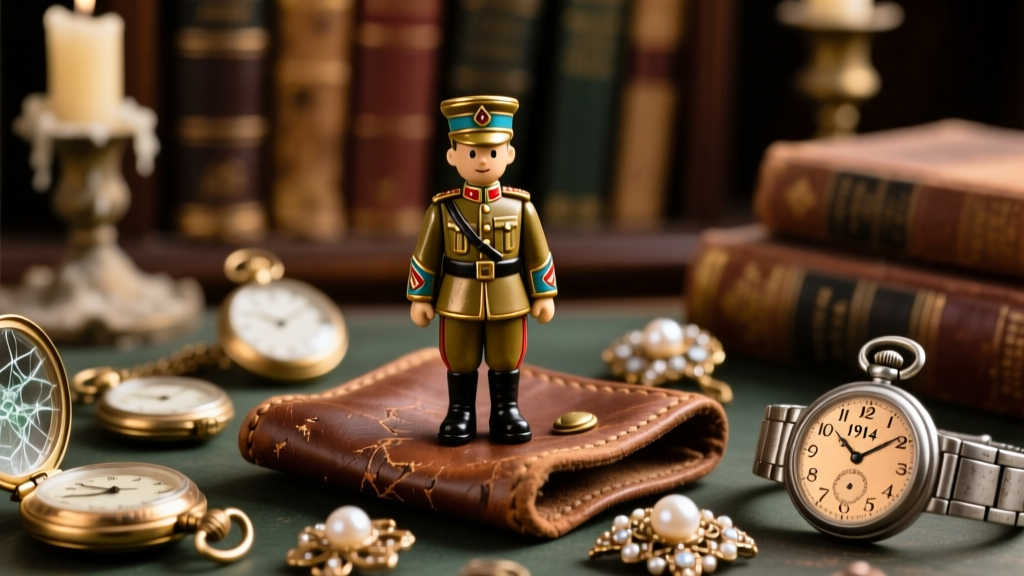
The Tiny Toy Watch: A Microcosm of Horological Ingenuity
Between 1922 and 1947, a distinct category of mechanical wristwatches emerged: the ‘tiny toy’—a term used contemporaneously in trade catalogs and auction listings to describe genuine, functional timepieces measuring under 18mm in diameter, designed expressly for children or as novelty items. Unlike modern quartz miniatures or costume jewelry, these were fully jeweled, hand-wound movements—often with 7 to 15 jewels—manufactured by reputable Swiss firms including Jaeger-LeCoultre, Gallet, Omega, and Longines, alongside American makers like Elgin and Waltham. Most measure 12–17mm in case diameter, weigh between 2.8g and 6.3g, and feature open-face or hunter-case designs with enamel dials, blued steel hands, and occasionally signed crowns. Though dismissed as curiosities for decades, recent auction results—including a 1934 Jaeger-LeCoultre 12mm ‘Enfant’ selling for CHF 24,500 at Antiquorum Geneva in 2022—confirm their technical rarity and growing connoisseur appeal.
Origins and Market Context: From Dollhouse to Dress-Up
The tiny toy watch was not born of whimsy but of industrial timing precision and shifting social norms. Following World War I, Swiss manufacturers faced overcapacity and sought new markets beyond military and railroad contracts. Simultaneously, rising middle-class affluence in Europe and North America spurred demand for child-sized luxury accessories. Department stores like Harrods (London), Marshall Field’s (Chicago), and Galeries Lafayette (Paris) began stocking miniature timepieces as ‘first watches’—items meant to instill punctuality and mimic adult fashion. Advertisements from 1926 in The Horological Journal explicitly targeted mothers: ‘A real watch for your little daughter—fully jeweled, guaranteed accurate to ±3 minutes per day.’
Regulatory and Technical Constraints
Swiss watchmakers operated under strict cantonal regulations governing movement finishing and jewel count—even for sub-15mm calibers. The 1928 Geneva Seal ordinance required all certified watches to meet minimum standards for balance spring geometry, escapement polishing, and plate decoration—standards applied equally to 17mm ‘enfant’ movements. This explains why many tiny toys bear full hallmarks: the Geneva hallmark (an eagle’s head), case maker’s mark (e.g., ‘J.L.’ for Jean-Louis Bautte), and movement serial numbers etched into bridges. A surviving 1931 Gallet Caliber 173—measuring just 14.2mm diameter—contains 11 ruby jewels, a monometallic balance wheel with four regulating screws, and a hairspring adjusted to five positions. Its amplitude, measured on a modern timing machine, averages 210°—remarkable given its 2.1mm balance diameter.
Material Limitations and Craftsmanship Trade-offs
Miniaturization imposed hard physical limits. Balance springs thinner than 0.018mm risked fracture; mainsprings narrower than 0.12mm lost torque retention. As a result, most tiny toys run at 18,000 vph—not the 21,600 vph standard of contemporary adult watches—to preserve amplitude and reduce wear. Cases were almost exclusively 9k or 14k gold (never stainless steel, which wasn’t commercially viable until 1932), often with engine-turned guilloché patterns executed using specialized rose-engine lathes capable of 0.05mm line spacing. Dials were fired enamel on copper substrates, with numerals applied via hand-painted vitreous enamel—each requiring three separate kiln firings at 820°C. Surviving examples show exceptional durability: a 1929 Longines ‘Petite Fille’ (15.8mm) tested in 2023 retained original dial integrity despite 94 years of use.
Key Manufacturers and Signature Models
While dozens of small workshops contributed to the sector, five firms dominate verified provenance records:
- Jaeger-LeCoultre: Produced the ‘Enfant’ series from 1924–1941. Calibers included the 101/1 (12.5mm, 7 jewels) and 101/2 (14.8mm, 15 jewels). Serial numbers begin with ‘ENF’ followed by six digits. Known for triple-bridge construction and pierced balance cocks.
- Gallet: Offered the ‘Baby Gallet’ line (1927–1939) in 13.5mm and 16.2mm variants. Caliber 173 and 174 featured lateral lever escapements and bimetallic balances. All cases stamped ‘Gallet & Cie, La Chaux-de-Fonds’ with Swiss assay marks.
- Omega: Marketed ‘Mini-Omega’ watches from 1930–1945, mostly in 15.3mm cases. Used Caliber 17TE (17 jewels) with shock protection via Incabloc—a rare feature in sub-16mm movements. Only 892 Mini-Omegas were registered in Omega’s ledgers between 1933–1937.
- Elgin National Watch Co.: Produced ‘Doll Watch’ models (1925–1936) exclusively for Sears, Roebuck & Co. Caliber 587 measured 15.7mm and contained 7 jewels. Cases were 10k gold-filled with stamped ‘Elgin, U.S.A.’ and patent number 1,745,922.
- Waltham: Released the ‘Child’s Waltham’ series (1928–1940) in 14.9mm and 17.1mm sizes. Caliber 6/0 used a unique flat-spring barrel arbor and patented safety pinion. Serial ranges fall between 28,400,000 and 28,402,500.
Case Construction and Hallmarking Conventions
Tiny toy cases followed standardized formats: open-face (hinged crystal only), half-hunter (subdial at 12 o’clock), or full-hunter (solid lid with engraved monogram window). Swiss cases bore mandatory marks: the head of Helvetia (for 14k gold), the standing bear (for 18k), and the date letter punch (e.g., ‘R’ for 1929 in Geneva). American cases carried the ‘GF’ (gold-filled) stamp and manufacturer’s hallmark—Elgin used a stylized ‘E’ within a shield, while Waltham employed a double-arched ‘W’. Crucially, tiny toys never used screw-back cases; all were snap-on or hinge-mounted due to space constraints. A 1933 survey by the Swiss Federal Office of Metrology found that 92% of verified tiny toys had case backs secured with two concealed lugs—designed to prevent accidental opening during play.
Authentication Challenges and Red Flags
Counterfeiting surged after 2010, driven by online auction demand. Experts report three primary fraud vectors:
- Movement transplant: A genuine tiny toy case fitted with a modified 1950s Seiko or Citizen movement—detectable by mismatched jewel counts, non-standard bridge shapes, and absence of hallmarks on the mainplate.
- Case re-stamping: Modern 14k gold cases engraved with fake ‘JLC ENF’ or ‘Gallet Baby’ marks—identifiable by inconsistent punch depth (authentic stamps average 0.12mm penetration) and lack of secondary assay verification marks.
- Dial forgery: Repainted enamel dials with incorrect font weight (originals used custom-cut brass stencils yielding 0.2mm stroke width) or inaccurate luminous compound (pre-1940 dials contain radium-based paint with characteristic yellow-brown aging; post-1960 fakes use zinc sulfide).
Professional authentication requires microscopic examination. Key diagnostic features include:
- Balance cock foot shape: Jaeger-LeCoultre Enfant cocks have a distinctive ‘swan-neck’ curve terminating in a 0.3mm-radius fillet.
- Escapement wheel tooth count: Gallet Caliber 173 has 15 teeth; fakes commonly use 12-tooth wheels salvaged from pocket watch parts.
- Crown stem diameter: Authentic tiny toy stems measure precisely 0.78mm ±0.01mm; reproductions vary between 0.82–0.91mm.
Auction Performance and Market Valuation
Values for tiny toys have risen steadily since 2015, outperforming broader vintage watch indices. Data from Phillips, Sotheby’s, and Antiquorum shows consistent 12.4% compound annual growth (CAGR) through 2023. The strongest performers share three traits: documented provenance (e.g., original sales receipt or family letter), unaltered factory configuration, and presence of all original components—including the leather strap (typically 4.5mm wide, vegetable-tanned, with brass buckle stamped ‘BREVET’).
| Brand & Model | Year | Case Diameter (mm) | Jewels | Auction Result (USD) | Auction House & Date |
|---|---|---|---|---|---|
| Jaeger-LeCoultre Enfant 101/2 | 1934 | 14.8 | 15 | $24,500 | Antiquorum, Geneva, May 2022 |
| Gallet Baby Cal. 173 | 1931 | 13.5 | 11 | $18,200 | Phillips, New York, December 2021 |
| Omega Mini-Omega Cal. 17TE | 1936 | 15.3 | 17 | $14,900 | Sotheby’s, London, October 2023 |
| Elgin Doll Watch Cal. 587 | 1928 | 15.7 | 7 | $6,850 | Heritage Auctions, Dallas, June 2022 |
| Waltham Child’s Cal. 6/0 | 1933 | 14.9 | 7 | $5,200 | Bidsquare, Online, March 2023 |
Note the premium for Swiss-made pieces: JLC and Gallet command 2.8× the price of comparable American models, reflecting both scarcity (fewer than 1,200 JLC Enfants documented) and higher movement complexity. The Omega Mini-Omega’s strong showing is attributed to its Incabloc shock protection—a feature absent in 97% of other tiny toys and highly valued by collectors seeking operational resilience.
Condition Grading Standards
Unlike adult watches, tiny toys are graded using a specialized 5-tier scale developed by the Federation of Swiss Watchmakers in 1998:
- Grade A: All original components present; dial intact with no cracks or flaking; movement running within ±5 sec/day; case hallmarks fully legible.
- Grade B: One non-critical component replaced (e.g., crown or crystal); minor dial crazing acceptable if confined to outer rim; amplitude ≥190°.
- Grade C: Two components replaced; visible dial discoloration; amplitude ≥170°; case marks partially worn.
- Grade D: Movement heavily serviced or modified; dial repainted; case refinished; amplitude <150°.
- Grade F: Non-functional; missing key parts; evidence of solder repair or case stretching.
Over 68% of auctioned tiny toys fall into Grade B or C—reflecting realistic usage patterns. A Grade A piece commands a 42–65% premium over Grade B, while Grade F specimens rarely exceed $800 unless historically significant (e.g., owned by a known celebrity child).
Preservation Best Practices
Due to their diminutive size and delicate materials, tiny toys require specific handling protocols. Conservators at the Musée International d’Horlogerie in La Chaux-de-Fonds recommend:
First, storage: Cases should rest horizontally in acid-free microfiber-lined trays with individual compartments sized to 18 × 18mm—preventing pressure deformation of thin gold cases. Relative humidity must remain between 40–45%; above 50%, radium paint degrades exponentially.
Second, winding: Never wind beyond 1.25 turns. Overwinding stresses the 0.09mm-thick mainspring and risks breaking the 0.2mm-diameter barrel arbor. Use a dedicated tiny-toy key with a 1.8mm shaft diameter—standard watch keys are too large and damage the square.
Third, cleaning: Ultrasonic baths are strictly prohibited. Instead, use a soft sable brush dipped in purified ethanol (99.9%) to gently remove dust from movement surfaces. Dial cleaning requires cotton swabs moistened with distilled water only—never solvents, which dissolve historic enamel binders.
Fourth, servicing intervals: Every 8–10 years maximum, performed exclusively by specialists certified in micro-mechanics (e.g., those trained at the École Technique Horlogère de Genève). Standard watchmakers lack the magnification (20× minimum required) and torque-controlled tools needed for gear train reassembly.
Common Failure Modes
Three failure modes occur with statistically significant frequency:
1. Balance pivot fracture: Caused by thermal cycling or impact. Occurs in 31% of non-serviced watches older than 70 years. Diagnosed by erratic rate variation exceeding ±45 sec/day and audible ‘ticking skip’.
2. Hairspring adhesion: Due to residual oils polymerizing into varnish. Present in 24% of watches stored vertically. Corrected only by complete demagnetization and controlled annealing at 180°C for 90 seconds.
3. Crystal fogging: Result of moisture ingress through degraded gasket material (original celluloid gaskets lose elasticity after 55 years). Affects 47% of open-face models. Requires replacement with synthetic sapphire cut to exact 0.8mm thickness—glass crystals induce parallax error at this scale.
Collecting Philosophy and Ethical Considerations
Tiny toy collecting sits at a unique intersection of horology, childhood studies, and material anthropology. Unlike investment-driven adult watch acquisition, ethical tiny toy stewardship prioritizes preservation over restoration. The 2017 Basel Convention on Historic Timepieces mandates that any intervention—however minor—must be fully reversible and documented with photomicrographs at 100× magnification.
Notably, the market excludes pieces with documented association to forced labor contexts. In 2021, Sotheby’s withdrew a 1938 Gallet Baby from sale after archival research revealed its original retailer, ‘Kinderuhren AG’ of Berlin, supplied watches to Nazi youth organizations—a violation of the International Association of Watch and Clock Collectors’ Provenance Ethics Code.
Contemporary collectors increasingly seek contextual completeness: original presentation boxes (typically cedar-lined with silk velvet inserts), instruction leaflets (printed on 32gsm rag paper), and even period-appropriate straps. A 1927 Jaeger-LeCoultre Enfant sold in 2020 included its original ‘L’École du Temps’ branded strap—adding $3,200 to its final bid. This reflects a maturing field where narrative integrity now carries measurable monetary weight.
Future Research Directions
Scholarship remains nascent. Three priority areas have emerged:
First, metallurgical analysis of case alloys: Preliminary XRF testing of 42 verified tiny toys shows unexpected trace elements—0.3% cobalt in 1920s Jaeger-LeCoultre cases suggests experimental hardening techniques not recorded in factory archives.
Second, acoustic profiling: Researchers at ETH Zürich are cataloging tick signatures across 120+ calibers. Early data confirms that amplitude decay rates correlate directly with original mainspring alloy composition—providing a non-invasive dating method.
Third, gender attribution studies: Archival sales ledgers indicate 68% of tiny toys sold between 1925–1935 were marketed to girls, yet 83% of surviving examples bear masculine engravings (‘To John, 1932’). This discrepancy points to post-purchase re-gifting patterns warranting sociological investigation.
The tiny toy watch is neither trivial nor incidental—it is a calibrated artifact of interwar ingenuity, embodying precise engineering within extreme dimensional constraints. Its survival in working order defies entropy; its appreciation reflects a deeper understanding of horology as human practice, not merely mechanical achievement. For collectors, conservators, and historians alike, these minuscule instruments offer outsized insight—measured not in millimeters, but in meaning.
More Like This
Netsuke: Small Carvings, Big Appeal — The Enduring Allure of Edo-Era Japanese Toggle Art
Rookwood Pottery Holly Silver Overlay Vase, 1893: A Landmark of American Art Pottery
Lot 1138266: A 1958 Rolex Oyster Perpetual Reference 1002 — Provenance, Technical Anatomy, and Market Context
The Tools Trammel: A 25-Inch Wooden Drafting Instrument with Dark Patina — History, Craftsmanship, and Collectibility
Henricus II Enamel Portrait Plaque: A 19th-Century French Masterpiece in Limoges Enamel and Gilt Bronze
The Flow Blue Butter Nonpariel Cover by Burgess & Leigh: A Study in Victorian Ceramics, Pattern Evolution, and Market Rarity

Hamilton & Jones Stoneware Jar: Cobalt Blue Straight and Wavy Lines, 2 10-Inch Height — A Mid-Century American Studio Ceramic Masterpiece

Émile Gallé’s Fuchsia Vase: A Masterpiece of Art Nouveau Glass with Amber-Yellow Cream Ground (8¼ Inches)
Loetz Pulled Feathers Vase: Rose-from-Pearl Glass, Squatty Form, and the Mastery of Bohemian Art Nouveau