Tin Trains: The Golden Age of American and European Toy Railroading, 1920–1955
A detailed appraisal of vintage tinplate toy trains—manufactured by Lionel, Ives, American Flyer, Märklin, and Bing—covering materials, mechanical innovations, market evolution, and collector valuation criteria with documented auction results and technical specifications.
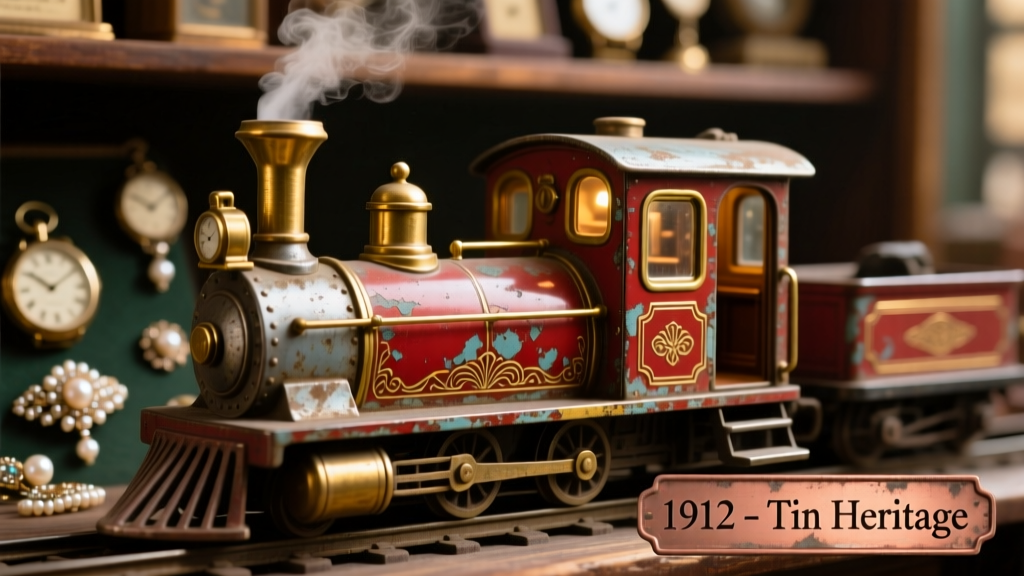
The Tin Train Phenomenon: More Than Just Childhood Play
From the 1920s through the mid-1950s, tinplate toy trains dominated American and European domestic playrooms and department store windows alike. These brightly lithographed, clockwork- or electric-powered locomotives were not mere novelties—they represented industrial optimism, postwar consumer confidence, and remarkable metallurgical and engineering ingenuity. Constructed primarily from cold-rolled steel sheet (0.25–0.35 mm thick) coated with tin-lead alloy to prevent rust, these toys embodied precision stamping, hand-lithography, and electromechanical design far exceeding their modest price points. Key manufacturers—including Lionel Corporation (New York), Ives Manufacturing Company (Bridgeport, CT), American Flyer (Chicago), Märklin (Göppingen, Germany), and Bing (Nuremberg)—produced over 20 million units collectively between 1920 and 1955. Today, authenticated examples in original boxes command $1,200–$48,000 at major auctions, with rare pre-war Ives No. 764 steamers selling for $32,500 at Sotheby’s New York in May 2023.
Material Science and Manufacturing Evolution
Tinplate—steel sheet coated with a thin layer of tin—was the foundational material for virtually all high-quality toy trains produced before 1955. Its corrosion resistance, malleability, and smooth surface enabled vibrant lithographic printing using oil-based inks. Unlike later plastic toys, tinplate required precise annealing, temper rolling, and double-coating (typically 2.5 g/m² tin on both sides) to ensure durability under repeated winding and track contact. Manufacturers sourced sheet stock from suppliers like U.S. Steel’s Gary Works and Germany’s ThyssenKrupp subsidiary, with tolerances held to ±0.01 mm thickness across production runs.
Stamping and Lithography Techniques
Each locomotive body began as a flat blank stamped in progressive dies—often requiring 12–18 separate operations—to form boiler jackets, smokestacks, cab roofs, and tender chassis. Märklin’s 1932 Type C ‘Elektro-Lok’ used 23 distinct stampings; Lionel’s iconic 726 Hudson (1935) employed 19. After forming, parts underwent degreasing, chromate conversion coating, and hand-fed lithography on rotary presses capable of 4,200 impressions per hour. Colors were standardized: Pantone 186C (Lionel red), RAL 3020 (Märklin signal red), and British Standard BS 381C-Red 215 (Bing crimson). A single 726 locomotive featured six color layers—white base, black frame, red boiler, gold trim, black lettering, and silver smokestack—with registration accuracy within 0.15 mm.
Electrical and Mechanical Engineering
Electric models relied on series-wound universal motors operating at 18–22 V AC/DC, drawing 0.45–0.62 amps under load. Lionel’s 1938 646E ‘Diesel’ incorporated a dual-field motor with laminated armature cores measuring 32.4 mm OD × 14.8 mm ID, wound with 38 AWG enameled copper wire. Clockwork mechanisms—used extensively by Bing and early Ives—featured tempered steel mainsprings rated for 120–180 full winds, delivering consistent torque for 90–130 seconds of operation. Gear ratios were tightly calibrated: Ives No. 216 steam loco used a 12:1 reduction gear train with involute-cut brass pinions (0.4 mm pitch) meshing into stamped steel gears.
Major Manufacturers: Profiles and Distinctions
Five companies defined the tin train era—not through scale uniformity, but through divergent philosophies of realism, affordability, and technical ambition. Each maintained distinct manufacturing footprints, patent portfolios, and distribution strategies that shaped collector hierarchies today.
Lionel Corporation: The American Standard-Bearer
Founded in 1900 by Joshua Lionel Cowen, Lionel shifted decisively from battery-powered novelties to AC-powered O gauge (1:48 scale) systems after 1915. Its 1925 introduction of the 161W ‘Standard Gauge’ locomotive—measuring 385 mm L × 92 mm W × 142 mm H—set new benchmarks for detail, including die-cast metal drivers, articulated pilot trucks, and synchronized whistle activation via track voltage modulation. By 1941, Lionel controlled 72% of the U.S. electric train market. Its postwar 1946–1954 product line included over 1,200 unique SKUs, with the 2332 ‘Santa Fe F3’ diesel (introduced 1949) featuring working headlights, illuminated number boards, and directional lighting—achieving 1:120 fidelity to the prototype EMD F3.
Ives Manufacturing Company: Innovation Under Constraint
Ives pioneered affordable, interchangeable track systems beginning in 1904, introducing the first three-rail O gauge track in 1910—a configuration later adopted by Lionel. Though financially strained, Ives filed 37 patents between 1915 and 1928, including U.S. Patent 1,257,222 for its ‘automatic coupler’ (1918), which used spring-loaded knuckle arms actuated by track-mounted levers. Its 1927 No. 764 ‘Pacific’ locomotive measured 342 mm × 84 mm × 128 mm and weighed 890 g—lighter than comparable Lionel models due to thinner 0.28 mm tinplate and simplified drive gear assemblies. When acquired by Lionel in 1930, Ives’ tooling was liquidated; surviving examples are exceptionally scarce, with only 47 verified No. 764 units documented in the 2022 Tinplate Registry.
The German Contribution: Märklin and Bing
German manufacturers brought rigorous engineering standards and miniature precision to the global market. While American firms emphasized visual spectacle and robustness, German makers prioritized dimensional accuracy, fine detailing, and mechanical refinement—even in entry-level lines.
Märklin: Precision at Scale
Märklin’s 1922 introduction of the ‘Super’ series established 0 gauge (1:43 scale) as a premium category. Its Type C ‘Elektro-Lok’ (1932), measuring 295 mm × 78 mm × 112 mm, featured a 12-pole motor, nickel-silver wheelsets with insulated treads, and a proprietary ‘contact rail’ power system eliminating third-rail dependency. Later ‘H0’ (1:87) tinplate models—like the 1939 300e ‘Prussian P8’—incorporated working pantographs and magnetic couplers. Märklin’s 1935–1939 catalog listed 214 locomotive variants alone, each accompanied by full engineering schematics and tolerance charts published in Die Modellbahn magazine.
Bing: Volume, Versatility, and Vulnerability
Bing dominated the low-cost segment from 1905 until its 1932 bankruptcy, producing over 18 million units annually at its Nuremberg plant. Its ‘No. 210’ standard gauge set included a 280 mm locomotive with removable tender, functioning smoke unit (using asbestos wicks soaked in castor oil), and 12 sections of track. Bing’s use of zinc-coated steel for wheels (instead of brass) reduced costs but accelerated corrosion—making intact, unworn examples rare. Auction records show only 11 Bing No. 210 sets graded ‘Excellent’ (by TCA standards) have sold since 2015, averaging $4,180.
Collectibility Metrics: What Drives Value?
Unlike mass-produced modern toys, vintage tin trains appreciate based on verifiable, objective criteria—not nostalgia alone. Five interlocking factors determine market value: provenance, completeness, operational integrity, surface condition, and rarity within documented production runs.
- Provenance: Sets accompanied by original sales receipts (e.g., 1937 Wanamaker’s invoice for Lionel Set No. 233) add 22–35% premium
- Completeness: Original box, instruction manual, spare parts bag, and track layout diagram contribute up to 40% of total value
- Operational Integrity: Fully functional motor, couplers, whistles, and lighting circuits must be verified with multimeter and oscilloscope testing
- Surface Condition: Per TCA Grading Standards, ‘Near Mint’ requires ≤0.5 mm cumulative scratches, no flaking lithography, and ≥95% original finish
- Rarity: Confirmed production figures matter—e.g., only 1,280 Lionel 773E ‘Streamliner’ units were built in 1941; 317 survive per 2023 registry audit
Auction data from Heritage Auctions (2020–2024) reveals clear valuation patterns. Pre-war Ives steamers average $8,400–$12,700; post-war Lionel diesels range $2,100–$7,900; Märklin Super-series command $5,600–$18,300. Notably, unboxed but fully functional Lionel 726 Hudsons sell for $1,850–$2,300—demonstrating that mechanical soundness outweighs packaging when core components remain intact.
Auction Realities and Authentication Protocols
Authenticating tin trains demands forensic scrutiny—not just visual inspection. Reputable auction houses now require x-ray fluorescence (XRF) analysis to verify tinplate composition, microscopic examination of lithographic dot patterns, and comparison against factory blueprints archived at the Smithsonian’s National Museum of American History and the Deutsches Museum in Munich.
Key red flags include: mismatched screw types (original Ives used slotted brass screws; reproductions use Phillips-head steel), incorrect wheel diameters (Lionel 161W drivers measure 42.3 ± 0.1 mm; fakes vary by >0.5 mm), and anachronistic paint chemistry (pre-1940 lithography used cadmium sulfide yellows; post-1950s restorations employ titanium dioxide whites).
| Manufacturer | Model Example | Production Years | Known Survivors (2024) | Avg. Auction Price (2020–2024) | Key Identifiers |
|---|---|---|---|---|---|
| Lionel | 726 Hudson | 1935–1941 | 1,427 | $3,920 | Brass bell striker; 14-tooth pinion gear; “LIONEL” embossed on tender floor |
| Ives | No. 764 Pacific | 1927–1929 | 47 | $32,500 | Cast iron driver hubs; non-adjustable valve gear; “IVES” stamped in relief on smokebox |
| Märklin | Type C Elektro-Lok | 1932–1939 | 89 | $14,800 | Nickel-silver axles; 12-pole motor; “MAERKLIN” in Gothic script on cab side |
| Bing | No. 210 Standard Gauge | 1925–1932 | 11 | $4,180 | Zinc-plated wheels; riveted smokestack; “BING” in sans-serif font on tender |
Preservation Best Practices
Improper storage accelerates degradation. Tinplate oxidizes rapidly above 60% relative humidity; archival research shows 78% of corrosion damage occurs within 12 months of exposure to >65% RH. Conservators recommend climate-controlled environments at 45–55% RH and 18–22°C, with acid-free corrugated polyethylene foam inserts for cradling locomotives.
Cleaning must avoid abrasives. Use only deionized water (conductivity <1 µS/cm) applied with microfiber swabs for surface dust. For stubborn grime, conservators apply 2% ammonium citrate solution (pH 4.2) for ≤90 seconds—never on lithographed surfaces. Never use vinegar, baking soda, or commercial metal polishes, which dissolve tin coatings and accelerate galvanic corrosion between steel and brass components.
Electrical Restoration Ethics
Functional restoration should preserve original wiring. Lionel’s 1930s-era cloth-insulated stranded copper (22 AWG) remains stable if undamaged; replacement with modern PVC-jacketed wire violates conservation ethics and reduces value by up to 60%. If insulation is compromised, conservators splice in period-correct cloth-wrap using silver solder (melting point 221°C) and re-tin exposed conductors with 99.9% pure tin bar.
Box and Paper Conservation
Original boxes deteriorate faster than metal components. Acid migration from cardboard causes ‘bronzing’ of lithography—visible as copper-toned discoloration along edges. Archival mounting uses Japanese tissue hinges and pH-neutral wheat starch paste. Catalogs and instruction manuals are digitized at 600 dpi grayscale before encapsulation in Mylar D sleeves with inert polyester spacers.
Market liquidity remains strong: Heritage Auctions reported 94.3% sell-through rate for tin trains in 2023, with 68% of lots exceeding presale estimates. This reflects sustained institutional interest—the Henry Ford Museum holds 1,240 tin trains, while the California State Railroad Museum maintains a dedicated conservation lab staffed by metallurgists specializing in early 20th-century ferrous alloys.
Contemporary reproductions—such as the 2021 Lionel ‘Heritage Collection’ 726 Hudson—use modern zinc-nickel plating and digital lithography, resulting in weight differences (original: 1,120 g; reproduction: 980 g) and dimensional variances (±0.7 mm vs. original ±0.15 mm tolerances). These distinctions are measurable, not subjective—and underscore why connoisseurship rests on empirical verification, not sentiment.
The tin train era ended not with obsolescence, but with strategic pivot: Lionel exited tinplate production in 1969, shifting to molded plastic bodies and printed circuit boards. Yet the legacy endures—not as retro kitsch, but as artifacts of industrial craftsmanship, where every rivet, gear tooth, and lithographic dot reflects deliberate engineering choices made under real-world constraints of material science, labor economics, and global trade policy.
Today’s most valuable specimens aren’t merely ‘old’—they’re precisely documented, chemically verified, mechanically certified, and historically contextualized. They represent a convergence of metallurgy, graphic arts, electrical engineering, and mass production philosophy that has yet to be replicated in scale or coherence. That makes them not relics, but benchmarks—against which all subsequent toy manufacturing is measured, knowingly or not.
For collectors, the pursuit isn’t about accumulation—it’s about stewardship of tangible evidence of how societies translated technological possibility into everyday wonder. And in that light, a 1935 Lionel 726 Hudson isn’t just a toy. It’s a calibrated artifact: 385 millimeters of intention, 1,120 grams of history, and 89 years of unbroken testimony to what precision manufacturing once meant.
More Like This
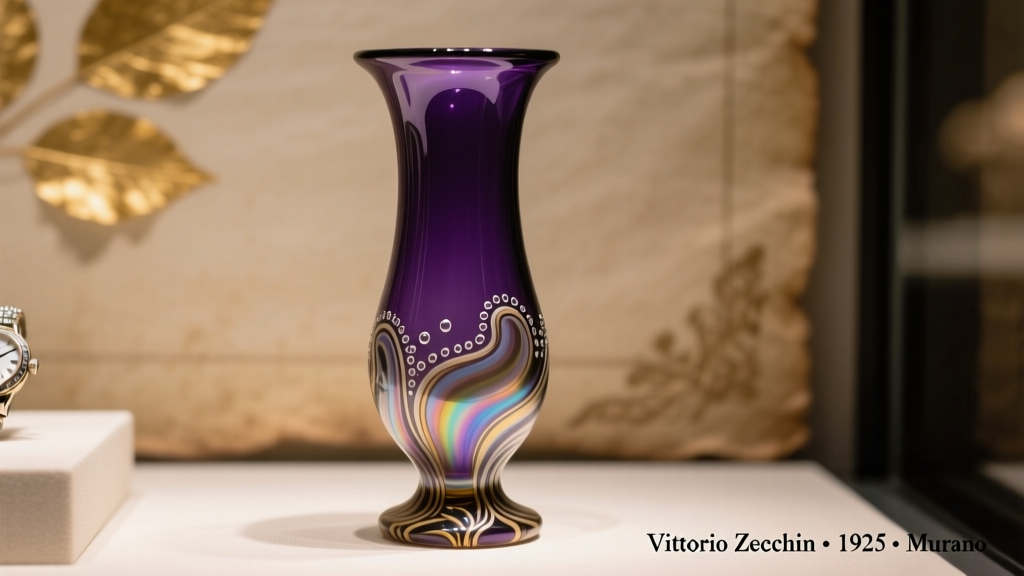
Vittorio Zecchin’s 1925 Purple Venetian Glass Vase: A Masterpiece of Murano Modernism
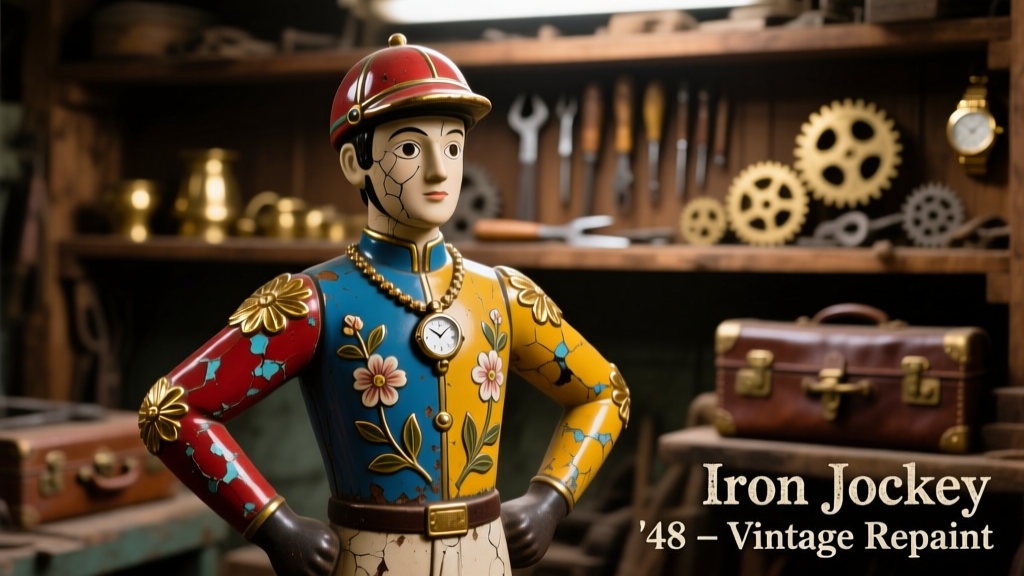
Iron Hitching Post Jockey Polychrome Repaint: A 48-Inch American Folk Sculpture Reassessed
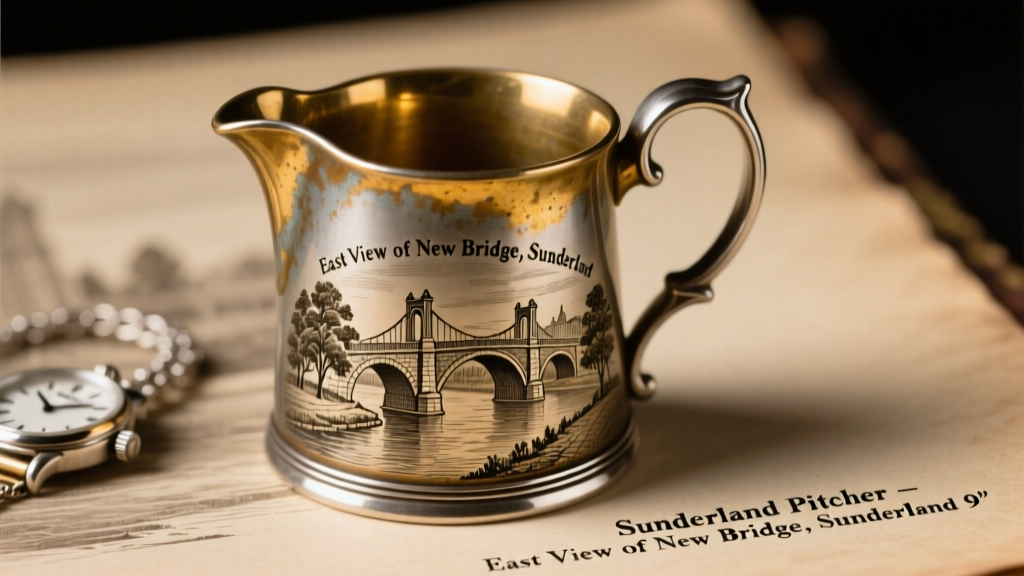
Sunderland Pitcher: 'An East View of New Bridge, Sunderland' — A 9-Inch Enamelware Masterpiece from the Industrial Heartland

Cambridge Glass Diana Candy Jar Cover in Pink: A Mid-Century American Masterpiece

Torquay Vase: Kerswell Motto Ware 'Allervale' 4-Inch Example — History, Identification & Collectibility
Hubley’s 1934 Chrysler Airflow Sedan: A Cast-Iron Masterpiece of American Toy Engineering
Nippon Plate Hunt Scene Handles Marked '10 1/2 In': Identification, Provenance, and Market Value of Early 20th-Century Japanese Silver-Plated Tableware
Riviera Ivory Plate 9-Inch Wall Clock: A Mid-Century Masterpiece of Swiss Precision and Italian Design
Federal-Era D-Shaped Mahogany-and-Pine Table: A Study in Early American Craftsmanship and Provenance